Retail Franchise POS & Inventory Systems: 2026 Analysis
Centralized POS and Inventory Systems for Retail Franchises: An Exhaustive 2026 Market and Localization Analysis
Introduction: The Maturation of Multi-Location Retail Ecosystems

The contemporary retail landscape has evolved significantly from the era of decentralized, independent storefronts into a highly synchronized, multi-location franchise ecosystem. In this advanced commercial environment, the Point of Sale (POS) system is no longer relegated to the role of a mere transactional cash register. Instead, it functions as the central nervous system of the entire retail enterprise. For franchisors and multi-location operators navigating the market in 2026, the technological imperative demands unified commerce platforms capable of orchestrating highly complex inventory management, multi-tiered geographical pricing, automated royalty distributions, sophisticated customer relationship management (CRM), and stringent regulatory compliance across diverse international borders.
As retail networks expand their footprints into new regional and international markets, the operational complexity of their networks scales exponentially. A multi-store POS system must actively eliminate the friction caused by disconnected data silos, providing corporate headquarters with a single source of truth that synchronizes front-of-house consumer transactions with back-office supply chain logistics. The technological divergence in the current 2026 market clearly separates lightweight, single-location payment processors from enterprise-grade architectures capable of executing multi-dimensional matrix inventory, automated global procurement, and cross-border fiscal compliance. This report provides an exhaustive, data-driven analysis of the prevailing centralized POS and inventory management systems available to retail franchises. Furthermore, it explores the critical nuances of geopolitical software localization, utilizing the rapidly expanding South Asian market—specifically Nepal—as a primary case study for integrating global enterprise software with rigid local tax compliance frameworks.
Core Architectural Imperatives for Franchise Operations
The operational viability and scalability of a retail franchise are fundamentally contingent upon the structural capabilities of its underlying POS architecture. When evaluating software systems for multi-location deployment, the foundational distinction between standard retail software and franchise-specific platforms lies in centralized control mechanisms. Franchisors require top-down, real-time visibility to monitor the financial health and inventory velocity of individual franchisees while rigorously maintaining brand consistency.
The primary architectural pillar for any franchise POS is deep inventory and supply chain management. Advanced centralized systems must possess the capability to handle highly complex product matrices—encompassing minute variations in size, color, style, material, and seasonal availability—across hundreds or thousands of locations simultaneously. Real-time data synchronization is paramount; an enterprise POS must continuously update stock levels across all nodes of the network, automate replenishment orders based on predictive historical sales velocity, and enable fluid cross-store inventory transfers to mitigate costly stockouts and reduce overall inventory carrying costs.
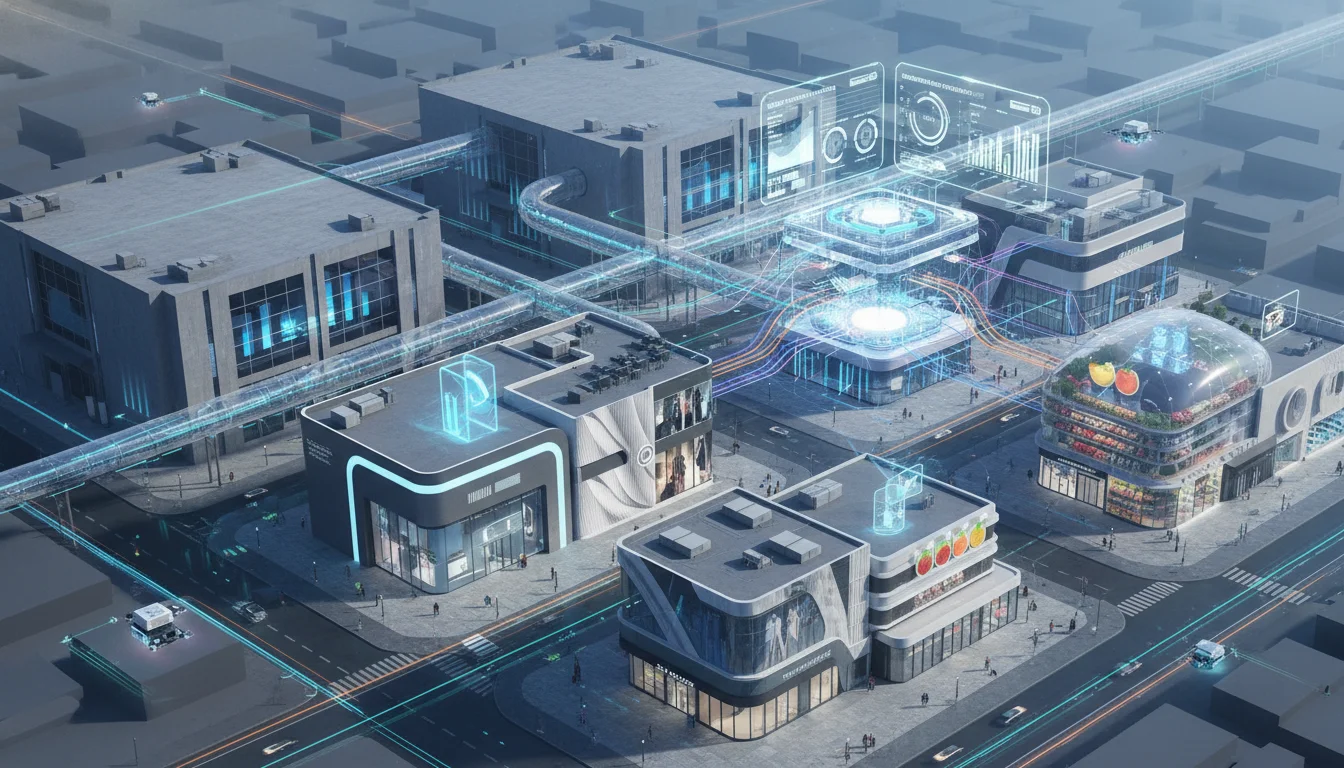
A secondary, yet equally critical, operational requirement is multi-location pricing agility. Geographic market disparities, varying logistical costs, and local competitive landscapes necessitate the ability to implement localized pricing strategies without disrupting the centralized master product catalog. Sophisticated platforms allow corporate headquarters to establish baseline retail prices or markup percentages while granting individual locations the flexibility to adjust prices based on regional demand, local taxation models, or specific promotional strategies.
Furthermore, franchise-specific platforms must inherently incorporate financial management features tailored to the unique franchisor-franchisee relationship. This includes the automated calculation and deduction of royalty payments, centralized marketing fund contributions, and the deployment of unified, cross-location customer loyalty programs. A loyalty program that functions seamlessly across all franchised outlets is a critical driver of customer retention and lifetime value, requiring a highly responsive cloud infrastructure that instantly updates customer profiles and reward balances regardless of the transaction’s physical location.
Comparative Analysis of Tier-1 and Mid-Market Franchise POS Platforms
Shopify POS: The Omnichannel eCommerce Orchestrator
Shopify has unequivocally established itself as the preeminent platform for online-first retailers expanding into brick-and-mortar operations. Its core architectural strength lies in its native, bidirectional integration with the Shopify eCommerce engine, providing true omnichannel synchronization. For franchises prioritizing digital sales, Buy Online, Pick Up In-Store (BOPIS), Buy Online, Return In-Store (BORIS), and seamless online-to-offline customer journeys, Shopify POS offers unparalleled fluidity.
However, the system’s architecture presents specific limitations for highly complex, rapidly expanding international franchise networks. The platform relies heavily on a massive ecosystem of third-party applications to augment its base functionality, which can lead to software bloat, integration instability, and significantly increased cumulative subscription costs. More critically, Shopify’s international expansion capabilities are structurally constrained by its payment processing framework. To accept in-person POS payments in multiple countries and maintain compliance with localized tax regulations, a business must create an entirely separate Shopify store and a distinct Shopify Payments account for each respective country, ensuring that the store’s currency perfectly matches the local currency of the physical stores and the payout bank account. This architectural fragmentation directly contradicts the unified dashboard requirement of a global franchise, forcing financial executives to aggregate sales data manually across multiple regional software instances.
Furthermore, international tax compliance often requires complex workarounds. For instance, in Spain, retail franchises must utilize third-party auditing applications like the Comply app to generate valid invoices, QR codes, and digital signatures to meet the VeriFactu obligations mandated by the local tax office. Offline transactions on Shopify in such heavily regulated regions are not fiscally compliant out-of-the-box, requiring manual reconciliation with local governments.
Lightspeed Retail: The Matrix Inventory and B2B Specialist
Lightspeed Retail is engineered specifically for complex, inventory-heavy, multi-location operations that require deep supply chain oversight. Unlike Shopify, which centers fundamentally on eCommerce, Lightspeed was built natively for the physical retail environment and intricate stockroom management. It excels in granular inventory control, offering advanced matrix configurations for product variants that newer, lighter cloud-based systems often struggle to replicate.
A defining feature of Lightspeed’s architecture is its robust multi-store pricing functionality. The platform allows franchisors to create distinct pricing levels or “Price Books” tailored to individual store locations or specific customer types, all managed fluidly from a single centralized catalog. Furthermore, Lightspeed has deeply integrated Business-to-Business (B2B) wholesale capabilities through its strategic integration with NuORDER. This integration establishes a continuous, data-informed loop where retailers can browse, compare, and order from thousands of global brands directly within the POS interface, effectively bridging wholesale commerce with retail inventory planning and eliminating the need for offline spreadsheets or disparate brand portals.
Despite these exceptionally robust capabilities, Lightspeed commands a premium pricing structure, and its reliance on proprietary payment processing models (Lightspeed Payments) has drawn scrutiny from some retail users seeking greater financial autonomy and lower interchange fees. The platform is also known for a steeper learning curve, requiring significant onboarding time to fully leverage its advanced reporting and inventory logic.
Square for Retail: The Entry-Level Ecosystem
Square has achieved massive market penetration among small, independent retailers and nascent franchises due to its highly transparent pricing, rapid deployment capabilities, and minimal upfront hardware costs. It provides a highly cohesive, closed-loop ecosystem that bundles POS software, payment processing, and basic payroll into a single, exceptionally user-friendly interface.
While highly capable for single-store operations or small, purely domestic chains, Square presents severe structural limitations for sprawling international franchises.
Square’s proprietary hardware is cryptographically locked to the specific country of account activation, expressly prohibiting cross-border card payments. If a franchise expands into an unsupported geographic region, the hardware becomes effectively useless, requiring the establishment of isolated regional accounts (each demanding unique email addresses and identity verification) and the procurement of entirely new localized hardware infrastructures. This geographic rigidity renders Square highly unsuitable for multinational franchise expansion strategies, relegating it primarily to domestic, low-complexity retail operations.
KORONA POS: The Customizable Franchise and QSR Engine
KORONA POS occupies a highly specialized, rapidly growing niche within the market, heavily targeting ticketed venues, quick-service restaurants (QSR), and complex retail franchises. It differentiates itself aggressively through a strict agnostic approach to payment processing. Unlike Square, Shopify, or Lightspeed, KORONA allows merchants total freedom to select their own payment processors, potentially yielding massive long-term savings on high-volume transaction fees by enabling businesses to negotiate interchange-plus pricing directly with acquiring banks.
For franchisors, KORONA offers a dedicated Franchise Module designed to facilitate centralized corporate communication, product database syncing across massive geographic spreads, and the automated deduction of customized royalty payments directly at the point of sale. The system’s multi-store architecture allows a franchisor to open a new location without manually exporting and importing data; upon initializing the new terminal, the centralized product database, inventory schemas, and pricing structures automatically populate the device via the cloud. Furthermore, KORONA provides robust offline capabilities, allowing transactional processing to continue uninterrupted during internet outages—a critical feature for franchise locations operating in regions with unstable connectivity infrastructures.
Franpos: The Purpose-Built Franchise Architecture
Franpos is explicitly designed around the franchise business model from the ground up, prioritizing centralized corporate management, enterprise-level reporting, and rigid operational standardization. The platform is highly versatile, offering specialized feature sets tailored for distinct service verticals, including beauty salons (featuring advanced online appointment booking, booth rental management, and resource allocation), pet retail (incorporating grooming schedules and self-delivery applications), and high-volume quick-service restaurants.
The system’s enterprise layer features a built-in business intelligence engine, organic CRM tools, automated review management, and a robust royalty processor. By consolidating eCommerce platforms, customer loyalty programs, and targeted marketing campaigns into a single unified channel, Franpos actively eliminates the need for franchisors to rely on a patchwork of fragmented third-party integrations. Case studies, such as the deployment across the Beef Jerky Outlet franchise, highlight the platform’s ability to drive sales through integrated, smart loyalty marketing campaigns. However, independent market analyses and user feedback indicate that while the feature set is broad, the platform’s granular inventory management modules lack the sheer depth found in specialized retail competitors like Lightspeed, and its offline payment processing capabilities are frequently cited as limited by end-users.
| Platform | Target Demographic | Core Architectural Strength | Primary Limitation | Payment Processing Model |
|---|---|---|---|---|
| Shopify POS | Omnichannel & eCommerce | Bidirectional digital/physical sync | Geographic fragmentation for multi-country setups | Proprietary (Shopify Payments preferred) |
| Lightspeed | Complex, multi-store retail | Deep matrix inventory & B2B procurement | Premium pricing & complex implementation | Proprietary (Lightspeed Payments) |
| Square | Small chains & pop-ups | Rapid deployment & hardware integration | Strict geographic lock-in & limited enterprise tools | Proprietary (Square Processing) |
| KORONA POS | Franchises & high-volume retail | Processor agnosticism & royalty automation | Lacks a native, proprietary eCommerce engine | Open (Processor Agnostic) |
| Franpos | Service-based franchises | Built-in enterprise royalty & CRM tools | Subpar offline functionality & inventory depth | Integrated via third-party partners |
Enterprise-Grade ERP and Global Retail Architectures
NetSuite (Oracle): The Global Unified Ledger
NetSuite represents the apex of cloud-based enterprise management, offering a comprehensive suite tailored explicitly for the unique demands of the retail industry. It unifies the entire retail lifecycle—from predictive merchandise planning and global accounting consolidation to end-user mobile POS interfaces. For franchisors, NetSuite provides brand-specific ERP configurations that can be standardized across the entire franchise network, ensuring total regulatory compliance and reporting uniformity.
The system’s Global Business Management module, known as NetSuite OneWorld, is engineered for immense geographic scale. It natively supports multi-currency management across more than 190 currencies, provides multi-language interfaces translated into 27 languages (including Chinese, Japanese, French, and German), and utilizes highly advanced multi-book accounting. Multi-book accounting is a critical feature for global franchises, as it allows individual retail transactions to be posted simultaneously to different ledgers to satisfy varying local, regional, and global headquarters accounting standards without manual duplication. Furthermore, NetSuite’s built-in indirect tax management engine (SuiteTax) automates tax compliance for over 110 countries, calculating complex cross-border sales taxes in real-time.
The implementation of NetSuite frequently yields transformational results for scaling enterprises. For example, the furniture retailer Lovesac utilized NetSuite’s SuiteCommerce and ERP capabilities to completely replace a fractured legacy retail environment, creating a single source of truth for orders and inventory that effortlessly handled significant market demand increases. Similarly, the technology manufacturer GoPro leveraged NetSuite’s unlimited scalability and SuiteFlow automation to integrate its customer transaction cycle, improving visibility for investors and satisfying the rigorous operational demands of its retail and warehouse vendors.
LS Retail: Microsoft Dynamics Integration
LS Retail, specifically its flagship product LS Central, is a world-leading, unified commerce platform built directly upon the Microsoft Dynamics 365 Business Central ERP framework. It is specifically designed to handle immense transaction volumes across highly complex, mixed business models, such as environments combining traditional retail with hospitality or food service. This makes it the platform of choice for massive international franchises operating in diverse markets, such as Devyani International Limited, which operates over 2,000 outlets including KFC, Pizza Hut, and Costa Coffee across India, Nepal, Nigeria, and Thailand.
The platform’s CentralConnect architecture guarantees automated, bi-directional data flow across all business systems, seamlessly connecting physical store POS operations, localized eCommerce, back-office accounting, and warehouse management. LS Retail provides highly robust offline POS capabilities, role-based security permissions for sensitive financial operations, and advanced, real-time analytics driven by Microsoft Power BI. The platform is supported globally by an extensive network of certified integration partners, such as Total Retail, Web Masters LLC, and Unikal Tech Partners, who provide localized expertise and tailored implementation services.
However, this level of enterprise sophistication commands a monumental financial investment. Implementation costs for LS Central scale aggressively based on user count and complexity. A small business implementation may range from $25,000 to $50,000, while a medium-sized enterprise can expect costs between $50,000 and $90,000. For large, multi-location franchises requiring advanced accounting and purchase module configurations, initial implementation costs start well above $90,000, placing LS Retail strictly in the upper echelon of capital-intensive enterprise solutions.
Geopolitics of Retail Technology: Localization and Fiscal Compliance
The operational expansion of global retail franchises into emerging markets introduces severe geopolitical and regulatory complexities. A centralized POS system cannot simply be transplanted across international borders; it must interface seamlessly with highly specific local tax infrastructures, localized payment gateways, and rigid government compliance protocols. The South Asian market, with a specific focus on Nepal and its commercial hub, Kathmandu, serves as an optimal and exhaustive case study for understanding the friction between global retail platforms and stringent localized regulatory environments.

The Regulatory Mechanics of CBMS Integration
To achieve IRD compliance, a POS system must possess highly specific architectural safeguards. Primarily, it must maintain an immutable, SQL-based audit trail where data deletion is cryptographically impossible; every single edit, void, or transaction alteration must permanently record the user, the exact timestamp, and the specific reason for the alteration. Furthermore, the system must algorithmically generate fiscal-year-based invoice serial numbers, utilize exact Annex-5 or Annex-6 invoice formatting, and securely synchronize this data to the government servers via a dedicated API.
If a franchise accepts digital payments (such as local QR wallets), the software must also be capable of generating a Schedule-8 format report detailing 10% VAT rebates for the consumer. Crucially, for multinational franchises utilizing cloud-based POS systems hosted on international servers, the IRD imposes additional, stringent stipulations: the franchise must maintain a localized, dedicated audit server physically housed within the borders of Nepal. The IRD must be granted immediate access to this server upon request, and its operation must be governed by a formal three-party legal agreement between the retail user, the global software provider, and the local hosting entity.
Indigenous Software Solutions vs. Global Platforms
To navigate these immense localized complexities, many retail chains and local franchises operating in Kathmandu bypass global platforms entirely, relying instead on indigenous, pre-certified software solutions. These localized platforms trade global omnichannel scalability for absolute regional compliance.
IMS Software is widely recognized as the premier local POS system in Nepal, offering deep inventory management, factual billing capabilities, and innate IRD certification out-of-the-box. It excels in local billing mechanics, handling Wholesale/Retail bills, Barcode modes, and Customer Membership tagging while ensuring all data syncs perfectly with local tax authorities. Similarly, platforms like Swastik POS provide highly robust, localized inventory tracking alongside deep integration with Nepal’s primary accounting standards.
For franchises prioritizing accounting stability, Saral Billing operates as an IRD-verified, lightweight POS that connects seamlessly with TallyPrime, utilizing CNC Nepal’s trusted local cloud infrastructure to eliminate the need for expensive on-premise servers. Other notable local competitors securing significant market share include Nepalebilling, OneFlow, Newton POS, MARG ERP 9+, Zeta POS, IVEPOS, and Ginesys Retail. While these indigenous systems are highly optimized for the domestic market’s tax codes, they generally lack the advanced AI-driven demand forecasting, limitless global omnichannel scalability, and deep global CRM integrations expected by tier-one international franchisors.
| System Type | Representative Platforms | Primary Strength | Primary Limitation | Target Market |
|---|---|---|---|---|
| Global Enterprise ERP | NetSuite, LS Retail | Limitless global scaling & multi-book accounting | Extremely high TCO & complex local tax localization | Billion-dollar multinationals |
| Mid-Market Cloud POS | Shopify, Lightspeed, KORONA | Rapid deployment & deep inventory matrix | Often lacks native compliance for niche emerging markets | Mid-sized global franchises |
| Indigenous Local POS | IMS Software, Swastik, Saral | Perfect alignment with local IRD/CBMS tax laws | Limited international expansion & advanced eCommerce | Domestic retail chains in Nepal |
Middleware, API Orchestration, and POS Extensions
The Role of Fiscal Middleware: Tigg Accounting
Tigg Accounting Software operates as a pivotal cloud-based middleware solution in the Nepalese retail market. It is a fully IRD-certified platform that provides a highly robust Developer API, specifically designed to allow international, non-compliant POS systems to interface seamlessly with local tax authorities.
By utilizing integration patterns, a global platform like Shopify POS can route its transactional data directly through Tigg’s API. In practice, a transaction occurs on the Shopify terminal; the data is passed via webhook to Tigg, which subsequently sanitizes the data, applies the appropriate Nepalese tax models, formats the invoice strictly to IRD Annex-5 standards, and pushes the telemetry directly to the government’s CBMS in real-time. This sophisticated integration architecture allows franchisors to maintain a unified global technology stack for inventory and CRM while perfectly satisfying stringent regional fiscal laws without resorting to manual, error-prone back-office reconciliation.
Implementing Shopify POS UI Extensions
- Environment Setup: Developers must install the Shopify CLI globally to interact with the merchant’s store architecture.
- Extension Generation: A new POS UI extension is generated, creating the foundational code blocks.
- Partner Configuration: The POS integration must be explicitly enabled within the Shopify Partner account.
- Component Creation: Developers create a custom “Tile Component” that appears directly on the POS home screen, allowing cashiers to trigger local compliance functions or print IRD-verified receipts.
- API Orchestration: The API service is configured to securely pass the transaction payload from the Shopify terminal to the middleware (e.g., Tigg). This level of custom development requires significant upfront investment but represents the only scalable method for deploying standardized global software in fractured regulatory environments.
Payment Gateway Integration in Emerging Markets
A secondary, yet equally massive challenge in regional franchise localization is the integration of dominant local payment networks. In emerging markets like Nepal, international payment gateways such as Stripe, PayPal, or even Shopify Payments are entirely non-functional for domestic consumer transactions. Instead, the market relies almost exclusively on localized digital wallet ecosystems and closed-loop QR-based payment networks, primarily Fonepay and the Smart Choice Technologies (SCT) network.
For a centralized franchise POS to operate efficiently, it cannot rely on cashiers manually typing transaction totals into standalone card terminals. It must utilize dynamic QR code generation directly on the customer-facing display. Architecturally, this necessitates that the POS software integrates directly with Fonepay’s API. This process requires merchant-wise API keys; every single franchised location must obtain a unique Merchant ID and Secret Key from their acquiring bank. The POS system must then be programmed to request a dynamic payment string for the exact transaction amount, convert that string into a scannable QR code on the screen, and continuously poll the Fonepay verification API every few seconds until the payment is confirmed, thus triggering the receipt printer. Failure to integrate these localized payment architectures results in severe operational bottlenecks, rampant human error at the checkout counter, and fractured financial reporting.
Hardware Ecosystems and Physical Infrastructure
The deployment of a centralized POS system also relies heavily on the physical hardware ecosystem. While companies like Square and Lightspeed offer sleek, proprietary hardware, deploying these devices in emerging markets is often logistically prohibitive due to import tariffs, lack of local warranty support, and geographic software locks.
Consequently, retail franchises expanding into markets like Kathmandu must rely on specialized local hardware distributors to supply agnostic equipment that pairs with cloud-based software.
Distributors such as Postronix Nepal and Buddha Trade Concern provide robust, high-volume hardware solutions tailored for the local environment. Devices like the Gilong U2 i3 Dual Screen POS terminal provide the processing power necessary to run web-based enterprise POS systems, while featuring secondary customer-facing displays essential for rendering dynamic payment QR codes. These distributors also supply critical peripherals, including thermal receipt printers, barcode scanners, and wireless peripherals, ensuring that the physical checkout infrastructure is fully supported by local technicians.
Customer Relationship Management (CRM) in Multi-Location Retail
Beyond supply chain logistics and fiscal compliance, the long-term profitability and valuation of a retail franchise rely heavily on robust Customer Relationship Management (CRM) and loyalty ecosystems. In the highly competitive 2026 retail space, generalized, standalone CRM tools are insufficient; platforms must be deeply intertwined with the POS to track hyper-specific purchasing behaviors, manage multi-tier loyalty point balances, and trigger automated, localized marketing campaigns.
Global CRM platforms like Salesforce and Microsoft Dynamics 365 offer monumental scalability, deep analytics, and massive integration ecosystems, making them highly suitable for large enterprise networks. Zoho CRM has emerged as an omnichannel standard for growing franchises, offering AI assistants (Zia), territory management for regional sales teams, and seamless inventory integration. Through local deployment partners like Nest Nepal, Zoho offers highly structured pricing tiers (e.g., Standard at Rs. 1,960/user/month; Enterprise at Rs. 5,600/user/month), providing financial predictability against currency fluctuations.
However, emerging markets often demand localized CRM solutions that integrate cleanly with regional business practices and field operations. Indigenous platforms like Pace CRM and Neo CRM provide highly tailored modules for field-heavy operations, localized production tracking, and direct integration with local SMS and telecommunication networks for marketing blasts. For a retail franchise, ensuring that the CRM synchronizes perfectly with the POS data—capturing every offline transaction, Fonepay payment, and loyalty point redemption—is the paramount technical requirement for constructing accurate customer profiles and executing high-conversion omnichannel marketing initiatives.
Total Cost of Ownership (TCO) and Scalability Metrics
The financial structuring of a franchise POS rollout requires a meticulous Total Cost of Ownership (TCO) analysis, moving far beyond base software subscriptions to encompass hardware amortizations, payment processing models, integration middleware fees, and the marginal cost of scaling to new locations.
Cloud-based, mid-market solutions generally operate on tiered per-terminal or per-location subscription models. KORONA POS represents an aggressive, highly transparent pricing strategy specifically tailored for franchises. A base multi-location tier (Plus Plan) averages $99 per terminal monthly, augmented by a highly specific $30 monthly fee per franchise location to enable automated royalty processing and centralized franchisor oversight. Crucially, KORONA’s processor-agnostic architecture prevents merchants from being tethered to predatory processing rates; businesses can negotiate directly with merchant acquirers to secure favorable interchange-plus pricing, drastically lowering the 3-year TCO compared to proprietary systems like Square or Lightspeed.
Conversely, platforms like Franpos scale their pricing based on comprehensive, all-in-one bundled services, averaging a $199 flat monthly rate per location. This higher base fee inherently absorbs the cost of native loyalty programs, review management, and CRM functionality that might require paid, third-party integrations on modular platforms like Shopify.
Enterprise platforms alter the TCO calculus entirely. LS Retail and NetSuite implementations require massive initial capital expenditures and ongoing licensing fees based on user counts and database sizes. An LS Retail deployment for a 10-store franchise network entails extensive software licensing, foundational ERP setup fees, and specialized consulting, driving initial costs well into the six-figure range. However, for operations exceeding $100 million in annual revenue, this steep upfront investment is heavily offset over a five-year horizon by the total eradication of disparate software subscriptions, the elimination of manual back-office reconciliation labor, and the hyper-efficient optimization of global supply chains.
| Platform / Tier | Average Monthly Software Cost | Hardware Strategy | Payment Processing Model | Optimal TCO Scaling & ROI |
|---|---|---|---|---|
| Square (Basic) | $0 - $60 (per location) | Proprietary (Country Locked) | Fixed proprietary rate (e.g., 2.5%) | Poor (High-volume transaction penalties) |
| KORONA POS | $89 - $129 (w/ Franchise Module) | Agnostic / Bring Your Own | Open / Merchant Negotiated | Excellent for high-volume, cost-conscious franchises |
| Lightspeed | $139 - $289 (per location) | Certified proprietary hardware | Proprietary (Lightspeed Payments) | Moderate (Feature-rich but proprietary lock-in) |
| Franpos | $199 Flat Rate (per location) | Proprietary Bundles | Integrated via third-party partners | Strong for service-based franchises (Salons/Pets) |
| LS Retail / NetSuite | Highly Variable ($50k+ Implementation) | Agnostic Enterprise Grade | Open Enterprise APIs | Unmatched for global conglomerates & massive scale |
Strategic Conclusions and 2026 Industry Outlook
The exhaustive evaluation of centralized POS and inventory systems for retail franchises in 2026 reveals a highly stratified and nuanced technological landscape. The optimal solution is inextricably linked to a franchise’s specific operational complexity, geographical footprint, vertical market requirements, and long-term expansion roadmap.
For massive, multinational conglomerates, mid-market cloud solutions are structurally and financially inadequate. These entities must pivot toward unified, globally compliant ERP platforms such as NetSuite or LS Retail. While the capital expenditure is immense, the ability to natively synthesize global tax compliance, automated procurement, multi-book accounting, and unified commerce into a singular, uncorrupted data stream is the only viable methodology for sustaining cross-border scalability without incurring paralyzing operational friction.
For mid-market retail franchises prioritizing rapid deployment and deep matrix inventory management, Lightspeed Retail offers an exceptionally robust architecture, provided the organization accepts the proprietary payment models and premium pricing structure. If the franchise operates primarily within the specialized service sector—such as beauty salons, pet retail, or quick-service restaurants—Franpos delivers a highly tailored, out-of-the-box ecosystem that expertly manages automated royalties and localized CRM, though users must carefully evaluate its offline resilience.
KORONA POS emerges as a highly strategic recommendation for traditional retail franchises seeking aggressive, unencumbered scalability without the financial drain of payment processor lock-in. Its dedicated franchise module, seamless data synchronization across limitless locations, and strict processor-agnostic architecture yield a highly favorable Total Cost of Ownership over a three-to-five-year expansion horizon.
Finally, the geographic expansion of any franchise requires meticulous, boots-on-the-ground technological localization. As exhaustively evidenced by the South Asian market and the Nepalese regulatory environment, global software deployment is routinely obstructed by localized fiscal regulations, electronic billing mandates, and the absolute necessity for government server synchronization. Franchisors operating in the 2026 global market must therefore adopt a sophisticated hybrid architectural approach: leveraging robust, centralized global POS platforms for high-level inventory and CRM oversight, while simultaneously utilizing sophisticated local middleware APIs, such as Tigg, to ensure seamless fiscal compliance and integration with indigenous QR payment infrastructures. Only through this precise synthesis of macro-level global oversight and micro-level localized execution can a retail franchise achieve unencumbered, sustainable growth and profitability in the highly complex modern commercial landscape.