Trucking Digital Transformation: ROI of Fleet Tracking Software
Digital Transformation in Trucking: High-ROI Fleet Tracking Software and the Architecture of Modern Logistics

The Economic Imperative of Digital Transformation in the Transport Sector
The contemporary trucking landscape is defined by a precarious intersection of stagnant revenue and escalating operational costs. As of early 2026, industry data highlights a significant “deadlock” where average truckload rates hover at approximately $2.3 per mile, while the Total Cost of Operation (TCO) has risen to $2.2 per mile. This razor-thin margin of $0.1 per mile allows for virtually zero error in fleet management, necessitating a fundamental shift toward digital transformation. The traditional model of reactive logistics, characterized by manual logbooks and periodic maintenance, is being systematically replaced by a telematics-driven architecture that prioritizes real-time visibility and predictive intelligence.
The scale of this transformation is reflected in the market’s growth. In the United States alone, fleet telematics revenue reached an estimated $8.8 billion by 2024, maintaining a 3.7% annual growth rate over the previous five years. This trajectory is propelled by a convergence of technological advancements, including Artificial Intelligence (AI), the Internet of Things (IoT), and high-speed 5G connectivity. For fleet operators, the adoption of these technologies is no longer an optional enhancement but a strategic necessity to mitigate the “sea change” in structural costs, such as truck and trailer payments which have surged over 52% since 2019.
Digital transformation in this context is built upon several foundational pillars: maximized operational efficiency, driver safety and retention, proactive maintenance, and automated regulatory compliance. Each pillar serves to protect the bottom line by converting raw vehicle data into actionable insights. By leveraging tools like Global Positioning Systems (GPS), onboard diagnostics (OBD), and AI-powered dashcams, fleet managers can oversee every nuance of a vehicle’s journey, from engine temperature and tire pressure to precise driver behaviors like harsh braking or excessive idling.
The Telematics Architecture: Mechanisms of Data Flow and Asset Visibility
At its core, a high-ROI fleet tracking system functions as the nervous system of a logistics operation. The architecture begins at the vehicle level with telematics devices that are integrally synchronized with the truck’s engine. These devices capture a continuous stream of data across various protocols, including the J1939 and CAN-bus standards used in heavy-duty commercial vehicles. The volume of data exchanged is increasing exponentially; while traditional systems handled 5 to 50 MB daily, modern 5G-enabled trucks are projected to transmit over 100 MB per day in 2026, potentially reaching 2 terabytes per day by 2027 as more sophisticated diagnostic algorithms are deployed.
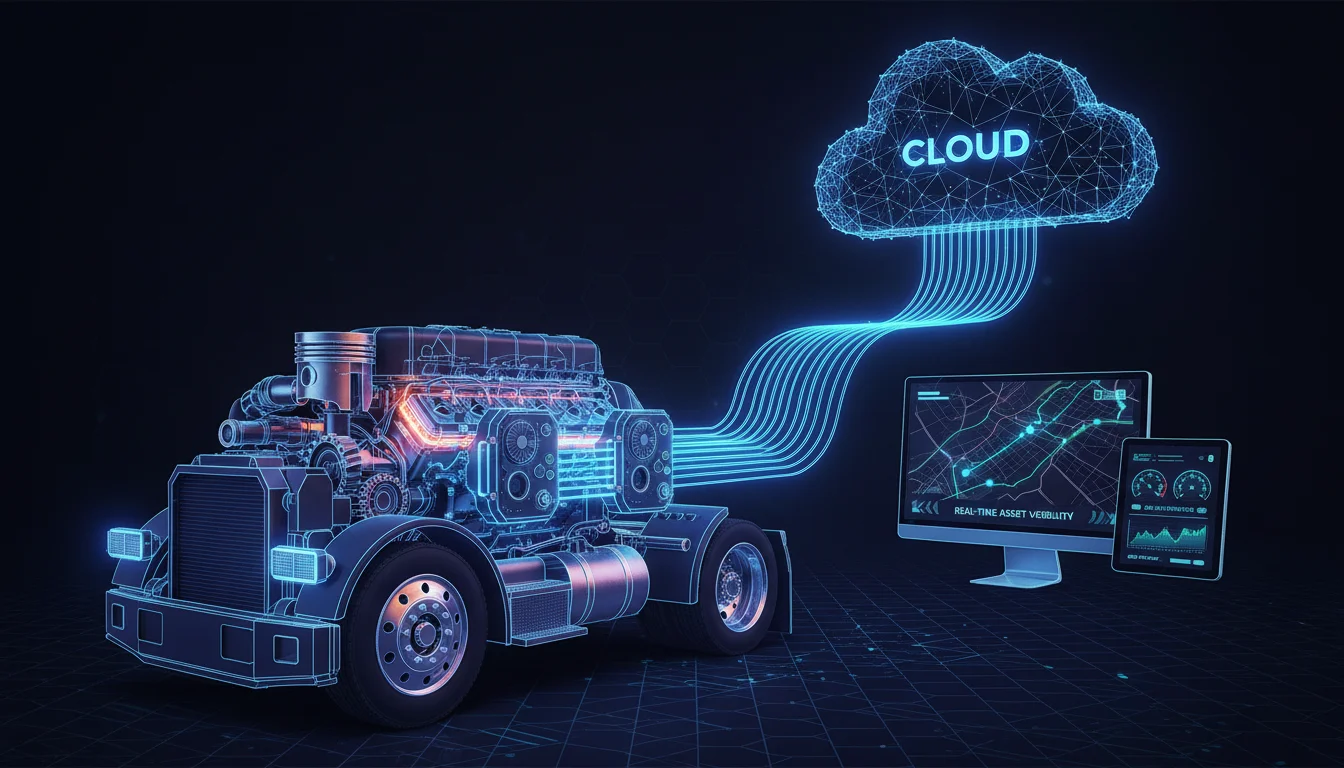
This data flow enables real-time asset visibility, which is the primary driver of operational efficiency. For dispatchers, knowing the exact location and status of every vehicle eliminates “blind spots” that historically led to delays and underutilization. In a connected ecosystem, this information is not just viewed on a map but is integrated into automated dispatching modules. When a new load is available, the system can automatically identify the most appropriate vehicle based on location, remaining Hours of Service (HOS) for the driver, and even the mechanical health of the truck.
The impact of this visibility extends to specialized logistics. In Australia, for instance, ECS Project Logistics manages the transport of high-value cargo worth millions of dollars through remote areas. For such operations, losing track of a vehicle is not just a delay; it is a “$10,000-an-hour problem”. Telematics systems mitigate these high-stakes risks by providing granular tracking that functions even in the most challenging environments.
| Feature | Technical Mechanism | Operational Impact |
|---|---|---|
| GPS Tracking | Patented curve-based algorithms for optimal recording. | High-precision location data with minimal data lag. |
| Engine Diagnostics | Continuous monitoring of J1939, 1708, and OBD fault codes. | Early detection of mechanical failure points. |
| HOS Integration | Direct link between engine status and electronic logging. | Real-time compliance monitoring and violation prevention. |
| Driver ID | Near Field Communication (NFC) or app-based login. | Accurate attribution of driving behavior and hours. |
Efficiency Pillar I: Optimizing Fuel Consumption and Managing Waste
Fuel remains one of the largest controllable expenses for any fleet, typically accounting for approximately 40% of annual operating costs. In an era of high diesel prices, even marginal improvements in fuel efficiency can have a profound impact on profitability. Digital tracking software addresses fuel waste through three primary vectors: idling reduction, behavior modification, and theft prevention.
The Hidden Cost of Excessive Idling
Idling is a pervasive but often invisible drain on resources. A study of an HVAC fleet in Chicago revealed that two specific drivers were idling for a combined 90 minutes per day, largely to keep cabs warm during lunch breaks. By implementing OBD trackers and setting 15-minute idling alerts, the owner reduced fleet-wide idling by 60% in just two weeks. The ROI was immediate: a $110 monthly subscription saved over $800 in fuel costs in a single month. For larger operations, the numbers scale dramatically; mid-size fleets often see idling costs of $700,000 annually, which can be reduced by 60% to 70% through proactive monitoring.
AI-Driven Driving Behavior Modification
Telematics systems leverage AI to detect inefficient and risky driving habits such as harsh acceleration, over-speeding, and hard braking. These behaviors not only waste fuel but also increase wear and tear on the engine and tires, shortening the vehicle’s lifespan. Top-performing fleets using automated operations platforms have achieved up to a 13% reduction in overall fuel consumption. These savings are primarily driven by data-driven coaching that results in a 79% reduction in hard acceleration and a 40% reduction in hard braking events.
Fuel Theft and “Time Theft” Mitigation
The integration of fuel cards with telematics software allows for the automated detection of fuel misuse and “splash and dash” disputes. By cross-referencing the vehicle’s GPS location with the location of the fuel transaction, the system can instantly flag unauthorized purchases. Furthermore, in industries like pest control, GPS data provides a definitive “data defense” against client claims of missed service. One pest control business saved an annual contract simply by providing a PDF report proving the technician was on-site for exactly 42 minutes, even though the client’s facility manager had not seen them.
Efficiency Pillar II: Route Optimization and Dispatch Intelligence
Beyond fuel, the optimization of time and mileage represents a critical lever for ROI. Manual route planning is often a painstaking process that fails to account for the dynamic variables of modern roads. AI-powered telematics platforms change this by processing millions of data points—including traffic reports, weather forecasts, and construction zone notifications—to plan the most optimal route.
Dynamic Rerouting and Weather Integration
In severe weather conditions, every second counts. AI telematics can automatically adjust routes on the fly to compensate for unforeseeable occurrences like major accidents or sudden ice storms. For companies operating in regions like Arizona, where vehicles must travel long distances through harsh terrain, route optimization features are essential for minimizing the environmental and mechanical strain on the fleet.
The “Take-Home Truck” and Side Hustle Prevention
For service fleets in landscaping or plumbing, unauthorized vehicle use is a significant source of liability and expense.
Telematics software allows managers to monitor “after-hours” use, identifying when employees are using company trucks, gas, and equipment for personal “side hustles”. By putting a stop to this unauthorized use, businesses not only save on fuel and maintenance but also significantly reduce their liability risk in the event of an accident.
Quantitative ROI Frameworks: The Financial Logic of Adoption
Calculating the Return on Investment for fleet tracking software requires a comprehensive analysis of both direct cost savings and indirect efficiency gains. Market research indicates that many organizations see a positive ROI in less than six months.
The ROI Calculation Formula
The financial value of a telematics solution is measured by comparing the total value delivered (savings and revenue gains) against the total cost of ownership (subscription and hardware). The standard formula used by industry analysts is:
For a mid-size carrier with 150 trucks and a baseline fuel spend of $12 million, a 12% reduction in waste ($1.44 million) against a system cost of $250,000 results in an ROI of 476%. Larger national carriers with 1,000+ trucks often see ROIs exceeding 560% as the benefits of automation scale across the enterprise.
ROI Benchmarks by Fleet Size and Industry
| Fleet Profile | Primary Loss Factors | Annual Savings Potential | System Cost Est. | Projected ROI |
|---|---|---|---|---|
| Service (25 Vans) | Idling, unauthorized use, “time theft”. | $160,000 | $50,000 | 220% |
| Mid-Size Regional (150 Trucks) | Routing, HOS violations, idling. | $1,440,000 | $250,000 | 476% |
| Large National (1,000+ Trucks) | Compliance, maintenance, fuel theft. | $8,000,000 | $1,200,000 | 566% |
| Heavy Logistics (Specialized) | Downtime, asset recovery, insurance. | Varies by cargo value | Varies | High (>400%) |
Rapid Payback and Hidden Value
The payback period for these systems can be surprisingly short. For example, a single recovery of a stolen high-value asset can pay for a GPS system for a decade. Diamond Landscapes utilized asset tracking to recover over $500,000 in stolen trucks, a clear demonstration of how real-time visibility protects capital. Furthermore, the transition to digital tools often yields “surprise findings,” such as identifying failing batteries through OBD diagnostics before they cause an emergency call-out on a freezing Monday morning.
The Regulatory Compliance Fortress: ELDs and HOS Management
Regulatory compliance is a non-negotiable aspect of modern trucking, with the Federal Motor Carrier Safety Administration (FMCSA) imposing rigorous standards for Hours of Service (HOS) and vehicle maintenance. The cost of non-compliance has escalated significantly in the 2024–2026 period.
The ELD Mandate: Beyond Simple Logging
The Electronic Logging Device (ELD) mandate, which requires most commercial drivers to record their Record of Duty Status (RODS) electronically, is designed to improve road safety by preventing driver fatigue. ELDs must be integrally synchronized with the truck’s engine to automatically record driving time. This automation eliminates the 20 hours of paperwork a driver typically spent annually on manual logs.
Moreover, ELDs provide critical real-time alerts. Drivers receive notifications when they are approaching their 11-hour driving limit or their 14-hour on-duty window, helping them avoid “egregious” violations. For management, the system provides a comprehensive overview of current resources, allowing dispatchers to plan loads based on a driver’s available hours under the 70-hour/8-day rule.
The 2025/2026 Penalty Landscape
| Violation Type | Regulatory Citation | 2025/2026 Max Penalty |
|---|---|---|
| Exceeding 11-Hour Driving Limit | 49 CFR 395.3(a) | $19,246 |
| Falsifying RODS Records | 49 CFR 395.8(e) | $15,846 |
| Clearinghouse Query (Missing) | 49 CFR 382.701 | $6,386 per violation |
| Out-of-Service Order Violation (Carrier) | 49 CFR 396.9 | $23,647 |
| Failure to Maintain Driver Qual. File (DQF) | 49 CFR 391.51 | $11,000 per driver |
Clearinghouse and Drug & Alcohol Compliance
Recent updates in 2024 and 2025 have intensified enforcement of the FMCSA Clearinghouse. Carriers that fail to conduct annual or pre-employment queries face some of the highest per-instance fines, at $6,386 each. For a carrier that hired 10 drivers without running these queries, the potential penalty is $63,860. Furthermore, unresolved violations can lead to a driver’s CDL being downgraded, rendering them ineligible for safety-sensitive duties and creating a sudden labor gap for the carrier.
IFTA Automation and the Mechanics of Tax Compliance
The International Fuel Tax Agreement (IFTA) is a significant administrative burden for interstate carriers. Traditionally, manual reporting consumes 4 to 8 hours per vehicle every quarter, representing a massive labor cost for even small fleets.
The Cost of Manual IFTA Reporting
For a 10-truck fleet, manual reporting can consume up to 320 hours annually. At a labor value of $25 per hour, this equates to $8,000 in labor costs alone, not including the “hidden costs” of mathematical errors. Under-reporting miles can trigger audits, while over-reporting in high-tax jurisdictions results in overpaid taxes, often costing $100 to $500 per quarter.
The Automated Solution
Telematics systems like StrategyLive or Navistream simplify this process by automatically tracking miles driven in each state or province. Drivers enter fuel purchase details electronically, and the software matches this data with GPS location to generate instant quarterly reports. What once took days of manual calculation now takes minutes of review, allowing most fleets to achieve a positive ROI on the software within the first quarter.
Predictive Maintenance: Replacing Guesswork with Prescriptive Analytics
Maintenance costs are rising faster than revenue, with the average repair and maintenance expense for a heavy-duty truck reaching $16,192 annually. The transition from reactive maintenance (fixing after failure) to predictive maintenance (identifying failures before they occur) is a critical component of digital transformation.

Remote Diagnostics and Fault Code Prioritization
Modern trucks generate mass amounts of vehicle data through onboard diagnostics (OBD) and sensor arrays. Predictive maintenance platforms like Volvo Connect or Noregon’s TripVision analyze this data to identify “early warning signs” such as misfires under load or emissions system degradation. Advanced AI then prioritizes these faults based on severity, allowing fleets to address critical health and safety issues first.
Reducing Unplanned Downtime
Unplanned breakdowns are not only expensive to repair but also lead to daily revenue losses of $800 to $1,200. Penske’s AI-driven maintenance platform uses real-time intelligence to determine if a fault code requires an immediate stop or can wait until the next scheduled service. This “prescriptive” approach prevents over-servicing and ensures that vehicles stay on the road for more miles between breakdowns, materially lowering the cost per mile.
| Maintenance Type | Approach | Cost Impact |
|---|---|---|
| Reactive | Fix after failure. | Highest (includes road calls, towing, lost revenue). |
| Preventive | Scheduled by mileage/time. | Medium (often involves over-maintaining healthy parts). |
| Predictive | Real-time diagnostic trends. | Low (repairs are scheduled and targeted). |
| Prescriptive | AI-recommended actions. | Lowest (optimizes part life and technician labor). |
The Human Factor: Driver Safety, Performance, and Retention
The trucking industry faces a critical turnover crisis, with tens of thousands of unfilled positions globally. Technology that improves the driver experience is no longer viewed as “surveillance” but as a vital tool for retention and morale.
AI Dash Cams and Safety Accountability
AI-powered dashcams do more than record video; they actively monitor for signs of fatigue, distraction, and aggressive maneuvers. Modern systems provide in-cab alerts that help drivers self-correct in real-time. This proactive coaching has led to a 43% improvement in unsafe driving scores. Crucially, dashcams also serve to exonerate drivers in the event of a false claim.
Salisbury Trucking utilized Samsara’s video evidence to protect their drivers and improve their CSA scores, demonstrating the “partnership” aspect of safety technology.
Gamification and Driver Scorecards
Fleets are increasingly using driver scorecards to create transparent and fair compensation programs. By tracking indicators like fuel efficiency and safe driving habits, managers can reward top performers through programs like Geotab Vitality or internal “safety streak” awards. Companies like Northern Logistics achieved a 28% boost in driver performance by using these scorecards to reward excellence. This positive reinforcement approach transforms safety into a shared goal rather than a management directive.
Impact on Driver Retention
By streamlining workflows and reducing the administrative burden of compliance, telematics-enabled solutions position a company as one that “puts drivers first”. Reducing unplanned breakdowns and long idle times protects a driver’s earning potential, especially for those paid by the mile. This shift in culture is essential for winning the “retention battle” in a highly competitive labor market.
Insurance and Risk Mitigation: The Underwriter’s Data Advantage
Telematics has transformed commercial fleet insurance from a reactive industry based on historical losses to a proactive one based on real-time data. Insurers are increasingly rewarding fleets that can demonstrate proactive safety management with lower premiums and better policy terms.
Telematics-Driven Discounts
Major insurers like Progressive, Nationwide, and Liberty Mutual offer significant discounts for fleets that participate in their telematics programs.
| Insurance Program | Enrollment Discount | Max Potential Discount | Data Monitored |
|---|---|---|---|
| Progressive Snapshot ProView | ~5% | 20% | Location, safety trends, ELD data. |
| Nationwide SmartRide | 10% | 40% | Braking, acceleration, phone use. |
| Liberty Mutual RightTrack | Up to 15% | 30% | 90-day trial of driving habits. |
| State Farm Drive Safe & Save | Varies | Up to 30% | Speed, braking, time of day. |
Data Integrity and Claims Exoneration
The real value of telematics for insurance comes during the claims process. Companies that share video data have reported a 41% decline in claim values and a 45% reduction in legal fees and litigation risks. However, insurers place a high value on data integrity; fleets that “delete unfavorable events” or gaps in data risk damaging their credibility with underwriters. A transparent, well-managed telematics narrative positions a fleet as a “better-than-average risk,” which is essential in a market characterized by high underwriting scrutiny.
Vendor Landscape 2026: Comparative Analysis of Market Leaders
Choosing the right fleet management software depends on a fleet’s size, internal IT capabilities, and strategic goals. The market in 2026 is dominated by a few major players, each with distinct value propositions.
Samsara: The Enterprise Operations Cloud
Samsara is the preferred solution for large, complex operators who require a “single-pane-of-glass” view of their physical operations. Its strength lies in its unified platform and its vast dataset of 20 trillion data points, which powers industry-leading AI detections like drowsiness monitoring. Samsara consistently ranks #1 in overall satisfaction (84%) and customer support.
Motive: Compliance and User Centricity
Formerly KeepTruckin, Motive is highly regarded for its robust ELD tools and intuitive interface, making it a favorite for small-to-mid-sized fleets. Its “Automated Operations Platform” has been proven to reduce fuel consumption by up to 13% for top-tier users. Motive focuses on providing a short learning curve for drivers and office staff alike.
Geotab and EnVue: The Open Platform Ecosystem
Geotab offers a comprehensive, all-in-one GO Plan that eliminates the complexity of tiered subscriptions. Its ecosystem approach, supported by strategic partners like EnVue Telematics, allows for over 300 integrations with CRM, fuel, and maintenance software. Geotab is a leader in high-quality data capture and is increasingly focused on electric vehicle (EV) intelligence and sustainability metrics.
Verizon Connect: Global Infrastructure and Field Service
Verizon Connect leverages its parent company’s massive telecom infrastructure to provide unmatched reliability and scalability. It is particularly well-suited for organizations with a mix of long-haul vehicles and local field service technicians, offering advanced scheduling and dispatch modules.
Pricing and Contractual Considerations
While enterprise providers like Samsara and Verizon typically require 3-year contracts, newer entrants and specialized trackers like Spytec GPS offer month-to-month flexibility starting as low as $8.95 per vehicle. The “sticker price” of fleet tracking can be deceptive, as multi-year commitments can lock a fleet into $900+ per vehicle in non-negotiable costs.
Future Horizon : V2X, Digital Twins, and Agentic AI
The next five years will see a rapid transition from simple tracking to “anticipating” and “acting”. The convergence of AI, 5G, and V2X (Vehicle-to-Everything) technology is reshaping the industry’s evolution roadmap.
Digital Twins and Strategic Simulation
Digital twins—virtual replicas of physical vehicles and logistics processes—are moving from experimental pilots to scalable revenue-generating systems. Fleets will use digital twins to test “virtual scenarios,” such as evaluating the impact of new traffic rerouting or the unintended consequences of EV charging queues, before deploying changes in the real world.
The Rise of Agentic AI
Telematics is moving beyond static reports toward “Agentic AI” systems that do more than surface insights—they perform actions. By the end of 2026, AI agents will likely be drafting maintenance schedules, recommending specific repair actions, and autonomously rerouting drivers around weather or congestion without human intervention.
V2X and Collective Perception
V2X connectivity will allow vehicles to share real-time sensor information with cloud infrastructure and roadway systems. This “collective perception” transforms safety from a static safeguard into an intelligent, proactive system capable of responding to potential threats before they are even visible to the driver.
The Autonomous and Sustainable Future
By 2030, autonomous trucking is expected to expand to highway corridors between major cities, and traditional fleet management practices will be considered legacy. Electric vehicles will reach cost parity with diesel in total cost of ownership (TCO) by 2028, and sustainability reporting will become mandatory for all commercial fleets globally.
Conclusion: Synthesizing the ROI of Transformation
The digital transformation of the trucking industry is no longer a peripheral advantage but the central axis of operational viability. The high-ROI nature of fleet tracking software is substantiated by measurable gains across fuel efficiency, administrative labor, and regulatory mitigation. The move from a reactive posture—where maintenance is performed after failure and compliance is recorded on paper—to a proactive, telematics-driven strategy is essential for protecting the thin margins of the modern logistics sector.
Key conclusions include:
- Fuel and Efficiency: Telematics systems deliver an average fuel reduction of 13% for top-tier fleets, with idling reductions of up to 70% being common within weeks of implementation.
- Regulatory Resilience: Automated ELD and IFTA tools not only save hundreds of labor hours annually but also safeguard fleets against HOS fines that now reach nearly $20,000 per instance.
- Maintenance and Downtime: Predictive diagnostics, projected to grow at a CAGR of 11.2%, represent the most effective defense against the $800–$1,200 daily revenue loss associated with unplanned downtime.
- Strategic Retention: In a tightening labor market, driver-centric technology that rewards safe behavior and reduces “compliance stress” is a primary competitive differentiator for recruitment and retention.
As the industry advances toward 2030, the integration of Digital Twins, V2X connectivity, and Agentic AI will further separate leaders from laggards. For fleet operators, the investment in high-ROI tracking software is the foundational step in a journey toward a fully connected, autonomous, and sustainable future.