Digital Marketing for Indian Agriculture & Organic Growth
Digital Marketing for Agriculture and Organic Products in India
1. Industry Overview
The agriculture and organic products sector in India represents a profound convergence of traditional agrarian heritage and modern, technology-driven consumerism. As the fundamental backbone of the Indian economy, the broader agricultural sector is currently undergoing a structural transformation catalyzed by rising health consciousness, environmental sustainability imperatives, and expanding digital integration. Historically characterized by fragmented landholdings, opaque supply chains, and heavy reliance on chemical inputs, the industry is increasingly pivoting toward sustainable and organic practices. This pivot is not merely a niche lifestyle movement but a rapidly scaling commercial sector that is redefining food security, export potential, and domestic retail consumption across the subcontinent.
The current market size and growth trajectory of this sector underscore its immense economic potential. The broader Indian agriculture market is projected to reach a valuation of USD 578.89 billion by the year 2031, expanding at a steady compound annual growth rate (CAGR) of 4.21%. Within this expansive macroeconomic ecosystem, cereals and grains command the dominant share, accounting for 49.10% of the market in 2025, largely driven by robust public procurement mechanisms and an insatiable domestic demand. Concurrently, the fruits and vegetables segment is emerging as the fastest-growing sub-sector, projected to clock a 7.42% CAGR through 2031, fueled by diversifying urban dietary habits and climbing export orders.
However, the most dynamic and lucrative vector of growth lies explicitly within the organic food and beverages market. In 2023, the Indian organic food and beverages market generated USD 2,025.9 million in revenue and is projected to surge to an extraordinary USD 7,624.6 million by 2030, registering an exceptional CAGR of 20.8%. This accelerated growth is propelled by a confluence of structural trends, including a surge in consumer awareness regarding the adverse health impacts of synthetic pesticides, a growing preference for clean-label products, and rising disposable incomes among the urban middle class. The organic beverage segment is currently the most lucrative and fastest-growing product category, while organic food overall remains the largest revenue generator. Furthermore, government initiatives and targeted subsidies, such as those that have benefited over one million farmers, are actively expanding the acreage dedicated to organic farming, alongside a 30% increase in organic product exports reported by the Agricultural and Processed Food Products Export Development Authority (APEDA).
- Broad Agriculture: Projected to reach USD 578.89 Billion by 2031 with a 4.21% CAGR. Key drivers include public procurement, mechanization, and rising domestic consumption.
- Organic Food & Beverages: Projected to reach USD 7,624.6 Million by 2030 with a 20.8% CAGR. Key drivers include health awareness, clean-label demand, disposable incomes, and export demand.
- Organic Farming (Production): Projected to reach USD 2.13 Billion with a 4.38% CAGR. Key drivers include government subsidies, technological advancements, and expansion of cultivation area.
Despite these highly optimistic growth forecasts, businesses operating within the Indian organic agriculture space face systemic operational, logistical, and marketing challenges. The most prominent barrier to mass adoption is the premium pricing model inherent to organic production. Certification expenses, compliance requirements, and lower initial yields add substantial overhead costs, forcing brands to pass these expenses onto consumers. This pricing challenge becomes particularly acute in tier-2 and tier-3 cities, where purchasing power remains constrained, forcing middle-income families into difficult trade-offs between budget limitations and health aspirations. Consequently, consumers frequently opt for conventional products despite possessing a strong preference for organic alternatives.
Furthermore, the industry is plagued by certification complexities and a profound consumer trust deficit. India operates two primary certification systems that function in rigid silos: the National Programme for Organic Production (NPOP) intended for export markets, and the Participatory Guarantee System (PGS) designed for domestic consumption. This bifurcated system generates immense confusion. Many certified organic farmers do not fully comprehend which system serves their target market, and consumers are left skeptical about the authenticity of the myriad “organic” labels populating retail shelves. Although authorities have launched a unified “India Organic” logo to build a single trusted brand identity, the legacy of consumer skepticism persists, heavily impeding market expansion.
Supply chain fragmentation exacerbates these issues. Transitioning from conventional to organic farming mandates a transition period during which farmers experience severe drops in field productivity and profitability. Coupled with inadequate cold-chain infrastructure, fragmented landholdings, and inconsistent value chains, the logistics of delivering fresh, authentic organic produce from rural farms to urban supermarkets remains a formidable hurdle. Additionally, a severe lack of digital literacy and awareness among traditional farmers prevents them from bypassing exploitative middlemen to access premium direct-to-consumer markets. Consequently, agribusinesses and organic brands are tasked not only with optimizing complex supply chains but also with deploying sophisticated communication strategies to educate consumers, justify premium pricing, and establish verifiable, unshakeable brand trust.
2. Digital Landscape in India (Contextual to the Industry)
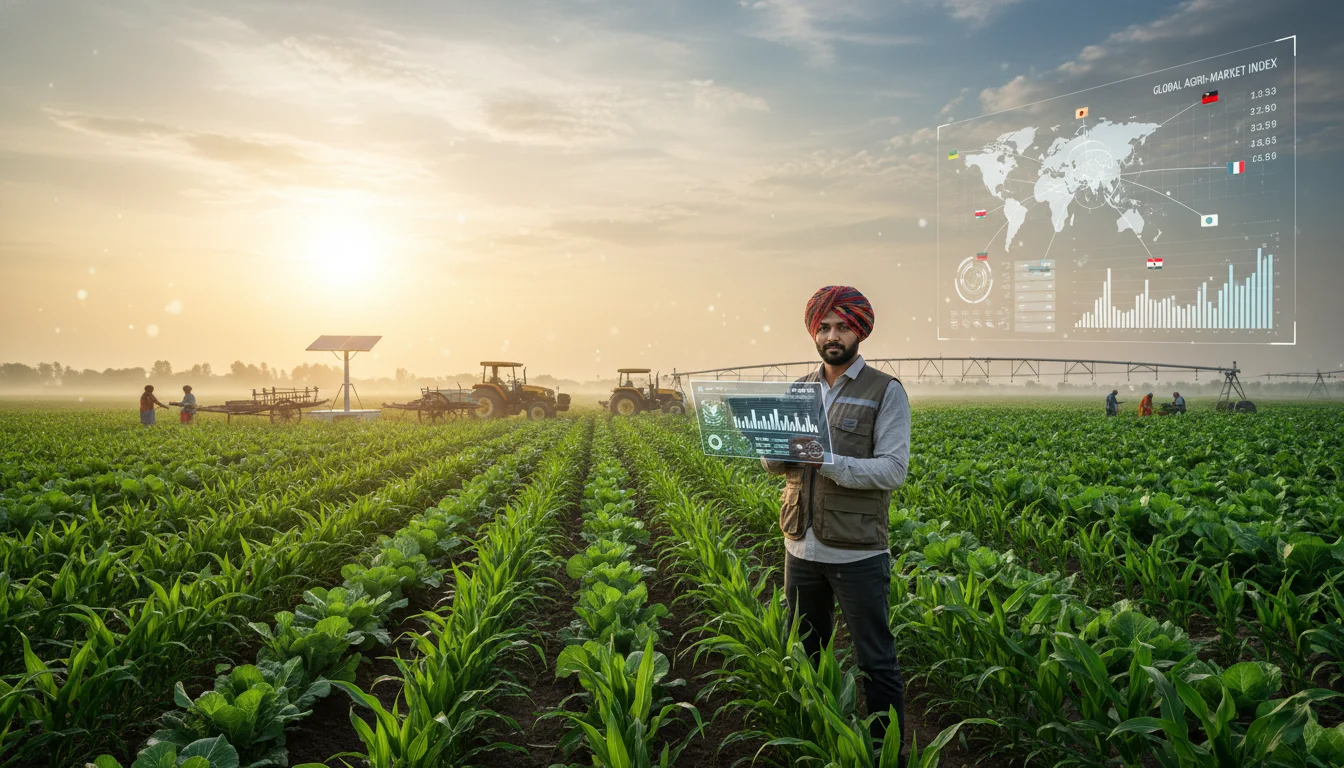
Understanding the nuances of the digital behavior of the Indian population is an absolute prerequisite for agribusinesses and organic brands seeking to penetrate this market. The digital landscape in India has fundamentally shifted from an urban-centric luxury to a ubiquitous, rural-dominated utility, creating unprecedented avenues for both direct-to-farmer (B2B) engagement and direct-to-consumer (B2C) retail.
India’s active internet user base is expanding at a staggering pace. In 2024, the active user base reached 886 million, reflecting an 8% year-over-year growth, and is projected to comfortably exceed 958 million active users by the 2025–2026 period. The most critical demographic shift within this data is that rural India now unequivocally leads this digital surge. With approximately 488 million users, rural areas account for 55% of the nation’s total internet population. While internet penetration in urban areas has begun to plateau, rural regions are witnessing double the growth rate, signaling a massive, untapped potential for agricultural marketing.
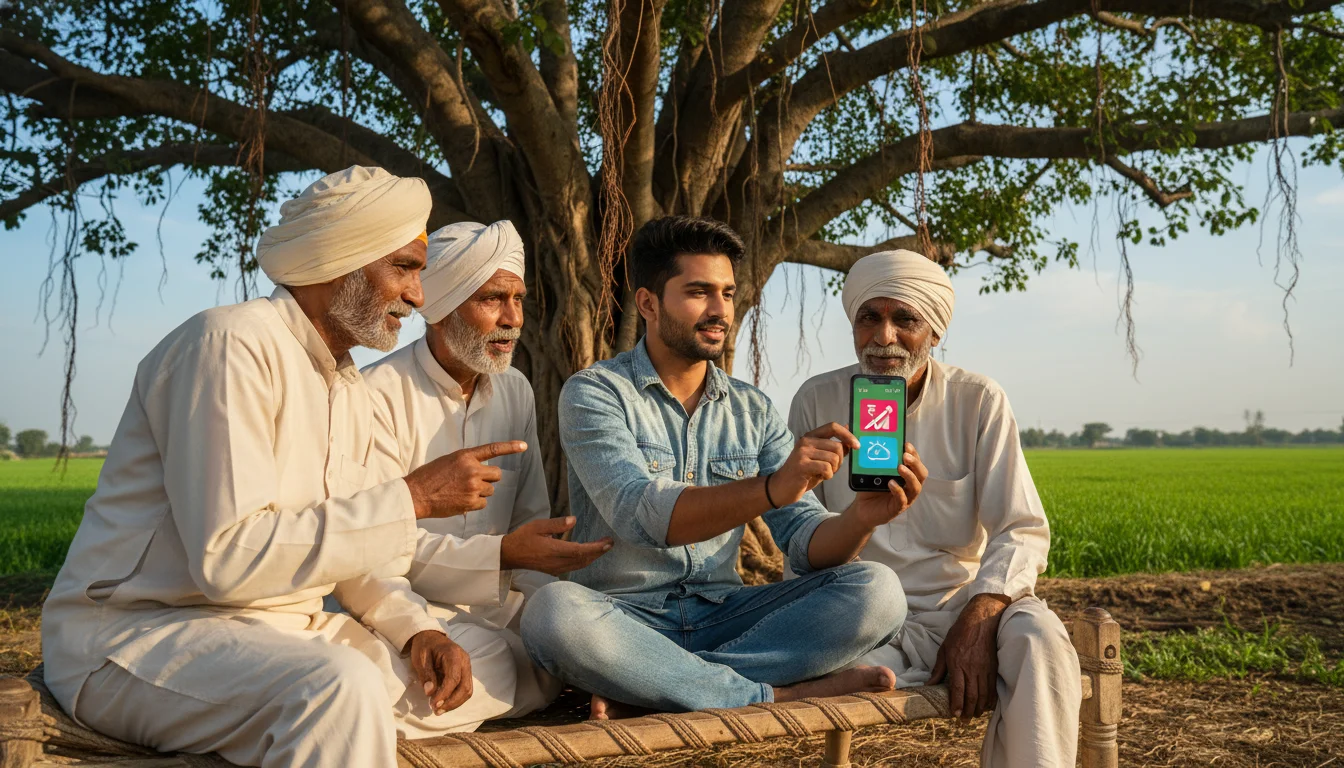
This digital expansion is heavily characterized by the dominance of regional, Indic languages and the rapid adoption of next-generation technologies. Approximately 98% of Indian internet users consume digital content in languages such as Hindi, Tamil, Telugu, and Malayalam, rendering English-only marketing strategies highly ineffective for nationwide scale. Furthermore, Artificial Intelligence (AI) has achieved mass adoption across the subcontinent. Surveys reveal that 44% of internet users are actively utilizing AI-enabled features, particularly voice search and image-based search. In the context of agriculture, voice search is a profoundly transformative tool; it entirely bypasses the barriers of formal text literacy, empowering rural farmers to verbally query real-time market prices, weather conditions, and organic farming techniques in their native dialects.
The platform preferences across India are deeply bifurcated depending on the user’s position within the agricultural value chain. For farmers and agricultural input businesses operating in the B2B space, mobile-first communication is paramount. WhatsApp has emerged as the undisputed leader for peer-to-peer communication, community building, and direct dealer outreach. YouTube serves as the primary educational and discovery hub, where farmers consume long-form, localized video content detailing crop techniques, pest control, and machinery demonstrations. Facebook remains highly relevant for regional community groups and localized agricultural forums. Conversely, for the urban and semi-urban organic consumers operating in the B2C space, the platform hierarchy shifts toward visual and lifestyle-oriented networks. Instagram and YouTube dominate as the primary arenas for lifestyle inspiration, recipe content, and wellness education. E-commerce aggregators such as Amazon, BigBasket, and Zepto, alongside dedicated direct-to-consumer brand websites, function as the primary conversion engines closing the sales loop.
Consumer online behavior regarding organic products is highly sophisticated, heavily scrutinized, and increasingly data-driven. Studies investigating buying patterns reveal that while nearly 89.8% of consumers report consuming organic products at least occasionally, their purchasing decisions are dictated by a rigid hierarchy of factors: availability, price, quality, peer reference, environmental concern, brand reputation, and personal experience. Availability and price remain the primary gatekeepers, but once those criteria are met, the degree of consumer satisfaction is intrinsically tied to the perceived authenticity of the product.
Online buying patterns reveal a massive demand for transparency and social proof.
The modern digital shopper actively seeks out user-generated content, customer reviews, and detailed narratives regarding the product’s origin farm before committing to a premium organic purchase. Furthermore, the digital consumer is increasingly embracing recurring delivery models. Subscriptions for daily organic milk, weekly pesticide-free vegetable baskets, and monthly staple replenishments are becoming commonplace, reflecting a deep-seated consumer desire for health products delivered with frictionless convenience. Simultaneously, rural media consumption has become increasingly hybrid, with rising consumption in convenience categories driving an increase in the rural average basket size from 5.88 in 2022 to 9.3 in 2024. This evolving behavior dictates that digital marketing can no longer rely on static advertisements; it must provide immersive, verifiable, and community-driven digital experiences.
3. Digital Marketing Opportunities
In an industry burdened by high customer acquisition costs, pervasive trust deficits, and profound geographic market fragmentation, digital marketing provides precise, scalable, and highly measurable solutions. By transitioning marketing from a peripheral promotional activity to a core operational strategy, agribusinesses can fundamentally alter their unit economics and brand positioning.
Digital marketing neutralizes the pervasive information asymmetry that plagues the agricultural sector by establishing direct communication conduits between rural producers and urban end-consumers. For B2C organic food brands, the critical challenge of the consumer trust deficit is solved through the strategic deployment of “radical transparency.” High-quality content marketing that visually documents pesticide-free farming methods, rigorous soil health testing, and pristine packaging processes serves as undeniable proof of authenticity, thereby directly justifying the premium retail price point to the skeptical consumer. For B2B agricultural machinery and organic input brands, localized digital campaigns drastically reduce the historical reliance on opaque, traditional dealer networks. This digital disintermediation allows for direct lead generation, predictive AI-driven pricing models, and highly targeted distribution strategies.
The best digital marketing strategies for the Indian agriculture and organic sector require a multi-disciplinary approach, leveraging several distinct channels simultaneously:
- Search Engine Optimization (SEO) serves as the foundational bedrock for long-term, sustainable organic growth. By capturing non-branded, high-intent search traffic—such as users specifically querying “wood pressed mustard oils” or “natural grains”—brands ensure they intercept consumers precisely at the moment they enter the active buying cycle. This strategy is particularly effective for e-commerce platforms seeking to reduce their long-term reliance on paid advertising capital.
- Performance marketing, encompassing Google Ads and Meta Ads (Facebook and Instagram), provides the necessary velocity for quick sales generation and precise demographic targeting. These platforms allow organic brands to deploy hyper-targeted advertising based on nuanced consumer interests, such as targeting users who follow yoga, holistic wellness, or environmental sustainability pages. Furthermore, retargeting campaigns deployed through these networks are highly effective at recovering abandoned shopping carts, which is a notoriously common issue in the premium e-commerce space.
- Content and video marketing are absolute non-negotiables in the current landscape. Transitioning from static text to dynamic video is essential for bridging the knowledge gap. Creating educational content that positions the brand as an authoritative partner—such as disseminating crop care tips and climate-resilient farming techniques for B2B farmers, or providing detailed nutritional breakdowns and recipes for B2C consumers—builds an enduring brand recall that transcends mere transactional relationships.
- Influencer and community marketing has experienced a meteoric rise, giving birth to the phenomenon of the “Agri-influencer.” Leveraging rural creators and farmers who have amassed millions of followers—such as Santosh Jadhav of Indian Farmer, Lakshay Dabas of Organic Acre, and Alen Joseph of Agrotill—provides unmatched peer-to-peer credibility. Influencer marketing effectively bypasses the skepticism associated with corporate advertising by utilizing these trusted, authentic voices to validate product efficacy, explain complex farming equipment, and humanize the brand narrative.
And so on…