Remittance API Security: Best Practices & Compliance
Advanced API Security Architecture for Cross-Border Remittance Gateways

The global cross-border payment ecosystem is experiencing unprecedented transformation and expansion, driven by the rapid digitalization of international commerce and the increasing adoption of real-time payment systems across major financial corridors. Recent macroeconomic analyses indicate that cross-border payment volumes reached $173.8 trillion in 2023, with projections forecasting a compound annual growth rate (CAGR) of 5.3% through 2026. For financial aggregators and digital remittance platforms such as Jyotipunja, integrating with disparate global and regional gateways—including Western Union, MoneyGram, and Prabhu Money Transfer—presents an exceedingly complex technological and security challenge. This complexity is underscored by the reality that approximately 47% of financial institutions experienced security breaches related to cross-border transactions in recent years, with average incident response times lagging at 72 hours.
To safeguard these high-value financial pipelines, the reliance on traditional Transport Layer Security (TLS) and baseline OAuth 2.0 authorization frameworks is no longer adequate. Modern financial-grade security architectures mandate sophisticated defense-in-depth strategies. These strategies must incorporate Mutual TLS (mTLS) for cryptographic client authentication, Certificate-Bound Access Tokens to strictly constrain sender permissions, Message-Level Encryption (MLE) to ensure end-to-end payload confidentiality, and advanced rate-limiting heuristics designed to neutralize automated abuse vectors such as credential stuffing and denial-of-service (DoS) attacks. This report provides an exhaustive technical analysis of these security paradigms and their direct application within the architectural integration of major cross-border remittance gateways.
Regulatory and Compliance Landscape
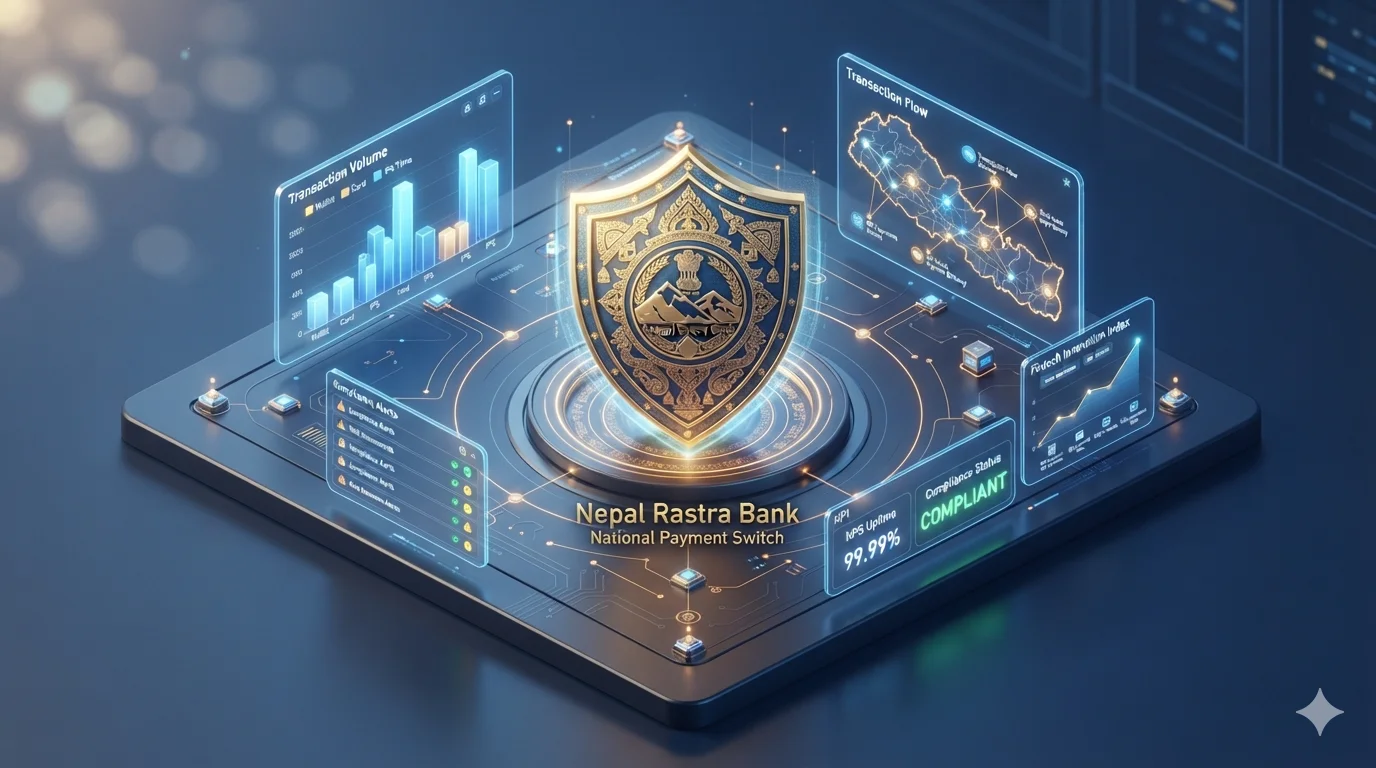
Integrating with domestic and international remittance gateways requires strict adherence to overlapping regulatory frameworks designed to combat money laundering, ensure data privacy, and maintain systemic financial stability. In the context of the Nepalese financial ecosystem, the Nepal Rastra Bank (NRB) exercises rigorous oversight through a series of legislative acts and technological guidelines. The foundational legislation guiding these operations is the Payment and Settlement Act, which mandates that all payment systems and instruments integrate with the National Payment Switch (NPS) to promote interoperability and settle transactions in central bank money.
Nepal Rastra Bank (NRB) Cyber Resilience and Fintech Guidelines
To mitigate the escalating threat of cyber-enabled financial fraud—which more than doubled in Nepal between the 2021/22 and 2022/23 fiscal years—the NRB issued the Cyber Resilience Guidelines in 2023. These guidelines impose stringent technical requirements on licensed Payment System Operators (PSOs) and Payment Service Providers (PSPs). The regulatory framework establishes clear mandates for security architectures, focusing on data localization, encryption, and access control.
| Regulatory Requirement | Technical Standard | Compliance Evidence |
|---|---|---|
| Data Residency | Customer data must be processed exclusively within Nepal or NRB-approved jurisdictions. | Comprehensive data flow documentation and architecture diagrams. |
| Encryption | Cryptographic protection is required for all sensitive data both at rest and in transit. | Independent security audit reports verifying cipher suites and key management. |
| Access Controls | Implementation of strict role-based access control (RBAC) and multi-factor authentication (MFA). | Immutable access logs and identity provider configurations. |
| Audit Logging | System logs must be retained for a minimum of seven years. | Log retention policies and secure storage mechanisms. |
| Vulnerability Assessment | Annual vulnerability assessments and penetration testing (VA/PT) by approved external auditors. | Formal audit certificates and remediation tracking. |
In tandem with cybersecurity mandates, aggregators must comply with Anti-Money Laundering (AML) and Countering the Financing of Terrorism (CFT) obligations. The NRB requires varying levels of Customer Due Diligence based on transactional risk profiles. For low-risk domestic transfers, simplified due diligence may suffice. However, high-risk cross-border remittances necessitate enhanced due diligence, including the verification of the source of funds and continuous transaction monitoring to detect suspicious patterns that must be reported to the Financial Information Unit (FIU-Nepal).
The Regulatory Sandbox Framework
To foster technological innovation without compromising the stability of the financial system, the NRB introduced the Regulatory Sandbox Guidelines, which came into effect in May 2021. The sandbox provides a controlled, supervised testing environment for fintech startups, PSPs, and remittance companies to pilot emerging products—such as new API integrations, digital identity services, and smart contracts—before a full commercial rollout.
Participation in the sandbox offers distinct advantages for integrators developing novel cross-border aggregation models. Participants benefit from temporary waivers on certain operational requirements and gain non-discriminatory, low-cost access to existing banking infrastructure. However, this flexibility is strictly contingent upon maintaining rigorous consumer protection, data privacy, and AML/CFT standards. The evaluation process for sandbox admission is designed to be completed within 120 working days, following a 45-day application window, ensuring that regulatory oversight keeps pace with rapid technological iteration.
Financial-Grade API (FAPI) 2.0 Security Profile
While local regulations dictate compliance baselines, the international standard for securing high-value financial APIs is defined by the OpenID Foundation’s Financial-grade API (FAPI) 2.0 Security Profile. The FAPI framework was specifically engineered for highly regulated industries to ensure robust authentication and secure data sharing, addressing the inherent vulnerabilities in standard OAuth 2.0 implementations.
The predecessor, FAPI 1.0, layered additional security constraints atop standard OAuth 2.0 flows. However, its numerous optional features led to complex and inconsistent implementations across different financial ecosystems. FAPI 2.0 represents a ground-up redesign that simplifies the profile, reduces optionality to ensure consistent behavior, and significantly raises the security bar against advanced threat vectors such as token theft, phishing, and unauthorized access.
The FAPI 2.0 Security Profile eliminates traditional weaknesses by enforcing several mandatory architectural constraints. Foremost among these is the complete prohibition of standard bearer tokens. In traditional OAuth 2.0, a bearer token grants access to anyone possessing it, creating a catastrophic vulnerability if the token is intercepted or exfiltrated. FAPI 2.0 mandates the use of sender-constrained access tokens. Every access token must be cryptographically bound to the specific client that requested it, utilizing either Mutual TLS (mTLS) certificate binding or Demonstration of Proof-of-Possession (DPoP).
Furthermore, FAPI 2.0 revolutionizes the authorization code flow through the mandatory implementation of Pushed Authorization Requests (PAR). Historically, authorization parameters were passed through the front-channel via browser redirects, exposing sensitive data to interception or manipulation. PAR requires the client to push authorization parameters directly to the authorization server via a secure back-channel POST request. The authorization server validates the request and returns a secure, opaque request_uri reference, which the client then utilizes in the front-channel browser redirect, ensuring that no sensitive parameters are exposed to the end-user’s device.
To ensure strong client authentication at the token endpoint, FAPI 2.0 explicitly forbids the use of shared symmetric secrets, such as client_secret_basic. Instead, clients must authenticate using asymmetric cryptography, employing either mTLS (tls_client_auth) or a Private Key JWT (private_key_jwt) assertion. When utilizing Private Key JWT, the client must format the assertion to include the authorization server’s exact issuer identifier as a string within the aud (audience) claim, strictly limiting the assertion’s scope and preventing cross-audience replay attacks. Additionally, where non-repudiation is required, FAPI 2.0 recommends the JWT Secured Authorization Response Mode (JARM), which encapsulates the authorization server’s response in a signed JWT, preventing mix-up attacks and ensuring the response cannot be replayed to different clients.
Advanced OAuth 2.0 and Mutual TLS (mTLS) Authentication
The integration of remittance gateways relies heavily on RFC 8705: OAuth 2.0 Mutual-TLS Client Authentication and Certificate-Bound Access Tokens. This specification addresses the asymmetrical trust model of traditional TLS and fundamentally alters how OAuth 2.0 clients authenticate and how access tokens are validated. It is critical to recognize that RFC 8705 encompasses two distinct, computationally independent mechanisms: mTLS Client Authentication and Certificate-Bound Access Tokens. An architecture can utilize one without the other, though high-security environments invariably deploy both.
Mutual TLS (mTLS) Client Authentication Mechanics
In a conventional TLS setup, authentication is entirely unilateral. The server presents an X.509 certificate to prove its identity, assuring the client that it has connected to the intended destination. However, at the transport layer, the server remains completely unaware of the client’s identity.
Client authentication is consequently deferred to the application layer, typically relying on credentials such as API keys or client secrets, which are susceptible to compromise.
Mutual TLS addresses this asymmetry by establishing a bidirectional trust relationship during the initial TLS handshake. The process begins when the client initiates a TLS session with the authorization server’s token endpoint. Following the server’s presentation of its certificate, it issues a CertificateRequest to the client. The client responds by presenting its own X.509 certificate.
Crucially, the mere presentation of a certificate is insufficient, as public certificates can be freely copied. To prove cryptographic ownership, the client must send a CertificateVerify message. This message contains a digital signature generated over the previous handshake messages using the private key corresponding to the public key embedded in the client’s certificate. Because this signature is mathematically impossible to forge without possession of the private key, the client’s identity is unequivocally validated at the transport layer.
RFC 8705 formally defines two methodologies for mTLS client authentication within the OAuth 2.0 framework:
PKI-Based Method (tls_client_auth)
- Trust Model and Validation Process: The authorization server validates the client’s certificate against a trusted Certificate Authority (CA) or Public Key Infrastructure (PKI). Validation includes checking the certificate chain, verifying revocation status, and matching the certificate’s Subject Distinguished Name (DN) to pre-registered metadata.
- Operational Considerations: Offers high assurance and integrates well into enterprise environments, but requires secure distribution of initial public keys and robust PKI management.
Self-Signed Certificate Method (self_signed_tls_client_auth)
- Trust Model and Validation Process: The client utilizes a self-signed certificate. The authorization server validates the certificate by comparing its public key against a pre-registered JSON Web Key (JWK) Set provided by the client during dynamic client registration.
- Operational Considerations: Simplifies certificate rotation, as clients can independently update their JWK Sets without requiring the authorization server to reconfigure trust anchors. The primary trust relies on the secure registration of the JWKS.
Regardless of the method chosen, RFC 8705 stipulates that the client must explicitly include its client_id in the token request. The authorization server must not attempt to implicitly deduce the client’s identity solely from the certificate’s contents, ensuring unambiguous identification.
Certificate-Bound Access Tokens (Sender-Constrained Tokens)
While mTLS client authentication hardens the token endpoint against unauthorized access, it does not inherently protect the resulting access token from theft or misuse. If an attacker manages to intercept an access token issued after a successful mTLS authentication, they could theoretically present that token to a resource server from a different machine. To eliminate this risk, RFC 8705 introduces Certificate-Bound Access Tokens, also known as sender-constrained tokens.
The mechanism operates by cryptographically tethering the access token to the specific TLS certificate presented by the client during authentication. When the authorization server issues the access token, it computes the SHA-256 hash (thumbprint) of the client’s mTLS certificate. This thumbprint is embedded directly into the access token—typically formatted as a JSON Web Token (JWT)—within a specific confirmation claim denoted as cnf. The cnf claim contains an x5tS256 member holding the Base64URL-encoded thumbprint.
When the client attempts to execute a transaction at the resource server, a complex, multi-step validation sequence occurs:
- The client establishes an mTLS connection with the resource server, presenting its X.509 certificate during the handshake.
- The client transmits the certificate-bound access token within the HTTP Authorization header.
- The resource server independently calculates the SHA-256 thumbprint of the client certificate presented at the transport layer.
- The resource server inspects the access token, extracting the expected thumbprint from the cnf claim.
- The server strictly compares the computed thumbprint against the embedded thumbprint.
If the thumbprints match identically, the request is authorized, proving that the client presenting the token is the exact same client to whom the token was originally issued. If a malicious actor attempts to replay a stolen token, the request will inevitably fail because the attacker lacks the corresponding private key required to establish the underlying mTLS connection with the resource server. This architecture entirely neutralizes the threat of stolen access tokens, transforming them from vulnerable bearer instruments into secure, proof-of-possession credentials.
Message-Level Encryption (MLE) for End-to-End Payload Security
While mutual TLS provides exceptional security at the transport layer, modern financial architectures rarely consist of simple point-to-point connections. Remittance integrations traverse highly complex network topologies involving intermediate components such as API gateways, load balancers, Web Application Firewalls (WAFs), and service meshes. In these multi-hop environments, TLS connections are frequently terminated at the network edge to facilitate traffic inspection and routing. This termination momentarily decrypts the traffic, leaving highly sensitive financial data—such as Personal Account Numbers (PAN), transaction amounts, and Personally Identifiable Information (PII)—exposed in plaintext within the internal network perimeter.
To achieve genuine end-to-end confidentiality and data integrity, independent of the underlying transport mechanism, remittance gateways enforce Message-Level Encryption (MLE). MLE encrypts the actual API payload at the application layer. Consequently, even if an intermediary appliance terminates the TLS connection, the payload itself remains a mathematically indecipherable cipher block.
Cryptographic Implementation of MLE via JWE and JWS
MLE in modern financial systems is predominantly implemented using the JSON Object Signing and Encryption (JOSE) framework, specifically utilizing JSON Web Encryption (JWE) and JSON Web Signatures (JWS). This standard allows structured financial payloads to be secured through asymmetric cryptography.
The most robust implementation of MLE utilizes a Nested JWE architecture, widely referred to as the Sign-then-Encrypt pattern. This pattern provides both absolute confidentiality and irrefutable non-repudiation. The cryptographic workflow proceeds as follows:
- Digital Signature (JWS): The sender first digitally signs the plaintext JSON payload using their own private key. This ensures data integrity—proving the payload has not been tampered with—and authenticity, confirming the sender’s exact identity.
- Payload Encryption (JWE): The sender then encrypts the signed payload using the recipient’s public key. Because asymmetric encryption is computationally expensive and ill-suited for large payloads, the system employs a hybrid approach. The sender generates a single-use symmetric Content Encryption Key (CEK). The actual signed payload is encrypted using this symmetric CEK via a highly efficient algorithm, such as Advanced Encryption Standard in Galois/Counter Mode (AES-GCM) with a 128-bit or 256-bit key size. The symmetric CEK is subsequently encrypted using the recipient’s public key, typically employing RSA Optimal Asymmetric Encryption Padding (RSA-OAEP) with a minimum 2048-bit key size.
The final output is a compact JWE token consisting of five distinct, Base64URL-encoded segments separated by periods:
- JOSE Header: Contains metadata defining the cryptographic algorithms employed, the timestamp (iat), and the Key ID (kid) indicating which public key was used.
- JWE Encrypted Key: The symmetric CEK, encrypted with the recipient’s public key.
- JWE Initialization Vector: A cryptographically random nonce used by the AES-GCM algorithm to ensure that identical plaintexts do not produce identical ciphertexts.
- JWE Additional Authentication Data (AAD): Data that is integrity-protected but not encrypted, typically mirroring the JOSE header.
- JWE Ciphertext and Authentication Tag: The encrypted payload itself, followed by an authentication tag generated by the GCM mode to verify the integrity of the ciphertext and AAD during decryption.

This architecture dictates strict cryptographic isolation between the request and response cycles. The client must utilize the server’s public key to encrypt outgoing requests, while the server relies on the client’s public key to encrypt the corresponding responses. This ensures that neither party can decrypt messages not explicitly intended for them, satisfying the most stringent regulatory requirements for safeguarding Personal Account Information (PAI).
API Rate Limiting and Traffic Throttling Algorithms
Exposing critical remittance APIs to the public internet inherently invites volumetric attacks, resource exhaustion, and economic abuse. Rate limiting serves as the primary defense mechanism by meticulously monitoring and controlling the volume of requests a client can execute within a defined temporal window.
By establishing rigid thresholds, rate limiting ensures equitable resource allocation among consumers while rendering automated attacks—such as brute-forcing, enumeration, and Denial-of-Service (DoS)—economically infeasible.
Comparative Analysis of Rate Limiting Algorithms
The efficacy of a rate-limiting strategy is entirely dependent upon the underlying mathematical algorithm. Different algorithms present distinct trade-offs concerning computational overhead, memory footprint, precision, and tolerance for legitimate traffic bursts. The financial sector relies on several core methodologies:
| Algorithm | Operational Mechanism | Advantages | Limitations | Optimal Use Case |
|---|---|---|---|---|
| Fixed Window | Divides time into strict, non-overlapping intervals (e.g., 60 seconds). A counter increments with each request and resets entirely at the window’s boundary. | Exceptional simplicity; minimal computational overhead; highly memory efficient as it requires storing only one integer per client. | Highly vulnerable to the “boundary burst” phenomenon. A client can exhaust their quota in the final second of one window and immediately exhaust the next quota in the first second of the new window, effectively doubling the permitted rate over a two-second period. | Internal microservices, low-risk endpoints, or simple public APIs where occasional bursts do not threaten infrastructure stability. |
| Sliding Window Log | Maintains a continuously updated, timestamped log of every single request made by a client. When evaluating a new request, it discards timestamps older than the rolling window and counts the remainder. | Provides flawless accuracy; completely eliminates boundary edge cases and ensures perfectly fair distribution of limits based on actual recent activity. | Extremely memory-intensive; high computational cost to continuously prune arrays of timestamps, especially in high-throughput environments. | High-value transactional APIs, financial gateways, and systems where absolute precision supersedes performance overhead. |
| Sliding Window Counter | A hybrid approach that stores simple counts for the current and previous fixed windows. It calculates a weighted average based on the exact percentage of time elapsed in the current window. | Delivers high accuracy and successfully prevents boundary bursts while requiring vastly less memory than a full sliding log (storing only two integers per client). | Relies on mathematical approximation assuming a uniform distribution of requests in the previous window, which can lead to minor inaccuracies in extreme edge cases. | Large-scale distributed systems requiring fairness and efficiency without the prohibitive memory costs of full logging. |
| Token Bucket | A virtual bucket is continuously refilled with tokens at a steady, predefined rate up to a maximum capacity. Each incoming request consumes exactly one token. Requests are rejected if the bucket is empty. | Naturally accommodates legitimate, short-term traffic bursts (up to the bucket’s capacity) while strictly enforcing the long-term average rate; low memory footprint. | Requires meticulous tuning; if the bucket capacity is set too high, an accumulated burst of tokens can still overwhelm sensitive downstream database connections. | Standard API platforms, SaaS products, and mobile applications characterized by variable, spiky traffic patterns. |
| Leaky Bucket | Requests enter a queue acting as a bucket. The system processes requests from the queue at a strictly constant rate, regardless of how fast they arrive. | Effectively smooths out chaotic traffic spikes, converting them into a predictable, highly uniform outflow rate that protects legacy downstream systems. | A sudden surge of legitimate traffic can fill the queue, causing significant latency or dropped requests for valid users during high-volume periods. | Asynchronous processing pipelines, background batch operations, and systems demanding strictly uniform workloads. |
In advanced architectural deployments, rate limit states are frequently maintained in fast, shared in-memory datastores such as Redis, ensuring that limits are enforced uniformly across all server instances and survive application restarts. For optimal performance, distributed rate limiters utilize atomic operations. For example, a basic fixed-window counter in Redis relies on executing the INCR (increment) and EXPIRE commands within a MULTI transaction block, ensuring the counter is atomically updated and assigned a time-to-live without race conditions.
To calculate the Sliding Window Counter efficiently, systems retrieve the counts for the previous and current window and apply a constant-time formula. This mathematical approximation allows the system to validate a request instantly, regardless of whether the limit is 10 or 1,000,000, ensuring the rate limiter fails fast and cheap.
Standardized Client Communication and HTTP Headers
When a client exceeds the established limit, the API gateway must decisively reject the request, returning an HTTP 429 Too Many Requests status code. Transparent communication is critical to allow integrating clients to implement proper exponential back-off logic. This is achieved by exposing standardized RateLimit headers in the HTTP response:
- X-RateLimit-Limit: Defines the absolute maximum number of requests permitted within the specified time window.
- X-RateLimit-Remaining: Indicates the exact number of requests remaining in the current window before throttling will occur.
- X-RateLimit-Reset: Provides the UNIX timestamp (or the number of seconds remaining) detailing precisely when the client’s quota will be replenished.
- Retry-After: A standard HTTP header explicitly instructing the client exactly how many seconds to wait before transmitting another payload.
Defending Against Credential Stuffing and Automated Bot Abuse
While sophisticated rate limiting protects infrastructure from brute-force resource exhaustion, it is often insufficient against targeted, distributed attacks such as credential stuffing. Credential stuffing occurs when malicious actors utilize automated bots to rapidly test massive databases of compromised username and password combinations—harvested from unrelated breaches—against a platform’s authentication endpoints.
These attacks are deliberately engineered to bypass traditional security controls. Attackers execute “low and slow” campaigns, distributing their requests across thousands of unique IP addresses utilizing residential proxy networks or botnets. By ensuring that any single IP address only makes a handful of requests per hour, the attackers effortlessly stay beneath standard per-IP rate-limiting thresholds.
Diagnostic Heuristics and Threat Identification
Identifying a sophisticated credential stuffing attack requires security operations teams to analyze telemetry far beyond simple request volume. Defenders must cross-reference logs across the Web Application Firewall (WAF), authentication services, and Identity Providers (IdPs) to identify specific indicators of compromise.
The primary heuristics indicating an active credential stuffing attack include:
- Anomalous Source Distribution: A drastic spike in the overall login failure rate, while the per-IP attempt count remains suspiciously low. This indicates deliberate traffic distribution to evade detection.
- Scattered Account Touchpoints: Rather than hammering a single account repeatedly (which indicates a targeted brute-force attack), the failed logins and subsequent account lockouts are spread thinly across thousands of unrelated user accounts.
- Cryptographic Fingerprint Mismatches: While the HTTP request may present a User-Agent string claiming to be a legitimate browser (e.g., Chrome or Safari), an analysis of the TLS handshake fingerprint (such as the JA3 hash) reveals the underlying engine is actually an automated scripting library, such as Python’s requests or Golang’s http package.
- Sequential Authentication Failures: An unexplained increase in Multi-Factor Authentication (MFA) challenges being triggered but never completed, or a sudden surge in automated password reset requests following failed login attempts.
Comprehensive Countermeasures and Bot Mitigation
To effectively neutralize credential stuffing on sensitive financial gateways, platforms must deploy intelligent, multi-layered defenses leveraging edge computing and behavioral analysis.
Foremost is the deployment of Web Application Firewall (WAF) Bot Control. Advanced managed rulesets analyze traffic patterns at the network edge to identify and block requests originating from known malicious botnets, bulletproof hosting providers, and anonymizing VPNs before they reach the API gateway.
To counter distributed attacks that bypass IP reputation filters, engineering teams must implement Multi-Key Rate Limiting. Rather than limiting requests based solely on the IP address, the rate limiter aggregates counts using composite keys, such as IP + Username or IP + Device Fingerprint. This architectural shift ensures that a single IP address cannot rapidly iterate through thousands of unique usernames, effectively neutralizing the core mechanism of credential stuffing. Furthermore, implementing response-based counting focuses the rate limiter strictly on penalizing malicious behavior. By configuring the WAF to track the rate of specific HTTP error codes (e.g., HTTP 401 Unauthorized or HTTP 403 Forbidden) on the login route, the system aggressively throttles failed authentication attempts without inadvertently blocking legitimate users generating high volumes of valid traffic.
For highly dynamic threat mitigation, aggregators leverage serverless edge compute platforms, such as AWS Lambda@Edge.
These functions inspect incoming requests globally, allowing for the execution of custom logic prior to WAF evaluation. If a request profile exhibits anomalous behavior—such as a sudden velocity spike from a previously dormant geographic region—the edge function can dynamically inject progressive friction into the flow. This involves serving a CAPTCHA challenge or demanding secondary PIN verification, ensuring that suspected bots are forced to prove human interaction before accessing the authentication endpoint.
Partner-Specific Integration Profiles: Western Union, MoneyGram, and Prabhu
The practical implementation of these security best practices is not uniform; it varies significantly across the global remittance ecosystem. As a financial aggregator, Jyotipunja’s internal architecture must possess the flexibility to adapt to the highly specific, and sometimes idiosyncratic, security constraints enforced by each partner gateway.
Western Union API Security Architecture
Western Union’s API Banking architecture demands an exceptionally high degree of security compliance, reflecting a mature, institutional-grade implementation designed to protect massive transactional flows.
The foundational requirement is Transport Layer Security, where Western Union strictly mandates that all API calls occur over mTLS 1.2, instantly rejecting legacy protocols and unauthenticated clients at the transport level. The authentication framework heavily leverages the OAuth 2.0 protocol, requiring the client to present registered keys and secrets alongside their certificate.
However, Western Union distinguishes itself by enforcing rigorous Message Layer Security. Every API request parameter and the entirety of the payload must be digitally signed using a secure, client-specific private key. This cryptographic signature provides absolute non-repudiation and ensures that the payload cannot be intercepted, altered, or forged while traversing the internet between the integrating client and the Western Union gateway, acting as a functional equivalent to the JWS signing phase of Message-Level Encryption.
MoneyGram API Integration Dynamics
The MoneyGram developer platform utilizes a more traditional OAuth 2.0 Client Credentials flow, placing a significant burden on the integrating application to implement robust internal credential management and strict session handling.
To initiate a session, partners receive a unique Client ID and Client Secret, which must be stored securely. These credentials are submitted via an HTTP POST request to the /oauth/accessToken endpoint to generate a Bearer access token. The resulting token is valid for exactly one hour and must be injected into the Authorization header of all subsequent API calls. Because this architecture relies on Bearer tokens rather than sender-constrained tokens, the integrator must prioritize token protection, as any exfiltration of the token grants the attacker immediate access to the API.
The MoneyGram API places a strong emphasis on system resilience and idempotency to prevent catastrophic errors such as double-charging a consumer. If the integrating application calls the Commit a Transaction endpoint and fails to receive a response within 5 to 10 seconds, it is contractually obligated to retry the request. To facilitate this without generating duplicate transactions, the API requires an idempotency key—typically a UUID—passed within the X-MG-ClientRequestId header.
Furthermore, MoneyGram enforces complex, real-time compliance screening during the Update a Transaction phase. Depending on the destination country or the transaction amount, enhanced due diligence may be triggered dynamically. If this occurs, the API halts the transaction and returns an HTTP 400 Bad Request alongside an array specifying the exact data fields (e.g., date of birth, primary identification) that the client must collect from the user and resubmit before the transaction is permitted to proceed to the commit phase.
Prabhu Money Transfer Regulatory Alignment
Prabhu Money Transfer operates primarily within the Indo-Nepal remittance corridor. As a registered entity under the laws of India and operating as a Business Correspondent in Nepal, its technical architecture is heavily dictated by domestic regulatory compliance rather than purely international API standards.
To ensure strict compliance with AML regulations, Prabhu implements rigid velocity and volume limits based on the user’s Know Your Customer (KYC) status. For instance, the system limits non-KYC customer transactions to a maximum of Rs 75,000 per month across dual wallet systems. These hardcoded constraints force high-value transactors into enhanced due diligence flows, automatically mitigating the risk of large-scale money laundering.
Furthermore, to protect against unauthorized fund reversals and ensure non-repudiation during edge cases, Prabhu secures all refund operations in the event of transaction failures using OTP (One Time Password) verification mechanisms. As Prabhu operates extensively within the Nepalese ecosystem overseen by the NRB, its infrastructure and API endpoints increasingly align with the objectives of the National Payment Switch (NPS). This alignment requires adherence to strict domestic interoperability standards and ensures that all domestic transactions are ultimately settled utilizing central bank money via the Real-Time Gross Settlement (RTGS) system.
Strategic Architecture Recommendations
Securing a high-volume financial aggregator integrating with diverse gateways necessitates transitioning away from legacy perimeter defenses toward a comprehensive Zero Trust API architecture. Based on the analysis of international standards, regulatory mandates, and specific partner configurations, the following architectural implementations are critical for maintaining a secure and compliant remittance pipeline.
The foremost priority is the enforcement of cryptographic token binding. Relying on standard OAuth 2.0 Bearer tokens poses an unacceptable systemic risk in the event of token exfiltration. Wherever supported by partner gateways, the architecture must transition to Certificate-Bound Access Tokens as defined in RFC 8705. By embedding the SHA-256 thumbprint of the client’s mTLS certificate into the token’s cnf claim, session access is mathematically tethered to the physical possession of the client’s private key, rendering stolen tokens entirely useless to an attacker.
To address the vulnerability of data in transit across multi-hop networks, the implementation of Message-Level Encryption (MLE) is paramount. Because transport-layer encryption (TLS) is frequently terminated at edge appliances such as load balancers and WAFs, highly sensitive attributes—including KYC documentation and Personal Account Numbers—must be encapsulated within Nested JWE payloads. This ensures end-to-end confidentiality and non-repudiation, guaranteeing that the data remains cryptographically sealed from the originating application directly through to the core banking ledger.
Protecting the availability and integrity of the API infrastructure requires the adoption of multi-layered rate limiting and sophisticated bot mitigation. The implementation of a Sliding Window Counter algorithm, backed by a distributed Redis cache, will provide highly accurate, memory-efficient quota management that smoothly handles legitimate traffic bursts without the vulnerability of boundary exploits. Concurrently, this volume-based limiting must be augmented by response-based WAF rules tied to HTTP 401/403 errors and multi-key aggregation (e.g., IP + Device Fingerprint). This targeted approach rapidly identifies and throttles the distributed, low-velocity traffic indicative of credential stuffing attacks, neutralizing automated threats before they stress internal authentication services.
Finally, the overarching architecture must align with both international best practices and domestic legal mandates. Internal API endpoints should be upgraded to meet the OpenID Foundation’s FAPI 2.0 Security Profile, actively deprecating the use of shared symmetric secrets in favor of asymmetric private_key_jwt assertions or mTLS client authentication. Furthermore, strict enforcement of data localization, at-rest encryption, and comprehensive audit logging is required to remain fully compliant with the Nepal Rastra Bank’s Cyber Resilience Guidelines and AML/CFT directives. By embedding these advanced cryptographic controls and traffic-shaping heuristics into the core aggregation engine, the platform can securely and efficiently route international capital while remaining resilient against an increasingly hostile digital threat landscape.