Orthodontist Reputation Management: Best Tools & Guide
Strategic Analysis of Automated Reputation and Review Management Systems in Orthodontic Practices
Executive Summary
The orthodontic sector is undergoing a profound and irreversible digital transformation. In the contemporary healthcare marketplace, a practice’s online reputation has evolved from a passive digital directory listing into a primary, algorithmic driver of patient acquisition, clinical revenue, and overall enterprise valuation. As a highly specialized, predominantly private-pay medical field, orthodontics is exceptionally sensitive to consumer sentiment and brand perception. Prospective patients and their families increasingly bypass traditional referral networks, relying instead on localized search engine results and aggregate online review scores to make high-ticket healthcare decisions. Consequently, the operational mechanisms by which orthodontic practices solicit, manage, and leverage patient feedback have necessitated a structural shift from manual, staff-dependent processes to fully automated, software-driven ecosystems.
This comprehensive research report evaluates the landscape of automated reputation and review management tools tailored specifically for orthodontic and dental practices for the 2024–2026 operational period. The analysis synthesizes macro-industry dynamics, Practice Management Software (PMS) integrations, vendor capabilities, technical architecture, economic returns on investment (ROI), and the broader implications of artificial intelligence (AI) in patient communications. By exhaustively examining platforms such as Birdeye, Swell CX, Podium, Weave, rater8, Solutionreach, and Curogram, alongside their technical synergy with core orthodontic PMS architectures like Dolphin Management, Cloud 9 Ortho, Ortho2 Edge Cloud, and TopsOrtho, this document provides a definitive, data-driven guide for practitioners, Dental Service Organizations (DSOs), and operational leaders seeking to optimize their digital presence and modernize their patient acquisition workflows.
The Macroeconomic and Industry Context for Orthodontics
To understand the critical necessity of automated review management infrastructure, one must first examine the broader macroeconomic and demographic forces currently shaping the orthodontic industry. Reputation management does not operate in a vacuum; it is a direct response to prevailing market pressures.
Production Trends and Evolving Demographics
Recent industry data drawn from the American Association of Orthodontists (AAO) 2025 Economics of Orthodontics and Patient Census Survey indicates positive momentum in practice performance. Survey respondents reported an average production per doctor in 2024 of $1,588,744, representing a 3.5% increase over previous periods. This growth underscores a robust, inelastic demand for orthodontic services. Concurrently, orthodontist compensation is reflecting this growth, with 40% of respondents reporting a salary increase in 2024 compared to 2023, and the average reported salary surging by 16% compared to 2022 survey data.
However, beneath these positive top-line metrics lies a shifting demographic landscape. The data reveals a significant gender and generational divergence in career trajectories. Female respondents were substantially more likely to join a Dental Service Organization (DSO) or Orthodontic Service Organization (OSO) as their first career opportunity (47%) compared to male respondents (20%). Younger practitioners overall are overwhelmingly migrating toward corporate dentistry and DSOs rather than pursuing independent solo practice ownership. This migration toward consolidated platforms means that the technological stacks utilized by these organizations must be highly scalable, centralized, and capable of managing brand reputation across dozens or hundreds of geographic locations simultaneously.
Labor Constraints and Operational Bottlenecks
While production is growing, it is simultaneously pressured by ongoing labor constraints, staffing shortages, and economic volatility, which threaten to erode profit margins. The recruitment and retention of skilled front-desk personnel and treatment coordinators remain acute challenges for clinical directors. In this constrained labor environment, relying on front-desk staff to manually solicit Google, Yelp, or Healthgrades reviews during the checkout process is an inherently flawed operational strategy.
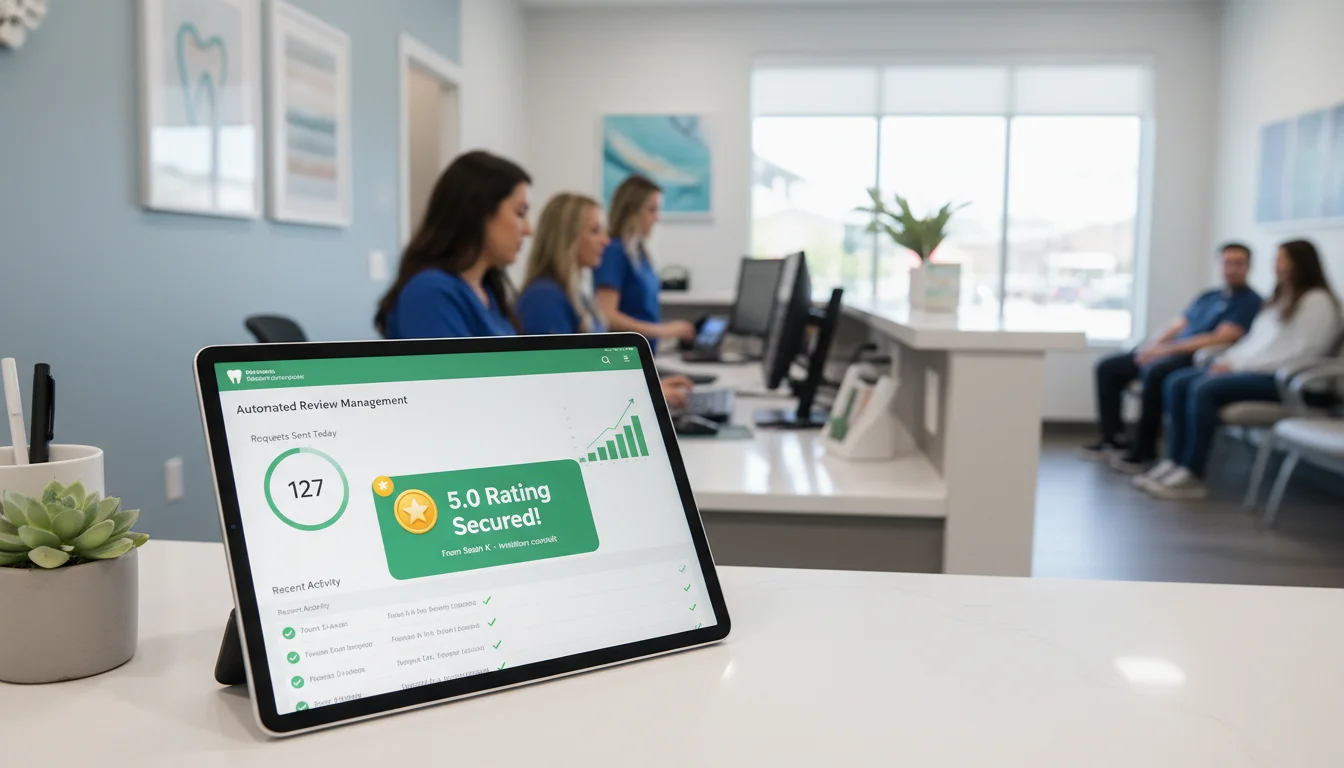
Front-desk staff must manage 30 to 50 complex patient interactions daily, juggling payment processing, insurance verification, future scheduling, and inbound phone inquiries. When tasked with asking for an online review, this objective is invariably the first operational casualty during peak office hours. The failure to generate reviews is rarely a reflection of poor clinical quality or staff apathy; rather, it is a systemic failure of workflow. The implementation of automated reputation management software directly mitigates this labor constraint by offloading a critical marketing function to background algorithms, thereby protecting human bandwidth while guaranteeing a consistent, unflagging pipeline of patient feedback.
Industry Consolidation and Enterprise Valuations
The orthodontic market is experiencing rapid and unprecedented consolidation. Private Equity (PE) firms and DSOs are aggressively acquiring independent practices to build regional and national networks. According to healthcare merger and acquisition data for the 2025 period, platform orthodontic groups commonly trade at enterprise values between 9 to 11 times EBITDA, while smaller add-on practices typically achieve multiples of 5 to 8 times EBITDA. A primary driver of these elevated valuations is the specialty’s recurring revenue model and a private-pay base that frequently exceeds 70% of total revenue, which attracts investors seeking margin protection against insurance reimbursement compression.
For DSOs and independent practices alike, maintaining a dominant local search presence through high review volumes is a critical lever for sustaining and inflating these valuations. A practice that completely dominates local Google search results through a superior, automated review profile commands a significantly higher acquisition premium. This is because a robust organic digital presence demonstrates a sustainable patient acquisition channel that is not wholly dependent on expensive, variable paid advertising campaigns. Consequently, reputation management software is increasingly viewed not merely as a marketing expense, but as a core driver of enterprise asset value.
The Psychology, Mechanics, and SEO of Patient Choice
The methodology by which patients select an orthodontist has fundamentally shifted, mirroring broader consumer e-commerce trends. The traditional model of receiving a paper referral from a general dentist and immediately booking a consultation is obsolete. Today, the patient journey is highly fragmented and digitally mediated.
The Dominance of the Digital Trust Signal
Research across the dental and orthodontic sectors indicates that 92% of consumers consult online reviews before selecting a local business. In the context of orthodontics—where comprehensive treatment fees frequently exceed $5,000—digital trust signals are paramount. A potential patient or parent can decide whether to contact a business in a matter of seconds, based almost entirely on what appears in the Google Local Pack on their mobile device. Outdated information, unanswered negative reviews, or a simple lack of recent positive feedback can quietly cost a practice highly lucrative leads before an initial phone call is ever made.
Orthodontic search engine optimization (SEO) is heavily reliant on these localized signals. Google’s algorithm prioritizes practices that exhibit three core review characteristics: volume, average rating, and recency. A practice that generates 50 reviews a month on autopilot signals constant operational relevance and high foot traffic to the search algorithm, vastly outperforming a legacy practice with 500 reviews that has not received a new rating in six months. Furthermore, AI-driven platforms that auto-generate keyword-rich replies to patient reviews create fresh, indexed content on the Google Business Profile, continually reinforcing the practice’s relevance for highly competitive search queries such as “Invisalign near me” or “best pediatric orthodontist”.
The Trigger Mechanism and Workflow Automation
To harness this SEO flywheel effect, automated reputation management platforms must integrate deeply with a clinic’s PMS. This structural integration eliminates human error. The most sophisticated systems utilize Application Programming Interfaces (APIs) or HL7 data feeds to constantly monitor the PMS appointment ledger.
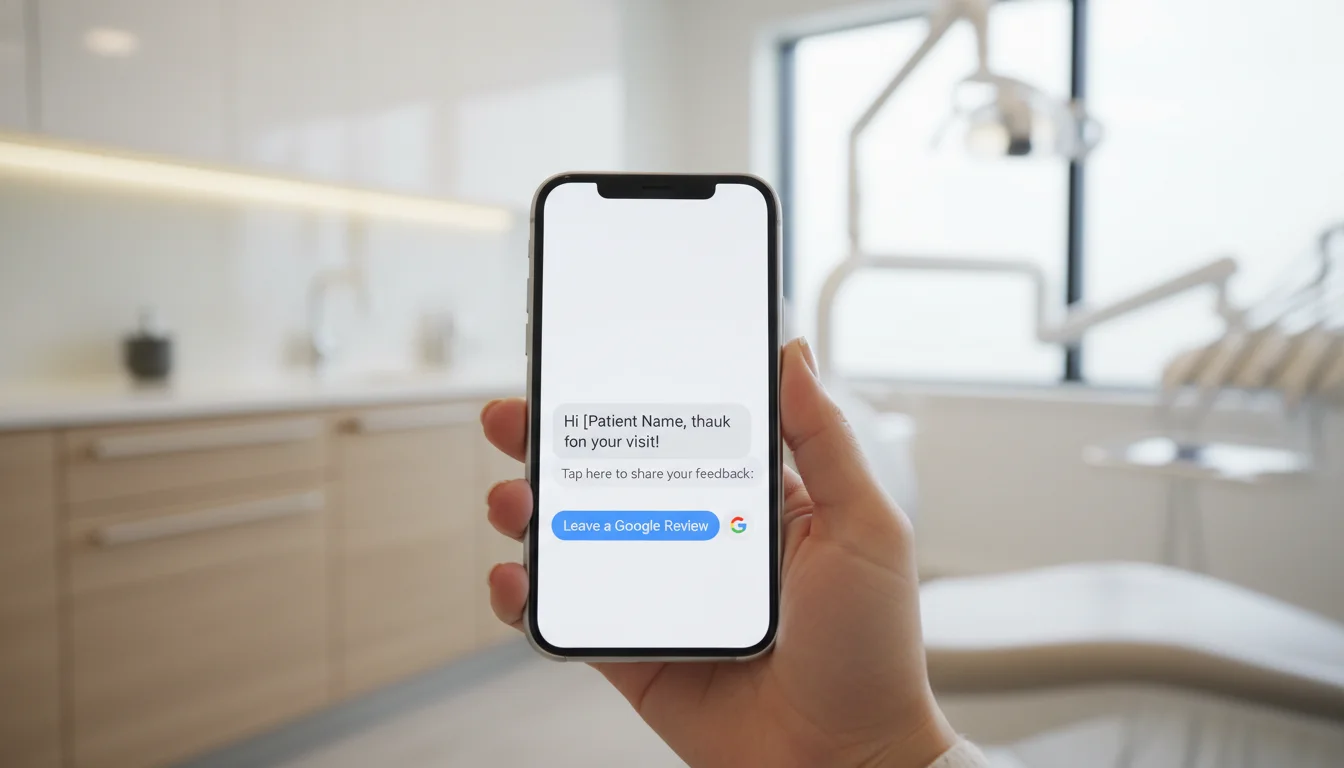
When an appointment status is altered by clinical staff to “Completed” or “Dismissed,” the reputation management software initiates a complex automated sequence. First, the system extracts the patient’s demographic data, contact information, the specific appointment type, and the attending provider’s details. Next, advanced platforms apply configurable timing logic. For example, a request following a “Debonding” (braces removal) appointment might be triggered within 30 minutes to capture the patient at the absolute peak of their emotional satisfaction and esthetic excitement. Conversely, a routine wire adjustment might trigger a request 24 hours later, while a new patient consultation might receive a request the following morning. Finally, a highly personalized SMS text message or email is dispatched. SMS is overwhelmingly favored by modern software vendors due to open rates that consistently exceed 90%, compared to the fractionally low engagement rates of traditional email.
Friction Elimination: The “One-Text, One-Tap” Paradigm
The primary mathematical variable determining the success of a review generation campaign is friction.
Systems that require patients to click through multiple intermediary screens, log into proprietary patient portals, or answer lengthy multi-page surveys suffer from severe engagement attrition. Every additional tap required is another point where the review process is abandoned.
The modern standard for review generation, exemplified by platforms such as Curogram and Swell CX, utilizes a frictionless “One-Text, One-Tap” methodology. The patient receives an SMS message, taps the embedded hyperlink, and is instantly deposited onto the practice’s Google Business Profile review interface, with five stars pre-populated in some configurations. This frictionless environment is responsible for generating astronomical review volumes. By reducing the cognitive load on the user, these platforms convert everyday clinical satisfaction into public digital assets in under sixty seconds.
The Imperative of HIPAA Compliance in Digital Workflows
Orthodontic and dental practices operate within strict regulatory frameworks regarding Protected Health Information (PHI). Standard retail marketing tools or generic SMS blasters are entirely insufficient for healthcare applications because they lack the necessary encryption protocols, stringent access controls, and Business Associate Agreements (BAAs) mandated by the Health Insurance Portability and Accountability Act (HIPAA).
Healthcare-Specific Reputation Architecture
Healthcare-specific reputation platforms differentiate themselves by being natively built to accommodate clinical workflows while maintaining airtight compliance. Platforms such as Curogram, Emitrr, Relias, and Patient Protect explicitly market their robust security infrastructures. These vendors ensure that automated review requests do not inadvertently expose sensitive clinical data—such as specific treatment modalities or diagnostic codes—in unencrypted SMS formats.
Furthermore, any two-way messaging conducted through these platforms, such as a patient texting the office to reschedule an appointment or ask a clinical question, is securely encrypted and logged. The failure to utilize HIPAA-compliant software for patient communications exposes the practice to catastrophic federal fines and reputational destruction, making the selection of a certified vendor a non-negotiable prerequisite for practice owners.
Negative Feedback Interception and Service Recovery
A critical feature of advanced, compliant reputation platforms is the “negative feedback prevention” loop. While Google’s terms of service strictly regulate aggressive “review gating” (the practice of only presenting the Google review link to patients who explicitly state they are happy), healthcare platforms utilize sophisticated micro-surveys to monitor sentiment in real-time.
If a patient indicates dissatisfaction through an initial SMS prompt or an internal Net Promoter Score (NPS) query, the system immediately routes this unhappy patient to a private, HIPAA-compliant internal feedback form rather than a public directory. Simultaneously, the software generates a real-time alert to the practice manager or clinical director. This workflow allows the practice to immediately contact the patient, de-escalate the situation, and enact service recovery protocols before a permanent, damaging one-star review is ever published to the web. This capability alone frequently justifies the software’s monthly subscription cost.
Core Orthodontic Practice Management Software (PMS) Ecosystems
The efficacy, automation depth, and overall stability of any reputation management tool are intrinsically linked to its ability to synchronize flawlessly with the practice’s underlying Practice Management Software (PMS). The orthodontic software landscape is highly specialized, dominated by several key platforms that dictate how third-party marketing applications can interact with the core patient database. Understanding these base ecosystems is essential for selecting a compatible reputation vendor.
Dolphin Management
Dolphin Management stands as a historic powerhouse in the orthodontic sector, serving a massive segment of the global market, particularly practices that are highly dependent on advanced cephalometric imaging and 3D diagnostics.
Historically engineered as an on-premise, server-based solution requiring robust local hardware and complex SQL databases, Dolphin has aggressively modernized by offering Dolphin Cloud Subscriptions, thereby eliminating the need for costly physical file servers. Dolphin’s feature set is expansive, integrating biometric fingerprint security for staff access control, comprehensive location-based security for multi-office practices, and the MyOrthodontist mobile application, which allows patients to view their images, appointments, and educational materials directly from their smartphones. Furthermore, the AnywhereDolphin cloud service facilitates seamless sharing of records and questionnaires.
Crucially for reputation management, Dolphin maintains an extensive, open ecosystem of third-party integrations, actively partnering with premier marketing platforms such as Weave, Podium, Birdeye, and Curogram. Integration is typically achieved via middleware utilities, such as the Sikka Platform, which allows software like Podium to recognize the exact millisecond an appointment is dismissed in Dolphin, instantly triggering a sequence for review generation. Similarly, Weave utilizes the Dolphin Ocean Server to establish a secure data bridge, powering its real-time review solicitations and instantaneous “call popping” features.
Cloud 9 Ortho
Cloud 9 Ortho represents the modern paradigm of orthodontic software. Built from inception as a cloud-native, browser-based practice management system, it is specifically engineered to handle the complex scale of orthodontics, pediatric dual-specialty dentistry, and rapidly expanding multi-location DSOs.
Cloud 9’s architectural philosophy is highly conducive to third-party connectivity, making it a preferred choice for enterprise organizations that require a modular technology stack.
It supports highly robust API integrations, enabling flawless, real-time bidirectional data synchronization. Through these APIs, platforms like Birdeye can automatically extract first names, email addresses, and mobile numbers based on granularly defined clinical triggers, dispatching review requests without any front-desk intervention. Similarly, Curogram’s Review Automation Dashboard leverages Cloud 9 to grant DSO operations leaders a macro-level, real-time visualization of review request statuses (Sent, Opened, Posted) across dozens of network locations simultaneously. Cloud 9 also integrates seamlessly with specialized clinical tools like EasyRx for digital lab prescription management.
Ortho2 Edge Cloud
Ortho2 Edge Cloud is a veteran, all-in-one cloud practice management solution favored for its extensive visual customization, interactive dashboards, and a robust suite of built-in patient communication tools.
Unlike platforms that rely heavily on external plugins, Ortho2 Edge Cloud possesses deep native capabilities designed to keep workflows internal. This includes Edge Animations (branded clinical videos embedded on practice websites), online scheduling, inVisit remote monitoring, and Edge Reminders. The platform is highly customizable based on the user’s role; a financial coordinator’s dashboard will display completely different tracking widgets than the lead clinician’s dashboard. Furthermore, its “Stacks” feature digitizes the concept of paper charts, allowing staff to move patient files through customized workflows like “Needs Treatment Plan” or “Care Call Required”.
While users consistently praise its visually organized dashboard and tightly integrated imaging modules, sentiment analysis from professional forums indicates a steep learning curve for new staff and occasional complexities in the clinical note-keeping modules. Its integration capabilities with external reputation tools are fully functional via general API connectors, though practices often meticulously weigh the cost of subscribing to third-party software against fully utilizing Ortho2’s comprehensive built-in communication suite.
TopsOrtho
TopsOrtho distinguishes itself as the premier Mac-based practice management system in the orthodontic industry. Backed by the inherent security and stability of Apple hardware, TopsOrtho emphasizes extreme operational speed and system reliability.
The platform boasts extraordinary real-time synchronization speeds, claiming that when a patient’s chart is updated, the data is synced across all network devices in precisely 0.013 seconds. This rapid data flow allows for seamless 360-degree chairside views and immediate alerts to the clinical team. When paired with external communication tools, this speed ensures that automated post-visit review requests are triggered instantly as the patient physically leaves the treatment chair, capitalizing on the moment of highest satisfaction.
Emerging and Alternative Platforms
The broader dental and orthodontic market features several other notable PMS platforms that integrate with reputation tools:
- SoftSmile: A newer entrant that stands out by focusing heavily on integrating clinical management directly with advanced clear aligner design and treatment planning, targeting highly ortho-focused clinical workflows.
- CareStack: A deeply robust cloud-based option specifically engineered for multi-location scalability, making it an ideal choice for group practices expanding geographically.
- Curve Dental: Frequently praised for its modern User Interface (UI) and exceptional user experience, often selected by practice owners transitioning away from legacy, server-based systems.
- Open Dental: Highly popular due to its open-source ethos, high customizability, and vast third-party integration ecosystem. However, sentiment from professional communities such as Reddit and Dentaltown frequently highlights frustrations with its aging UI, noting that while functional, it has failed to transition into a truly modern, cloud-native design paradigm.
- Denticon, Dentrix, and Eaglesoft: Legacy giants of general dentistry that maintain significant market share, particularly in multi-specialty practices that include orthodontic departments.
Software Integration Matrix
| Practice Management Software | Architectural Paradigm | Key Vendor Integrations for Reputation Management | Primary Market Focus |
|---|---|---|---|
| Cloud 9 Ortho | Cloud-Native, Browser-based | Birdeye, Curogram, Podium | DSOs, Multi-location Groups, Pediatric Dual-Practices |
| Dolphin Management | On-Premise & Cloud Hosted | Weave, Birdeye, Podium, Curogram | Imaging-intensive practices, Global independent clinics |
| Ortho2 Edge Cloud | Comprehensive Cloud-based | Native Tools, General API connectors | Solo practices, Customization-focused clinics |
| TopsOrtho | Mac-based Cloud Ecosystem | Various third-party APIs | Apple-ecosystem users, Speed-focused clinics |
| Open Dental | Open-Architecture Server/Cloud | Podium, Weave, Swell CX, rater8 | Highly customized practices, Tech-savvy owners |
| CareStack | Enterprise Cloud | Native Tools, Major API connectors | Scaling dental groups, Corporate dentistry |
Exhaustive Analysis of Automated Reputation Platforms
The vendor landscape providing reputation and review management to the dental and orthodontic sectors is densely populated. Evaluating these platforms requires a rigorous parsing of their pricing models, integration depth, artificial intelligence capabilities, and their strategic focus (e.g., catering to enterprise-scale DSOs versus localized solo practices).
Swell CX
Swell CX has established itself as an elite, AI-powered reputation and patient experience platform explicitly engineered for multi-location healthcare groups and specialized clinics. It is highly regarded by industry analysts for its deep personalization parameters and aggressively high review conversion rates.
The core methodology of Swell is fundamentally different from basic review blasters. Swell differentiates itself by capturing patient feedback at an operational scale and transforming it into actionable data, rather than merely publishing superficial star ratings. Its automated review requests utilize rich contextual data drawn from the PMS; the SMS message can reference the specific provider seen, the exact procedure performed (e.g., initial bonding vs. retainer check), and the timing of the care. This extreme personalization makes the communication feel highly intentional and relevant to the patient, drastically increasing engagement.
Performance metrics for Swell are exceptional. The platform routinely achieves review conversion rates in the range of 7% to 8%, driven by these real-time triggers and personalized outreach. This massive feedback volume allows clinical leaders to utilize the platform’s data visualization dashboards to identify recurring operational trends, spot staff issues faster, and make data-driven management decisions. Swell’s feature set is expansive, including automated review invites via text, unlimited email sends, a private Google API integration for precise review attribution, negative feedback management, and a unified webchat inbox.
Commercially, Swell is highly competitive.
Pricing starts at approximately $109.00 per month, positioning it as an incredibly cost-effective solution with an exceptional ROI profile. User satisfaction on aggregator sites routinely hits 4.6 to 5.0 out of 5, with practice managers providing high marks for intuitive interfaces, dedicated US-based support, and immediate, significant boosts in review volume upon implementation.
rater8
In direct contrast to generalist platforms, rater8 operates as a highly specialized, healthcare-exclusive tool designed primarily to optimize individual provider star ratings and build public patient reviews on specific medical directories, such as Healthgrades, Vitals, and Google.
Unlike Swell’s focus on deep, contextual operational feedback, rater8 is heavily oriented toward public visibility and elevating the digital profiles of specific doctors within a group practice. It achieves this through automated, highly configurable micro-surveys sent immediately after checkout via text or email. A standout feature is its intelligent routing algorithm, which dynamically directs patients to the specific review sites that require the most attention at any given moment, balancing a practice’s reputation across the entire web ecosystem rather than focusing solely on Google.
While rater8 is highly effective at building public profiles, its standard review conversion rate is generally closer to 1%, primarily due to its reliance on slightly more static, post-visit survey structures rather than highly personalized procedural triggers. However, the platform achieves remarkable average survey response rates of around 31%, providing practices with robust internal Net Promoter Score (NPS) tracking and patient satisfaction data. Advanced tiers of the software include benchmarking against industry peers, sentiment analysis, and AI-assisted review responses.
Pricing for rater8 begins at $89.00 per provider, per month for the “raVE Lite” tier, scaling to $109.00 for the “raVE Pro” tier, which unlocks the NPS and patient satisfaction surveys. It holds a flawless 5.0/5.0 overall rating across many G2 and Capterra metrics, with medical practices continually praising its seamless EMR integrations and exceptionally responsive customer support team.
Birdeye
Birdeye represents the apex of enterprise-grade, AI-powered reputation and social media management platforms. It is the dominant software choice for massive DSOs, multi-location healthcare networks, and corporate brands seeking to manage visibility at an institutional scale.
Birdeye’s methodology is holistic, offering an expansive suite of autonomous AI agents encompassing Reviews AI, Listings AI, Social AI, and Search AI. The integration of advanced Natural Language Processing (NLP) through its proprietary “BirdAI” allows the platform to auto-generate highly contextual, personalized responses to thousands of reviews and analyze vast datasets to identify sentiment trends across entire geographic regions.
Beyond review generation, Birdeye centralizes social media scheduling across Facebook, Instagram, and YouTube, ensures local business listings are perfectly synchronized across the internet, and provides an AI-powered webchat interface for lead conversion. Operating at a higher price tier (typically starting around $299+ per month depending on location scale and module selection), Birdeye easily justifies its cost to enterprise users through its sheer analytical depth and its capability to consolidate and replace multiple disparate marketing, chat, and SEO tools into a single, unified command center.
Podium
Podium pioneered the concept of the unified customer communication inbox, combining SMS texts, online reviews, and webchat interactions into a single, seamless platform.
Podium focuses heavily on aggressive lead conversion. Its Webchat interface allows practices to instantly engage website visitors, seamlessly transitioning the conversation to SMS text messages where automated review invitations, appointment scheduling, and text-to-pay links are subsequently dispatched. The platform’s newest iterations feature an AI Patient Coordinator, an outcome-driven conversational AI assistant designed to handle inbound scheduling queries autonomously, 24/7. Podium integrates deeply into the dental ecosystem, maintaining strong partnerships with Open Dental, Denticon, and Curve Dental.
However, sentiment analysis drawn from professional communities reveals significant commercial friction regarding Podium’s business model. Pricing is widely considered excessive, ranging from approximately $249 for core features to $599+ per month for professional tiers. Practice owners frequently express deep dissatisfaction with Podium’s rigid, long-term contracts, aggressive sales and retention tactics, and highly complex cancellation protocols. While the underlying technology is robust and the G2 feature ratings remain strong, the commercial structure often drives independent, overhead-conscious orthodontists to seek more agile, transparently priced alternatives.
Weave
Weave differentiates itself fundamentally by combining comprehensive patient communication software with proprietary Voice over Internet Protocol (VoIP) telephony hardware, effectively serving as the entire technological nervous system for an orthodontic front desk.
Weave’s most celebrated capability is its “call popping” feature. When a patient calls an orthodontic practice utilizing Weave, the deep integration with the underlying PMS (such as Dolphin or Eaglesoft) immediately recognizes the phone number and “pops” the patient’s comprehensive clinical and financial record onto the front desk coordinator’s screen. This mechanism enables a highly personalized, “white-glove” greeting by name and instantly surfaces actionable items—such as pending review requests, unscheduled family members, or outstanding balances—drastically reducing cognitive load and accelerating workflow.
In addition to telephony, Weave features robust real-time two-way texting, automated review requests sent the moment a patient exits the office, digital form links sent via SMS, and an AI Response Assistant for crafting review replies. Pricing typically begins around $249.00 per month. Crucially, Weave operates entirely without long-term contracts, granting it a massive competitive advantage over legacy platforms. Professional forums like Dentaltown and Reddit are replete with organic praise for Weave, with practice managers specifically highlighting its ability to instantly fill same-day cancellation gaps via text messaging, thereby preserving daily production goals.
Curogram
Curogram is a purpose-built healthcare communication platform renowned for its rigorous adherence to HIPAA compliance, advanced multi-location routing capabilities, and unparalleled “stealth” review generation.
Curogram excels in maximizing trust during the automated outreach process. Review requests are sent from the exact same local phone number the practice utilizes for standard 2-way texting and appointment reminders, drastically increasing patient recognition and open rates compared to systems that utilize randomized shortcodes. Furthermore, Curogram is a market leader in negative feedback interception, utilizing intelligent survey routing to ensure dissatisfied patients are directed solely to internal clinical managers for service recovery.
Curogram’s technical architecture supports deep API and advanced HL7 integrations, making it uniquely powerful when paired with cloud platforms like Cloud 9 Ortho. Its multi-location capabilities include sophisticated text-routing rules—where billing inquiries are automatically funneled to a centralized DSO billing team while clinical questions are routed to local clinical coordinators—and a comprehensive Review Automation Dashboard. Case studies involving Curogram document astronomical growth metrics, making it highly recommended for large-scale operations requiring unified, unbreachable communication security.
Solutionreach and RevenueWell
Solutionreach is a historic pioneer in the patient engagement software space, having served the dental market for over two decades. While it offers a deeply mature feature set, including sophisticated recall messaging protocols, customizable newsletters, and specialized add-ons like Revenue Cycle Messaging to accelerate insurance verifications, the platform faces acute challenges in the modern era.
Recent sentiment analysis from dental professionals indicates severe frustration with Solutionreach’s pricing strategies and corporate policies.
Users report relentless, creeping price hikes—with monthly fees escalating from $199 to over $355 within a few years for static features—and the absolute necessity to aggressively negotiate with retention departments prior to annual contract renewals to maintain viable overhead costs. Combined with feedback noting outdated UI elements and occasional technical glitches, the platform is increasingly viewed as a legacy system struggling against agile innovators.
RevenueWell, conversely, is viewed as a highly dynamic, marketing-forward alternative heavily focused on patient reactivation and financial growth. In direct, aggregated user comparisons on platforms like G2, RevenueWell consistently outscores Solutionreach across vital metrics, including patient satisfaction management, ease of initial setup, and overall online presence management (scoring a remarkable 9.3 out of 10 versus Solutionreach’s 8.0). Furthermore, RevenueWell generally operates with high transparency and without punitive long-term contracts, making it a highly attractive option for practices seeking a robust marketing engine without commercial lock-in.
Additional Software Contenders
The market features several other notable reputation and communication utilities:
- LocalImpact: A streamlined reputation platform enabling businesses to monitor and respond to customer reviews across 30+ platforms simultaneously, featuring an AI response assistant to manage high-volume feedback.
- Doctible & NexHealth: Rapidly growing platforms emphasizing seamless online booking, automated waitlists, and modernized patient intake forms alongside their reputation management suites.
- Yext & Thryv: Broad-spectrum local SEO and listing management tools. Yext excels at pushing accurate practice data (hours, addresses, provider bios) across hundreds of disparate web directories to ensure absolute data consistency, a critical factor for local SEO.
Comparative Vendor Matrix
| Platform | Core Value Proposition | Review Conversion Model | Contract Structure | Estimated Starting Cost | Ideal Practice Profile |
|---|---|---|---|---|---|
| Swell CX | High Volume & Contextualization | Dynamic, personalized SMS (7-8% conv.) | Flexible | ~$109 / month | Multi-location seeking rich, actionable feedback |
| rater8 | Provider Ratings & Healthgrades | Static micro-surveys (~1% conv, 31% response) | Flexible | ~$89 / provider/mo | Medical-leaning orthodontists, Dual-specialties |
| Birdeye | AI Mastery & Enterprise Local SEO | Omnichannel AI generation & analysis | Annual/Custom | ~$299 / month | Massive DSOs & Large Regional Network Groups |
| Podium | Webchat & Unified Inbox Lead Gen | Direct SMS workflow & AI Coordinator | Locked Annual | $249 - $599 / mo | Practices highly focused on inbound digital leads |
| Weave | VoIP Telephony & “Call Popping” | Post-visit SMS trigger | Month-to-Month | ~$249 / month | Practices needing complete phone system modernization |
| Curogram | Strict HIPAA & Deep PMS Sync | Known-number SMS & Negative Interception | Custom | Varies by scale | Cloud 9 Users & Security-focused corporate groups |
| RevenueWell | Marketing & Patient Reactivation | Email & SMS campaign triggers | Flexible | Custom | Practices focused heavily on database reactivation |
Economic Returns, Real-World ROI, and Clinical Case Studies
The deployment of automated reputation software represents a highly asymmetric financial investment for an orthodontic practice; the nominal monthly subscription cost is vastly outweighed by the top-line revenue generated through marginal increases in patient acquisition.
The Mathematics of Orthodontic Patient Acquisition
Orthodontics boasts one of the highest Customer Lifetime Values in outpatient healthcare. A standard comprehensive orthodontic case (utilizing traditional brackets or advanced clear aligners) typically yields a treatment fee between $4,500 and $7,000, depending on geographic location and clinical complexity.
To mathematically model the Return on Investment (ROI) of a reputation platform like Swell or Birdeye, one must analyze the marginal impact of increased local visibility. Consider the following formula:
[Marginal New Patient Starts x Average Case Fee] - Monthly Software Cost = Net Monthly ROI
If an automated review system costing $1,308 annually ($109/month) elevates a practice’s Google Local Pack ranking sufficiently to attract merely two additional case starts per month at a conservative average fee of $5,000, the financial impact is profound:
[2 x $5,000] - $109 = $9,891 Net Monthly Profit
Annualized Impact: $118,692 incremental revenue
Empirical Evidence: Swenson Orthodontics Case Study
Real-world clinical case studies corroborate these theoretical financial models. Swenson Orthodontics, a premier provider in Idaho, deployed precision-targeted SEO paired with aggressive reputation generation automation. By modernizing their digital presence and driving review volume, the practice experienced a massive surge in search engine dominance, with their organic page-one keyword rankings leaping from 17 to 87 in a matter of months.
This visibility surge directly increased monthly inbound call volume by 55%, filling their clinical schedule to absolute capacity and creating a four-month waiting list for new starts. The practice began averaging 8 new patient starts per month directly attributable to digital visibility, yielding an exceptional 82% monthly ROI against their total marketing expenditure, with an extraordinarily low acquisition cost of just $141 per comprehensive case.
Empirical Evidence: Cloud 9 DSO Case Study
The scalability of these automated systems is further demonstrated in DSO environments. A multi-location orthodontic DSO utilizing Cloud 9 integrated with Curogram’s automated SMS triggers generated 1,064 new five-star reviews in just three months across their locations. The organization’s total review count grew from a stagnant 993 to an overwhelming 8,159—a nearly 10x increase achieved purely through automation, capturing the goodwill of appointments the practice was already running every single day.
As noted in deployment data, if this improved digital visibility via thousands of new 5-star reviews generates just 5 additional new patients per month per location, it translates to $300,000 in annualized top-line revenue per clinic. For DSOs operating on strict EBITDA margins or preparing for private equity exit multiples, this automated, organic lead generation is arguably the single most cost-effective driver of enterprise value enhancement available.
Future Frontiers: AI, Remote Monitoring, and Autonomous Systems
As the orthodontic industry looks toward 2026 and beyond, the technological landscape is advancing rapidly. Two converging trends—clinical remote monitoring and artificial intelligence—will fundamentally alter the execution of reputation management.
The Rise of Remote Monitoring
The 2024 AAO Orthodontic Practice Survey highlights a steady, accelerating increase in the utilization of remote monitoring technologies (such as DentalMonitoring or Grin). Orthodontics is currently in an adoption phase where forward-thinking practices are converting to clinical models based on AI-assisted remote scanning. This technology allows clinicians to safely extend appointment intervals, seeing patients physically in the clinic less frequently while maintaining excellent treatment tracking and high patient satisfaction.
However, this clinical advancement presents a distinct marketing challenge. Fewer physical visits mean fewer traditional opportunities to solicit reviews or build interpersonal rapport. Consequently, reputation management platforms must become infinitely more precise, utilizing integration data to trigger review requests not just after physical chairside visits, but after successful virtual check-ins or the achievement of specific clinical milestones identified by the remote monitoring software. Every digital touchpoint must be perfectly optimized for feedback capture.
The Era of Autonomous AI Systems
We are transitioning rapidly from automated request systems to truly autonomous intelligence systems.
- Autonomous Review Resolution: Drafting customized, HIPAA-compliant responses to hundreds of patient reviews is an immense administrative burden. Platforms utilizing generative AI (such as Birdeye’s BirdAI or Weave’s Response Assistant) now instantly draft highly contextual replies that acknowledge the specific feedback without violating patient privacy boundaries. This ensures 100% response rates, a metric highly favored by Google’s search algorithms.
- Conversational AI Patient Coordinators: Platforms are evolving beyond simple review generation to deploy conversational AI agents that actively interact with the leads generated by stellar review profiles. Software like Podium’s AI Patient Coordinator can answer complex clinical queries, check inventory or provider availability, and autonomously book consultation appointments within the PMS, operating 24/7 without human intervention.
- Generative AI Search Visibility (Search AI): As consumers increasingly bypass traditional search engines and use Large Language Models (LLMs) like ChatGPT, Perplexity, or Google’s Gemini to find local healthcare providers, software suites are developing “Search AI” modules. These tools optimize a brand’s digital presence specifically for these LLMs, ensuring that when a prospective patient prompts an AI for the “highest-rated, most technologically advanced orthodontist in my city,” the practice is generated as the definitive, unquestionable recommendation.
Strategic Recommendations and Conclusions
The transition from manual reputation management to automated, software-driven solutions is no longer a discretionary marketing luxury for orthodontic practices; it is a fundamental operational necessity.
Strategic Recommendations and Conclusion
The data unequivocally demonstrates that automated systems scale review generation by orders of magnitude compared to human-driven efforts, directly influencing local search dominance, neutralizing labor constraints, and driving high-value patient acquisition.
Based on an exhaustive synthesis of market data, software capabilities, and economic ROI profiles, the following strategic recommendations are presented for clinical and operational leaders:
- 1. For Independent, Solo Orthodontic Practices: Priority must be given to platforms offering flexible, month-to-month contracting, low initial deployment overhead, and seamless integration with existing PMS setups. Weave is highly recommended if a unified VoIP telephony system is also desired; its lack of long-term contracts and transformative “call-popping” features provide immediate operational relief to front desks. Alternatively, Swell CX provides unparalleled financial value for practices hyper-focused on raw review volume and personalized, contextual patient feedback, achieving maximum results without requiring an overhaul of the existing phone system.
- 2. For Multi-Location DSOs and Scaling Corporate Groups: Enterprise architecture, deep analytical benchmarking, and cross-location data visualization are paramount. Birdeye stands out as the premier comprehensive suite, capable of utilizing AI to seamlessly manage reputation, social media, and local directory listings at massive scale. For groups heavily reliant on sophisticated cloud PMS platforms like Cloud 9 Ortho, Curogram represents an optimal, highly secure choice due to its advanced HL7/API routing, multi-location operational dashboards, and rigorous, unbreachable HIPAA compliance.
- 3. For Medical-Leaning or Multi-Specialty Practices: Orthodontic practices that operate within broader multi-specialty groups, or those that rely heavily on inter-physician referrals and physician-centric rating directories (e.g., Healthgrades, Vitals), should strongly consider rater8. Its unique micro-survey architecture and intelligent algorithmic routing are mathematically optimized to elevate individual provider scores in the specific directories that medical consumers frequent most.
- 4. Audit Existing Vendor Contracts and Overhead: Practice administrators must remain fiercely vigilant against technological complacency and predatory pricing models. Legacy platforms exhibiting creeping price structures, outdated UI elements, and rigid annual contracts (such as Solutionreach and Podium) should be subjected to rigorous annual audits. Practices possess immense leverage in the current highly competitive software marketplace and should aggressively negotiate renewal rates or readily migrate to agile, transparently priced competitors to maximize overhead efficiency and protect profit margins.
Ultimately, the optimal reputation management software acts as a silent, unflagging extension of the clinical team—flawlessly converting clinical excellence into a permanent, highly visible, and continuously compounding digital asset. By selecting a platform that aligns technically with their underlying PMS architecture and strategically with their enterprise growth trajectory, orthodontic practices can secure their market dominance, insulate themselves against economic volatility, and guarantee a consistent, highly profitable influx of new patient starts for years to come.