Learning Objectives
By the end of this chapter, you will be able to:
- Define Predictive Analytics and the key question it answers.
- Describe the main techniques used in predictive analytics, such as regression and classification.
- Understand the role of machine learning in making predictions.
- Provide business examples of predictive analytics, such as fraud detection and demand forecasting.
Predictive Analytics: Looking into the Future
Predictive Analytics is the branch of advanced analytics that moves beyond summarizing the past to making predictions about the future. It uses historical data, combined with statistical algorithms and machine learning techniques, to identify the likelihood of future outcomes.
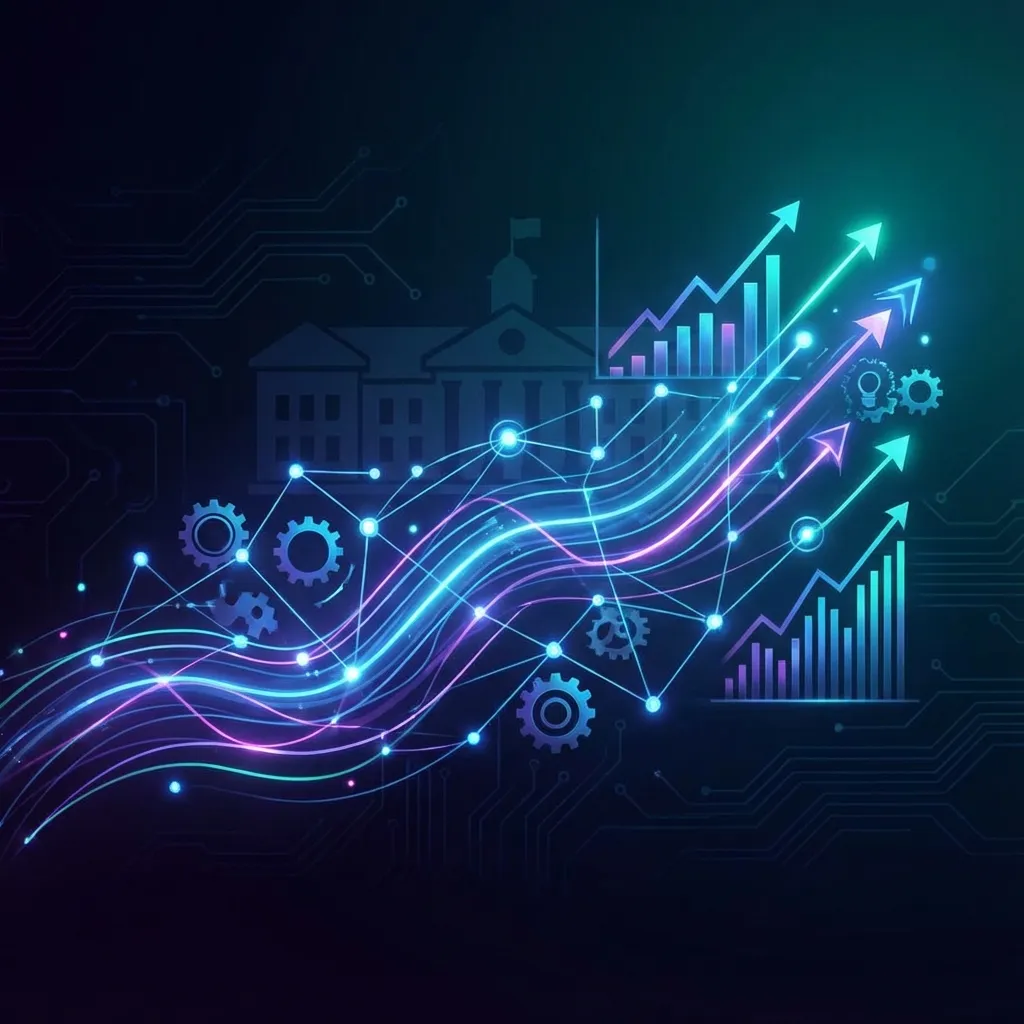 Figure 1: Predictive Analytics Overview
While descriptive analytics tells you what happened, predictive analytics tells you what is most likely to happen next.
flowchart TB
    HIST["🗃️ Historical\nData"]

    HIST --> TECH

    subgraph TECH["Predictive Techniques"]
        REG["📈 Regression\nPredict Values"]
        CLASS["🏷️ Classification\nPredict Categories"]
        ML["🤖 Machine\nLearning"]
        TS["📅 Time-Series\nForecasting"]
    end

    TECH --> PRED["🔮 Predictions\n(Probabilities)"]

    PRED --> ANS["❓ 'What Will Happen?'"]

    style PRED fill:#6a1b9a,color:#fff
    style ANS fill:#2e7d32,color:#fff
Figure 2: Predictive Analytics Flow
The Question It Answers: “What will happen?”
The goal of predictive analytics is to answer forward-looking questions, such as:
- Which of our customers are most likely to stop using our service in the next six months?
- What will our sales be for the next quarter?
- Is this credit card transaction likely to be fraudulent?
- What is the probability that this marketing lead will convert into a customer?
Key Techniques and Tools
Predictive analytics employs a range of more advanced statistical and machine learning techniques:
-
Regression Analysis: Used to predict a continuous value. For example, a real estate company might use regression to predict the future sale price of a house based on its features (e.g., square footage, number of bedrooms, location).
-
Classification Analysis: Used to predict a categorical outcome (i.e., to which category does an item belong?). For example, a bank might use a classification model to predict whether a loan applicant will default (Yes/No).
-
Machine Learning (ML): A broad field of artificial intelligence where algorithms are “trained” on historical data to learn patterns. They can then use these learned patterns to make predictions on new, unseen data. Many modern predictive analytics applications are built on machine learning.
-
Time-Series Forecasting: A specific type of predictive modeling that is used to predict future values based on previously observed values over time. This is widely used for tasks like forecasting sales, stock prices, and website traffic.
Business Examples
Predictive analytics has transformative applications across many industries:
-
Customer Churn Prediction: Telecommunication and subscription-based companies use predictive models to identify customers who are at a high risk of churning (canceling their service). The company can then target these customers with special offers or proactive support to encourage them to stay.
-
Fraud Detection: Banks and credit card companies use predictive models to analyze financial transactions in real-time. The model flags transactions that have a high probability of being fraudulent, allowing the bank to block them and alert the customer.
-
Demand Forecasting: Retailers use predictive analytics to forecast future demand for their products. This helps them optimize their inventory levels, ensuring they have enough stock to meet demand without carrying costly excess inventory.
-
Credit Scoring: Lenders use predictive models to assess the risk of lending to a particular individual or business. The model generates a credit score that predicts the likelihood of the borrower defaulting on the loan.
It is important to remember that predictive analytics is about probabilities, not certainties. It provides an educated guess about the future, but it is not a guarantee. The value lies in using these probabilities to make better, more informed decisions.
Summary
Predictive Analytics leverages historical data and machine learning to forecast future events and behaviors. By answering the question “What will happen?”, it allows businesses to move from being reactive to proactive. Applications like customer churn prediction, fraud detection, and demand forecasting enable organizations to anticipate challenges and opportunities, giving them a significant competitive advantage. While not a crystal ball, predictive analytics provides the probabilistic insights needed for smarter, forward-looking decision-making.
Key Takeaways
- Predictive analytics uses historical data to predict future outcomes.
- It answers the question, “What will happen?”
- Key techniques include regression, classification, and machine learning.
- Common applications include churn prediction, fraud detection, and demand forecasting.
Discussion Questions
- What is the difference between descriptive and predictive analytics?
- Netflix uses predictive analytics to recommend movies and shows. What data do you think they use to make these predictions?
- If a predictive model is not 100% accurate, can it still be useful? Why or why not?