Miami Water Damage Insurance Claims & Restoration Guide
Emergency Water Damage Restoration in Miami: Navigating Insurance Claims for Flood and Mold Recovery
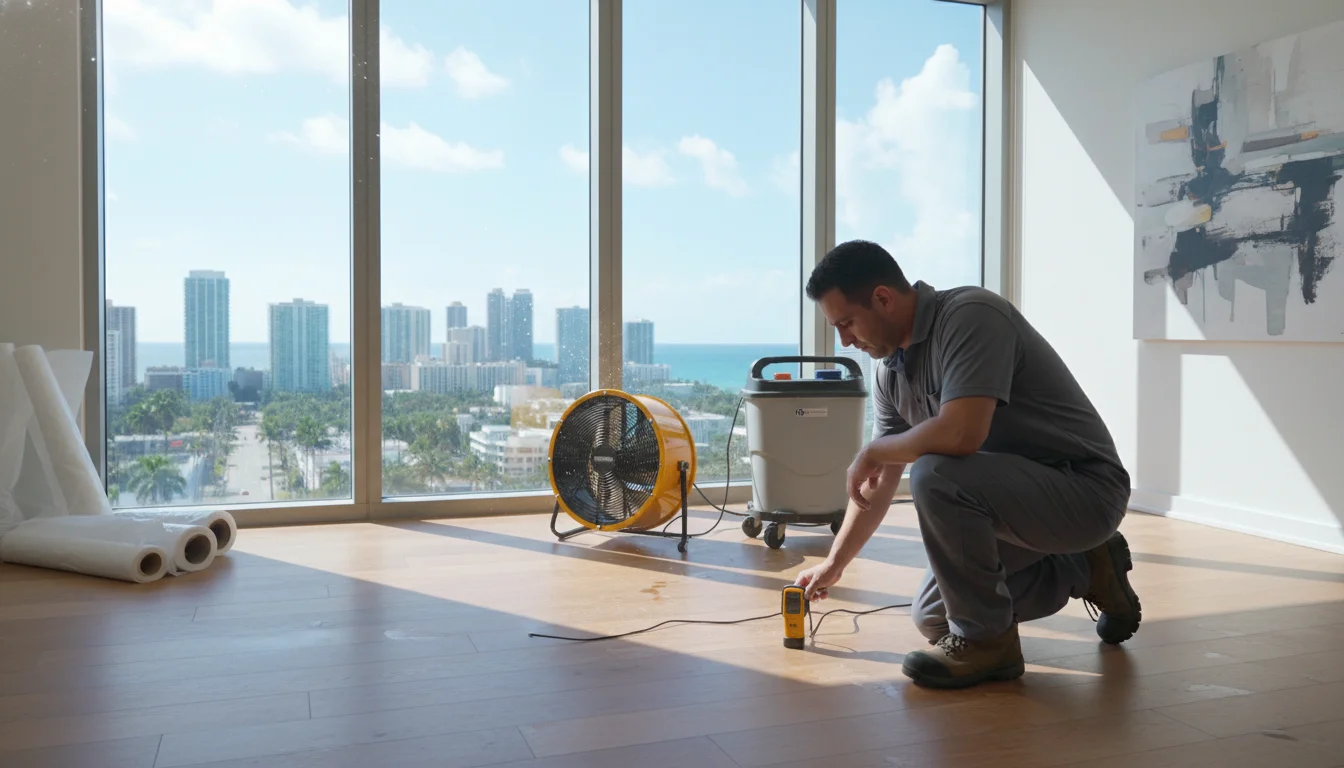
Introduction to the South Florida Property Risk Landscape
In the highly vulnerable coastal and low-lying topography of South Florida, water damage and subsequent mold proliferation represent the most frequent and financially devastating perils faced by property owners. Miami-Dade County, characterized by a high water table, frequent torrential downpours, hurricane exposure, and aging plumbing infrastructure, exists at the epicenter of property insurance disputes and restoration challenges. The Federal Emergency Management Agency (FEMA) calculates that a single inch of floodwater can inflict approximately $25,000 in damages to a standard residential property. Concurrently, the Insurance Information Institute reports that water damage and freezing account for roughly 22.6% of all domestic property insurance claims, a metric that skews significantly higher in Florida’s volatile climate where extreme humidity exacerbates the consequences of structural moisture.
The intersection of emergency water mitigation, microbial remediation, and property insurance claims constitutes a highly complex matrix of building science, statutory law, and contractual interpretation. Following a catastrophic loss, property owners must immediately navigate stringent Institute of Inspection, Cleaning and Restoration Certification (IICRC) standards, rigorous Florida Department of Business and Professional Regulation (DBPR) licensing mandates, and an increasingly restrictive property insurance framework governed by recent legislative reforms including Florida Senate Bill 2-A and House Bill 939.
This exhaustive analysis delineates the operational, regulatory, and legal paradigms governing water damage restoration and flood recovery in Miami-Dade County. By dissecting the technical standards of moisture mitigation, the nuances of anti-concurrent causation clauses, the operational realities of managed repair programs, and the profound implications of the FEMA 50% Rule for coastal reconstruction, this report provides a comprehensive framework for understanding the modern South Florida property recovery ecosystem. The subsequent sections will detail the precise methodologies required to document damages, satisfy statutory deadlines, and secure fair compensation within an adversarial claims environment.
The Building Science of Water Mitigation and IICRC S500 Standards
The mitigation of water intrusion is a time-sensitive, scientifically rigorous process. In Florida’s subtropical climate, the interval between initial water exposure and catastrophic microbial amplification can be as brief as 24 to 48 hours. Consequently, the property restoration industry relies on the ANSI/IICRC S500 Standard for Professional Water Damage Restoration. First developed in 1994, this consensus-based document dictates the precise procedures, psychrometric principles, safety protocols, and equipment specifications required for lawful and effective structural drying. Insurance carriers strictly utilize the IICRC S500 as the benchmark for auditing contractor invoices and verifying the necessity of mitigation efforts.
Categorization and Classification of Water Intrusions
The IICRC S500 establishes a rigid taxonomy for water damage, which directly dictates the required remediation protocols, demolition requirements, and safety measures. Water is categorized by its level of pathogenic contamination:
- Category 1: Commonly referred to as clear water, originates from a sanitary water source, such as a ruptured supply line, a failing water heater, or an overflowing bathtub without chemical or biological contaminants.
- Category 2: Or gray water, contains significant contamination and has the potential to cause discomfort or sickness, typically originating from dishwasher overflows, washing machine discharges, or toilet overflows containing urine but no feces.
- Category 3: Or black water, is grossly contaminated and contains pathogenic, toxigenic, or other harmful agents. Flooding from storm surge, rising rivers, seawater, or sewage backflows inherently defaults to Category 3.
Simultaneously, water intrusions are classified based on the estimated rate of evaporation and the porosity of the affected materials. A Class 1 loss involves minimal moisture absorption by low-porosity materials, whereas a Class 4 loss involves deep saturation of highly porous or restrictive assemblies, such as plaster, hardwood flooring, or concrete. A Class 4 classification necessitates specialized low-grain refrigerant (LGR) or desiccant dehumidification systems to extract bound moisture from dense structural assemblies. Local Miami restoration entities prominently feature their IICRC certifications to assure stakeholders that their 45-to-60-minute emergency response protocols align with these rigid classification standards.
Psychrometry and Structural Moisture Mapping
Professional mitigation relies heavily on psychrometry, which is the study of the thermodynamic properties of moist air. To prevent secondary damage, such as the warping of uncontaminated hardwood or the proliferation of mold in adjacent rooms due to elevated relative humidity, restoration contractors must utilize advanced diagnostic tools. Moisture mapping employs penetrating and non-penetrating moisture meters, alongside thermal imaging (infrared) cameras, to detect latent moisture trapped within wall cavities, beneath subflooring, and inside HVAC ductwork.
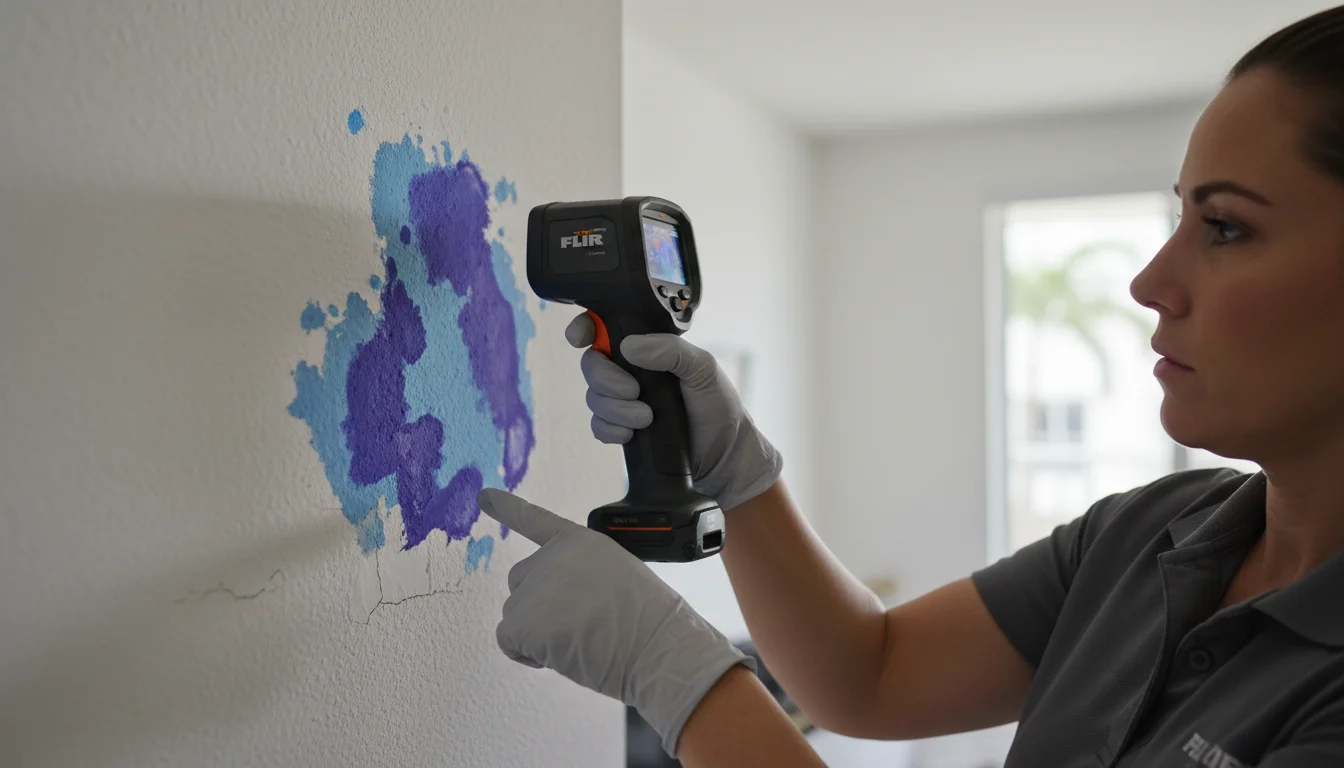
This mapping process is not merely an operational necessity; it is a critical evidentiary requirement for insurance claims. Insurers routinely demand continuous daily moisture logs to validate the duration of equipment deployment. Failure to map moisture accurately can lead to incomplete drying, resulting in delayed mold growth, or alternatively, prolonged equipment usage that insurers will reject as unnecessary. Thermal imaging combined with daily relative humidity readings forms the evidentiary backbone of a successful water damage claim, proving that the contractor ceased drying operations exactly when the structural materials reached their scientifically established dry standards.
Equipment Deployment Formulas and Billing Verification
A major point of contention in Florida water damage claims involves the volume of drying equipment billed to the insurer. The IICRC S500 establishes strict mathematical formulas to govern equipment deployment, which insurance desk adjusters use to audit contractor invoices to identify potential fraud or bill padding.
For air movers, which are designed to control the boundary layer of humidity on wet surfaces and accelerate evaporation, the standard dictates a highly specific deployment calculus. The restorer must install one initial air mover in each affected room. Subsequently, the contractor must add one air mover for every 50 to 70 square feet of affected wet floor space within that room. If walls and ceilings are affected above a height of 24 inches, the restorer is required to add one air mover for every 100 to 150 square feet of saturated surface area. Finally, the standard requires the addition of one air mover for each wall inset or offset measuring greater than 18 inches.
Contractors who deviate from these calculations without documented justification face aggressive invoice reductions. Insurance adjusters frequently cite the S500 standard to deny compensation for excessive equipment, a practice commonly referred to in the industry as “equipment stuffing” or over-deployment designed solely to inflate the daily rental invoice. Reputable restoration companies avoid this by strictly adhering to the established mathematical ranges and providing daily atmospheric logs to justify the precise tonnage of dehumidification and the exact unit count of air movers utilized.
Florida Mold Assessment and Remediation Regulations
Given the severe health hazards posed by toxigenic fungi, the State of Florida strictly regulates the mold remediation industry. Governed by Chapter 468, Part XVI of the Florida Statutes and administered by the Department of Business and Professional Regulation (DBPR), these laws are designed to protect consumers from fraudulent practices, enforce minimum scientific standards, and ensure that microbial contaminants are eradicated safely without cross-contaminating unaffected areas of a property.
The 10-Square-Foot Regulatory Threshold
Florida law relies on a critical geometric metric known as the 10-square-foot rule. According to Environmental Protection Agency (EPA) guidelines and state statutes, mold growth covering an aggregate surface area of less than 10 square feet can generally be cleaned by a homeowner or standard property maintenance personnel using basic antimicrobial protocols. However, once the contamination footprint exceeds 10 contiguous square feet, Florida law mandates the utilization of state-licensed professionals to handle both the assessment and the physical remediation of the hazard.
DBPR Licensing Criteria and Insurance Requirements
The DBPR issues two distinct, non-interchangeable licenses:
- Mold-Related Services Assessor (MRSA): Strictly authorized to perform or directly supervise microbial sampling, indoor air quality testing, and the drafting of remediation protocols.
- Mold-Related Services Remediator (MRSR): Authorized to perform the physical removal of contaminated materials, establish negative air containment, and apply biocide treatments.
Obtaining either license requires substantial academic and field qualifications.
Applicants must possess a minimum of an Associate of Arts degree in a related scientific discipline, such as microbiology, engineering, or industrial hygiene, paired with one year of documented field experience. Alternatively, an applicant with a high school diploma may qualify by demonstrating four years of documented field experience, validated by submitting at least 15 invoices for related services per year of claimed experience. Candidates must pass a state-approved, nationally recognized examination and undergo comprehensive criminal background checks.
Furthermore, to protect consumers against negligence, Florida requires licensed mold professionals to carry substantial insurance. Assessors must maintain a minimum of $1,000,000 in commercial liability insurance. This coverage guarantees that if an assessor fails to identify a hazard, or if a remediator accidentally spreads toxic spores into uncontaminated zones of a residential structure, the homeowner has a viable financial path to compensation. Licensees must also complete 14 hours of DBPR-approved continuing education courses every biennial renewal cycle, ensuring their knowledge of microbial science remains current.
The Strict Conflict of Interest Prohibition
One of the most consequential consumer protection mechanisms in Florida’s mold legislation is the strict statutory prohibition against conflicts of interest. Under Florida Statute §468.8419, a licensed mold assessor is legally barred from performing, or offering to perform, mold remediation on any structure for which they provided a mold assessment within the preceding 12 months. Conversely, a remediator cannot act as the assessor for a property they have remediated within the same 12-month timeframe.
This legislative firewall prevents “scoping inflation,” a deceptive practice where unscrupulous entities exaggerate the severity of a mold infestation during the testing phase to artificially inflate the cost of the subsequent remediation work, which they would then perform themselves to maximize revenue. By forcing the absolute separation of assessment and remediation, the state ensures that post-remediation clearance testing—the process of verifying that the fungal ecology has been successfully returned to normal indoor environmental levels—is conducted by an independent, unbiased third party who has no financial stake in the outcome of the physical labor.
Municipal Regulations and Rental Habitability
Beyond state licensing, Miami-Dade County enforces local ordinances regarding mold hazards, particularly within rental properties. Under the Florida Residential Landlord and Tenant Act (Section 83.51), property owners must maintain premises in a habitable condition, which requires the rapid repair of plumbing leaks, roof breaches, and air-conditioning failures to prevent moisture accumulation. The Miami-Dade County Code Compliance Department actively enforces these standards, granting tenants the right to file formal complaints if landlords fail to remediate mold resulting from neglected maintenance. Once a tenant provides written notice of a defect causing mold, landlords typically have a statutory seven-day window to commence corrective action before the tenant may legally withhold rent or terminate the lease agreement without penalty.
The Property Insurance Paradigm: Homeowners vs. Flood Coverage
Understanding the mechanics of water and mold restoration is only a fraction of the recovery process; financing that recovery relies on navigating an increasingly complex and adversarial property insurance landscape. In Florida, the specific source, mechanism, and temporal nature of the water intrusion strictly dictate whether a loss is covered, severely limited, or entirely excluded.
Standard Homeowners Insurance Limitations
Standard Florida homeowners insurance, typically written on an HO-3 or DP-3 policy form, explicitly excludes damage caused by natural flooding. Instead, these policies protect against “sudden and accidental” water damage originating from within the structure or resulting from a sudden breach of the building envelope. Covered scenarios typically include a pressurized PVC pipe that bursts without warning, a failed washing machine hose, an accidental overflow from a bathroom fixture, or a situation where hurricane-force winds destroy a roof and allow rainwater to inundate the interior.
However, insurers aggressively scrutinize claims to ensure the damage does not stem from long-term neglect. If an adjuster determines a leak is the result of gradual seepage or deferred maintenance, the claim will be denied. Furthermore, even when an internal water leak is approved as a covered peril, the resulting mold is subjected to extreme limitations. Most standard Florida admitted carriers place a rigid sub-limit on mold remediation, usually capping payouts at $10,000 per incident. Given that extensive Category 3 mitigation, negative air containment, and structural demolition easily exceed $10,000, policyholders frequently face massive out-of-pocket expenses unless they have preemptively purchased enhanced mold riders that expand limits to $25,000 or $50,000.
| Policy Type | Water Source Covered | Mold Coverage Cap | Key Exclusions |
|---|---|---|---|
| Standard Admitted Market | Sudden and accidental internal plumbing | Typically $10,000 | Flooding, gradual seepage, poor maintenance |
| Surplus Lines | Sudden and accidental internal plumbing | Typically $10,000 | Flooding, wear and tear |
| Preferred Market (with Rider) | Sudden and accidental internal plumbing | $25,000 to $50,000+ | Flooding |
The National Flood Insurance Program (NFIP) vs. Private Flood Markets
Protection against rising water requires a separate flood insurance policy. FEMA, through the NFIP, legally defines a flood as a general and temporary condition of partial or complete inundation of two or more acres of normally dry land, or two or more properties, caused by tidal surge, overflowing inland waters, or the rapid accumulation of surface runoff.
While the NFIP dominates the market, its strict statutory coverage caps render it increasingly inadequate for South Florida’s high-value real estate. The NFIP maximums are strictly capped at $250,000 for building property and $100,000 for personal contents. Crucially, the NFIP utilizes an Actual Cash Value (ACV) methodology for contents, meaning reimbursement is heavily depreciated based on the age of the damaged items, rather than paying the full Replacement Cost Value (RCV). Furthermore, the NFIP strictly excludes coverage for business interruption and alternative living expenses, forcing displaced homeowners to bear the full cost of temporary housing while their flooded properties are remediated.
This inadequacy has fueled a massive surge in the adoption of private flood insurance. Private carriers, unburdened by federal legislative caps, utilize proprietary risk models to offer dwelling limits exceeding $2,000,000 to $4,000,000. Private policies routinely offer full replacement cost for personal property, cover alternative living expenses, and eliminate the mandatory 30-day waiting period historically associated with NFIP policy initiation.
| Coverage Feature | NFIP Flood Insurance | Private Flood Insurance |
|---|---|---|
| Maximum Building Limit | $250,000 | Up to $4,000,000+ |
| Maximum Contents Limit | $100,000 | Often matches building limit |
| Contents Valuation | Actual Cash Value (Depreciated) | Replacement Cost Value (RCV) |
| Additional Living Expenses | Explicitly Excluded | Typically Included |
| Policy Waiting Period | 30 Days | 0 to 10 Days |
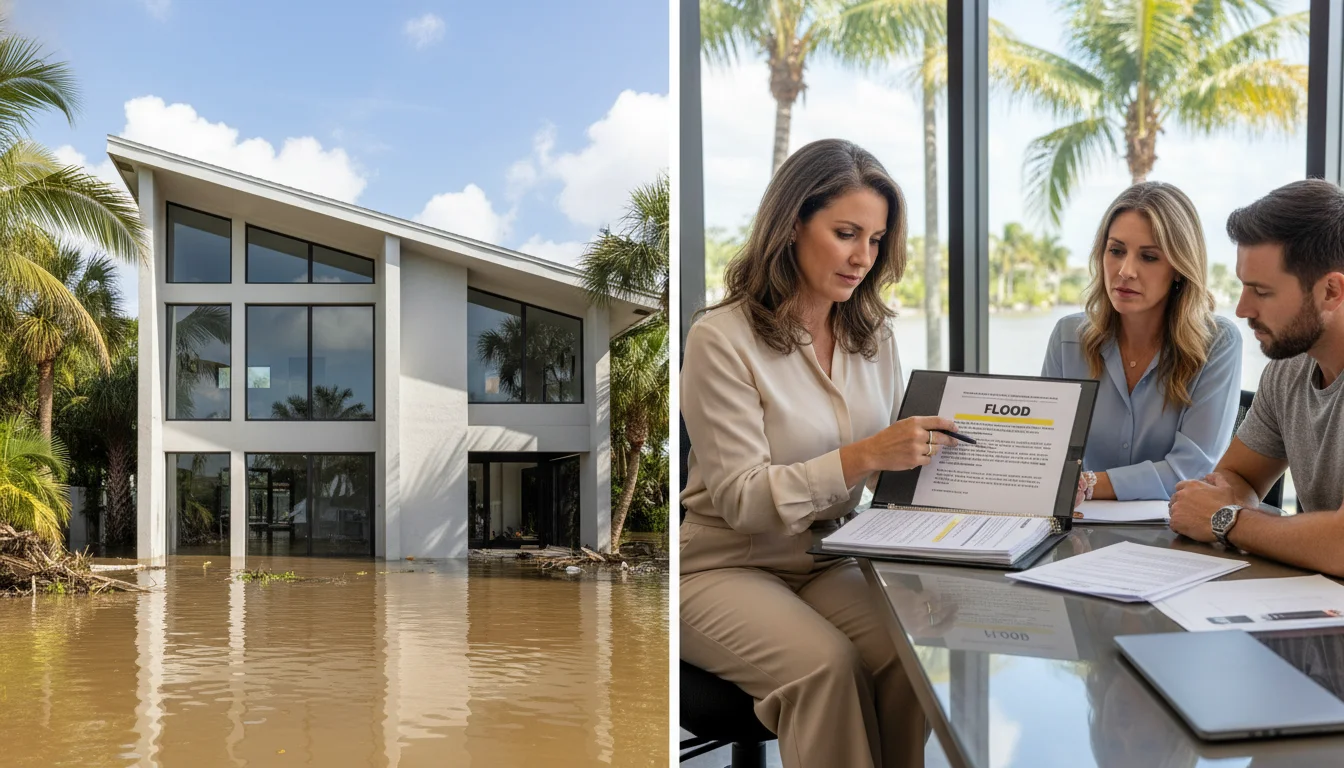
To address catastrophic insolvency risks, the Florida legislature mandated that policyholders insured by Citizens Property Insurance Corporation must obtain separate flood insurance, regardless of their geographical flood zone designation. This requirement is currently being phased in based on the dwelling’s replacement cost value, aiming for universal flood coverage for all Citizens personal lines policyholders by January 1, 2027.
| Citizens Coverage A (Dwelling Replacement Cost) | Deadline to Secure Separate Flood Insurance |
|---|---|
| $600,000 or more | January 1, 2024 |
| $500,000 or more | January 1, 2025 |
| $400,000 or more | January 1, 2026 |
| All other personal residential properties | January 1, 2027 |
Claim Denial Mechanisms and Policy Traps
Insurance carriers employ sophisticated contractual language to mitigate their financial exposure following water losses. Policyholders frequently find their claims denied due to specific policy exclusions, failure to adhere to post-loss duties, or complex causation doctrines.
The “Gradual Seepage” Exclusion and the 14-Day Rule
A primary mechanism insurers use to deny interior water claims is the “gradual seepage” or deferred maintenance exclusion. Standard policies do not function as home warranties; they are strictly designed to cover precipitous, unforeseen events.
If a field adjuster determines that a pipe has been leaking behind a wall for an extended period, evidenced by advanced wood rot, widespread mold colonization, or heavy corrosion, the claim is almost universally denied on the grounds of chronic neglect.
In recent years, many Florida policies have codified a draconian “14-day rule,” explicitly excluding any water damage where the leak can be proven to have existed for 14 days or more without intervention. The evidentiary burden often falls entirely on the homeowner and their adjusting representatives to prove, sometimes via forensic plumbing analysis, camera inspections of drain lines, or metallurgical testing of a failed cast-iron pipe, that the failure was indeed an instantaneous, sudden event.
The Anti-Concurrent Causation (ACC) Clause
During hurricane events in coastal areas like Miami-Dade, properties are frequently subjected to both extreme wind (a covered peril) and storm surge (an excluded peril under standard homeowners policies). In these complex scenarios, insurance carriers routinely invoke the Anti-Concurrent Causation (ACC) clause.
An ACC clause stipulates that if a loss is caused by a combination of covered and excluded perils, acting concurrently or in any sequence, the entire loss is excluded from coverage under the primary policy. For example, if a hurricane rips the roof off a home (wind damage), but moments later a storm surge floods the ground floor, the insurer may attempt to deny the entirety of the structural damage claim under the homeowner’s policy, citing the ACC clause. This forces the homeowner to rely solely on their flood policy, which may be drastically underinsured and will not cover the wind-damaged roof. Overcoming an ACC denial requires exhaustive meteorological data, forensic engineering reports, and a sequence-of-events analysis to definitively separate the timeline of wind damage from the timeline of flood damage, proving that the covered loss occurred independently before the excluded peril arrived.
Florida’s Valued Policy Law (VPL) interacts complexly with ACC clauses. While plaintiff attorneys frequently argue that the VPL mandates total payout if a covered peril caused a total loss, statutory amendments in 2005 clarified that if both a covered and non-covered peril cause a total loss, the insurance company is only liable for the proportionate amount of the loss directly caused by the covered peril, reinforcing the devastating power of the ACC clause.
Statutory Timelines, Proof of Loss, and the Homeowner Claims Bill of Rights
To counter unreasonable delays by insurance carriers, the Florida legislature enacted strict chronological mandates governing the claims process, detailed within Florida Statute § 627.7142, known as the Homeowner Claims Bill of Rights.
Carrier Deadlines and Interest Penalties
Upon receiving a claim, insurers must adhere to a rigid timeline to acknowledge, investigate, and render a final decision on coverage. Recent legislative reforms have significantly accelerated these deadlines to facilitate faster disaster recovery for residents.
- 7 Days: Insurer must provide written acknowledgment of the claim receipt and provide any generated damage estimates.
- 14 Days: Insurer must begin the formal claim investigation.
- 30 Days: Upon written request and submission of a complete proof of loss, the insurer must confirm whether the claim is covered in full, partially covered, denied, or still under investigation.
- 60 Days: Insurer is legally required to issue full payment, payment of the undisputed portion, or a formal written denial (reduced from the historical 90-day threshold).
If an insurer fails to pay the undisputed portion of a claim within 60 days, any subsequent payment automatically accrues interest from the date the insurer originally received notice of the claim. This financial penalty was designed to disincentivize insurers from intentionally delaying payouts to bolster their own capital reserves during mass-casualty hurricane events.
Proof of Loss Submissions: FEMA vs. Citizens
The submission of a formal Proof of Loss is the most critical hurdle in securing claim compensation. This is a sworn, notarized statement detailing the exact monetary value of the loss, supported by comprehensive inventories, receipts, and contractor estimates.
For NFIP flood claims, policyholders are mandated to submit a completed Proof of Loss within 60 days of the flood event. Failure to submit this highly specific documentation within the 60-day window is grounds for an immediate and irreversible denial of the federal claim.
Conversely, in the admitted state market, Citizens Property Insurance Corporation has imposed an even tighter timeline. For policies effective in 2024 and 2025, Citizens amended their policy language to require policyholders to submit a signed, sworn Proof of Loss within 30 days of Citizens’ formal request. This accelerated timeline places immense pressure on homeowners to quantify massive structural losses almost immediately following a disaster.
The Operational Realities of Managed Repair Programs (MRPs)
In an aggressive attempt to curb the rising costs of non-weather water damage claims and combat contractor fraud, major Florida insurance carriers have heavily incentivized, and in some cases mandated, the use of Managed Repair Programs (MRPs).
Under an MRP, the insurance company exercises its contractual right to dispatch restoration contractors from its own proprietary, pre-vetted network, rather than issuing a financial settlement directly to the homeowner to hire an independent vendor. Prominent examples include State Farm’s Premier Service program and similar networks deployed by Progressive.
The Controversy and Inherent Conflicts of Interest
While insurance carriers argue that MRPs streamline the repair process, eliminate price gouging, and guarantee workmanship warranties, consumer advocates and legal professionals assert that these programs create a severe conflict of interest. Because the network contractor’s primary source of ongoing revenue is the insurance company, their loyalty may inherently skew toward the insurer rather than the policyholder. Critics argue this dynamic incentivizes contractors to utilize substandard materials, minimize the scope of repairs, and ignore peripheral damage to keep claim costs artificially low for their corporate benefactors.
Penalties for Opting Out of Citizens’ MRP
Citizens Property Insurance Corporation has weaponized the MRP to ensure high participation rates. If a homeowner suffers a non-weather water loss and refuses to participate in Citizens’ Managed Repair Contractor Network Program, opting instead to hire an independent local contractor, Citizens imposes draconian financial penalties.
Specifically, policyholders who decline the program are subject to a strict $3,000 maximum sub-limit on emergency water mitigation services and a hard $10,000 cap on permanent structural repairs, including any amounts already paid for emergency measures. Given that replacing a water-damaged kitchen and remediating mold routinely exceeds $30,000, these caps effectively force the vast majority of Citizens policyholders to surrender control of their homes to the insurer’s chosen contractors to avoid financial ruin.
Furthermore, legislative reform under Senate Bill 2-A completely banned the use of Assignment of Benefits (AOB) contracts for property policies issued on or after January 1, 2023. Historically, AOBs allowed independent contractors to perform work and sue the insurer directly for payment. With AOBs outlawed, homeowners remain fully liable for any unpaid mitigation invoices if they opt out of the MRP and the insurer subsequently denies or underpays the independent contractor’s bill.
The FEMA 50% Rule and Miami-Dade Coastal Reconstruction
When devastating floods strike Miami-Dade County, the most significant hurdle to recovery is often not the physical water extraction, but the subsequent regulatory labyrinth imposed by local building codes and the NFIP. Specifically, homeowners and developers must confront the “50% Rule,” officially known in regulatory parlance as the Substantial Damage/Substantial Improvement provision.
The Mechanics of Substantial Damage and Improvement
As a participating community in the NFIP, Miami-Dade County is federally mandated to enact and aggressively enforce floodplain management ordinances. The 50% Rule dictates that if the cumulative cost to repair, reconstruct, or improve a structure equals or exceeds 50% of the property’s pre-damage Market Value, the entire structure is legally classified as “Substantially Damaged” or “Substantially Improved.”
Once this critical threshold is breached, the existing building loses its “grandfathered” status.
The property owner is then legally compelled to bring the entire structure into full compliance with current floodplain management regulations and the modern, highly rigorous Florida Building Code. For the vast majority of older, low-lying homes in Miami-Dade’s Special Flood Hazard Areas (SFHAs)—such as Zones AE or VE—this requires physically elevating the lowest floor of the home, along with all electrical panels and HVAC machinery, to or above the Base Flood Elevation (BFE).
Elevating a concrete slab-on-grade home built in the 1960s is an engineering monumental task that can easily cost between $150,000 and $400,000, frequently rendering repair economically unfeasible and forcing total demolition and reconstruction of the property from the ground up.
Calculating the Threshold: Market Value vs. Cost of Improvement
The catastrophic surprise for many homeowners lies in the specific, counterintuitive methodologies Miami-Dade County utilizes to calculate the two variables of the 50% equation.
1. Determining Market Value
The “Market Value” used for the 50% Rule is exclusively the depreciated value of the physical structure itself. It strictly excludes the value of the underlying land, landscaping, swimming pools, and detached structures. Crucially, the county does not rely on online real estate estimates or recent purchase prices. Instead, building officials rely on standardized cost-estimating software, such as Marshall & Swift, or the property appraiser’s specifically adjusted assessed building value, to calculate what it would cost to build the structure today, minus heavy depreciation based on age and wear.
This creates a devastating paradox in affluent, older coastal neighborhoods like Coral Gables, Miami Beach, or Coconut Grove. A homeowner might own a property with a total real estate market value of $2,000,000. However, because the land is highly desirable and the 60-year-old cinderblock structure is heavily depreciated, the county may assign a structural Market Value of only $150,000.
2. Calculating the Cost of Improvement
The “Cost of Improvement” encompasses all labor and materials required to return the home to its pre-loss condition. This includes architectural fees, engineering costs, built-in appliances, and even the calculated value of donated labor or owner-supplied materials.
Using the previous example, if the structure value is determined to be $150,000, the 50% threshold is a mere $75,000. Following a catastrophic storm surge, replacing saturated drywall, custom kitchen cabinetry, electrical wiring, and flooring will effortlessly exceed $75,000. If the homeowner attempts to combine post-flood repairs with a long-desired bathroom expansion, the cumulative cost easily triggers the rule, mandating full elevation.
Permitting Strategies and the Substantial Damage Estimator (SDE)
To process mass assessments following a hurricane, Miami-Dade and FEMA utilize the Substantial Damage Estimator (SDE 3.0) software tool to rapidly calculate damage percentages across thousands of affected parcels based on observed high-water marks and standardized material replacement costs.
Homeowners are strongly advised to engage in a formal Pre-Application meeting with the Miami-Dade Building Department before submitting architectural plans or signing construction contracts. This preemptive step allows the county to provide a preliminary, binding determination of the home’s official market value specifically for the 50% Rule. To avoid inadvertently triggering the mandate, legal and architectural experts advise a phased permitting approach. Homeowners should delineate and complete only the strict minimum code-mandated repairs under one initial permit to obtain a Certificate of Occupancy, deliberately treating 49% of the county’s valuation as a hard, non-negotiable budget cap. Once the tracking period (which Miami Beach defines as a “cumulative substantial improvement” window of one year) resets, the homeowner can apply for a secondary permit for discretionary cosmetic upgrades.
During declared emergencies, Miami-Dade County frequently implements fee waivers for specific disaster-related permits—such as roof repairs, electrical panel change-outs, and drywall replacement—and expedites plan reviews to facilitate rapid community recovery without unnecessary bureaucratic delays.
The Role of Public Adjusters and Fraud Prevention
Given the immense complexity of IICRC S500 guidelines, ACC clauses, and the 50% Rule, many property owners opt to retain a Public Insurance Adjuster. Unlike an independent adjuster or a company adjuster—both of whom are hired by and represent the financial interests of the insurance carrier—a public adjuster is specifically licensed by the Florida Department of Financial Services (DFS) to represent the fiduciary interests of the policyholder.
Representation and Contractual Safeguards
Public adjusters handle the granular quantification of the loss, the compiling of the formal Proof of Loss, and all negotiations with the carrier. They utilize the exact same estimation software (Xactimate) as the insurance carriers, enabling them to effectively counter lowball initial estimates by accurately pricing local Miami-Dade labor rates, current material costs, and highly specific code-upgrade requirements mandated by local building departments.
To protect consumers from predatory practices, Florida law imposes stringent regulations on public adjuster contracts and compensation structures:
- Emergency Fee Caps: During a state of emergency declared by the Governor, a public adjuster’s fee is strictly capped at 10% of the claim settlement for claims originating in the first year following the disaster declaration.
- Standard Fee Caps: For non-emergency claims (e.g., a standard pipe burst), the fee is legally capped at 20% of the insurance payout.
- Contingency Basis: Public adjusters operate strictly on a contingency basis; they cannot demand upfront fees, nor can they charge fees based on claim payments the homeowner received prior to executing the representation contract.
- Statutory Cooling-Off Period: For claims arising from a declared emergency, Florida Statutes §626.8796 grants the policyholder the right to cancel the public adjuster contract without penalty or obligation within 30 days of the date of loss, or 10 days from the date the contract is executed, whichever is longer.
Reputable adjusters align with the Florida Association of Public Insurance Adjusters (FAPIA), an organization that enforces a strict Code of Ethics. This code prohibits the unauthorized practice of law, false advertising, and explicit conflicts of interest, such as an adjuster owning a financial stake in the restoration company contracted to perform the physical repairs. Policyholders are heavily encouraged to verify an adjuster’s active license status and background via the Florida DFS online portal (Licensee Search) before signing any binding representation agreements.
Post-Disaster Fraud, Price Gouging, and Consumer Protection
In the chaotic aftermath of a hurricane or massive flood event, the influx of out-of-state contractors and desperate homeowners creates a highly fertile environment for exploitation and fraud. Miami-Dade County, working in tandem with the Florida Attorney General’s Office, aggressively enforces consumer protection statutes to mitigate post-disaster gouging.
Under Florida Statute § 501.160, the formal declaration of a state of emergency immediately triggers anti-price gouging laws. It becomes a civil and potentially criminal offense to charge an “unconscionable price” for essential commodities, which legally encompass ice, water, generators, lumber, and vital remediation services like tree removal, roof tarping, and emergency water extraction.
An unconscionable price is determined by comparing the emergency rate to the average price charged for the exact same commodity or service during the 30 days immediately preceding the disaster declaration. Violators face severe civil penalties of $1,000 per violation, up to a maximum of $25,000 for multiple violations committed within a single 24-hour period, in addition to potential second-degree misdemeanor charges for operating without proper occupational licenses. The Miami-Dade State Attorney’s Office and the Attorney General operate dedicated hotlines to rapidly field reports of exorbitant invoicing and coordinate law enforcement responses.
Fraud is not limited to upfront price gouging by material vendors; it frequently manifests in highly sophisticated invoice padding by restoration contractors attempting to exploit insurance carriers. Common schemes identified by investigators in South Florida include:
- Equipment Over-Deployment: Placing 15 commercial air movers in a small bedroom when the IICRC S500 standard dictates that only 3 are mathematically required, thereby hyper-inflating the daily rental invoice submitted to the insurer.
- Unnecessary Demolition: Removing uncontaminated, structurally sound materials under the guise of “mold prevention” simply to bill for higher demolition, debris removal, and reconstruction labor hours.
- Falsifying Moisture Logs: Extending the drying process artificially by falsifying psychrometric data to charge for additional, unneeded days of dehumidifier rental.
To combat this rampant fraud, insurers increasingly require exhaustive, immutable documentation before honoring mitigation invoices. This includes submitting 3D thermal imaging scans, timestamped and geolocated photographs, and detailed moisture mapping logs. Property owners must remain extraordinarily vigilant, verifying that any contractor they hire holds a valid DBPR license and strictly adheres to S500 protocols.
Failure to oversee these contractors can result in the insurance carrier denying the mitigation invoice due to fraudulent contractor behavior, leaving the homeowner personally liable for the entirety of the padded bill under the newly reformed, post-AOB legislative landscape.
Conclusion
Recovering from catastrophic water and flood damage in Miami-Dade County requires an intricate, multi-disciplinary understanding of a highly regulated and rapidly evolving ecosystem. The physical restoration of the property is dictated by rigid building science and IICRC psychrometric standards, which directly and fundamentally influence the viability of the financial recovery. Concurrently, the state’s stringent DBPR mold licensing laws serve as a vital safeguard against unqualified remediation, but introduce rigid compliance steps that must be documented meticulously to satisfy insurance carriers.
Financially, policyholders must proactively understand the stark delineations between standard homeowners and specific flood insurance, particularly regarding the coverage disparities between sudden internal water discharges versus excluded gradual seepage and external storm surge. The aggressive application of Anti-Concurrent Causation clauses, coupled with the strategic implementation of restrictive Managed Repair Programs by major carriers like Citizens Property Insurance, places the overwhelming burden of proof and compliance entirely on the property owner.
Most critically, the overarching shadow of the FEMA 50% Rule forces Miami-Dade residents to approach post-disaster reconstruction with surgical precision. Navigating the extreme disparity between a property’s actual real estate value and its highly depreciated structural market value requires strategic, phased permitting to avoid mandatory, financially ruinous elevation requirements.
Ultimately, success in this volatile environment is predicated on immediate action, meticulous photographic and scientific documentation, and the engagement of licensed, highly credentialed professionals—ranging from IICRC-certified water mitigators to DBPR-licensed mold assessors, licensed public adjusters, and specialized legal counsel. By adhering strictly to statutory timelines, understanding the parameters of the Homeowner Claims Bill of Rights, recognizing the severe penalties for opting out of managed repair programs, and aggressively protecting against post-disaster contractor fraud, Miami-Dade property owners can successfully navigate the precarious journey from catastrophic loss to complete structural and financial recovery.
Related reading
- Explore all blog articles
- About Arjan KC
- Mega-Project Bidding: Strategies for Margin Optimization
-
[RAID Data Recovery San Francisco Emergency Server Services](/blog/san-francisco-raid-data-recovery-services/)