Zero-Trust Checklist: Cybersecurity for Remote Agencies
The Ultimate Zero-Trust Cybersecurity Checklist for Remote Digital Agencies
The paradigm of enterprise cybersecurity has undergone a profound transformation over the past half-decade, accelerating rapidly away from traditional, perimeter-based defense models toward identity-centric, resource-focused architectures. For remote digital agencies—organizations characterized by decentralized workforces, a heavy reliance on cloud-native software-as-a-service (SaaS) platforms, and the continuous exchange of high-value intellectual property—this architectural pivot is not merely a technical upgrade; it is an absolute operational necessity. The rapid proliferation of sophisticated cyber threats, driven by artificial intelligence (AI), commercialized cybercrime, and the dissolution of the corporate perimeter, has rendered legacy virtual private networks (VPNs) and static network perimeters entirely obsolete. The contemporary digital agency operates in a boundaryless environment where every home network, personal device, and third-party contractor represents a potential vector for compromise.
To mitigate these systemic vulnerabilities, the adoption of a Zero Trust Architecture (ZTA) has emerged as the definitive standard for operational resilience. Operating on the foundational axiom of “never trust, always verify,” Zero Trust abolishes the concept of implicit trust based on network location or organizational affiliation. Instead, it mandates rigorous, continuous authentication and dynamic authorization for every single access request, evaluating the context of the user, the health of the device, and the sensitivity of the resource. This exhaustive research report explores the theoretical underpinnings, architectural components, and strategic implementations of Zero Trust methodologies specifically tailored for remote digital agencies, culminating in an actionable, highly detailed operational checklist designed to secure digital assets across the modern threat landscape.
The Evolution of the Threat Landscape for Remote Agencies
The cybersecurity threat landscape facing remote digital agencies in the 2025 and 2026 horizon is characterized by unprecedented complexity, automation, and speed. Remote work environments natively expand the attack surface, stripping away the centralized physical infrastructure that historically shielded corporate networks. Research conducted by the Stanford Institute for Economic Policy Research reveals that the number of employees working at least one day a week outside a traditional office has increased fivefold since 2019, now accounting for 42% of the workforce. Consequently, digital marketing and creative agencies are particularly lucrative targets due to their aggregation of sensitive client data, proprietary campaign strategies, unreleased media assets, and extensive privileged access to third-party advertising platforms and social media ecosystems.
Advanced and Autonomous Threat Vectors
The integration of artificial intelligence into the arsenals of malicious actors has catalyzed a surge in sophisticated, automated cyber threats, radically altering the economics of cybercrime. The World Economic Forum’s Global Cybersecurity Outlook 2025 highlights that the fallout of geopolitical turbulence in the digital realm, coupled with rapid advances in emerging technologies, has led to a cyberspace that is more complex than ever before. AI-driven attacks now encompass autonomous threat agents capable of executing multi-stage attack chains with minimal human intervention, effectively circumventing traditional, signature-based defenses. Threat actors utilize generative AI tools to exponentially enhance the efficacy of social engineering, enabling the deployment of hyper-personalized phishing campaigns and deepfake communications that consistently deceive creative, human resources, and account management teams.
Simultaneously, the ransomware landscape has evolved far beyond mere file encryption to complex, multi-extortion models. Attackers routinely infiltrate supply chains or managed service providers, operating stealthily for extended periods. Advanced Persistent Threat (APT) groups maintain long-term access through covert tools such as backdoors, rootkits, and malware that imitate legitimate system processes, allowing them to harvest large volumes of encrypted data, TLS-encrypted communications, and database backups before executing a ransom demand. This stealth and persistence are facilitated by an alarming surge in credential theft and the deployment of infostealers, which specifically target the disparate, often under-secured endpoint devices utilized by remote workforces. Furthermore, emerging risks such as quantum computing threats and cryptographic degradation pose long-term challenges to the integrity of current encryption standards, necessitating highly agile security frameworks.
The Vulnerability of the Edge and the Cloud
In a fully remote digital agency, the enterprise perimeter dissolves entirely into thousands of isolated edge devices operating on unsecured, unmonitored residential networks. State-sponsored groups and financially motivated cybercriminals increasingly exploit these edge devices, leveraging them as entry points to bridge into corporate cloud environments. In recent high-profile botnet cases, edge devices were routinely hijacked for financial gain, leading to a massive surge in attacks on private enterprises. Because remote agencies operate predominantly via SaaS applications and multi-cloud architectures, the cloud itself has become the primary battleground. Threat actors systematically target known security gaps, such as misconfigured web assets, unmonitored remote services, and shadow IT infrastructure, exploiting these vulnerabilities at a rapidly accelerating pace.
Foundational Principles of Zero Trust Architecture
The National Institute of Standards and Technology (NIST) Special Publication 800-207 serves as the foundational, authoritative doctrine for Zero Trust Architecture globally. The core thesis of NIST SP 800-207 is that no entity, whether internal or external to the network, is inherently trusted. Defenses are fundamentally decoupled from physical network segments and reoriented around protecting individual resources—applications, services, workflows, and network accounts—based on continuous identity verification. Zero Trust replaces the binary “trust but verify” model with an “assume breach” mentality, functioning under the operational assumption that the network infrastructure is already compromised.
The Seven Tenets of NIST SP 800-207
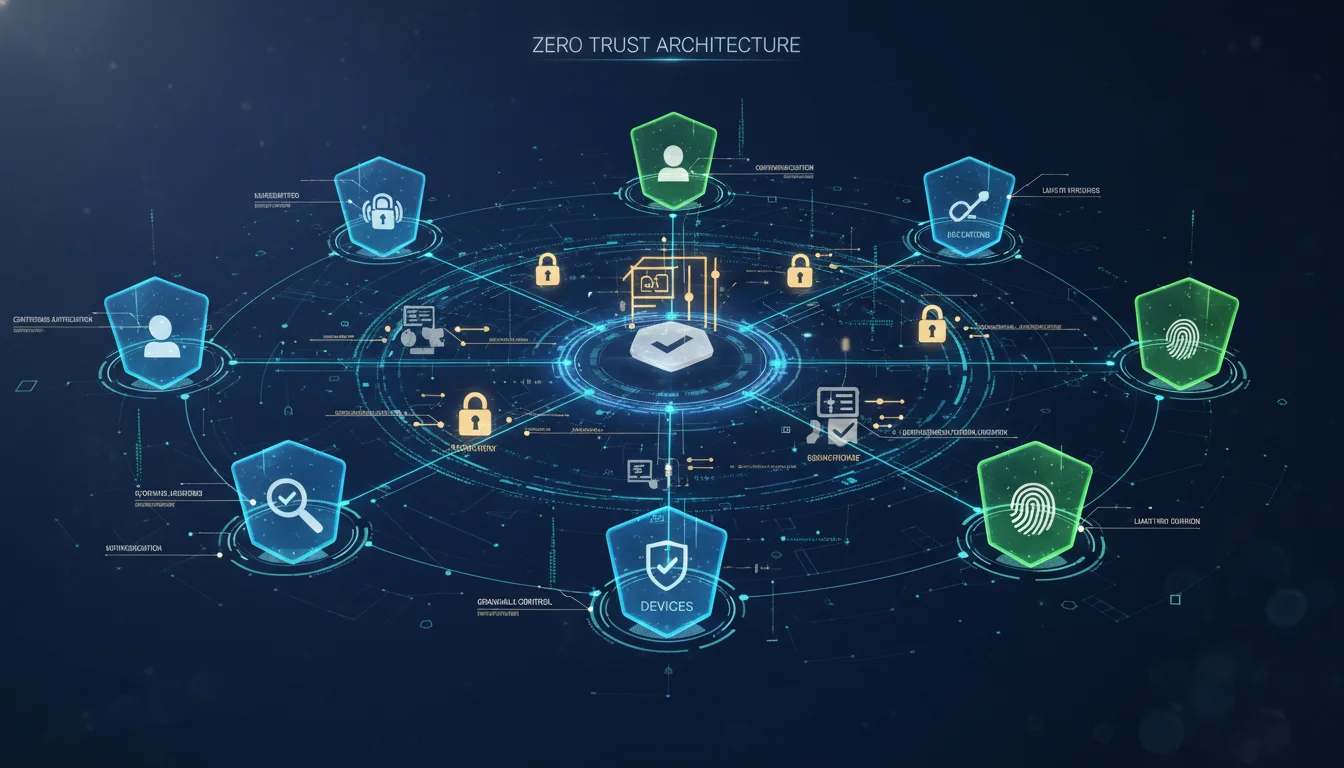
To architect a resilient Zero Trust environment, remote digital agencies must rigorously align their infrastructure with the seven core tenets defined by NIST, which provide the theoretical scaffolding for all subsequent technical deployments:
- All Data Sources and Computing Services are Considered Resources: The scope of protection must extend far beyond traditional on-premises servers to include SaaS applications, personal devices (Bring Your Own Device, or BYOD) loosely connected to the enterprise, cloud storage repositories, and even third-party application programming interfaces (APIs).
- All Communication is Secured Regardless of Network Location: Trust is never granted based on the premise that a device is connected to a “secure” corporate Wi-Fi or a traditional VPN. Every single data flow must be encrypted and authenticated, effectively treating internal networks with the same degree of suspicion as the public internet.
- Access to Enterprise Resources is Granted on a Per-Session Basis: Trust is ephemeral and strictly time-bound. Access granted for one specific task or application does not automatically confer access to another, nor does it guarantee indefinite access to the initial resource. Privileges must be elevated only when explicitly necessary.
- Access is Determined by Dynamic Policy: Authorization decisions cannot be static. They must be calculated in real-time, integrating complex contextual signals such as identity assurance strength, privilege level, machine identity posture, behavioral anomalies, and environmental factors.
- The Enterprise Monitors and Measures the Integrity and Security Posture of All Owned and Associated Assets: Continuous endpoint telemetry is an absolute mandate. Organizations must continuously monitor asset integrity, ensuring that devices falling out of compliance—such as those with outdated operating systems, disabled firewalls, or detected malware—are dynamically isolated from enterprise resources.
- Authentication and Authorization are Strictly Enforced Before Access is Allowed: Both the subject (the user or service account) and the device must be discretely authenticated through robust mechanisms before a connection to any resource is established. This enforcement must occur as close to the resource as possible through well-placed Policy Enforcement Points (PEPs).
- The Enterprise Collects Data About the Current State of Network Infrastructure to Improve Security Posture: Security is an iterative, data-driven process. Organizations must leverage centralized logging and telemetry to continuously refine access policies, track identity behavior for potential misuse, and detect anomalous patterns over time.
Identity and Access Management (IAM): The New Perimeter
In a perimeter-less environment, digital identity becomes the primary, indispensable boundary of the enterprise.
Robust Identity and Access Management (IAM) is the central pillar of any Zero Trust strategy, serving as the definitive gatekeeper for all corporate assets. The shift to Zero Trust security has necessitated IAM solutions that verify every user and device dynamically, replacing blind trust with continuous, context-aware validation.
Continuous and Adaptive Authentication Mechanisms
First-generation multi-factor authentication (MFA), which relies heavily on phishable factors such as one-time passwords (OTPs) delivered via SMS or magic links, is no longer sufficient to protect against modern adversaries. These legacy mechanisms are highly susceptible to sophisticated social engineering, adversary-in-the-middle (AiTM) proxy attacks, and SIM swapping. Zero Trust mandates the deployment of phishing-resistant authentication frameworks, utilizing modern identity protocols and hardware-based security keys (such as FIDO2 tokens), to definitively and cryptographically bind user identities to their access requests.
Furthermore, authentication must transition from a discrete, point-in-time event that occurs only at login, to a continuous, adaptive process. Risk-based policy enforcement engines must continuously evaluate user behavior throughout the entire duration of a session. If an agency’s art director successfully authenticates from their standard location in New York, but their account subsequently attempts to bulk-download proprietary client video assets from an IP address associated with a high-risk geographic region ten minutes later, the IAM system must instantly identify this behavioral anomaly, terminate the active session, and demand immediate, stepped-up re-authentication. This adheres strictly to the zero trust principle of “never trust, always verify”.
Device Posture Verification and Unified Endpoint Management (UEM)
Identity verification solves only half of the access equation; the security posture of the requesting device must also be mathematically established. Zero Trust explicitly requires that organizations evaluate device health and integrity prior to granting access. This necessitates the deep integration of Unified Endpoint Management (UEM) or Mobile Device Management solutions directly into the IAM policy evaluation pipeline.
When a remote contractor attempts to access a cloud-based design repository, the IAM platform (such as Okta, Microsoft Entra ID, or JumpCloud) must instantly query the MDM solution to verify that the endpoint is running an approved operating system, possesses active disk encryption, and is completely devoid of known vulnerabilities or configuration drift. Devices failing this native posture verification are automatically denied access or placed in highly restricted, quarantined network segments until remediation occurs. This dual-verification model ensures that legitimate, highly privileged credentials cannot be leveraged maliciously if they are utilized from compromised, unmanaged, or unauthorized hardware.
Role-Based Access Control (RBAC) and the Principle of Least Privilege
The principle of least privilege dictates that users, applications, and non-human identities (such as service accounts) are granted only the absolute minimum level of access required to perform their designated, immediate functions. By enforcing just-in-time and just-enough access, agencies severely limit user access, thereby minimizing the potential blast radius and preventing lateral movement in the event of a credential compromise. In a digital agency, where cross-functional remote teams constantly collaborate on diverse, highly sensitive projects, implementing structured Role-Based Access Control (RBAC) is an operational imperative.
Architecting the RBAC Matrix for Digital Agencies
RBAC replaces ad-hoc, individualized permission assignments with a systematic, scalable model where permissions are aggregated into predefined roles based on strict job functions. For example, a “Senior Copywriter” role inherently requires read and write access to specific Google Workspace drives and read-only access to campaign performance metrics, while a “Financial Controller” role requires highly privileged access to payroll software and client invoicing portals. Building an access control matrix from scratch presents challenges regarding role proliferation and compliance overlap, but it provides the necessary structure for secure user management.
-
Creative Director
Functional Requirements & Justification: Oversee all design assets, approve final deliverables, manage creative talent.
Permitted SaaS Access: Adobe Creative Cloud, Figma (Admin), Canva, Slack.
Data Classification Access Level: Internal, Confidential
-
Freelance Designer
Functional Requirements & Justification: Execute specific, scoped asset creation for isolated campaigns.
Permitted SaaS Access: Figma (Project-level only), Slack (Restricted channels).
Data Classification Access Level: Internal
-
Media Buyer
Functional Requirements & Justification: Manage extensive ad spend, monitor campaign performance across channels.
Permitted SaaS Access: Meta Ads Manager, Google Ads, Looker Studio, Adriel.
Data Classification Access Level: Confidential, Restricted
-
Account Executive
Functional Requirements & Justification: Interface with clients, manage campaign briefs and strategy documentation.
Permitted SaaS Access: Salesforce, Google Workspace, Slack, Zoom.
Data Classification Access Level: Internal, Confidential
-
IT/Security Admin
Functional Requirements & Justification: Provision infrastructure, monitor network telemetry, manage IAM and MDM.
Permitted SaaS Access: SIEM, MDM Console, IAM Platform, SSPM tools.
Data Classification Access Level: Restricted (Requires Privileged Access Management)
Implementing RBAC mitigates the immense administrative overhead of managing thousands of individual permissions across a highly fluid remote workforce. Crucially, it significantly reduces the risk of privilege creep—a pervasive phenomenon where employees retain legacy access rights to systems and data long after changing roles or concluding specific projects—by ensuring that changes to a user’s role automatically and uniformly propagate permission changes across all connected applications.
Microsegmentation in Cloud-Native Environments
While RBAC restricts what a specific user identity can access, microsegmentation restricts how workloads, applications, and data repositories communicate with one another at the infrastructure level. Traditional network segmentation relied on broad Virtual Local Area Networks (VLANs) and static, IP-based firewall rules to create macroscopic security zones. However, in the highly dynamic, cloud-native environments utilized by modern remote agencies—characterized by auto-scaling infrastructure, containers, and SaaS ecosystems—IP addresses are highly ephemeral, rendering static network topologies and traditional firewall rules largely ineffective.
Workload Isolation and Identity-Based Policy Enforcement
Microsegmentation applies granular security controls at the individual workload or application level, effectively wrapping a secure, software-defined micro-perimeter around every single asset. If a digital agency hosts a custom client portal and an internal financial database on the same cloud infrastructure, microsegmentation ensures that a compromise of the client portal cannot result in unauthorized lateral movement to the financial database. The foundational Zero Trust principle of “deny by default; only allow what is needed” is enforced at the network layer; unless a specific, identity-based policy explicitly allows communication between two defined workloads, the traffic is automatically dropped.
In multi-cloud and SaaS-heavy architectures, microsegmentation relies heavily on cryptographic tagging, service mesh integrations, and workload identity rather than physical network topology. By applying attributes and tags to resources (e.g., associating specific cloud workloads with a highly regulated, PCI-compliant application), security teams can coordinate consistent, adaptive microsegmentation policies across disparate on-premises and public cloud assets. This approach ensures that lateral movement is mathematically contained regardless of where the workload physically resides or how the underlying network shifts.
Converging Security and Networking: SASE and ZTNA
To facilitate secure, frictionless access for remote teams without relying on legacy VPNs—which are notorious for granting excessive network-level access and causing performance bottlenecks—organizations are rapidly adopting Secure Access Service Edge (SASE) and Zero Trust Network Access (ZTNA) architectures. While frequently conflated in industry literature, SASE and ZTNA represent distinct, yet highly complementary, components of a modern, holistic cybersecurity strategy.
ZTNA: Granular, Application-Level Access
ZTNA is a specific security framework designed to enforce least privilege access by verifying user identity and contextual factors (such as device posture, time of day, and location) before granting connectivity strictly at the application level. Unlike a VPN, which punches a hole in the network perimeter and grants an authenticated user broad, uninhibited access to the underlying local area network, ZTNA establishes a secure, encrypted tunnel only to the specific application requested. The user remains entirely blind to the rest of the network, drastically reducing the attack surface and mitigating the risk of lateral movement. This application-level routing makes ZTNA exceptionally suited for granting highly restricted access to third-party freelancers and contractors, allowing them to interface with specific tools like Jira or internal wikis without exposing any broader corporate infrastructure.
SASE: Holistic, Cloud-Native Security at the Edge
SASE, conversely, is a comprehensive cloud-native architecture that converges ZTNA with a much broader suite of networking and security services into a single, unified platform. Coined by Gartner, the SASE architecture integrates software-defined wide area networking (SD-WAN) with critical security functions delivered directly from the cloud edge. These comp
onents typically include Cloud Access Security Brokers (CASB), Secure Web Gateways (SWG), Firewall as a Service (FWaaS), and Data Loss Prevention (DLP) protocols.
Architecture Framework
Scope & Core Functionality
Primary Use Case for Digital Agencies
Zero Trust Network Access (ZTNA)
Micro-level access control; connects verified users strictly to authorized applications based on identity and context, shielding the underlying network.
Providing external contractors secure, isolated access to specific project boards or internal development environments without exposing the broader corporate network.
Secure Access Service Edge (SASE)
Macro-level cloud security; inspects all outbound/inbound traffic, enforces web filtering, prevents data exfiltration, and optimizes network performance.
Ensuring a remote employee’s general internet traffic is actively filtered for malware, and strictly preventing the upload of proprietary client design files to unapproved personal cloud storage accounts.
By combining ZTNA’s stringent access controls with SASE’s pervasive, inline traffic inspection, remote agencies achieve a unified, globally distributed security mesh. This integration provides comprehensive protection across all traffic and locations, eliminating gaps and silos within the security architecture, and protecting end-users seamlessly regardless of their geographical location or the specific devices they employ.
Securing the Creative Tech Stack: SaaS Security Posture Management (SSPM)
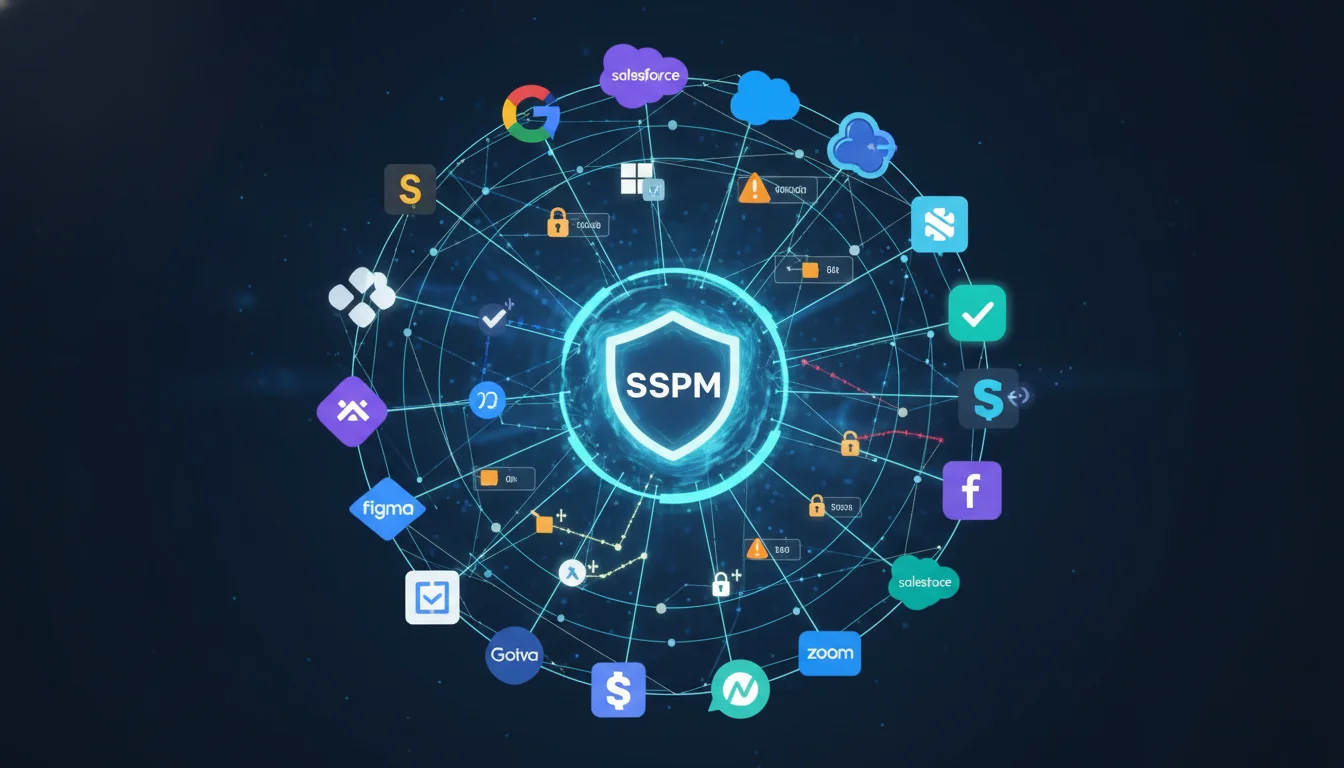
Digital agencies operate almost entirely within SaaS ecosystems—utilizing platforms such as Google Workspace for collaboration, Slack for rapid communication, Salesforce for client relationship management, and specialized creative tools like Figma, Canva, and the Adobe Creative Cloud suite. Consequently, securing this highly interconnected SaaS portfolio is arguably the most critical operational imperative for an agency’s security team. The inherent complexity of the shared responsibility model demands that organizations actively manage their configurations, as cloud providers secure the infrastructure, but the customer is solely responsible for securing the data and access within the application.
Mitigating SaaS-to-SaaS Integration Risks
One of the most insidious and frequently overlooked threats in modern SaaS-to-SaaS environments is the rampant proliferation of unvetted integrations.
Modern application programming interfaces (APIs) utilize the OAuth 2.0 protocol to enable seamless, authorized connectivity between platforms. A designer might innocently integrate a third-party typography or wireframing plugin directly into Figma, or an account manager might connect an automated scheduling bot to the agency’s Slack workspace. These seemingly benign actions grant the third-party application programmatic access to the host SaaS environment, effectively bypassing the organization’s primary security perimeters.
If the third-party application itself is compromised, the threat actor inherently inherits the OAuth permissions previously granted to that app. This creates a silent, highly persistent backdoor into the agency’s primary data repositories that completely circumvents traditional MFA and Endpoint Detection and Response (EDR) tools, as the malicious activity originates from a trusted, authenticated cloud service rather than a user’s endpoint.
The Critical Role of SSPM Platforms
To effectively combat this shadow IT and integration risk, agencies must implement SaaS Security Posture Management (SSPM) solutions. SSPM platforms continuously monitor the configuration settings, user access controls, and data protection measures of the entire SaaS portfolio, unifying continuous cybersecurity risk assessment and compliance monitoring. They systematically map the complex web of API keys, OAuth tokens, and third-party integrations, calculating dynamic risk scores and identifying highly permissive, dormant, or malicious connections.
Furthermore, SSPM tools automatically detect configuration drift over time, comparing current SaaS settings against rigorous industry benchmarks (such as CIS, NIST, SOC 2, and GDPR) to identify deviations. These deviations might include publicly accessible shared drives containing sensitive client data, SaaS environments where multifactor authentication has been inadvertently disabled, or improper administrative delegations. Through dynamic alerting and user-guided remediation workflows, SSPM empowers security teams to lock down the creative tech stack, revoke dangerous connections, and enforce strict least-privilege access without hindering the agency’s operational productivity.
Data Classification and Cryptographic Controls
Under a Zero Trust paradigm, the ultimate objective is the unassailable protection of data. Because network perimeters are assumed to be compromised or non-existent, data must be rendered inherently self-protecting. This strategic shift requires rigorous, automated data classification methodologies paired with state-of-the-art cryptographic controls.
Automated Data Classification and ABAC Tagging
Data classification involves systematically categorizing information based on its sensitivity, business value, and the potential financial, legal, and operational impact the agency would suffer if the data were exposed, altered, or destroyed. A standardized four-tier classification schema is highly effective for structuring data governance within digital agencies:
- Public: Information freely used, reused, and redistributed with absolutely no restrictions on access or usage (e.g., published press releases, public agency portfolios, finalized marketing brochures).
- Internal: Routine operational data intended strictly for internal agency personnel who are granted access (e.g., company memos, general process documentation, internal communications).
- Confidential: Sensitive business information requiring granted access and authorization, contained tightly within the business or specifically permissible third parties (e.g., client briefs, unreleased marketing creatives, financial projections).
- Restricted: Highly sensitive intellectual property or personally identifiable information (PII) with use strictly limited on a granular, need-to-know basis. Exposure would cause critical damage (e.g., proprietary algorithms, employee payroll data, raw client customer databases).
Manual classification using spreadsheets is fundamentally unscalable and highly prone to human error. Agencies must deploy automated classification engines that continuously scan data repositories, applying persistent metadata tags based on deep content analysis and context. These metadata tags directly integrate with Attribute-Based Access Control (ABAC) policies. For example, if an unreleased product design document is automatically tagged as “Restricted,” the Zero Trust policy engine can dynamically mandate that any requesting user possess specific elevated security privileges, be operating exclusively from a managed, compliant corporate device, and be physically located within an approved geographic jurisdiction before the file can be decrypted and accessed.
Cryptographic Standards: TLS 1.3 and AES-256
To fulfill the Zero Trust mandate, data must remain strongly encrypted across all states: at rest, in transit, and in use. For data in transit, Transport Layer Security (TLS) version 1.3 is the mandated, modern cryptographic protocol. TLS 1.3 provides massive security enhancements over its predecessors by stripping out vulnerable, legacy cipher suites and significantly accelerating the cryptographic handshake process. This ensures that all communications between remote endpoints, SaaS applications, and cloud resources are highly efficient and completely impervious to eavesdropping, tampering, or interception.
For data at rest, the Advanced Encryption Standard (AES) utilizing a 256-bit key length remains the preeminent, globally recognized standard. According to the National Institute of Standards and Technology (NIST), AES-256 provides mathematically robust symmetric encryption capable of securing even TOP SECRET government information against contemporary brute-force methodologies. By leveraging TLS 1.3 to secure the communication channel and AES-256 to secure the data inside that channel and at rest, remote agencies establish an impenetrable cryptographic baseline that ensures data confidentiality even in the event of an infrastructure breach.
Telemetry, Centralized Logging, and SIEM
A Zero Trust Architecture cannot operate effectively in a vacuum; it requires massive, continuous volumes of telemetry data to fuel its dynamic policy decisions and detect anomalous behavior in real-time. Without comprehensive visibility into network flows, identity behavior, and application states, security analysts are essentially operating blind, rendering the organization incapable of identifying stealthy intrusions.
Aggregating SaaS and Endpoint Logs
Security Information and Event Management (SIEM) systems act as the centralized nervous system of the entire cybersecurity apparatus.
Modern, AI-native SIEM solutions—such as CrowdStrike Falcon, Splunk, Sumo Logic, and Google SecOps—aggregate log data from across the highly distributed enterprise. This includes collecting event data from remote endpoints, cloud infrastructure, network appliances, and, critically, SaaS applications, to identify behavioral deviations and known threat signatures while drastically reducing false positives.
For remote agencies, ingesting comprehensive audit logs from primary SaaS applications is an absolute priority. Platforms like Google Workspace, Slack, and Zoom generate vast amounts of audit data detailing user logins, file modifications, administrative privilege changes, and API calls. By actively streaming these application logs into a centralized SIEM repository—utilizing tools like the Slack Audit Logs API feeding into Amazon S3 V2—security teams can establish highly accurate, normalized baselines of standard user behavior.
The Open Cybersecurity Schema Framework (OCSF) and Automated Response
To derive actionable intelligence from these disparate data streams, log data must be standardized and normalized. Utilizing standardized formats like the Open Cybersecurity Schema Framework (OCSF) allows the SIEM to correlate events seamlessly across different vendor platforms. For instance, a SIEM can correlate an anomalous, off-hours login attempt in Google Workspace with a simultaneous, uncharacteristic large data transfer occurring in Slack, instantly alerting the Security Operations Center (SOC) to a potential account takeover or malicious insider threat scenario.
This real-time, correlated telemetry is essential for triggering automated incident response playbooks. Modern log management and SIEM tools integrate with Security Orchestration, Automation, and Response (SOAR) capabilities, enabling the system to react instantaneously to threats—such as dynamically isolating a compromised host, blocking malicious IP addresses, or revoking a user’s identity access tokens globally without requiring manual human intervention.
Third-Party Risk Management (TPRM) and the Offboarding Lifecycle
Digital agencies rely heavily on complex external ecosystems, frequently integrating specialized third-party software vendors and a highly fluid pool of freelance creative talent to scale operations dynamically. This operational reality introduces profound supply chain and insider risks that must be systematically and rigorously managed under a Zero Trust framework.
Vendor Risk Assessments and Continuous Monitoring
Integrating a new SaaS tool or contracting with an external analytics firm fundamentally extends the agency’s attack surface. Third-Party Risk Management (TPRM) mandates comprehensive due diligence prior to establishing any digital connectivity. The process transitions from a mindset of “trust but verify” to “verify then maybe trust”. Vendor risk assessments must evaluate:
- Security Standards and Certifications: Strict verification of the vendor’s adherence to recognized industry frameworks, requiring documentation such as ISO 27001, NIST CSF, or SOC 2 Type II reports covering the services in scope.
- Access and Identity Controls: Confirmation that the vendor enforces robust MFA, Role-Based Access Control, and Privileged Access Management (PAM) within their own internal infrastructure, protecting the agency’s data downstream.
- Incident Response Mechanisms: Detailed evaluation of the vendor’s documented breach notification procedures, disaster recovery plans, and cyber liability insurance coverage.
- Data Privacy Compliance: Assurance that the vendor’s data handling, encryption in transit and at rest, and geographic storage practices comply fully with regulatory mandates such as GDPR, CCPA, or PCI DSS.
The Zero-Trust Contractor Offboarding Lifecycle
The fluid nature of freelance engagements means that contractors frequently onboard and offboard. Improper offboarding represents a severe vulnerability, as orphaned accounts and unrevoked API tokens are prime targets for exploitation and account takeover. A stringent Zero Trust offboarding protocol requires a synchronized, highly verifiable sequence of events:
- Immediate Access Revocation: At the precise moment of contract termination, all identity access, SSO provisions, and ZTNA tunnel access must be simultaneously terminated across all platforms, effectively neutralizing the identity.
- OAuth and Integration Auditing: Security teams must meticulously scan for and sever any third-party app integrations, automated forwarding rules, or API keys generated by the departing contractor during their tenure.
- Device and Digital Asset Recovery: If the contractor was issued corporate hardware, remote wipe protocols must be initiated via the MDM platform if physical recovery is delayed, ensuring localized data caches are cryptographically destroyed and rendered inaccessible.
- Knowledge and Access Transfer: A structured, documented handover of proprietary assets, root passwords for specific campaign tools, and master file ownership must be transferred to an active internal employee to ensure seamless business continuity and intellectual property protection.
The Human Firewall: Security Awareness and Culture
Despite the implementation of the most advanced technological architectures and Zero Trust frameworks, human psychology remains the most persistent and easily exploited vulnerability. Threat actors continually leverage cognitive biases, induced urgency, and employee fatigue through sophisticated social engineering tactics. For creative and marketing professionals, who are naturally inclined toward open communication and external collaboration, cultivating a robust, deeply ingrained security culture is vital to the agency’s survival.
Continuous and Interactive Security Engagement
Annual, static security presentations and compliance-checkbox training are demonstrably ineffective in altering user behavior. Security awareness training must evolve into continuous, interactive engagement that challenges employees to “think like a hacker”. Agencies should leverage gamification and experiential learning to foster genuine behavioral change:
- Simulated Phishing Campaigns: Deploying benign, highly realistic phishing simulations that mimic current real-world threats (e.g., a fabricated urgent request from a major client or a fake invoice from a known software vendor). Employees who fail the simulation are immediately provided with micro-training on identifying the specific red flags they missed, turning a potential breach into a valuable learning opportunity.
- Open-Source Intelligence (OSINT) Exercises: Challenging employees to discover publicly available information about themselves or the agency online. This exercise starkly demonstrates the ease with which attackers harvest data to craft highly personalized spear-phishing campaigns, driving home the importance of digital footprint management.
- Interactive Threat Modeling and Role Reversal: Engaging teams in scenario-based discussions regarding the potential impact of compromised credentials, or asking them to draft their own phishing emails to understand attacker methodology. This contextualizes the abstract concept of cybersecurity within their daily workflows.
By embedding security consciousness directly into the organizational DNA, the workforce transitions from being the weakest link in the chain to becoming a distributed, proactive sensor network, capable of identifying anomalies and social engineering attempts that automated systems might overlook.
The Ultimate Zero-Trust Implementation Checklist for Remote Digital Agencies
To operationalize the theoretical mandates, architectural designs, and strategic frameworks discussed exhaustively throughout this report, remote digital agencies must systematically execute the following comprehensive Zero Trust implementation checklist. Recognizing that Zero Trust is a journey rather than a single product deployment, this matrix is structured across six critical phases, representing a roadmap toward mature, comprehensive cyber resilience based on industry best practices and the Microsoft Zero Trust adoption framework.
| Objective | Implementation Action | Validation Metric |
|---|---|---|
| Phase 1: Foundational Strategy and Network Mapping | ||
| Define Protect Surfaces and Strategy | Identify critical assets, sensitive data repositories, and high-value applications. Align security goals with business outcomes. | Documented digital estate inventory and approved Zero Trust steering committee charter. |
| Map Transaction Flows | Analyze how data moves between users, applications, and third-party vendors to understand dependencies. | Comprehensive data flow diagrams generated for all critical agency workflows. |
| Establish Data Classification | Define Public, Internal, Confidential, and Restricted tiers. Implement automated ABAC tagging for all new and existing files. | 100% of newly created files are automatically tagged with security metadata. |
| Phase 2: Identity and Access Foundation | ||
| Enforce Phishing-Resistant Authentication | Deploy hardware keys (FIDO2) or biometric authenticators globally. Strictly eliminate SMS-based OTPs. | 100% of the workforce authenticates via phishing-resistant MFA. |
| Deploy Unified IAM & SSO | Centralize all user identities within a robust identity provider (IdP). Integrate all compatible SaaS apps via SAML/OIDC. | Legacy standalone application logins reduced to < 5% of all authentications. |
| Establish Role-Based Access Control (RBAC) | Define discrete operational roles. |
- Map required data and application access strictly to job functions based on least privilege.
- Zero instances of default administrative privileges assigned to standard creative users.
Implement Continuous Authentication
- Configure identity policies to evaluate behavioral analytics, geolocation, and session context continuously.
- Audit logs demonstrate automated session termination upon detection of anomalous telemetry.
Phase 3: Endpoint Trust and Device Management
Unified Endpoint Management (UEM/MDM)
- Enroll all corporate and BYOD endpoints into a centralized management platform (macOS, Windows, iOS, Android).
- 100% asset visibility established across the entirely distributed remote fleet.
Enforce Device Posture Checks
- Integrate MDM directly with the IAM policy engine to explicitly deny access to devices failing health checks (e.g., missing OS patches, disabled firewalls).
- Access logs show automated blocks for non-compliant endpoints attempting network entry.
Mandate Disk Encryption & Secure Standards
- Enforce full-disk encryption (FileVault/BitLocker) remotely on all devices accessing corporate data. Utilize 802.1X authentication for network access control.
- 100% encryption compliance verified via continuous MDM telemetry reporting.
Phase 4: Network Security, SASE, and Microsegmentation
Deploy Zero Trust Network Access (ZTNA)
- Replace legacy VPNs with ZTNA to provide identity-based, application-layer routing without exposing the underlying network architecture.
- VPN infrastructure decommissioned. Network access is granted purely on a per-session, per-app basis.
Implement SASE Architecture
- Route all remote traffic through cloud-native gateways for inline inspection, web filtering, and CASB enforcement.
- 100% of user internet traffic is dynamically inspected for malware and DLP policy violations.
Establish Microsegmentation
- Apply workload-identity tags to isolate cloud resources. Enforce strict “deny by default” communication policies between distinct applications.
- Penetration testing confirms lateral movement between isolated cloud workloads is mathematically impossible.
Phase 5: SaaS Posture, Application Security, and Cryptography
Deploy SSPM Solutions
- Integrate SSPM tools to continuously monitor configuration drift and compliance across all SaaS platforms (Google, Slack, Adobe).
- Real-time dashboards accurately reflect continuous alignment with CIS/SOC 2 standards.
Audit SaaS-to-SaaS Integrations
- Execute a comprehensive discovery of all OAuth tokens, API keys, and third-party plugins connected to core platforms.
- Inventory completed; all redundant, dormant, or high-risk integrations successfully revoked.
Enforce Strong Cryptography
- Mandate TLS 1.3 for all data in transit and AES-256 for all data at rest across cloud and endpoint storage ecosystems.
- Vulnerability scans confirm the complete absence of legacy cipher suites (e.g., SSLv3, TLS 1.0).
Phase 6: Telemetry, Lifecycle Management, and Culture
Centralize Logging in SIEM
- Stream audit logs from all endpoints, ZTNA gateways, and major SaaS applications into a central SIEM using normalized schemas (OCSF).
- SOC retains a minimum 90-day searchable index of global, cross-platform telemetry for incident response.
Formalize Vendor Risk Assessments
- Require SOC 2 Type II compliance, encryption verification, and penetration test reviews before onboarding any third-party software.
- 100% of external vendors pass documented, rigorous security due diligence.
Automate Contractor Offboarding
- Orchestrate workflows to simultaneously revoke IAM access, terminate SSO sessions, and sever OAuth tokens upon contract expiration.
- Offboarding completed instantaneously with zero residual access or orphaned accounts detected.
Implement Continuous Training
- Roll out interactive security awareness programs, featuring gamified OSINT challenges and sophisticated, AI-generated phishing simulations.
- Measurable, sustained reduction in workforce susceptibility to simulated social engineering campaigns.
The transition to a Zero Trust Architecture is not a localized, finite IT project; it is a fundamental, ongoing strategic evolution necessary for the survival and prosperity of the modern remote digital agency. By completely abandoning the illusion of secure network perimeters and wholeheartedly embracing continuous verification, identity-centric access controls, and pervasive telemetry, agencies can establish a mathematically robust defense against an increasingly hostile and automated digital environment. Implementing the frameworks, architectures, and checklists detailed in this report ensures that high-value intellectual property, sensitive client data, and proprietary creative assets remain securely insulated, empowering remote teams to collaborate securely and innovate without compromise.