Why Nepalese Voices Matter in Regional and Global Internet Governance
When I first attended an international Internet Governance meeting, I felt “Imposter Syndrome.” I thought: Who cares what a guy from Kathmandu thinks? The internet is run by Silicon Valley.
I was wrong. The global community is desperate for voices from the “Global South,” and specifically from countries with unique challenges like Nepal.
The “Nepal Scenario” is Unique
We assume our problems are boring. Actually, they are fascinating governance case studies:
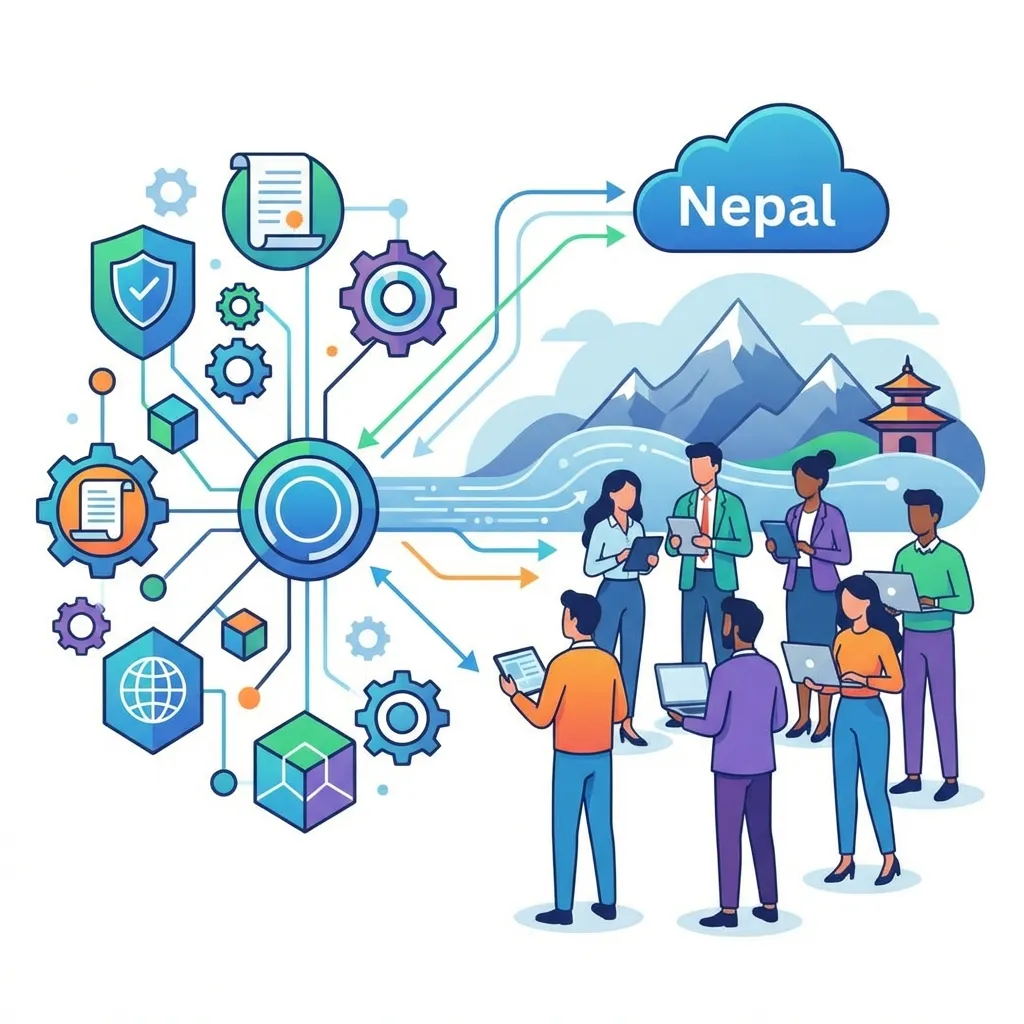
- Geography vs Connectivity: How do you enforce stable internet in a country that is 80% mountains? Policy-makers in flat countries (like the Netherlands) don’t understand the cost of fiber in the Himalayas. We need to explain it to them so global funding models can adapt.
- Language and Script: Our Devanagari script is complex. If we don’t push for Universal Acceptance (UA), the future internet will only work well for English speakers. We cannot wait for India to solve this; our specific Nepali unicode implementations matter.
- Landlocked Resilience: We rely on connectivity through India and China. This creates specific vulnerabilities (internet shutdowns, fiber cuts). Our perspective on cross-border connectivity resilience is invaluable to other landlocked nations (like Laos or Mongolia).
mindmap
  root((Nepal's Unique Internet Governance Challenges))
    Geography vs Connectivity
      Cost of Fiber in Himalayas
      Global Funding Models Adaptation
    Language and Script
      Devanagari Script Complexity
      Universal Acceptance (UA) Push
      Nepali Unicode Implementations
    Landlocked Resilience
      Reliance on India/China Connectivity
      Vulnerabilities (Shutdowns, Fiber Cuts)
      Cross-border Connectivity Resilience
Figure 1: Key Challenges in the Nepal Scenario
If You Are Not at the Table, You Are on the Menu
There is an old saying in diplomacy: “If you are not at the table, you are on the menu.”
If Nepali experts don’t engage in APNIC or ICANN:
- Rules about IP pricing might ignore our purchasing power.
- Standards for digital ID might not fit our citizenship database systems.
- Content moderation rules by Meta/Google might misunderstand our cultural context, leading to over-censorship or uncontrolled hate speech.
graph TD
  A[Nepal Not at the Table] --> B{Decisions Made Elsewhere};
  B --> C1[IP Pricing Ignored];
  B --> C2[Digital ID Standards Don't Fit];
  B --> C3[Content Moderation Misunderstands Culture];
  C1 --> D1[Higher Costs for Users];
  C2 --> D2[Incompatible Systems];
  C3 --> D3["Over-censorship or Hate Speech"];
  D1 & D2 & D3 --> E((Negative Impact on Nepali Digital Ecosystem));
Figure 2: Consequences of Non-Participation in Internet Governance
Cultural Bridge
Nepal has always been a neutral ground. In Internet Governance, we can play a role as a bridge-builder in South Asia. Our civil society is vibrant and relatively free compared to some neighbors. We can lead the conversation on Digital Rights in the region.
Your Perspective is Data
When you speak at a forum, you aren’t just giving an opinion. You are providing data to decision-makers.
- “My students can’t afford Zoom data packs.” -> That’s data for pricing policy.
- “My startup can’t pay for AWS because of dollar limits.” -> That’s data for fintech policy.
So, speak up. Your reality is the missing piece of their puzzle.
Related Posts and Resources
- Digital Marketing in Nepal (Complete Guide)
- Google Ads in Nepal: Practical Strategy
- SEO Analytics for Nepali Businesses
- eCommerce Analytics Setup in Nepal
- eCommerce Metrics That Matter
- Email Marketing Guide for Nepal
- Email Marketing ROI in Nepal
- Facebook Ads Budget Guide (Nepal)
- Cultural PPC Strategy for Nepal
- Competitor Analysis Framework for Nepal