How Structured Mentorship Using the KLEM Framework Transforms 7th Semester Marketing Students
The transition from a university classroom to a corporate boardroom is rarely smooth. For marketing students, the 7th semester represents a critical strategic inflection point. It is the moment where academic theory must convert into professional capability.
Students at this stage often face significant pressure. They manage coursework, thesis requirements, internship hunting, and the looming reality of post-graduation life. Without guidance, this pressure leads to confusion rather than clarity.
This is why structured mentorship is essential. I am excited to share that I have recently been assigned to volunteer as an industry mentor for BBA 7th semester marketing students at Kathford International College. As I sit down to prepare for my first sessions with these emerging professionals, I find myself reflecting on my own journey and the crucial skills that the market demands today.
To guide these sessions and ensure my students get the maximum value out of our time together, I will be strictly abiding by the institution’s foundational educational philosophy: the KLEM Framework.

Why 7th Semester Is a Strategic Inflection Point
The 7th semester is not just another academic term; it is the phase where a student’s identity shifts. They stop being just students and start becoming emerging professionals.
Common problems emerge at this stage. Many students lack career clarity. They know they want to “do marketing,” but they cannot define what role suits them. Their professional portfolios are often weak or non-existent. Furthermore, most students rely heavily on their GPA as their only asset, not realizing that the industry values relationships and demonstrated skills more than exam scores.
They also suffer from limited real industry exposure. They understand the definition of SEO or branding, but they have never executed a campaign.
My goal as an industry mentor is to address these issues directly. I want to force students to confront their readiness gaps before they graduate, moving them from passive learning to active career preparation.
Abiding By the KLEM Philosophy
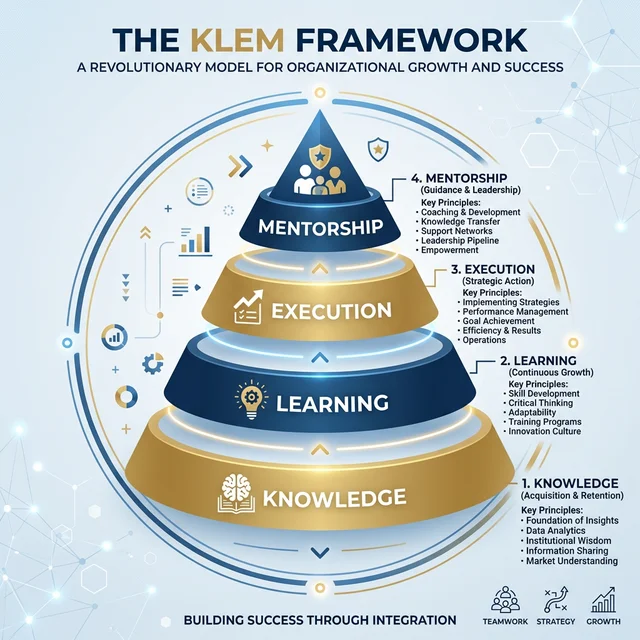
At Kathford International College, the Kathford Learning Experience Model (KLEM) serves as the institution’s core foundational philosophy. It is not just an arbitrary theory; it is a practical scaffolding used to guide student transformation dividing student development into four integrated domains.
mindmap
  root("(KLEM Framework"))
    Foundational Literacy
      Subject Mastery
      Reading & Research Skills
      Analytical Thinking
    Professional Skills
      Digital Tools Proficiency
      Campaign Execution
      Client Communication
      Presentation Skills
    Learning and Innovation Skills
      Adaptability
      Creative Problem-Solving
      Collaboration
      Critical Thinking
    Life and Career Skills
      Time Management
      Professional Etiquette
      Emotional Intelligence
      Accountability
Figure 1: The KLEM Framework Domains for Student Development
As a mentor, I plan to leverage these 4 domains to structure our mentorship sessions, ensuring that my industry advice aligns perfectly with their academic foundation.
1. Foundational Literacy in Marketing Education
Foundational Literacy focuses on subject mastery. For a marketing student, this means understanding the core concepts deeply.
It involves reading comprehension and research skills. A 7th-semester student must be able to read complex market reports and understand them. Furthermore, analytical thinking falls under this domain. Can the student look at data and find the story?
My mentorship sessions will focus on testing this foundational literacy and challenging the students to apply these concepts to real Nepal-based market scenarios rather than textbook examples.
2. Professional Skills for Marketing Students
Professional Skills focus on the technical competence needed to do the job. This is where theory meets practice.
We will focus heavily on digital tools. A marketing graduate must know how to use analytics platforms, CRM software, and design tools. Campaign execution is essential; students need to know how to launch a project, not just plan it.
Client communication and presentation skills are non-negotiable. In the business world, you must sell your ideas. My goal is to work with the students to ensure they can confidently demonstrate these skills, as employers prioritize skill demonstration over grades.
3. Learning and Innovation Skills
The market changes every day. Learning and Innovation Skills focus on adaptability.
Creativity is central to marketing, but it is not just about being artistic—it’s about problem-solving. How does a student react when a campaign fails? Collaboration is vital; marketing is a team sport.
I want to use my mentorship sessions to challenge their critical thinking, forcing them to question assumptions and ensuring they have the adaptability to survive in a volatile digital market. Employers want staff who can think on their feet and innovate when standard procedures fail.
4. Life and Career Skills
This is often the most neglected area in traditional education, focusing on the person, not just the professional.
Time management is the first hurdle; corporate life is deadline-driven. Students must learn discipline. Professional etiquette includes everything from email tone to dress code, while emotional intelligence is key to handling rejection and feedback without collapsing.
These skills differentiate average graduates from future leaders. By adhering to the KLEM framework, I will ensure these soft skills are developed intentionally during our time together.
What Marketing Employers Actually Look For
There is often a massive disconnect between what students think employers want and what we actually look for.
Students obsess over their GPA. Employers obsess over the portfolio. A 4.0 GPA shows you can take tests. A strong portfolio shows you can do the work. Employers value initiative; we want to see what you did without being asked. Passive learning is a red flag.
Communication clarity is essential. Can you write a concise email? Can you explain a complex idea simply?
Consider two hypothetical students: Student A: Has a 3.9 GPA. Attends every class. Has no internship experience. Has no portfolio. Student B: Has a 3.2 GPA. Completed a summer internship. Has a portfolio of three distinct marketing campaigns. Writes a blog about digital trends.
Student B gets hired. Student A struggles to get an interview.
graph TD
    subgraph Student A
        A[3.9 GPA] --> A1(Attends every class)
        A1 --> A2(No Internship)
        A2 --> A3(No Portfolio)
        A3 --> A_Outcome[Struggles to get interview]
    end

    subgraph Student B
        B[3.2 GPA] --> B1(Summer Internship)
        B1 --> B2("Portfolio: 3 Campaigns")
        B2 --> B3("Blog: Digital Trends")
        B3 --> B_Outcome[Gets hired]
    end

    style A_Outcome fill:#fcc,stroke:#333,stroke-width:2px
    style B_Outcome fill:#cfc,stroke:#333,stroke-width:2px
Figure 2: Employer Perspective: Student A vs. Student B
Student B proved their value. Student A only promised potential. The goal of my 7th semester mentorship program is to turn Student A into Student B.
My Approach to Structured Mentorship
I do not intend to leave this transformation to chance. I will apply mentorship step-by-step.
It will begin with student profiling at the start of the semester to look at their mismatched skills and interests. From there, I will mandate career goal documentation; I want my mentees to write down exactly what they want to achieve.
Using a KLEM self-assessment, they will rate themselves on the four domains to reveal blind spots. We will then set SMART goals (Specific, Measurable, Achievable, Relevant, and Time-bound) across these domains.
The core of the program will be our monthly review sessions. We will track their portfolios, review their LinkedIn positioning, and push them toward valuable industry exposure.
Mentorship Orientation Slides
Below are the slides I have prepared for our orientation session. We will be using this deck to kick off our mentorship program and align our expectations:
Conclusion: Preparing for Day One
The transition from student to professional does not happen by magic. It happens by design.
By volunteering as an industry mentor and utilizing the robust KLEM framework as my structural guide, I believe I can help remove the guesswork for these students. My role is not just to offer advice, but to enforce accountability and focus on intentional growth.
I look forward to meeting the BBA 7th semester marketing students at Kathford. Our goal is not just to get them graduated, but to ensure they are professionals ready to work, ready to lead, and ready to succeed.
Suggested Internal Links
- 7 Essential Digital Marketing Skills for Undergraduates
- How to Build a Professional Portfolio Before Graduation
- Understanding the KLEM Framework at Kathford
- Why Soft Skills Mapped to KLEM Matter in Business
- Transitioning from University to Your First Job
Suggested External References
- Kathford International College - Official Approach
- Harvard Business Review: What the Best Mentors Do
- LinkedIn: The Importance of Mentorship in Career Development
Related Posts and Resources
- Low-Tech, High-Impact Teaching in Nepal
- Coding for Teachers in Nepal
- Data-Driven Grading for Educators
- Open-Source Schools in Nepal
- Gamification in Nepali Classrooms
- Cyber Hygiene for Students and Teachers
- Flipped Classroom in Nepal
- CS Unplugged Activities in Nepal
- School Wi-Fi Budget Planning
- AI-Based Assessment in Nepal