Nepal's Self-Reliance: Autarky in a Fractured World
The prevailing architecture of international trade, predicated upon frictionless cross-border logistics, uninterrupted supply chains, and the unhindered flow of global capital and labor, is facing an era of unprecedented destabilization. For a landlocked, mountainous, and ecologically diverse nation like Nepal, the potential enduring collapse of global interconnectivity due to protracted geopolitical conflicts represents an existential vulnerability. Historically reliant on international corridors for essential commodities—ranging from refined fossil fuels and chemical fertilizers to active pharmaceutical ingredients and heavy industrial machinery—Nepal finds itself at a critical strategic inflection point. The nation must undertake a radical paradigm shift from a state of reactive import dependency to a structurally self-reliant ecosystem of localized production and decentralized consumption.
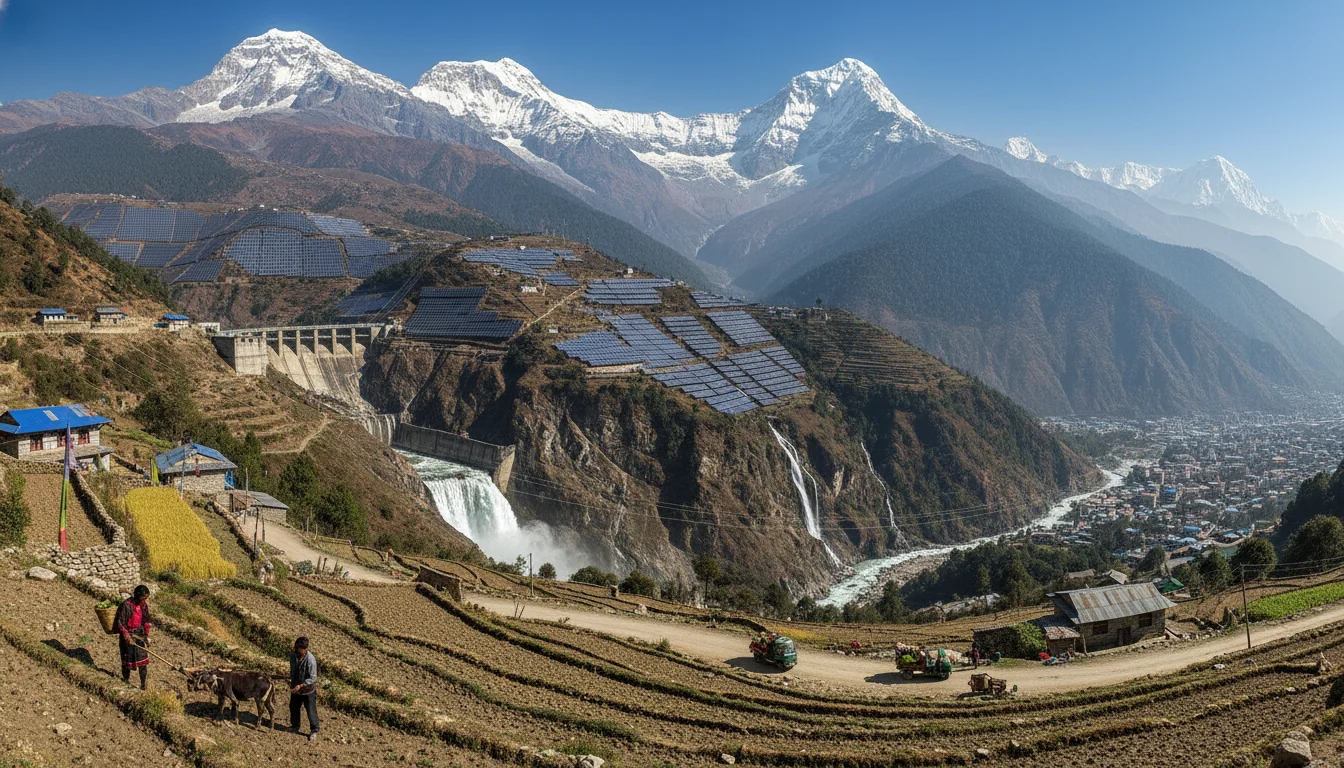
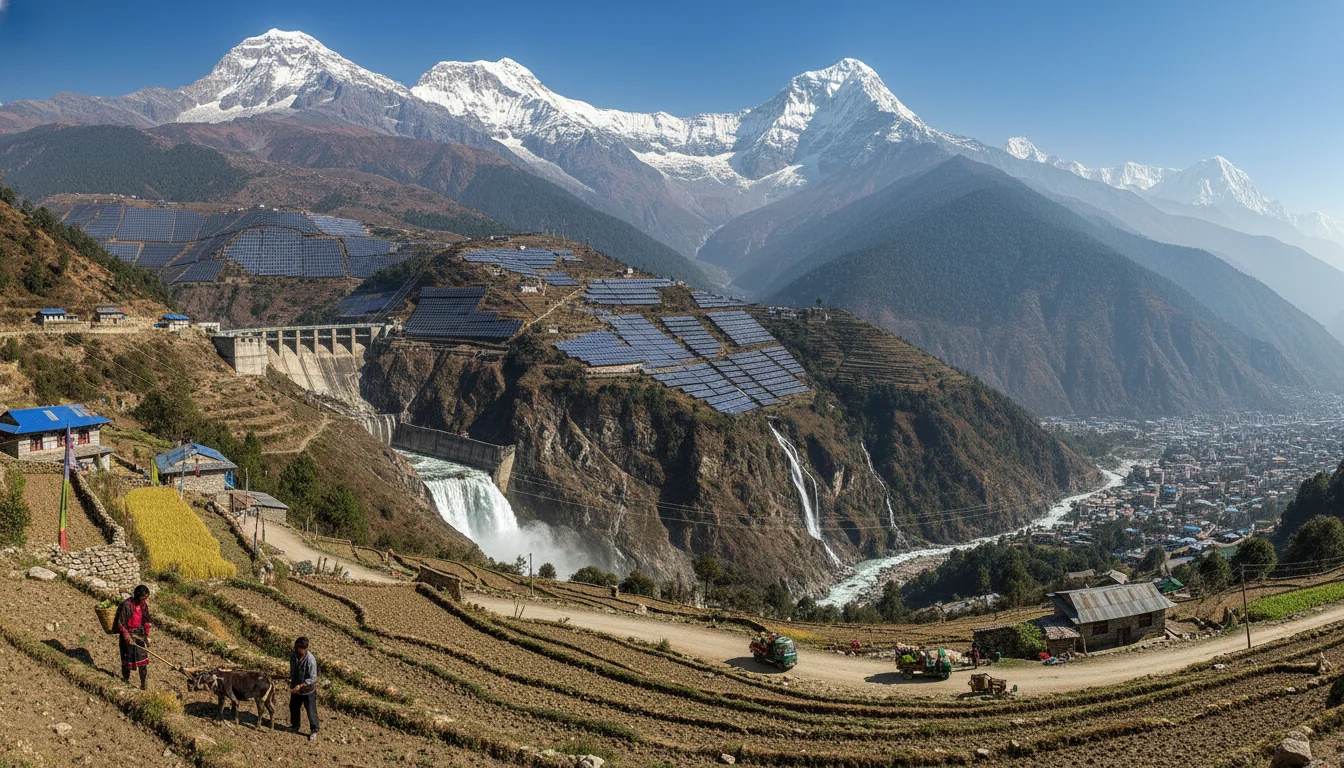
This exhaustive report evaluates the pathways toward Nepalese autarky and sovereign resilience. It posits that survival and sustained prosperity in a post-globalized paradigm require moving beyond traditional import substitution policies. Instead, Nepal must operationalize a localized, decentralized economic and infrastructural matrix. By systematically decoupling from precarious international supply chains, Nepal can transform its perceived geographical constraints into strategic buffers. This involves securing energy independence through domestic hydroelectricity and solar proliferation, establishing agricultural sovereignty via organic inputs and indigenous seed banking, localizing industrial manufacturing capabilities, and reviving traditional ecological knowledge systems alongside emerging decentralized digital technologies.
The Macroeconomic Restructure: Eradicating the Remittance Trap
The baseline macroeconomic architecture of Nepal is currently characterized by a severe structural imbalance that leaves the nation highly exposed to external shocks. Global trade statistics from 2024 reveal that Nepal ranked 151st out of 226 countries in total exports, generating a mere $1.24 billion, while simultaneously ranking 114th in imports, consuming $10.3 billion in foreign goods. This discrepancy translates to a per capita export of just $41.80 against a per capita import of $347. The export portfolio is precariously narrow, dominated by low-complexity goods such as soybean oil ($93.5 million), knotted carpets ($84.1 million), and synthetic staple fibers. Conversely, the import structure is dominated by capital-intensive and energy-critical goods, including refined petroleum ($1.54 billion), petroleum gas ($399 million), and telephonic equipment ($289 million). The Economic Complexity Index (ECI) further highlights this vulnerability, ranking Nepal 50th out of 138 in research complexity and 110th out of 172 in software complexity, indicating a lack of advanced endogenous manufacturing capabilities.
This unsustainable trade deficit, which ballooned to Rs 649.68 billion in the first five months of the 2025/26 fiscal year alone, is almost entirely subsidized by international labor migration. In that same five-month period, petroleum imports alone surpassed the entirety of the nation’s export earnings. Remittances currently constitute approximately 22.8 percent of the national Gross Domestic Product (GDP), making Nepal one of the most remittance-dependent economies globally. The structural penetration of this dependency is profound; between the 1995/1996 and 2022/2023 fiscal years, the share of Nepalese households receiving remittances surged from 23.4 percent to 76.8 percent, with the nominal average remittance amount per recipient household increasing from NRs 15,160 to NRs 145,093.
While this massive financial inflow currently stabilizes foreign exchange reserves and drives household consumption, it masks deep systemic vulnerabilities and functions as a detrimental “remittance trap”. The reliance on labor export externalizes the demographic dividend—currently, 40.68 percent of the population is between 16 and 40 years old—resulting in a severe domestic brain drain and agricultural labor shortage. Furthermore, this economic model utilizes the human body as a site of extraction, leading to severe occupational hazards, mental health erosion due to social isolation, and compromised well-being among migrant workers primarily stationed in the Gulf Cooperation Council (GCC) states and Malaysia.
In a scenario of protracted global conflict, international labor markets will invariably contract, and cross-border financial flows will face severe disruptions. The immediate macroeconomic necessity for Nepal is the rapid transition toward an endogenous, production-based economy. This requires shifting capital away from import-driven consumption and redirecting official development assistance (ODA) and domestic credit toward the private sector to fuel local industrial capacity and agricultural modernization. The broader regional geopolitical landscape reinforces this necessity. Neighboring India has aggressively pursued the Atmanirbhar Bharat Abhiyan (Self-Reliant India) mission, aiming to reduce import dependency and build domestic supply chains, backed by a stimulus package worth approximately 10 percent of its GDP. As regional hegemonies close their supply chains to prioritize internal resilience, Nepal’s transition to autarky becomes not merely a theoretical exercise, but an urgent geopolitical imperative.
Economic Indicator: Total Exports
2024/2025 Baseline Metric: $1.24 Billion (Rank 151/226)
Strategic Implication for Autarky: Indicates severe lack of domestic production capability; requires urgent industrial localization.
Economic Indicator: Total Imports
2024/2025 Baseline Metric: $10.3 Billion (Rank 114/226)
Strategic Implication for Autarky: Unsustainable capital flight; highly vulnerable to international shipping disruptions.
Economic Indicator: Remittance Dependency
2024/2025 Baseline Metric: 76.8% of households receiving funds
Strategic Implication for Autarky: Exposes economy to global labor market shocks; necessitates domestic job creation.
Economic Indicator: Fuel Import Costs
2024/2025 Baseline Metric: Surpassed total export earnings (FY 25/26)
Strategic Implication for Autarky: Complete vulnerability to global energy crises; demands immediate transition to domestic renewables.
Federalism and Decentralized Governance as the Bedrock of Resilience
The transition toward absolute economic self-reliance requires operationalizing the constitutional framework of federalism, which actively decentralizes administrative power and fiscal responsibility across federal, provincial, and local governments. Historically, the Local Self-Governance Act (LSGA) of 1999 attempted to devolve powers, but suffered from capacity crunches, unfunded mandates, and the political instability of the conflict era. However, the 2015 Constitution formally established a three-tier government system, granting local governments 22 constitution-delegated rights over critical sectors including primary education, health services, local roads, irrigation, and the management of local markets.
In a de-globalized world, the centralized nation-state model becomes a logistical liability. Decentralized governance ensures that if the federal capital is cut off from global or regional communications and resources, provincial and municipal entities can sustain their populations autonomously. The effectiveness of localized governance was distinctly demonstrated during the COVID-19 pandemic. When national lockdowns severed domestic supply chains, local units successfully managed emergency localized procurement and established food distribution networks. For example, in the Bagmati Province, local governments established highly effective food bank systems to support marginalized communities, particularly the Dalit and Chepang populations, preventing severe malnutrition through direct, localized intervention.
Provincial budgets are increasingly reflecting this necessary shift toward domestic production and infrastructure resilience. For the fiscal year 2025/26, the Bagmati Province unveiled a budget of Rs 67.47 billion, deliberately skewing capital expenditure toward physical infrastructure development (Rs 24.80 billion), water supply and energy (Rs 7.28 billion), and agriculture and livestock (Rs 2.63 billion). This fiscal prioritization aligns with the broader mandate to bring fallow land into cultivation, modernize localized farming, and support marginalized farmers through cooperative networks. By decentralizing the mandate for self-reliance to the provincial and municipal levels, local governments can tailor industrial policies to specific geographic realities, thereby establishing a highly resilient, multi-nodal economic defense system that does not rely on a fragile, centralized distribution hub.
Energy Sovereignty: Decoupling from the Fossil Fuel Apparatus
Nepal’s most critical strategic vulnerability lies in its absolute dependence on imported fossil fuels. Refined petroleum products and petroleum gas dominate the national import structure, accounting for $1.54 billion and $399 million respectively in 2024. Data from the Nepal Rastra Bank indicates that petroleum products consistently account for roughly 13 percent of the total import share, driven by a heavy reliance on fuel-based transport and industrial systems. The transport sector alone consumes 52 percent of this imported petroleum, while the industrial sector consumes 28 percent. A collapse in the global oil supply chain, or a localized blockade as experienced in 2015, would instantly paralyze internal logistics, halt agricultural mechanization, and severely disrupt market access.
Conversely, Nepal possesses a massive, largely untapped endogenous energy source: its topography and hydrology. Currently, over 90 percent of the nation’s domestically generated electricity is sourced from hydropower.
The strategic alignment of these two realities dictates an aggressive, complete electrification of the domestic economy, structured through an Integrated Renewable Transition Model (IRTM) that combines policy reforms, hybrid energy systems, and decentralized infrastructure.
The Rapid Electrification of Transportation
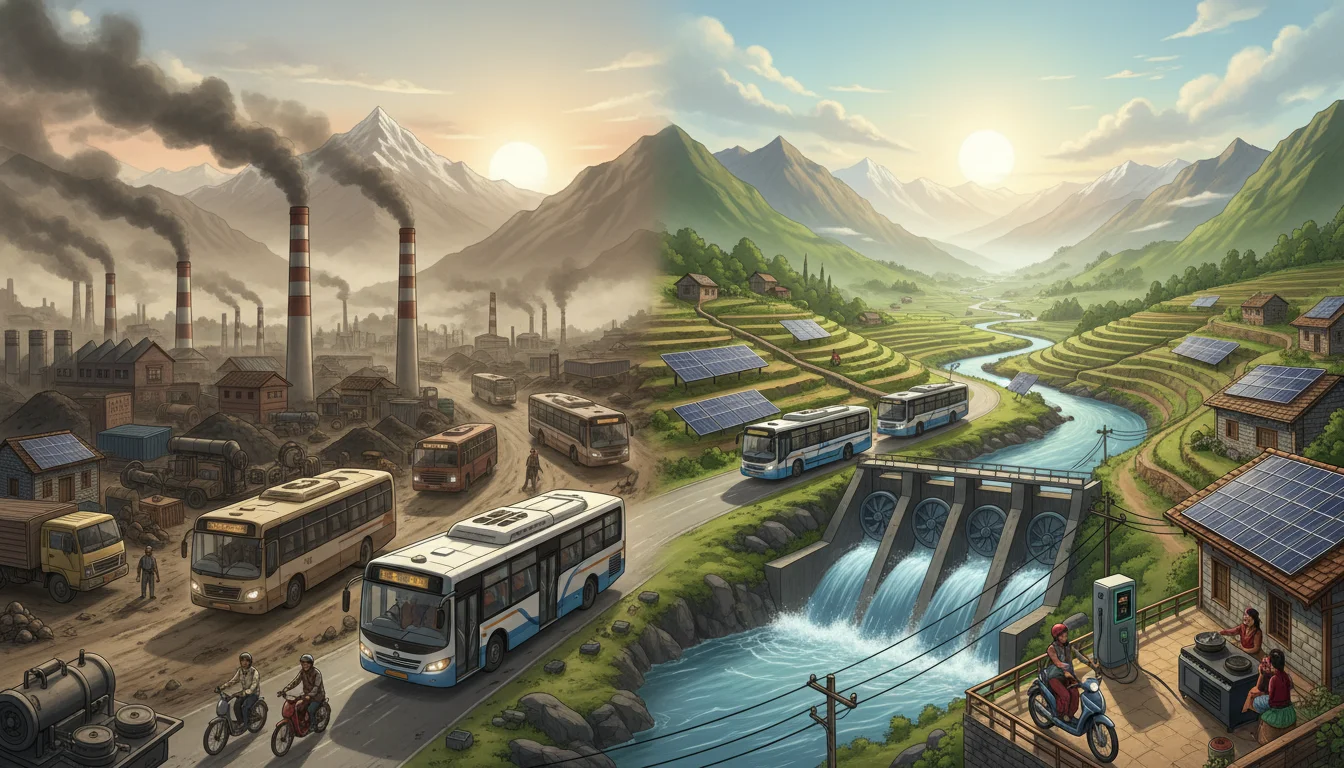
Nepal is currently exhibiting one of the fastest electric vehicle (EV) adoption rates globally for an emerging economy. Recent automotive market data indicates that an unprecedented 76 percent of new passenger cars sold in Nepal are electric. This rapid transition has been catalyzed by strategic fiscal policies; the government has slashed import duties on EVs to between 25 and 90 percent, while internal combustion engine (ICE) vehicles face punitive duties ranging from 276 to 329 percent. Nepal’s updated climate action plan (NDC 3.0) aggressively targets 90 percent of private cars and 60 percent of public vehicles to be electric by 2030, culminating in near-total fleet electrification by 2035.
While the initial hardware—the vehicles and their lithium-ion battery architectures—still relies on foreign imports, the ongoing operation of these vehicles is powered purely by domestic hydroelectricity. This transition effectively neutralizes recurring fuel import dependency, keeping capital within the domestic economy. The proliferation of over 60 public charging stations in the Kathmandu Valley and along major highway routes indicates a rapidly maturing domestic infrastructure. Furthermore, this transition is facilitating a technological leapfrog effect. In many rural and semi-urban areas, citizens are bypassing traditional ICE motorcycles entirely, moving directly from non-motorized transport to e-bikes, significantly enhancing local mobility without compounding fossil fuel demand.
Decentralized Micro-Grids and Agricultural Electrification
In rural and mountainous terrains where extending the centralized national grid operated by the Nepal Electricity Authority (NEA) is logistically prohibitive and financially unviable, energy self-reliance must be achieved through Decentralized Renewable Energy (DRE) systems. Micro-hydro power (MHP) plants operate independently of the main grid by harnessing the kinetic energy of local rivers and streams, bringing reliable electricity to isolated communities without requiring large-scale, environmentally disruptive dam infrastructure. By 2024, Nepal’s off-grid hydropower capacity reached 36.5 megawatts, successfully connecting nearly a million rural residents to reliable power.
Simultaneously, the agricultural sector must urgently decouple from diesel. During the six-month dry season, farmers in unelectrified districts traditionally spend between $1,000 and $2,200 annually to rent and fuel diesel water pumps. The deployment of solar-powered irrigation pumps (SIPs), subsidized up to 60 percent by the Alternative Energy Promotion Centre (AEPC), is actively replacing these diesel pumps across the Terai plains. By 2021, over 2,000 solar pumps had been installed, with AEPC initiatives specifically targeting smaller landholders and women entrepreneurs, who constituted 22 percent of the beneficiaries. While some farmers currently utilize SIPs alongside legacy fossil-fuel pumps, strict policy redirection and further subsidies could eliminate diesel reliance entirely, securing the agricultural base against global oil price volatility. In combination with residential domestic biogas (DBG) digesters and metallic improved cookstoves (MICS), rural municipalities can achieve full energy autarky, shielding themselves entirely from international energy shocks.
Agricultural Sovereignty: Eradicating the Chemical Supply Chain
Agricultural self-reliance is the absolute bedrock of national survival during a prolonged global crisis. Currently, Nepal’s agricultural output is highly contingent on imported chemical fertilizers, primarily procured from India and China. In the early months of the 2025/26 fiscal year, chemical fertilizer imports surged by 68.1 percent, reaching Rs. 16.17 billion. While this indicates active government procurement to secure yields, it reflects a dangerous, systemic vulnerability to international supply bottlenecks. The Ministry of Agriculture and Livestock Development estimates annual national demand for fertilizers at 700,000 tons, yet historical imports have often stagnated at 300,000 tons due to global shortages and logistical delays, leading to recurring agricultural crises. If global shipping lanes close entirely, the subsequent fertilizer deficit would trigger an immediate collapse in domestic crop yields, precipitating a national food security crisis.
The Shift to Improved Organic Manure
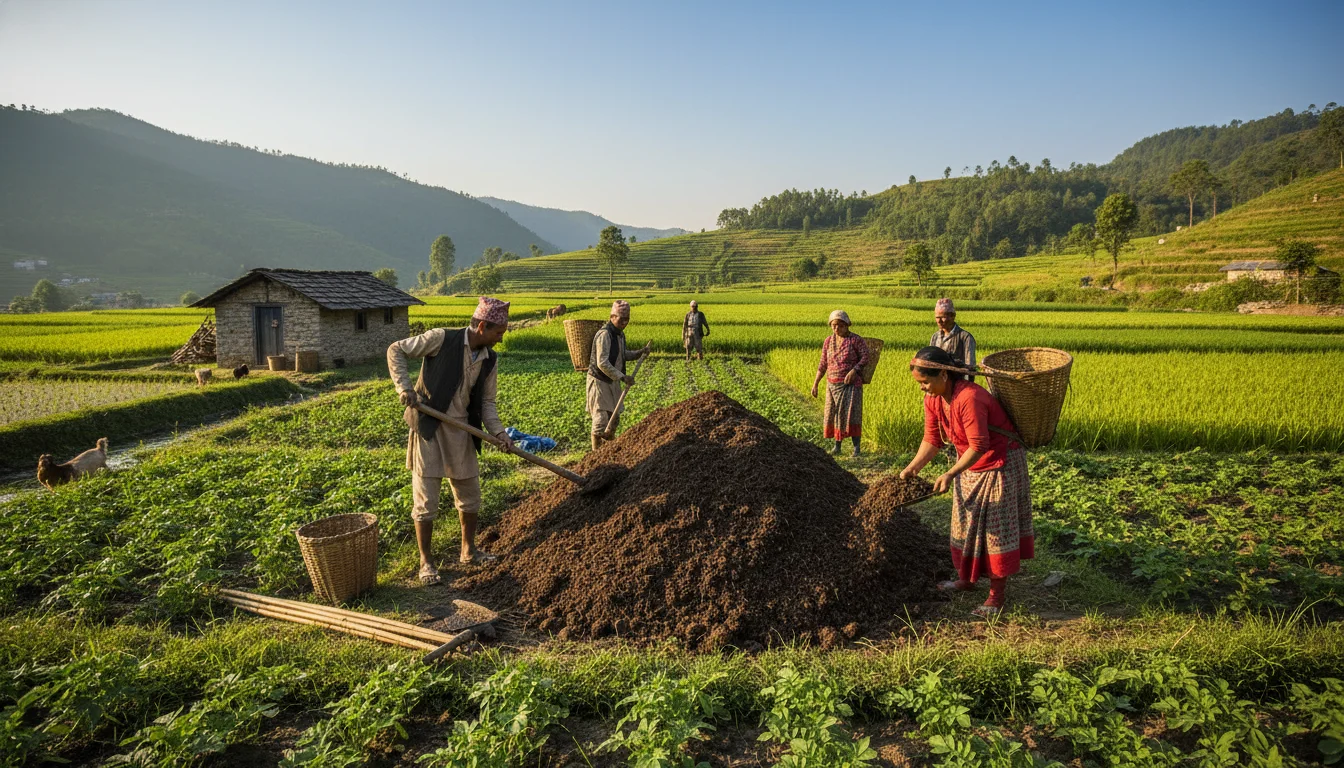
To permanently mitigate this risk, Nepalese agriculture must rapidly pivot to improved organic manure practices, capitalizing on abundant local biomass and livestock waste. Empirical evaluations utilizing the highly rigorous control function approach in endogenous switching regression models (CF-ESR) have demonstrated that the adoption of improved organic manure practices increases crop yields by an average of 17 percentage points. The methodology, which accounts for self-selection biases regarding farmer skill and land quality, reveals that adopting farm households achieved an average predicted crop productivity of 8,764 kg/ha, compared to 7,482 kg/ha for non-adopting households—a substantial yield advantage of 1,282 kg/ha. Crucially, counterfactual analyses indicate that non-adopting farms would realize an average yield increase of 1,448 kg/ha had they implemented these endogenous technologies.
Transitioning the nation to organic inputs requires the rapid scaling of robust domestic infrastructure. The government has laid the groundwork through initiatives like the vermicompost production program launched in 2014, and subsequent subsidies. As of recent assessments, 25 private organic fertilizer manufacturing companies have been established, possessing a combined production capacity of over 100,000 tons annually. Localized, decentralized initiatives further prove the viability of this model. For instance, a public-private partnership in Palpa—involving the rural municipality, a local cooperative, and regional farmers—successfully established an organic fertilizer plant producing between 500 and 1,000 kilograms daily, selling the product at an affordable Rs 25 per kilogram. To scale this autarkic model nationwide, the promotion of vermicomposting must be aggressively accelerated through state agricultural extension services. Research indicates that the adoption of organic practices is heavily reliant on social capital; proximity to early adopters and cooperative networks increases the likelihood of technology uptake by up to 56 percent.
Indigenous Crop Revival and Seed Banking
A fundamental pillar of an autarkic, resilient food system is total sovereign control over genetic resources. Nepal currently imports an alarming 90 percent of its vegetable seeds, 30 percent of maize seeds, and 15 percent of rice seeds. This dependency is heavily skewed toward hybrid varieties that require continuous seasonal repurchase and demand intensive chemical inputs to thrive. A localized, self-reliant agricultural paradigm requires abandoning these external dependencies and reviving indigenous, climate-resilient crop varieties.
The Community Seed Bank Nepal (CSB Nepal) operates as a vital national platform, coordinating 28 community seed banks across all seven provinces. These decentralized repositories have successfully conserved 1,716 local varieties belonging to 75 different crop species. Annually, these member seed banks produce and market approximately 300 metric tons of local and farmer-preferred improved varieties. Indigenous crops often exhibit superior resistance to local pests, erratic monsoon patterns, and altitudinal extremes, demanding significantly fewer external inputs than imported hybrids. Strengthening these community seed banks ensures that local farmers maintain absolute sovereignty over their planting cycles and genetic heritage, rendering international agribusiness operations and foreign seed monopolies irrelevant to Nepalese food security.
Decentralized Storage and Cooperative Food Networks
Once agricultural commodities are produced, they must be preserved using indigenous methods that do not rely on electrified cold chains, which are inherently vulnerable to grid failures or imported refrigerant shortages. Traditional Nepalese grain storage structures provide highly effective, sustainable, off-grid preservation capabilities. These include the Bhakari (woven bamboo silos often coated in mud or cow dung), the Deri or Kothi (mud bins), and the Ghyampo (earthen clay pots). In rural areas, the traditional Dhiki (a manual wooden lever) and Jaato are utilized for dehusking and processing grains locally without reliance on diesel-powered mills. Seed protection is achieved utilizing indigenous botanical materials; farmers use powders derived from neem, timur, marich, and titepati leaves to prevent pest degradation without the application of imported synthetic agrochemicals.
Furthermore, the establishment of decentralized food banks and cooperative distribution networks ensures equitable food access during systemic macroeconomic shocks. As demonstrated during the pandemic lockdowns in Bagmati Province, localized food banks managed by rural municipalities provided essential short-term food support to highly vulnerable demographics, particularly wage laborers from Dalit and Chepang communities.
By integrating these cooperative food banks into the permanent provincial architecture, Nepal shifts its agricultural focus from hyper-commercialized, export-oriented cash cropping to prioritizing essential domestic food security and community resilience.
Agricultural Autarky Mechanism
-
Fertilizer Supply
- Heavy reliance on India/China; 68.1% import surge
- Scale organic manure and vermicomposting; proven to increase yields by 17%.
-
Seed Sovereignty
- 90% vegetable, 30% maize seeds imported (hybrids)
- Expand CSB Nepal network; utilize 1,716 conserved local varieties.
-
Grain Processing & Storage
- Reliance on grid-powered mills and chemical pest control
- Revive traditional Bhakari silos, Dhiki processing, and botanical pest repellents (neem, timur).
-
Food Distribution
- Centralized, market-driven supply chains
- Provincial food banks and cooperative networks managed by local governments.
Endogenous Manufacturing: Health, Textiles, and Construction
A truly self-sufficient state must possess the sovereign capacity to guarantee the physiological security of its population and the structural integrity of its habitats. Currently, Nepal’s industrial capacity is severely underutilized, operating at an average capacity utilization rate of just 44.5 percent, with extreme disparities across sectors. Strategic state intervention is required to redirect idle manufacturing capacity toward critical domestic needs, effectively replacing imported essentials.
Pharmaceutical Autonomy and Botanical Active Ingredients
The reliance on imported medicines and medical consumables constitutes a profound strategic weakness in national defense planning. Recognizing this critical vulnerability, the Ministry of Health and Population has directed domestic pharmaceutical industrialists to prioritize the full, localized production of 98 designated essential medicines. Currently, domestic production satisfies only 40 to 50 percent of national demand, leaving rural health posts highly vulnerable to supply chain disruptions. Achieving full pharmaceutical self-reliance, however, requires moving beyond the mere downstream formulation and packaging of imported Active Pharmaceutical Ingredients (APIs) to the actual domestic synthesis of these critical compounds.
Nepal possesses an immense, inherently valuable biological asset base: it is a prime habitat for over 400 species of medicinal and aromatic plants (MAPs). The Karnali Province, and particularly the Dolpa district, harbors vast biodiversity, accounting for 57 percent of the nation’s MAPs. High-value species such as Picrorhiza kurrooa (Kutki), Swertia chirayita (Chiraaito), Zanthoxylum armatum (Timur), and Cinnamomum tamala (Tejpat) are extensively harvested by rural populations. However, these resources are conventionally exported as raw, unprocessed materials to Indian and Chinese pharmaceutical conglomerates, only to be re-imported as expensive finished drugs.
To achieve pharmaceutical autarky, national policy must legally mandate and financially support the domestic processing of these biological assets. Establishing a centralized API research, extraction, and synthesis sector will allow Nepal to produce essential therapeutic compounds locally, dramatically reducing dependence on foreign API supply chains. Concurrently, the domestic production of essential medical consumables—such as hypodermic syringes, absorbent cotton wool, and gauze bandages—must be scaled to fulfill absolute domestic clinical requirements. Companies such as Fortuna Healthcare and Everest Med, both of which possess ISO 9001 and ISO 13485 certifications and operate under WHO Good Manufacturing Practices (GMP), demonstrate that high-quality, sterile medical manufacturing is already viable within Nepal’s borders. Scaling these operations ensures that primary hospitals and health posts remain operational even under conditions of total global isolation.
Sovereign Textiles and Apparel Production
Global apparel and textile supply chains are notoriously complex and highly fragile. A localized economy must rely entirely on endogenous fibers for clothing, agricultural textiles, and utilitarian fabrics. Nepal possesses abundant, naturally regenerating resources such as Himalayan Giant Nettle (Allo), wild hemp, and various bamboo species. These indigenous fibers represent a superior ecological and economic alternative to imported cotton or synthetics; they require significantly less water for cultivation, naturally resist parasites without the need for chemical pesticides, and thrive in Nepal’s diverse topography.
Local enterprises already utilize traditional, foot-powered treadle looms to weave these raw materials into highly durable, completely biodegradable fabrics. Hemp and nettle fibers possess extraordinary tensile strength, resulting in garments and textiles that exhibit a vastly superior lifespan compared to imported fast-fashion synthetics. Scaling these traditional cottage industries into organized, decentralized manufacturing hubs will secure domestic apparel demands, generate vital rural employment, and fully bypass the global synthetic textile market, which is inextricably linked to the fossil fuel industry.
Construction Material Sovereignty and Earthquake Resilience
Post-disaster reconstruction following the 2015 earthquake, coupled with rapid urbanization, has driven immense demand for heavy building materials. Nepal achieved a critical industrial milestone by becoming virtually self-sufficient in cement production. Aided by foreign direct investment—such as the massive joint venture between China’s Hongshi Group and Nepal’s Shivam Cement—and localized limestone extraction, domestic plants now possess an estimated annual production capacity of 25 million tonnes, significantly outpacing current domestic consumption of roughly 7 million tonnes.
However, conventional cement production remains heavily carbon-intensive, environmentally degrading, and occasionally reliant on imported coal for kiln firing. To truly build a resilient, self-contained construction sector, Nepal must pivot toward indigenous, low-embodied-energy materials that require minimal industrial processing. Cement Bamboo Frame Technology represents a highly resilient, seismically appropriate, and sustainable alternative. Bamboo is ubiquitous across Nepal, rapidly renewable, and possesses extraordinary structural properties. When specifically treated against pests and combined with traditional local stone foundations and a minimal cement plaster shell, engineered bamboo housing drastically reduces the need for heavy industrial inputs. Studies indicate that structures built using this technology reduce carbon emissions by up to 70 percent compared to conventional reinforced concrete systems. Promoting this technology ensures that vital housing and infrastructure expansion does not exhaust national capital or require extensive international material imports.
The Sustainable Circular Economy and the Indigenous Guthi Paradigm
The contemporary Western macroeconomic discourse surrounding the “Circular Economy” (CE) often focuses heavily on end-of-pipe recycling, complex waste-to-energy solutions, and maintaining high levels of consumerist throughput through material recovery. While specific technical applications of this model—such as the highly successful biogas production from municipal solid waste pioneered by the Women Environment Protection Committee (WEPCO) in Lalitpur—are highly relevant for urban Nepal, uncritically importing European CE policy frameworks ignores the profound, preexisting models of circularity deeply embedded in Nepalese culture. Mainstream CE models often fail to address the socio-ecological implications of a zero-waste society and do not inherently challenge the linear growth paradigm.
Instead, Nepal must pursue a Sustainable Circular Economy (SCE), which aligns more closely with regenerative economics and planetary health concepts like doughnut economics. True autarkic resilience in Nepal can be structurally modeled upon the traditional Guthi system. Originating in the Kathmandu Valley during the Licchavi period (500-800 AD) and maturing through the Malla era (1420-1768 AD), the Guthi is an indigenous social, religious, and land-tenure institution designed to manage common-pool resources, fund public works, and enforce comprehensive social safety nets entirely without state or international intervention.
Historically, specialized Guthis have masterfully managed complex irrigation systems (such as the Raj Kulo networks) and community drinking water spouts (Hitis), demonstrating a deep, localized capacity for decentralized resource administration. Crucially, the Guthi system acts as an autonomous, self-funding disaster resilience mechanism. Rather than relying on external governmental aid or international humanitarian appeals during crises, community members historically pooled their resources, agricultural surplus, and communal labor into the Guthi as a fundamental civic responsibility. When natural disasters such as earthquakes or extreme floods struck, these pooled resources were immediately mobilized to rebuild homes, repair vital infrastructure, and support disenfranchised families.
By modernizing, legally empowering, and scaling the Guthi model across contemporary local governance structures, municipalities can create robust, self-contained economic loops. This indigenous circularity guarantees that wealth, raw materials, and skilled labor remain constantly circulating within the immediate community. It fosters a high degree of economic autonomy and social cohesion that renders sprawling international supply chains largely irrelevant to local survival and prosperity.
Furthermore, the system inherently promotes sustainable resource management; for instance, historical Guthis managed dedicated community forests specifically to ensure a sustainable supply of timber for structural repairs and festival chariots, showcasing an embedded understanding of long-term ecological balance.
Decentralized Logistics and Additive Manufacturing (3D Printing)
A major operational vulnerability in any isolated economy is the ongoing maintenance, repair, and overhaul (MRO) of legacy imported technology. While Nepal can successfully transition its energy matrix to domestic hydropower and its transportation fleet to EVs, the physical mechanical components of these complex systems (hydro turbine runners, vehicle drivetrains, medical diagnostic machinery) will inevitably degrade over time. Currently, the lack of an advanced domestic heavy metallurgy sector forces Nepal to import these highly specific replacement parts. In the hydropower sector alone, the inability to locally forge and cast high-quality stainless steel forces generating companies to spend over $5.6 million annually on imported parts, causing severe operational delays and exposing the grid to international supply shocks. Indeed, approximately 72 percent of Nepalese hydropower companies continue to import their critical components.
The Strategic Role of 3D Printing and Micro-Manufacturing
The structural solution to this maintenance crisis lies in localized remanufacturing driven by 3D printing (Additive Manufacturing). 3D printing allows for the highly decentralized, small-scale production of complex mechanical components directly from digital CAD files, effectively eliminating the need for massive, centralized industrial foundries or reliance on international shipping corridors.
In the critical hydropower sector, advanced engineering research is actively optimizing the use of 3D printing to manufacture replacement Francis turbine runners and blades that are regularly damaged by the intense sediment erosion characteristic of Himalayan rivers. By reverse-engineering degraded parts via precise laser scanning and 3D digital modeling, local technicians can print exact, functional replicas, dramatically reducing downtime and capital flight.
Furthermore, field-ready 3D printing has already demonstrated profound, life-saving utility in the medical and mechanical sectors within Nepal and similar developing contexts. Local humanitarian tech initiatives have successfully printed highly specific, otherwise unattainable items, including water pipe cutters, IV fluid warmers, hand-powered centrifuges for blood analysis, and critical neonatal umbilical cord clamps. The economic and logistical disparity is stark: the capacity to 3D print a sterile umbilical cord clamp for merely $0.60 locally, rather than waiting weeks for a fragile imported supply chain that charges up to $3.00 per unit, epitomizes the absolute power of technological autarky. Scaling this capacity requires establishing a network of regional digital fabrication laboratories (FabLabs) across the provinces. In these hubs, community engineers can download open-source designs, modify them for local context, and print essential replacement parts for agricultural machinery, transport vehicles, and hospital equipment entirely on demand.
Reconfiguring Internal Logistics and Rural Connectivity
Without the constant influx of international imports, the domestic logistics ecosystem must be radically optimized to facilitate seamless internal trade. Currently, Nepal’s trucking and freight sector is severely hampered by outdated vehicle fleets, poor mechanical maintenance, and cartel-driven syndicate inefficiencies that artificially inflate the cost of moving goods between the Terai and the Hills.
A self-reliant logistics model requires the immediate implementation of a National Industrial and Logistics Master Plan that intricately connects provincial dry ports, domestic industrial manufacturing zones, and localized agricultural distribution hubs into a cohesive, highly efficient network. The strategic focus must shift completely from facilitating cross-border international transit to optimizing the internal movement of domestic commodities. The integration of digital freight-matching platforms and the aggressive transition to electric trucking fleets will remove systemic bottlenecks, ensuring that surplus food produced in the southern plains can reliably reach the northern mountainous regions without requiring a single drop of imported diesel.
Furthermore, the continuous maintenance of the vital rural road network must be entirely localized. Nepal has expanded its rural road network dramatically, yet nearly 80 percent of these roads remain unpaved, earthen tracks highly susceptible to monsoon landslides. Decentralized maintenance models, such as those successfully promoted under the Strengthening National Rural Transport Program (SNRTP) and the Department of Local Infrastructure Development and Agricultural Roads (DoLIDAR), empower local government bodies and dedicated Routine Maintenance Groups (RMGs) to constantly upkeep these roads using local labor and indigenous materials. This localized approach ensures year-round connectivity for isolated communities without relying on heavy, fuel-guzzling imported construction equipment, maintaining the arteries of the domestic economy.
Securing the Nervous System: Decentralized Mesh Networks and Community Radio
In a deeply fragmented geopolitical landscape, centralized telecommunications infrastructure—which relies heavily on global internet backbones, imported fiber optic cables, and highly centralized domestic data servers—is exceptionally susceptible to systemic failure, physical destruction, or deliberate cyber sabotage. To maintain internal socio-economic cohesion, coordinate logistics, and ensure robust disaster response capabilities, Nepal must deploy a fully decentralized communication architecture that cannot be shut down by external forces or single-point domestic failures.
The Proliferation of Wireless Mesh Networks
The Nepal Wireless Networking Project (NWNP), initiated in 1996 by Mahabir Pun to connect the Himanchal Higher Secondary School in the remote village of Nangi, serves as the definitive, proven blueprint for autonomous digital infrastructure in harsh topographies. Operating initially under restrictive telecom policies and during a period of political conflict, the NWNP utilized low-cost, off-the-shelf Wi-Fi equipment to build a massive, community-owned wireless network. This system successfully provided vital e-education, telemedicine diagnostics, and localized communication without relying on the rigid, centralized infrastructure of national telecom monopolies.
Expanding upon this foundational success, the widespread national deployment of advanced Wireless Mesh Networks (WMNs) ensures total communication resilience. In a mesh network topology, every connected device—be it a smartphone, a laptop, or a dedicated smart radio—acts as an independent node that receives, dynamically routes, and transmits data to its peers. Because there is no reliance on a single central server or vulnerable cell tower base station, the network is inherently self-healing; if one node fails or is physically destroyed during a disaster, the data traffic instantly and autonomously reroutes through surrounding available devices to reach its destination.
Recent field deployments of community mesh networks in semi-urban environments demonstrate significant technical advantages over older, rigid network models, including a 25 percent boost in data throughput, an 18 percent reduction in transmission delay, and packet delivery rates consistently maintained above 95 percent. Furthermore, these networks can operate entirely off-grid, powered by small, localized solar panels. This capability allows communities to communicate, coordinate the sharing of essential resources, and maintain digital agricultural marketplaces even if the national internet gateway is completely severed by global conflict.
Community Radio as a Resilient Broadcast Medium
For broad, immediate information dissemination—especially regarding critical agricultural data, weather forecasting, and disaster preparedness protocols—the medium of community radio remains unparalleled in its resilience and reach. Nepal boasts an exceptionally robust network of over 8,900 mass media outlets, with community radio stations serving as the vital backbone of rural communication. These stations have repeatedly proven their indispensable value during severe national crises, most notably during the catastrophic 2015 Gorkha earthquake and the more recent 2023 Jajarkot earthquake.
When standard cellular towers collapse or lose grid power, community radio journalists—often operating from makeshift, battery-powered studios—are able to keep the affected populations informed, guiding rescue efforts and coordinating the distribution of localized aid. By formally integrating these localized radio broadcasts with the decentralized community mesh networks, Nepal can establish an impenetrable, dual-layer communication grid. This hybrid system guarantees that the nation’s digital and informational nervous system remains fully functional and immune to global cyber disruptions, ensuring that local governments and citizens can act cohesively in the absence of federal or international direction.
Conclusion
The strategic path forward for Nepal in a globally fractured, post-conflict era is not one of technological or economic regression, but of profound, necessary structural evolution. For decades, the dominant metric of national development has been the degree of integration into global supply chains and international markets.
However, as those very chains transform into severe liabilities, the new, absolute metric of national success is the degree of autonomous, localized resilience.
By strategically synthesizing its inherent geographical realities—its massive hydrology, its biodiversity, and its rugged topography—with cutting-edge decentralized technologies, Nepal can construct an impenetrable autarkic economy. The transition requires decisively halting the reliance on labor-driven remittance and prioritizing endogenous production. This mandates utilizing vast hydroelectric resources to fully electrify the transport and industrial sectors, effectively neutralizing petroleum dependency. It requires abandoning imported chemical fertilizers and hybrid seeds in favor of potent, scientifically optimized organic alternatives and indigenous seed banking to guarantee absolute food sovereignty.
Furthermore, industrial self-reliance dictates that Nepal must manufacture its own essential medicines by synthesizing APIs from its rich biodiversity, weave its own textiles from highly resilient native fibers like hemp and Allo, and construct its infrastructure using engineered bamboo rather than imported, carbon-heavy materials. Where advanced mechanical components degrade, localized 3D printing and remanufacturing micro-factories must instantly replace international shipping lines. All of these disparate economic functions must be bound together by the profound indigenous wisdom of the Guthi system—enforcing resource efficiency, mutual aid, and civic responsibility—and coordinated through decentralized wireless mesh networks that cannot be severed by external geopolitical actors.
In executing this comprehensive blueprint, Nepal will not merely survive the collapse of global interconnectivity; it will emerge as a vanguard state of the post-globalized world. It will definitively demonstrate that true sovereignty and enduring security are derived not from international dependence, but from unyielding self-sufficiency, ecological harmony, and profound internal resilience.