Nepal Electric Scooters & Bikes: Market Analysis & Future
Comprehensive Analysis of the Electric Two-Wheeler Market in Nepal: Commuter Preferences, Technical Comparisons, and Long-Term Viability

The Macroeconomic and Policy Paradigm Shift in Nepalese Mobility
The transportation sector in Nepal is currently navigating a profound and irreversible structural transformation. This shift is driven fundamentally by macroeconomic necessity, stringent domestic policy interventions, and a rapidly increasing national surplus of hydroelectric power. Historically, the Nepalese economy has been deeply tethered to imported petroleum products, a dependency that has consistently widened the national trade deficit and exposed the country to the severe volatility of global energy markets. In response, the Nepalese government has strategically leveraged highly favorable taxation and customs duty structures to artificially accelerate the adoption of electric vehicles (EVs). The results of this policy framework are already starkly visible in the broader automotive sector, where electric vehicles now account for an astonishing 73% of all four-wheeled passenger vehicle imports into the country.
While the four-wheeler segment has captured the initial and most visible wave of electrification, the two-wheeler market is now reaching a critical inflection point. Two-wheelers—comprising both scooters and motorcycles—constitute approximately 80% of the existing vehicle fleet in the heavily congested Kathmandu Valley alone, representing an estimated 1.3 million operational units serving a population of 3.5 million. These vehicles are the lifeblood of urban mobility, preferred for their affordability, maneuverability in dense traffic, and the ubiquitous availability of localized repair mechanics. The emissions from this vast fleet of internal combustion engines, however, are a primary contributor to the hazardous air quality and high concentrations of carbon monoxide and toxic gases trapped within the valley’s topography. Consequently, the overarching public mentality is rapidly flipping from skepticism to active adoption, with industry projections indicating that electric two-wheelers will achieve majority market penetration within the next several years.
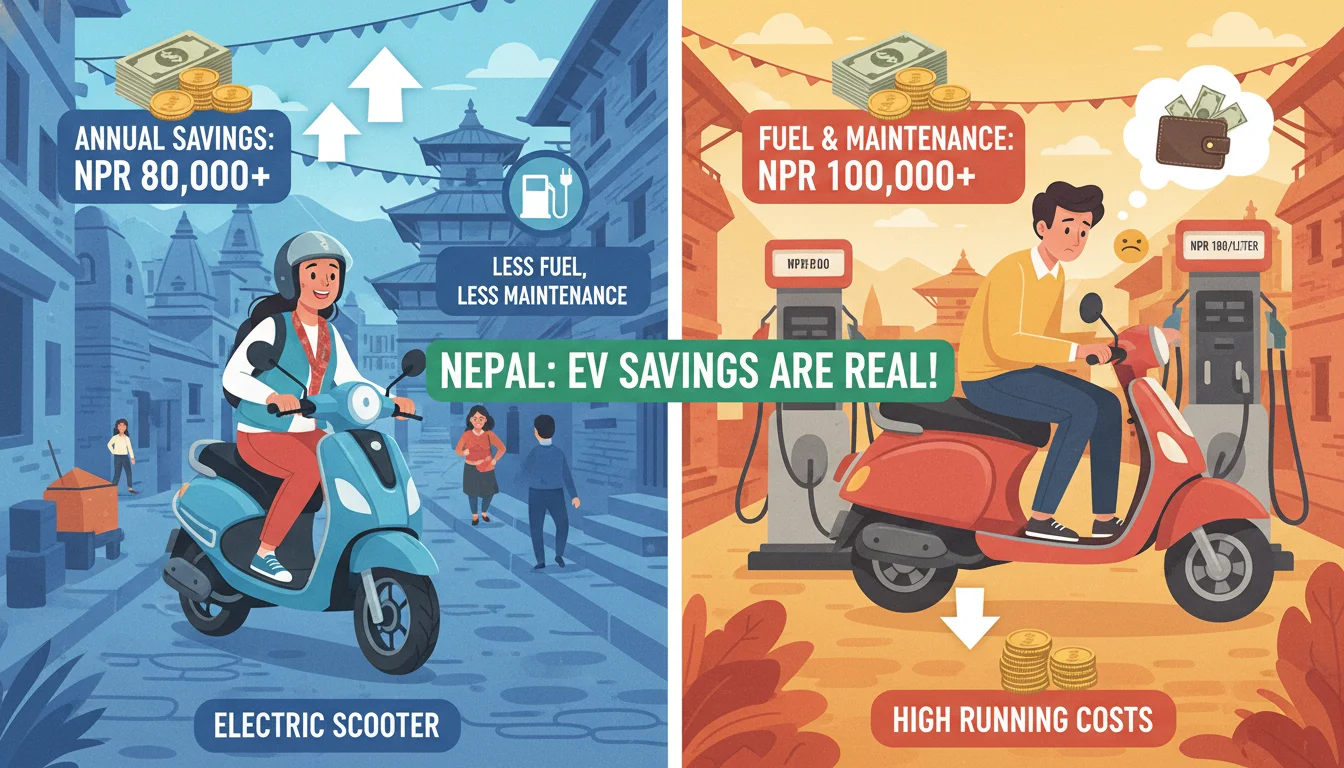
The economic impetus for this transition at the individual consumer level is compelling. The data indicates that the running costs of electric two-wheelers are drastically lower than those of their internal combustion engine counterparts. With residential electricity rates in Nepal averaging a highly affordable NPR 10 to NPR 13 per unit, the operational expenditure of an electric scooter falls between a mere NPR 0.50 to NPR 3.33 per kilometer. This stands in stark contrast to petrol-powered scooters, which incur running costs of approximately NPR 4.77 or more per kilometer, subject to frequent upward revisions in fuel prices. When these figures are extrapolated across an average daily urban commute of 30 to 40 kilometers, the annual operational savings routinely exceed NPR 58,000 on fuel and routine mechanical servicing alone.

However, the transition to electric mobility in Nepal is not without significant friction. The unique topography of the region, characterized by steep Himalayan inclines, severely degraded urban road surfaces, and unpredictable off-road conditions, acts as an unforgiving proving ground for electric vehicle engineering. Consumers are rapidly maturing past the early-adopter phase—where the sheer novelty of a silent, emission-free ride was sufficient—and are now demanding rigorous long-term mechanical reliability, expansive after-sales support networks, and transparent, predictable battery replacement economics.
The Internal Combustion Engine Baseline and the Economic Case for Transition
To accurately gauge the value proposition of the emerging electric two-wheeler market, it is essential to establish the existing internal combustion engine (ICE) baseline against which these new technologies are competing. Legacy Japanese manufacturers have long dominated the Nepalese market by offering highly refined, reliable, and utilitarian scooters.
Yamaha and Honda represent the zenith of the traditional ICE scooter market in Nepal. Yamaha’s lineup, which includes the Ray ZR 125 FI Hybrid, Fascino, and the performance-oriented Aerox 155, commands significant market share due to robust build quality and extensive dealership networks. The pricing for these established ICE models spans a broad spectrum: the standard Yamaha Ray ZR 125 Hybrid with drum brakes is priced at NPR 283,900, while the disc brake variant retails at NPR 316,900, and the high-performance Aerox 155 reaches NPR 499,900. These scooters typically deliver fuel efficiency figures exceeding 45 kilometers per liter, which has historically made them cost-effective for daily commuting. Similarly, Honda commands immense brand loyalty with its Dio series. The 110cc Honda Dio BS6, priced at approximately NPR 269,900, is lauded for its lightweight maneuverability and claims superior mileage of around 55 kilometers per liter. For consumers seeking more aggressive power delivery, the Honda Dio 125 is available at NPR 323,900, featuring smart digital meters and enhanced suspension tuned for Nepalese inclines.
Despite the entrenched trust in these legacy ICE platforms, the economic calculus is actively shifting in favor of electrification. While a top-tier Honda Dio 125 or Yamaha Ray ZR demands an initial capital outlay comparable to modern entry-level electric scooters (roughly NPR 2.7 Lakhs to NPR 3.3 Lakhs), the total cost of ownership over a five-year horizon diverges drastically. An internal combustion engine inherently requires frequent, highly specific mechanical maintenance. This includes regular engine oil replacements, spark plug changes, transmission belt inspections, and air filter replacements. Over a five-year lifecycle covering 50,000 kilometers, these cumulative maintenance costs, coupled with the relentless expenditure on imported petroleum, create a heavy financial burden.
Electric vehicles bypass this mechanical attrition almost entirely. Electric drivetrains possess significantly fewer moving parts, entirely eliminating the need for oil changes, complex clutch replacements, or exhaust system maintenance. Routine maintenance on an EV scooter is generally limited to brake pad replacements, tire wear, and minor suspension adjustments. A documented case study of a Segway electric scooter owner in Nepal revealed that over the course of 450 days and 13,000 kilometers of operation, the total maintenance expenditure amounted to a mere NPR 750 for new brake pads and NPR 6,500 for a rear tire replacement. Such extreme reductions in operational overhead represent the primary driver of EV adoption among the working and middle classes in the Kathmandu Valley.
Categorization of the Nepalese Electric Two-Wheeler Ecosystem
The current electric two-wheeler market in Nepal is highly fragmented, chaotic, and fiercely competitive. The streets of Kathmandu now showcase a sprawling and diverse landscape of approximately 50 different electric scooter and motorcycle brands, ranging from deeply capitalized multinational corporations to obscure, transient importers. However, market analysis indicates that a rapid and brutal consolidation phase is currently underway, separating sustainable automotive operations from opportunistic ventures.
The market can be systematically segmented into three distinct categories based on manufacturing origin, corporate capitalization, and strategic intent.
Established Indian Original Equipment Manufacturers (OEMs)
Brands such as TVS Motor Company, Bajaj Auto, and Hero MotoCorp possess deeply entrenched, decades-old distribution and service networks across Nepal. Their strategic entry into the EV space—exemplified by products like the TVS iQube and the Bajaj Chetak—heavily leverages existing consumer trust regarding the perpetual availability of spare parts and the longevity of service infrastructure.
Specialized Electric Vehicle Startups
Companies such as Ather Energy, Ultraviolette Automotive, and Revolt Motors represent the vanguard of electric mobility software and battery management technology. These brands prioritize high-performance metrics, intelligent software integration, proprietary chassis engineering, and advanced thermal management, specifically targeting a tech-savvy demographic willing to pay a premium for innovation.
Global and Chinese Manufacturers
Brands such as Yadea (recognized globally as the largest electric two-wheeler manufacturer by volume), NIU, Segway-Ninebot, and Super Soco offer a vast, highly diverse array of models. These ranges span from highly economical urban commuters to premium, high-speed electric motorcycles. While these manufacturers frequently boast superior homologated range figures, aggressive pricing models, and highly innovative battery chemistries—such as advanced graphene variants—they face immense and sustained scrutiny from Nepalese consumers regarding the viability of their localized service infrastructure and the affordability of proprietary spare parts.
The underlying behavioral trend in the Nepalese market reveals that consumer psychology is rapidly shifting. Buyers are no longer prioritizing raw, isolated specifications—such as a claimed top speed or aesthetic design—but are instead demanding systemic, verifiable reliability.
The market is currently littered with the cautionary tales of “disappearing brands” such as Raysince and the Thee Go e8. These early entrants aggressively marketed low-cost EVs but collapsed rapidly due to weak financial backing and inferior product durability. When the showrooms abruptly closed, owners were left with entirely unserviceable vehicles, zero technical support, and a complete absence of replacement parts, forcing them to modify and retro-fit components from internal combustion micro-cars just to keep their scooters operational. Consequently, the presence of a robust, verifiable “3S” network—encompassing Sales, Service, and Spares—has become the singular, non-negotiable metric for brand survival and consumer trust in Nepal.
Deep Dive: Urban Commuter and Family Electric Scooters
The highest volume and most fiercely contested segment in the Nepalese electric two-wheeler market is the urban commuter and family scooter category. This specific demographic demands practical, expansive under-seat storage, ergonomically comfortable seating for a pillion rider, and predictable, linear acceleration over aggressive raw speed.
Ather Rizta: The Practical Utility Architecture
Ather Energy, traditionally renowned for its highly aggressive, sporty, and tech-forward 450X series, has executed a strategic pivot to capture the broader, more lucrative family demographic with the introduction of the Rizta model. Launched in the Nepalese market at an introductory price of NPR 2.94 Lakhs for the base ‘S’ variant, the Rizta prioritizes spatial comfort and everyday domestic usability over blistering track performance.
The structural engineering of the Rizta is entirely focused on utility. The scooter features a massive 34-liter under-seat storage capacity, large enough to accommodate helmets, gym equipment, or daily groceries with ease, alongside an elongated, wide seat specifically designed to comfortably support two adults over extended commutes. Crucially for the Nepalese market, the Rizta boasts a highly practical ground clearance of 165 mm. This elevation places it at the upper echelon of the scooter segment, ensuring the battery casing remains protected while navigating the deep potholes, speed breakers, and uneven tarmac that are ubiquitous across the Kathmandu Valley.
Performance is managed through two battery configurations—a 2.9 kWh and a 3.7 kWh pack—yielding claimed Indian Driving Cycle ranges between 123 km and 159 km, providing ample endurance for multi-day urban commuting. Furthermore, the Rizta is defined by its intelligent software integration. Features such as “Magic Twist” regenerative braking allow for intuitive deceleration without engaging the mechanical brakes, while built-in hill-hold assist and traction control systems directly address the unique topographical challenges of Nepal, significantly reducing rider fatigue when navigating steep, congested inclines.
TVS iQube: Legacy Trust and Suspension Superiority
The TVS iQube represents the most formidable institutional challenge to the specialized EV startups, largely due to the massive distribution and service backing of Jagdamba Motors in Nepal. By leveraging decades of brand equity, TVS has positioned the iQube as the default, zero-risk transition vehicle for traditional ICE riders.
TVS has aggressively targeted multiple budgetary tiers with its variant strategy. The company recently introduced an highly affordable 2.2 kWh battery variant priced at NPR 2.99 Lakhs, which delivers a realistic real-world range of 75 km. This model sits alongside the premium 3.5 kWh ‘S’ variant, priced at NPR 3.39 Lakhs, which extends the real-world range to an impressive 115 km. The engineering architecture of the iQube is particularly well-suited to the region. It features a robust tubular frame structure paired with hydraulic twin-tube shock absorbers. This specific suspension calibration has been overwhelmingly praised by long-term users for delivering a plush, highly composed ride quality that effectively neutralizes the harsh vibrations of unpaved and potholed roads.
While its ground clearance of 157 mm is marginally lower than the Ather Rizta’s, it remains highly capable and well above the critical safety threshold for the region. A significant strategic advantage of the iQube 2.2 kWh variant is its charging infrastructure independence. It features an exceptionally fast 0-80% charging time of just 2 hours utilizing a portable 950W Plug & Play charger that operates on any standard 15A domestic socket. This rapid turnaround effectively neutralizes range anxiety for urban commuters who lack access to dedicated, high-voltage charging stations.
Bajaj Chetak 3501: Premium Build with Engineering Compromises
Hansraj Hulaschand & Co. has introduced the Bajaj Chetak 3501 variant to the Nepalese market, priced at NPR 3.24 Lakhs. Designed to evoke timeless, retro aesthetics combined with modern electric mobility, the Chetak features an all-metal body construction that imparts a highly premium, durable feel unmatched by its plastic-bodied competitors.
The specifications of the 3501 variant appear highly competitive on paper. It is equipped with a 3.5 kWh lithium-ion battery boasting an IP67 water and dust resistance rating, powering a 4 kW electric motor that generates 20 Nm of peak torque. The manufacturer claims an extensive range of 153 km per charge under standardized testing conditions. However, the Chetak suffers from significant topographical and software limitations. The most critical structural flaw is its ground clearance of merely 135 mm. This dimension falls dangerously below the recommended 150 mm threshold required for safe navigation on Nepalese roads, leaving the undercarriage highly susceptible to devastating impacts. Furthermore, long-term user feedback highlights systemic issues with the motor controller mapping. Riders frequently report sudden, jerky acceleration spikes and a lack of progressive throttle response, making low-speed maneuvering in dense Kathmandu traffic cumbersome and uncomfortable. Additionally, the suspension setup delivers a notably stiffer ride quality compared to the plushness of the TVS iQube or the balanced geometry of the Ather Rizta.
Table 1: Mainstream Commuter Scooter Specifications Comparison
| Specification Metric | Ather Rizta (S Variant) | TVS iQube (2.2 Variant) | Bajaj Chetak (3501 Variant) |
|---|---|---|---|
| Approximate Retail Price (NPR) | 2.94 Lakhs | 2.99 Lakhs | 3.24 Lakhs |
| Battery Capacity | 2.9 kWh | 2.2 kWh | 3.5 kWh |
| Operational Range | 123 km | 75 km (Real World) | 153 km (ARAI) |
| Ground Clearance | 165 mm | 157 mm | 135 mm |
| Standard Charging Time (0-80%) | ~4.5 hours | 2.0 hours | ~3.5 hours |
| Rear Suspension Architecture | Monoshock | Hydraulic Twin Tube | Single Sided Suspension |
| Under-Seat Storage Capacity | 34 Liters | 32 Liters | Not Specified |
Premium, Tech-Forward, and Performance Electric Scooters
For consumers possessing a higher disposable income and a willingness to pay a premium for advanced technological aesthetics, high-speed performance, and intelligent cloud connectivity, international brands offer a highly compelling suite of alternatives to standard commuter vehicles.
Segway E-Series: Technological Sophistication vs. Topographical Reality
Segway has successfully leveraged its global reputation for micro-mobility innovation to launch a highly sophisticated line of premium electric scooters in Nepal. The portfolio includes the N100 (NPR 2.60 Lakhs), E100 (NPR 2.91 Lakhs), the E110L (NPR 3.65 Lakhs), and the flagship E125 (NPR 3.91 Lakhs).
The engineering focus of the Segway lineup is unabashedly premium. The flagship E125 model, for example, features a brutally powerful 3600 Watt brushless electric motor capable of generating an immense 200 Nm of maximum torque. This powertrain propels the scooter to a top speed of 75 km/h, supported by a tailored lithium battery configuration that ensures rapid acceleration. The models are laden with high-end features, including E-ABS braking systems with aggressive regeneration, patented anti-skid tubeless tires, matrix LED lighting, and remote key control systems.
However, the entire Segway architecture suffers from a fatal topographical deficit in the context of the Himalayan market: critically low ground clearance. The N100 and E100 models hover at a perilous 129 mm, while the top-tier E125 sits at merely 132 mm. These dimensions relegate the Segway predominantly to meticulously paved urban core routes. Attempting to navigate the heavily rutted, pothole-strewn roads of the Kathmandu outskirts on a Segway significantly increases the probabilistic risk of severe underbelly impacts, threatening the structural integrity of the highly expensive lithium battery casing.
The Yadea Ecosystem: Graphene Claims vs. Real-World Endurance
Yadea, a global titan in electric mobility, offers a broad spectrum of vehicles in Nepal, ranging from the economical M6 (NPR 1.75 Lakhs) to the premium C1S (NPR 3.70 Lakhs) and G5 (NPR 3.50 Lakhs). However, the most heavily discussed model is the Yadea E8S Pro, priced highly competitively at NPR 2.30 Lakhs.
The defining characteristic of the E8S Pro is its utilization of a 72V 38Ah TTFAR 3rd generation Graphene battery, a significant departure from standard lithium-ion chemistries. Graphene-enhanced batteries theoretically offer extended lifespans and excellent thermal stability. The manufacturer claims an astonishing range of 150 km per charge. However, deep scrutiny of long-term user data in Nepal reveals a stark and highly problematic contrast between laboratory claims and real-world execution.
The 150 km figure is achieved under highly controlled, flat-road laboratory conditions at a constant speed of 25 km/h with a strict 75 kg payload limit. In the undulating, stop-and-go reality of Nepalese traffic with a pillion rider, the actual operational mileage plummets to an average of roughly 60 km.
Furthermore, users consistently report severe mechanical limitations. The E8S Pro struggles significantly to maintain power while carrying a dual load on steep inclines, and its suspension system has been criticized as being “purely cosmetic”. Riders report that the hydraulic shocks fail to dampen high-frequency vibrations, transmitting harsh impacts directly through the chassis, making travel on gravel or off-road conditions exceedingly punishing.
NIU NQi and MQi Series: The Cost of Proprietary Monopolies
Once viewed as the undisputed benchmark for premium, smart electric scooters in Nepal, NIU offers models such as the NQi Sport (NPR 3.10 Lakhs to NPR 3.15 Lakhs) and the highly powerful MQi GT (NPR 4.75 Lakhs). The MQi GT represents formidable engineering, featuring dual removable 48V 31Ah lithium-ion batteries and a robust 3000 Watt Bosch motor, achieving top speeds of 70 km/h and ranges up to 120 km.
Despite these impressive initial specifications, extensive longitudinal user feedback indicates severe friction during long-term ownership. Consumers report persistent “battery anxiety,” plagued by buggy, unresponsive smartphone applications that fail to sync crucial telemetry data. More critically, NIU’s deeply proprietary manufacturing ecosystem makes third-party diagnosis and repair nearly impossible. When a battery module fails, local service centers frequently lack the authorization or capability to repair individual cells. Consequently, owners are forced into purchasing complete, sealed battery pack replacements from authorized dealers at exorbitant costs, frequently quoted above $1,300 USD (roughly NPR 170,000). This lack of repairability, coupled with systemic dissatisfaction regarding the high cost and poor quality of routine servicing, has deeply tarnished the brand’s long-term resale value and viability in the region.
Pure EV, FD Motors, and Emerging Alternatives
Providing alternatives to the dominant brands, companies like Pure EV and FD Motors offer unique propositions. Pure EV markets the ePluto 7G at NPR 2.75 Lakhs. Featuring distinctly retro styling highly reminiscent of classic Vespa scooters, it houses a 1.8 kWh battery delivering a 90 km range. Crucially, it benefits from a highly practical 163 mm ground clearance, making its vintage aesthetics surprisingly capable on modern, uneven roads.
Conversely, FD Motors introduces highly advanced powertrain configurations to the market. The F5-A Pro utilizes a Side Drive Motor (PMSM) technology, identical in architecture to systems used in full-sized electric cars. By removing the motor mass from the rear wheel hub and utilizing a gear-drive mechanism, the scooter achieves vastly superior torque multiplication and efficiency, making it arguably the most capable hill-climbing scooter available. Paired with an ultra-safe LFP (Lithium Iron Phosphate) battery, CAN Bus communication protocols, and a towering 200 mm ground clearance on 16-inch front tires, it represents a technological leap engineered specifically for rugged topography. Similarly, the Lvneng LX01, powered by a 2.02 kW Bosch motor, offers a highly respectable 150 mm ground clearance and dual-battery configurations, providing a durable, sporty alternative.
Table 2: Premium Scooter Specifications Comparison
| Specification Metric | Segway E125 | Yadea E8S Pro | NIU MQi GT | Pure EV ePluto 7G |
|---|---|---|---|---|
| Retail Price (NPR) | 3.91 Lakhs | 2.30 Lakhs | 4.75 Lakhs | 2.75 Lakhs |
| Motor Power | 3600 W | 2800 W | 3000 W (Bosch) | 2.2 kW Peak |
| Battery Chemistry | Lithium | Graphene (72V 38Ah) | Dual Lithium (48V 31Ah) | Lithium (1.8 kWh) |
| Top Speed | 75 km/h | 60 km/h | 70 km/h | 68 km/h |
| Ground Clearance | 132 mm | Not Specified | 145 mm (NQi Baseline) | 163 mm |
| Standard Charging Time (0-80%) | ~4.0 hours | ~6.0 hours | ~4.0 hours | ~4.0 hours |
| Rear Suspension Architecture | Dual Hydraulic | Hydraulic Twin Tube | Single Sided Suspension | Hydraulic Twin Tube |
| Under-Seat Storage Capacity | Not Specified | Not Specified | Not Specified | 20 Liters |
The Electric Motorcycle Vanguard
While scooters utterly dominate the utility and commuter segments due to their floorboards and storage capacity, full-sized electric motorcycles are rapidly capturing the enthusiast demographic. These vehicles offer inherently superior handling dynamics, vastly larger wheel diameters capable of rolling over significant obstacles, and aggressive aesthetic styling that appeals to a younger, performance-oriented buyer.
Revolt RV400 and RV1: The Mid-Drive Benchmark
The Revolt RV400, introduced to the Nepalese market at NPR 4.49 Lakhs via the MV Dugar Group, currently serves as the structural benchmark in the commuter electric motorcycle classification. The vehicle’s defining engineering triumph is its powertrain architecture. Unlike the vast majority of electric scooters that utilize hub-mounted motors—which severely increase unsprung weight and negatively affect suspension dynamics—the RV400 utilizes a robust 3 kW mid-drive motor connected to the rear wheel via an exposed belt drive mechanism.
This mid-drive architecture allows the motor to leverage the mechanical advantage of the drivetrain gearing, providing vastly superior torque multiplication. This engineering choice allows the RV400 to tackle the steepest Kathmandu inclines with much greater efficiency and less thermal strain than similarly powered hub-motor vehicles. Equipped with a 3.24 kWh battery, the motorcycle claims an ARAI-certified range of 150 km and features an exceptional 190 mm of ground clearance, thoroughly immunizing it against topographical hazards. Furthermore, Revolt caters to the sensory experience of riding by integrating a proprietary smartphone application that allows users to project artificial engine sounds (such as ‘Rebel’, ‘Roar’, or ‘Rage’) through onboard speakers, synthesizing the visceral appeal of an ICE motorcycle. The company is also expanding its portfolio with the highly affordable RV1 series, expanding accessibility to lower-income brackets.
Super Soco TC Max and TS Street Hunter: Retro Aesthetics, Premium Power
Competing directly with the Revolt platform is the Super Soco lineup. The flagship TC Max is engineered to deliver performance comparable to a traditional 125cc ICE motorcycle. It features a powerful central engine rated at 3.9 kW, with a peak power output of 5.1 kW, enabling the vehicle to achieve a top speed of 95 km/h.
Mirroring the RV400, the TC Max utilizes a mid-mounted engine and a silent toothed belt drive, ensuring optimal weight distribution between the front and rear axles, which drastically improves high-speed cornering stability and sports performance. The motorcycle draws power from a substantial 72V 45Ah polymer lithium battery, yielding a maximum range of 110 km at average speeds. With an aggressive ground clearance of 189 mm, inverted hydraulic front suspension, and a centralized hydraulic rear monoshock, the TC Max rivals dedicated off-road vehicles in its capability to absorb terrain imperfections. However, the pricing structure for these high-performance models, particularly the extended 200 km range variant of the TS Street Hunter (priced at NPR 4.79 Lakhs), places them firmly in a luxury tier, limiting mass-market adoption.
Ultraviolette F77 Mach 2: The High-Performance Halo
Representing the absolute pinnacle of current electric two-wheeler performance available in Nepal is the Ultraviolette F77 Mach 2, recently launched at an introductory price of NPR 9.99 Lakhs through a partnership with the Kedia Group.
The F77 Mach 2 operates in an entirely different operational paradigm than commuter vehicles. It boasts a massive 30 kW motor capable of producing an immense 100 Nm of peak torque at the wheel. This extreme power output propels the motorcycle from 0 to 60 km/h in a blistering 2.8 seconds, culminating in a highly restricted top speed of 155 km/h, securing its position as one of the fastest electric vehicles legally permissible on Nepalese roads. To sustain this performance, the vehicle is equipped with a gargantuan 10.3 kWh battery pack, which yields a staggering estimated range of 323 km based on the Indian Driving Cycle.
While a price tag approaching NPR 10 Lakhs renders the F77 Mach prohibitively expensive for the average Nepalese commuter, it serves a highly critical strategic function as a market “halo product.” By proving that an electric vehicle can unequivocally outperform high-end ICE sportbikes, it systematically destroys the psychological stigma that EVs are inherently slow or fragile. Furthermore, Ultraviolette’s implementation of an industry-shattering 800,000 km (or 8-year) battery warranty sets an entirely new, radical standard for manufacturer confidence, forcing competing brands to drastically rethink the limitations of their own warranty structures.
Table 3: Electric Motorcycle Specifications Comparison
| Specification Metric | Revolt RV400 | Super Soco TC Max | Ultraviolette F77 Mach 2 |
|---|---|---|---|
| Retail Price (NPR) | ~4.49 Lakhs | Premium Segment | 9.99 Lakhs |
| Motor Output (Rated/Peak) | 3 kW / - | 3.9 kW / 5.1 kW | 30 kW |
| Motor Architecture | Mid-Drive / Belt | Mid-Drive / Belt | Mid-Drive / Chain |
| Battery Capacity | 3.24 kWh | 72V 45Ah | 10.3 kWh |
| Claimed Operational Range | 150 km | 110 km | 323 km |
| Ground Clearance | 190 mm | 189 mm | Standard Sportbike |
Topographical Engineering: Navigating the Himalayan Urban Environment
The engineering architecture of an electric two-wheeler must be heavily and mercilessly scrutinized through the specific lens of Nepal’s unique geographical and infrastructural constraints.
Vehicles that perform flawlessly on the meticulously smooth, flat tarmac of Shanghai or Bangalore frequently suffer catastrophic structural or electronic failure when subjected to the relentless kinetic stresses of Himalayan urban environments.
The Ground Clearance Imperative
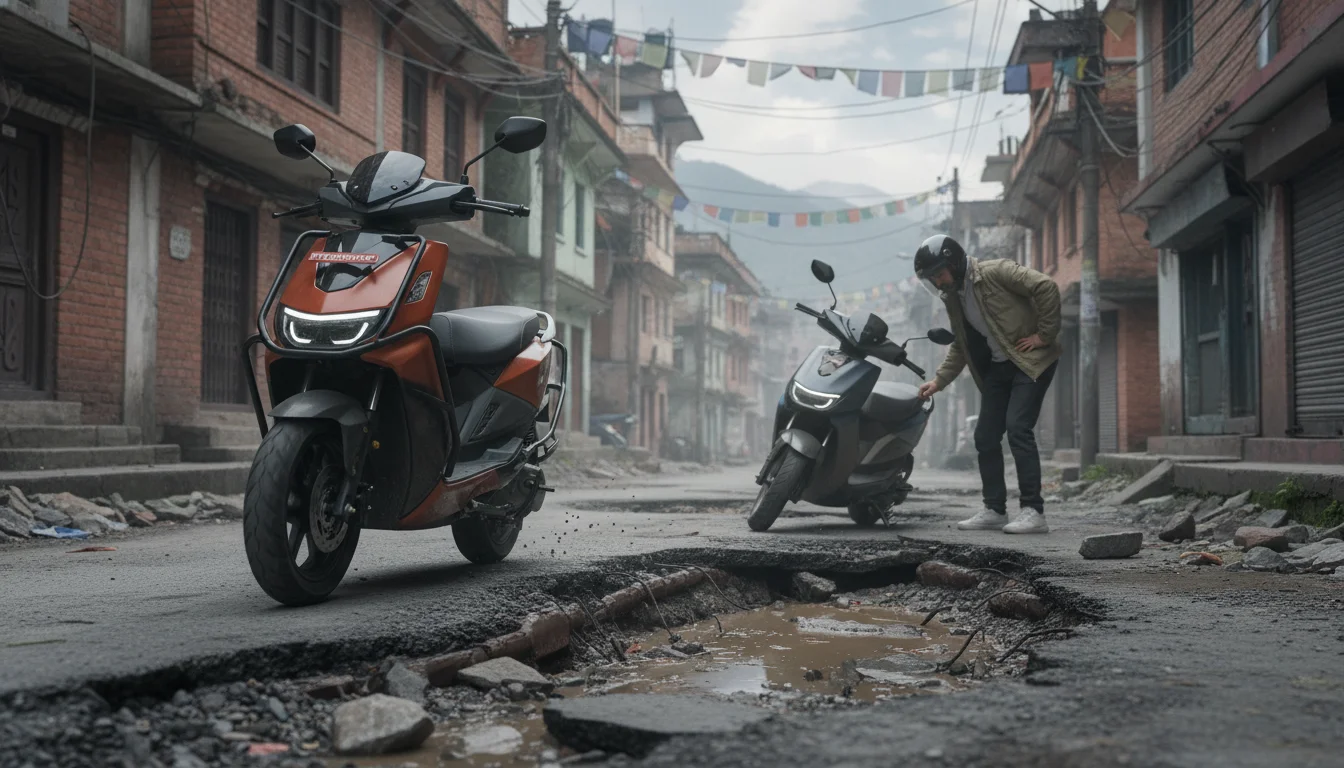
In the context of Nepal, ground clearance is not merely an aesthetic or minor technical specification; it is the primary, overarching determinant of vehicle survivability. In the vast majority of electric scooter designs, the heavy, dense lithium-ion or graphene battery packs are located directly underneath the rider’s floorboard in order to maintain an optimally low center of gravity. Consequently, any underbelly strike caused by navigating jagged speed breakers, deep water-filled potholes, or heavily rutted, unpaved rural roads poses a severe, existential risk to the vehicle. A structural puncture or deep abrasion to the protective battery casing can lead directly to catastrophic thermal runaway (battery fires) or critical water ingress that destroys the internal cells.
Vehicles engineered with ground clearances below 140 mm—such as the Segway E125 at 132 mm and the Bajaj Chetak 3501 at 135 mm—require extreme rider vigilance and are fundamentally unsuited for deployment on rural or heavily degraded peripheral routes. Industry consensus within Nepal establishes a minimum of 150 mm as the baseline safety threshold. Vehicles such as the TVS iQube (157 mm), Pure EV ePluto 7G (163 mm), and Ather Rizta (165 mm) represent the ideal structural adaptations for the region, allowing riders to traverse obstacles without fear of grounding out. Full-sized motorcycles inherently bypass this engineering constraint due to their larger wheel diameters and differing frame geometries, with the Revolt RV400 and Super Soco TC Max boasting massive clearances of 190 mm and 189 mm, respectively, completely neutralizing any topographical clearance anxieties.
Suspension Dynamics and the Physics of Unsprung Mass
The fundamental transition from an internal combustion drivetrain to an electric powertrain radically alters the weight distribution geometry of the vehicle. Over 90% of budget and mid-tier electric scooters utilize Hub-Mounted BLDC (Brushless DC) motors, where the heavy copper windings and magnets of the engine are located directly inside the rear wheel itself. In suspension physics, this adds massive “unsprung mass” (weight that is not supported by the vehicle’s shock absorbers). This concentrated mass vastly increases the rotational inertia of the wheel when it strikes a bump, violently forcing the wheel upward. If the suspension is not specifically and heavily calibrated to absorb this increased force, the result is a harsh, jarring ride that rapidly induces spinal fatigue in the rider.
Budget imported models, particularly those utilizing inferior shock absorbers characterized as “purely cosmetic,” fail to dampen this aggressive rebound, transmitting kinetic energy directly into the chassis. Conversely, superior engineering solutions explicitly address this. The TVS iQube utilizes robust hydraulic twin-tube shock absorbers specifically tuned to handle the added hub weight, resulting in a ride quality overwhelmingly praised as “plush” and composed by owners navigating Kathmandu’s most degraded roads. The ultimate engineering solution to this problem is the implementation of PMSM (Permanent Magnet Synchronous Motors) mid-drive or side-drive systems, as seen in FD Motors’ lineup and the premium motorcycles. By removing the heavy motor mass from the wheel hub entirely and centralizing it within the main frame, the suspension is freed to react instantaneously to road imperfections, drastically improving both ride comfort and aggressive hill-climbing torque.
Advanced Motor Controllers and Cell Chemistries
Long-term reliability is deeply tethered to the quality of the motor controller—the computational brain that dictates how power flows from the battery to the motor. The Nepalese market is currently witnessing a critical shift away from older, cheaper square-wave controllers toward highly advanced sine-wave controllers. Sine-wave controllers deliver electrical power smoothly and continuously, running significantly cooler and entirely eliminating the jerky, unpredictable on/off acceleration that severely fatigues riders and plagues poorly mapped EVs like the Bajaj Chetak.
Simultaneously, battery cell architectures are evolving. Premium models are abandoning older 18650 cylindrical cells in favor of denser, thermally superior 21700 lithium-ion cells, which offer 25-50% higher energy density and far greater resistance to overheating during long, steep Himalayan climbs. The integration of highly sophisticated Battery Management Systems (BMS) ensures that individual cell voltages are monitored in real-time, preventing thermal stress before it escalates, and allowing regenerative braking algorithms to safely recharge the battery while descending steep hills without locking the rear wheel.
Long-Term Ownership Gauging: Battery Degradation and the Replacement Dilemma
The single largest psychological and financial hurdle to mass electric vehicle adoption in Nepal is what automotive analysts colloquially term the “11 Lakh Problem”—the sudden, devastating shock experienced by early EV adopters upon discovering that post-warranty battery replacement costs can rival or exceed the residual resale value of the entire vehicle. While this specific phrasing was initially coined in relation to electric four-wheelers, the exact same economic principle applies perfectly to the two-wheeler domain.
The Economics of Chemical Degradation
Unlike an internal combustion engine, which experiences slow, linear, and highly repairable mechanical wear (e.g., replacing piston rings or valves), electric vehicle batteries undergo irreversible chemical degradation. The battery packs of electric scooters represent a staggering 30% to 40% of the vehicle’s total upfront capital cost. Over years of usage, internal resistance within the lithium or graphene cells gradually increases, and overall capacity fades. This manifests physically as a permanent reduction in maximum range and a noticeable dip in peak acceleration. Depending heavily on individual charging habits, the frequency of deep discharges (running the battery to 0%), and exposure to extreme thermal stress, an EV battery will typically cross the threshold of unviability—dropping below 70% of its original capacity—after 4 to 6 years of daily use.
The current replacement economics in the region present a steep challenge for owners exiting their warranty periods:
- NIU: The deeply rigid, unrepairable nature of NIU’s proprietary battery architecture forces owners to import completely new, sealed replacement packs at exorbitant costs, frequently quoted above $1,300 USD (over NPR 170,000). This immense liability severely hampers the brand’s long-term resale value.
- TVS iQube: Replacing the integrated battery packs on an iQube can cost between INR 50,000 and INR 76,000 in the Indian market, which translates with import duties to upwards of NPR 80,000 to NPR 120,000 in Nepal.
- Ather Energy: A replacement battery module for the Ather 450 or Rizta series currently costs approximately INR 42,000 to INR 50,000.
- Yadea: For models utilizing older, heavier graphene-lead-acid technology, replacements are marginally more affordable, quoted around NPR 65,000 to NPR 70,000. However, these batteries lack the energy density and rapid-charging capabilities of modern lithium equivalents.
Innovative Ownership Models and Warranties
To combat consumer hesitancy surrounding these impending costs, leading manufacturers are radically restructuring the traditional ownership model. TVS has introduced a groundbreaking Lifetime Battery Assurance (LBA) subscription program. Under this model, owners pay a flat recurring fee of NPR 2,999 per month for the first 36 months, dropping to NPR 1,499 per month thereafter. This financial engineering effectively shifts the battery from a massive, terrifying Capital Expenditure (CapEx) into a predictable, manageable Operational Expense (OpEx), mimicking the cash flow of buying petrol while guaranteeing perpetual battery replacements when degradation occurs.
Ather Energy combats the issue through overwhelming warranty transparency. They offer a baseline 5-year/60,000 km warranty that can be expanded to a massive 8-year/80,000 km coverage via their “Eight70” package. Critically, this warranty explicitly guarantees a 70% State-of-Health. If the battery’s maximum capacity degrades past the 30% loss threshold within that window, Ather replaces the entire unit free of charge, no questions asked, effectively eliminating the financial risk for the primary owner for almost a decade of use.
Furthermore, companies like Gogoro are attempting to bypass the degradation problem entirely by implementing a Battery-as-a-Service (BaaS) swapping model. In this ecosystem, the consumer purchases only the scooter chassis and subscribes to a network of swapping stations, meaning the rider never actually owns the battery—and thus never assumes the financial liability for its inevitable degradation.
Total Cost of Ownership (TCO) and Return on Investment
Despite the daunting reality of eventual battery replacements, mathematical analysis proves that EV ownership remains highly favorable if the vehicle is utilized correctly and consistently.
Consider a consumer riding a standard ICE scooter 30 kilometers daily. At a conservative running cost of NPR 4.77 per kilometer, the rider spends roughly NPR 143 per day on petrol. Over a 5-year period encompassing approximately 54,000 kilometers of travel, fuel costs alone exceed NPR 260,000.
When factoring in the compounding costs of engine oil, spark plugs, filters, and clutch maintenance, the true 5-year operational cost of an ICE scooter easily pushes past NPR 300,000.Conversely, an EV operating at highly efficient rates of NPR 0.5 to NPR 3.33 per kilometer will cost a maximum of NPR 100 per day, with mechanical maintenance virtually non-existent. Therefore, even when factoring in the devastating “worst-case scenario” of a total, out-of-pocket battery replacement costing NPR 100,000 at the end of year 5, the EV owner still retains a massive net positive financial saving of over NPR 150,000 compared to their petrol-burning counterpart. The primary challenge for manufacturers is no longer proving the mathematics; it is overcoming the psychological friction of asking a consumer to pay for five years of “fuel” in one sudden, lump-sum battery replacement invoice.
After-Sales Infrastructure, Right to Repair, and Supply Chain Vulnerabilities
The rapid and unprecedented proliferation of electric vehicles has exposed severe, systemic vulnerabilities in the Nepalese automotive supply chain. A significant barrier to continued EV adoption—and the primary source of vehement owner frustration—is the inadequacy of post-purchase diagnostic and repair support.
The extremely low barrier to entry for importing cheap, generic Chinese electric components led to a massive influx of obscure, white-labeled brands into Nepal between 2020 and 2023. Brands like Raysince aggressively marketed their vehicles with immense fanfare, only to entirely vanish from the country when warranty claims for burnt motors and failed batteries began to mount. These transient companies operated without domestic warehousing for spare parts. Consequently, when a minor component such as a 12V DC-DC converter or a proprietary throttle position sensor failed, the scooter was rendered completely inoperable for months while owners desperately attempted to source parts from global marketplaces like AliExpress or Taobao.
This history of immense supply chain volatility heavily favors the deeply capitalized legacy automotive distributors. Entities like Jagdamba Motors (distributing TVS) and Hansraj Hulaschand & Co. (distributing Bajaj) possess dense, nationwide networks of service centers that have operated for decades. While a pure-play, specialized EV startup might offer slightly superior smartphone connectivity or a marginally faster 0-40 km/h acceleration time, the ironclad guarantee that a TVS iQube can be diagnosed and repaired by trained technicians anywhere from the capital of Kathmandu to the remote borders of Narayanghat or Nepalgunj provides an insurmountable, practical competitive advantage.
Furthermore, the right to repair is becoming a fiercely contested issue. The deeply proprietary nature of modern EV software—including encrypted CAN Bus networks and digitally locked Motor Controllers—makes third-party diagnosis by independent local mechanics exceedingly difficult, if not impossible, without expensive, OEM-supplied diagnostic decryption tools. As the market heavily matures through 2025 and 2026, educated buyers are aggressively prioritizing brands that utilize standardized, modular components (such as generic 12-inch tires, standard hydraulic brake calipers, and non-proprietary suspension linkages) and actively avoiding brands that lock consumers into expensive, inescapable OEM service monopolies.
Technological Trajectories: The Software-Defined Scooter
The traditional paradigm of evaluating a scooter based solely on its static mechanical hardware is rapidly becoming obsolete. In 2026, the electric two-wheeler is fundamentally transitioning into a “software-defined vehicle.” This means that the computational logic governing the machine is as critical to the riding experience as the motor or the chassis.
Modern premium scooters from brands like Ather, TVS, and Segway are heavily reliant on continuous, Over-The-Air (OTA) software updates, a concept pioneered in the automotive space by companies like Tesla. Through cellular or Wi-Fi connectivity, manufacturers can wirelessly push entirely new algorithms directly to the scooter’s onboard computer long after the initial purchase. This capability allows engineers to continuously refine the vehicle—for instance, by pushing an update that increases the aggressiveness of the regenerative braking to extend range, tweaking the throttle response curve to make acceleration smoother, or adding entirely new riding modes tailored for beginners.
Furthermore, deep smartphone integration via platforms like TVS’s SmartXonnect or the Ather mobile app provides riders with unprecedented telemetry. Dashboards now seamlessly project live Google Maps turn-by-turn navigation, display real-time cell voltage and battery temperature, push anti-theft geofencing alerts to the user’s phone if the vehicle is moved while parked, and track historical ride efficiency data to help the user maximize their range. The capability of a scooter to seamlessly sync with the digital life of the user has transitioned from a luxury gimmick into an expected, baseline utility.
Strategic Synthesis and Future Outlook
The electric two-wheeler market in Nepal is decisively exiting its chaotic, nascent stage and is currently enduring a period of rigorous, Darwinian consolidation. The early adopters, who were driven primarily by the environmental novelty of zero-emissions technology or the immediate sensory allure of instantaneous electric torque, are rapidly being replaced by a massive wave of highly pragmatic, economically focused commuters. These buyers are ruthlessly scrutinizing Total Cost of Ownership, topographical durability, and long-term battery economics.
The exhaustive synthesis of market data, technical specifications, and longitudinal user experiences yields several definitive strategic conclusions regarding the Nepalese landscape:
- Topography Dictates Viable Design: The undulating, steep, and frequently degraded infrastructure of Nepal strictly mandates a minimum vehicle ground clearance of 150 mm. Models that fail to meet this non-negotiable threshold—such as the premium Segway lineup or the Bajaj Chetak—will encounter severe, localized failures and see highly limited success outside the immediate, well-paved confines of the Kathmandu ring road. Vehicles structurally optimized for this environment, primarily the Ather Rizta (165 mm) and the TVS iQube (157 mm), will capture the vast majority of the utilitarian commuter market.
- Warranty Innovations Will Drive Mass Adoption: The paralyzing fear of catastrophic, out-of-pocket battery replacement costs remains the primary psychological friction point for risk-averse buyers. Manufacturers that actively dismantle this fear by offering ultra-extended warranties with explicit State-of-Health guarantees (exemplified by Ather’s 8-year/70% program) or by shifting the burden entirely through Battery-as-a-Service subscription models (such as TVS’s Lifetime Battery Assurance) will inherently dominate consumer trust and secure unassailable long-term market share.
- The Ascendancy of the Mid-Drive Electric Motorcycle: For enthusiasts seeking genuine off-road capability, high-speed gyroscopic stability, and immunity from the harsh ride penalties associated with heavy hub-mounted motors, mid-drive electric motorcycles like the Revolt RV400 and Super Soco TC Max offer highly compelling alternatives to traditional ICE sportbikes, successfully bridging the historical gap between green utility and visceral performance.
- Service Infrastructure is the Ultimate Determinant of Survival: The sprawling graveyard of abandoned, unsupported EV brands in Nepal serves as a stark, permanent warning to consumers. The ultimate victors in the Nepalese transition to electric mobility will not necessarily be the brands boasting the highest theoretical top speed or the most vibrant touchscreen displays, but rather the deeply capitalized corporate entities that possess the logistical density to maintain exhaustive spare parts inventories and train a nationwide, localized network of high-voltage technicians.
Ultimately, the transition from internal combustion engines to electric mobility across Nepal is a mathematical and macroeconomic inevitability, driven by an abundance of domestic hydroelectric power and the crushing cost of imported petroleum. However, the speed, safety, and financial success of this transition for the individual rider depend entirely upon selecting a manufacturer that perfectly aligns rigorous topographical engineering with transparent, sustainable long-term battery economics.