Nepal CRM: Price, Features & Market Comparison Guide
Strategic Analysis of Customer Relationship Management (CRM) Software in Nepal: Price, Features, and Market Dynamics
The digital transformation of the corporate sector in Nepal is currently undergoing a rapid and irreversible acceleration. Historically, the commercial environment across the nation relied heavily on decentralized, manual processes—such as physical ledgers, disparate spreadsheet management systems, unstructured notebook records, and informal messaging applications. However, as the competitive landscape intensifies across metropolitan hubs like Kathmandu and rapidly emerging commercial centers such as Pokhara, Butwal, and Biratnagar, the limitations of uncoordinated data management have become acutely evident. The fragmentation of client information routinely leads to missed conversion opportunities, uncoordinated sales follow-ups, and an alarming loss of institutional knowledge during periods of employee turnover. Consequently, the deployment of robust Customer Relationship Management (CRM) software has evolved from a discretionary luxury to an absolute strategic necessity for survival and growth in the contemporary Nepali market.
This comprehensive research report provides an exhaustive evaluation of the CRM software market in Nepal, delineating the deep dichotomy between indigenous software solutions and globally dominant international enterprise platforms. By rigorously analyzing feature sets, pricing models, deployment architectures, total cost of ownership (TCO), and essential local integrations—specifically telecommunications and digital payment gateways—this analysis serves as a foundational blueprint for enterprises navigating technological acquisitions in the South Asian operational theater. The analysis synthesizes data spanning from low-cost local entry points to highly complex, multi-national systems integration projects, providing a definitive guide for procurement officers, technical directors, and enterprise strategists operating within Nepal.
The Macroeconomic Context and the Evolution of the Nepali CRM Ecosystem
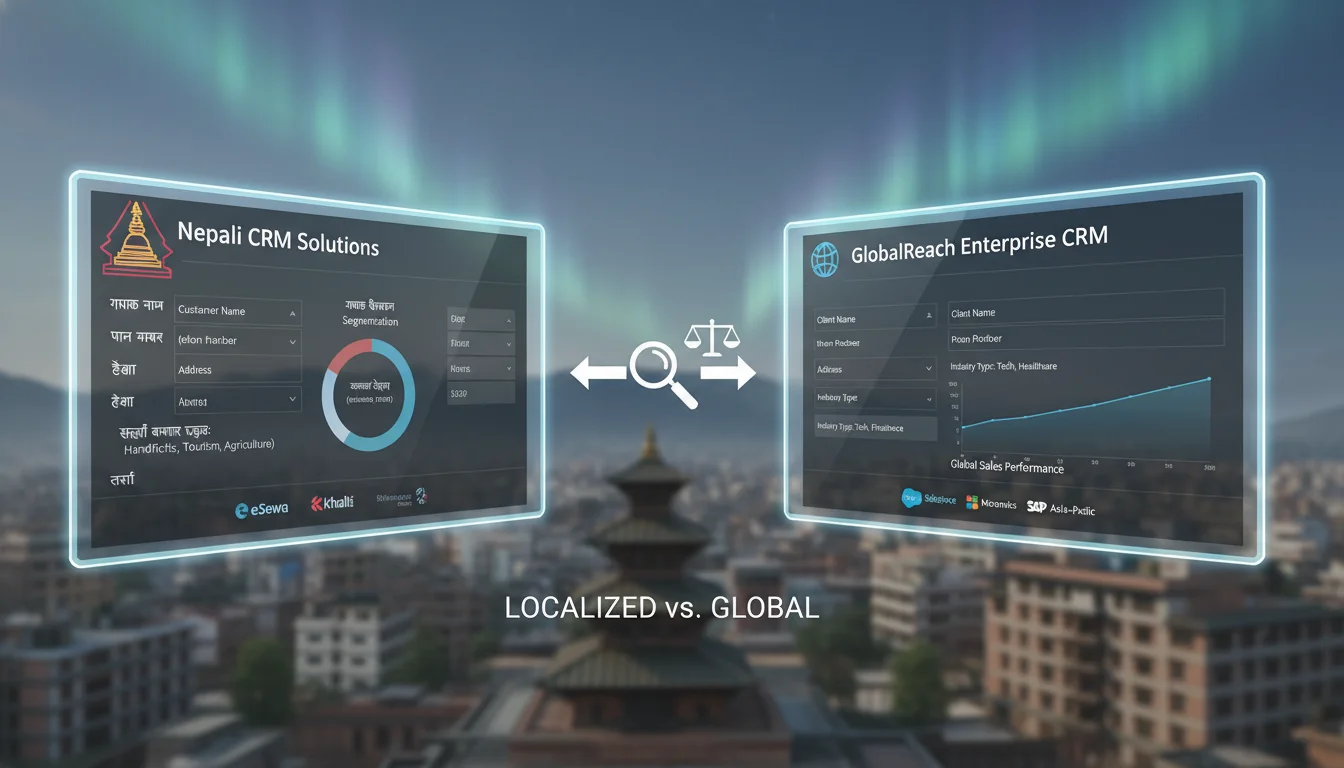
The commercial environment in Nepal presents a unique intersection of rapid digital adoption and persistent infrastructural challenges. The market is witnessing bifurcated demand driven by distinct enterprise scales and operational requirements. On one end of the spectrum, micro, small, and medium enterprises (MSMEs) and early-stage startups seek highly affordable, intuitively designed systems that require minimal technical overhead or extended onboarding periods. These organizations prioritize immediate usability, localized customer support, and direct integration with local communication channels. On the other end, large-scale corporate entities, financial institutions, and complex supply chain operators demand highly customizable platforms capable of advanced artificial intelligence (AI) automation, predictive analytics, and seamless integration with existing Enterprise Resource Planning (ERP) infrastructures.
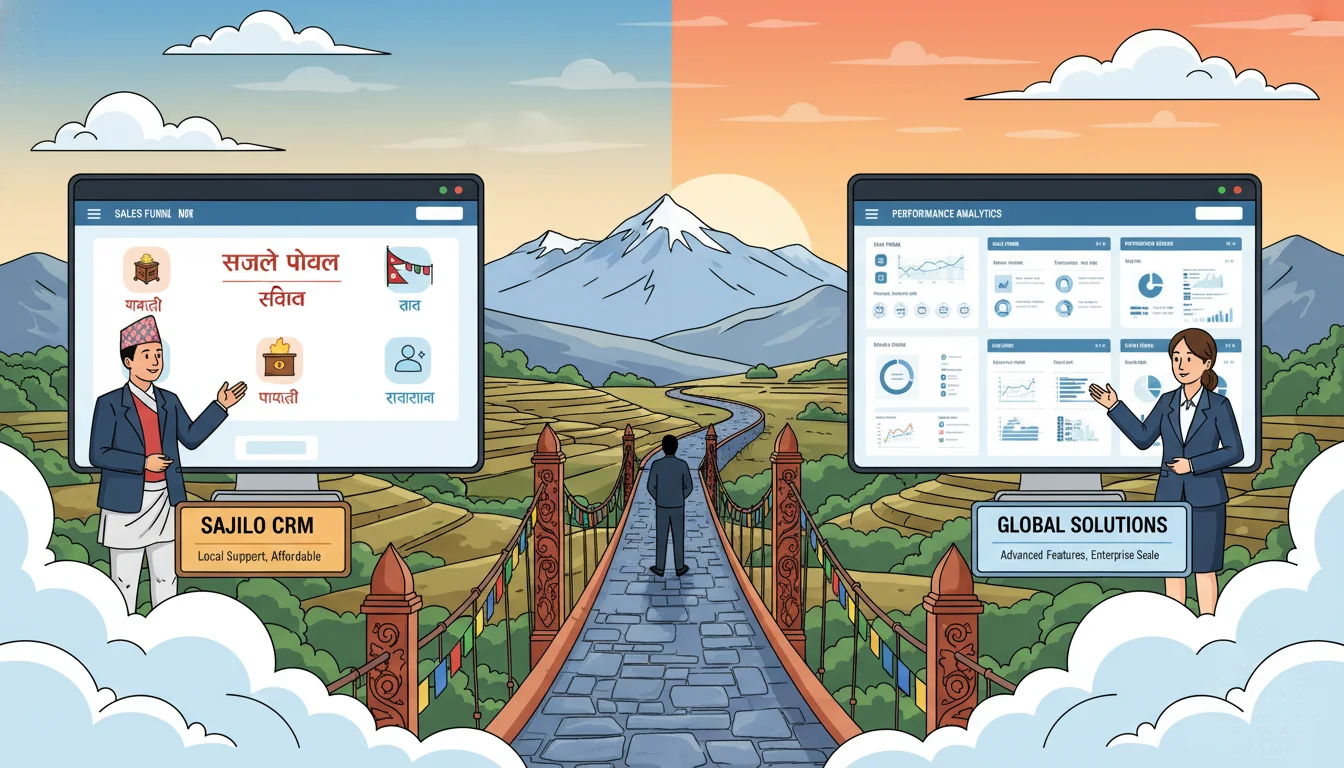
The central strategic decision for a Nepali enterprise lies in selecting between homegrown platforms and globally dominant software suites. Indigenous platforms, such as Delta Sales CRM, Pace CRM, Sajilo CRM, and Kumari Job CRM, are specifically engineered for the nuances of the local market. These solutions boast superior alignment with local business practices, natively integrated communication channels, and pricing architectures specifically aligned with the purchasing power of domestic MSMEs. Furthermore, local vendors frequently offer highly responsive, localized customer support, which serves as a critical metric for organizations lacking extensive internal IT departments. Additionally, localized platforms are increasingly addressing compliance constraints, such as Inland Revenue Department (IRD) certified billing procedures, which international platforms largely lack out-of-the-box.
Conversely, international platforms, including Salesforce, HubSpot, Zoho CRM, and Microsoft Dynamics 365, represent the vanguard of global technological innovation. They provide unmatched scalability, artificial intelligence-assisted predictive modeling, omni-channel marketing automation, and vast third-party application marketplaces. While their feature depth is unparalleled, they often require specialized integration partners to bridge the gap between global infrastructure and local commercial realities, significantly increasing the total cost of deployment.
Foundational Feature Parity and Localized Functional Requisites
To evaluate the efficacy of a CRM system in the Nepali market, technical evaluators must assess both universal functional paradigms and locally mandated operational requisites. Regardless of geographic origin, effective CRM solutions deployed in Nepal must master the foundational pillars of sales force automation. The centralization of communication histories, contact details, and interaction logs into a secure, unified database remains the primary directive. Systems must provide visual pipeline architectures, allowing sales managers to monitor deal stages in real-time and identify operational bottlenecks through drag-and-drop interfaces. Workflow automation is equally critical, eliminating redundant data entry through intelligent automation that includes automatic lead assignment, follow-up scheduling, and status updates. Finally, advanced systems must translate raw sales data into actionable intelligence, utilizing historical data to predict revenue trends, evaluate key performance indicators (KPIs), and generate customized performance reports.
Beyond these universal requirements, the unique infrastructural and regulatory environment of Nepal introduces a secondary layer of critical features necessary for optimal system performance. Given the topographical challenges and intermittent internet connectivity in remote rural regions, CRMs—particularly those deployed for field sales and fast-moving consumer goods (FMCG) distribution—must support robust offline data capture functionalities that automatically synchronize upon network reconnection. Field sales operations in sectors like manufacturing and distribution require hyper-localized mobile applications featuring GPS beat planning, attendance tracking, and on-the-go order management. Furthermore, seamless integration with the Nepali Inland Revenue Department (IRD) for certified computerized billing is a highly sought-after capability, pushing many enterprises toward local providers or complex custom integration architectures.
Exhaustive Analysis of Indigenous CRM Platforms
The domestic software engineering sector in Nepal has matured significantly over recent years, producing highly competitive Software as a Service (SaaS) products that actively contest the dominance of international vendors. These local applications are characterized by aggressive pricing models, intuitive localized interfaces, and specialized feature sets designed to solve specific regional logistical and commercial hurdles.
Delta Sales CRM and the Field Sales Architecture
Developed by Delta Tech, a prominent software development firm headquartered in Biratnagar, Delta Sales CRM is engineered as a comprehensive lifecycle management tool. Rather than serving as a generalized contact database, the platform is explicitly optimized for manufacturers, wholesalers, and distributors heavily reliant on distributed field sales operations.
The platform distinguishes itself through an aggressive “unlimited” feature provision model. The standard architectural design includes unlimited deal tracking, contact management, company profiling, customer records, invoicing, payments, and web forms. This structural choice eliminates the arbitrary scaling limits and paywalls often imposed by global competitors, providing cost predictability for rapidly expanding supply chains. Furthermore, the desktop ecosystem integrates deeply with the Delta Sales App, a mobile-first field sales automation tool. This application allows regional managers to track field representatives via GPS integration, map optimized “beat plans” (pre-defined travel routes), monitor daily attendance and leave applications, and capture automated order requests directly from the field. This effectively addresses the logistical friction inherent in managing remote sales forces across challenging terrains.
Delta Sales CRM employs a highly disruptive, low-cost pricing matrix tailored to undercut international competitors significantly.
Delta Sales CRM Pricing Tier
Standard User Plan
- Cost Structure: $7 per user/month (Annual) or $6/mo promotional
- Core Inclusions: Unlimited leads, pipelines, invoicing, email integration
- Target Audience: Independent sales professionals
Small Team Package
- Cost Structure: $252 per year for 3 users
- Core Inclusions: 30 GB storage, workflow automation, Google Calendar sync
- Target Audience: Micro-enterprises and regional distributors
The vendor actively positions itself against global platforms like Pipedrive and HubSpot, illustrating that equivalent feature sets on international platforms could cost upwards of $1,320 annually for a three-user team, representing an approximate 80% cost reduction when utilizing the indigenous solution. Financial policies dictate that payments are non-refundable, encouraging prospective buyers to utilize the provided demonstration environments prior to capital commitment, while all future system updates are included in the base licensing at no additional cost.
Pace CRM: Mid-Market Versatility and Automation
Developed by The Pace Infosys, Pace CRM represents a highly versatile, scalable platform targeting a diverse array of domestic industries.
Pace CRM
Unlike systems focused purely on field sales, Pace targets retail operations, financial advisory firms, banking institutions, insurance providers, and non-governmental organizations (NGO/INGO).
Pace CRM focuses heavily on operational analytics and sophisticated workflow automation. The platform features robust priority lead scoring, utilizing intelligent algorithmic rules to rank prospects based on engagement levels and potential conversion value. It features a comprehensive visual pipeline, personalized marketing campaign triggers based on customer behavioral actions, and predictive trend analytics designed to detect early market shifts and consumer purchasing patterns. For the Nepali retail sector, the CRM provides sophisticated customer segmentation, loyalty program management, and targeted up-selling capabilities—vital tools in a local market where relationship-driven repeat business is paramount. The system facilitates point rewards and redemption tracking, turning passive shoppers into recurring revenue streams. Additionally, demonstrating deep vertical specialization, the platform integrates with “EasyQuote,” an internal Print Management Information System (MIS) software module that streamlines cost estimating for print production and signage firms, ensuring accurate pricing and rapid proposal generation.
Pace CRM adopts a mid-market pricing structure, positioning itself as a premium local alternative with enterprise-grade capabilities.
Pace CRM Implementation Metric
| Detail / Estimated Cost | Deployment Format | Training Modalities |
|---|---|---|
| Estimated User Licensing | ~$30 per user/month | Web-Based / Cloud |
| Live Online, Documentation, Webinars | Pricing Models Available | Per-User Subscription or One-Time License + Maintenance |
| Hybrid or On-Premise options available | In-Person corporate training | Target Enterprise Scale |
| Startups to Enterprise level | Customizable modules | Business hours dedicated support |
The system’s implementation economics may fluctuate based on specific customization requirements, the volume of CRM modules activated, and the necessary integrations with existing accounting tools or marketing applications. The platform’s emphasis on data security, role-based access permissions, and real-time dashboard analytics makes it highly suitable for the financial advisory sector, where client confidentiality and long-term relationship tracking are critical.
Sajilo CRM: Project Management and Accessibility
Positioned as a highly accessible, enterprise-grade system for MSMEs, Sajilo CRM has gained substantial market traction across diverse operational sectors in Nepal, including clinical cosmetics, construction project management, and logistics routing.
Sajilo functions as a centralized operational command center, merging client relationship management, project oversight, and financial administration into a single intuitive dashboard. Key functional modules include comprehensive lead tracking, project phase monitoring, invoice and estimate generation, contract administration, and a dedicated secure client portal for external communication. The system guarantees an impressive 99.9% uptime metric and provides localized 24/7 customer support via its Nepali operations center. User testimonials highlight its specific utility in varied environments: dermatology clinics utilize the platform for patient appointment tracking and historical visit logs, logistics firms leverage the human resources modules to monitor rider attendance and manage localized payroll, while construction companies deploy the system for ongoing project phase management and task allocation.
While strict public pricing tiers are obscured behind custom demonstration and consultation requests, the platform is aggressively marketed as an “affordable,” high-value proposition designed specifically for the purchasing power of the local economy. A key competitive differentiator is its commitment to “Lifetime Updates” without arbitrary upgrade paywalls, ensuring that domestic businesses do not face unexpected operational expenditure (OpEx) inflation as the software ecosystem matures. The underlying architecture relies on robust backends and RESTful APIs, enabling continuous integration with third-party digital services.
Kumari Job CRM: Entry-Level Accessibility
Originating from the human resources and recruitment sector, Kumari Job CRM has expanded its core functionality into a generalized business management tool perfectly calibrated for startups and small enterprises undergoing their initial digital transition.
The platform is defined by its extreme simplicity and rapid ease of onboarding. It provides essential contact and lead management, basic sales pipeline tracking, and fundamental task automation designed to immediately eliminate spreadsheet reliance. Its distinct operational advantage is deep local market alignment—featuring native SMS and email integration optimized specifically for Nepali telecommunications networks, alongside a highly localized, culturally fluent customer support apparatus. The system deliberately eschews overly complex ERP integrations in favor of high-speed adoption, improving internal team communication, and drastically reducing manual errors in daily administrative tasks. For organizations lacking formal IT departments, Kumari Job CRM acts as a highly effective introductory digital stepping stone.
Specialized and Emerging Indigenous Solutions
- Thulo CRM: This platform offers an exceptionally low-cost entry point into the digital ecosystem. With a “Starter Plan” available at approximately NPR 1,000 per month (when billed on a triennial contract), it stands as one of the most cost-effective solutions for extreme micro-enterprises and sole proprietorships.
- Swastik: While technically overlapping with Enterprise Resource Planning (ERP), Swastik holds a dominant position in taxation and inventory-heavy applications. Serving over 2,000 clients domestically, its market share is driven by its highly trusted inventory control mechanisms and strict compliance with local taxation laws, making it a critical tool for businesses where inventory and CRM overlap.
- MeroCRM / Mero Network: Focused heavily on overarching office automation, MeroCRM provides contact management and sales automation natively integrated with the broader Mero Network ERP solutions. The platform offers flexible deployment options, including both on-premise installations and cloud hosting, catering to organizations with strict internal data governance policies.
Exhaustive Analysis of International Enterprise CRM Providers in Nepal
Despite the rise of highly capable domestic alternatives with attractive pricing structures, international CRM platforms maintain a powerful and prestigious foothold in the Nepali market. Their continued adoption is driven by the necessity for massive data scalability, sophisticated artificial intelligence integrations, global compliance standards, and the operational prestige of utilizing globally recognized technological architectures.
Zoho CRM: The Omnichannel Standard
Zoho CRM is arguably the most pervasive international platform utilized by small to medium-sized businesses in Nepal. It successfully bridges the gap between massive enterprise capabilities and emerging-market budget constraints through an aggressive global pricing strategy and local partnerships.
Zoho functions as an AI-powered, cloud-based omni-channel system designed to provide a comprehensive 360-degree view of the complete sales cycle. It integrates flawlessly with global digital infrastructure components such as Microsoft Office 365 and Google Ads, while offering advanced proprietary modules. These include “Blueprint” for enforcing rigid organizational process automation, “Canvas” for deep user interface (UI) customization, and “Zia,” an advanced proprietary AI assistant capable of predictive sales forecasting, sentiment analysis, and data anomaly detection.
A significant historical hurdle for Nepali enterprises adopting international software has been currency fluctuation risks and strict regulatory compliance regarding foreign currency (USD) payments. To circumvent this friction, Zoho utilizes authorized local partners, prominently Nest Nepal (a leading domestic cloud service provider established in 2020), allowing for fixed Nepalese Rupee (NPR) billing.
Zoho CRM Plan (via Nest Nepal)
| Plan Name | NPR Pricing (Annual Term) | Core Features Included | Target Demographic |
|---|---|---|---|
| Free Edition | Rs. 0 (Up to 3 Users) | Basic lead and document management | Micro-startups testing the ecosystem |
| Standard Plan | Rs. 1,960 per user/month | Mass email, custom modules, basic workflow automation, Canvas UI | Small teams requiring structured data |
| Professional Plan | Rs. 3,220 per user/month | Blueprint automation, inventory management, SalesSignals, Google Ads sync | Growing SMEs managing complex sales cycles |
| Enterprise Plan | Rs. 5,600 per user/month | Zia AI Assistant, territory management, custom coding functions, portals | Large organizations with distinct regional sales teams |
| Ultimate Plan | Rs. |
7,280 per user/month
Advanced business intelligence, data storytelling, maximum feature limits
Massive corporate entities requiring deep analytics
Furthermore, the vendor offers the Zoho One suite, an integrated operating system comprising over 50 enterprise applications (covering HR, finance, marketing, and operations), presenting unparalleled software consolidation capabilities for scaling Nepali enterprises looking to centralize their entire digital infrastructure under a single vendor.
HubSpot CRM: The Inbound Marketing Vanguard
HubSpot CRM possesses immense popularity among Nepali tech startups, digital marketing agencies, and modern B2B service providers heavily reliant on content-driven acquisition.
HubSpot acts as a strategic nexus point, seamlessly merging traditional sales pipeline management with highly advanced inbound marketing engines. Its primary operational advantage lies in its intuitive, frictionless dashboard and its ability to passively track customer email interactions, website visits, and digital content engagement without requiring manual data entry from sales representatives. The ecosystem includes advanced tools such as AI content writers, automated meeting schedulers, and comprehensive email tracking software.
HubSpot’s deep market penetration in Nepal is largely driven by its robust, perpetually free foundational tier. This allows bootstrapped Nepali startups to organize contacts and monitor pipelines without any upfront capital expenditure. As these companies scale, however, transitioning into HubSpot’s paid “Starter” (approximately $45 per month), “Professional,” and “Enterprise” tiers presents a massive financial leap that requires careful strategic justification. Due to the immense complexity of configuring HubSpot’s automated marketing workflows at scale, a micro-economy of certified CRM consultancies has emerged in Nepal. Firms operating as official HubSpot Solutions Partners—such as Lunaria Consulting, WooBrand, and Gurkha Technology—provide localized expertise to ensure return on investment for these premium software tiers.
Salesforce and Microsoft Dynamics 365: Enterprise Dominance
For the largest corporate entities operating in Nepal—such as commercial banks, multinational corporate subsidiaries, and major telecommunications conglomerates—Salesforce and Microsoft Dynamics 365 represent the indisputable gold standard of CRM architecture.
Salesforce provides an infinitely customizable, AI-powered cloud infrastructure unified under its “Customer 360” philosophy. It is engineered to ingest vast quantities of data and integrate seamlessly with legacy ERPs, complex proprietary accounting systems, and enterprise communication protocols. Similarly, Microsoft Dynamics 365 provides enterprise-grade capabilities, heavily leveraged by large Nepali organizations that are already deeply embedded within the Microsoft operational ecosystem and rely on Azure cloud infrastructure.
These platforms command the highest licensing premiums in the global market. Beyond the base per-user software licensing fees, deploying Salesforce or Dynamics in Nepal requires substantial capital investment in professional consulting and Systems Integration (SI). The software acts as a blank canvas that must be meticulously architected to match the specific, highly complex workflows of a large corporation.
Other Notable International Solutions
- Creatio: A highly rated platform (pricing around $25 user/month) recognized for its robust no-code architecture, allowing business analysts rather than software engineers to construct workflows.
- monday sales CRM: Operating at approximately $12 per seat/month, this tool is favored for its highly visual, project-management-style approach to sales tracking.
- Pipedrive CRM: Heavily focused purely on the visual sales pipeline, Pipedrive is utilized by sales-centric teams in Nepal to track calls and prioritize high-value leads with minimal technical overhead.
- Freshsales: Developed by Freshworks, this international platform is gaining traction due to its clean interface, built-in communication tools, and effective lead scoring algorithms.
- Sheetify CRM: Priced at roughly $67 per month, offering spreadsheet-like familiarity combined with advanced CRM backend capabilities.
The Systems Integration (SI) and Consultancy Ecosystem in Nepal
The procurement of an enterprise-grade CRM is merely the initial phase of deployment; the actualization of its value requires expert configuration. Consequently, a highly sophisticated sector of IT consultancy and Systems Integration (SI) firms has developed within Kathmandu and Lalitpur to service both domestic implementations and international offshore requirements.
This market dynamic is heavily influenced by the broader South Asian tech landscape. While India remains the dominant regional Business Process Outsourcing (BPO) destination due to its massive scale and specialized workforce, the rising cost of living and operations in Indian tech hubs has allowed Nepal to emerge as a highly competitive alternative. Nepalese engineering talent provides exceptional price-to-quality ratios for CRM configuration, attracting both local corporate clients and international firms seeking offshore development partners.
Several specialized agencies dominate the Nepali CRM consultancy space, charging varying rates based on project complexity and platform specialization.
Top CRM Consultancy Firms in Nepal
- Set2Close: 80% CRM Consulting, specializing heavily in HubSpot implementations and system alignment. Estimated Hourly Rates: $200 - $300 / hr. Team Size & Location: 10 - 49 (Serves Nepal)
- CloudMasonry: 100% CRM Consulting and Systems Integration, known for strict adherence to deployment budgets. Estimated Hourly Rates: $200 - $300 / hr. Team Size & Location: 50 - 249 (Serves Nepal)
- Dogma Group: CRM & ERP Consulting, IT Strategy. Operates as a dual-location entity. Estimated Hourly Rates: Project based ($10,000+). Team Size & Location: 50 - 249 (London / Kathmandu)
- neosoftware: CRM and ERP Consulting, IT Staff Augmentation, targeting customized enterprise solutions. Estimated Hourly Rates: Project based ($1,000+). Team Size & Location: 2 - 9 (Lalitpur)
- New IT Venture Corp.: Broad IT consulting with a dedicated CRM integration division. Estimated Hourly Rates: $100 - $149 / hr. Team Size & Location: 50 - 249 (Kathmandu)
Other notable firms contributing to the digital transformation ecosystem include Meronetwork Pvt. Ltd., Social Wave Agency (Pokhara), Zunkiree Labs (Lalitpur), and Digital Consulting Ventures, which provides market entry advisory and compliance support alongside CRM technical integration. For a large Nepali enterprise deploying Salesforce or an advanced HubSpot configuration, engaging these firms ensures that the software is properly mapped to local operational realities, minimizing deployment failure risks.
Critical Local Integrations: Telecommunications and SMS Gateways
A CRM system operating within the Nepali commercial ecosystem is inherently crippled if it functions as an isolated data silo. To truly automate revenue generation and maintain effective customer engagement, the CRM architecture must interface directly with the unique digital infrastructure of the country. Foremost among these requirements is telecommunications integration.
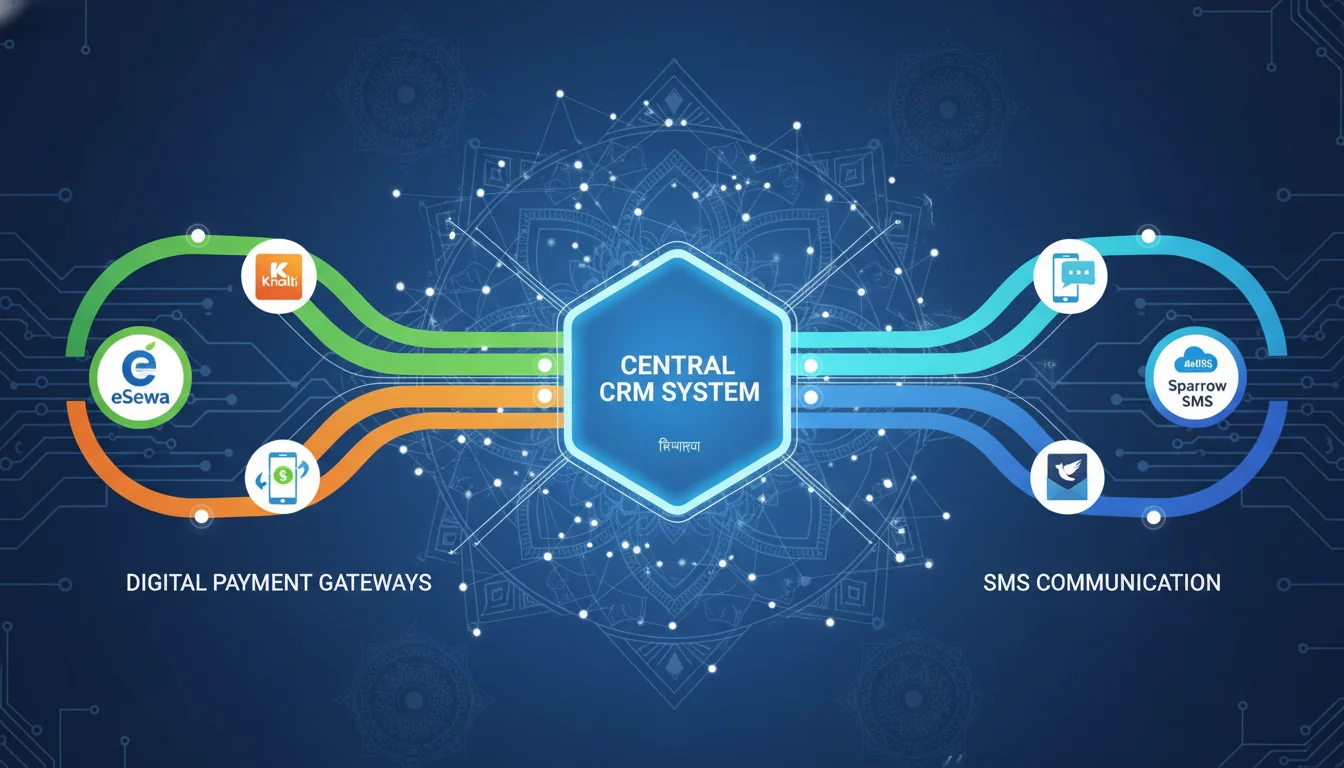
Despite rapidly rising smartphone adoption and expanding 4G/LTE infrastructure provided by Nepal Telecom (NTC) and Ncell, mobile internet access across the geographically diverse topography of Nepal remains highly inconsistent. Push notifications and email marketing often fail to reach consumers in real-time. Consequently, Short Message Service (SMS) maintains an unparalleled open-rate and reliability metric compared to internet-dependent communication channels. Integrating bulk SMS API gateways directly into the CRM is a strict operational requirement for effective B2C and B2B communication in Nepal.
The Nepali market relies on several specialized gateway providers to facilitate this critical bridge between software and cellular networks.
- Aakash SMS: This provider offers highly robust API integration, allowing CRM systems to transmit real-time updates seamlessly. It supports critical functions such as Two-Factor Authentication (2FA) for secure client portals, dynamic scheduling, automated SMS-based voting and polling, and low-latency delivery across both NTC and Ncell networks.
- Sparrow SMS: Widely regarded as a highly reliable backbone for institutional messaging, Sparrow SMS provides deep API support explicitly utilized for educational automation, ensuring verified sender IDs, and guaranteeing instantaneous delivery without hidden balance expiry issues. It is the preferred choice for internal development teams requiring stable webhook support for routing One-Time Passwords (OTPs) and triggering programmatic system alerts.
- SMS Pasal: Facilitates critical Unicode support, which allows CRM systems to dispatch automated messages in the native Nepali script rather than relying exclusively on English. This ensures broad comprehension across all demographic segments and geographical regions.
The synergy generated by integrating these gateways into a CRM is profound.
When natively integrated, the CRM can automatically dispatch a personalized confirmation text the moment a deal stage moves to “Closed/Won,” broadcast bulk holiday promotional messages directly from the central contact database, or trigger automated appointment reminders to minimize client no-shows. The absence of this native integration forces sales teams to manually export CSV contact files and operate secondary web-based SMS platforms, completely negating the operational efficiency that a CRM is supposed to provide.
Critical Local Integrations: Digital Payments and Regulatory Compliance
Parallel to telecommunications, the integration of local digital payment gateways represents a formidable but necessary hurdle for complete CRM automation. The digital payment ecosystem in Nepal is effectively a duopoly, with eSewa and Khalti processing approximately 80% of all digital retail and service transactions nationwide. For CRMs handling direct invoicing, retail client portals, e-commerce checkout syncing, or subscription renewals, integrating these specific gateways is an absolute imperative.
Connecting a globally standardized CRM (or developing a custom local build) to Nepali payment gateways presents significant software engineering challenges. The domestic developer community frequently highlights the technical friction involved in these integrations. Developers encounter hurdles related to convoluted API documentation, inconsistent webhook callbacks, and the complexities of navigating sandbox testing environments. For instance, establishing a functional testing environment requires meticulous configuration using specific, non-standard dummy credentials provided by the gateways (e.g., Khalti test mobiles utilizing numbers like 9800000001, specific static OTPs like 987654, and complex live secret keys, alongside eSewa merchant IDs like EPAYTEST). Historically, this integration was so arduous that developers relied on community-built, open-source plugins just to force compatibility between basic web platforms and the payment processors.
However, the operational payoff for overcoming this engineering friction is immense. Once integrated via custom API layers—often architected by local SI firms utilizing intermediate modern technology stacks like React and Node.js—the CRM can achieve true financial automation. The system can be programmed to automatically update invoice statuses from “Pending” to “Paid,” instantly issue digital receipts, and trigger service provisioning the precise moment a client authorizes a Khalti or eSewa transaction on their mobile device. This automated financial reconciliation completely eliminates human error in ledger management and dramatically accelerates cash flow recognition across the enterprise. Furthermore, as local regulatory bodies like the Inland Revenue Department (IRD) increasingly mandate digital trails for corporate taxation, ensuring the CRM’s billing module is IRD-certified prevents severe compliance liabilities. Local CRM architectures like Swastik and Thulo CRM maintain a competitive advantage here, natively supporting these compliance frameworks, whereas deploying an international platform requires costly custom API middleware to achieve the same legal standing.
Total Cost of Ownership (TCO) Modeling for the Nepali Market
When evaluating CRM software, procurement officers and technology directors in Nepal must strictly avoid the fallacy of assessing solely the advertised monthly subscription rate. True strategic evaluation requires calculating the Total Cost of Ownership (TCO) over a standard 36-month technological lifecycle, accounting for hidden deployment, operational, and integration costs.
The empirical TCO can be calculated utilizing the following comprehensive theoretical framework:
TCO = (N _ C_m _ 36) + C_i + (C_a * 36) + C_t + C_d
Where the specific variables dictate the true financial impact on the enterprise:
- N = Total number of registered CRM users requiring individual licenses.
- C_m = The base monthly subscription cost per user (subject to currency exchange risks if purchasing international software without localized NPR billing).
- C_i = One-time implementation, customization, and setup fees (e.g., contracting an SI firm like Set2Close or Dogma Group at $200/hr to map complex business workflows into the new system).
- C_a = The recurring monthly costs of maintaining third-party APIs and localized integrations (e.g., purchasing bulk SMS credit packages from Aakash SMS, or covering the transaction percentage fees levied by Khalti and eSewa).
- C_t = Expenditure related to initial staff onboarding, sustained training protocols, and organizational change management required to break legacy habits.
- C_d = The one-time technical cost of cleansing and migrating legacy unstructured data (from physical books or fragmented Excel/SQL databases) into the new CRM architecture.
Practical Application of the TCO Model
Applying this mathematical framework reveals the stark contrast in procurement strategies within the Nepali market.
For an MSME deploying a local platform like Delta Sales CRM, the TCO equation is heavily optimized for capital preservation. The C_t and C_d variables approach zero due to the highly intuitive, localized interface and the inclusive customer support provided directly by the vendor in Biratnagar. Furthermore, the C_m is fixed at a highly aggressive $7/user/month, or a bulk rate of $252 annually for three users. This results in a highly predictable, linear TCO that scales cleanly alongside organizational growth without demanding sudden capital injections.
Conversely, deploying an enterprise-grade international architecture like Salesforce or heavily customized HubSpot Enterprise results in a massive surge in the C_i parameter. An enterprise must inevitably contract an SI firm to map the system, potentially incurring tens of thousands of dollars in consulting fees upfront. Furthermore, integrating local SMS and payment gateways requires custom API development, driving up the C_a costs significantly. However, for a large commercial bank or a nationwide logistics conglomerate, the return on investment (ROI) generated by advanced automated up-selling, flawless data compliance, and AI-driven revenue forecasting often eclipses this immense initial expenditure over a 36-to-60-month operational horizon. The critical error occurs when mid-sized Nepali companies purchase enterprise software based on brand prestige, only to discover they lack the capital to fund the C_i phase, resulting in an expensive, underutilized digital Rolodex rather than an automated sales engine.
Strategic Recommendations and Sector-Specific Conclusions
The empirical data and technical analysis suggest that the Nepali CRM landscape is maturing at an exceptional rate, presenting organizations with highly capable software solutions across all budgetary strata. The software selection process must not be dictated by marketing prestige, but rather by a rigorous analysis of specific operational architecture, sector requirements, and the fundamental technological fluency of the adopting organization.
Strategic Directives for Micro-Enterprises, Startups, and Service Consultancies:
Organizations operating with constrained capital and minimal IT infrastructure must prioritize rapid adoption and ease of use over complex automation. Platforms like Kumari Job CRM or the perpetually free foundational tier of HubSpot CRM provide the optimal entry points. These systems require zero complex implementation, allowing teams to immediately transition away from spreadsheet dependency and begin systematically mapping their sales pipelines and client communications. The focus here should be establishing fundamental data hygiene and team accountability.
Strategic Directives for Field-Heavy Operations, Wholesalers, and FMCG Distributors:
For organizations managing distributed workforces across Nepal’s challenging geography, Delta Sales CRM emerges as the definitive strategic choice. Its aggressive local pricing model, coupled fundamentally with the critical Delta Sales App for GPS tracking, beat plan optimization, and offline order processing, directly solves the core logistical challenges of domestic distribution networks. International platforms without native offline mobile optimization will fundamentally fail in this specific sector.
Strategic Directives for Mid-Market Retail, Financial Advisory, and Regional Services:
Organizations requiring sophisticated customer engagement strategies must deploy platforms capable of advanced workflow automation and audience segmentation. Pace CRM and Zoho CRM offer the necessary blend of powerful analytics, loyalty program management, and scalable architecture. Zoho’s NPR pricing via Nest Nepal provides vital financial predictability against currency fluctuations, while its modular expansion capabilities through the Zoho One ecosystem ensure the software infrastructure can expand concurrently with the business’s operational complexity. Pace CRM provides excellent localized support and deep vertical integration (such as the EasyQuote system for production tracking), making it highly attractive for firms requiring specialized modules.
Strategic Directives for Large-Scale Corporations and Multi-National Entities:
For organizations where data volume is massive and operational complexity spans multiple divisions, the deployment of global titans like Salesforce or Microsoft Dynamics 365 remains the only logical conclusion.
Despite the highly prohibitive implementation costs and the strict requirement to retain domestic SI consultancies like CloudMasonry or Dogma Group, the unparalleled ability to architect infinite workflow customizations, deploy advanced AI forecasting models, and integrate deeply into multi-tiered ERP ecosystems fully justifies the immense capital expenditure.
Ultimately, executing an optimal CRM deployment within the Nepali market requires looking far beyond standard sales pipeline management. Long-term commercial success is predicated on recognizing and adapting to the unique technological topography of the region. This mandates seamless software connections with domestic telecommunications infrastructure (Sparrow SMS, Aakash SMS) to guarantee message delivery, deep integration with localized digital wallets (eSewa, Khalti) to automate revenue reconciliation, and strict adherence to local regulatory frameworks. By aligning these complex integrations with the appropriate software tier, Nepali enterprises can achieve profound operational efficiencies, secure institutional memory against workforce attrition, and drive sustainable, data-driven revenue growth in an increasingly competitive digital economy.