Mid-Market Restructuring vs Liquidation: Strategic Guide
Chapter 11 Corporate Restructuring vs. Liquidation: A Strategic Guide for Mid-Market Firms

The Macroeconomic and Sectoral Anatomy of Middle-Market Distress
The middle-market corporate landscape in 2026 is defined by a complex “distress paradox.” While overall default rates remain generally manageable—hovering between 2% and 3%, which is largely unchanged from 2024 but higher than pre-pandemic averages—specific sectors and capital structures are experiencing acute operational and financial stress. Chapter 11 bankruptcy filings reached a decade-long high in 2025, driven by a confluence of elevated input costs, sustained inflation, supply chain disruptions, and a K-shaped economic recovery that severely strained lower- and middle-income consumer spending. This environment is primed to generate further restructuring activity throughout 2026 as macroeconomic volatility persists.
Middle-market companies, particularly those that are privately held or operating within fragile supply chains, are often under significantly greater strain than their larger, publicly traded counterparts. These entities frequently lack the dedicated internal treasury functions, robust capitalization, and dynamic forecasting capabilities necessary to navigate prolonged economic volatility, making proactive scenario planning and early liability management imperative. The nature of this distress is not uniform; it is deeply concentrated within specific sectors facing unique structural hurdles, requiring nuanced restructuring approaches rather than generalized insolvency protocols.
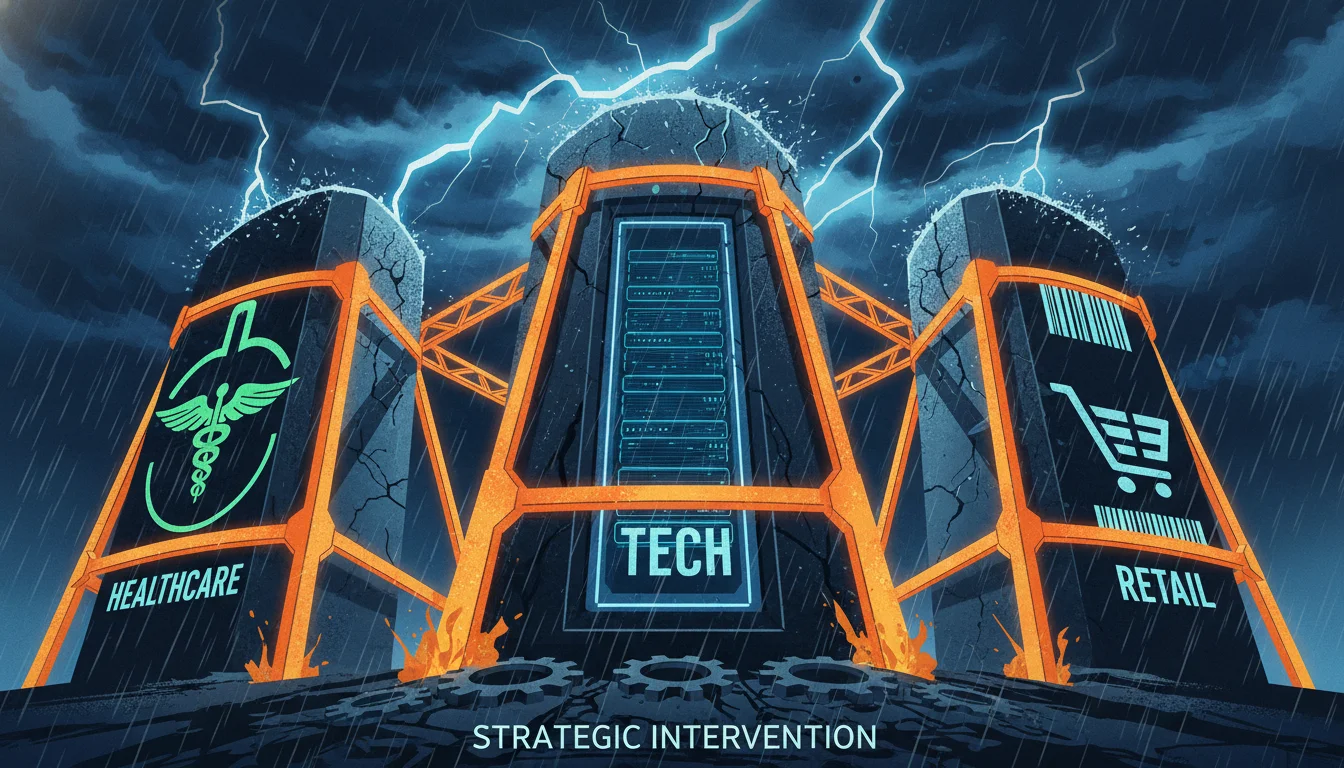
The software and technology sector provides a stark illustration of this phenomenon. Many middle-market software firms were acquired during the valuation peaks of 2020 and 2021, frequently transacting at mid-teens EBITDA multiples. These organizations are now struggling under the crushing weight of floating-rate debt structures in a higher-yield environment. A critical structural vulnerability in this space is the heavy reliance on Annual Recurring Revenue (ARR) credit facilities, which frequently utilize Payment-in-Kind (PIK) options. While these structures theoretically allow early-stage companies to reinvest cash into growth rather than debt service, they concentrate risk immensely and render these firms highly vulnerable to shifts in market sentiment and cash-burn acceleration when growth targets are missed.
Simultaneously, the healthcare sector leads in overall default volume due to a perfect storm of regulatory, structural, and operational pressures. High leverage combined with extreme labor intensity makes these organizations hyper-sensitive to skilled labor costs, which have plateaued at elevated levels rather than returning to pre-pandemic norms. Furthermore, healthcare cash flows have been heavily constrained by complex regulatory frameworks, such as the No Surprises Act, and systemic operational shocks, most notably the widespread Change Healthcare cyber breach. Provider-focused businesses remain particularly stressed compared to their payer counterparts, necessitating specialized restructuring strategies that account for patient care continuity and strict state regulatory oversight.
In the retail and consumer space, distress is sharply bifurcated by the underlying business model. Traditional brick-and-mortar operators are weighed down by inflexible, long-term lease obligations and rising minimum wage requirements that compress operating margins. Conversely, e-commerce native brands operate on asset-light models, affording them far greater flexibility to access alternative financing or restructure liabilities without the burden of severe physical overhead.
Other sectors face similarly unique structural challenges. The telecommunications and broadcasting industries are characterized by systemic structural decline, driven by single issuers with highly complex debt profiles. As debt values linger at distressed levels, specialized investors are increasingly targeting these subsectors for complex, opportunistic restructurings. Within business services, subsectors such as aerospace, government contracting, and small-market gaming face immense operational leverage challenges. The primary catalyst for distress in this sector is customer concentration; the loss of a single major contract or the bankruptcy of a key client can trigger rapid and catastrophic financial deterioration due to high fixed costs. Finally, the commercial real estate (CRE) market exhibits severe regional and quality-based divergence. While Class-A office spaces maintain relative occupancy, Class-B and Class-C buildings face limited visibility and massive refinancing risks, with Southern U.S. markets dealing with localized stress due to systemic overbuilding.
These localized sectoral pressures are fundamentally altering the way mid-market capital structures are analyzed and restructured. The proliferation of multiple debt tranches and complex securities has made identifying the “fulcrum security”—the specific class of debt expected to receive a majority of the reorganized firm’s equity—increasingly difficult. In response, there has been a massive surge in sophisticated out-of-court Liability Management Exercises (LMEs), including aggressive “uptier” transactions and “drop-down” financing playbooks, which require highly creative legal and financial engineering to execute without triggering cross-default provisions.
Furthermore, private equity (PE) sponsors are playing an unprecedented role in shaping middle-market distress outcomes. PE firms are increasingly doubling down on troubled middle-market investments rather than walking away, injecting more than $2.5 billion in total capital into at least 165 distressed portfolio companies over the past five years. This is driven by constrained buyout activity and an increase in median holding periods for U.S. PE-backed companies, which reached a decade high of 3.4 years. However, these post-leveraged buyout (LBO) capital injections are almost always accompanied by severe covenant modifications, PIK conversions, and aggressive maturity extensions. Despite these interventions, data indicates that PE-backed firms restructure more quickly, avoid bankruptcy court more often, and liquidate less frequently than highly leveraged non-PE firms, acting as a stabilizing force in the mid-market credit ecosystem.
| Sector | Primary Catalyst for Distress | Key Structural Challenge | Restructuring Trend / Outlook |
|---|---|---|---|
| Software/Tech | Overvaluation during 2020-2021 | Floating-rate debt, ARR facilities with PIK options | Cash burn management; vulnerability to market shifts |
| Healthcare | Labor costs, cyber breaches | Extreme labor intensity, No Surprises Act compliance | High default volume, especially among providers |
| Retail | Inflation, shifting consumer habits | Long-term leases for brick-and-mortar vs asset-light e-commerce | Bifurcated outcomes based on physical footprint |
| Telecom | Structural industry decline | Complex debt structures driven by single large issuers | Target for opportunistic, complex debt restructurings |
| Business Services | Loss of key contracts | Extreme customer concentration and high fixed costs | Rapid deterioration upon contract termination |
| Real Estate (CRE) | High interest rates, WFH trends | Regional overbuilding, obsolescence of Class-B/C spaces | Deep regional and asset-quality divergence |
Evaluating the Strategic Threshold: Restructuring Versus Liquidation
When a middle-market firm crosses the threshold into insolvency—defined fundamentally as the inability to meet debt obligations as they come due, or when total liabilities exceed the fair market value of assets—stakeholders are forced to make a profound strategic decision: attempt to restructure the enterprise to restore solvency, or liquidate its assets to repay creditors. This inflection point carries vast implications for secured and unsecured creditors, employees, supply chains, shareholders, and surrounding municipalities.
From a macroeconomic perspective, business failures during economic downturns serve as a mechanism for “creative destruction,” a Schumpeterian theory positing that inefficient firms must exit the market to allow for the reallocation of resources to more productive uses. Statistical models utilizing accounting measures, such as the Altman Z-score—which aggregates working capital, retained earnings, EBIT, market equity, and sales ratios—demonstrate that young, small, single-product, and domestic-market-oriented firms are the most vulnerable to this cycle of financial distress. However, while macroeconomic theory assumes that liquidations efficiently transfer assets to healthier competitors, the microeconomic reality for a mid-market firm is fraught with friction, deadweight loss, and complex fiduciary obligations.
The framework for deciding between reorganization and liquidation relies on a rigorous evaluation of several core criteria. The absolute primary determinant is the viability of the enterprise’s “going concern” value. Stakeholders must objectively assess whether the business model remains fundamentally sound despite possessing an unsustainable balance sheet. If the firm possesses a viable future with potential for long-term profitability, a defensible market share, and operational utility, restructuring is invariably the superior path. A traditional Chapter 11 reorganization allows a viable business to shed unprofitable executory contracts, restructure burdensome debt without entirely erasing it, and emerge as a highly competitive entity. Fundamentally, if the enterprise value of the firm operating as a going concern exceeds the projected piecemeal liquidation value of its assets, fiduciary duties generally compel the board of directors and the firm’s advisors toward a restructuring posture.
Conversely, the severity of the financial distress must be weighed carefully.
If liabilities overwhelmingly exceed both current assets and any reasonable projection of future cash flows, and there is no clear strategic path to profitability, liquidation becomes the most practical, legally responsible solution. In instances where access to Debtor-in-Possession (DIP) financing is completely unavailable—a common hurdle for middle-market companies lacking unencumbered assets—reorganization becomes mathematically impossible, forcing an immediate pivot to liquidation mechanisms.
Stakeholder impact and the maximization of recovery are also paramount in this decision matrix. Creditors typically recover a significantly higher percentage of their claims through a successful restructuring than through a forced liquidation. Restructuring preserves vital intangible assets such as brand equity, long-term vendor contracts, proprietary intellectual property, and customer goodwill—assets that evaporate instantly the moment a liquidation is announced. Furthermore, reorganization maintains employment, operational continuity, and supplier relationships, mitigating the broader economic fallout and reputational damage associated with abrupt business closures.
Demystifying Chapter 11 in the Middle Market: Cost, Timeline, and Strategic Viability
A pervasive and often damaging misconception among middle-market sponsors, boards of directors, and secured lenders is that Chapter 11 bankruptcy filings are inherently prohibitively expensive, agonizingly lengthy, and ultimately destructive to enterprise value. Because of this enduring stigma, many distressed middle-market portfolio companies opt for out-of-court alternatives that carry far less certainty, inferior legal protections, and significantly greater successor liability risks.
However, empirical data and recent market behavior demonstrate that, under the right conditions and with rigorous pre-petition planning, Chapter 11 can be executed as a highly cost-effective and swift strategic maneuver. A comprehensive review of middle-market restructuring cases reveals that accelerated Chapter 11 processes can successfully consummate asset sales or comprehensive balance sheet reorganizations in a matter of weeks, rather than years, while strictly minimizing administrative bloat and professional fee burn.
Recent case studies of middle-market Chapter 11 processes underscore the extreme efficiency achievable through pre-negotiated strategies and targeted execution:
- Supply Source (Distribution): 49 Days, $5.1 Million, Sale Confirmation
- Appgate (Cybersecurity): 58 Days, $4.6 Million, Effective Date Reorganization
- Ambri (Energy Storage): 67 Days, $3.4 Million, Sale Confirmation
- Plastiq (Fintech): 68 Days, $3.8 Million, Sale Confirmation
- Performance Powersports (Manufacturing): 70 Days, $3.2 Million, Sale Confirmation
Data reflects total post-petition debtor professional fees (counsel, investment banker, and restructuring advisor) and the timeline from petition to plan/sale confirmation.
These highly compressed, 50-to-70-day timelines are not accidental; they are precisely engineered by restructuring professionals. Achieving a rapid Chapter 11 exit requires a confluence of strict operational prerequisites. Primarily, the most efficient cases invariably begin with a clear strategy at commencement, such as a pre-arranged deal, a pre-negotiated Restructuring Support Agreement (RSA), or a designated “stalking horse” bidder already in place prior to the petition date. Filing a “free fall” bankruptcy without a defined exit strategy guarantees protracted litigation and exploding costs.
Furthermore, securing reasonable Debtor-in-Possession (DIP) financing is critical. DIP loans must include realistic and achievable operational milestones. If the covenants attached to the post-petition financing are overly restrictive, they will immediately trigger creditor objections, spawning costly litigation that dramatically inflates professional fees and extends the length of the case. Finally, the marketing process for an eventual sale or recapitalization must begin in earnest well before the Chapter 11 petition is filed. By conducting the market test prior to the filing, the company ensures that the federal court process is utilized merely to execute, sanitize, and bless the transaction, rather than to undertake a lengthy discovery of the market’s appetite.
Mechanisms of Value Preservation: 363 Sales, RSAs, and DIP Financing
To execute a successful middle-market reorganization or going-concern sale, executives, restructuring advisors, and financial sponsors rely on a triad of powerful statutory tools that are entirely exclusive to the federal bankruptcy framework. These tools—Section 363 sales, Restructuring Support Agreements, and Debtor-in-Possession financing—provide unparalleled leverage that simply cannot be replicated in out-of-court state venues.
The Power of Section 363 Sales
Under Section 363 of the U.S. Bankruptcy Code, a debtor is authorized to sell assets outside the ordinary course of business, free and clear of all liens, claims, encumbrances, and interests. This is arguably the most powerful mechanism available to mid-market distressed companies and opportunistic strategic buyers. The primary advantage of a 363 sale is the absolute legal protection it offers the purchaser against “successor liability” claims. Unlike out-of-court asset purchases where hidden liabilities frequently attach to the buyer, a bankruptcy court order approving a 363 sale explicitly forecloses future liability, enabling strategic buyers to purchase distressed operations with complete confidence and a clean slate.
Furthermore, the debtor possesses the unique ability under Section 365 to assume and assign favorable executory contracts and unexpired leases to the buyer—even if those specific contracts contain strict anti-assignment clauses—while simultaneously rejecting burdensome or above-market obligations. This capability allows a retail or manufacturing firm to shed unprofitable locations or vendor agreements while transferring the crown jewels of the business intact.
Secured creditors wield immense power in 363 sales through the statutory mechanism of “credit bidding.” A secured creditor can bid the full par value of its outstanding debt against the purchase price of the assets at auction, even if that specific debt was purchased on the secondary market at a massive discount. Consequently, specialized distressed investors frequently execute a “loan-to-own” strategy. By purchasing a distressed mid-market firm’s first-lien secured debt at 50 cents on the dollar, the investor enters the capital structure explicitly to use a credit bid to acquire the company’s assets at a 50% discount to market value, easily outbidding competing cash buyers.
Restructuring Support Agreements (RSAs)
A Restructuring Support Agreement (RSA), occasionally referred to as a Plan Support Agreement, is a formal, binding contract executed between a debtor and its key creditor constituencies prior to, or during the very early stages of, a bankruptcy case. Historically uncommon prior to the mid-2000s, RSAs have become a regular fixture, fundamentally transforming bankruptcy from a litigation-driven arena into a transactional, consensus-building process.
RSAs are designed specifically to eliminate the unpredictability, confrontational legal actions, and adversarial litigation that traditionally derail Chapter 11 timelines. These sophisticated agreements dictate exactly how specific classes of claims will be treated, secure binding commitments from participating creditors to vote in favor of the impending reorganization plan, and establish strict procedural milestones, such as immutable deadlines for filing a sale motion or confirming the final plan.
Crucially, to satisfy rigorous legal standards and corporate governance requirements, RSAs uniformly include a “fiduciary out” clause. This provision permits the debtor’s board of directors to terminate the agreement and pursue an alternative transaction if proceeding with the RSA would violate their fiduciary duties to maximize the value of the estate under applicable law. By locking in creditor consensus early, RSAs drastically reduce professional expenses, increase outcome predictability, and preserve the debtor’s operational stability by ensuring uninhibited access to cash collateral during the proceeding.
Debtor-in-Possession (DIP) Financing
Chapter 11 accomplishes its rehabilitative goals by providing specialized statutory protections that incentivize lenders to provide critical post-petition liquidity to a distressed firm, without which reorganization or an orderly sale is mechanically impossible. DIP lenders are granted “super-priority” administrative expense status, ensuring they are repaid ahead of almost all other pre-petition claims, significantly reducing the risk of the loan.
A profound and recent evolution in the middle-market DIP landscape is the aggressive push by pre-petition equity sponsors to become DIP lenders.
Private equity sponsors frequently step in to provide this vital financing, strategically embedding provisions that allow them to convert the DIP loan into post-bankruptcy equity. This enables sponsors to salvage returns from failing investments and retain control of the reorganized entity at a steep discount. Because DIP loans are typically approved by the court on an accelerated, “first-day” basis, they entirely bypass the traditional, lengthy plan confirmation process, allowing sponsors to lock in equity control before the broader market has any opportunity to accurately price the reorganized firm’s intrinsic value. While controversial, heavily scrutinized, and frequently challenged by unsecured creditors—given the inherent corporate governance conflicts when a company’s board evaluates financing proposals from its own equity holders—bankruptcy courts frequently approve these structures out of sheer necessity, recognizing the absolute dearth of alternative, third-party financing in distressed mid-market credit environments.
Subchapter V: The Legislative Evolution and the 2026 Horizon
For firms operating at the lower end of the middle market, the costs, administrative burdens, and absolute priority rules of a traditional Chapter 11 case can still present insurmountable barriers. Recognizing this systemic failure, Congress enacted the Small Business Reorganization Act (SBRA) of 2019, officially creating Subchapter V of Chapter 11, which went into effect in February 2020. This framework was designed specifically to allow small and medium-sized enterprises to restructure debt, retain operations, and save jobs without the crushing complexities of a mega-corporate bankruptcy.
Subchapter V fundamentally alters traditional bankruptcy rules to favor the debtor and streamline the path to confirmation. First, unless explicitly ordered by the court for cause, Subchapter V cases do not feature official committees of unsecured creditors, eliminating a massive source of litigation, delay, and professional fees that the debtor estate would otherwise have to fund. Second, it grants the debtor absolute exclusivity; only the debtor may file a reorganization plan, and it must be submitted within 90 days of the petition date, preventing hostile creditors from proposing competing liquidation plans to seize the company.
Most significantly, Subchapter V abrogates the absolute priority rule. In a traditional Chapter 11, existing equity holders cannot retain their ownership interests unless all unsecured creditors are paid in full or vote overwhelmingly to approve the plan. Under Subchapter V, business owners can retain their equity without creditor consent, provided the reorganization plan dedicates all of the firm’s projected disposable income to debt repayment over a three-to-five-year period. Furthermore, Subchapter V eliminates the requirement for a costly formal disclosure statement, removes the obligation to pay quarterly U.S. Trustee fees, and mandates the appointment of a specialized Subchapter V trustee tasked with facilitating consensus rather than seizing operational control.
Debt Limit Volatility and the Bankruptcy Threshold Adjustment Act of 2026
Despite its immense utility, eligibility for Subchapter V is strictly governed by a debt limit threshold, which has experienced extreme and highly disruptive volatility over the past five years. Upon enactment in 2019, the limit was set at approximately $2.75 million in aggregate noncontingent, liquidated secured and unsecured debts. The CARES Act of 2020 temporarily spiked this limit to $7.5 million to combat pandemic-driven distress, opening the subchapter to a massive swath of the middle market.
This $7.5 million threshold was extended multiple times by Congress but was ultimately allowed to lapse on June 21, 2024. Consequently, the threshold reverted to the original statutory calculation, adjusting for inflation to $3,024,725. Pursuant to the triennial inflation adjustments mandated by Section 104 of the Bankruptcy Code, this limit automatically rose by roughly 13.2% to $3,424,000 on April 1, 2025.
However, lawmakers and restructuring professionals quickly realized that dropping the threshold from $7.5 million back down to the $3 million range severely disenfranchised thousands of mid-market businesses. Highly leveraged, asset-light firms with debts between $3.5 million and $7.5 million were suddenly pushed toward devastating Chapter 7 liquidations because traditional Chapter 11 remained unaffordable.
In response, bipartisan legislative efforts gained massive momentum. In March 2026, the “Bankruptcy Threshold Adjustment Act of 2026” was formally introduced in Congress by Senate Judiciary Committee Chair Charles Grassley and Representative Ben Cline, with support from Representative Lou Correa. This critical legislation aims to amend Section 1182 of the Bankruptcy Code to permanently restore the debt eligibility limit to $7.5 million, significantly expanding the safety net for the middle market. The urgency of this legislation is underscored by market behavior; even under the restricted $3.4 million limit, Subchapter V filings surged, witnessing a staggering 91% year-over-year increase in February 2026, indicating massive latent demand among mid-market firms for streamlined restructuring mechanisms.
Liquidation Frameworks: Chapter 7 and Collateral Economic Impacts
When reorganization is mathematically or operationally unfeasible due to insurmountable debt, systemic unprofitability, or a total lack of DIP financing, a firm must pivot from preservation to liquidation. Chapter 7 of the U.S. Bankruptcy Code, often referred to as “liquidation bankruptcy,” governs the orderly dissolution of a company.
In a Chapter 7 proceeding, the business immediately ceases operations, and incumbent management is displaced. An independent Chapter 7 trustee is appointed by the U.S. Trustee’s Office to assume total control over the estate. The trustee has a singular, statutory mandate: to marshal and liquidate the company’s assets as efficiently as possible, and distribute the proceeds to creditors in accordance with the strict priorities established by the Bankruptcy Code.
For corporate entities, unlike individual debtors, Chapter 7 does not result in a formal “discharge” of debts. Rather, the corporate shell is permanently dissolved, and all equity stock is rendered entirely valueless. The liquidation process typically takes three to six months to execute the initial asset sales, though complex estate administration involving litigation or asset tracing can stretch for years, often yielding mere pennies on the dollar for unsecured creditors. It is worth noting that for individuals crossing into business debt—such as sole proprietors—eligibility for Chapter 7 is subject to a strict means test, and over 95% of individual Chapter 7 cases are “no-asset” cases where creditors receive nothing, while the filing remains on a credit report for 10 years.
The Microeconomic Fallout: Thick vs. Thin Markets
While Chapter 7 serves as an efficient legal mechanism to resolve unpayable debt, it carries profound macroeconomic and socioeconomic collateral damage, particularly for local economies. The assumption underlying liquidation is that physical, real estate, and intellectual assets will be swiftly purchased by healthier competitors and reallocated to more efficient uses. However, empirical research tracing the outcomes of more than 28,000 corporate bankruptcies over two decades reveals a stark divergence based entirely on market geography and density.
In “thick” markets—regions with high concentrations of capital, robust industries, and numerous potential buyers—the difference in long-term asset utilization between a Chapter 11 reorganization and a Chapter 7 liquidation is negligible, as assets are quickly absorbed and repurposed by competitors. However, in “thin” markets—such as single-industry towns or geographically isolated manufacturing hubs—the destruction of enterprise value caused by liquidation is severe and long-lasting.
Real estate and industrial assets that pass through a Chapter 11 reorganization are 17% more likely to remain in productive use five years later compared to identical assets liquidated under Chapter 7. More critically, Chapter 11 acts as a powerful artificial market stabilizer; companies that survive a Chapter 11 restructuring retain roughly 70% of their pre-bankruptcy employment levels at the five-year mark. By contrast, Chapter 7 liquidations routinely result in assets sitting vacant for years, with eventual regional employment recovering to only 60% of original levels. This dynamic suggests that federal bankruptcy judges, restructuring advisors, and mid-market boards must exercise extreme caution before defaulting to a “simple” liquidation, as the failure to preserve going-concern value can precipitate a localized economic cascade that devastates surrounding communities.
Non-Bankruptcy Alternatives: Article 9 and ABCs Under the 2026 UABCA
Given the intense public scrutiny, complex fiduciary duties, and massive professional fees associated with federal bankruptcy, secured creditors and mid-market executives frequently seek state-level and out-of-court alternatives.
While these alternative tools offer unparalleled speed and discretion, they generally lack the comprehensive liability shields and cross-creditor cramdown capabilities inherent in Chapter 11.
Article 9 Strict Foreclosure
Under Article 9 of the Uniform Commercial Code (UCC), a secured creditor holds the statutory right to seize, lease, license, or dispose of collateral after a borrower defaults on a loan agreement, bypassing the judicial system entirely.
An Article 9 sale can be executed either publicly (via auction) or privately, provided the overarching process meets the strict legal standard of being “commercially reasonable” in its preparation and execution. For distressed mid-market companies, secured lenders frequently engineer what is known as a “friendly foreclosure.” In this scenario, the lender seizes the assets and immediately sells them to a pre-identified third-party buyer—often a newly formed entity backed by the distressed company’s existing management team or financial sponsor.
The strategic advantages of an Article 9 sale are velocity and cost-efficiency. The transaction can be completed in a matter of weeks, incurring a mere fraction of the legal and administrative costs of a Chapter 11 or 363 sale. Furthermore, the lack of public court dockets minimizes reputational damage and prevents competitors from weaponizing the distress against the firm’s customer base or supply chain.
However, Article 9 carries severe strategic vulnerabilities. Unlike a Section 363 sale, an Article 9 disposition does not universally extinguish unsecured claims or guarantee a “free and clear” title. Buyers assume a significant risk of successor liability litigation from aggrieved trade creditors, unions, or state regulatory agencies. Moreover, Article 9 only addresses the specific collateral pledged to the secured lender; it provides no automatic stay against other creditor actions and leaves the corporate shell—and any deficiency judgments—intact, frequently necessitating a subsequent Chapter 7 filing merely to clean up and dissolve the residual entity.
Assignments for the Benefit of Creditors (ABCs) and the 2026 UABCA
An Assignment for the Benefit of Creditors (ABC) is a voluntary, state-law-driven liquidation process. The distressed company (the assignor) legally transfers all its assets, titles, and interests to an independent fiduciary (the assignee), who then liquidates the assets and distributes the proceeds to creditors. ABCs have long served as a faster, cheaper alternative to Chapter 7 liquidations, operating with minimal or zero judicial oversight depending on the specific state’s governing statute.
However, the historical utility of ABCs has been severely handicapped by extreme inconsistencies across state lines. Some states possess robust, highly developed common-law frameworks for ABCs, while others lack coherent statutory guidance entirely, making multi-state mid-market liquidations highly unpredictable.
To rectify this deep fragmentation, the Uniform Law Commission (ULC) drafted the Uniform Assignment for Benefit of Creditors Act (UABCA), which was officially approved in late 2025. In February 2026, the American Bar Association’s House of Delegates officially approved the UABCA, signaling a massive shift toward state-level adoption. By March 2026, the Delaware General Assembly introduced Senate Bill No. 267 to formally enact the UABCA, paving the way for widespread national standardization.
The UABCA standardizes the ABC process across jurisdictions, modernizing outdated statutes and codifying aspects of common-law assignment practice. It provides a definitive, statutory framework governing the powers of the assignor and assignee, establishes uniform procedures for allowing and disputing claims, limits the personal liability of the fiduciary, and codifies distribution priorities. If universally adopted, the UABCA promises to elevate ABCs from a niche, state-specific workaround into a formidable, standardized national alternative to federal bankruptcy, particularly for mid-market liquidations where the cost of a Chapter 7 trustee cannot be justified.
Comparative Matrix: Mid-Market Restructuring and Liquidation Avenues
| Feature | Chapter 11 (Traditional & Sub V) | Chapter 7 Liquidation | UCC Article 9 Sale | Assignment for Benefit of Creditors (ABC) |
|---|---|---|---|---|
| Primary Strategic Goal | Reorganization / Going Concern Sale | Forced Dissolution | Secured Creditor Recovery | Orderly Fiduciary Liquidation |
| Judicial Oversight | Intensive (Federal Bankruptcy Court) | Moderate to High (Federal) | None (Statutory mechanism) | Low to None (State Court dependent) |
| Management Control | Debtor-in-Possession (Retains control) | Chapter 7 Trustee | Secured Lender / Buyer | Independent Fiduciary (Assignee) |
| Asset Transfer Title | Free and clear of all liens/claims (§363) | Trustee sells assets | Subject to subordinate liens/successor risks | Clean transfer, but lacks federal injunctions |
| Automatic Stay | Yes (Global protection) | Yes | No (Only impacts specific collateral) | Varies by state; generally weaker than federal |
| Cost & Speed | High Cost / 60 Days to Years | Moderate Cost / Months | Low Cost / Weeks | Low to Moderate Cost / Weeks to Months |
Matrix synthesized from respective statutory frameworks, cost evaluations, and comparative analyses of federal and state procedures.
The Critical Role of the Chief Restructuring Officer (CRO)
A fundamental difference between mega-cap corporate bankruptcies and middle-market distress is the stark disparity in internal corporate infrastructure. Middle-market companies facing insolvency frequently lack sophisticated internal treasury departments, rely on rudimentary or inconsistent accounting software, and suffer from exceptionally poor cash-flow visibility.
Furthermore, mid-market entities are heavily influenced by founder dynamics. Founders often exert outsized control over operations, possess deep emotional attachments to the enterprise, hold personal relationships with vendors, and, critically, may have signed personal guaranties on corporate debt. In distress scenarios, this manifests as a dangerous reluctance to file for bankruptcy, desperate attempts to obscure pre-petition intercompany transfers, or the mingling of personal and corporate assets, which inevitably spawns fraudulent conveyance investigations, debt-equity recharacterization issues, and intense “creditor paranoia.”
To bridge this operational and credibility gap, the appointment of a Chief Restructuring Officer (CRO) has evolved from a reactive measure to a proactive, operational imperative. The CRO is an independent, specialized C-suite interim executive inserted into the distressed firm to usurp control of the restructuring narrative, sideline emotional founders, and restore immediate credibility with hostile lenders and stakeholders.
The modern CRO operates across a highly structured, sequential mandate designed to salvage enterprise value:
- 1. Financial Stabilization: The immediate, primary focus is to stabilize the business by implementing rigorous 13-week cash flow modeling, halting non-essential disbursements, and negotiating forbearance agreements with banks to prevent imminent liquidation and buy time.
- 2. Strategic Planning: Working in conjunction with financial advisors, the CRO pressure-tests the existing business model and books to identify genuine viability, modeling scenarios for recapitalization versus an accelerated 363 sale, while developing contingency plans for a free-fall insolvency process.
- 3. Stakeholder Negotiation: The CRO serves as the objective buffer and primary negotiator between the debtor, private equity sponsors, the creditor syndicate, and the board. They lead the harrowing negotiations required to draft RSAs and secure DIP financing term sheets, utilizing immense interpersonal skills to “win the hearts and minds” of entrenched parties.
- 4. Operational Execution: Once a path is agreed upon, the CRO drives the operational turnaround. This involves executing headcount reductions, disposing of non-essential assets, and managing the highly complex logistical requirements of the Chapter 11 docket, ensuring that management is free to focus on day-to-day operations.
As the guiding principle dictates, “The CRO deals with the past; the CEO shapes the future.” The CRO paradigm is rapidly shifting. According to industry surveys, 66% of institutional respondents cite persistent financial distress as the primary trigger for a CRO engagement, while 60% anticipate that escalating global volatility will dramatically increase the necessity for proactive CRO deployments well before a formal default occurs, particularly among PE sponsors. To maximize efficiency, the CRO should be formally appointed to the board as an officer of the company, granting them clear authority to issue binding instructions relevant to the restructuring.
| CRO Phase | Primary Objective | Key Deliverables | Strategic Impact |
|---|---|---|---|
| Stabilize | Halt cash bleed and restore trust | 13-week cash flow model, forbearance agreements | Prevents immediate liquidation; buys negotiating time |
| Plan | Assess viability and structure options | Recapitalization models, contingency plans | Establishes the baseline for going-concern value |
| Negotiate | Align stakeholders | RSAs, DIP term sheets, covenant waivers | Neutralizes litigation risk and secures post-petition liquidity |
| Execute | Implement the turnaround | Asset sales, operational downsizing, court reporting | Achieves the formal restructuring or 363 sale exit |

Tax Considerations in Debt Workouts: CODI and Attribute Reduction
Financial restructuring—whether effectuated in a federal bankruptcy court or through an out-of-court workout—triggers severe and highly complex tax consequences that fundamentally alter the net recovery of the estate and the viability of the reorganized firm.
The foremost concern in any corporate debt workout is the realization of Cancellation of Debt Income (CODI). The fundamental principle governing CODI was established by the Supreme Court in the seminal 1931 case, Kirby Lumber, which dictated that the discharge of debt makes available an amount “previously offset by the obligation of bonds now extinct”. This principle is codified under Internal Revenue Code (IRC) Section 61(a) and Treasury Regulation § 1.61-12. Consequently, when borrowed funds are forgiven, settled at a discount, or completely discharged by a lender, the canceled amount is immediately recognized as taxable gross income to the borrower. For a highly leveraged middle-market firm restructuring tens of millions in debt, recognizing CODI can instantly create a catastrophic corporate tax liability, effectively replacing unpayable commercial debt with an immediate, un-dischargeable federal tax burden.
Statutory Exclusions and Tax Attribute Reduction
To prevent the tax code from neutralizing the rehabilitative purpose of bankruptcy, IRC Section 108 provides vital, specific statutory exclusions. A corporate debtor may wholly exclude CODI from its gross income if the debt discharge occurs under the formal jurisdiction of a federal bankruptcy court (a Chapter 11 proceeding). For out-of-court debt restructurings, a corporation may only exclude CODI to the extent that it can mathematically prove it was objectively “insolvent” immediately prior to the debt forgiveness event. For tax purposes, insolvency is defined as the amount by which the taxpayer’s total liabilities exceed the fair market value of its assets.
However, this statutory relief is not free; it comes at a steep future cost. In exchange for excluding CODI from current taxable income, the debtor must submit to strict tax attribute reduction. The firm is required to reduce its valuable future tax shields—primarily Net Operating Loss (NOL) carryforwards, capital loss carryovers, and the tax basis in its physical property—dollar-for-dollar by the exact amount of the excluded CODI. This intricate mechanism ensures that the tax is not forgiven entirely, but rather deferred. By wiping out NOLs and lowering property basis, the reorganized company will face significantly higher future tax liabilities, which inherently lowers the enterprise value of the firm post-emergence.
The Complexity of Partnerships and Pass-Through Entities
While corporate CODI calculations are relatively straightforward at the entity level, the vast majority of mid-market firms operate as pass-through entities, such as Partnerships or Limited Liability Companies (LLCs). In a partnership context, the insolvency exclusion is not evaluated at the entity level; it is tested strictly at the individual partner level.
If a distressed partnership successfully restructures its debt out of court, it generates CODI, which then flows directly through to its partners via Schedule K-1 allocations. A financially stable, solvent partner holding equity in the distressed partnership cannot utilize the insolvency exclusion, forcing them to pay out-of-pocket taxes on “phantom income” generated by the debt forgiveness. This dynamic routinely torpedoes consensual out-of-court workouts. Affluent private equity sponsors, solvent founders, or wealthy minority partners will aggressively block any debt forgiveness that triggers massive personal tax liabilities, frequently forcing the entity into a formal Chapter 11 bankruptcy solely to access global bankruptcy tax protections and shield the partners.
Furthermore, the tax compliance burden multiplies exponentially during insolvency. In a Chapter 7 liquidation or a Chapter 11 reorganization involving an individual debtor, a separate taxable entity—the “bankruptcy estate”—is legally created. The appointed trustee or Debtor-in-Possession must file Form 1041 for the estate, maintaining complex parallel tax compliance alongside the debtor’s standard corporate or individual returns (Form 1040), demanding sophisticated tax advisory to navigate the transition without incurring severe penalties.
Human Capital and Employee Considerations in Restructuring
In the midst of complex financial engineering, the human element of corporate restructuring is often overshadowed, yet it remains one of the most critical operational risks. The global economy, beset by slow growth, inflation, and high interest rates, has forced companies across the tech, finance, and manufacturing sectors to execute severe headcount reductions. However, entering Chapter 11 introduces extreme legal constraints on how a mid-market firm manages, pays, and incentivizes its remaining workforce.
A Chapter 11 proceeding is governed by general bankruptcy rules, notably the “automatic stay” and strict prohibitions against paying pre-petition obligations or entering into non-ordinary-course transactions without explicit approval from the bankruptcy court. Consequently, upon filing a bankruptcy petition, a debtor must immediately determine whether employee compensation and benefits were earned “pre-petition” (before the filing date) or “post-petition” (after the filing date).
By default, the company is legally barred from paying any wages, salaries, paid time off (PTO), or severance that accrued pre-petition. To prevent the immediate mass resignation of the workforce—which would instantly destroy the company’s going-concern value—the debtor must file “first-day motions.” These motions petition the court for emergency authorization to pay prepetition employee wages and honor existing health and welfare benefits. Because retaining human capital is universally recognized as vital to a successful reorganization, bankruptcy judges routinely grant these motions, up to certain statutory limits. However, specialized retention bonuses for key executives (often called Key Employee Retention Plans, or KERPs) face immense judicial and creditor scrutiny, requiring the debtor to prove that the executives are essential to the turnaround and possess alternative employment offers.
Strategic Conclusions
The middle-market distress cycle of 2026 demands a radical departure from outdated insolvency paradigms. The traditional view of Chapter 11 as an agonizing, prohibitively expensive, and value-destructive last resort has been empirically dismantled by the data. Through the aggressive and strategic application of pre-negotiated Restructuring Support Agreements, sponsor-led DIP financing, and Section 363 sales, Chapter 11 can be wielded as a highly precise legal instrument. It allows mid-market firms to sanitize balance sheets, shed legacy liabilities, protect buyers from successor risks, and execute rapid asset transfers within highly compressed 60-day windows.
Simultaneously, the legislative and statutory environments are rapidly adapting to the unique contours of the middle market. The introduction of the Bankruptcy Threshold Adjustment Act of 2026, aimed at cementing Subchapter V eligibility at $7.5 million, paired with aggressive state-level adoptions of the Uniform Assignment for Benefit of Creditors Act (UABCA), provides mid-market executives, secured lenders, and private equity sponsors with a highly diverse, standardized spectrum of restructuring tools tailored to exact levels of financial distress.
Ultimately, the decision between reorganization and liquidation hinges not on the sheer severity of the debt, but on the intrinsic viability of the underlying operations and the willingness of stakeholders to intervene early. Preserving going-concern value averts the severe macroeconomic and socioeconomic destruction associated with forced liquidations, particularly in thin, geographically isolated markets. For middle-market boards and financial sponsors, achieving a successful turnaround dictates abandoning reactionary postures, enlisting objective Chief Restructuring Officers long before cash reserves are depleted, and meticulously addressing the complex interplay of tax liabilities, human capital retention, and operational leverage before the liquidity runway permanently expires.
Related reading
- Explore all blog articles
- About Arjan KC
-
[Miami Surgical Malpractice Attorney Expert Legal Counsel](/blog/miami-surgical-malpractice-attorney-search/) - Export Tariffs Strategy: Navigating Cross-Border Trade