Masterclass: Create Social Media Assets in 6 Hours
Structuring a 6-Hour Masterclass: From Blank Canvas to Publish-Ready Social Media Assets

The contemporary digital economy demands a relentless output of high-fidelity social media assets. For corporate teams, independent creators, and marketing professionals, the ability to seamlessly transition from an abstract concept to a rigorously formatted, accessible, and highly engaging digital publication is no longer a peripheral skill; it is a core operational competency. However, acquiring this multifaceted skill set—which straddles the disciplines of strategic brand positioning, persuasive copywriting, graphic design, and technical workflow management—presents a significant pedagogical challenge. Attempting to compress this vast syllabus into a singular, six-hour intensive masterclass requires an architectural approach to curriculum design. The instructional framework must bypass traditional, passive knowledge transfer in favor of a highly optimized, project-based incubator that aligns with the cognitive constraints and behavioral preferences of the adult learner. This comprehensive report delineates the exhaustive structuring, pacing, and thematic sequencing required to execute a six-hour masterclass that guarantees measurable skill acquisition and the production of publish-ready assets by its conclusion.
The Pedagogical Framework of Intensive Adult Learning
Designing a condensed, high-stakes educational experience necessitates a foundational understanding of the psychological and cognitive mechanisms governing adult learning. The architecture of a masterclass must be explicitly decoupled from pedagogical models designed for childhood education, anchoring itself instead in the principles of andragogy and the empirical realities of cognitive load management.
Andragogy and Problem-Centered Instruction
The theoretical bedrock of adult education is encapsulated in the work of Malcolm Knowles, whose principles of andragogy dictate that adult learners possess distinct operational characteristics that must fundamentally alter instructional design. Knowles identified four primary tenets: adults require direct involvement in the planning and evaluation of their instruction; their prior experiences, including professional failures and triumphs, must serve as the foundation for new learning activities; they exhibit peak motivation when learning subjects that offer immediate, tangible relevance to their job or personal life; and their learning processes are inherently problem-centered rather than content-oriented.

In the context of a social media asset creation masterclass, these principles mandate a severe departure from theoretical lecturing. Participants do not enroll to passively absorb the historical evolution of digital marketing platforms; they attend to solve an acute professional deficit, namely the inability to efficiently produce compelling content. Consequently, the six-hour curriculum must operate as a practical laboratory. Every module must be explicitly tethered to a real-world deliverable, ensuring that the theoretical concepts of design and copywriting are instantly applied to the participant’s actual business or personal brand. This project-based methodology mirrors highly successful corporate entrepreneurship specializations, wherein learners are not merely tested on their knowledge but are required to build business models, identify opportunities, and create actionable strategies in real-time, receiving immediate, individualized feedback from facilitators and peers.
Overcoming the Illusion of Passive Learning
A critical vulnerability in designing a six-hour masterclass lies in the tension between learner satisfaction and actual knowledge retention. Instructors often default to polished, continuous lectures because they yield positive immediate feedback from audiences. However, rigorous academic research exposes this dynamic as a dangerous cognitive illusion. A landmark study published by Harvard University researchers in the Proceedings of the National Academy of Sciences (PNAS) profoundly illustrates the disconnect between how students perceive their learning and their objective academic performance.
The Harvard study evaluated students in an introductory physics course. For the first eleven weeks, students received standard instruction from an experienced professor. In the twelfth week, the cohort was randomized, with half attending a traditional lecture and the other half participating in a classroom employing active learning strategies. Following the session, students were surveyed on their perceived learning and subsequently tested on their objective comprehension via a multiple-choice examination. The results were definitive: students consistently showed a strong preference for the passive lectures, rating them higher in terms of engagement and self-reported learning, yet they scored a full ten percentage points lower on the objective tests compared to their peers in the active learning cohort.
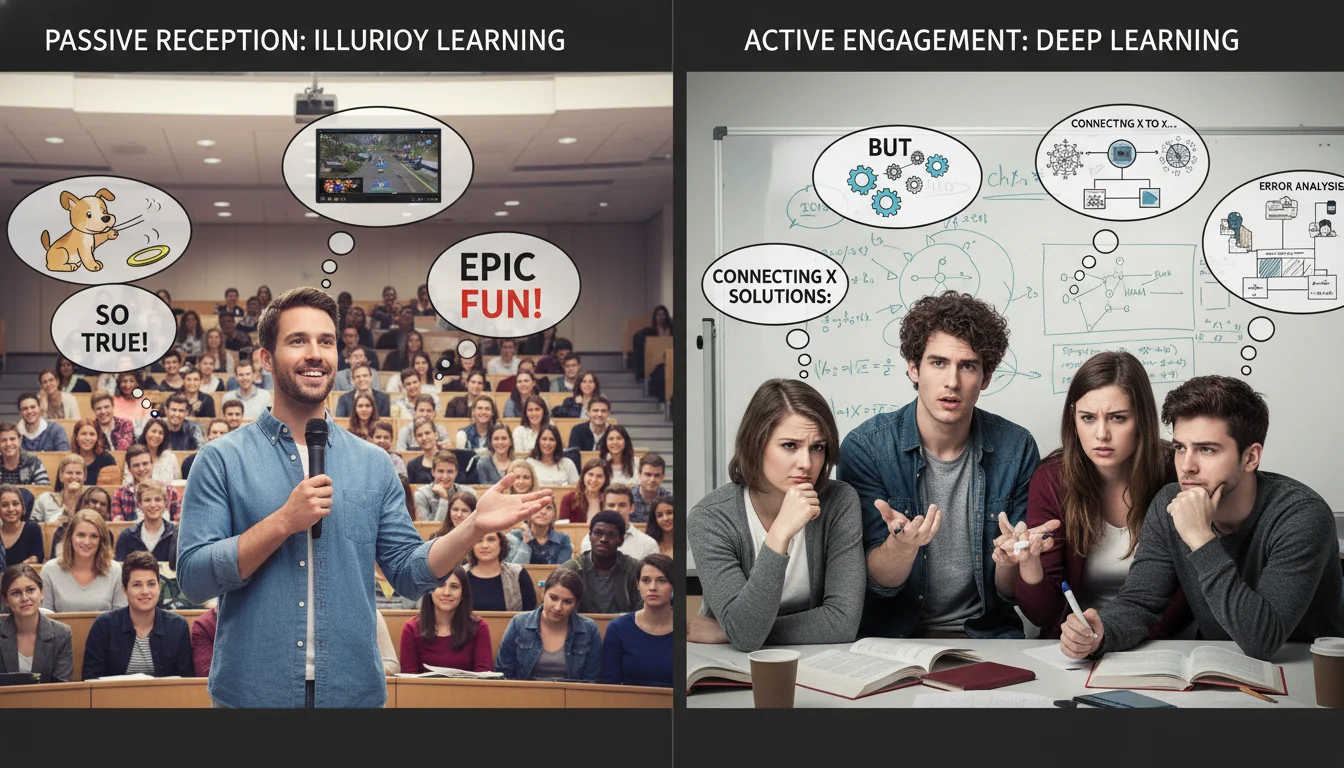
The lead author of the study, Louis Deslauriers, articulated that the core mechanism behind this illusion is cognitive friction. Deep, durable learning requires immense cognitive effort. For learners experiencing active, problem-solving environments for the first time, the inherent difficulty and frustration of the task are frequently misinterpreted as a sign of poor instruction or a failure to learn. Conversely, a highly charismatic lecturer can synthesize complex information so smoothly that the audience feels they have mastered the material, despite lacking the ability to apply it independently.
For the facilitator of a six-hour masterclass, these findings carry profound structural implications. The instructor must actively resist the temptation to dominate the room with continuous presentations. The curriculum must enforce a high ratio of hands-on practice to passive instruction. Furthermore, the facilitator must explicitly transparentize this pedagogical strategy at the beginning of the day, warning participants that the active creation phases will feel arduous, but that this precise cognitive effort is the only mechanism for genuine skill acquisition. Ensuring that neither the instructor nor the participants are fooled into prioritizing the comfort of a passive lecture over the friction of applied practice is paramount to the workshop’s efficacy.
Pacing, Cognitive Load, and Time Management
The temporal constraints of a six-hour intensive demand rigorous pacing protocols. Pacing is formally defined by educational theorists Feeney, Hibbard, and Ylvisaker as the precise rate at which instructional activities occur or specific “learning trials” are presented to the student. Mismanaging this rate inevitably leads to cognitive overload, a state where the learner’s working memory is saturated, resulting in rapidly diminishing returns on instructional time.
To optimize cognitive endurance, the masterclass must align with established principles of human productivity and time management. Research indicates that cognitive resources and productivity peak in the early part of the day. Therefore, the curriculum must front-load the most intellectually demanding tasks—such as overarching strategic ideation, brand positioning, and complex narrative architecture—into the morning sessions. Routine, collaborative, or highly mechanical tasks, such as peer review, formatting adherence, and the configuration of publishing software, are subsequently reserved for the late afternoon when analytical stamina naturally wanes.
Furthermore, the facilitator must engineer the overarching narrative of the session to sustain engagement. The structural planning phase requires the instructor to define the core story of the day: identifying what the students must walk away with, pinpointing specific “wow moments,” and establishing an overarching question—motivated by a real-life problem—that is systematically answered by the conclusion of the workshop. To protect the participants’ focus during the intensive sprints, strict environmental controls must be suggested, such as keeping mobile phones out of reach to eliminate the temptation of browsing social media, thereby forcing a sustained period of deep work followed by deliberate, scheduled mini-breaks. The curriculum must also explicitly discourage multitasking, as empirical studies confirm that locking in on a single task at a time is vastly more effective than attempting to execute writing, designing, and scheduling simultaneously.
Masterclass Architecture and Chronological Sequencing
Transitioning participants from a blank canvas to a completed asset requires a timeline that perfectly balances instructional delivery with cognitive recovery.
Drawing upon standardized institutional work shift templates and specialized scheduling matrices (such as those developed in Microsoft Excel and Smartsheet), the architecture of the day must incorporate hyper-specific intervals for breaks and transitions to prevent intellectual exhaustion.
The following architectural framework outlines the optimal chronological pacing for a standard 9:00 AM to 5:00 PM workshop day, incorporating exactly six hours of active instructional and application time, segmented by necessary restorative intervals.
| Time Allocation | Duration | Thematic Module | Cognitive Application Focus |
|---|---|---|---|
| 09:00 AM - 09:30 AM | 30 Minutes | Orientation: Narrative framing, software initialization, and goal setting. | Environmental Acclimation and Contextualization |
| 09:30 AM - 10:45 AM | 75 Minutes | Phase 1: Strategic Ideation and Brand Identity Formulation. | High-Demand Analytical Processing |
| 10:45 AM - 11:00 AM | 15 Minutes | Morning Restorative Break | Cognitive Reset and Fatigue Mitigation |
| 11:00 AM - 12:15 PM | 75 Minutes | Phase 2: Copywriting, Narrative Architecture, and Hooks. | High-Demand Creative Synthesis |
| 12:15 PM - 01:15 PM | 60 Minutes | Lunch Break | Sustenance and Extended Neurological Recovery |
| 01:15 PM - 02:45 PM | 90 Minutes | Phase 3: Visual Design Principles and Tool Execution. | Applied Technical Practice |
| 02:45 PM - 03:00 PM | 15 Minutes | Afternoon Restorative Break | Cognitive Reset |
| 03:00 PM - 04:00 PM | 60 Minutes | Phase 4: Accessibility Standards and Formatting Optimization. | Detail-Oriented Rule Adherence |
| 04:00 PM - 05:00 PM | 60 Minutes | Phase 5: Workflow Governance, Peer Review, and Publishing. | Collaborative Evaluation and Systemic Planning |
This chronological progression is not arbitrary; it meticulously mirrors the professional workflow of an enterprise-level social media creator, guiding the participant linearly from the abstract inception of an idea to the concrete moment of algorithmic distribution. Tools such as Canva class schedule templates or Microsoft Excel daily planners can be utilized by the facilitator to visually project this agenda, ensuring that every academic minute is strictly accounted for and that participants remain anchored within the broader context of the day’s narrative.
Phase 1: Strategic Ideation and Brand Identity Formulation
The most pervasive failure mode for novice social media creators is the premature engagement with design software. Bypassing strategic planning to immediately manipulate visuals inevitably results in disjointed, ineffective content that fails to resonate with a target audience. Therefore, the first seventy-five minutes of the masterclass are exclusively dedicated to defining the brand’s foundational strategy. Establishing this strategy collaboratively within the workshop environment provides clients and participants with a vital sense of ownership and creative control, dramatically increasing the likelihood that they will adopt and adhere to the final recommendations without subsequent friction.
Defining the Unique Value Proposition and Brand Persona
A brand cannot communicate effectively on social media without a rigorous articulation of its Unique Value Proposition (UVP). The UVP represents the singular benefit that the entity provides better than any of its market competitors. To extract this, the facilitator leads the room through a structured distillation exercise. Participants begin by listing all potential benefits their product or service offers. They must then aggressively narrow this list by addressing three critical questions: What are the target customers’ most severe pain points? How does the specific product solve those exact problems? What mechanical or philosophical element makes this solution distinct from all others in the market?. The culmination of this exercise is the drafting of a concise, one-sentence UVP statement that will subsequently act as the absolute filter for all content creation; if a drafted social media asset does not implicitly or explicitly support this UVP, it must be discarded.
Following the UVP formulation, participants engage in the “Brand Personality Quiz” to determine the specific voice and tone of their digital presence. Instructors guide participants to imagine describing their brand as a living person to a best friend. Using a physical or digital whiteboard, the cohort lists a spectrum of personality traits—ranging from quirky and playful to stoic, serious, and highly professional. Participants must ruthlessly narrow their selection down to the top five traits that most accurately reflect their brand’s ethos. This exercise is frequently paired with the selection of a “Brand Archetype.” By mapping the brand to one of the twelve core psychological archetypes—such as The Hero, The Explorer, or The Creator—participants establish a permanent guidepost that dictates the narrative role their brand will play in the lives of their consumers, ensuring total consistency across all future social interactions.
To finalize the strategic foundation, creators must possess a crystalline understanding of their audience. Broad demographic data is insufficient for compelling content creation. Participants execute an exercise to build hyper-specific “Customer Personas,” documenting fictional representations of their ideal consumers that include not only age, gender, and occupation, but intimate details regarding their daily frustrations, hidden fears, aspirational goals, and digital consumption habits. By giving these personas specific names and backstories, the abstract concept of an “audience” is transformed into a relatable human target, dramatically sharpening the focus of subsequent copywriting efforts.
Structured Mechanics of Rapid Ideation
With the strategic boundaries firmly established, the masterclass transitions from foundational definition to active content generation. Unstructured brainstorming sessions frequently collapse into groupthink or creative paralysis. Therefore, the curriculum introduces highly structured ideation mechanics designed to force volume and bypass cognitive hesitation.
The ideation phase is often likened to the recurring narrative trope in the television series Murder, She Wrote, where the protagonist experiences a sudden, magical flash of inspiration that solves the case. In reality, professional service design and content ideation do not operate on spontaneous intuition; they require specific tools that collaboratively force the brain into generative states.
One of the most potent techniques introduced during this phase is the “Crazy 8s” exercise, derived directly from the Google Design Sprint methodology popularized by John Zeratsky. Participants are instructed to take a physical piece of paper and fold it into eight equal quadrants. The facilitator then sets a strict timer for exactly eight minutes, mandating that the participants sketch or outline eight distinct social media concepts—equating to a highly aggressive pace of one minute per idea. This severe time constraint is the core mechanism of the exercise; it prevents the participant from over-analyzing or self-editing their initial concepts. The speed forces the brain to discard the most obvious, cliché ideas in the first few boxes, pushing the creator into deeper, more innovative psychological territory to fill the final quadrants. While industrialized design sprints often treat sketching as a purely silent, isolated activity to maximize rapid iteration, the masterclass environment benefits immensely from introducing a collaborative element. After the eight minutes elapse, participants share their concepts with the broader group. Exposing the room to a diverse array of raw ideas frequently triggers secondary inspiration, allowing participants to cross-pollinate concepts and develop robust content pipelines.
An alternative, equally rigorous framework taught during this phase is the S.C.A.M.P.E.R. technique. This analytical tool provides a systematic checklist that prompts creators to view an existing piece of content or a core brand message and systematically alter it. Participants are guided to Substitute elements, Combine disparate ideas, Adapt a format to a new platform, Modify the scale or tone, Put the concept to an entirely different use, Eliminate unnecessary components, or Reverse the narrative perspective. By the conclusion of this seventy-five-minute block, the participant has successfully transitioned from a state of total conceptual emptiness to possessing a documented brand identity and a deep, structured backlog of viable content ideas.
Phase 2: Copywriting, Narrative Architecture, and Hooks
An exceptional visual graphic remains entirely inert if it is not supported by persuasive, mechanically sound copywriting. Module 2 of the masterclass is engineered to demystify the art of commercial writing, providing non-writers with the specific formulas and psychological levers required to arrest algorithmic scrolling and drive consumer action.
The Elevator Pitch and the Architecture of the Hook
The modern social media feed operates as a brutally efficient attention economy. The margin for capturing a user’s focus is measured in fractions of a second. Consequently, the introductory text of any asset—the hook—is the definitive variable determining the content’s success. To train this reflex, participants engage in the “Elevator Pitch” exercise, challenging them to synthesize their entire brand value into a compelling thirty-second narrative.
The curriculum breaks the pitch down into a rigid, repeatable five-part formula:
- The Hook: A provocative question, a counter-intuitive statement, or an alarming statistic designed exclusively to interrupt the user’s scroll.
-
The Problem: An immediate, empathetic identification of the exact pain point the target persona is experiencing.
- The Solution: The introduction of the brand’s specific intervention that addresses the identified pain.
- The Benefit: A vivid articulation of how the user’s life or operational efficiency improves post-intervention, focusing on outcomes rather than features.
- The Call to Action (CTA): A frictionless, highly specific directive instructing the user on the immediate next step they must take to engage further.
Once the architectural logic of the pitch is mastered, participants execute granular exercises focused on linguistic optimization. They are presented with dense, overly academic sentences and tasked with rewriting them by stripping out bureaucratic linking words and injecting simple, forceful transitional phrases. Furthermore, they practice substituting passive vocabulary with emotional “power words” that trigger psychological responses such as urgency, exclusivity, or intense curiosity. For instance, a mundane title like “100 Online Marketing Strategies” is workshopped to become vastly more compelling and click-oriented.
Audience Substitution and Contextual Elasticity
A hallmark of sophisticated copywriting is tone elasticity—the ability to modulate the brand’s voice to resonate with vastly different audience segments without losing the core identity. To cultivate this skill, the masterclass employs the audience substitution exercise. Participants are assigned a generic product or topic and instructed to write a compelling promotional post. Once completed, the facilitator introduces a radical demographic shift, defining highly specific, divergent audience segments—for example, writing the exact same promotion targeted exclusively at pediatricians, then rewriting it for teenage snowboarders, and finally for senior citizens.
This forced pivoting requires the participant to rapidly analyze and adjust their vocabulary, cultural references, and the specific pain points they highlight. During the subsequent peer discussion, the cohort analyzes the underlying mechanics of these rewrites, exploring the critical factors they zeroed in on immediately, and dissecting scenarios where a topic simply could not be forced to fit a specific audience without appearing deeply inauthentic.
Defeating Imposter Syndrome via the Swipe File
Adult learners entering a new creative discipline inevitably encounter severe imposter syndrome, paralyzed by the perception that their initial efforts will never measure up to the highly polished campaigns saturating their feeds. To dismantle this psychological barrier, the curriculum introduces the concept and operational necessity of the “Swipe File”.
A Swipe File is a meticulously curated digital or physical repository where creators archive exceptional advertisements, brilliant headlines, compelling email sequences, and highly effective visual layouts encountered in their daily lives. Participants are trained not merely to hoard these examples, but to systematically deconstruct them. When faced with a blank canvas, the Swipe File serves as an immediate structural crutch, providing proven frameworks that can be reverse-engineered and adapted to the participant’s specific industry. Furthermore, the masterclass highlights external resources for continued, self-paced study, guiding learners toward established, high-quality copywriting curricula such as the Creative Circus Copywriting Portfolio School, The Copy Cure, or the American Writers and Artists Institute (AWAI), ensuring they possess pathways for advanced development long after the six-hour session concludes.
Phase 3: Visual Design Principles and Tool Execution
Following the lunch break, participants enter the most technically demanding phase of the masterclass. The objective is not to transform non-designers into master artists within ninety minutes, but to instill a rigid adherence to universal design principles that instantly elevate amateur graphics into professional-grade assets.
Core Design Heuristics for Non-Designers
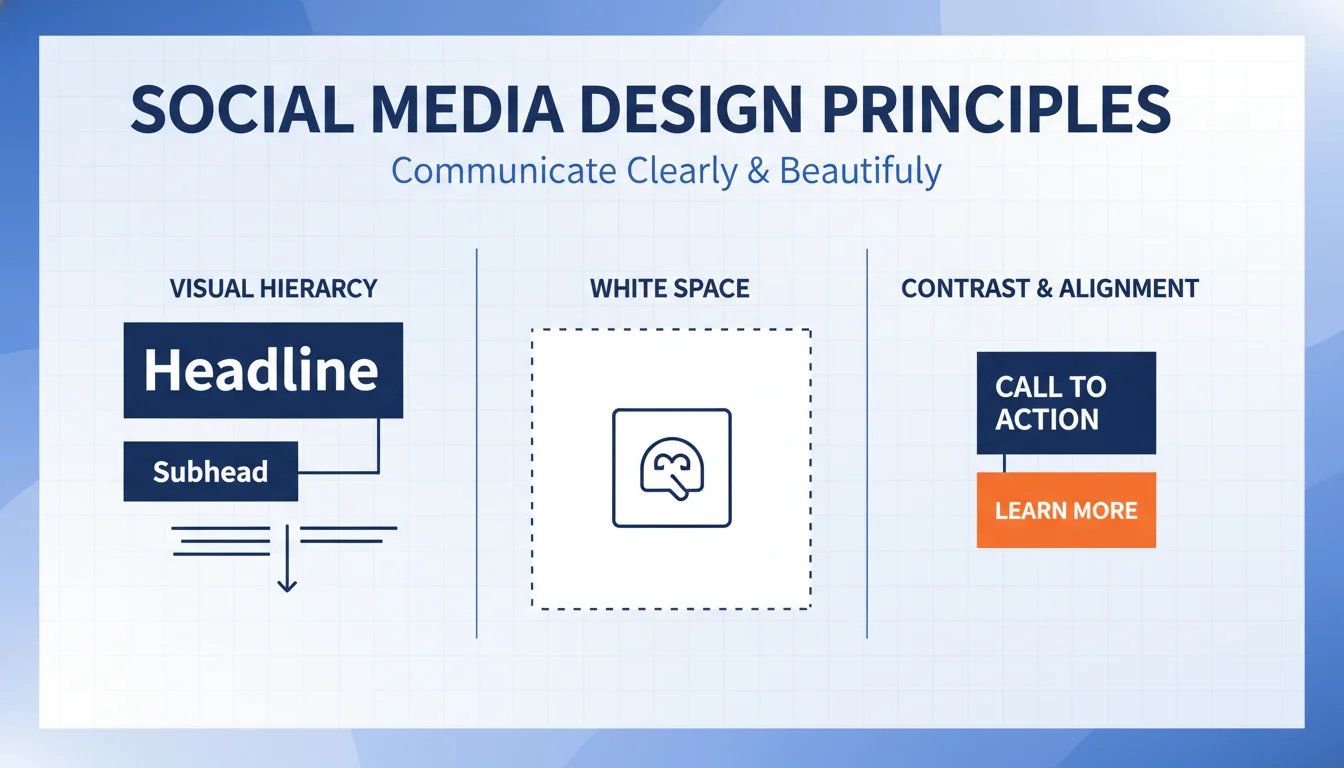
The creation of compelling visual content is governed by a strict hierarchy of rules. The curriculum distills these into five foundational principles:
- Visual Hierarchy and Flow: When a user lands on a graphic, their eye must be explicitly guided. Without a defined hierarchy, the viewer experiences immediate cognitive friction, unable to determine where to look first, leading to rapid abandonment. Participants are trained to manipulate scale, typeface weight, and strategic placement to force the viewer’s attention to the most critical message first, utilizing bold, bright colors to highlight primary data while deploying muted tones to recede secondary information into the background.
- White Space (Negative Space): The most definitive indicator of an amateur design is the pathological compulsion to fill every available pixel with text, logos, or imagery, leaving no visual resting place for the eye. White space—the unmarked territory between visual elements—is a vital compositional tool. The curriculum points to high-end corporate campaigns, such as Apple’s stark, empty marketing layouts for the HomePod, demonstrating how expansive margins force total focus onto the product. Participants adopt a ruthless “less is more” philosophy, explicitly asking themselves before finalizing any asset: “What element can I remove to improve this design?”.
- Proximity: The spatial relationship between elements implies a conceptual relationship. By clustering related pieces of information tightly together, creators allow the viewer’s brain to process complex data as a single, easily digestible unit.
- Alignment and Repetition: As cautioned by design educator Robin Williams, random placement creates visual chaos. Enforcing strict grid alignment stabilizes the asset. Furthermore, the repetition of specific visual motifs—such as a persistent color palette, consistent typeface pairing, and standardized layout structures—serves to build rapid brand recognition and trust as users scroll through a saturated feed.
- Contrast: If repetition builds consistency, contrast guarantees differentiation. Participants learn to leverage stark contrasts in color value and font style to snap the viewer out of passive scrolling and draw immediate focus to the core Call to Action.
The 2026 Industry Tool Stack and AI Integration
The democratization of design software dictates that creators no longer need to navigate the immense learning curves of enterprise software to produce daily content. While Adobe Creative Cloud (specifically Premiere Pro and Photoshop) remains the undisputed industry standard for high-end visual production and complex commercial editing, the masterclass focuses on the agile tools essential for daily social media operations.
Canva and Adobe Express are positioned as the dominant, drag-and-drop engines of the modern creator economy, enabling the rapid generation of high-quality graphics and lightweight video content on the go. For the editing of short-form vertical video—which remains the most potent vector for algorithmic engagement—mobile-first applications like CapCut and InShot are deemed indispensable, providing frictionless methods for adding native-feeling captions, trending audio, and rapid transitions without requiring traditional non-linear editing expertise.
Crucially, the 2026 masterclass must deeply integrate Artificial Intelligence literacy into the tool execution phase. The utilization of AI is no longer a novelty; it is a fundamental workflow requirement. Participants receive direct instruction on leveraging advanced language models for content drafting and SEO optimization, as well as utilizing text-to-image and next-generation AI video generators, such as Google’s Veo 3, to rapidly prototype visual concepts. Facilitators demonstrate specific AI functionalities, such as Canva’s Magic Write, illustrating how prompt engineering can generate comprehensive lesson plans, outline social media campaigns, and populate layout templates in a matter of seconds, drastically compressing the distance between ideation and tangible design.
Phase 4: Accessibility Standards and Formatting Optimization
A graphically beautiful asset that is exported in the wrong dimensions or fails to meet digital accessibility standards is fundamentally broken. Phase 4 treats accessibility and technical formatting not as optional post-production chores, but as critical engineering constraints that maximize reach and ensure equitable digital experiences.
The Mathematics of Platform Formatting
Social media algorithms aggressively penalize content that fails to adhere to native dimensional requirements.
Uploading improperly sized assets results in catastrophic auto-cropping that slices off vital logos or calls to action, induces severe pixelation that destroys brand credibility, and causes off-aspect uploads to shrink on mobile displays, leading directly to collapsed engagement metrics and wasted ad spend. The current landscape heavily favors mobile-first, vertical orientations over legacy square formats.
Participants are provided with an exhaustive dimensional matrix to govern their exports across all major platforms for 2026:
| Social Platform | Content Placement | Optimal Resolution (Width x Height in Pixels) | Required Aspect Ratio |
|---|---|---|---|
| Standard Feed Post (Portrait) | 1080 x 1350 | 4:5 | |
| Stories & Reels (Full Screen) | 1080 x 1920 | 9:16 | |
| Legacy Grid Post (Square) | 1080 x 1080 | 1:1 | |
| Standard Feed (Landscape) | 1200 x 630 | 1.91:1 | |
| Feed Post (Portrait) | 630 x 1200 (or 1080 x 1350) | ~1:2 or 4:5 | |
| Organic Post / Article Graphic | 1200 x 1200 | 1:1 | |
| Vertical Feed Post | 720 x 900 | 4:5 | |
| X (Twitter) | In-Stream Media Attachment | 1600 x 900 (or 1280 x 720) | 16:9 |
| TikTok | Standard Organic Video / Ad | 1080 x 1920 | 9:16 |
Creators are trained to leverage automated resizing features within platforms like Canva or PostNitro, allowing them to instantly adapt a single core asset into multiple platform-compliant sizes while strictly maintaining “safe zones”—such as ensuring all vital text on an Instagram Reel remains at least 100 pixels away from every edge to prevent obstruction by the platform’s native interface elements.
Designing for Universal Accessibility
Digital accessibility is an ethical imperative and a mechanical necessity for algorithmic performance. The curriculum dictates that designers must integrate accessibility protocols directly into the creation phase.
For visual assets, Alternative (Alt) Text must be systematically applied to every non-decorative image, including every individual slide within an Instagram carousel. Alt text must be fiercely concise, limited to approximately 125 characters, to prevent screen readers from truncating the description. The text must convey the semantic context and value of the image, rather than merely listing the literal objects depicted, and must never begin with redundant phrasing such as “Image of…” as assistive technologies announce this metadata automatically. Crucially, participants are forbidden from using image files to display critical text; any text embedded in a graphic must be duplicated verbatim in the main caption, as screen readers cannot interpret text rasterized into an image file, nor can users translate or magnify it. Furthermore, all visual designs must adhere to strict color contrast guidelines, ensuring a minimum 4.5:1 ratio between text and background colors to accommodate users with color vision deficiencies and to maintain legibility under severe mobile screen glare.
The formatting of the written caption itself is equally subjected to accessibility standards. Copy must be written in plain language, stripped of obscure acronyms and unnecessary jargon, and assessed through readability checkers to ensure broad comprehension. Dense walls of text must be shattered using frequent line breaks, restricting paragraphs to a maximum of two or three sentences to support users relying on screen magnification or those with cognitive processing disorders.
The use of specific digital vernaculars, such as hashtags and emojis, requires precise modification. Hashtags must be formatted using “Camel Case” (e.g., #SocialMediaMasterclass), capitalizing the first letter of every distinct word. This simple formatting adjustment ensures that screen reading software will enunciate the words individually, rather than attempting to pronounce the uninterrupted string of characters as a single, unintelligible phonetic block. Emojis, while valuable for establishing brand tone, must be deployed highly sparingly—ideally no more than three per post—and must exclusively be placed at the absolute end of the caption. Emojis inserted into the middle of a sentence violently disrupt the auditory flow of assistive technology, as the software will interrupt the narrative to read the literal, verbose description of the emoji aloud (e.g., “smiling face with heart-eyes”). Additionally, the use of ASCII art, custom symbol keyboards, or decorative fonts generated by third-party applications is strictly prohibited, as screen readers attempt to read every individual symbol literally, resulting in severe auditory disruption. Finally, every video file exported from the workshop must include accurate, fully proofed closed captions; creators cannot rely on auto-generated captions without conducting a rigorous manual review for transcription errors.
Phase 5: Workflow Governance, Peer Review, and Publishing
The ability to craft a single, flawless social media asset is functionally useless if the creator cannot reliably execute the process at scale. Organizations and independent creators without documented workflows rapidly succumb to missed deadlines, erratic publishing schedules, and catastrophic internal collaboration failures. The final hour of the masterclass transitions the participants from individual tacticians into systemic operators.
Constructing the Operational Workflow
A professional social media pipeline is a mechanized process consisting of distinct, sequential phases that govern the lifecycle of every asset. The curriculum formalizes a five-stage operational framework:
- Strategic Ideation and Planning: The initial phase of gathering intelligence, aligning with broader business goals, mapping out centralized content calendars, and identifying critical performance gaps.
- Asset Creation and Production: The physical development of the copy, image, and video files based on the defined strategy.
- Tiered Approval and Revisions: Implementing a quality control matrix. Routine, low-risk content may only require a rapid review by a direct manager, whereas high-stakes product launches or sensitive communications demand rigorous compliance checks and executive sign-off before proceeding.
- Scheduling and Multi-Platform Distribution: The logistical execution of uploading the approved assets, injecting the relevant metadata, and programming the release dates utilizing third-party automation tools.
- Analytics, Monitoring, and Community Management: The workflow extends beyond the moment of publication. Teams must actively track specific Key Performance Indicators (KPIs), aggregate data sets, visualize the insights, and immediately feed these empirical findings back into Phase 1 to refine the ongoing strategy.
The Mechanics of Digital Peer Review
Before the assets created during the masterclass are authorized for scheduling, they must survive a rigorous peer review crucible. Introducing peer review is highly effective for consolidating adult learning, but it must be heavily scaffolded by the facilitator to prevent the feedback from devolving into superficial praise or unconstructive criticism.
Instructors deploy highly specific peer review worksheets and rubrics tailored to the assignment’s exact objectives. Participants are trained to differentiate between evaluative feedback (judging the quality) and descriptive, formative feedback (providing actionable instructions on how to alter the work to better meet the requirements). Drawing on methodologies utilized by the Center for Teaching Innovation at Cornell University, instructors may execute rapid, randomized exchanges of work, forcing participants to analyze the graphics and copy of their peers against the strict constraints of the UVP, the design heuristics, and the accessibility guidelines formulated earlier in the day. This student-to-student interaction not only stress-tests the physical asset but also deepens the reviewer’s cognitive mastery of the curriculum.
Ecosystems of Automation and the Pre-Publishing Audit
The ultimate stage of the masterclass involves the initialization of scheduling software and the execution of the final pre-publishing audit.
The management of multiple social networks necessitates the use of third-party platforms that centralize scheduling, automate publishing, provide collaborative approval dashboards, and execute deep analytical reporting. The curriculum provides an objective evaluation of the industry-leading tools for 2026, allowing participants to align their technology stack with their operational budget and team size:
Scheduling Platforms
Hootsuite
Primary Target Audience & Core Strengths: Enterprise brands, large marketing agencies.
Key Features & Workflow Integration: Extensive multi-platform support, powerful publishing engines, ad management.
Pricing Dynamics & Operational Drawbacks: Cost-prohibitive for solo creators (Starts ~$99-$199/month); complex, outdated UI.
Sprout Social
Primary Target Audience & Core Strengths: Large teams requiring deep data.
Key Features & Workflow Integration: Advanced social listening, highly granular analytics, all-in-one suite.
Pricing Dynamics & Operational Drawbacks: Premium pricing tier; steep learning curve.
Buffer
Primary Target Audience & Core Strengths: Independent creators, eCommerce, small budgets.
Key Features & Workflow Integration: Highly intuitive visual calendar, seamless AI integration, robust free tier (up to 3 profiles).
Pricing Dynamics & Operational Drawbacks: Analytics are lightweight compared to enterprise tools.
Agorapulse
Primary Target Audience & Core Strengths: Mid-size teams focused on engagement.
Key Features & Workflow Integration: Excellent brand monitoring, functions as a project management tool with comment assignment.
Pricing Dynamics & Operational Drawbacks: Requires dedicated setup for team collaboration routing.
Metricool
Primary Target Audience & Core Strengths: Data scientists, strategists, analytical marketers.
Key Features & Workflow Integration: Intense focus on competitor tracking, deep performance insights, varied platform support.
Pricing Dynamics & Operational Drawbacks: UI prioritizes data over visual planning; paid plans from ~$18/month.
Planable
Primary Target Audience & Core Strengths: Agencies requiring frictionless client approval.
Key Features & Workflow Integration: Hyper-visual planning, streamlined communication for content sign-off.
Pricing Dynamics & Operational Drawbacks: Lacks the deep social listening features of enterprise suites.
Zoho Social
Primary Target Audience & Core Strengths: Individual brands, data-driven teams.
Key Features & Workflow Integration: Highly flexible scheduling, predictive posting times based on historical data.
Pricing Dynamics & Operational Drawbacks: Reporting workflows can become complex for novice users.
Publer
Primary Target Audience & Core Strengths: Automation-heavy marketers.
Key Features & Workflow Integration: Bulk-scheduling capabilities, content recycling, automated first-comment scheduling.
Pricing Dynamics & Operational Drawbacks: Overly complex setup for users desiring simple scheduling.
Pre-Publishing Audit
Prior to engaging these automation engines, every piece of content must pass a final, exhaustive pre-publishing audit. The audit checklist serves as the final barrier against errors. Creators systematically verify that all profile branding (bios, links, avatars) is perfectly synchronized across the ecosystem. They confirm that the overarching strategy is intact by analyzing the actions of their top competitors to identify missed trends or opportunities. Most importantly, they conduct a rigorous post-mortem on their historical metrics, isolating their top-performing content formats to ensure that the current asset aligns with proven engagement patterns.
Looking toward the evolving landscape of 2026, the masterclass emphasizes a critical strategic shift during this final audit phase: the industry is aggressively pivoting away from superficial vanity metrics (such as mere likes and follows) toward hardcore performance marketing metrics that demonstrate definitive business outcomes, ROI, and deep community engagement. Furthermore, participants are instructed on how to package these verified metrics into professional Media Kits—documenting 30-day engagement averages, watch times, and demographic distributions—to secure high-value influencer partnerships and sponsorships.
By mastering the pre-publishing audit, participants ensure that when the asset is finally injected into the platform algorithms, it is algorithmically optimized, accessible to all users, visually pristine, and strategically lethal.
Conclusion
Structuring a comprehensive, six-hour masterclass on the end-to-end creation of social media assets requires the total abandonment of passive instructional models. To generate genuine, durable skill acquisition within a highly compressed timeframe, the curriculum must be explicitly engineered around the psychological realities of the adult learner, leveraging intense, project-based cognitive friction. By meticulously sequencing the day—progressing logically from the abstract definition of brand identity and value propositions, through the psychological mechanics of copywriting, into the rigid application of visual design heuristics and accessibility mandates, and finally culminating in the industrial standardization of approval workflows and automation tooling—the facilitator provides much more than a software tutorial. This architectural approach systematically dismantles the intimidation of the blank canvas, equipping professionals and creators with the resilient frameworks, technical precision, and operational discipline required to dominate an increasingly complex and saturated digital economy.