Iran Conflict: Historical Overview, 1953 Coup to 2026 War
Introduction and Strategic Context
The geopolitical confrontation between the Islamic Republic of Iran and the Western alliance, led primarily by the United States and Israel, represents one of the most enduring, complex, and volatile conflicts of the modern era. To comprehend the cataclysmic events of the 2026 regional war, which has fundamentally disrupted the global macroeconomic system and redrawn the security architecture of the Middle East, one must trace the historical through-line that began in the early twentieth century. This conflict is not merely a series of isolated military engagements or discrete diplomatic failures. Rather, it is a continuous, multi-generational evolution of strategic doctrines, born from a profound historical trauma regarding foreign intervention, a relentless quest for regional hegemony, and an uncompromising pursuit of regime survival by the Iranian state.
The analytical framework required to understand this trajectory must examine the systemic interplay between Iran’s internal political pendulum—swinging violently between reformist aspirations and hardline praetorian consolidation—and its external security posture. Over the course of seven decades, Iran’s grand strategy has mutated from secular resource nationalism to theocratic anti-imperialism, subsequently birthing a highly sophisticated asymmetric warfare doctrine designed to compensate for severe conventional military inferiority. This report provides an exhaustive, granular analysis of the Iran conflict. It begins with the foundational rupture of the 1953 coup d’état, proceeds through the crucible of the Iran-Iraq War and the protracted nuclear diplomatic crisis, and culminates in a detailed examination of the 2025 and 2026 military escalations that have plunged the international community into a profound and perilous era of multipolar instability.
The Genesis of Enmity: Oil Nationalism and the 1953 Coup
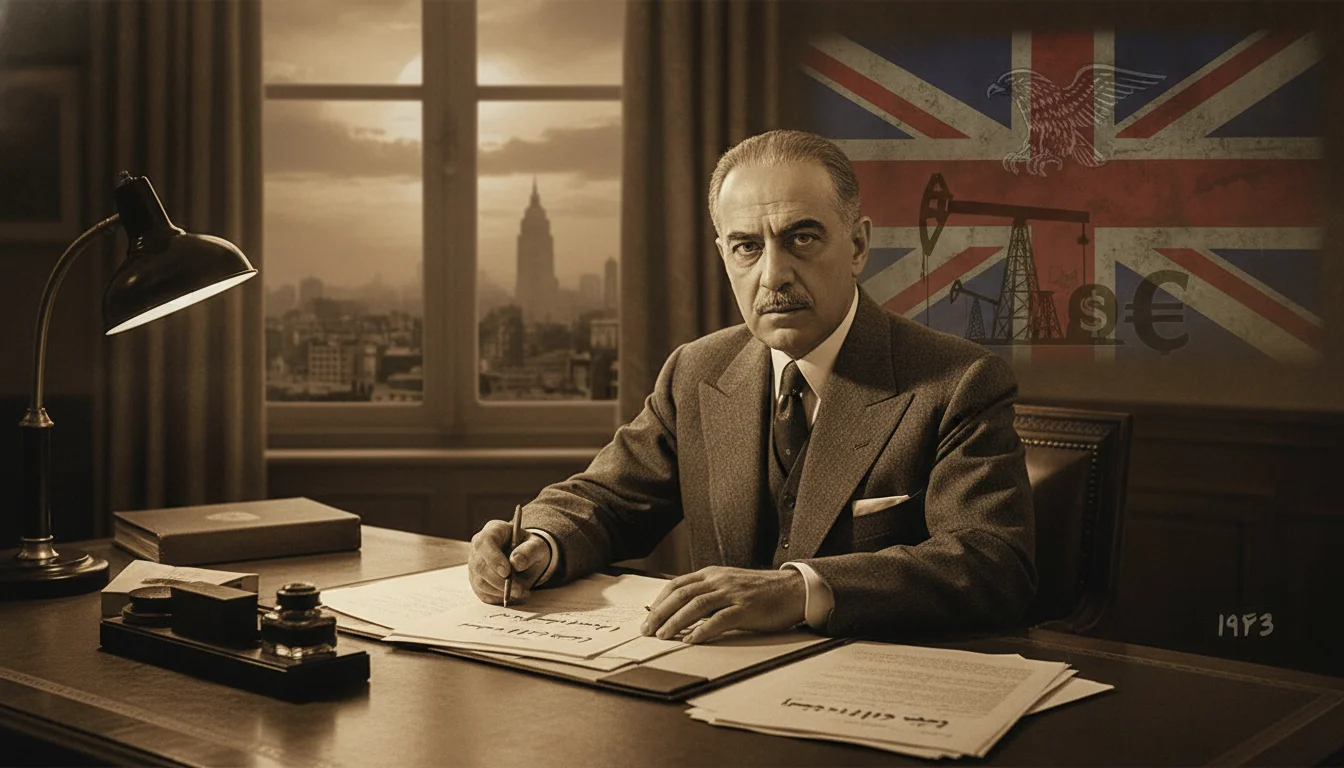
The structural roots of modern Iranian anti-Western sentiment, and the pervasive institutional paranoia that defines its current intelligence apparatus, were firmly planted during the Abadan Crisis and the subsequent 1953 coup d’état. In the early twentieth century, Iran’s vast hydrocarbon reserves were exclusively controlled by the Anglo-Iranian Oil Company (AIOC), a British corporation that later evolved into British Petroleum (BP). The AIOC operated under highly asymmetrical terms, extracting immense wealth to fuel the British Empire while remitting a mere sixteen percent of profits—and often far less—to the Iranian state. This profound economic disenfranchisement catalyzed an emergent political formation known as the National Front, led by the immensely popular Prime Minister Mohammad Mossadegh.
In March 1951, Mossadegh successfully nationalized the Iranian oil industry, seeking to audit AIOC documents to enforce royalty contracts, limit foreign control over Iranian reserves, and reclaim sovereign control over the nation’s primary economic engine. This assertion of economic sovereignty precipitated a severe international crisis. The British government, facing the loss of its most lucrative overseas asset and viewing the nationalization as an an existential threat to its post-war economic recovery, retaliated by imposing a devastating global embargo on Iranian oil. This embargo severely reduced the revenue reaching Tehran, plunging the Iranian economy into a state of acute crisis and fomenting domestic unrest.
Initially, the United States under President Harry Truman rejected British proposals for military or covert intervention, preferring a diplomatic resolution. However, the advent of the Cold War and the inauguration of President Dwight D. Eisenhower altered the strategic calculus in Washington. Exploiting American fears that the National Front’s political instability could pave the way for a communist-inspired takeover by the Soviet-aligned Tudeh party, British intelligence (MI6) successfully lobbied the Central Intelligence Agency (CIA) to intervene.
From August 15 to 19, 1953, the CIA and MI6 orchestrated Operation Ajax, a covert coup d’état led on the ground by CIA agent Kermit Roosevelt, the grandson of President Theodore Roosevelt. The operation deliberately fomented economic collapse and social unrest through a campaign of bribery, propaganda, and engineered provocations, creating an environment where Mossadegh was forced into an increasingly authoritarian posture to maintain order. U.S. Ambassador Henry Grady reluctantly focused diplomatic pressure directly on Mossadegh, viewing the monarch at the time as a secondary factor. Ultimately, the democratically elected Prime Minister was deposed by royalist military units, imprisoned for three years, and placed under house arrest for the remainder of his life.
The second-order implications of the 1953 coup fundamentally altered Iran’s domestic political trajectory and permanently scarred its relationship with the West. By installing a post-coup military government under General Fazlollah Zahedi and firmly restoring the autocratic rule of Mohammad Reza Pahlavi, the Shah of Iran, the United States established a pro-Western, anti-communist dictatorship. In return for this intervention, the Shah quickly signed over forty percent of Iran’s oil fields to American corporations, breaking the British monopoly but cementing Western resource hegemony. Crucially, the CIA subsequently trained the Shah’s brutal secret police, SAVAK, linking American foreign policy directly to the domestic repression of the Iranian populace. For the Iranian collective consciousness, 1953 served as undeniable proof that Western powers would ruthlessly dismantle democratic institutions to preserve their economic interests. This instilled a deep-seated suspicion regarding foreign infiltration that would later become the ideological bedrock of the Islamic Republic’s security state.
The 1979 Islamic Revolution and the Rupture of Western Relations
For the next two decades, the Shah reigned as an absolute monarch, aggressively purging disloyal elements and pursuing a rapidly modernizing, state-capitalist socio-economic program. However, the combination of the Shah’s autocracy, ubiquitous Western cultural and political interference, severe economic disparities exacerbated by rapid modernization, and relentless sociopolitical repression by state security forces united a highly disparate coalition of Iranian opposition groups.
This volatile mixture of nationalist, leftist, and religious grievances culminated in the 1979 Islamic Revolution, which successfully overthrew the Pahlavi dynasty. Under the charismatic leadership of Ayatollah Ruhollah Khomeini, the authoritarian monarchy was replaced by a Shiite Islamic republic founded on the principle of Velayat-e faqih (guardianship of the Islamic jurist), wherein Shiite clerics assumed absolute authority over state affairs. The revolution swiftly discarded the Shah’s pro-Western foreign policy in favor of a “neither east nor west” doctrine, pivoting the state toward fierce opposition to both the United States and Israel, and mandating strict Islamic cultural codes, including the compulsory hijab for women.
The total rupture of bilateral relations was cemented by the Iran Hostage Crisis, an event that would define American-Iranian interactions for nearly half a century. In late 1979, the deposed Shah traveled to the United States seeking medical treatment for cancer. For the revolutionary factions in Tehran, this mirrored the exact prelude to the 1953 coup. Driven by the profound fear that the CIA was utilizing the Shah’s medical visit as cover to orchestrate a counter-revolution and reinstate the monarchy, and angered by American criticism of the harsh revolutionary tribunals, radicalized student groups seized the U.S. Embassy in Tehran on November 4, 1979.
The occupiers, known as the Muslim Student Followers of the Imam’s Line, held fifty-two American diplomats hostage for 444 days, demanding the Shah’s return to stand trial and the cessation of American sabotage against the revolution. A deeper, third-order strategic motive drove the embassy seizure: radical factions utilized the crisis as domestic leverage to depose the provisional revolutionary government of Prime Minister Mehdi Bazargan, whom they suspected of plotting to normalize relations with Washington and extinguish the newly established Islamic revolutionary order.
The hostage crisis fundamentally undermined the administration of U.S. President Jimmy Carter, projecting an image of American weakness and vacillation on the global stage. The inability of the United States to resolve the crisis swiftly, compounded by a failed military rescue mission, sapped the administration’s vitality. This perceived weakness emboldened the Soviet Union to pursue strategic advantages across the globe, leading to Soviet-supported Marxist gains in Ethiopia, Angola, and Mozambique, and culminating in the late 1979 Soviet invasion of Afghanistan. In response, President Carter shifted from Secretary of State Cyrus Vance’s policy of negotiation toward National Security Adviser Zbigniew Brzezinski’s more confrontational stance. For Iran, the crisis permanently entrenched the United States as the “Great Satan” in its state ideology, institutionalizing an adversarial posture that precluded diplomatic normalization and set the stage for decades of mutual hostility.
The Crucible of the Republic: The Iran-Iraq War (1980–1988)
Barely a year after the revolution, the nascent Islamic Republic faced an existential threat that would forge its military, intelligence, and strategic doctrines for the next half-century.
On September 22, 1980, Iraqi armed forces under Saddam Hussein invaded western Iran along their joint border. Seeking to exploit the post-revolutionary chaos and sweeping purges within the Iranian military officer corps, and fueled by deep-seated historical Arab-Persian animosities and Sunni-Shia religious divisions, Iraq aimed to quickly annex oil-rich Iranian territories and potentially topple the revolutionary government.
The Iran-Iraq War evolved into one of the longest and most brutal conventional conflicts of the twentieth century. It was characterized by grueling trench warfare reminiscent of World War I, mass human-wave assaults by highly motivated but poorly equipped Iranian volunteers, and the extensive, systematic deployment of chemical weapons by Iraqi forces.
Iraqi Invasion & Advance
Timeframe: Sept 1980 – 1981. Iraq invades western borders. The initial advance stalls rapidly against stiff, ideologically driven Iranian resistance, notably at the First Battle of Khorramshahr. The conflict devolves into a static stalemate.
Iranian Counter-Offensive
Timeframe: 1982 – 1984. Iran forces a massive Iraqi retreat through operations such as Fath ol-Mobin and the Battle of Dezful, subsequently pushing deep into Iraqi territory. A brutal war of attrition begins.
The Tanker and City War
Timeframe: 1984 – 1987. The conflict expands to international shipping in the Persian Gulf (Tanker War). In May 1984, Iraq launches missiles and air strikes against Tehran and other major civilian centers (“War of the Cities”), causing massive civilian casualties.
Stalemate & Ceasefire
Timeframe: 1987 – 1988. Following renewed Iranian offensives and subsequent Iraqi counter-attacks, an exhausted Iran, fearful of potential Iraqi chemical attacks on its major population centers, accepts UN Security Council Resolution 598.
The geopolitical impact of the war, which claimed at least one million lives, was profound, multifaceted, and enduring.
First, the international community’s response permanently shaped Iran’s worldview. The United States, Western European powers, and Gulf Arab states largely provided logistical, financial, and intelligence backing to Saddam Hussein, further cementing Tehran’s perception of a hostile global consensus seeking its destruction.
Second, the structural impossibility of acquiring conventional military hardware from Western or Eastern bloc suppliers forced Iran to adapt its warfighting strategy. This severe constraint birthed Iran’s “forward defense” doctrine. Because Tehran could not match the technological superiority of its adversaries, it began mobilizing transnational Shiite communities to fight as proxies. During the war, Iran actively sponsored Iraqi Shiite opposition groups, encouraging mass defections and attempting to spur an insurgency campaign within Iraq. Though this failed to trigger a mass uprising inside Iraq at the time, it established the operational blueprint for the Islamic Revolutionary Guard Corps (IRGC) Quds Force. The proxy network strategy—leveraging non-state actors for asymmetric warfare in previously impervious political and ideological spaces like Lebanon and Syria—was institutionalized as the primary mechanism of Iranian power projection.
Finally, the war acted as an ideological crucible. The survival of the state against overwhelming international odds fortified the legitimacy of the clerical establishment and the IRGC. It embedded a culture of fierce self-reliance, militarism, and deep suspicion of international diplomacy into the DNA of the Iranian leadership, leaving deep political scars and reinforcing authoritarian rule in both nations.
Domestic Turmoil and the Illusion of Reform (1989–2024)
Following the death of Ayatollah Khomeini in 1989, Ali Khamenei was elevated to Supreme Leader, representing the highest authority in the land. Under his tenure, the Iranian domestic landscape has been characterized by a cyclical and increasingly violent struggle between a civil society demanding sociopolitical liberalization and a deeply entrenched security apparatus prioritizing absolute regime survival.
The election of the reformist President Mohammad Khatami in 1997 signaled a profound societal desire for greater freedoms, heavily supported by Iran’s youth who sought a rational, tolerant, and democratic form of governance open to the world. However, this reformist wave collided violently with the conservative establishment. In July 1999, following the closure of the leftist-Islamic newspaper Salam under draconian new press laws passed by a conservative parliament, massive student protests erupted at the University of Tehran. Students viewed these amendments as severe restrictions on freedom of speech, leading to widespread campus demonstrations. The state’s response was swift and violent, demonstrating that the supreme clerical authority would not tolerate structural challenges to its power, utilizing universities as key sites of rights advocacy and state contestation. Further unrest occurred in 2002 and 2003, notably following the death sentence handed to reform-minded academic Hashem Aghajari after a speech supporting religious reform, which sparked the largest protests since 1999.
The political pendulum swung back forcefully in 2005 with the shock election of the hardline conservative Mahmoud Ahmadinejad, a former blacksmith’s son who had risen to become mayor of Tehran. Ahmadinejad’s populist rhetoric and confrontational foreign policy isolated Iran globally, while his disputed re-election in 2009 ignited the Green Movement. Unlike the student protests of 1999, which aimed to reform the system, the 2009 demonstrations represented a mass societal mobilization against perceived electoral fraud, with young people famously chanting “Where is my vote?”. The state violently suppressed the movement, marking a turning point in state-society relations.
Over the subsequent decade, the nature of domestic protests evolved from political grievances to acute socio-economic desperation, exacerbated by international sanctions and systemic domestic mismanagement. This was evident in the 2017–2018 inflation demonstrations and the extraordinarily violent “Bloody November” (Aban) protests of 2019, which were triggered by sudden gas and car fuel price hikes. The social contract deteriorated further with the 2021–2022 water protests and the massive 2022–2023 “Woman, Life, Freedom” movement following the death of Mahsa Amini.
Protest Movement
- Student Protests (1999): Closure of reformist newspaper Salam; demands for freedom of speech and press.
- Green Movement (2009): Disputed re-election of Mahmoud Ahmadinejad; massive anti-fraud mobilization.
- Inflation & Aban Protests (2017–2020): Acute economic deterioration, sudden fuel price hikes (“Bloody November”); widespread socio-economic demands.
- Woman, Life, Freedom (2022–2023): Death of Mahsa Amini; systemic demands for women’s rights and the end of theocratic sociopolitical repression.
- Wartime Uprising (2025–2026): Economic collapse, currency devaluation, and anti-war sentiment during the escalating conflict with the US and Israel.
A critical third-order insight: The Islamic Republic’s response to internal dissent has relied increasingly on kinetic military suppression by the IRGC and Basij rather than political accommodation. This continuous reliance on violence, driven by the impunity of the security forces, highlights a progressive erosion of the state’s ideological legitimacy. As demonstrations incorporated political slogans directly questioning the legitimacy of the ruling elite, the state’s response combined selective repression, economic signaling, and political containment, reflecting lessons drawn from previous cycles.
The Nuclear Conundrum and the Collapse of the JCPOA
Parallel to its domestic struggles, Iran’s clandestine nuclear program became the central pillar of its confrontation with the West. The Iranian rationale for nuclear latency was deeply informed by the lessons of the Iran-Iraq War: a belief that possessing an advanced nuclear fuel cycle provides the ultimate strategic deterrent against foreign invasion and regime change, compensating for its conventional military weaknesses.
After years of punishing international sanctions, a diplomatic breakthrough was achieved in July 2015 with the Joint Comprehensive Plan of Action (JCPOA). Negotiated between Iran and the E3/EU+3 (China, France, Russia, the United Kingdom, the United States, plus Germany), the JCPOA imposed severe restrictions on Iran’s nuclear infrastructure in exchange for billions of dollars in sanctions relief. Under the agreement, which was endorsed by UN Security Council Resolution 2231, Iran agreed to dismantle much of its nuclear program and subject its facilities to extensive International Atomic Energy Agency (IAEA) inspections. The core strategic objective of the JCPOA was to extend Iran’s “breakout timeline”—the time required to produce enough weapons-grade fissile material for one nuclear bomb—to approximately one year, maintained by strict caps on uranium enrichment levels (restricted to 3.67%), stockpile sizes, and centrifuge research and development until 2026.
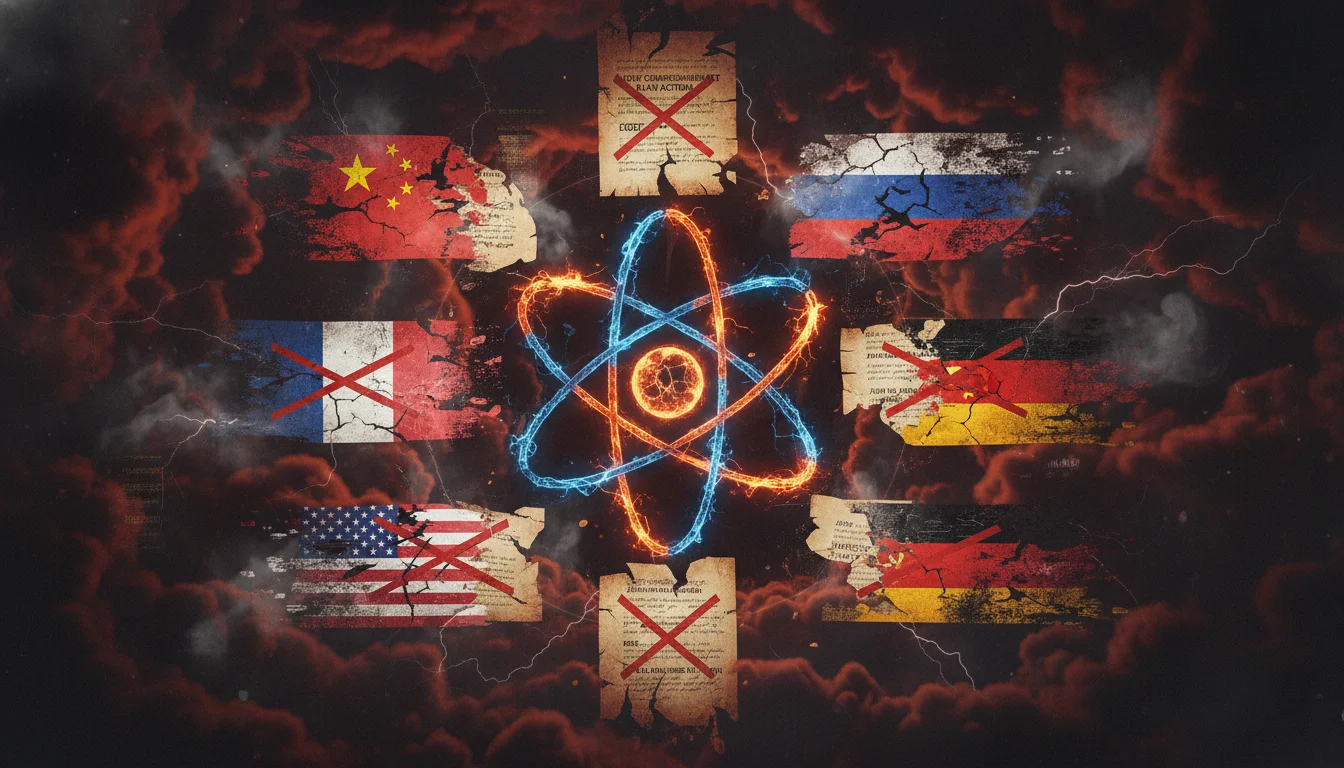
However, the geopolitical architecture of the agreement fractured fundamentally on May 8, 2018, when U.S. President Donald Trump unilaterally withdrew the United States from the JCPOA. The U.S. administration claimed the deal was fundamentally flawed as it failed to address Iran’s advancing ballistic missile program and its funding of regional proxy networks. Despite attempts by the European Commission to shield European companies from secondary U.S.
sanctions via a 1996 blocking statute, and instructions to the European Investment Bank to facilitate investment, the structural dominance of the U.S. dollar forced the global economy to comply with Washington’s “maximum pressure” campaign, plunging the Iranian economy into severe distress.
Following a year of strategic patience, Iran abandoned its compliance with the JCPOA. By 2023, the IAEA reported that Iran had lifted the cap on its uranium stockpile to 30 times the permitted limit, installed advanced centrifuges, and expanded enrichment capabilities to 60 percent purity—with trace particles discovered at 83.7 percent, just shy of weapons-grade. Furthermore, the IAEA’s monitoring capabilities were severely curtailed by Tehran starting in February 2021.
The collapse of the JCPOA triggered a dangerous strategic paradigm shift. Iran’s breakout timeline was reduced from one year to a matter of months, if not weeks. As diplomatic avenues to revive the arms control agreement stagnated, facing stumbling blocks including Iran’s links to conflicts in Gaza and Ukraine, Iran transitioned its nuclear program from a negotiable diplomatic lever into an irreversible deterrent reality. This prompted the United States and Israel to increasingly view preemptive kinetic military action as the only viable mechanism for counterproliferation.
The Axis of Resistance and the Collapse of Proxy Warfare
While the nuclear program shielded Iran from direct state-on-state conventional attacks, the IRGC Quds Force aggressively expanded Iran’s strategic depth through its “Axis of Resistance.” This network of non-state militias allowed Tehran to project power, encircle regional adversaries like Israel and Saudi Arabia, and maintain plausible deniability, acting as a “forward defense” strategy.
At the absolute center of this network sat Lebanese Hezbollah, the most sophisticated non-state military actor in the world. Established in the 1980s in response to state weakness in Lebanon, Hezbollah served as Iran’s primary deterrent against Israeli aggression and helped bridge Shiite Arab–Persian divides. In Yemen, the Houthi movement (Ansar Allah), a Zaydi Shiite group, received extensive Iranian support following the 2015 Saudi-led military intervention. The Houthis evolved into a force capable of threatening global maritime shipping in the Red Sea and launching deep strikes into the Arabian Peninsula.
In Iraq and Syria, various Shiite militias served as force multipliers to secure supply lines, while Hamas and Palestinian Islamic Jihad received backing in the Palestinian territories. However, the structural integrity of the Axis of Resistance suffered a catastrophic and irreversible blow in 2024. In a historic geopolitical realignment, the Syrian regime of Bashar al-Assad collapsed under the weight of an offensive by Turkish-backed Sunni Muslim forces. Assad fled Damascus, and the IRGC was forced into a rapid, humiliating evacuation of its military commanders and personnel across the country.
The fall of Assad dismantled over a decade of Iranian investment engineered by the late Quds Force commander Qassem Soleimani, who had exploited governmental weakness to implant brutal proxy forces. More critically, Syria had functioned as the indispensable logistical land bridge and weapons conduit from Tehran to Hezbollah in Lebanon. Without Syria, Iran was forced to rely on vulnerable maritime shipments and airlifts, which were easily intercepted by a hostile new Syrian government and Israeli intelligence.
Simultaneously, a relentless Israeli military campaign throughout late 2024 decapitated Hezbollah’s leadership structure. In just three months, from September 2024, Israel eliminated the group’s command, including its longtime Secretary-General Hassan Nasrallah, Tehran’s most trusted regional ally. Stripped of its primary logistical hub in Syria and with its most potent proxy in Lebanon severely degraded, Iran’s ‘unity of the arenas’ strategy—intended to coordinate action across multiple fronts—fractured completely. This strategic contraction forced Tehran into a defensive posture, fundamentally compromising its regional deterrence and setting the stage for direct state-on-state confrontation.
The Prelude to Total War: The 2025 “12-Day War”
The degradation of the proxy network and the accelerating nuclear program collided in the summer of 2025. With Hezbollah critically weakened and unable to retaliate effectively on Iran’s behalf, the deterrence guardrails that had historically prevented direct Israeli attacks on Iranian sovereign soil evaporated.
On June 13, 2025, Israel, backed directly by the United States, initiated Operation Midnight Hammer. This campaign was specifically tailored as a limited counterproliferation strike targeting Iran’s most critical and fortified nuclear facilities, including the mountain-shielded enrichment site at Fordow, Natanz, and Isfahan, alongside military sites and regime infrastructure. The operation initiated what became known as the “12-Day War.”
The conflict saw direct ballistic missile exchanges between Iran and Israel, resulting in extensive damage to urban centers such as Tehran and the Israeli city of Bat Yam. In a highly controversial escalation that broke a long-standing strategic taboo, Iran launched strikes against a U.S. military base in Qatar, an action that fundamentally altered the American risk calculus regarding Iranian containment. During the conflict, Israel also conducted ferocious human intelligence (HUMINT) and signals intelligence (SIGINT) operations deep inside Iran, orchestrating the targeted assassinations of high-value scientific and military personnel. This mirrored previous Israeli operations, such as the 2020 assassination of nuclear scientist Mohsen Fakhrizadeh, which exposed deep penetrations within Iran’s security apparatus.
A formal ceasefire agreement, mediated by the United States and Qatar, was announced by President Trump on June 24, 2025, utilizing a phased 12-hour cessation of hostilities model. While the ceasefire nominally held until early 2026, despite initial deadly violations, the strategic outcome was highly destabilizing. For the Iranian counterintelligence apparatus, the deep penetration of Israeli assets during the 12-Day War triggered a “corrosive paranoia” and widespread purges within the IRGC. Fearing sophisticated digital infiltration, Iranian command structures regressed to slower, analog communication mechanisms to avoid interception, which severely hindered their operational agility in subsequent crises. Ultimately, the 12-Day War erased the unwritten rules of the shadow war, normalized direct kinetic strikes on sovereign territory, and greased the wheels for the massive escalation that would follow less than a year later.
The 2026 Escalation: Operation Epic Fury and the Decapitation of the State
The failure of Operation Midnight Hammer to permanently curtail Iran’s nuclear ambitions or collapse the regime led the Trump administration and the Israeli government to abandon containment in favor of total decapitation. On February 28, 2026, the United States and Israel launched Operation Epic Fury (referred to as Operation Roaring Lion by Israel).
Unlike the limited scope of the 2025 strikes, Epic Fury was a maximalist, overwhelming military campaign. U.S. President Donald Trump articulated four explicit military objectives: the permanent prevention of an Iranian nuclear weapon, the total destruction of its ballistic missile infrastructure, the degradation of its proxy networks, and the annihilation of the Iranian Navy. The underlying political objective, openly stated by Washington, was to catalyze regime change from within by destroying the state’s security apparatus and urging the Iranian public to “take over your government.”
Military Assets Deployed (U.S.)
- Aviation: B-1, B-2 Stealth, & B-52 Bombers, F-22, F-35 Stealth Fighters, A-10 Attack Jets
- Leadership: Command and Control Centers, IRGC Joint Headquarters, Aerospace HQs
- Unmanned Systems: LUCAS Drones, MQ-9 Reapers
- Nuclear: Remnants of Nuclear Production Facilities
- Naval/Missile: Nuclear-Powered Aircraft Carriers, Destroyers, Tomahawk Land Attack Missiles (TLAM)
- Defense: Integrated Air Defense Systems, Ballistic Missile Silos (e.g., Khorramabad)
- Cyber: U.S. Cyber Command (CYBERCOM), Space Command
- Maritime: Naval Ships, Submarines, Anti-ship Missile Sites
The campaign opened with an unprecedented shock event: a coordinated U.S.-Israeli decapitation strike utilizing precision air-launched munitions against a heavily fortified leadership compound in the heart of Tehran. The strike successfully killed the 86-year-old Supreme Leader, Ayatollah Ali Khamenei, along with his wife, roughly a dozen close family members, and approximately 40 top-tier Iranian security and military officials. This assassination marked a watershed moment in contemporary history. While heads of state have been killed before, it was the first time a sitting head of state was killed via an overt bombing campaign by another sovereign nation without a formal declaration of war, sparking fierce debate among international legal scholars regarding the laws of armed conflict, acts of aggression, and the erosion of the international norm against assassination.
Within the first 72 hours, U.S. Central Command (CENTCOM) struck nearly 2,000 targets. CYBERCOM and U.S. Space Command acted as “first movers,” deploying non-kinetic effects to systematically blind Iran’s early warning radars and disrupt command-and-control communications, seamlessly layering these cyber operations with kinetic strikes.
The civilian and humanitarian toll of the campaign was catastrophic.
Iranian authorities reported over 1,200 civilian deaths within the first week of the bombardment. The brutality of the air campaign was starkly highlighted by the bombing of the Shajareh Tayyebeh girls’ elementary school in Minab, Hormozgan province, which resulted in the deaths of over 160 children. While President Trump initially attempted to cast blame on Iranian misfires, geolocated video evidence published by international news agencies and analyzed by military experts confirmed the munition was an American BGM-109 Tomahawk cruise missile—which Israel does not possess—aimed at an adjacent IRGC naval base but resulting in massive collateral damage.
Simultaneously, the Iranian state utilized the chaos of the war and the cover of a ten-day state-imposed internet blackout to violently suppress ongoing domestic uprisings. Utilizing imported foreign militias alongside regular security forces, the government perpetrated widespread massacres against its own civilians, with death toll estimates ranging between 7,000 and 36,500 people, rendering it among the largest massacres in modern Iranian history.
Succession and the Consolidation of the Praetorian State
The sudden death of Ali Khamenei plunged the Iranian state into a profound constitutional and succession crisis at the exact moment of its greatest geopolitical vulnerability. In accordance with Article 111 of the Iranian constitution, a provisional leadership council was rapidly formed, which included the moderate President Masoud Pezeshkian and Chief Justice Gholamhossein Mohseni Ejei.
Recognizing the severe risk of a unified Arab-Western military coalition forming against Tehran, Pezeshkian attempted to navigate the crisis diplomatically. He issued unprecedented formal apologies to neighboring Gulf states that had been hit by errant Iranian strikes, announcing a new policy that Iran would not target neighbors unless their territories were actively used as launchpads by U.S. forces. This calculated maneuver represented a significant change in tactics intended to alleviate overpowering diplomatic pressure from states like Oman, Turkey, and Qatar.
However, Pezeshkian’s diplomatic maneuvering was swiftly overshadowed by the hardline security apparatus, exposing deep fault lines between moderates, clerics, and security factions. On March 8, 2026, the 88-member Assembly of Experts, acting under immense pressure from the IRGC, officially appointed Mojtaba Khamenei, the 56-year-old second son of the late Ayatollah, as the new Supreme Leader.
Mojtaba Khamenei, a highly secretive figure deeply intertwined with the intelligence services, the Quds Force, and the Basij paramilitary, represented the ultimate triumph of the “praetorian state”. His ascension explicitly violated the founding anti-monarchist ethos of the 1979 revolution, wherein Ayatollah Ruhollah Khomeini had condemned hereditary succession as abhorrent to Islam. Yet, in the crucible of war, the regime chose dynastic continuity and hardline defiance over ideological purity, cementing hard-line theocratic rule.
President Trump had explicitly warned that Mojtaba was an “unacceptable” choice, stating he would not last long without U.S. approval, and demanding unconditional surrender. The IRGC’s installation of Mojtaba was therefore a deliberate, defiant signal that the regime would not capitulate. Having lost his parents, wife, and child in the decapitation strikes, Mojtaba assumed total control over the war effort, driven by what analysts described as an undying desire for vengeance and regime survival. Under his command, the IRGC rejected American offers of immunity, with diplomats rebuffing Trump’s calls to switch sides. Iran immediately launched fresh, massive retaliatory ballistic missile and drone barrages against U.S. installations and allied targets across the region, including bases in Erbil, Baghdad, the al-Dhafra airbase in the UAE, and fuel storage tanks in Kuwait.
The Geoeconomic Fallout: The Strait of Hormuz Blockade and Global Implications
In response to the existential threat posed by Operation Epic Fury, and recognizing its conventional military inferiority, Tehran activated its ultimate asymmetric economic weapon: the closure of the Strait of Hormuz. On March 2, 2026, a senior official in the IRGC officially announced a blockade of the strait, the world’s most critical maritime chokepoint, through which 20 percent of global daily oil supply and vast quantities of liquefied natural gas (LNG) normally transit.
The execution of the blockade was swift and devastating. Employing a combination of naval mines, fast-attack craft, and coastal anti-ship missile batteries, the IRGC systematically targeted commercial vessels, striking the oil tanker Skylight and killing Indian crew members. By March 9, commercial shipping through the strait had effectively ground to a halt. Ship-tracking data indicated that commercial activity had fallen by 85 percent compared to the previous year, with average daily transits dropping from 153 to roughly 13, and eventually to zero inbound movements. Major global shipping conglomerates, including Maersk, CMA CGM, and Hapag-Lloyd, completely suspended bookings through the strait, and marine insurers withdrew war-risk cover, making the route commercially unviable.
Geoeconomic Metric Impact of the March 2026 Blockade:
- Global Energy Prices: Brent crude surged past $100/barrel for the first time in four years, peaking at $126/barrel as markets priced in prolonged shortages.
- Maritime Traffic: Daily vessel transits through Hormuz fell from an average of 153 to near zero. Over 150 ships stranded outside the strait.
- Global Financial Markets: Massive global equity wipeouts; Japan’s Nikkei dropped 6.1%, South Korea’s Kospi fell 6%, and Australian markets plunged 3%.
- Supply Chain Disruptions: Severe shortages in agricultural fertilizers (ammonia/urea from Qatar) and semiconductor manufacturing gases (helium), devastating European and Asian manufacturing sectors.
The blockade generated a severe secondary geopolitical crisis involving global superpowers. Seeking to protect its vital Belt and Road Initiative investments and secure its critical energy lifelines from the Persian Gulf, the People’s Republic of China dispatched its 48th naval fleet from its base in Djibouti. This deployment, featuring the advanced Type 052DL guided-missile destroyer Tangshan and the Type 054A frigate Daqing, introduced a highly volatile new variable into the theater. The presence of a sophisticated Chinese naval armada operating in the same confined, heavily mined waters as U.S. Carrier Strike Groups vastly increased the risk of a superpower miscalculation.
The international diplomatic community fractured completely in the face of the conflict. At an emergency meeting of the UN Security Council on February 28, the deep divisions mirroring the multipolar geopolitical landscape were laid bare. Russia and China vehemently condemned the U.S.-Israeli strikes as unprovoked acts of armed aggression and cynical assassinations that breached international law. UN Secretary-General António Guterres warned that the actions risked igniting an uncontrollable chain of events, noting that diplomatic opportunities had been squandered. Conversely, European members, including the UK, France, and Germany, offered sympathetic support to Washington, placing the burden of blame on Iran’s nuclear provocations and domestic crackdowns, though they declined to directly join the kinetic strikes and urged restraint. The paralysis of the UN Security Council underscored the transition of the Middle East from a theater of regional proxy disputes into a primary arena of unchecked great-power competition.
Conclusion: The Horizon of the Iranian Crisis
The cataclysmic war of 2026 marks the absolute terminus of the containment and diplomatic engagement doctrines that governed Western policy toward Iran since the 1979 revolution. Operation Epic Fury’s systematic dismantling of Iranian military infrastructure, combined with the unprecedented targeted assassination of the Supreme Leader, was explicitly designed to catalyze the collapse of the Islamic Republic. Instead, the extreme kinetic pressure forged a hyper-militarized, praetorian state. Under the hereditary succession of Mojtaba Khamenei, the clerical establishment has been thoroughly subsumed by the IRGC, transforming Iran into a pure military dictatorship locked in an existential war of attrition fueled by vengeance and the imperative of regime survival.
The structural consequences of this conflict are irreversible and global in scale. The taboo against the direct assassination of a sovereign head of state has been shattered, eroding the foundational norms of international law and normalizing decapitation strikes as a tool of statecraft. Geoeconomically, the blockade of the Strait of Hormuz has vividly demonstrated that Iran, even while suffering overwhelming conventional bombardment and extreme domestic turmoil, retains the asymmetric capacity to hold the global macroeconomic system and supply chains hostage. Furthermore, the introduction of Chinese naval forces into the Persian Gulf to protect its energy interests signals the definitive end of uncontested American maritime hegemony in the Middle East.
Ultimately, the historical trajectory from the 1953 coup d’état to the 2026 war reveals a tragic cyclicality. Driven by a deep-seated historical trauma regarding Western imperialism and a perpetual fear of regime change, Iran sought strategic depth through nuclear latency and expansive proxy warfare. In response, Western powers, determined to prevent Iranian regional hegemony and protect allied interests, continually escalated military and economic pressures. This relentless, decades-long security dilemma has now culminated in a total regional war.
Whether the Islamic Republic survives this crucible in a devastated, fragmented form, or collapses entirely into civil war, the geopolitical architecture of the Middle East has been permanently fractured, inaugurating an era of profound, unpredictable, and perilous global instability.