Indian Telecom Digital Marketing: Market Research & Growth
Digital Marketing for Telecommunication Services and ISPs in India
Industry Overview
The telecommunications and Internet Service Provider (ISP) sector in India represents one of the most dynamic, rapidly evolving, and fiercely contested digital infrastructures in the global economy. Over the past decade, the industry has undergone a seismic transition from a fragmented market of voice-centric cellular operators to a highly consolidated, data-driven ecosystem characterized by ultra-high-speed broadband, rapid 5G proliferation, and the seamless delivery of advanced digital services. As the foundational backbone of the comprehensive “Digital India” initiative, the telecommunications sector acts as the primary catalyst for the nation’s economic modernization, enabling everything from unified digital payments and telemedicine to remote education and hyper-local e-commerce.
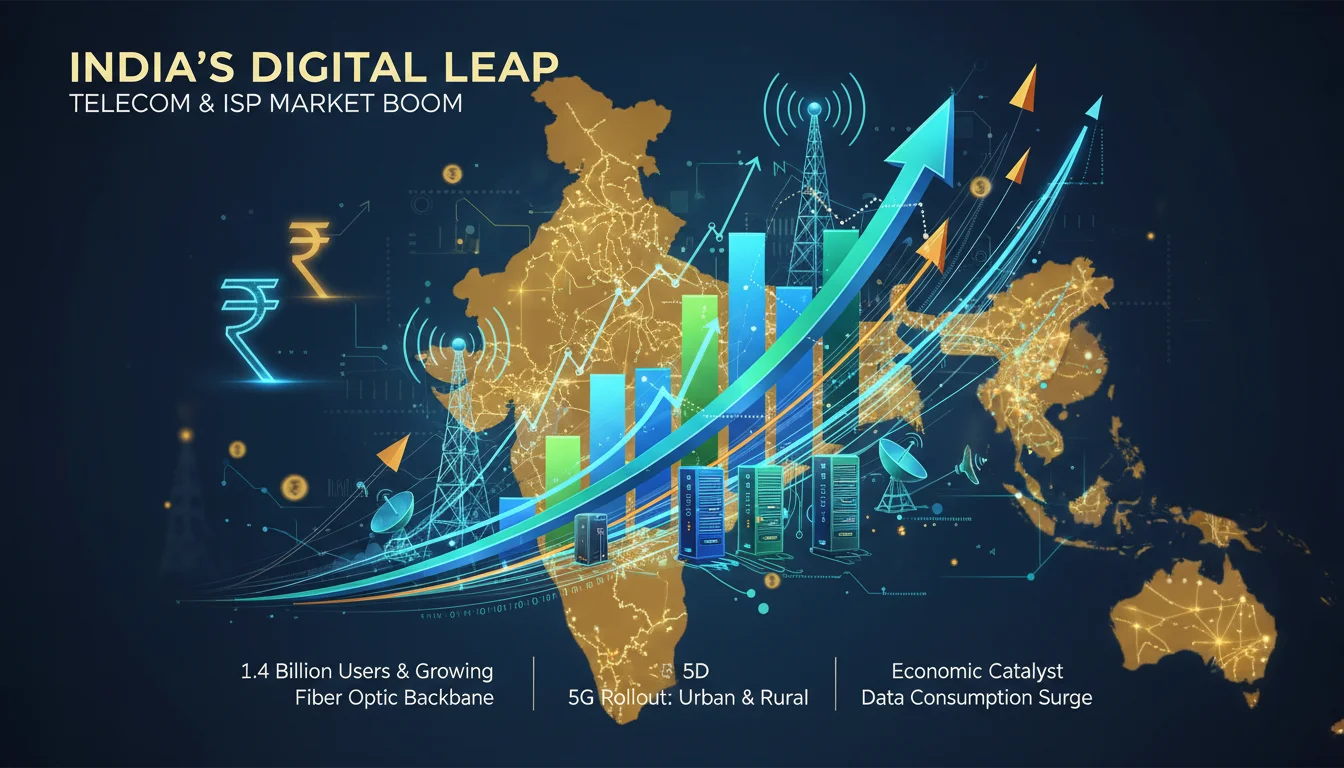
The sheer scale of the Indian telecommunications market is staggering, reflecting its status as the world’s second-largest digital population. By the end of 2024, the telecom market generated revenues of approximately USD 48.61 billion to USD 52.79 billion, with aggressive and sustained projections indicating a surge to between USD 76.16 billion by 2029 and USD 114.47 billion by 2033. This macroeconomic expansion is advancing at a Compound Annual Growth Rate (CAGR) of approximately 8.89%, fueled by a potent combination of advantageous government policies, aggressive 5G pricing strategies, surging foreign direct investment, and an insatiable public appetite for digital services.
The fixed broadband and ISP segment specifically is experiencing a parallel and highly lucrative renaissance. Valued at approximately ₹85,000 crores (USD 10.2 billion) in 2025, the ISP industry is accelerating at an impressive annual growth rate of 18% to 22%, driven predominantly by the rapid deployment of Fiber-to-the-Home (FTTH) infrastructure across both urban clusters and emerging tier-2 cities. The broader broadband services market generated USD 48.54 billion in 2024 and is projected to reach an astounding USD 116.61 billion by 2030, growing at a CAGR of 15.6%. This growth is heavily predicated on the transition from legacy copper networks to optical fiber, which constituted the largest revenue-generating connection segment in 2024 due to its capacity to support the soaring demand for high-definition streaming, enterprise cloud computing, and smart home IoT applications.
| Market Segment | 2024/2025 Valuation | Projected Valuation (Year) | Projected CAGR | Primary Macroeconomic Growth Drivers |
|---|---|---|---|---|
| Overall Telecom Market | USD 52.79 Billion | USD 114.47 Billion | 8.89% | Aggressive 5G deployment, deepening smartphone penetration, foreign direct investment, and shifting digital consumption habits. |
| Fixed Broadband & ISPs | ₹85,000 Crores | ₹1,05,000 Crores | 19.50% | Unprecedented FTTH expansion, smart home adoption, and rural fiber initiatives driven by changing work paradigms. |
| Broadband Revenue | USD 48.54 Billion | USD 116.61 Billion | 15.60% | Surging demand for high-definition streaming, robust enterprise cloud computing needs, and the proliferation of IoT devices. |
Structurally, the tele-density metrics across India provide a clear, albeit bifurcated, picture of market penetration and future opportunity. By mid-to-late 2025, the nation recorded over 1.21 billion total telephone subscribers, achieving an overall tele-density of 86.09%. However, analyzing this figure at a granular level reveals a significant demographic and geographic divide. Urban areas boast a heavily saturated tele-density of 133.56%, indicating widespread multi-device ownership and multiple SIM connections per individual. In stark contrast, rural regions lag significantly with a tele-density of 59.43%. This structural discrepancy dictates a strategic imperative for the industry: while urban markets require retention and upselling strategies to drive value, future volume growth and new subscriber acquisitions must inevitably emerge from the vast rural hinterlands.
Technological trends are fundamentally reshaping the mechanics of service delivery and the nature of competition. The rapid rollout of 5G infrastructure stands as a monumental achievement, featuring over 508,000 Base Transceiver Stations (BTS) deployed across 99.9% of Indian districts by late 2025, providing a population coverage of 85%. Telecom operators are actively monetizing these immense capital investments through Fixed Wireless Access (FWA) services, which effectively bridge the gap between mobile flexibility and fixed-line stability, thereby opening new revenue streams in areas where laying physical fiber remains unfeasible. Furthermore, the imminent integration of Low Earth Orbit (LEO) satellite internet by major industry players—such as BSNL’s partnership with Viasat, Reliance Jio’s alignment with SES and Starlink, and Bharti Airtel’s utilization of Eutelsat OneWeb—aims to conquer the final frontier of remote rural connectivity, ensuring that even the most geographically isolated populations are brought into the digital fold.
Despite the immense scale and evident technological triumphs, the Indian telecommunications and ISP industry operates in a fiercely competitive environment fraught with systemic business challenges. The primary economic hurdle is the historically low Average Revenue Per User (ARPU). Years of hyper-competitive, aggressive price wars effectively democratized data access for the Indian populace but severely depressed profit margins for the operators. Although the market has recently stabilized into a de facto duopoly allowing for gradual and cautious tariff corrections, maximizing the lifetime value of a highly price-sensitive subscriber base remains difficult. As of late 2025, ARPU figures highlight this ongoing struggle, ranging from an industry-high of INR 256 for Bharti Airtel down to INR 211 for Reliance Jio, while struggling competitors like Vodafone Idea languish at INR 167.
Infrastructure deployment presents profound logistical and financial bottlenecks that constrain rapid expansion. While government-backed initiatives like the BharatNet project have made commendable strides in connecting over 214,000 gram panchayats with optical fiber, the physical deployment of cables across India’s complex and diverse rural terrains remains notoriously slow and capital-intensive. Urban centers, conversely, suffer from chronic right-of-way disputes with municipal authorities, frequent cable cuts due to uncoordinated civil works, and the exorbitant costs associated with digging and maintenance.
Customer churn is another critical vulnerability that threatens profitability. In a market where mobile number portability is seamless and localized broadband alternatives are proliferating rapidly, retaining existing subscribers is as vital as acquiring new ones. Industry data consistently indicates that acquiring a new telecom customer costs 5 to 25 times more than retaining an existing one, making churn prevention a financial imperative. Consumers frequently cite network congestion, frequent rebuffering during high-definition video streaming, and unresponsive or highly bureaucratic customer service as the primary catalysts for switching providers. The frustration is palpable in consumer forums, where users frequently lament prolonged downtimes and a lack of transparency regarding service restorations. Consequently, ISPs and telecom operators must navigate the dual pressures of funding massive capital expenditures for network upgrades while simultaneously fending off the persistent threat of subscriber attrition through elevated customer experience management.
Digital Landscape in India (Contextual to the Industry)
Internet & Social Media Usage Relevant to Telecom and ISPs
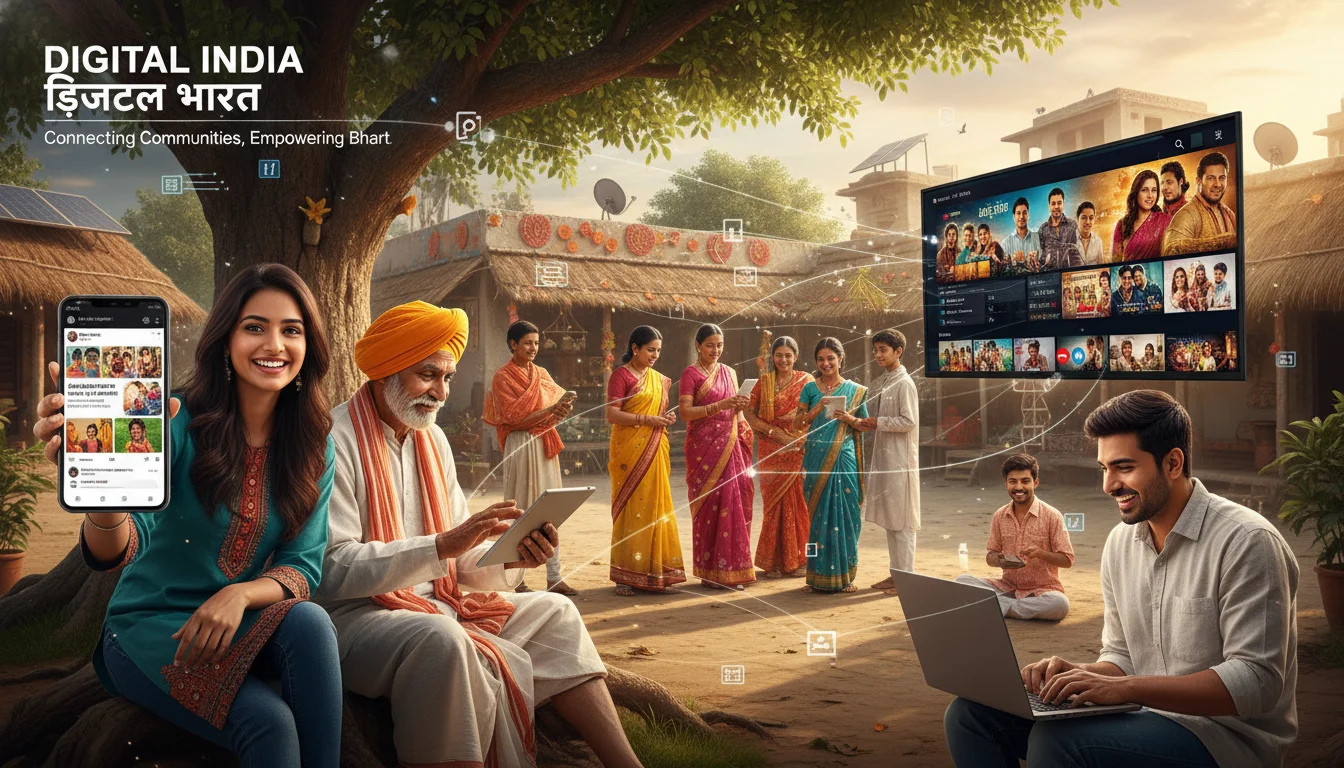
As of 2025, India’s active internet user base crossed a monumental threshold, surpassing 958 million active users, representing a robust 8% year-on-year growth trajectory. This expansion firmly reinforces India’s position as the world’s second-largest and arguably fastest-evolving digital market. Crucially, the epicenter of this internet growth has shifted decisively away from the saturated urban metropolitan centers. Rural India now accounts for an astonishing 57% of all active internet users—equating to approximately 548 million individuals—and is currently growing at nearly four times the pace of urban markets. This demographic inversion signals a profound structural shift in digital adoption, indicating that the next wave of telecom growth is inextricably linked to rural connectivity.
Social media penetration remains equally profound and highly relevant to telecommunication marketers. By the beginning of 2025, India was home to 491 million social media user identities, equating to nearly 33.7% of the total population. This user base is highly engaged, with 444 million users aged 18 and above representing a critical mass of decision-makers and purchasers. For telecom operators and local ISPs, these social platforms are no longer merely auxiliary communication channels; they are the primary battlegrounds for customer acquisition, brand storytelling, reputational defense, and real-time customer relationship management. Furthermore, the phenomenon of multi-device usage is surging significantly.
India now boasts over 193 million multi-device internet users, representing 20% of the active user base. This proliferation of screens—spanning smartphones, connected smart TVs, laptops, and IoT devices within single households—exponentially heightens the demand for robust, high-bandwidth, and low-latency home Wi-Fi solutions, directly expanding the total addressable market for fiber ISPs.
Popular Platforms Among the Target Audience
The platform preferences of Indian consumers are increasingly dictated by highly immersive content formats, predominantly video. Short-form video platforms—such as Instagram Reels, YouTube Shorts, and emerging indigenous alternatives—have rapidly become the default entertainment medium, particularly serving as the primary driver for rural digital engagement and daily data consumption. For ISPs marketing high-speed residential broadband, understanding the shift toward Connected TV (CTV) and Over-The-Top (OTT) streaming platforms is of paramount strategic importance.
Streaming giants like Disney+ Hotstar, Amazon Prime Video, Netflix, and JioCinema have successfully conditioned Indian consumers across socioeconomic strata to expect uninterrupted, high-definition and 4K streaming experiences. Approximately 88% of active internet users now regularly access OTT platforms, yet paradoxically, two-thirds of these users report profound frustration with frequent rebuffering, pixelation, and long loading times. This widespread dissatisfaction creates a prime, high-intent marketing vector for fiber broadband providers. By positioning their FTTH services as the definitive, technologically superior solution to the “buffering epidemic,” ISPs can directly align their product with the consumer’s most acute pain point.
Additionally, the perception of the open internet is gaining significant prestige over traditional walled gardens like basic social media feeds. Recent comprehensive research indicates a paradigm shift: 1 in 3 Indian consumers now explicitly prefer OTT/CTV over social media for consuming premium content. This trend is even more pronounced among younger demographics, who are 55% more likely to view brands advertising on these premium OTT platforms as inherently more premium and trustworthy compared to brands advertising on user-generated content platforms. For telecom marketers, this signifies a necessary and strategic shift in digital ad spend, moving away from exclusive reliance on social media toward programmatic CTV advertising and native open-internet formats that command higher attention and brand recall.
Consumer Online Behavior Related to Telecommunications
The behavioral economics of the Indian digital consumer are heavily, and increasingly, influenced by language, cultural context, and localization. A staggering 98% of users now access digital content in Indic languages—spanning Hindi, Tamil, Telugu, Malayalam, Bengali, and Marathi—making vernacular integration an absolute non-negotiable requirement for effective telecom marketing. The assumption that English suffices for urban markets is also fundamentally flawed; research reveals that 57% of urban internet users also strongly prefer regional language content. This proves that localization is a national imperative, not merely a rural outreach strategy. Content, advertisements, and customer support interfaces must be fluent in the local dialect to build trust and drive conversions.
Search behavior related to telecommunication services has also evolved into a highly nuanced, intent-driven activity. Consumers demonstrate exceptionally high intent when researching ISPs, frequently utilizing complex search queries adorned with localized modifiers such as “best fiber broadband near me,” “low ping internet for gaming in Mumbai,” or “affordable 5G plans in Dehradun”. Accompanying this hyper-local search behavior is a pronounced reliance on peer reviews and digital social proof. Prospective subscribers meticulously analyze Google Business Profiles, read localized tech blogs, and scour community forums (such as specific city-based subreddits) to ascertain the real-world reliability, customer service responsiveness, and actual throughput of an ISP before committing to an annual plan.
Furthermore, artificial intelligence adoption has rapidly reached the masses, altering how consumers seek information. In 2025, 44% of Indian internet users actively engaged with AI-enabled features, including advanced voice search, image-based search, and conversational chatbots. This profound shift toward conversational, AI-driven search means that consumers are increasingly asking complex, natural-language questions about telecom services (e.g., “Which is the most reliable internet provider in my area for working from home?”) rather than typing disjointed, short-tail keywords. This necessitates a highly sophisticated, semantic approach to Search Engine Optimization (SEO) and content marketing, ensuring that telecom brands provide direct, authoritative, and easily parsable answers that AI algorithms can confidently serve to users.
Digital Marketing Opportunities
The maturation and consolidation of the Indian telecom sector demand a definitive departure from traditional, broad-spectrum advertising methodologies—such as exorbitant mass television buys, generic print media, and static billboards—toward precision-targeted, data-driven, and highly accountable digital marketing. Digital marketing offers the unique agility and granular measurability required to navigate the hyper-competitive ISP landscape, allowing brands to directly address the industry’s core existential challenges: exorbitant customer acquisition costs (CAC) and persistent, revenue-draining churn.
How Digital Marketing Solves Key Challenges
Digital marketing algorithms and platforms are uniquely equipped to identify, isolate, and exploit consumer micro-moments with surgical precision. In a macroeconomic environment where the Average Revenue Per User (ARPU) is inherently low, the cost of acquiring a customer must be rigorously minimized to ensure a viable Customer Lifetime Value (LTV) to CAC ratio. Through highly efficient, programmatic ad buying, sophisticated audience segmentation, and organic search visibility, ISPs can ensure that their marketing budgets are expended exclusively on high-intent prospects who are actively seeking internet upgrades, rather than blanketing indifferent populations.
Moreover, advanced digital marketing is the ultimate, proactive weapon against customer churn. Modern Customer Relationship Management (CRM) systems, when deeply integrated with marketing automation and network telemetry data, can monitor user behavior to predict churn before it manifests. For instance, if data analytics reveal a user experiencing sudden spikes in latency, frequently hitting bandwidth caps, or repeatedly visiting the cancellation FAQ page, automated, highly personalized email or WhatsApp retention campaigns can be triggered. These campaigns can preemptively deploy targeted concessions—such as a complimentary speed boost, a proactive apology with a service timeline, or a discounted bundled OTT subscription—to pacify the at-risk customer, thereby preserving the recurring revenue stream and significantly extending their lifetime value.
Best Strategies for Telecommunication Services and ISPs
The deployment of digital marketing in this sector requires a sophisticated orchestration of multiple channels, each serving a distinct phase of the consumer lifecycle.
Search Engine Optimization (SEO) and Local Search Dominance
For Internet Service Providers, geographical proximity is synonymous with product availability. Therefore, Local SEO is arguably the single most critical and cost-effective acquisition channel. By aggressively optimizing Google Business Profiles (GBP) for tier-2 and tier-3 cities, regional ISPs can frequently intercept highly localized, high-intent searches, effectively outranking national conglomerates through sheer local relevance, accurate NAP (Name, Address, Phone Number) data, and an aggregation of positive community reviews. Creating hyper-local landing pages that detail specific neighborhood fiber routing advantages, unique topographical coverage, and authentic local customer testimonials builds unparalleled trust and drives high conversion rates.
Social Media and Conversational Commerce
Given the staggering reality that Indian consumers spend hours daily on platforms like Instagram and WhatsApp, ISPs must transition from viewing these channels as mere broadcasting or brand-awareness tools to treating them as fully functional transactional and support hubs. WhatsApp marketing, in particular, represents a paradigm shift. Offering open rates that routinely exceed 80%, WhatsApp provides a frictionless, universally adopted environment for sending automated bill reminders, executing personalized upsell offers, and providing instantaneous customer support via sophisticated AI chatbots. This conversational commerce model dramatically reduces the friction of user acquisition and support resolution.
Content Marketing and Educational Storytelling
The deeply technical nature of internet delivery, routers, and bandwidth allocation often alienates average consumers. Content marketing serves as the crucial bridge over this knowledge gap.
By creating highly accessible, vernacular blogs, YouTube video tutorials, and easily digestible infographics explaining concepts like “Why FTTH is superior to wireless 5G for competitive gaming” or “How to optimally position your home Wi-Fi router for seamless remote work,” an ISP establishes itself as an authoritative, transparent, and customer-centric entity. This educational approach builds enduring brand affinity that transcends mere pricing wars.
Influencer and Native Marketing
While national megastars offer broad visibility, micro-influencers in regional markets command immense, actionable trust. Rather than securing expensive national celebrities, ISPs benefit far more from partnering with local technology reviewers, regional esports and gaming streamers, and vernacular lifestyle creators. These individuals can authentically demonstrate the speed, latency, and reliability of the ISP’s connection in verifiable, real-world scenarios. Furthermore, seamlessly integrating native advertisements within local news portals, regional lifestyle blogs, and festival-specific digital content provides a non-intrusive method to capture consumer attention precisely during high-intent shopping and festive periods.
Local and Global Examples and Case Studies
Analyzing specific market executions provides empirical evidence of these strategies in action.
Reliance Jio’s Disruptive Ecosystem Marketing
Jio’s aggressive entry into the Indian telecom sector remains the definitive, textbook masterclass in market disruption. Leveraging the overarching “Digital India” narrative, Jio utilized a comprehensive digital-first marketing strategy to promote its initial, highly disruptive freemium model. Rather than merely selling megabytes, Jio created a self-sustaining, inescapable digital ecosystem encompassing the MyJio app, JioCinema, and JioSaavn. Through relentless digital promotion of this ecosystem, the brand transformed consumer behavior overnight, successfully positioning high-speed internet access not as a metered utility, but as an indispensable digital lifestyle necessity.
ACT Fibernet’s Precision Search Acquisition
Facing immense competitive pressure from the deep-pocketed national giants, regional player ACT Fibernet required a highly efficient, high-ROI acquisition model to defend and expand its market share. By deploying sophisticated Google Search Ads deeply integrated with Fibr AI’s dynamic landing page optimization technology, ACT aligned its localized ad messaging perfectly with the content on its web presence. This strategic congruence and reduction of user friction resulted in a remarkable 25% increase in customer acquisition, a 12% lift in overall conversion rates, and a 6% increase in Call-to-Action engagements. This case study definitively proves that intelligent, technologically augmented digital media buying can successfully and profitably defend market share against vastly larger rivals.
Airtel’s Comedy-Driven Social Campaigns
To market its international roaming packs—a notoriously dry and uninspiring product category—Bharti Airtel executed a highly creative campaign by embedding its brand messaging directly within stand-up comedy routines featuring popular digital creators like Gaurav Kapoor. This seamless integration completely bypassed the traditional ad-fatigue experienced by users relentlessly bombarded on social media. By weaving the brand naturally into culturally relevant, highly shareable entertainment, Airtel generated massive organic visibility, engagement, and positive sentiment, proving the efficacy of content-led native marketing over aggressive direct-response advertising.
Competitive Analysis
The Indian telecommunications landscape has quietly and irrevocably consolidated into a de facto duopoly, flanked by struggling legacy operators attempting to survive and hyper-focused regional ISPs carving out profitable niches. Analyzing the digital footprint, strategic posture, and consumer perception of these players reveals critical gaps that agile competitors can systematically exploit.
Current Digital Presence of Top Telecoms and ISPs
Reliance Jio
As the dominant, undisputed market leader holding a 41.36% wireless market share and an overwhelming 51.10% of the fixed broadband sector, Jio’s digital presence is virtually omnipresent. Their core digital strategy relies heavily on complete ecosystem lock-in. Massive, multi-channel marketing campaigns continuously drive users toward the MyJio application, which serves as a centralized, indispensable hub for content consumption, e-commerce, and connectivity management. Moving into 2025 and beyond, Jio is heavily utilizing its digital channels to aggressively cross-sell its 5G FWA (Fixed Wireless Access) connections and proprietary smart home IoT devices, targeting the modern Indian household.
Bharti Airtel
Maintaining a strong secondary position with 33.59% of the wireless market and 31.20% of the broadband market, Airtel has consciously positioned itself as the premium, quality-first alternative. This strategy has yielded the highest ARPU in the industry at INR 256. Their digital presence is sophisticated and aesthetic, emphasizing uninterrupted connectivity, premium enterprise-grade reliability, and superior customer experience. The proprietary Airtel Thanks app is heavily promoted through highly polished, omnichannel digital campaigns that frequently highlight high-value-added services, such as data rollover capabilities and complimentary premium OTT subscriptions, designed specifically to retain high-paying subscribers.
Vodafone Idea and BSNL
Vi, possessing a 17.13% wireless share and a 12.80% broadband share, continues to struggle with severe financial constraints and massive adjusted gross revenue (AGR) dues, which drastically restricts its ability to fund aggressive digital marketing acquisition campaigns. Consequently, its digital narrative heavily relies on defensive retention marketing and loyalty programs aimed at preserving its existing base rather than expansive acquisition. BSNL, the state-owned entity with 7.9% wireless and 3.28% broadband share, suffers from a noticeably dated digital presence, notoriously poor online CRM systems, and legacy marketing approaches that fail to resonate with younger demographics. However, BSNL is attempting a slow digital resurgence through marketing its indigenous 4G rollouts and highlighting exclusive satellite communication partnerships for ultra-remote areas.
Regional Players (e.g., ACT Fibernet, Hathway, Excitel)
These independent players hold significantly smaller national shares but fiercely dominate specific urban pockets and regional territories. ACT Fibernet, for instance, operates with extreme agility, leveraging hyper-targeted performance marketing, meticulously localized SEO, and a fiercely defended reputation for providing symmetric upload and download speeds to appeal directly to the highly demanding gaming and heavy-streaming demographics.
| Operator / Entity | Wireless Share | Broadband Share | Core Digital Marketing Focus and Strategy |
|---|---|---|---|
| Reliance Jio | 41.36% | 51.10% | Ecosystem lock-in, aggressive 5G/FWA rollout promotion, mass-market digital penetration via extreme affordability. |
| Bharti Airtel | 33.59% | 31.20% | Premium brand positioning, high ARPU customer retention, lifestyle-integrated social campaigns, and premium OTT bundling. |
| Vodafone Idea | 17.13% | 12.80% | Defensive retention marketing, targeted loyalty programs, mitigating subscriber churn amidst financial restructuring. |
| BSNL | 7.90% | 3.28% | Rural connectivity messaging, government infrastructure partnerships, marketing indigenous tech stacks and remote satellite access. |
| Regional ISPs | N/A | < 5.00% (Individual) | Hyper-local SEO dominance, niche targeting (e.g., esports gamers), community-level sponsorships, and rapid deployment messaging. |
What They Are Doing Well
The duopoly of Jio and Airtel excels at a scale that is difficult to replicate. Specifically, they are masterfully utilizing their massive reservoirs of first-party customer data to build formidable proprietary ad-tech platforms (Jio Ads and Airtel Ads). By deeply analyzing the browsing, app usage, and consumption habits of over a billion combined users, they offer precision targeting to external advertisers that rival the capabilities of global tech giants like Google and Facebook. Airtel Ads, for instance, segments audiences into highly specific categories like travelers, gamers, and foodies, delivering targeted campaigns across the Airtel Thanks App and Wynk Music. Furthermore, their transition toward seamlessly bundling major OTT platforms natively within their broadband packages creates an almost irresistible value proposition that is heavily and effectively marketed across programmatic display and video networks.
Gaps and Opportunities to Outperform Them
Despite their overwhelming market dominance and technological capabilities, these national conglomerates suffer from significant vulnerabilities inherent to their massive scale, presenting distinct opportunities for agile competitors.
The most glaring vulnerability is profound customer service deficits. Extensive social media listening across platforms like Reddit and Quora reveals significant, deep-seated customer dissatisfaction regarding automated, highly scripted, and ultimately unhelpful customer service from mega-providers. Users frequently document instances of week-long downtimes, unresolved tickets, and a frustrating inability to speak with human agents, compounded by rigid “no refund” policies during outages. Regional and local ISPs can actively weaponize this sentiment by aggressively marketing “human-first, hyper-local customer support” and “guaranteed rapid-response resolution times” as their primary core differentiator.
Secondly, national giants often rely on generic regional messaging.
While they possess the budget to run national campaigns dubbed into regional languages, these campaigns frequently miss the nuanced, hyper-specific cultural context of individual tier-2 and tier-3 cities. A local ISP can vastly outperform national players in specific geographies by utilizing deeply culturally resonant, hyper-local content and partnering with micro-influencers who are authentic, recognized voices embedded within those specific communities.
Finally, the critical issue of gaming routing and latency provides a massive opening. National fiber networks, due to their vast and complex topologies, occasionally suffer from routing inefficiencies that inadvertently increase ping times for online gamers. Localized ISPs have successfully captured fiercely loyal market share by optimizing their routing specifically to popular gaming servers (like Valorant or BGMI) and heavily marketing this low-latency infrastructure directly on niche platforms like Reddit and Discord. When a local ISP can deliver a verified 5ms ping compared to a national provider’s fluctuating latency, they instantly win the lucrative esports demographic.
Recommended Strategy for Telecommunication Services and ISPs
To successfully navigate and conquer the complex, multifaceted Indian digital ecosystem, telecommunication brands must deploy a highly nuanced, multi-tiered marketing strategy. This strategy must seamlessly address both the high-end, aspirational demands of urban metropolitan centers and the foundational, utility-driven needs of the rapidly digitizing rural landscape.
Consumer Segmentation and Personas
A monolithic, one-size-fits-all marketing approach to the Indian market is guaranteed to fail due to immense socio-economic and geographical diversity. Strategic efforts must be meticulously segmented into distinct, highly detailed buyer personas.
The first critical persona is the Urban “Smart Home” Power User, predominantly located in Tier-1 cities. These consumers are typically aged 25 to 45, possess high disposable incomes, and belong to the white-collar professional class. Their preferences are defined by a zero-tolerance policy for buffering or downtime. They require, and are willing to pay a premium for, symmetric Gigabit speeds to support simultaneous multi-device 4K streaming, flawless remote work video conferencing, and extensive IoT smart home integration. The marketing triggers for this persona revolve around guaranteed reliability, premium priority customer service, and high-value bundled OTT platforms (such as Netflix 4K or Apple TV+) that simplify their digital subscriptions.
The second highly lucrative persona is the Hyper-Competitive Gamer, distributed across both Tier-1 and Tier-2 cities. This demographic is generally younger, aged 16 to 30, comprising students and young professionals. For this persona, raw bandwidth is entirely secondary to network latency and stability. They demand incredibly low ping, zero packet loss, and transparently optimized routing to specific domestic and international gaming servers. Marketing triggers for this group involve extreme technical transparency, verifiable peer reviews on forums like Reddit, and active ISP sponsorships of local esports tournaments or popular gaming streamers.
The third, and fastest-growing, persona is the Rural Mobile-First Adopter, located in Tier-3 cities and deep rural districts. Spanning a wider age range of 18 to 50, these individuals often come from agricultural or small-business backgrounds and are exclusively vernacular speakers. Their preferences are highly price-sensitive, and they rely almost entirely on mobile devices rather than desktop computers. They are heavy, daily consumers of short-form video content (YouTube Shorts, Instagram Reels) and are increasingly reliant on digital payment platforms (UPI) for daily commerce. The primary marketing triggers for this vast demographic are absolute affordability, easily accessible localized customer support via familiar channels like WhatsApp, and content delivered entirely and authentically in their native language.
Recommended Channels and Campaign Types
To effectively reach these diverse personas, ISPs must deploy a mix of sophisticated channel strategies.
Hyper-Local Performance Marketing is absolutely essential. ISPs should heavily index their budgets on Google Local Services Ads and highly constrained, geo-fenced Facebook and Instagram advertising. When a user searches for internet providers or scrolls through their feed, the advertisements should dynamically insert the user’s specific neighborhood name (e.g., “Blazing Fast Fiber Internet now live in Andheri West”). This hyper-relevance drastically increases click-through rates and conversion efficiencies, ensuring ad spend is not wasted on unserviceable pin codes.
Furthermore, WhatsApp Conversational Commerce must be implemented not just as a support tool, but as a primary sales funnel. Given its absolute ubiquity in India, WhatsApp allows ISPs to guide users from an initial Facebook ad click directly into an automated WhatsApp chatbot. Within this familiar, low-friction chat interface, the user can instantly check fiber feasibility by dropping their location pin, view available localized plans, and complete the entire onboarding and payment process.
Equally important are proactive Retention and Churn Mitigation Campaigns. ISPs must implement an automated lifecycle marketing strategy heavily reliant on telemetry data. If network data indicates a customer is consistently maxing out their allocated bandwidth or experiencing buffering, an automated email and SMS campaign should trigger immediately, offering a seamless, one-click upgrade path. Conversely, long-term loyalty must be actively rewarded through tenure-based discounts or free speed upgrades, rather than the industry-standard mistake of reserving all attractive promotional pricing solely for new acquisitions, thereby effectively neutralizing churn before the customer considers a competitor.
Content Ideas Specific to the Industry
Content marketing must transcend generic corporate updates and focus on utility, cultural resonance, and education.
Festival-Driven Native Content is highly effective in India, where festivals represent massive, predictable spikes in discretionary spending, family gatherings, and content consumption. Instead of posting generic, visually identical festival greetings, ISPs should launch utility-driven, native campaigns. For example, during Diwali, content campaigns could focus on “Upgrading your home network for the ultimate family movie marathon,” utilizing native advertising formats that blend seamlessly into lifestyle editorial content on popular regional news portals, avoiding ad-blockers and banner blindness.
Educational “Work From Home” and Tech Hub content establishes long-term brand authority. ISPs should develop a comprehensive, SEO-optimized knowledge base that proactively answers common, frustrating consumer queries. Creating high-quality articles and short-form vernacular videos explaining topics such as “How to optimally place your router for maximum home coverage,” “Understanding the critical difference between 5GHz and 2.4GHz Wi-Fi bands,” and “Why your Zoom calls keep dropping and how to fix it” positions the ISP not just as a utility pipe, but as a helpful, indispensable technology partner.
Budget-Friendly Digital Marketing Approaches
For mid-sized and local ISPs lacking the billion-dollar marketing war chests of the national duopoly, extreme capital efficiency is paramount.
The highest ROI activity is Google Business Profile (GBP) Optimization. Claiming, verifying, and meticulously maintaining GBPs with high-quality photos, accurate operating hours, and regular post updates for every single local branch or distributor is entirely free. This singular activity yields the highest return on investment for capturing high-intent local search visibility and driving immediate foot traffic or inbound calls.
Furthermore, establishing robust Referral Programs leverages the existing, satisfied subscriber base. Offering a tangible reward, such as a free month of internet service or a permanent speed boost for every successful neighborhood referral, capitalizes on the immense, culturally ingrained power of Indian word-of-mouth marketing. This transforms the customer base into an active acquisition engine at a fraction of the cost of acquiring a user through paid digital media.
Finally, promoting User-Generated Content (UGC) is a highly cost-effective strategy. Actively encouraging satisfied customers to post their speed test results on social media platforms, tagging the ISP’s brand, provides free, highly authentic social proof. This grassroots validation is significantly more persuasive to prospective buyers than any polished, highly produced corporate advertisement.
Keywords & SEO Opportunities
A robust, meticulously researched Search Engine Optimization (SEO) strategy in the Indian telecom sector is the bedrock of sustainable growth. This strategy must capture users across all stages of the digital funnel—from the initial moment of service frustration and problem awareness to the final, high-intent transactional decision.
High-Intent Keywords for Ranking
High-intent (often short and mid-tail) keywords typically represent users who are actively dissatisfied with their current internet provider and are primed to make an immediate switch. While these keywords are fiercely competitive, successfully ranking for them guarantees a steady, lucrative stream of highly qualified leads.
Data indicates massive, consistent search volumes for diagnostic queries.
For instance, the exact phrase “wifi speed test” commands a staggering search volume of 2.74 million, while the broader “internet speed test” peaks at 16.6 million searches. Capturing even a fraction of this diagnostic traffic by hosting a proprietary, fast-loading speed test tool directly on the ISP’s website allows the brand to instantly present targeted upgrade offers to users who record poor speeds, capitalizing on their immediate frustration with their current provider.
Other highly valuable transactional keywords that ISPs must target include localized variations such as “best broadband in [City Name],” “fiber internet near me,” comparative queries like “Jio fiber vs Airtel broadband,” and value-driven searches such as “unlimited wifi plans for home.”
Long-Tail Keyword Opportunities (India-Specific)
Long-tail keywords are the undisputed secret weapon for regional and challenger ISPs. Following the 80/20 rule of search demand, while these longer phrases possess lower individual search volumes, they demonstrate ultra-specific user intent and boast significantly higher conversion rates due to drastically lower competition from major brands. Furthermore, as 55% of users now utilize voice search daily, they increasingly speak to their devices in full sentences, naturally generating long-tail queries. Crucially, adapting these long-tail queries into vernacular languages captures the rapidly expanding, highly engaged non-English speaking demographic that represents the future of Indian internet growth.
Examples of English Long-Tail Opportunities:
Targeting specific pain points yields excellent long-tail keywords, such as “best broadband for gaming with low ping in Pune,” “affordable internet service providers for small business in Tier 2 cities,” instructional queries like “how to switch from BSNL to a private fiber network,” and feature-specific searches like “broadband plans with free Netflix and Amazon Prime.”
Vernacular and Transliterated SEO:
With 98% of Indian internet users accessing digital content in Indic languages, optimizing web assets for transliterated searches (e.g., Hindi typed using the English alphabet) and pure vernacular scripts is absolutely essential for market penetration. For instance, optimizing for Hindi phrases like “Sabse sasta fiber internet plan” (Cheapest fiber internet plan) or “Ghar ke liye best wifi connection” (Best wifi connection for home) captures a massive audience segment completely ignored by English-only campaigns. Similarly, localized phrasing in Tamil or Telugu regarding customer support quality and speed reliability will directly capture the southern regional markets.
| Keyword Category | Example Queries | Strategic Value and Application | Primary Search Intent |
|---|---|---|---|
| Diagnostic / Head Terms | “Internet speed test”, “Wifi speed test” | Generates massive top-of-funnel traffic; provides a direct opportunity to intercept and convert frustrated competitor users. | Informational / Frustration-driven |
| Transactional / Local Search | “Fiber internet near me”, “Best broadband in Dehradun” | Drives direct, high-intent lead generation; offers an exceptionally high conversion rate for local ISPs with optimized GBPs. | Action-oriented / Purchasing |
| Long-Tail Niche Targeting | “Best low ping ISP for Valorant in Mumbai” | Captures highly specific, lucrative demographics (e.g., esports gamers) that are often alienated by broad, generic national campaigns. | Research / Deep Evaluation |
| Vernacular / Transliterated | “Ghar ke liye best wifi”, “Sabse sasta internet plan” | Unlocks the massive, high-growth Tier-2, Tier-3, and rural internet populations that prefer searching in native languages. | Navigational / Action-oriented |
Implementation Roadmap
Transforming digital marketing from a siloed, auxiliary activity into the primary, predictable driver of telecom revenue requires a highly structured, phased approach. The following implementation roadmap delineates actionable, sequential steps designed to balance immediate revenue generation and churn reduction with the construction of long-term, defensible brand equity.
Phase 1: Short-Term Quick Wins (1–3 Months)
The critical initial phase focuses intensely on harvesting existing, uncaptured market demand, optimizing current digital real estate for maximum visibility, and rapidly plugging recurring revenue leaks caused by preventable churn.
During the first month, the absolute priority is establishing a flawless digital foundation and local search dominance. The marketing team must conduct a comprehensive, uncompromising audit of all localized digital assets. This involves claiming, verifying, and meticulously optimizing Google Business Profiles (GBP) for every operational node, distribution center, or serviced city. Simultaneously, the ISP must implement an aggressive, automated review generation campaign via SMS and email, prompting highly satisfied customers to rate the service on Google, thereby building immediate local authority and outranking competitors in the “Map Pack”. Concurrently, the IT and marketing teams must collaborate to launch a proprietary, branded “Speed Test” landing page, heavily optimized for high-volume diagnostic keywords to begin capturing frustrated traffic.
Moving into the second month, the focus shifts to aggressive performance marketing and operational automation. The ISP should deploy highly targeted, hyper-local Google Search and Meta (Facebook/Instagram) advertising campaigns. These campaigns must utilize strict geo-fencing, targeting only specific zip codes where new fiber infrastructure is freshly laid or currently underutilized, ensuring zero ad spend wastage. Simultaneously, the crucial integration of the WhatsApp Business API must be completed. This enables the ISP to handle automated customer inquiries, facilitate instant plan upgrades, and register technical complaints directly through WhatsApp, drastically reducing call center loads and improving the immediate customer experience.
By the third month, the operational focus must pivot to retention and the initiation of organic referral engines. The marketing team should launch a sophisticated, automated email and SMS lifecycle sequence. This sequence must specifically target users who are approaching their annual contract renewal dates or those exhibiting definitive churn signals, such as frequently calling technical support or experiencing repeated data capping. Alongside this retention effort, the ISP must roll out a gamified, highly visible customer referral program. By offering tangible, immediate benefits—such as permanent bandwidth boosts or entirely free service months—the ISP can effectively deputize its existing user base, turning them into a highly motivated, localized acquisition engine.
Phase 2: Long-Term Strategy (6–12 Months)
With the foundational quick wins secured and operationalized, the secondary phase pivots toward establishing unassailable thought leadership, expanding aggressively into the vernacular open internet, and utilizing advanced artificial intelligence for predictive, hyper-personalized marketing.
Months four through six are dedicated to building a robust content ecosystem and executing a wide-scale vernacular expansion. The marketing department must develop a comprehensive, continually updated content hub featuring high-quality, SEO-optimized blogs, engaging video tutorials, and deep technical guides that proactively answer common internet queries. Critically, this period marks the aggressive translation and cultural adaptation of high-performing web assets and advertising creatives into the dominant regional languages—such as Hindi, Marathi, Tamil, and Telugu. This linguistic expansion is vital to aggressively capture the rural and tier-2 market surge. Furthermore, the ISP should initiate formal, long-term partnerships with regional micro-influencers and specialized tech vloggers to produce authentic, highly localized video content reviewing and validating the network’s stability and speed within specific communities.
As the strategy progresses into months seven through nine, the focus elevates to advanced programmatic media buying and native advertising integration. The marketing leadership should strategically shift a significant portion of the advertising budget away from the increasingly saturated walled gardens of Meta and Google Search, redirecting it toward the open internet and CTV (Connected TV) platforms. By utilizing advanced programmatic native advertising, the ISP can place highly contextual, non-intrusive ads within regional news portals and popular streaming applications precisely during major Indian festivals and massive sporting events, such as the IPL, capturing high-intent audiences when they are most engaged. Concurrently, implementing rigorous cross-channel attribution modeling will allow the team to understand the exact, multi-touch customer journey from the first ad impression to the final physical fiber installation, allowing for the ruthless, ongoing optimization of the Customer Acquisition Cost (CAC).
In the final quarter of the year, months ten through twelve, the ISP must deploy AI-driven predictive marketing and deep telemetry integration. This represents the pinnacle of telecom marketing maturity. The ISP must integrate raw network telemetry data—comprising anonymized Quality of Service (QoS) and Quality of Experience (QoE) metrics—directly with the marketing CRM suite. By deploying sophisticated machine learning algorithms against this data, the ISP can accurately predict impending network degradation or individual user experience drops.
The marketing system can then proactively message affected users with sincere apologies, real-time status updates, or preemptive discounts before the user ever initiates a complaint, completely revolutionizing the customer relationship. Finally, utilizing AI tools for dynamic pricing models will allow the ISP to generate hyper-personalized bundle offers, perfectly matching an individual user’s specific bandwidth consumption patterns with bespoke internet and premium OTT packages, maximizing revenue extraction while ensuring customer delight.
Conclusion
The Indian telecommunications and Internet Service Provider sector has definitively crossed the rubicon into a fully digitized, hyper-connected, and extraordinarily complex era. With the active internet user base hurtling rapidly toward the staggering one billion mark, and the rural demographics outpacing urban digital growth at an unprecedented and structural scale, the sheer volume of market opportunity is vast and undeniable. However, this lucrative landscape is simultaneously defined by a ruthless, entrenched duopoly, relentless downward pricing pressures, exorbitant infrastructure costs, and a consumer base that has become increasingly educated, demanding, and uncompromising regarding streaming quality, network latency, and customer service responsiveness.
In this unforgiving environment, reliance on traditional, broad-brush marketing methodologies is entirely insufficient and financially irresponsible. Digital marketing is no longer merely a peripheral promotional vehicle; it has evolved into the central nervous system required for sustainable customer acquisition, intimate relationship management, and proactive churn mitigation. From leveraging the extreme precision of hyper-local SEO to dominate neighborhood-level commercial searches, to utilizing the expansive reach of programmatic CTV advertising and the frictionless engagement of WhatsApp conversational commerce, ISPs must deploy sophisticated, data-backed strategies to fiercely defend their operating margins and systematically expand their geographic footprint. Ultimate market success belongs to the forward-thinking providers who can seamlessly blend their robust physical infrastructure capabilities with highly personalized, culturally resonant, vernacular-fluent, and technologically advanced digital narratives.
Executing a digital strategy of this magnitude, complexity, and precision requires deep, specialized domain expertise, advanced technological fluency, and an intimate, localized understanding of South Asian consumer behavior. This is precisely where strategic, expert partnerships become an invaluable competitive asset. Gurkha Technology, a premier digital marketing and comprehensive IT solutions firm based in Nepal, stands uniquely positioned to empower and scale telecom operators and ISPs navigating this complex terrain. With a proven, award-winning portfolio encompassing advanced, conversion-optimized web development, highly technical full-spectrum SEO, and sophisticated, data-driven digital marketing campaigns executed for premium corporate clientele, Gurkha Technology offers the operational agility and deep localized intelligence necessary to execute these high-stakes strategies flawlessly. By forging a strategic partnership with Gurkha Technology, ambitious telecommunication businesses can leverage cross-border digital excellence to radically optimize their acquisition funnels, significantly enhance customer lifetime value, and secure a definitive, lasting competitive advantage in the world’s most vibrant and rapidly expanding digital market.