India E-commerce Marketing Report & Growth Trends 2026
Digital Marketing for E-commerce Stores in India
1. Industry Overview
Brief Description of E-commerce Stores in India
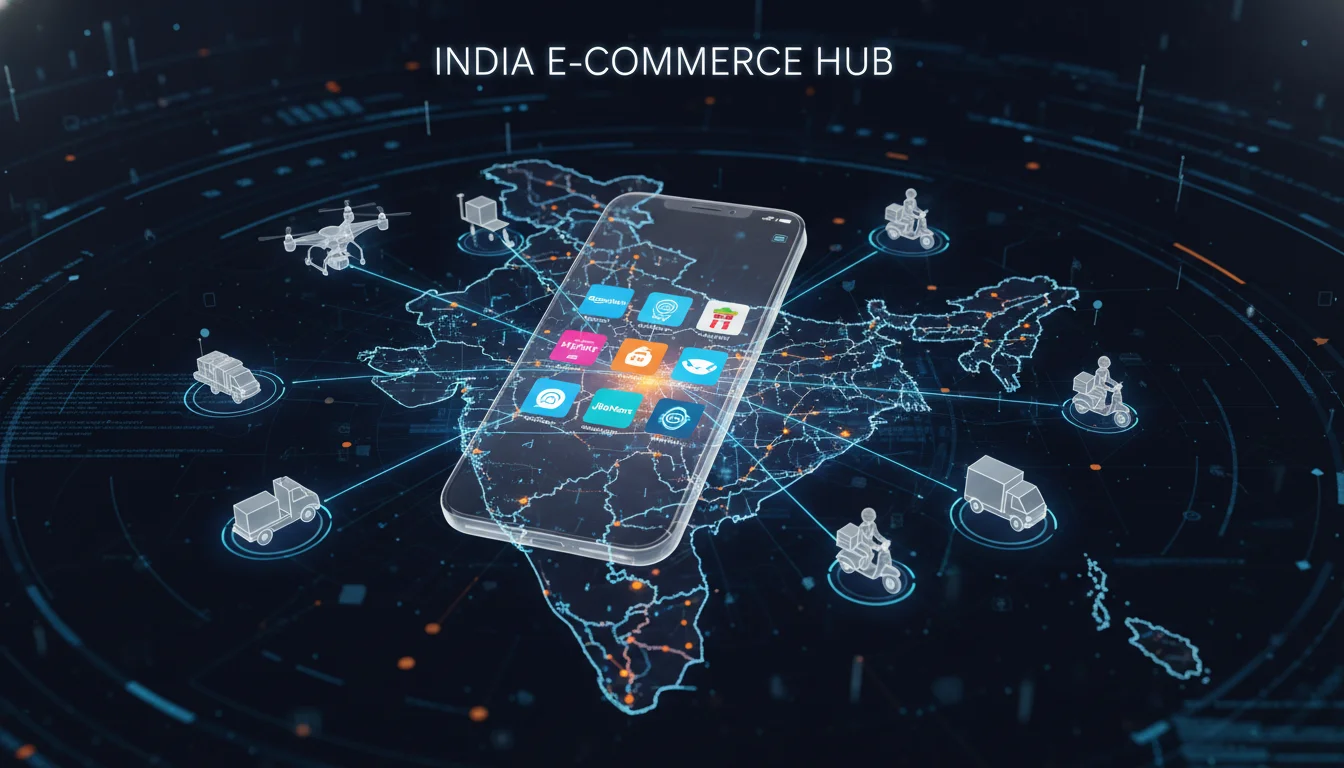
The Indian e-commerce ecosystem represents one of the most dynamic, rapidly evolving, and heavily capitalized digital economies globally. Transitioning from a nascent, metropolitan-centric operational model to a deeply integrated, pan-Indian retail framework, the sector has fundamentally altered the nation’s consumption patterns and supply chain logistics. E-commerce in India is no longer merely a digital alternative to physical retail; it has become the primary growth engine for the country’s broader macroeconomic consumption story.
The structural landscape comprises diverse operational models that cater to varying consumer intents. These include massive multi-vendor marketplaces that dominate aggregate search intent, hyper-local quick commerce (q-commerce) providers that have revolutionized high-frequency purchasing, and an aggressively expanding direct-to-consumer (D2C) segment. The D2C model, in particular, allows emerging brands to circumvent traditional distribution monopolies, cultivate native brand trust, and retain higher profit margins. Driven by aggressive digital public infrastructure initiatives, mass smartphone adoption, and ubiquitous low-cost internet access, the industry has successfully bridged the geographical and economic divides that previously hindered the reach of organized retail in the subcontinent. Furthermore, governmental frameworks such as the Open Network for Digital Commerce (ONDC) and the Government e-Marketplace (GeM) are actively democratizing digital retail, breaking the oligopolistic grip of traditional tech giants and allowing micro, small, and medium enterprises (MSMEs) to participate seamlessly in the digital economy.
Current Market Size, Growth, and Trends
The statistical trajectory of the Indian e-commerce market points toward exponential and sustained expansion across multiple verticals. As of 2024, the total e-commerce volume in India reached an estimated US$ 182 billion. This market, which was valued at US$ 60 billion in 2024, is on track to surpass US$ 300 billion to US$ 332.94 billion by the 2030-2031 fiscal window. This reflects a robust compound annual growth rate (CAGR) ranging between 15.89% and 19.63% through the next decade.
Growth dynamics are undergoing a structural geographical shift. Expansion is no longer localized to Tier-1 metropolitan areas; a profound democratization of the retail landscape has occurred. Nearly 60% of all new online shoppers onboarded since 2020 hail from Tier-3 cities or smaller, unlocking access for consumers in remote, previously brand-starved areas. Consequently, India has established itself as the world’s second-largest e-commerce market by user base, boasting over 270 million online shoppers in 2024, a figure projected to nearly double to 500 million by 2030.
-
Total E-commerce Volume: US$ 182 Billion (2024/25) Projected: >US$ 300 - 332 Billion (2030/31) 15.89% - 19.63% CAGR -
Online Shopper Base: 270 Million (2024/25) Projected: 500 Million 125M new users added recently -
Retail Market Penetration: 8% (2024/25) Projected: 14% Steady market share expansion -
D2C Segment Valuation: Est. US$ 12-15 Billion (2024/25) Projected: US$ 60 Billion 40% CAGR -
Beauty & Personal Care (BPC): Rapid Growth Phase (2024/25) Projected: US$ 30 Billion 10% Annual Growth -
Subscription E-commerce: US$ 10.34 Billion (2024/25) Projected: US$ 374.24 Billion 45.13% CAGR
Several profound structural trends underpin this expansion:
- Transaction Mediums & Infrastructure: Technological maturity has shifted the transaction medium decisively. Smartphones now facilitate over 76.42% of all e-commerce GMV in the country. This is deeply intertwined with the widespread adoption of the Unified Payments Interface (UPI) and digital wallets, which together command nearly 49.68% of the market’s transaction volume, alongside emerging credit vectors like Buy Now Pay Later (BNPL).
- Category Proliferation: The proliferation of high-frequency categories—specifically groceries, lifestyle, and general merchandise—is anticipated to generate nearly 70% of incremental sector growth by 2030. By 2025, grocery alone is expected to capture a 23% market share, driven by rapid quick-commerce expansion. The food and beverage sector is projected to rise at a 17.68% CAGR through 2031.
- B2B and Public Procurement Scaling: Beyond B2C mechanics, the Business-to-Business (B2B) sector is experiencing massive digitalization, leading the market with a 78% share in 2025 due to supply chain modernizations. Concurrently, the Government e-Marketplace (GeM) crossed a GMV of US$ 58.5 billion (Rs. 5 lakh crore) in FY25, highlighting the immense scale of digital public procurement.
- Capital Allocation: Investor confidence remains highly robust. In the 2024-2025 period, e-commerce attracted Rs. 26,527 crore (US$ 3.1 billion) across 79 deals, representing 31% of total start-up funding—a massive 128% jump from the previous year, predominantly led by hyperlocal and B2C segments.
Key Challenges Faced by Businesses in this Industry
Despite the structural boom and heavy capitalization, operating an e-commerce enterprise in India involves navigating profound systemic and operational challenges.
Firstly, infrastructural and logistics complexities remain formidable, particularly as consumer demand shifts aggressively toward the hinterlands. While national logistics costs have decreased by 6% between 2020 and 2023, fulfilling the rapid delivery expectations cultivated by quick-commerce platforms in remote, Tier-3 and Tier-4 regions requires immense capital expenditure. Major players are aggressively adding micro-fulfillment centers and dark stores; new entrants face severe difficulties matching this heavy infrastructure investment and streamlining logistics without entirely eroding their profit margins.
Secondly, the payment ecosystem, despite UPI’s success, presents a unique operational dichotomy. With only 64% of the population fully banked, financial inclusion gaps ensure that Cash-on-Delivery (COD) remains a highly preferred transaction method for millions of shoppers, accumulating up to 75% of certain e-retail activities. COD introduces severe operational risks for merchants, primarily through elevated return-to-origin (RTO) rates. When a COD order is rejected at the doorstep, the merchant absorbs the forward and reverse logistics costs, which severely compresses profit margins and increases inventory holding costs.
Thirdly, the sector is experiencing a stark, industry-wide pivot from hypergrowth to a strict demand for profitability. As the digital space becomes increasingly saturated, customer acquisition costs (CAC) are rising astronomically. Rising ad fatigue, data privacy concerns, and the impending shift to a cookieless future make digital targeting more expensive. E-commerce stores are forced to rely on sophisticated retention models, ad monetization, and subscription architectures to survive, demanding an elevated level of digital marketing sophistication that small-to-medium enterprises (SMEs) often lack.
Finally, navigating the oligopolistic dominance of giant marketplaces limits the autonomy of emerging brands. Independent sellers are routinely subjected to arbitrary algorithm changes, rising commission fees, payment cycle delays stretching up to 30 days during high-volume periods, and opaque ad-bidding environments.
2. Digital Landscape in India (Contextual to the Industry)
Internet & Social Media Usage Relevant to E-commerce Stores
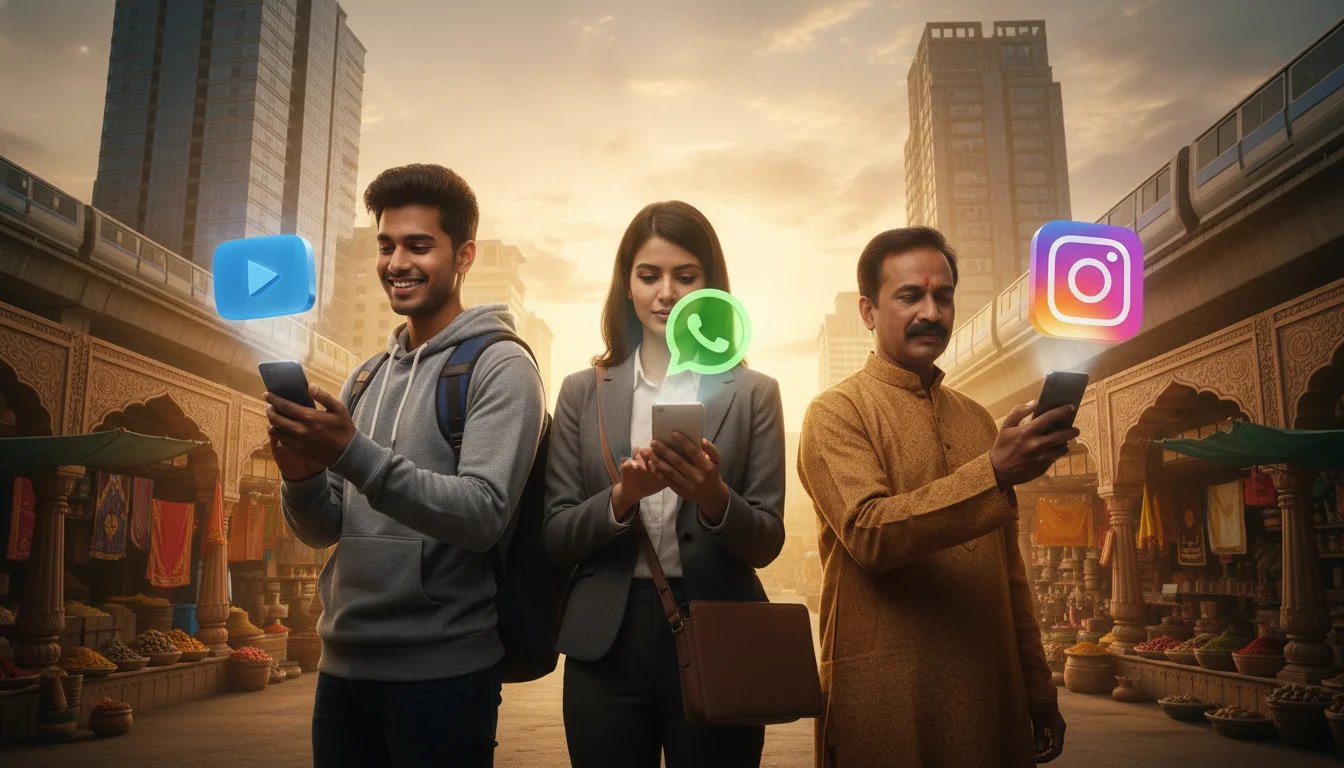
The structural foundation of India’s e-commerce explosion is its unprecedented digital penetration, facilitated by some of the lowest mobile data costs globally. At the dawn of 2024, India recorded 751.5 million internet users, representing an internet penetration rate of 52.4%. Concurrently, social media adoption has reached critical mass, with 462 million active social media users equating to 32.2% of the total population. The proliferation of inexpensive smartphones has facilitated an environment where 1.12 billion cellular mobile connections are active, meaning 78% of the population has access to mobile networks.
This vast, digitally connected footprint directly influences retail mechanics and advertising allocations. Digital advertising spending in India reached ₹49,000 crore in the 2024-2025 fiscal year, growing by 20% year-over-year.
This firmly established digital as the largest advertising medium in the country, commanding a 44% share of total ad spend compared to television’s 27%. Looking ahead, digital ad spends are projected to grow an additional 15% to ₹56,400 crore by FY2026. The e-commerce and FMCG sectors dominate this spending, contributing 34% each. Mobile platforms overwhelmingly dictate this expenditure, accounting for 78% of all digital ad spends, cementing the smartphone as the indisputable primary screen for commerce, content consumption, and interactive engagement.
Popular Platforms Among the Target Audience
The fragmentation of consumer attention across specific digital platforms requires a highly nuanced understanding of platform utility, as each network serves a distinct psychological and commercial function in the Indian user’s daily life.
- YouTube: Serving as the central node for digital discovery and entertainment in India, YouTube commands a massive advertising audience of 491 million individuals, reaching over 60.9% of the country’s total internet users. Its integration of YouTube Shorts caters seamlessly to the surging demand for short-form video, while its core long-form platform remains a crucial engine for product demonstrations, detailed tech reviews, and influencer marketing, which are vital for establishing e-commerce brand trust.
- The Meta Ecosystem (Facebook & Instagram): Despite the emergence of newer platforms, Facebook continues to dominate as a community, news, and mass-engagement hub. Users spend an average of 20 hours and 42 minutes monthly on the platform, and its ad reach is equivalent to 48.8% of the local internet user base. However, Instagram is the undisputed engine of modern lifestyle and aesthetic commerce. With users spending an average of 20 hours and 27 minutes per month on the app, Instagram Reels and Stories dictate national fashion, beauty, and D2C trends, providing immediate, shoppable visual stimuli.
- WhatsApp: Beyond peer-to-peer messaging, WhatsApp has evolved into a primary commercial interface. Indian consumers spend nearly 15 hours a month on the platform. Through the WhatsApp Business API, it serves as an indispensable tool for lead generation, cart recovery, highly personalized customer support, and direct storefront operations via conversational commerce architectures.
| Social Platform | Monthly Usage Time / Reach Metric | Primary E-commerce Utility |
|---|---|---|
| YouTube | 491 Million Ad Reach (60.9% of Net Users) | Product demonstrations, long-form reviews, short-form discovery. |
| 20 hours 42 minutes per month | Mass engagement, community building, broad demographic targeting. | |
| 20 hours 27 minutes per month | Aesthetic brand building, influencer collaborations, shoppable media. | |
| 14 hours 48 minutes per month | Conversational commerce, cart recovery, customer support automation. |
Consumer Online Behavior Related to E-commerce Stores
Indian online consumer behavior cannot be treated as a monolith; it is heavily segmented by age, geography, gender, and digital maturity—a phenomenon appropriately termed the “Many Indias” paradigm.
Demographic Nuances: Generation Z (individuals born between 1997 and 2012) constitutes 30% to 40% of the online shopper base. This cohort exhibits a spend share in lifestyle, beauty, and electronics that is 1.5 times higher than older demographics. Behaviorally, Gen Z is highly experimental, relies heavily on social media influencers for brand discovery, makes purchase decisions rapidly, and shows a marked preference for UPI over COD. Conversely, the participation of Gen X and older millennials has surged. E-commerce is no longer a male-dominated arena (currently 53% male vs. 47% female participation). The influx of female shoppers has dramatically diversified the product range, driving immense demand for grocery, beauty, apparel, and household items, and necessitates marketing strategies that provide comprehensive product information to build trust.
Geographic and Maturity Divergence: There is a distinct behavioral divergence based on regional maturity. Consumers in metropolitan and mature Tier-1 cities display high e-retail maturity. Their average spend per shopper is approximately 40% higher than in nascent markets. Shoppers in these mature hubs exhibit a strong preference for premium, insurgent D2C brands, willingly paying a 10% to 25% premium across categories for perceived quality, sustainability, and superior aesthetics.
In stark contrast, shoppers in Tier-2 and Tier-3 cities—who represent nearly 60% of all new customers onboarded since 2020—are characterized by high price sensitivity, an ongoing reliance on Cash-on-Delivery (COD), and a preference for vernacular language content. However, their collective spending power is rapidly converging with metropolitan areas. Interestingly, the average order values in non-urban regions frequently outpace urban areas in specific categories; for example, shoppers spend an average of US $60 in urban areas, likely due to larger household structures and a lack of access to physical premium retail stores.
Furthermore, regional personas display unique traits. Northeast India displays a 1.2 times higher e-retail shopper penetration compared to the rest of the country, driven by a lack of physical brand access and demand for specific regional sizing formats, while North India shows a distinct preference for trendier, high-turnover fashion.
3. Digital Marketing Opportunities
How Digital Marketing Can Solve Key Challenges
Digital marketing acts as the critical operational bridge over the structural chasms of the Indian e-commerce landscape.
To combat rising logistics and customer acquisition costs (CAC), sophisticated digital marketing shifts the paradigm from broad-spectrum, inefficient broadcasting to precision targeting. Through data-driven programmatic advertising, lookalike audience modeling, and AI-led segmentation, businesses can specifically target high-intent micro-cohorts. This maximizes the return on ad spend (ROAS) and reduces wasted impressions on demographics unlikely to convert.
To mitigate the existential risks of COD and elevated return-to-origin (RTO) rates, e-commerce marketers deploy digital trust-building signals and behavioral nudges. Automated email and WhatsApp marketing sequences can confirm orders pre-dispatch, verify addresses algorithmically, and nudge consumers toward digital prepayments through dynamically incentivized discounts, effectively lowering logistical losses.
Furthermore, against the backdrop of marketplace oligopolies, digital marketing empowers the direct-to-consumer (D2C) model. By utilizing rigorous Search Engine Optimization (SEO), content marketing, and community building, brands can own their first-party audience data, build independent digital storefronts, and cultivate direct customer loyalty, insulating themselves from the unpredictable algorithmic and policy shifts of third-party platforms.
Best Strategies for E-commerce Stores in India
Executing a successful, high-yield e-commerce marketing framework in India requires a synchronized, omnichannel approach that leverages emerging technologies and respects regional nuances.
- Search Engine Optimization (SEO) & Voice Search Optimization: SEO remains the foundation of sustainable digital visibility and customer acquisition. Given the linguistic diversity of India, optimizing for regional vernacular queries is a massive, highly profitable growth lever. Moreover, voice search optimization is rapidly becoming non-negotiable. Driven by the proliferation of smart speakers and smartphone virtual assistants (Alexa, Siri, Google Assistant), voice search accounts for a rapidly growing share of digital queries. By 2024, it was estimated that over half of all searches would feature voice-based elements. Strategies must involve incorporating conversational, long-tail keywords and optimizing Google My Business listings to capture localized, immediate-need intent.
- Social Commerce & Programmatic Advertising: Social media has evolved from the top of the funnel to the actual point of sale. Integrating product catalogs directly into Instagram and Facebook shops minimizes checkout friction, allowing users to transition from inspiration to transaction in seconds. Additionally, employing Google Performance Max (PMax) campaigns enables AI to distribute ad budgets dynamically across Search, Shopping, YouTube, and Display networks based on real-time conversion probability and predictive analytics.
- Content & Influencer Marketing: In an environment where consumer skepticism runs high, user-generated content (UGC) and influencer partnerships are highly effective trust proxies.
The Indian market responds particularly well to micro and nano-influencers who speak regional languages and possess localized, niche authority rather than disconnected mega-celebrities. Content marketing should focus on high-quality product demonstrations, transparent unboxing videos, and educational content that addresses specific consumer pain points while simultaneously embedding long-tail SEO value.
Conversational Commerce (WhatsApp Integration): Deploying AI-powered chatbots and customer relationship management (CRM) software via the WhatsApp Business API allows brands to create immersive, end-to-end purchasing experiences entirely within a chat interface. This strategy is particularly effective for recovering abandoned carts, issuing personalized product recommendations, executing drip campaigns, and providing post-purchase support, seamlessly blending customer service with active revenue generation.
Local and Global Examples/Case Studies
Case Study 1: Mamaearth’s Ascendance to a ₹1000 Crore D2C Brand
Mamaearth exemplifies the power of mission-driven digital marketing in India. Identifying a gap in safe, toxin-free baby and personal care products, founders Varun and Ghazal Alagh built their marketing architecture entirely around trust. They utilized an online-first D2C strategy, bypassing traditional retail to maintain margin control and test SKUs rapidly. Their promotional engine relied heavily on authentic micro-influencers and parenting bloggers, creating viral word-of-mouth equity. By aligning specific digital campaigns with regional influencers, utilizing Hindi and local languages, and promoting environmental initiatives like “Plant Goodness,” Mamaearth captured the Tier-2 demographic’s trust before executing a highly successful omnichannel retail expansion.
Case Study 2: Amazon’s Localization Strategy for the Indian Market
To capture the Indian demographic, Amazon could not simply replicate its US model; it required a robust, localized digital strategy. They developed a localized website and mobile app optimized for low bandwidth connections, addressing India’s internet infrastructure challenges. Crucially, they introduced multiple language options, including Hindi and regional dialects, to tap into the non-English speaking base. To penetrate Tier-2 and Tier-3 cities, they launched the “I Have Space” program, partnering with small local stores to serve as delivery points, effectively merging digital programmatic advertising with hyper-local physical logistics.
Case Study 3: Astounding ROI for a Niche Phone Case Manufacturer
An unnamed premium phone case manufacturer partnered with digital agency SunTec to overhaul its e-commerce presence. Facing un-optimized content, a lack of keyword focus, and poor search visibility, the strategy implemented a rigorous SEO overhaul focusing on mobile-product related keywords aligned with exact search intent. By combining strategic SEO optimization, compelling content marketing, and precision Google Shopping campaigns, the brand achieved an extraordinary Return on Ad Spend (ROAS) of 2093.63%, proving that hyper-targeted digital frameworks yield exponential, transformative returns even in highly saturated, competitive hardware markets.
Competitive Analysis
Current Digital Presence of Top E-commerce Businesses in India
The Indian e-commerce arena is characterized by an intense oligopolistic rivalry primarily between Amazon India and Walmart-backed Flipkart, with specialized category killers like Nykaa (beauty/personal care), Lenskart (eyewear), and Meesho (value commerce) carving out massive, defensible strategic niches.
Amazon leverages its unparalleled global technological infrastructure. Its digital presence is defined by vast cataloging, algorithmic precision, and the massive loyalty lock-in created by Amazon Prime, which combines rapid, predictable delivery with digital entertainment. Amazon’s advertising network (Amazon DSP) also captures immense high-intent search traffic directly on its platform, functioning as a search engine in its own right.
Flipkart’s digital strategy is intrinsically localized and culturally resonant. It heavily dominates the fashion and apparel sector—bolstered significantly by its subsidiary Myntra—and has cultivated deep consumer trust in Tier-2 and Tier-3 cities. Its digital presence relies heavily on gamified mega-events like the “Big Billion Days” and the aggressive promotion of regional languages, vernacular interfaces, and highly visible Cash-on-Delivery options.
Meesho disrupted the traditional duopoly by gamifying the digital presence of independent resellers. Focusing on unbranded goods, long-tail items, and regional manufacturers, Meesho’s digital footprint lives organically on WhatsApp and social media groups, targeting highly price-conscious consumers in Tier-3 and Tier-4 markets.
What They Are Doing Well
The dominant players excel at infrastructure scaling and behavioral conditioning. They have successfully trained the Indian consumer to expect profound convenience, deep discounting during predictable festive seasons (e.g., Diwali, Black Friday), and frictionless returns. Furthermore, their deployment of programmatic advertising, AI-driven personalized product recommendations, and sophisticated retargeting logic across the web creates an omnipresent brand experience that smaller stores struggle to replicate organically.
Gaps and Opportunities to Outperform Them
Despite their massive scale, severe structural vulnerabilities and consumer pain points exist within the operations of Amazon and Flipkart, presenting distinct, actionable opportunities for agile, independent e-commerce brands.
- Exploitative Seller Ecosystems and Margin Compression: Both Amazon and Flipkart subject independent sellers to high commission rates (often 15-30%), complex compliance metrics, and opaque advertising algorithms. Furthermore, platforms like Flipkart are notorious among sellers for delayed payment cycles stretching up to 21-30 days during peak high-volume seasons, suffocating cash flow for small businesses. Even “zero-commission” platforms like Meesho are pivoting toward monetizing shipping costs and forcing sellers into mandatory advertising models to maintain visibility.
- Consumer Friction and “Dark Patterns”: A significant trust deficit is emerging regarding platform transparency. The Ministry of Consumer Affairs has launched a sweeping investigation into major platforms for utilizing “dark patterns”—manipulative user interfaces that introduce hidden charges. Social media outrage recently highlighted arbitrary fees on COD orders, such as “Offer handling fees,” “Payment handling fees,” and “Protect Promise Fees.” Additionally, complex checkout processes remain the primary operational pain point, with studies showing that 73% of consumers will abandon purchases if forced into long, frictionless queues or digital processes.
- The ONDC Revolution as the Ultimate Equalizer: The Government’s Open Network for Digital Commerce (ONDC) is structurally altering the e-commerce landscape. By breaking the siloed monopolies of traditional platforms via the open-source BeckN protocol, ONDC allows small e-commerce stores to upload their catalogs to a decentralized network. This grants MSMEs access to pan-India consumers via multiple buyer apps without paying exorbitant marketplace commissions. Integrating with ONDC allows independent D2C brands to leverage standardized, third-party logistics while retaining full control over their customer data, pricing strategies, and brand narratives.
- Hyper-Personalization and Niche Authority: Massive marketplaces suffer from choice paralysis, counterfeit anxieties, and a lack of curated authority. Independent e-commerce stores can outperform giants by offering hyper-personalized customer service, immersive brand storytelling, and deep domain expertise that generic algorithms cannot replicate.
Recommended Strategy for E-commerce Stores in India
To successfully navigate and monetize the Indian market, emerging e-commerce stores must adopt a highly localized, agile, and technology-forward digital marketing strategy that prioritizes specific consumer profiles over generalized mass marketing.
Target Audience Personas

Persona 1: The Aspirational Tier-2/3 Value Seeker
- Demographics: Age 25–45; residing in emerging cities (e.g., Indore, Surat, Coimbatore, Guwahati); lower-to-middle income bracket.
- Preferences: Highly price-conscious but increasingly aspirational and brand-aware. Driven by social proof, family-oriented bulk purchasing, and regional trends. They prefer vernacular language interfaces, rely heavily on COD due to financial inclusion gaps, and use WhatsApp as their primary digital and communication tool.
- Behavior: Highly responsive to flash discounts, combo offers, and validations from local nano-influencers. They seek robust post-purchase support and clear return policies.
Persona 2: The Urban Gen Z & Millennial Trendsetter
- Demographics: Age 16–35; residing in metropolitan and mature Tier-1 cities (e.g., Mumbai, Bangalore, Delhi NCR); higher disposable income ratios.
- Preferences: Values sustainability, cruelty-free labels, ethical manufacturing, and high aesthetic appeal. They are highly integrated into the digital economy and utilize UPI, digital wallets, and BNPL frameworks extensively.
- Behavior: Product discovery is almost exclusively visually driven via Instagram Reels and YouTube Shorts.
Short attention spans necessitate frictionless, one-click checkout experiences and rapid, predictable delivery mechanisms.
Recommended Channels and Campaign Types
- Conversational Commerce via WhatsApp: WhatsApp is the ultimate retention and conversion engine. Businesses must utilize API tools suited to their scale. Small retailers starting out can leverage Interakt or Vepaar for in-chat storefronts and Shopify syncing. Support-heavy teams can use Gallabox, while D2C brands focused on revenue attribution and advanced cart recovery should deploy Quickreply.ai. Campaigns must include automated abandoned cart reminders, post-purchase order tracking, and targeted broadcast messages offering VIP discounts to repeat buyers.
- Performance Max (PMax) & Google Shopping: For capturing high-intent search traffic, Google Shopping campaigns combined with PMax allow Google’s AI to place products dynamically before users actively searching for exact specifications, adjusting bids in real-time based on conversion likelihood.
- ONDC Network Selling: Simultaneously list the store’s inventory on the ONDC network via specialized seller applications (such as Mystore, uEngage, eSamudaay, or EnStore) to immediately unlock a decentralized, pan-India audience without the heavy customer acquisition costs of traditional channels.
- Meta Ads (Instagram Reels) with Shoppable Integration: Run short, dynamic, and native-feeling video advertisements. Campaigns must utilize dynamic product catalogs, allowing users to tap and purchase directly from the video interface.
Content Ideas Specific to E-commerce in India
- Vernacular Video Demonstrations: Create high-quality product review and demonstration videos in Hindi, Tamil, Telugu, Marathi, and other regional languages. This directly targets the rapidly expanding Tier-2 and Tier-3 demographic, building immediate trust and lowering the barrier to entry.
- “Behind the Scenes” and Transparency Content: Counteract the market’s skepticism toward fake products and marketplace “dark patterns” by producing content that highlights ethical manufacturing, transparent pricing breakdowns, and robust quality control.
- Trending Product Spotlights: Align content with highly demanded products. Current high-intent trending categories in India include vegan protein powders, hyaluronic and centella sunscreens, smart home accessories, cushion foundations, and travel adapters.
Budget-Friendly Digital Marketing Approaches
For startups and MSMEs with restricted capital, high ROI can be achieved through tactical, low-cost optimization:
- Local SEO & Google My Business (GMB): For brands with physical fulfillment centers or hybrid models, optimizing GMB listings captures free local intent and builds domain authority rapidly.
- UGC and Micro-Influencer Bartering: Instead of paying exorbitant fees to mega-celebrities, seed products to nano-influencers (1k-10k followers) in exchange for authentic reviews and unboxing videos.
- Content Repurposing: A single long-form educational YouTube video should be systematically spliced into multiple Instagram Reels, YouTube Shorts, and Pinterest pins, maximizing the organic reach and ROI of a single asset production.
Keywords & SEO Opportunities
High-Intent Keywords for Ranking
In e-commerce SEO, distinguishing between informational intent (a user researching a topic) and commercial/transactional intent (a user ready with their credit card) is the bedrock of profitability. High-intent keywords are the digital equivalent of a customer walking into a physical store asking for a specific model. These keywords frequently include transactional modifiers such as “buy,” “price,” “discount,” “online,” or highly specific product dimensions, materials, and model numbers.
Focusing on category-page and product-page optimization using these high-intent markers ensures visibility at the absolute bottom of the marketing funnel. Because massive players like Amazon and Flipkart dominate broad short-tail keywords (e.g., “smartphones,” “running shoes,” or “face wash”), emerging e-commerce stores must strategically pivot their resources toward optimizing for the long-tail.
Long-Tail Keyword Opportunities (India-Specific)
Long-tail keywords—search phrases generally comprising three to five words or more—account for over 70% of all web searches and consistently yield conversion rates up to 2.5 times higher than generic head terms. They exhibit significantly lower competition, allowing newer domains without massive backlink profiles to achieve page-one SERP (Search Engine Results Page) rankings. Furthermore, they map perfectly to the rising trend of voice searches, which mimic conversational and interrogative patterns.
Examples of effective, high-conversion long-tail keyword architecture tailored to the Indian context include:
| E-commerce Category | Broad/Short-Tail (Low Conversion, Extreme Competition) | High-Intent Long-Tail (High Conversion, Lower Competition) |
|---|---|---|
| Fashion & Apparel | Sarees online | Buy authentic Kanjeevaram silk saree for wedding online |
| Footwear | Running shoes | Best affordable running shoes for flat feet with arch support in India |
| Beauty & Skincare | Face wash | Salicylic acid face wash for acne prone skin under 500 |
| Health / Grocery | Protein powder | Vegan plant based protein powder for women in India |
| Electronics | Smartphones | Best gaming smartphone under 20000 with fast charging |
To continuously identify these opportunities, e-commerce stores should implement a systemic feedback loop: mining their own internal site search data (analyzing what users type into the website’s search bar), scrutinizing customer reviews for natural language descriptors, and utilizing Google’s “People Also Ask” matrices to understand the exact phraseology and pain points of the Indian consumer.
Implementation Roadmap
Executing a robust digital marketing infrastructure requires a phased, data-driven rollout to ensure sustainable scaling and technical stability without exhausting initial capital reserves.
Short-Term Quick Wins (1–3 Months)
The initial phase focuses entirely on technical hygiene, rapid data capture infrastructure, and establishing initial revenue channels.
- Month 1: Technical Foundation & Tracking: Conduct a comprehensive site audit to optimize page load speeds (crucial for mobile-heavy Indian users facing varied bandwidths). Install and configure Meta Pixels, Google Analytics 4, and server-side conversion tracking to ensure every user action is measurable.
- Month 2: Catalog Optimization & ONDC Onboarding: Revamp product titles, meta descriptions, and category pages, injecting the specific long-tail, high-intent keywords identified in the research phase. Simultaneously, onboard the store’s inventory to the ONDC network via seller applications like Mystore or uEngage to immediately unlock a decentralized, pan-India audience.
- Month 3: Activating Campaigns & WhatsApp Flows: Launch initial Google Performance Max (PMax) and Google Shopping campaigns utilizing the newly optimized product feeds. Integrate a WhatsApp Business API tool to automate abandoned cart recovery and COD order confirmations, immediately addressing the primary revenue leakages inherent in Indian e-commerce.
Long-Term Strategy (6–12 Months)
The secondary phase transitions from foundational acquisition to brand building, aggressive retention, predictive scaling, and festive calendar synchronization.
- Month 4-6: Content Ecosystem & SEO Authority: Scale the production of vernacular video content and educational blog assets. Begin executing a structured, high-quality backlink acquisition strategy to build domain authority, ensuring sustained organic traffic that reduces long-term dependency on paid advertising.
- Month 7-9: Omnichannel & AI Personalization: Implement AI-driven recommendation engines on the storefront to increase Average Order Value (AOV) by cross-selling and up-selling based on predictive user behavior. Scale high-performing ad creatives across secondary social platforms and formalize micro-influencer collaboration frameworks.
- Month 10–12: Festive Capitalization & Loyalty Loops: Align all marketing spend meticulously with the Indian e-commerce festive calendar. Begin aggressive retargeting and email/WhatsApp marketing campaigns 30-45 days prior to major sales events. Key dates include the Summer Cool Sale (April), Freedom Sale (August), Amazon Great Indian Festival / Flipkart Big Billion Days (September–October), Diwali (November), and Black Friday (late November). Launch a structured customer loyalty or subscription program to lock in the Gen-Z and Tier-2 consumers acquired throughout the year, maximizing customer lifetime value and ensuring profitable unit economics.
Conclusion
The trajectory of the Indian e-commerce industry—projected to surge past a staggering US$300 billion valuation by the turn of the decade—presents an unparalleled macroeconomic opportunity for ambitious retailers. However, the operational reality of the market is deeply complex and unforgiving to traditional methodologies. The demographic shift toward Tier-2 and Tier-3 cities, the highly fragmented linguistic landscape, the deeply entrenched reliance on Cash-on-Delivery, and the oligopolistic dominance of giant marketplaces create a fiercely competitive environment. In this arena, generalized, broad-spectrum retail strategies inevitably fail.
In this paradigm, sophisticated digital marketing is not merely an auxiliary promotional tool; it is the core operational framework required for survival, profitability, and scale. It serves as the great equalizer, empowering independent e-commerce and D2C brands to bypass traditional distribution gatekeepers.
Through data-driven marketing, brands can target high-intent micro-cohorts with surgical precision, mitigate logistical risks through automated trust-building via WhatsApp, and harness revolutionary, decentralized public infrastructures like the ONDC. By embracing AI-driven personalization, long-tail semantic SEO, authentic vernacular video marketing, and immersive conversational commerce, Indian e-commerce businesses can cultivate profound, highly profitable relationships with a rapidly maturing digital consumer base.
Strategic Implementation and Partnerships
To successfully execute this complex orchestration of data, creative asset generation, and technical infrastructure, partnering with an elite digital agency is paramount. Gurkha Technology, a leading digital marketing and IT solutions firm based in Nepal, possesses the exact regional expertise required to navigate the nuanced South Asian digital landscape. Backed by world-class infrastructure and recognized by the Microsoft Founders Hub, Gurkha Technology provides end-to-end digital mastery—from enterprise-grade web development and highly technical SEO optimization to custom AI integration and data-driven performance marketing.
For e-commerce brands looking to scale aggressively, transcend marketplace monopolies, and establish dominant, highly profitable digital legacies in the Indian subcontinent, Gurkha Technology offers the strategic partnership necessary to turn immense market potential into sustained industry leadership.