HIPAA CRM for Aesthetic & Plastic Surgery: Lead Tracking
Strategic Evaluation of HIPAA-Compliant Lead Tracking CRMs for Aesthetic and Plastic Surgery Clinics

The Transformation of Aesthetic Patient Acquisition in 2026
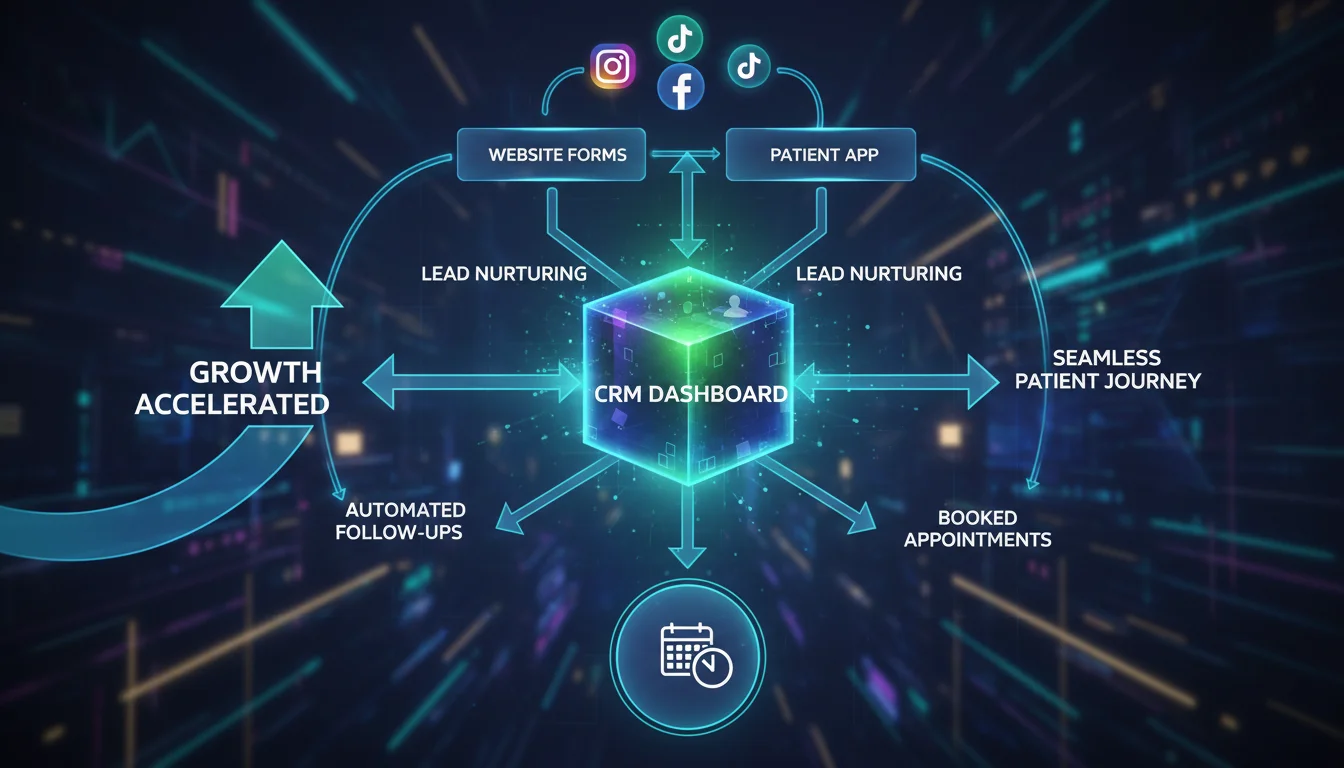
The landscape of cosmetic surgery and aesthetic medicine has fundamentally transitioned from a traditional, referral-based medical paradigm into a highly competitive, direct-to-consumer retail healthcare environment. In this evolved market, the commercial viability of a plastic surgery clinic or medical spa is no longer dictated exclusively by surgical outcomes or the clinical pedigree of its practitioners. Instead, growth is equally dependent upon the sophistication of the practice’s digital patient acquisition strategy, its lead nurturing pipelines, and its longitudinal patient engagement workflows. The modern aesthetic patient journey frequently initiates on visual social media platforms such as Instagram, Facebook, or TikTok, transitions through interactive digital inquiry forms or live web chats, and inherently requires months of automated nurturing before culminating in a high-value surgical consultation.
This paradigm shift necessitates an advanced technological infrastructure that bridges the historic divide between consumer-focused marketing and rigorous clinical documentation. Clinics increasingly require Customer Relationship Management (CRM) software that can aggressively track leads, automate highly personalized follow-ups, centralize disparate communication channels, and precisely calculate marketing return on investment (ROI). However, because these initial marketing inquiries invariably involve sensitive medical information—ranging from prospective treatment interests, such as a rhinoplasty or breast augmentation, to highly confidential before-and-after photographs submitted via direct messaging—the technological framework must comply strictly with the Health Insurance Portability and Accountability Act (HIPAA). The intersection of aggressive consumer marketing automation and stringent healthcare data privacy creates a highly complex operational challenge that practice administrators and clinical directors must meticulously navigate.
This comprehensive report evaluates the premier HIPAA-compliant lead tracking CRMs and hybrid practice management ecosystems available to plastic surgery clinics and medical aesthetics practices. By systematically analyzing technical architectures, total cost of ownership (TCO), integrated artificial intelligence capabilities, verified user satisfaction feedback, and regulatory compliance frameworks, this analysis provides stakeholders with the strategic foresight required to optimize their digital patient acquisition infrastructure.
Decoding the Regulatory Imperative of HIPAA in Lead Generation
In the context of aesthetic lead generation, the demarcation between a standard consumer data point and Protected Health Information (PHI) is exceptionally thin, and crossing it without appropriate safeguards invites severe regulatory consequences. When a prospective patient fills out a web form inquiring about a specific procedure, requests a quote for dermal fillers, or sends a direct message containing an image of a dermatological concern, that data is instantly classified as Electronic Protected Health Information (ePHI) under federal HIPAA regulations. Therefore, deploying generic consumer CRM platforms that lack healthcare-specific security protocols exposes medical practices to catastrophic financial penalties, reputational damage, and legal liability.
Historical Context and the Evolution of Compliance Standards
Enacted in 1996, the Health Insurance Portability and Accountability Act was originally designed to establish unprecedented record-keeping standards, improve the accountability of health insurance coverage, decrease fraud, and encourage healthcare providers to digitize patient records. Over subsequent decades, the legislation was fundamentally modernized through the introduction of the Privacy Rule, the Security Rule, the Transactions and Code Sets Rule, the Enforcement Rule, and critically, the 2013 Omnibus Rule. The 2013 update established HIPAA as a constantly adapting standard that expanded regulatory liability to third-party vendors, fundamentally altering how software companies engage with medical practices. Under this framework, any organization that transmits patient health information is a “Covered Entity” (the clinic), while any technology vendor that comes into contact with, stores, or processes that information on behalf of the Covered Entity is classified as a “Business Associate”.
Cryptographic Standards and Access Controls
A fundamental technological requirement for any CRM operating within the aesthetic space is the implementation of advanced cryptographic standards. The HIPAA Security Rule mandates the secure handling of ePHI both at rest on servers and in transit across networks. Platforms architected for the healthcare sector typically deploy Advanced Encryption Standard (AES) ciphers, specifically AES-256, across their server infrastructure to ensure that intercepted or breached data remains completely obfuscated, anonymous, and inaccessible to malicious actors.
Furthermore, access controls must be rigorously enforced through granular Role-Based Access Control (RBAC). This ensures that front-desk personnel, marketing coordinators, clinical staff, and surgeons only access the specific subsets of patient data required to execute their distinct operational duties, thereby minimizing internal exposure risks. Comprehensive systems also deploy two-factor authentication (2FA) and IP restriction protocols, limiting application sign-ins to designated corporate networks to neutralize threats from stolen credentials.

The Business Associate Agreement (BAA)
The legal linchpin of HIPAA compliance in cloud-based software procurement is the execution of a Business Associate Agreement (BAA). Under HIPAA regulations, third-party software vendors cannot simply claim that their underlying architecture is “secure.” They must be legally willing to execute a BAA, thereby accepting shared statutory liability for data breaches. A standard BAA legally obligates the software vendor to implement administrative, physical, and technical safeguards designed to reasonably and appropriately protect the confidentiality, integrity, and availability of ePHI. It also outlines specific protocols for incident reporting, stipulating how and when the software vendor must notify the clinic of unauthorized access, modifications, or network reconnaissance techniques.
Enterprise solutions like HubSpot and Salesforce explicitly offer comprehensive BAAs to their healthcare clients, though they often restrict this vital legal protection to their higher-priced enterprise subscription tiers. Conversely, specialized aesthetic platforms, such as PatientNow, Symplast, and Nextech, embed the BAA into their standard service contracts, explicitly detailing their responsibilities without requiring premium upgrades. Failure to secure a customized, mutually signed BAA renders any lead tracking software inherently non-compliant, regardless of its AES encryption strength or cloud infrastructure.
Audit Trails and Data Portability Restrictions
Beyond encryption and legal contracts, the HIPAA Security Rule demands rigorous operational auditability. Compliant CRM platforms must maintain immutable, time-stamped logs of every user interaction with a patient record. These logs must track not only the creation and modification of data but also monitor deletions or unauthorized access attempts across the system. Furthermore, administrators must possess the capability to restrict the export of ePHI through Application Programming Interfaces (APIs) or bulk spreadsheet downloads, ensuring that departing employees cannot surreptitiously extract the clinic’s proprietary, highly sensitive lead database to a competitor.
Typology of Aesthetic Practice Software Architectures
The aesthetic software market in 2026 is highly fragmented, with vendors approaching the lead tracking challenge from fundamentally different architectural philosophies. Selecting the optimal system requires carefully aligning the clinic’s operational scale, specific workflows, and budget with the correct software architecture. The market can be broadly categorized into three distinct operational paradigms:
- The first category encompasses Unified Electronic Medical Record (EMR) and CRM Ecosystems. These are end-to-end solutions built to handle the entire patient lifecycle, seamlessly transitioning a marketing lead into a surgical chart, and continuing through to postoperative care and long-term retention.
- The second category features Hyper-Specialized Lead Management Engines. These are agile, marketing-focused CRMs designed exclusively for aesthetic sales pipelines. They operate either as highly efficient standalone platforms or rely on sophisticated bidirectional API synchronization to feed data into traditional clinical EMRs.
- The third category consists of Horizontal Enterprise CRMs.
These are industry-agnostic, infinitely scalable CRM platforms that have been rigorously adapted for the healthcare sector through specialized medical data models, strict compliance overlays, and enterprise-grade BAAs.
Category 1: Unified EMR and CRM Ecosystems
For the majority of small to mid-sized plastic surgery practices and medical spas, the operational friction of utilizing disparate systems for marketing outreach, appointment scheduling, and clinical charting results in profound revenue leakage and severe administrative fatigue. Unified ecosystems attempt to consolidate the entire technology stack, ensuring that a top-of-funnel lead seamlessly and securely transitions into a patient record without the need for error-prone manual data entry by front-desk staff.
PatientNow: The Comprehensive Aesthetic Growth Engine
PatientNow operates as a deeply integrated practice management, EMR, and marketing automation platform specifically tailored for plastic surgery, cosmetic dermatology, and wellness clinics. Its underlying architectural philosophy relies on eliminating the artificial boundaries between a prospective marketing lead and an active clinical chart.
The platform’s CRM functionalities are heavily focused on high-conversion aesthetic workflows, featuring visual sales pipelines, automated email and SMS text messaging campaigns, reputation management tools, and AI-powered marketing engagement protocols designed to save time while maintaining personal patient connections. One of its most significant strategic advantages in lead conversion is its deep integration with RxPhoto, an advanced clinical photography and media management module. Because aesthetic conversions are overwhelmingly driven by visual proof, the ability to seamlessly transition from initial marketing interactions to showcasing interactive 3D morphing tools, side-by-side comparisons, and secure before-and-after photo sharing provides a highly persuasive consultation experience. To utilize this effectively, clinics running PatientNow version 7.0.215.3 or higher with RxPhoto 4.12.2 or higher can automatically sync patient data, mapping submitted forms as PDF documents and images as JPEG files directly into the HIPAA-compliant electronic record under specialized access rights, thereby eliminating redundant uploads.
Despite its robust, all-in-one feature set, comprehensive market feedback indicates a distinct duality in user satisfaction. Verified users frequently commend the platform’s intuitive color-coded scheduling interface, the efficiency of having intake, charting, and marketing housed within a single ecosystem, and its ability to construct rapid, accurate financial quotes for surgeries. However, longitudinal user data from platforms like G2 and Capterra reveals consistent friction regarding complex, cumbersome invoicing procedures, systemic customer support delays, and administrative difficulties when attempting to cancel subscriptions. For practices prioritizing an out-of-the-box solution that deeply merges automated marketing with sophisticated visual clinical documentation, PatientNow remains a primary contender, though its implementation requires dedicated staff training to navigate its denser administrative interfaces.
Symplast: Mobile-First Patient Engagement and Clinical AI
Symplast fundamentally differentiates itself from legacy software competitors by eschewing traditional, desktop-heavy architectures in favor of a 100% mobile-first, cloud-based ecosystem designed natively for iOS and Android environments. This platform is engineered specifically for the modern aesthetic provider who demands untethered, ubiquitous access to patient records, multimedia, and communication channels from anywhere in the world.
Symplast’s lead tracking capabilities are housed within the SymplastCRM module, a HIPAA-compliant ecosystem that captures leads via digital intake forms, automatically deploys targeted drip campaigns, and calculates sophisticated marketing analytics. A highly detailed Key Performance Indicator (KPI) dashboard allows clinics to track referral sources and distinguish between casual prospects and active patients, providing a clear window into marketing ROI. In 2024, Symplast significantly expanded its lead generation prowess by announcing a deep integration with EntityMed, an advanced healthcare technology solution explicitly designed to drive top-line revenue growth and maximize return on investment from aesthetic marketing efforts.
The patient journey within this ecosystem is heavily supported by the Symplast Patient App. This application facilitates two-way, HIPAA-secure text messaging, custom video sharing, and integrated telehealth functionalities. A critical and highly lauded innovation within Symplast is SymplastAI, which utilizes advanced ambient voice technology to generate clinical encounter notes. By quietly listening to the consultation, the AI synthesizes the interaction and automatically generates structured documentation in formats such as SOAP notes, Good Faith Exams (GFE), or Operative Notes, thereby reducing clinical documentation time by up to 50% and allowing the surgeon to maintain unbroken eye contact with the lead.
While users praise the software’s aggressively modern interface and unparalleled mobile capabilities—with some reviewers likening it to the “Tesla of EMR systems”—certain enterprise clinics have reported challenges with data portability and system stability during rapid update cycles. Specifically, users have noted administrative resistance and technical difficulty when attempting to export historical data to competing platforms, highlighting a potential vendor lock-in risk that requires careful legal consideration and data-ownership clauses during the initial BAA contract negotiations.
Nextech and ModMed: Clinical Powerhouses with Acquisition Workflows
Nextech and ModMed (Modernizing Medicine, often referred to via its EMA platform) represent the upper echelon of unified systems, primarily favored by high-volume, multi-location plastic surgery centers, ambulatory surgery centers, and massive dermatology clinics.
Nextech excels in clinical environments requiring advanced surgical billing, complex inventory management for injectables, and seamless multi-location operational synchronization. Its marketing suite is heavily quantitative, providing granular reporting on marketing campaign tracking, up-selling opportunities, and patient retention metrics to maximize revenue. Reviewers consistently applaud Nextech for its highly customizable charting templates designed specifically for plastic surgery workflows, its robust ePHI storage capabilities, and its capacity to manage intense administrative workloads. However, some administrators note that its interface can feel less intuitive and more akin to legacy software compared to modern, cloud-native startups, occasionally suffering from performance latency when many users are active simultaneously.
Conversely, ModMed (EMA) is heavily celebrated for its adaptive learning engine and its interactive, layerable 3D anatomical atlas. This tool allows clinicians to pinpoint injection sites, document dermatological concerns, and map surgical alterations with profound clinical accuracy, a feature highly coveted in aesthetic dermatology and reconstructive surgery. ModMed automatically learns a provider’s top ten diagnoses and counseling verbiage, prepopulating plans to rapidly accelerate the charting process. While ModMed is clinically superior in charting workflows—particularly for specialized treatments—its CRM functionalities are heavily reliant on basic patient portal engagement and communication rather than proactive, aggressive top-of-funnel marketing automation. Clinics selecting ModMed often must augment its clinical superiority with a dedicated, synchronized external CRM to manage high-velocity lead generation.
Table 1: Comparative Matrix of Unified EMR and CRM Ecosystems
| Feature / Platform | PatientNow | Symplast | Nextech | ModMed (EMA) |
|---|---|---|---|---|
| Primary Structural Focus | Marketing, Operations & RxPhoto Integration | Mobile-First Ecosystem, Patient App & Clinical AI | High-Volume Surgical Billing & Practice Management | Advanced Clinical Charting & 3D Anatomical Atlas |
| Lead Tracking CRM | Native (PatientNow CRM with Visual Pipelines) | Native (SymplastCRM with EntityMed Integration) | Native (Quantitative Campaign Tracking) | Basic (Focused heavily on Patient Experience) |
| Artificial Intelligence | AI-Powered Marketing & Reputation Workflows | SymplastAI (Ambient Listening & Encounter Notes) | Intelligent Document Routing & Workflows | Adaptive Learning Engine for Clinical Preferences |
| Platform Architecture | Desktop / Cloud Hybrid | 100% Mobile / Cloud | Desktop / Cloud Hybrid | iPad Native / Cloud |
| Aggregated User Rating | ~3.9 / 5.0 | ~4.0 / 5.0 | ~4.1 / 5.0 | ~4.4 / 5.0 |
Category 2: Hyper-Specialized Lead Management Platforms
Recognizing that comprehensive, clinically heavy EMRs often treat aggressive consumer marketing as a secondary afterthought, a distinct category of hyper-specialized aesthetic CRMs has rapidly emerged.
These platforms act as aggressive conversion engines, capturing top-of-funnel inquiries, nurturing them automatically, and managing the sales pipeline until the lead is financially ready to transition into the clinical EMR software.
Aesthetic Record and LeadAR: The Med Spa Growth Engine
Aesthetic Record has rapidly expanded its footprint, serving over 50,000 users spanning 9,000 medical practices, with a profound focus on non-surgical aesthetic clinics and medical spas. The platform uniquely combines specialized clinical charting—including detailed 3D facial mapping, injection plotting, and precise batch tracking for neurotoxins—with an immensely robust patient acquisition suite.
Its dedicated CRM module, known as LeadAR, functions as a fully integrated sales and marketing automation platform. LeadAR automatically captures inbound traffic 24/7 from social media platforms, including Facebook, Instagram, LinkedIn, and TikTok, alongside optimized web forms, funneling prospects directly into visual sales pipelines. A significant advantage of this system is its intelligent automation of the longitudinal patient journey. Based on clinical purchase tags generated within the EMR (e.g., a patient receiving a Botox treatment), LeadAR automatically triggers customized rebooking reminders, neurotoxin follow-ups, or weekly weight loss check-ins via SMS and email.
Additionally, the platform operationalizes recurring revenue through sophisticated membership and loyalty program management. Clinic administrators can easily configure dynamic VIP pricing, establish minimum commitment terms, route complementary goods into digital patient wallets, and process automated monthly billing. By integrating an AI-powered Review Tool that automatically requests Google reviews the exact moment an appointment is completed, Aesthetic Record actively engineers continuous organic lead generation through improved online reputation management. Furthermore, it offers deep third-party integrations with established marketing tools such as ActiveCampaign, Intuit Mailchimp, and Twilio SendGrid to further extend its outreach capabilities.
Pabau: The Transparent Scaling Solution for Growing Clinics
Originating in the United Kingdom and expanding its presence globally, Pabau targets growing aesthetic, wellness, and plastic surgery practices that require both clinical depth and robust lead management within a unified interface. The system acts as a comprehensive clinical repository, managing consultations, surgical consents, before-and-after photos, and post-operative workflows within a strict framework that complies with both HIPAA in the United States and GDPR in Europe.
Pabau distinguishes itself heavily through its transparent pricing architecture. Unlike competing platforms in the wellness space that extract high percentage commissions on marketplace bookings—such as Fresha, which charges an approximate 20% commission on every new client booked via its marketplace alongside variable payment processing fees—Pabau operates on a flat, predictable per-user subscription model. To streamline clinical workflows and improve the patient experience, Pabau recently integrated “Echo AI,” an automated documentation tool designed to synthesize clinical notes, thereby maximizing the time practitioners spend engaging directly with clients rather than typing records. With comprehensive support for memberships, loyalty programs, and automated marketing outreach bundled into its core offerings, Pabau presents a highly viable, economically predictable alternative for multi-location clinics seeking modern AI integrations.
Ad Vital: The Autonomous Pipeline Engine
Ad Vital is engineered explicitly to combat the most common point of revenue leakage in aesthetic medicine—the approximately 30% to 40% of potential high-value leads lost due to missed phone calls, delayed email responses, or unmonitored social media messages. The platform’s architectural core is an AI-driven virtual receptionist named Kaia, which acts as an outsourced growth engine, ensuring instantaneous 24/7 engagement across all inbound communication channels.
Beyond traditional web forms, Ad Vital addresses the contemporary shift toward direct social commerce by actively monitoring Direct Messages across Instagram, Facebook, and TikTok. The AI instantly engages prospective patients, pre-qualifying them by asking targeted questions regarding their surgical goals, budget constraints, and procedural timelines. This automated qualification prevents clinical coordinators and front-desk staff from expending expensive labor on low-intent inquiries. Furthermore, Ad Vital solves the software fragmentation problem by offering bidirectional synchronization with major legacy EMR systems, including Nextech, PatientNow, and ModMed. This critical interoperability ensures that once a marketing lead converts, their data flows seamlessly into the clinical record, enabling practice administrators to attribute actual surgical revenue to specific top-of-funnel marketing campaigns without relying on manual reconciliation or speculative attribution.
PilotPractice and KloudMD: Visual Accountability and Telehealth
KloudMD, developed by the growth agency PilotPractice, provides a HIPAA-compliant CRM framework specifically optimized for top-tier plastic surgeons seeking to visualize and meticulously control their patient acquisition funnel. The platform centralizes leads from website capture widgets, inbound phone calls, and social DMs into a singular, unified KloudMD inbox.
A unique operational advantage of the KloudMD system is its deeply integrated telehealth infrastructure. This feature allows plastic surgeons to conduct secure, HIPAA-compliant virtual consultations directly within the CRM ecosystem before the patient is ever moved into the formal clinical EMR. This dramatically reduces the friction of out-of-state or high-profile lead conversion, expanding the clinic’s geographical catchment area. By offering highly visual, drag-and-drop sales pipelines, practice managers can actively assign lead ownership to specific staff members, ensuring absolute accountability so that no prospective $20,000 surgical case falls through the cracks due to administrative oversight.
Category 3: Horizontal Enterprise CRMs Configured for Healthcare
For enterprise-level aesthetic groups, private equity-backed roll-ups, massive ambulatory surgery centers, or hospital-affiliated plastic surgery departments, niche aesthetic software often lacks the robust data architecture required for massive-scale analytics, multi-entity reporting, and complex system integrations. In these high-stakes scenarios, deeply customizable horizontal CRMs adapted specifically for healthcare become an operational necessity.
Salesforce Health Cloud (Agentforce Health)
Salesforce Health Cloud, recently rebranded as Agentforce Health, is unequivocally the most powerful, flexible, and resource-intensive CRM available to the global healthcare sector. Unlike standard medical practice management software, which handles the day-to-day back-office tasks like billing and registration, Health Cloud is fundamentally a patient relationship management and interactive care coordination matrix.
Its architectural superiority lies in the “Data 360 for Health” framework, which aggregates clinical data (ingested via deep EMR integrations), demographic information, insurance claims, and behavioral marketing interactions into a single, unified, real-time profile. Health Cloud utilizes advanced predictive AI to prioritize provider referrals, automate intelligent document routing for complex intake forms, coordinate complex postoperative care visits, and orchestrate highly personalized, omni-channel marketing journeys at an enterprise scale.
However, the financial and technical barrier to entry is exceptionally high. Total Cost of Ownership (TCO) analysis, based on over 150 healthcare implementations, indicates that deploying Salesforce Health Cloud for a standard 10-user practice ranges between $385,000 and $625,000 over a three-year period. This staggering figure accounts for base licensing ($300 to $500 per user, per month), mandatory implementation partner fees ($75,000 to $250,000), custom API development requirements ($50,000 to $150,000), and continuous annual maintenance. For single-location plastic surgeons, this represents profound technological overkill; for a 50-location private equity portfolio seeking unified data governance, predictive AI, and infinite scalability, it is an unparalleled strategic asset.
HubSpot: Inbound Marketing with Sensitive Data Compliance
HubSpot has historically dominated the global inbound marketing and sales tracking sector but previously struggled to penetrate the healthcare market due to strict HIPAA regulations regarding data storage.
Recently, HubSpot resolved this vulnerability by introducing specialized “Sensitive Data” properties, enterprise-grade encryption for personal health information, comprehensive audit logging, and the willingness to execute a Business Associate Agreement for its qualifying enterprise customers. HubSpot’s Smart CRM allows aesthetic practices to orchestrate the most sophisticated email and SMS marketing campaigns available on the market, leveraging highly advanced segmentation logic based on precise web behavior, form submissions, and content engagement metrics. The platform’s Service Hub facilitates continuous patient feedback loops and automates post-operative follow-up surveys. However, maintaining strict HIPAA compliance on HubSpot requires purchasing the upper-tier Enterprise licenses, which frequently start at $3,600 monthly, in addition to significant mandatory onboarding fees often exceeding $7,000. Furthermore, because HubSpot is strictly a CRM and marketing engine with no clinical oversight capabilities, clinics must invest heavily in custom API development to synchronize HubSpot’s pipeline data with their clinical EMRs, adding distinct layers of technical complexity to the implementation.
Zoho CRM: The Budget-Conscious Scalable Solution
For practices requiring a highly customizable horizontal CRM without the enterprise-level financial commitment of Salesforce or HubSpot, Zoho CRM provides a highly compelling, budget-friendly alternative. Zoho legally acts as a Business Associate and readily offers a BAA template to its healthcare clients.
However, HIPAA compliance within Zoho CRM is not automatic; it requires deliberate, manual configuration by the clinic’s internal administrative team. To configure the system properly, administrators must navigate through the Security Control and Compliance Settings, explicitly toggle the HIPAA Compliance button, and manually select the specific CRM modules (up to a maximum of 10) that will house health data. Furthermore, administrators must edit layout properties to explicitly mark individual custom fields (such as surgical history, symptoms, or requested treatments) as containing Personal Health Data. Once marked, the system deploys AES-256 encryption on those specific fields and applies strict access restrictions, including blocking data exportation and restricting API transmission to unauthorized third-party applications. While highly cost-effective and flexible, Zoho CRM places the burden of compliance configuration squarely on the practice’s IT staff, making it imperative to systematically design least-privilege roles, strengthen user authentication, and execute rigorous routine audits to maintain regulatory standing.
Table 2: Financial and Strategic Comparison of Horizontal CRMs
| Platform | Target Demographic | Est. 3-Year TCO (10 Users) | HIPAA BAA Availability | Primary Strategic Strength |
|---|---|---|---|---|
| Salesforce Health Cloud | Enterprise / Private Equity | $385,000 - $625,000 | Yes | AI Predictive Workflows & Deep EMR Unification |
| HubSpot | Marketing-Driven Enterprises | $130,000+ ($3.6k/mo + setup) | Yes (Enterprise Only) | Unmatched Inbound Automation & Engagement Analytics |
| Zoho CRM | Budget-Conscious / Tech-Savvy | Highly Variable (Low Cost) | Yes (Upon Request) | High Customizability, DIY Compliance & Low Cost of Entry |
The Integration of Visual Assets in Lead Conversion
In cosmetic surgery and aesthetic medicine, textual descriptions of procedures are secondary to visual proof. A platform’s ability to seamlessly ingest, secure, and present high-resolution imagery is a fundamental component of the lead conversion process. Software platforms must treat clinical photography with the exact same regulatory reverence as a medical history form, as before-and-after photographs inherently constitute ePHI.
Platforms like PatientNow excel in this domain through their integration with RxPhoto. This partnership allows clinics to capture perfectly aligned before-and-after photos, which can then be displayed to leads using interactive photo sliders and morphing tools. Crucially, RxPhoto allows these approved, anonymized images to be pushed directly into marketing tools, website galleries, or design platforms like Canva without breaking compliance, streamlining the creation of marketing collateral.
Similarly, Symplast approaches media management through a true-cloud infrastructure, ensuring that no sensitive images or videos are stored directly on the physical mobile device (iPads or iPhones). Providers can capture images in a designated photo room, organize them into custom-tagged albums, and utilize the media for direct telehealth consultations or secure sharing via the patient app. The seamless integration of visual media management within the CRM dramatically accelerates the consultative sales process, providing the ultimate mechanism for building patient trust.
The Role of Artificial Intelligence in Patient Acquisition
The trajectory of lead management software in the aesthetic sector is increasingly defined by the deep integration of Artificial Intelligence. The most successful clinics in 2026 leverage AI not merely as a technological novelty, but as a core operational mechanism to reclaim human capital, accelerate lead velocity, and engineer superior patient experiences.
Conversational AI and Instant Gratification
The modern aesthetic consumer exhibits a profound demand for instant gratification; an inquiry left unaddressed for several hours often results in the prospect abandoning the funnel and booking a consultation with a competing clinic. Specialized systems deploy conversational AI receptionists that simulate human interaction via text, web chat, and social media, instantaneously answering routine queries about procedure costs, recovery timelines, and surgeon availability. This instantaneous, 24/7 triage ensures that the clinic remains front-of-mind, capturing the lead’s intent at the exact moment it peaks and gracefully routing qualified leads directly into the booking calendar.
Ambient Clinical Intelligence and Post-Consultation Workflow
The integration of ambient AI into the clinical workflow has profound downstream effects on lead management and patient retention. When tools like Symplast’s AI Encounter Notes or Pabau’s Echo AI automatically generate structured medical records by listening to the natural conversation of a consultation, it liberates the provider’s cognitive focus. This technological transition allows the consultation to become a fully engaging, empathetic, and patient-centric sales experience rather than a distracted data-entry exercise. The AI seamlessly formats the dialogue into HIPAA-compliant clinical notes, ensuring regulatory compliance while dramatically enhancing the patient’s perception of attentive, high-quality care.
Predictive Analytics and Automated Reputation Generation
Advanced enterprise CRMs utilize AI to calculate sophisticated patient engagement scoring, evaluating how frequently a lead opens emails, views before-and-after galleries, or interacts with specific social media content. This predictive scoring allows surgical coordinators to ruthlessly prioritize their outbound phone calls, focusing expensive labor exclusively on high-intent leads that exhibit behavioral readiness for surgery. Furthermore, platforms utilize AI to automate reputation management. By automatically deploying localized review requests to patients immediately following a successful treatment, systems engineer a continuous, self-sustaining loop of organic lead generation fueled by five-star online reviews.
Strategic Risks: Interoperability, Data Portability, and Support
While the technological capabilities of modern aesthetic CRMs are formidable, practice administrators must navigate significant, often hidden strategic risks during the procurement and implementation phases.
The Interoperability and Synchronization Challenge
A fundamental operational risk lies in maintaining synchronized data across disparate software systems. If a clinic utilizes a sophisticated clinical tool like ModMed for charting but relies on a separate entity like HubSpot for marketing outreach, the lack of native, bidirectional interoperability requires complex API bridges. If this bridge experiences latency or fails entirely, patient communication becomes dangerously misaligned. For instance, a patient might receive an aggressive promotional email for a facelift mere days after undergoing the exact procedure, severely damaging the clinical relationship and highlighting institutional incompetence. Therefore, platforms offering seamless bidirectional EMR synchronization, such as Ad Vital’s native integrations with legacy systems, drastically reduce operational risk by ensuring the CRM marketing engine relies exclusively on real-time, verified clinical truths.
Data Portability and Vendor Lock-In
The transition to cloud-based ecosystems inherently introduces the threat of vendor lock-in. Aesthetic practices accumulate massive volumes of highly proprietary data over years of operation, particularly high-resolution clinical photographs, detailed financial histories, and custom charting templates. If a clinic decides to transition away from a platform due to rising costs or inadequate features, the extraction of this data must be seamless.
However, consistent market feedback indicates that extracting data from certain proprietary platforms can be administratively hostile or prohibitively expensive, requiring dedicated data migration specialists. Clinics must proactively mandate strict data portability clauses within their BAAs and Service Level Agreements (SLAs), ensuring they retain absolute legal ownership of their ePHI and can execute bulk exports in standardized, interoperable formats without punitive vendor interference or exorbitant extraction fees.
Customer Support and System Stability
Finally, the operational utility of any CRM is completely dictated by its structural stability and the vendor’s dedicated support infrastructure. Several industry-leading platforms face persistent, documented user criticism regarding system latency, frustratingly slow load times, and unresponsive customer service. In a high-volume aesthetic practice, software downtime directly correlates to lost surgical revenue, chaotic waiting rooms, and compromised patient care. Consequently, qualitative evaluations of vendor support—such as the rapid, human-centric support frequently praised by certain cloud-native vendors, contrasted against the structural delays and difficult cancellation procedures reported by users of broader legacy platforms—must weigh heavily in the final procurement decision.
Strategic Conclusions and Future Outlook
The selection of a HIPAA-compliant lead tracking CRM is not merely an IT procurement exercise; it is a foundational business decision that dictates an aesthetic clinic’s growth trajectory, regulatory safety, and operational efficiency. The comprehensive evaluation of the 2026 aesthetic software market yields distinct strategic recommendations based on practice typology and scale:
- First, for high-volume, multi-provider surgical centers and ambulatory surgery facilities, platforms that natively unify intense clinical charting, complex insurance and cash-pay billing, and robust marketing analytics provide the necessary structural rigidity. Nextech and PatientNow operate effectively at this scale. PatientNow holds a distinct edge in direct visual marketing due to its deeply integrated RxPhoto suite, while Nextech remains unparalleled in handling enterprise-grade practice management and high-volume surgical workflows.
- Second, for modern, aesthetics-focused medical spas and non-surgical dermatology clinics, platforms like Aesthetic Record and Pabau offer the optimal balance of specialized clinical tooling with aggressive, highly automated CRM capabilities. Their native support for dynamic memberships, loyalty programs, and neurotoxin batch tracking aligns perfectly with the recurring revenue models that are essential to modern med spa profitability.
- Third, for practices currently suffering from severe revenue leakage at the top of the acquisition funnel, deploying hyper-specialized middleware is the most efficient corrective measure. Clinics struggling to convert digital inquiries should deploy platforms such as Ad Vital or KloudMD alongside their existing EMRs. The implementation of autonomous AI receptionists, 24/7 social DM interception, and visual sales pipelines drastically improves speed-to-lead, effectively plugging critical conversion gaps without requiring a disruptive, practice-wide overhaul of the core clinical software.
- Finally, for massive enterprise organizations, multi-location corporate roll-ups, and private equity portfolios scaling beyond a dozen locations, evaluating horizontal enterprise solutions like Salesforce Health Cloud is imperative. While the upfront implementation cost and required technical maintenance are immense, the ability to unify data governance across a massive network, normalize diverse EMR data, and deploy enterprise-level predictive AI algorithms yields a competitive structural advantage that localized, practice-level software simply cannot match.
Ultimately, technology within the aesthetic sector must flawlessly serve the dual masters of high-end consumer expectation and strict healthcare regulation. By implementing a CRM architecture that proactively nurtures leads through highly personalized, instantaneous, and automated channels while simultaneously enveloping that data in rigorous cryptographic safeguards and binding Business Associate Agreements, an aesthetic practice secures both its revenue pipeline and its legal standing in an increasingly complex and competitive digital economy.