EOR & Payroll Software Comparison 2026: Deel vs. Remote vs. Oyster
Strategic Evolution of Global HR, Payroll, and Employer of Record (EOR) Architecture in 2026

The Maturation of the Global Employment Infrastructure Market
The global employment infrastructure market has traversed a critical evolutionary threshold by 2026, transitioning from a fragmented ecosystem of localized payroll providers into a sophisticated, highly integrated framework encompassing global payroll orchestration, comprehensive compliance, equity management, and comprehensive IT asset lifecycles. As multinational corporations and hyper-growth startups increasingly adopt borderless operational models to access distributed talent pools, the demand for technology-driven platforms capable of navigating complex cross-border regulatory environments has surged. Organizations operating in the contemporary macroeconomic climate are no longer satisfied with disparate vendor networks that create data silos and elevate compliance risks; instead, they demand centralized platforms that offer unified visibility over global headcount, payroll execution, and strategic workforce planning across dozens of jurisdictions simultaneously.
This market maturation has resulted in a distinct bifurcation of the Employer of Record (EOR) and global human resources software landscape. On one end of the spectrum, expansive, all-in-one unified platforms such as Deel and Rippling focus heavily on rapid global deployment, extreme workflow automation, and deep integration with existing enterprise resource planning (ERP) stacks, aiming to consolidate the entire employee lifecycle into a single graphical interface. Conversely, highly specialized EOR platforms like Remote and Oyster emphasize absolute legal security, rigorous intellectual property (IP) protection, ethical remote-first hiring methodologies, and highly localized employee experiences tailored to specific cultural and regulatory contexts.
Concurrently, the integration of generative artificial intelligence (AI) has shifted from experimental, surface-level chatbots to foundational architectural elements within human resources operations. In 2026, AI functions as an indispensable operational copilot capable of drafting customized career frameworks, conducting predictive workforce planning and scenario modeling, synthesizing asynchronous performance calibrations, and providing instant, multi-jurisdictional labor law insights to prevent compliance breaches before they occur. Furthermore, stringent regulatory scrutiny regarding independent contractor misclassification—substantially accelerated by directives such as the 2024 United States Department of Labor (DOL) Final Rule, which refined the “economic realities” test—has compelled these global platforms to develop robust indemnification mechanisms, most notably the Contractor of Record (CoR) model. The regulatory environment has grown highly punitive, with the U.S. DOL recovering over $273 million in back wages and damages for nearly 152,000 workers in a single fiscal year, underscoring the systemic financial risk of misclassification. Consequently, the selection of an EOR or global payroll provider in 2026 is no longer merely an administrative software procurement decision; it is a foundational risk management and corporate scaling strategy.
Comparative Structural Analysis of Tier-1 EOR Platforms: Deel, Remote, and Oyster
Strategic Positioning and Entity Ownership Methodologies
The mechanism by which an Employer of Record operates within a target country—specifically, whether it utilizes a wholly-owned corporate subsidiary or relies on third-party in-country partners (ICPs) and Dependent Contractor Entities (DCEs)—dictates the platform’s speed of execution, the fidelity of its compliance, and the security of a client’s intellectual property.
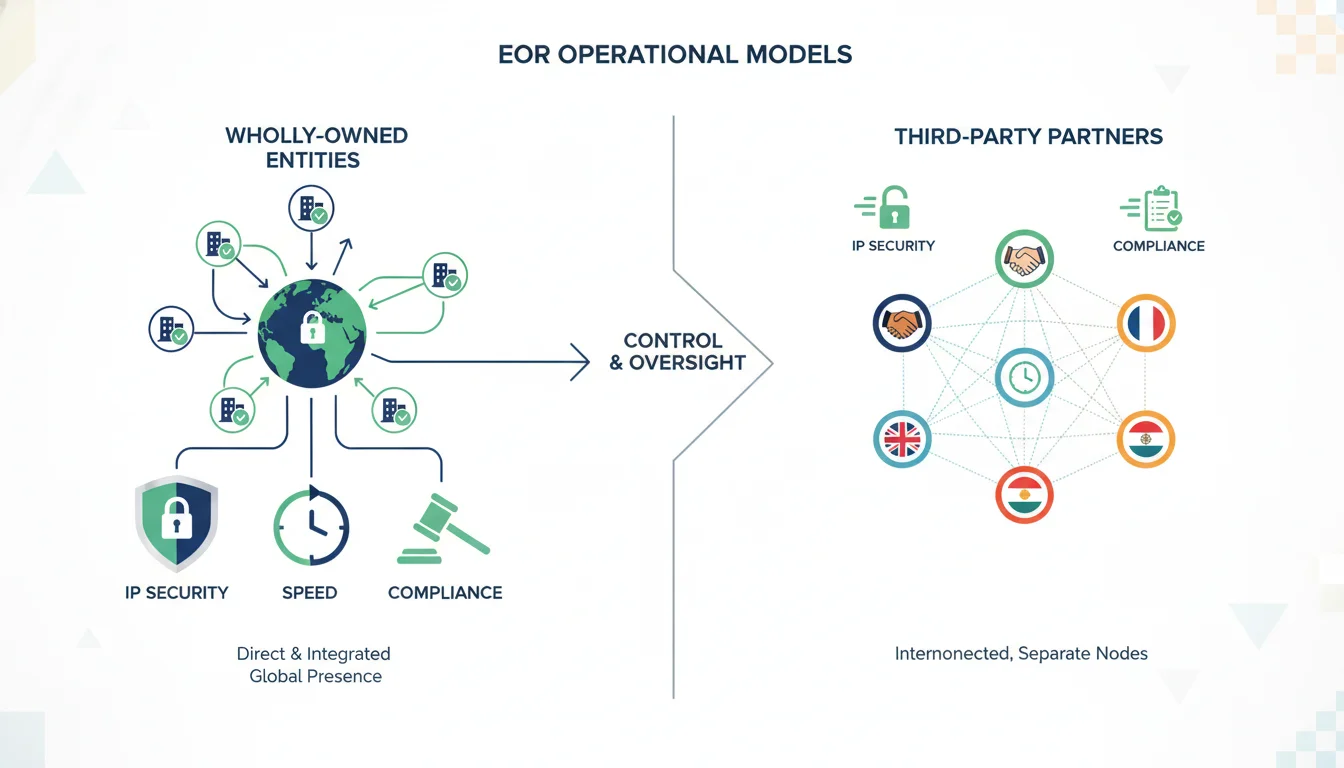
Deel has aggressively pursued the broadest possible global coverage, establishing owned legal entities in over 150 countries. This expansive, proprietary infrastructure enables astonishingly rapid onboarding, often completing the complex employee enrollment, contract generation, and compliance verification process in a matter of minutes to a few days. Deel’s operational philosophy is anchored in automation, immense scale, and serving as a unified technological layer for “mixed workforces,” allowing human resources teams to seamlessly manage direct corporate hires, EOR-based employees, and independent contractors within a single unified dashboard. Deel relies heavily on an in-house payroll calculation engine, executing real-time Gross-to-Net (G2N) calculations natively across more than 50 of its operating countries, minimizing the reliance on external payroll processors.
Remote operates with a slightly narrower geographic footprint, covering over 90 countries; however, it maintains a near-100% owned-entity model in the specific jurisdictions it chooses to serve. Remote’s fundamental strategic differentiation is its prioritization of strict legal security, uncompromising intellectual property protection, and absolute data privacy, holding key certifications such as ISO 27001. By steadfastly avoiding external payroll partners and third-party local entities, Remote minimizes the required coordination steps and retains absolute legal control over the entire employee lifecycle. This architectural decision is highly critical for deep-technology companies, biopharmaceutical firms, and proprietary trading desks that are deeply concerned with ironclad invention assignment clauses and the prevention of codebase leakage. While Remote’s country count is lower than Deel’s, its compliance infrastructure within its operational footprint is arguably more robust and legally resilient.
Oyster provides EOR services across an impressive expanse of approximately 180 countries, achieving this vast global reach through a hybrid operational model that incorporates both owned entities in strategic high-volume markets and highly vetted local partners in emerging jurisdictions. Oyster’s strategic differentiation lies not in raw technological automation, but in its mission-driven, culture-forward operational approach. The platform emphasizes ethical remote hiring practices, robust localized benefits that mirror domestic standards, and the overall quality of the employee experience. Oyster caters heavily to startups, non-governmental organizations, and mid-market enterprises that prioritize social impact, equitable global compensation, and a human-centric approach to distributed workforces.
The Taxonomy of Independent Contracting: Standard Management vs. Contractor of Record (CoR)
The taxonomy of global workers presents significant legal and financial peril for expanding organizations. Regulatory bodies worldwide have fundamentally shifted their auditing frameworks to scrutinize the true nature of employment relationships, targeting organizations that misclassify full-time equivalents (FTEs) as independent contractors to evade payroll taxes and statutory benefits.
To structurally mitigate this risk, leading platforms have bifurcated their contractor product offerings into standard Contractor Management software and premium Contractor of Record (CoR) indemnification services.
| Feature / Service | Standard Contractor Management | Contractor of Record (CoR) |
|---|---|---|
| Primary Use Case | Project-based, low-control, short-term engagements | Full-time-equivalent work, strict regulatory jurisdictions |
| Legal Employer / Agent | Client Company | The EOR Platform (e.g., Deel) |
| Misclassification Liability | Borne by the Client Company | Borne by the EOR Platform (Liability Transfer) |
| Average Monthly Cost | $29 to $49 per active contractor | $325 to $400 per active contractor |
| Financial Requirements | Pay-as-you-go invoicing | Often requires a 1-month salary deposit plus platform fee |
Deel’s standard Contractor Management tier, priced at $49 per month per active contract, provides essential administrative tooling: compliant localized independent contractor agreements, automated W-8BEN/W-9 tax form collection, and multi-currency invoicing capabilities. This tier is highly efficient for engaging genuine freelancers for autonomous, project-based deliverables.
However, for workers whose daily operations heavily resemble full-time employment—especially in strict labor jurisdictions like the United Kingdom (IR35 regulations) or the European Union—Deel offers the sophisticated Contractor of Record (CoR) service at $325 per month.
Under the CoR operational model, Deel acts as the legal Agent of Record (AOR), assuming full legal misclassification liability and providing uncapped indemnification to the client enterprise. Deel legally engages the worker directly, processes all payments through its own infrastructure, and entirely shields the client company from potential tax violations, back-wage claims, and labor disputes. Because Deel becomes legally obligated to pay the worker regardless of whether the client pays Deel on time, this CoR framework requires the client to remit a security deposit equal to one month of the contractor’s wages plus the Deel platform fee.
Competitors Remote and Oyster offer highly competitive standard contractor management software at an aggressive price point of $29 per month, which includes localized compliance checks, quick onboarding, and multi-currency disbursements. While Remote includes an embedded indemnification layer within its core platform architecture to protect against misclassification, Deel’s dedicated, hyper-automated CoR infrastructure represents a premium, high-security safety net specifically designed for large enterprises operating in high-risk jurisdictions that are unwilling to absorb any degree of misclassification risk.
Pricing Architecture, Hidden Fees, and Total Cost of Ownership (TCO)
Evaluating the true financial footprint of a global employment platform requires deep analysis beyond the aggressively marketed base platform fees, necessitating a thorough uncovering of currency exchange (FX) markups, mandatory security deposits, regional compliance surcharges, and payment processing levies.
| Platform | Base EOR Fee (Monthly) | Contractor Fee (Monthly) | Key Financial Considerations & Hidden Cost Vectors |
|---|---|---|---|
| Deel | $599 (Standard) / $899 (Enterprise) | $49 (Mgmt) / $325 (CoR) | 1-month salary deposit; 0.6–2% FX markup; $50–$150 country surcharges; 10-15% benefits markup; 2.9%-3.9% card processing fees. |
| Remote | $599 (Annual) / $699 (Monthly) | $29 | Flat pricing model; transparent FX with no markups; no hidden geographic surcharges; highly predictable Total Cost of Ownership. |
| Oyster | $499 (Annual) / $699 (Monthly) | $29 | Requires refundable EOR salary deposit; comprehensive inclusion of HR expert consultation and offboarding without additional hidden fees. |
| Multiplier | $400 | $40 | Highly competitive baseline entry price; optimal for scaling startups prioritizing immediate cost containment. |
| Remofirst | $199 | Not specified | Extreme low-cost EOR provider; best for highly constrained budgets needing basic compliance coverage. |
Deel’s standard Employer of Record fee is advertised at $599 per employee per month, but the true Total Cost of Ownership (TCO) frequently incorporates multiple hidden financial structures. Firstly, Deel mandates a one-month gross salary deposit per EOR employee, which heavily impacts corporate cash flow and is held in escrow until 30 days after the employee’s offboarding. Furthermore, Deel discreetly applies an FX markup ranging from 0.6% to 2% above the interbank mid-market exchange rate whenever the client’s funding currency differs from the target payroll currency—a fee that is structurally built into the exchange rate rather than itemized transparently on invoices. Additionally, complex and highly regulated labor markets, such as Brazil, France, and India, carry mandatory regional surcharges ranging from $50 to $150 per month above the base platform rate. Clients utilizing credit cards face steep processing fees of 2.9% plus $0.30 in the US/EU, and 3.9% plus $0.30 in the rest of the world. Deel also applies a 10% to 15% administrative markup on non-statutory, supplemental employee benefits. However, for enterprise clients, Deel offers aggressive, unadvertised volume discounts, reducing EOR rates to between $350 and $425 per month for organizations deploying teams exceeding 50 employees, altering the long-term ROI equation.
Remote strategically differentiates itself through a highly transparent, flat-rate pricing architecture supported by a strict “no hidden fees” corporate policy. At $599 per month on an annual contract, or $699 on a flexible monthly basis, Remote deliberately abstains from applying FX markups, and completely avoids the implementation of unadvertised regional surcharges. This pricing transparency allows corporate finance and FP&A (Financial Planning & Analysis) teams to execute highly accurate financial forecasting and headcount planning without the volatility of backend platform surcharges.
Oyster positions its premium EOR service at $699 per employee per month, dropping to $499 for clients committing to annual billing cycles. Similar to Deel, Oyster requires a refundable financial deposit for EOR team members to initiate the engagement and guarantee on-time salary disbursements. However, Oyster distinguishes itself by bundling essential support services—such as deep consultations with regional HR experts, localized employment policy design, and complex termination processing—directly into the base subscription fee, avoiding the nickel-and-dime approach of a la carte administrative billing. For extreme cost-consciousness, platforms like Multiplier ($400/month flat) and Remofirst ($199/month) have emerged as highly viable alternatives, though they often lack the deep integration ecosystems, proprietary entity footprints, and white-glove support SLAs provided by the leading triad.
Transformational 2026 Product Architectures and Platform Capabilities
The first quarter of 2026 witnessed a massive deployment of new product features, AI integrations, and operational workflows across the top EOR platforms, signaling a shift from basic compliance software toward intelligent, autonomous HR operating systems.
Remote’s Q1 2026 Innovations: Automation, Approvals, and GL Syncing
Remote’s product cadence in early 2026 was defined by centralizing operations, eliminating manual HR bottlenecks, and deepening financial integrations. In March 2026, Remote launched a dedicated “Contract Updates” dashboard, centralizing all post-onboarding lifecycle changes—such as salary modifications, contract renewals, legal amendments, and expiring localized agreements—into a single live, auditable view. This eradicates the risk of compliance failures stemming from lost email threads and surfaces pending management approvals systematically.
More profoundly, Remote revolutionized its automation engine by introducing “Multi-flow Branching” and “Wait Steps” to its Workflow Canvas. Multi-flow branching allows disparate organizational departments—such as IT provisioning, Payroll setup, and HR compliance—to execute their respective onboarding tasks simultaneously rather than sequentially, condensing cross-functional process timelines from days to mere minutes. The strategic addition of programmable “Wait Steps” enables HR administrators to build deliberate pauses of up to 90 days into automated workflows. This allows for the flawless, hands-free execution of staggered 30-60-90 day performance reviews, delayed compliance training reminders, and structured probationary evaluations without any manual intervention.
On the financial front, Remote deployed a sophisticated NetSuite integration, allowing payroll General Ledger (GL) reports—which now capture complex employer-level costs, specific local taxes, mandatory levies, and social contributions alongside standard wages—to sync directly and automatically map to specific corporate ledger accounts and departments. This eliminates manual month-end reconciliation errors. Remote also introduced automated “Expense Gross-up Policies,” where the payroll engine automatically calculates and covers the tax gap on taxable employee reimbursements, ensuring the worker receives the exact intended net amount.
Deel’s Q1 2026 Innovations: Modularity, AI Governance, and Operational Scale
Deel’s early 2026 updates focused on enterprise scalability, AI-driven compliance, and granular workflow refinements. Recognizing that massive enterprises do not adopt platforms uniformly, Deel introduced a highly modular architecture, allowing large organizations to adopt specific solutions—such as standalone contractor management or fragmented payroll consolidation—without ripping and replacing their entire tech stack.
In February 2026, Deel entirely revamped its payroll support infrastructure.
Recognizing that complex payroll inquiries were getting lost in unstructured live chats, Deel transitioned to structured “Workbench” processes for all payroll and PEO requests, giving every single inquiry a definitive status, an assigned owner, and a clear path to resolution, complete with guaranteed operational SLAs for enterprise clients.
Deel significantly upgraded its compliance automation by introducing the automated generation of highly specific equity documents, such as S431 forms for workers in the United Kingdom, transforming a historically manual and error-prone legal task into an instantaneous output. Deel’s embedded AI assistant now surfaces directional insights directly to managers, instantly providing multi-jurisdictional HR and compliance guidance across 100+ countries, seamlessly integrated into Slack interfaces. The platform also refined global tax compliance by automatically generating and applying accurate VAT, GST, or HST tax labels on contractor invoices matching the exact localized rules of the worker’s jurisdiction.
Oyster’s Q1 2026 Innovations: Advisory Services and Workforce Intelligence
Oyster focused its early 2026 product strategy on providing deep workforce visibility and supplementing its software with high-level human expertise. Acknowledging that global hiring generates highly sensitive employee relations issues that software alone cannot solve, Oyster launched “People Partner Services”. This premium advisory offering provides clients with project-based access to Oyster’s senior, multi-country HR experts, assisting with everything from international policy design to navigating sensitive, highly regulated employee terminations.
To enhance operational visibility, Oyster released new “Workforce Insights,” providing human resources leaders with a bespoke, data-rich overview of their total global headcount, tenure trends, and geographic distribution. A highly requested “Team Availability Calendar” was introduced to allow managers to instantly identify staffing gaps, track global holidays, and monitor pending leave requests in a single, unified view, optimizing cross-timezone coordination. Recognizing the administrative burden of scaling teams, Oyster implemented bulk payroll modification capabilities and strategically extended its monthly payroll change cut-off date from the 10th to the 15th of the month across almost all direct countries, providing finance teams with critical breathing room. Furthermore, Oyster deepened its ecosystem by launching seamless API integrations with Workable (for applicant tracking) and ADP Workforce Now Canada, enabling one-click candidate porting and eliminating manual data entry.
The Convergence of HRIS, IT Asset Management, and Payroll
Employing an international worker is merely the initial legal hurdle; structurally enabling them with the necessary hardware, secure access to corporate networks, and operational workflows is an equally critical challenge. The market divergence between HRIS-first platforms and EOR-first platforms is highly visible in their approach to Information Technology (IT) asset lifecycle management.
Rippling: The Unified Employee Graph
Rippling represents the zenith of unified, interconnected workforce management software, operating from the foundational premise that employee data should dictate all downstream IT and financial actions. Unlike Deel or Oyster, which utilize cloud connectors to sync data across disparate applications, Rippling operates on a single source of truth known as the “employee graph”.
When an international employee is hired via Rippling’s EOR or global payroll system, this single action automatically cascades across the entire corporate infrastructure. Rippling’s built-in IT management module instantly procures the appropriate hardware, deploys robust Mobile Device Management security protocols, and provisions identity and access management (IAM) credentials to specific cloud applications (e.g., GitHub, Slack, AWS, Salesforce) based strictly on the employee’s department, geographic location, and seniority. Upon termination, Rippling’s automation engine executes an instantaneous, comprehensive offboarding sequence: it immediately revokes all application access to prevent data exfiltration, locks the physical device, triggers final payroll calculations, and initiates the automated hardware retrieval shipping process. With a staggering library of over 650 native integrations, Rippling seamlessly bridges the gap between human resources, localized compliance, and highly secure IT operations, making it the premier choice for scaling technology enterprises that demand absolute operational control.
Deel IT and Remote Device Management
Historically, Deel relied on basic device provisioning or third-party partnerships, but in 2026, the company aggressively expanded its proprietary capabilities with the launch of the “Deel IT” platform. Designed to compete directly with Rippling, the Deel IT “Scale” tier, priced at an additional $133 per user per month, provides centralized access control explicitly tied to Deel HR data. The module includes Device Lifecycle Management, sophisticated Endpoint Protection (EPP) deployment, and 24/7 global IT support for the distributed workforce. However, organizations requiring extreme, edge-case hardware logistics in complex customs environments frequently still rely on integrating Deel with dedicated, specialized IT Asset Management (ITAM) platforms like Workwize for end-to-end global procurement and retrieval.
Remote has similarly expanded its operational footprint to include comprehensive global device management. This ensures that remote engineers operating in restrictive hardware markets receive secure, pre-configured laptops without the client company needing to navigate the labyrinthine complexities of international shipping logistics, customs duties, and localized tax implications. Remote’s platform also features a highly robust native HRIS module that seamlessly integrates these device management functions with time-off tracking, organizational charting, and localized performance management, providing a highly capable alternative for mid-market firms.
Global Payroll Ecosystems for Distributed Tech Teams
For mature organizations that have already undertaken the capital-intensive process of establishing their own international legal entities, Employer of Record services are fundamentally unnecessary. Instead, these multinational corporations require robust, enterprise-grade multi-country payroll (MCP) software to automate complex gross-to-net calculations, remit hyper-local taxes, and unify general ledger reporting across dozens of disparate jurisdictions.
Enterprise Multi-Country Payroll (MCP) Providers
Papaya Global approaches the global payroll market fundamentally through the lens of sophisticated financial technology rather than legacy human resources software. Operating seamlessly across 160+ countries, Papaya Global utilizes a cloud-native SaaS infrastructure dubbed “Payments OS”. This platform is explicitly designed to bypass the inefficiencies, high fees, and opaque settlement times of the traditional SWIFT banking network by utilizing optimized cross-border payment rails.
A cornerstone feature of Papaya is its deployment of “Virtual IBAN” accounts, which allow multinational corporations to centralize their global payroll funding into a single account, drastically reducing the friction of managing dozens of localized bank accounts. Papaya Global excels in executive data visibility, providing enterprise-grade analytics that ingest highly localized, multi-currency payroll data and instantly normalize it into a single, unified financial dashboard. However, its reliance on a vast network of third-party in-country partners can occasionally result in varied support resolution times, and its tiered, volume-based pricing architecture is strategically tailored for rapidly scaling mid-market and enterprise firms rather than early-stage startups.
ADP (GlobalView and Celergo) remains the undisputed, dominant force for massive, legacy multinational enterprises. Boasting coverage in over 140 countries and decades of entrenched, deep compliance expertise, ADP provides managed payroll outsourcing services that cater to organizations navigating the most complex, multi-state, and multi-country tax environments on the globe. ADP’s technological architecture is highly stable and backed by a distributed team of specialists constantly monitoring for cyber threats and payroll fraud. However, ADP lacks the agile, tech-forward IT provisioning, modern user interfaces, and rapid onboarding automations championed by disruptors like Rippling and Deel.
Gusto serves as the optimal, highly efficient payroll solution for domestic U.S.
Technology startups managing remote teams distributed across multiple states. Gusto excels at automated multi-state tax compliance, benefits administration, and seamless accounting integrations. While Gusto integrates directly with Remote to handle international contractors and limited EOR services, its core competency remains deeply rooted in domestic payroll operations, particularly excelling in its integration with specialized R&D tax credit software.
Other notable providers filling specific market niches include Paylocity Global Payroll, which is highly suitable for mid-size companies already utilizing Paylocity domestically that wish to avoid introducing a new vendor for international expansion; Alcor, a highly specialized provider focusing on building tech R&D centers and managing payroll specifically in Latin America and Eastern Europe; and Native Teams, an emerging platform providing low-cost payroll and payment tools specifically optimized for global freelancers, gig workers, and lean startups.
Payments Infrastructure: The Shift to Stablecoins and Real-Time Rails
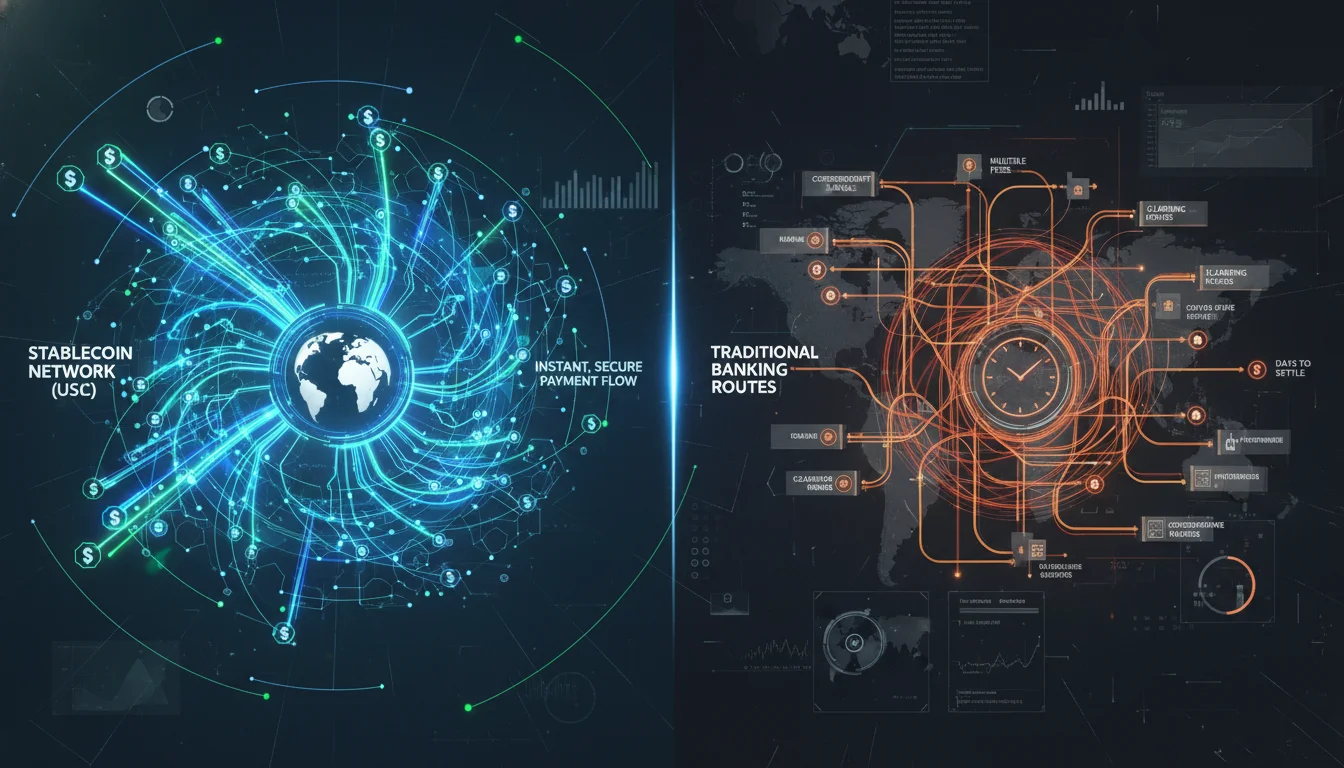
The underlying mechanism of cross-border value transfer is undergoing a radical, technology-driven transformation in 2026. Traditional fiat banking networks suffer from slow settlement times, exorbitant correspondent banking fees, and highly opaque currency conversion spreads. Global payroll providers have responded aggressively by integrating blockchain-based stablecoins and cryptocurrency payout architectures to facilitate frictionless, near-instantaneous global transactions.
| Platform | Stablecoin & Cryptocurrency Support | Fiat Currency Reach | Primary Payment Rail Innovations |
|---|---|---|---|
| Deel | Multi-chain crypto withdrawals; Stablecoin earnings holding & rewards | 120+ Currencies | 15+ withdrawal methods; Deel Card; Native integrations with Coinbase, Mercury, Brex, DolarApp |
| Remote | USDC stablecoin payouts facilitated via Stripe in ~70 countries | 120+ Currencies | High-speed standard banking; Transparent fiat infrastructure |
| Papaya Global | Utilizes stablecoins strictly as a backend settlement rail | 130+ Currencies | Payments OS; Virtual IBAN accounts; Proprietary Non-SWIFT global rails |
| Oyster HR | Traditional fiat only (Digital assets currently unsupported) | 140+ Currencies | Standardized SWIFT and local bank transfers |
Deel unequivocally leads the global employment industry in digital asset flexibility, offering native support for multi-chain cryptocurrency withdrawals across more than 150 countries. Independent contractors and EOR employees on the Deel platform can actively opt to receive portions of their monthly salary directly in stablecoins, hold these earnings in secure digital wallets, and even earn yield rewards on their stablecoin balances, completely bypassing volatile local fiat currencies in emerging markets. Deel also supports an extensive array of alternative withdrawal methods, including Wise, Payoneer, PayPal, and the Deel global debit card.
Remote has systematically partnered with Stripe to enable highly secure USDC stablecoin payouts in nearly 70 countries. This provides a highly stable, dollar-pegged digital alternative for technology workers situated in hyper-inflationary emerging markets, ensuring their purchasing power remains intact. Papaya Global, taking an institutional approach, leverages stablecoin architecture primarily as a backend settlement rail to drastically accelerate international corporate fund transfers, bypassing the sluggish correspondent banking delays inherent in traditional payroll funding. Conversely, Oyster HR maintains a highly conservative financial posture, currently restricting its payment platform entirely to traditional fiat disbursements via standard banking networks.
Complex Compliance: Benefits, Global Equity, and R&D Tax Credits
Attracting and retaining top-tier software engineering and executive talent on a global scale requires the deployment of compensation packages that transcend baseline fiat salaries. Global platforms must seamlessly administer highly localized health benefits, manage the immense tax complexities of global equity grants, and ensure rigorous data compliance to secure vital corporate tax incentives.
Localized Health Benefits and US PEO Operations
A monolithic, unified approach to health benefits fails entirely when applied to a distributed, multi-national workforce. Market leaders Deel and Remote provide access to highly curated, pre-vetted statutory and supplemental benefits packages that are rigorously localized to the specific legal requirements and cultural expectations of each target market.
Remote is frequently recognized for the unparalleled depth, customization, and flexibility of its localized benefits offerings. For example, within the United States, Remote allows client organizations to choose from up to seven different comprehensive health plans with highly customizable employer contribution amounts, whereas Deel offers a more streamlined but inherently restrictive selection of only two primary benefit plans. Oyster partners extensively with premier global insurance providers to deliver comprehensive health and insurance packages in over 165 countries, ensuring that a remote software engineer in Germany receives an employment benefits package culturally and medically equivalent to a peer in Brazil.
For companies operating intensely within the United States, managing state-by-state compliance is equally complex. Both Deel and Oyster have launched robust Professional Employer Organization (PEO) services specifically for U.S. employees. Deel’s U.S. PEO offering, starting at a highly competitive $125 per employee per month, provides full-service co-employment across all 50 states. This includes the comprehensive management of complex employee lifecycle events, automated filing of federal, state, and local taxes, access to premium healthcare networks, and the critical inclusion of Employment Practices Liability Insurance (EPLI) and workers’ compensation coverage to deeply protect the client business from domestic litigation. Remote bolsters its U.S. compliance by partnering with Traliant to automatically assign and operationally track state-specific anti-harassment training for all U.S. PEO employees prior to their start dates, ensuring continuous legal compliance at no additional administrative cost.
Global Equity Management and Stock Options Taxation
Distributing corporate equity—whether in the form of Incentive Stock Options (ISOs), Non-Qualified Stock Options (NSOs), or Restricted Stock Units (RSUs)—to a globally distributed workforce introduces extreme, multi-jurisdictional tax liabilities and stringent regulatory reporting requirements. Different sovereign jurisdictions tax equity grants at wildly different stages of the asset lifecycle: some trigger a taxable event upon vesting, others upon the employee’s exercise of the option, and others strictly upon ultimate liquidity.
Deel systematically addresses this massive compliance hurdle through built-in global equity consulting and deep API integrations with leading equity management platforms such as Carta and LiquiFi. This ensures that complex capitalization table (cap table) data remains completely accurate and synced in real-time, while Deel’s in-house payroll engine automatically calculates and executes the necessary payroll tax withholdings across different jurisdictions, preventing catastrophic tax liabilities for both the corporation and the employee.
Remote tackles this challenge utilizing its dedicated “Remote Equity” framework (powered by its acquisition of Easop). This infrastructure is designed to comprehensively manage global equity and token distributions, handling the labyrinthine tax reporting and direct payroll integration necessary to distribute corporate ownership compliantly across international borders. This technology ensures that highly specific local tax obligations are automatically factored into the employee’s localized payslip, shielding the employer from international tax evasion penalties.
The R&D Tax Credit Imperative and Cross-Border Data Integrity
For technology-centric enterprises, the U.S. Research and Development (R&D) Tax Credit (IRC §41) represents a critical, non-dilutive mechanism for massive cash preservation.
However, successfully claiming this credit while keeping IRS audit risk exceptionally low requires meticulous, granular documentation of specific employee activities, exact geographic locations, and highly verifiable qualified research expenses (QREs).
Fragmented, siloed global payroll systems severely elevate the risk of an IRS or state tax examination, as pulling verifiable data across different international systems often leads to miscalculated expenses. Global EOR and unified HRIS platforms like Rippling, Gusto, and Deel structurally mitigate this audit risk by centralizing all employee demographic data, precise time-tracking, and exact gross-to-net payroll outputs into a single, auditable database. Gusto, specifically tailored for domestic SMBs with some international contractor footprint, actively partners with leading R&D tax specialists to seamlessly and automatically funnel precise payroll data directly into complex tax credit calculation algorithms. For massive global engineering teams, the ability of Papaya Global or Rippling to instantly generate unified, cross-entity financial reports with field-level permissions ensures that tax auditors receive clean, immutably verifiable data regarding exactly where and how engineering capital was deployed.
As global EOR compliance inevitably moves toward strict, real-time, data-driven reporting in 2026, governmental tax authorities are increasingly coordinating sophisticated cross-border audits of EOR activities. Therefore, utilizing platforms that maintain an unimpeachable single source of truth for global payroll variance and statutory reporting is absolutely essential for securing tech R&D credits without triggering devastating compliance failures or financial penalties. When evaluating R&D tax credit providers to interface with these payroll systems, organizations rely heavily on specific criteria: verifiable customer reviews and audit defense success (25% weight), years in continuous business (20%), advanced client-facing technology (25%), and the stability of a partner-led structure versus private equity ownership (10%).
Support Models, Employee Experience, and Ethical Global Hiring
The true efficacy of a global human resources platform is ultimately tested not during routine payroll execution, but when severe operational exceptions occur—such as a missed cross-border wire transfer, an abrupt work visa denial, or a highly contentious, legally complex international termination. The customer support models deployed by these platforms serve as direct reflections of their broader operational philosophies and target demographics.
Support Architecture: Real-Time Resolution vs. Ticket-Based Specialization
Deel has invested extraordinary capital into building an “always-on,” high-velocity support architecture. It operates a 100% in-house, highly trained global support team distributed across 49 countries, explicitly refusing to rely on outsourced customer service call centers. This team provides 24/7 multi-channel assistance across live in-app chat, direct phone lines with callback requests, video calls, email, WhatsApp, WeChat, Microsoft Teams, and highly specialized, dedicated Slack channel integrations for enterprise clients. This aggressive operational model yields exceptional Service Level Agreements (SLAs), with average first-response times consistently hovering around a mere one minute, and an impressive 91% of complex issues resolved during the very first interaction. For highly distributed technical teams where operational friction or downtime costs thousands of dollars per hour, Deel’s real-time responsiveness is viewed as a mission-critical competitive advantage.
Conversely, Remote and Oyster predominantly rely on asynchronous, ticket-based systems and email communication frameworks. While Remote offers reliable 24/5 support, users have occasionally noted that complex resolutions—particularly regarding nuanced offboarding procedures or specific localized legal queries—can experience noticeable delays during peak global business hours. Oyster provides a strict 24-hour SLA for its ticketing system, but the inherently asynchronous nature of email back-and-forth can protract issue resolution times. To successfully counter this structural limitation, both Remote and Oyster heavily emphasize the proactive assignment of dedicated Customer Success Managers (CSMs) and highly specialized regional HR, legal, and payroll experts. This ensures that enterprise clients receive deeply strategic, localized guidance regarding employment law rather than merely resolving immediate software glitches. Emerging competitors like Gloroots also differentiate themselves by offering named CSMs for actionable guidance on payroll exceptions rather than relying on automated chat queues.
Social Impact, Ethical Hiring Practices, and Workforce Intelligence
In 2026, workforce analytics have evolved far beyond mere headcount tracking and basic cost-center analysis. Oyster has deliberately and successfully positioned itself as the premier platform for mission-driven organizations focused heavily on ethical remote hiring and long-term social impact. Oyster provides its clients with profound “Workforce Insights,” systematically tracking global country distribution, specific tenure trends, and equity metrics.
Oyster’s proprietary internal research indicates that a staggering 57% of companies are aggressively planning to hire globally, with new talent hubs rapidly expanding in the Philippines (representing 9% of new hires), the United States (8%), India (7%), Canada (6%), and the United Kingdom (6%). To structurally support this expansion, Oyster has developed intelligent tools that optimize for time zone overlap, ensuring that highly distributed teams are actively designed for real-time collaboration and cultural integration, rather than simply optimizing for aggressive labor arbitrage. Furthermore, Oyster actively campaigns for ethical hiring practices, educating human resources teams on preventing the unethical use of social media in candidate screening (to protect protected-status information) and ensuring absolute transparency in job requirement representations.
The launch of Oyster’s “People Partner Services” in Q1 2026 further solidifies this ethos. This premium HR advisory service grants organizations on-demand access to senior, multi-country HR experts. This service aids rapidly scaling organizations in designing equitable, globally balanced compensation policies, navigating highly sensitive terminations with cultural empathy, and ensuring that diverse global talent in emerging markets is treated with the exact same ethical standards, respect, and compliance fidelity as domestic headquarters employees.
Strategic Synthesis
The global HR and EOR landscape of 2026 is defined by hyper-specialization, intense technological convergence, and unforgiving regulatory scrutiny. The selection of an optimal platform is entirely contingent upon an organization’s specific structural maturity, deep technical requirements, and inherent risk appetite.
Organizations demanding blistering global scale, extreme workflow automation, and maximum flexibility for mixed workforces gravitate toward Deel, utilizing its 150+ owned entities, advanced stablecoin payroll rails, and sub-minute support SLAs. Deep-technology firms requiring absolute legal control, rigorous IP protection, and highly predictable flat-rate pricing infrastructure consistently deploy Remote, leveraging its owned-entity legal shielding and deep workflow branching capabilities. For enterprises seeking the holy grail of absolute unification—merging HR, complex multi-country payroll, and comprehensive IT asset management into a single, omnipotent employee graph—Rippling stands uncontested, powering automated hardware provisioning and granular R&D tax compliance. Mature multinationals operating their own entities rely on the sophisticated financial rails of Papaya Global to bypass SWIFT inefficiencies, while mission-driven organizations prioritizing ethical hiring and equitable global benefits deploy Oyster to ensure human-centric scale. Ultimately, the deployment of global employment software in 2026 transcends administrative utility; it is the fundamental architecture that dictates a corporation’s ability to survive and scale in a borderless economy.