Classroom Management for Engaging Technical IT Students
Classroom Management for IT Subjects: Keeping Highly Technical Students Engaged
Introduction to the Technical Pedagogical Landscape
The landscape of computer science (CS) and information technology (IT) education is defined by rapid technological evolution, dense theoretical concepts, and a highly diverse student population. Managing an IT classroom requires more than traditional pedagogical strategies; it demands a nuanced understanding of cognitive load, collaborative dynamics, and the psychological interplay between humans and computational environments. Historically, practitioners and educational researchers have operated with a wide gulf between them, where academic research often fails to address the lived, practical problems teachers face in technical classrooms. Educational research frequently identifies answerable theoretical questions but neglects the logistical and managerial challenges that primary, secondary, and post-secondary instructors identify as critical to their daily practice.
The modern CS educator is tasked with translating highly abstract, mathematically rigorous concepts into digestible modules while simultaneously managing an environment prone to severe digital distractions and wide disparities in prior knowledge. Administrators of these courses face massive material preparation, the logistical tasks of equitable grading across large enrollments, and the challenge of managing multiple instructors. Novice teachers often find themselves teaching outside their primary area of expertise, feeling isolated, and struggling with insufficient planning time. However, the synthesis of cognitive science, behavioral psychology, and computer science education research provides a robust framework for addressing these challenges. This report provides an exhaustive analysis of classroom management strategies specifically tailored for IT subjects. It explores the management of diverse skill levels, the mitigation of toxic “hero cultures” in collaborative engineering, the psychological phenomena of the “expert blind spot,” and the application of active learning frameworks. Furthermore, it addresses the contemporary challenges of the digital ecosystem, including the paradigm-shifting integration of Generative Artificial Intelligence (GenAI) and its profound implications for academic integrity, critical thinking, and student engagement.
Navigating Learner Variance: The Spectrum of Technical Proficiency
One of the most profound challenges in computer science education is the extreme variance in student readiness and prior knowledge. Unlike sequential disciplines where students generally enter with a uniform baseline, IT classrooms frequently contain a bimodal distribution: absolute novices sitting adjacent to advanced “super-coders” who have been programming independently for years. This disparity creates a volatile classroom dynamic. When instruction targets the median skill level, novices are quickly overwhelmed, leading to frustration and disengagement, while advanced students experience acute boredom, which often manifests as disruptive behavior or academic apathy.

The presence of “super-coders” also introduces significant psychological barriers for novice learners. In introductory courses, the hyper-competence of a few peers can trigger severe impostor syndrome among the rest of the cohort. Novices, observing peers who easily navigate complex syntax or boast about attending summer training boot camps that cover advanced languages like Python, Go, and Swift, often erroneously conclude that they lack an innate aptitude for computer science. This feeling of being a “phony” can persist even into professional programming careers, where individuals constantly feel a gap in their knowledge despite formal education.
Differentiated Instruction in the Technical Domain
To address this variance without resorting to rigid ability tracking—which research indicates can exacerbate inequities and lead to discipline and self-esteem problems—instructors must employ proactive differentiated instruction. Differentiation in the IT classroom involves tailoring the content, process, and product to align with a student’s Zone of Proximal Development (ZPD)—the conceptual space between what a learner can do independently and what they can achieve with guidance. By presenting tasks within this zone, educators foster persistence and mitigate both frustration and boredom. Without proactive differentiation, teachers often find themselves scrambling to provide scaffolds on the fly, relying on extended direct instruction sessions that only a portion of the class needs, and defaulting to activities that fail to serve the extremes of the bimodal distribution.
The implementation of differentiation in computer science requires systematic planning. The following table outlines how core differentiation strategies map directly to IT education:
| Differentiation Vector | Application in IT Classrooms | Intended Pedagogical Outcome |
|---|---|---|
| Content Differentiation | Providing multiple entry points for algorithmic study. Novices may analyze pseudocode or block-based languages, while advanced students analyze production-level code, explore higher-order thinking questions, or act as peer tutors. | Ensures all students are challenged at an appropriate cognitive level without altering the core learning objective, reducing simultaneous boredom and frustration. |
| Process Differentiation | Utilizing flexible grouping. Instructors can pair students for collaborative debugging or allow independent exploration based on learner profiles. It involves designing multiple learning paths. | Respects diverse learning styles, processing speeds, and cognitive profiles, honoring both introverted and extroverted learning needs within the same physical space. |
| Product Differentiation | Permitting students to choose their final project medium to demonstrate mastery. Options might include a written report, an oral presentation, a functional web application, or a digital media project. | Fosters learner autonomy, intrinsic motivation, and a sense of belonging by aligning assessment with personal technical interests and cultural backgrounds. |
The challenge of differentiation lies in its demand on instructional resources. Designing multiple learning paths and managing nuanced grading rubrics is highly time-intensive and complex for the educator. However, the integration of mastery-based tracking—where objectives are decomposed into granular, actionable items—allows students to self-pace. For instance, rather than listing a generic objective like “Using loops,” an instructor utilizes specific criteria such as “Iterating a fixed number of times using for-loops” or “Creating appropriate stopping conditions”. This granularity provides the instructor with clear metrics for targeted intervention and allows advanced students to accelerate through known material.
The Psychology of the Introverted Technologist
In the pursuit of collaborative learning, modern classrooms have heavily shifted toward group work and open-plan desk arrangements, moving away from the autonomous rows of the past. While collaboration is undeniably vital in software engineering, the continuous noise and lack of autonomous processing time can be deeply detrimental to introverted students. These students often require quiet reflection to synthesize complex technical logic and build internal mental models. In disciplines like programming, which demand intense concentration, forcing constant extroverted engagement can lead to cognitive exhaustion. As psychologist Susan Cain noted, students who prefer to work autonomously are sometimes erroneously viewed as outliers or problem cases in heavily collaborative environments.
Educators must honor the introverted identity by balancing collaborative tasks with structured independent processing time. When executing group projects, introverted students often find it difficult to interject into loud brainstorming sessions. Strategies to mitigate this include allowing silent brainstorming periods before group discussions, assigning independent writing or coding modules within a larger group project, and scheduling one-on-one conferences rather than forcing introverts to raise their hands in a crowded lecture hall. By recognizing that collaboration does not necessitate constant verbal interaction, educators can build a more inclusive environment that leverages the deep, focused analytical strengths typical of introverted learners.
Dismantling “Hero Culture” and Cultivating Psychological Safety
In many technical environments, both academic and professional, a destructive paradigm known as “hero culture” frequently emerges. This occurs when a single, highly skilled individual—the “super-coder” or “IT hero”—becomes the sole savior during crises or the primary driver of a team’s success. Society at large often glorifies these highly competitive heroes, affording them disproportionate recognition compared to ordinary contributors. However, hero culture is highly detrimental to collaborative learning and long-term organizational health. It creates a single point of failure, stifles the development of peers, and breeds an environment where asking for help is viewed as a weakness.
When an IT hero constantly resolves incidents without documenting their process or sharing their knowledge, the overall system becomes brittle. In a classroom setting, the hero often commandeers group projects, doing all the technical work while marginalized group members passively observe, thereby learning nothing.
The Transition to Team-Sport Engineering
To prepare students for modern software development, classrooms must aggressively dismantle hero culture and replace it with a process-driven, team-sport mentality. This requires a structural shift in how success is measured, communicated, and celebrated.
Engineering teams are far more effective when they are more than the sum of their parts. Educational leaders must champion a culture that values systematic processes over individual brilliance.
The cultural transformation requires recognizing different behaviors. Instead of celebrating the student who stays up all night to write an entire application alone, the classroom culture should celebrate the “assist.” This includes recognizing the student who takes on a less glamorous task like writing documentation, the student who mentors a struggling peer, or the team that seamlessly covers for an absent member. This shift promotes team collaboration, supports an integrated workflow, and broadens knowledge sharing. Furthermore, when systems fail or code breaks, the response should not rely on the hero to fix it in isolation. Instead, educators should model blameless post-incident processes, where the team collaboratively reviews the failure to understand pitfalls and improve future workflows.
Establishing Team Psychological Safety
The eradication of hero culture is fundamentally linked to the establishment of team psychological safety. Coined by Harvard Business School Professor Amy C. Edmondson in the 1990s, psychological safety describes a work environment where candor is expected and where individuals can speak up, share worries, and acknowledge errors without fear of retribution, embarrassment, or belittlement. In 2012, Google’s Project Aristotle identified this concept as the singular most critical component in successful, high-performing teams.
In an IT classroom, where learning involves constant trial, error, and debugging, psychological safety is not merely a soft skill; it is a cognitive prerequisite for active learning. Research involving first-year engineering students transitioning into problem-based learning environments reveals that active cooperation is often hindered by the fear of making mistakes and facing negative reactions from peers. When students lack psychological safety, they expend immense cognitive energy managing their interpersonal risk rather than engaging with the technical material. They hide their knowledge gaps, copy code without understanding it, and avoid participating in technical discourse. Conversely, an environment high in psychological safety empowers students to iterate, take risks, and learn from their mistakes. Employees with lower psychological safety are four times as likely to indicate a desire to quit their jobs, a metric that easily translates to student dropout rates in rigorous CS programs.
Educators can cultivate this environment through intentional actions:
- Modeling Vulnerability and Debugging: Instructors should openly share their own coding errors. By demonstrating how to use references to fix errors instantly, teachers shift the focus from fearing mistakes to learning from them.
- Structuring Peer Feedback: Implementing community-developed rubrics and teaching “accountable talk” ensures critiques remain constructive. Using sentence stems like “I agree with your logic here, but have you considered…” helps maintain mutual respect.
- Implementing the “Seven Norms of Collaboration”: Derived from the 2008 book The Adaptive School, these norms include pausing before responding, paraphrasing often, asking questions, using data in discussions, and assuming positive intentions from all peers.
Overcoming the “Expert Blind Spot”
A critical barrier to effective IT classroom management and instructional pacing is a cognitive bias known as the “expert blind spot.” As practitioners gain deep, automated expertise in a subject, they lose the ability to recall the cognitive difficulty they faced when initially learning the material. Research into the nature of expertise reveals that elevated performance levels are due to vast amounts of well-organized, domain-specific knowledge and long-term practice. However, this expertise becomes problematic in an educational setting. An expert views a complex algorithmic concept holistically, often forgetting the numerous, granular sub-skills required to comprehend it.
Consequently, experts tend to organize their pedagogy in accordance with the logical structure of the domain rather than the developmental learning needs of novices. This phenomenon frequently leads to pacing that is far too rapid, the skipping of foundational steps, and a failure to anticipate common novice misconceptions. For example, an instructor with advanced training in biological sciences might use a deep sequencing data set to teach a computational algorithm, viewing it as a motivating real-world application. However, they fail to realize that the biological context introduces massive extraneous cognitive load for students who lack that specific domain knowledge. Studies of preservice secondary teachers confirm this bias, showing that participants with more advanced mathematical education consistently misjudge the difficulty of algebra problem-solving for their students.
Pedagogical Mitigation Strategies for the Blind Spot
To bypass the expert blind spot, educators must actively deconstruct their automated knowledge and employ strategies that reveal student thinking in real-time.
Metacognitive Modeling and “Think-Aloud” Protocols:
Instructors should perform “think-alouds” while coding, explicitly articulating their internal decision-making processes, hypothesis generation, and reactions to syntax errors. When instructors articulate their thinking process in response to a bug or a new architecture, they model critical problem-solving skills. This demystifies the programming process, showing students that expertise is not the absence of errors, but rather the possession of robust strategies for resolving them. Furthermore, explicitly teaching students “how to learn”—recommending evidence-based approaches like self-testing, spaced practice, and interleaved practice—helps novices develop their own metacognitive frameworks.
Live Coding over Static Demonstration:
Presenting pre-written, perfect code on a presentation slide obscures the messy reality of software development and exacerbates the expert blind spot. Live coding—where the instructor types and compiles code in real-time in front of the class—is highly effective because it puts the “how” front and center. It forces the instructor to pace themselves at the speed of typing, creating natural pauses for students to process the information. When the instructor inevitably makes a typo or logic error, it provides an authentic, unscripted opportunity to model debugging and resilience. Comparing the instructor’s mental models with students through “think-pair-share” exercises further bridges the gap between expert assumptions and novice reality.
Cognitive Load Management: Chunking, Scaffolding, and Pacing
The theoretical nature of computer science—encompassing discrete mathematics, memory allocation, algorithms, and application development—places an enormous burden on a student’s working memory. Cognitive psychology, dating back to George Miller’s 1956 research, dictates that working memory has strict capacity limits, typically able to hold only about seven chunks of novel information simultaneously, and can only actively work on roughly four. If a technical lecture exceeds this capacity, students experience cognitive fatigue, overload, and a complete cessation of learning.
The Segmenting Principle and Content Chunking
To manage this immense cognitive burden, instruction must rely heavily on the segmenting principle, commonly known as “chunking.” Chunking involves breaking down massive, complex systems from a whole into smaller, discrete, logically related units. By grouping related pieces of information into manageable segments, educators reduce extraneous mental load, allowing students to transition information from short-term working memory into long-term schema storage more efficiently.
In a practical IT setting, this means abandoning the traditional 60-minute continuous lecture. Modern instructional design suggests that lecture videos or direct instruction segments should be kept short, ideally around 10 to 15 minutes, depending on topic complexity. After a short chunk of instruction, the class should immediately transition into an active processing task. For example, station rotations can allow students to spend intentional time processing small chunks of instructional content, solving specific algorithmic problems before moving to the next concept. This spaced practice ensures that the first chunk is cognitively secured before new variables are introduced, maximizing the “germane cognitive load”—the mental effort directed toward creating actual learning and comprehensive understanding.
Scaffolding Complex Architectures
Scaffolding complements chunking by providing temporary structural support that is gradually removed as the student gains competence and becomes a self-regulated learner. This requires careful planning and initial assessment of prior knowledge. In the early stages of learning a complex programming language, an instructor might provide guided notes, interactive 3D models of data structures, and automated feedback systems. As the term progresses, these scaffolds fade. For example, the instructor might initially provide a complete backend database and require the student only to write the frontend API calls. Eventually, the student is tasked with designing the entire full-stack architecture independently.
This gradual release of responsibility ensures that students are continually operating at the edge of their competence without plunging into frustration.
CS Unplugged: Removing Syntactic Overhead
When teaching pure computational theory to advanced or novice students—such as searching algorithms, network routing, or information hiding—the syntactic demands of a programming language can act as a massive barrier to conceptual understanding. The “CS Unplugged” methodology offers a profound pedagogical solution by teaching computer science without computers.
Through engaging, kinesthetic activities using physical objects like cards, strings, and crayons, students act out complex algorithms. The curriculum includes a wide array of theoretical topics mapped to physical games:
- Information Theory / Binary: “Twenty Guesses” and “Count the Dots” using physical cards to represent binary states and data representation.
- Routing and Deadlock: “The Orange Game” mapping network traffic and bottlenecks using physical movement.
- Searching & Sorting Algorithms: “Battleships,” “Lightest and Heaviest,” and “Beat the Clock” sorting networks where students physically walk pathways to compare variables.
- Minimal Spanning Trees: “The Muddy City” activity focusing on optimization and graph theory.
By completely removing the cognitive load of syntax compilation errors, IDE navigation, and typing speed, students can focus entirely on the pure logic and efficiency of the algorithm itself. Educational literature indicates that utilizing these unplugged activities prior to engaging in computer-based coding leads to deeper semantic understanding, better engagement, and improved long-term outcomes in the same amount of instructional time.
Active Learning Frameworks in Theoretical Instruction
The traditional didactic lecture, while efficient for transmitting information, is highly inefficient for facilitating deep comprehension in STEM fields. Historically, most computer science undergraduate courses teach students how to think sequentially, often lagging behind industry demands for complex problem-solving like parallel programming. However, evidence overwhelmingly suggests that active learning methodologies—where students are forced to engage, reflect, experiment, and interact with the material—yield vastly superior academic outcomes. Meta-analyses of undergraduate STEM courses reveal that active learning produces an average effect size of 0.47 compared to traditional classes, representing an improvement of about half a standard deviation. Furthermore, active learning significantly narrows achievement gaps for underrepresented minorities and low-income groups.
Despite the perception that active learning carries higher risks—such as students steering discussions off-topic—allowing students to relate new content to their previous knowledge creates stronger mental links. Implementing active learning in a dense CS curriculum requires highly structured frameworks to be effective.
Peer Instruction and ConcepTests
Developed by Harvard physicist Eric Mazur, Peer Instruction (PI) is a research-backed pedagogy designed to disrupt the passive lecture and force active cognitive engagement, even in massive lecture halls. The core mechanism of PI is the “ConcepTest,” a short, conceptual multiple-choice question that targets known student misconceptions rather than mere rote memorization.
The implementation follows a strict, timed protocol:
- Individual Commitment (1-1.5 minutes): The instructor poses a question. Students are given a brief period to think and must commit to an initial answer individually, often using clickers or web-based polling devices, without consulting peers.
- Peer Discussion (2-3 minutes): If the correct response rate is intermediate, the instructor directs students to form small groups of two to three. Students are tasked with discussing their choices, aiming for consensus, and explicitly explaining why the alternative answers are incorrect.
- Re-polling (30 seconds): After the discussion, students answer the exact same question again to lock in their final, post-discussion logic.
- Debrief (2-5 minutes): The instructor reveals the correct answer and explains the underlying logic, dynamically adjusting the subsequent mini-lecture based on the prevalence of remaining misunderstandings.
The efficacy of PI lies in the peer discussion phase. Because peers have only recently mastered the concept themselves, they lack the “expert blind spot” that hinders the professor. They can explain the reasoning using language and analogies that perfectly align with their fellow novice’s cognitive framework, frequently resulting in dramatic improvements in conceptual understanding.
Just-in-Time Teaching (JiTT)
Just-in-Time Teaching (JiTT) is a synergistic pedagogical strategy that bridges the gap between out-of-class preparation and in-class activities. Originally developed for university physics but highly applicable to computer science, JiTT relies on a feedback loop driven by brief web-based assignments.
Hours before a lecture, students complete a “warmup exercise” containing conceptual questions regarding the upcoming reading. The instructor reviews these submissions immediately prior to class, grouping responses into clusters that reflect similar thinking processes. This allows the instructor to identify common misconceptions, address gaps in understanding, and dynamically alter the lecture to target those specific knowledge deficits. The instructor may anonymously quote student responses during class—starting with “useful wrong answers” and ending with correct examples—to show students that their input directly shapes the instructional time.
The fusion of JiTT and Peer Instruction is incredibly powerful. JiTT addresses often neglected areas like spaced practice and provides the instructor with precise data on where students are struggling before they even enter the room. This data allows the instructor to select PI ConcepTests that directly target those specific vulnerabilities, creating a highly responsive, customized classroom experience where no instructional time is wasted covering concepts the students already intuitively grasp.
Collaborative Pedagogies: Peer Tutoring and Immersive Hackathons
The Nuances and Risks of Peer Tutoring
Peer tutoring pairs students for the purpose of mediating each other’s learning, heavily relying on the zone of proximal development. A profound benefit of this model is the “protégé effect.” Educational psychology studies demonstrate that when a student is tasked with teaching a concept to a peer—or even a digital avatar—they exert more effort than when studying solely for their own test. In the process of teaching, the tutor must reorganize their own semantic networks, clarify their mental models, and chunk the information into understandable language. Consequently, the act of teaching deepens the tutor’s own mastery of the subject while building their self-confidence and communication skills.
However, peer tutoring carries significant pedagogical risks. Educational research by Graham Nuthall indicates that while students receive the vast majority (approximately 80%) of their feedback from peers, a massive portion of that unmonitored feedback is factually incorrect. If peer tutoring is implemented loosely, it can result in the rapid, unchecked propagation of deep technical misconceptions. As studies from the Education Endowment Foundation (EEF) have shown, poorly structured peer tutoring can yield negative results. To mitigate this, educators must tightly structure the tutoring environment, provide clear rubrics, train students on how to give feedback, and actively monitor the exchanges to ensure pedagogical accuracy. Utilizing same-age peer tutoring models during small-group rotations allows the instructor to oversee these interactions while maximizing engagement.
Hackathons as Applied Project-Based Learning
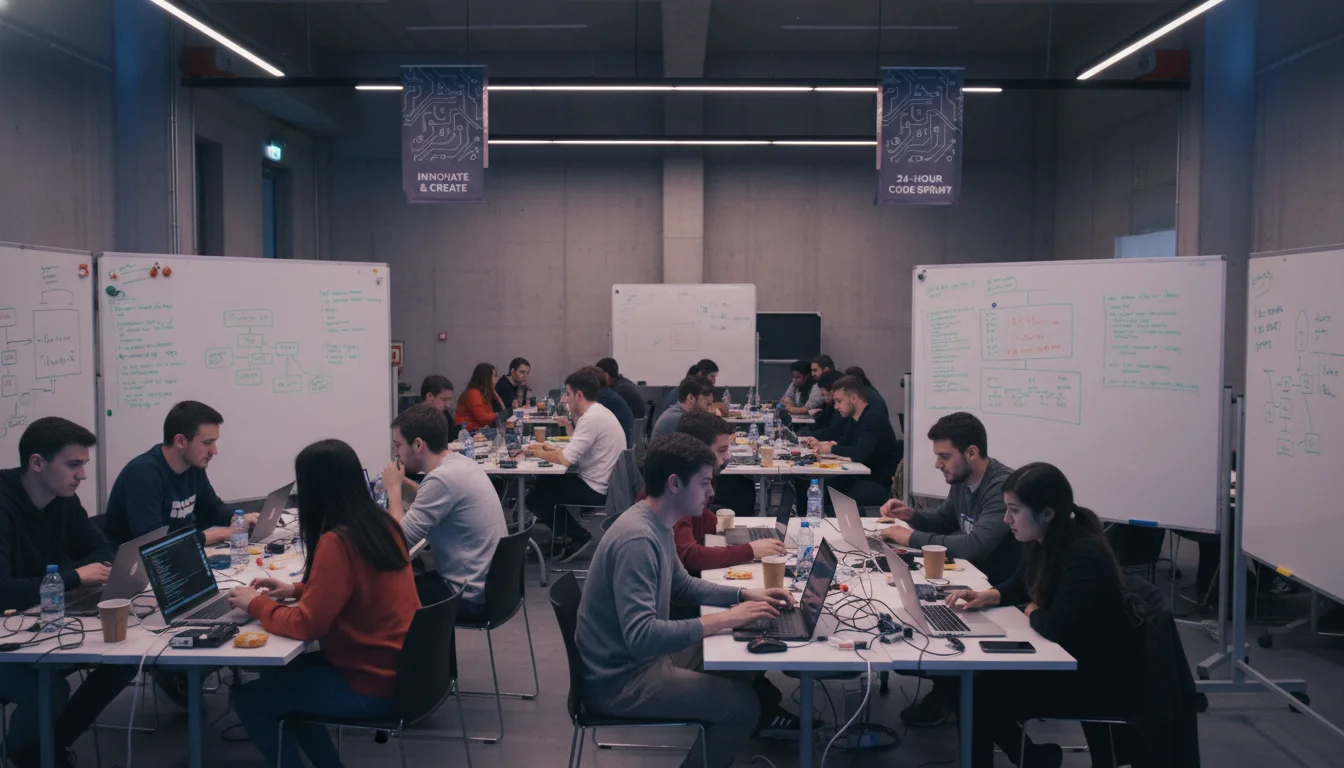
To synthesize theoretical knowledge with authentic problem-solving, educators are increasingly bringing “hackathons” into the CS curriculum. A hackathon is a time-bound, high-energy development model where interdisciplinary teams collaborate to propose and build a solution to a real-world “wicked problem”—a complex issue with no single correct answer that spans multiple disciplines.
Hackathons serve as the ultimate vessel for Project-Based Learning (PBL) and Design Thinking. They force students to engage the “4Cs”—collaboration, creativity, critical thinking, and communication—moving beyond theoretical learning to authentic creation. Furthermore, they break down the siloed nature of traditional education. A successful hackathon team is carefully balanced and relies on a triad of distinct roles:
- The Hacker: The student focused on coding, tinkering, and the technical execution of bringing the idea to life.
- The Designer: The student focused on aesthetics, user interface (UI), user experience (UX), and empathetic human-centric design.
- The Hustler: The student focused on the business model, interviewing potential users, project management, and delivering the final pitch.
Implementing a hackathon requires logistical precision.
Venue setups must differentiate between workshop seating (classroom style) and hacking seating (banquet-style circular tables for 10) to facilitate communication. In the weeks leading up to the event, educators should engage students in 5-15 minute “mini warm-ups” that mimic the design thinking process: Define the Problem, Generate Ideas, Develop Solutions, Prototype, Evaluate, and Present. By integrating this model, educators provide an environment that tolerates failure, encourages rapid iteration, and perfectly mirrors the chaotic, collaborative reality of the tech industry, far removed from the sterile environment of traditional textbook learning.
Managing the Digital Environment: Distractions and AI Integration
The modern IT classroom is saturated with digital devices, creating unprecedented opportunities for learning alongside unparalleled vectors for distraction. Managing this digital ecosystem is perhaps the most acute classroom management challenge of the modern era.
Re-evaluating Digital Distraction Frameworks
For nearly two decades, university and high school instructors have struggled with student multitasking. The traditional response has been highly punitive—banning laptops, strictly enforcing “no device” policies, or utilizing a “three-strikes” rule resulting in severe grade deductions. However, research strongly indicates that these authoritarian frameworks are largely ineffective at modifying long-term behavior. As classroom culture becomes inextricably linked to digital habits, and with global data showing that 30% of students across OECD countries report being distracted by digital devices in most lessons, schools must transition from emergency containment to intentional practice.
Effective distraction management relies on behavioral change frameworks that foster self-regulation rather than relying on surveillance. The behavioral change framework requires helping students observe their behavior, make realistic decisions, and commit to internal management. A proven four-step strategy for designing this learning experience includes:
-
Step 1: Predict
Action: Present students with an empirical study (e.g., Glass & Kang 2019 on device access) and have them debate and predict the outcomes.
Pedagogical Purpose: Surfaces both correct ideas and misconceptions regarding human multitasking limits.
-
Step 2: Share
Action: Reveal the actual data. For example, showing that exam performance was poorer for all students in device-permitted classes, including those who didn’t use devices (the bystander effect).
Pedagogical Purpose: Confronts students with objective reality without making them feel foolish or personally attacked.
-
Step 3: Reflect
Action: Devote class time for students to create specific, personal mitigation plans.
Pedagogical Purpose: Encourages self-regulation techniques like turning off notifications, using focus modes, or scheduling planned device breaks.
-
Step 4: Integrate
Action: Build moments into the course for students to revisit and monitor their progress.
Pedagogical Purpose: Ensures the behavioral change is sustained and continuously evaluated.
Concurrently, AI-enhanced classroom management tools are evolving from punitive surveillance to proactive support. Modern platforms (such as Blocksi, SchoolAI, ClassDojo, and Otus) can analyze attendance, assignment completion, and browsing patterns to identify behavioral trends weeks before a crisis occurs. For instance, by recognizing a pattern of disengagement following weekend transitions, an AI tool can flag a student’s profile, prompting the educator to initiate a preemptive check-in or assign a specific morning job to redirect focus. This shifts the classroom dynamic from reactive discipline to proactive intervention, allowing teachers to address issues before learning stalls.
The Generative AI Paradigm Shift
The integration of Large Language Models (LLMs) and Generative AI (GenAI) such as ChatGPT, GitHub Copilot, and Claude has fundamentally destabilized traditional computer science education. While the tech industry rapidly adopts these tools for massive productivity gains, the educational sector is grappling with their impact on foundational skill development, academic integrity, and cognitive effort.
A dual perspective exists regarding GenAI in the classroom. Students were quick to embrace these tools, with surveys indicating almost 90% of college students used them within months of release. An in-depth mixed-methods study of CS and Software Engineering students identified six distinct categories of GenAI usage, highlighting its strategic adoption:
-
GenAI Usage Category: Learning Enhancement
Prevalence: 29.2%
Description: Using AI for personalized tutoring, explaining complex concepts, and debugging support.
-
GenAI Usage Category: Productivity and Efficiency
Prevalence: 28.1%
Description: Automating boilerplate code, generating basic scripts, and formatting data.
-
GenAI Usage Category: Research and Info Processing
Prevalence: 15.7%
Description: Summarizing documentation and finding specific library syntax.
-
GenAI Usage Category: Creativity and Ideation
Prevalence: 13.9%
Description: Brainstorming project architectures and generating design paradigms.
-
GenAI Usage Category: Problem-Solving
Prevalence: 8.2%
Description: Overcoming specific algorithmic roadblocks.
-
GenAI Usage Category: Accessibility Support
Prevalence: 4.9%
Description: Translating text, adjusting reading levels, and providing accommodations.
Despite these benefits, educators are deeply concerned about the erosion of critical thinking and the inhibition of social development. Empirical surveys of knowledge workers reveal a concerning psychological trend: higher confidence in GenAI systems correlates directly with a self-reported reduction in the cognitive effort expended on critical thinking. Conversely, higher self-confidence in one’s own skills correlates with more critical thinking. In a learning environment, students may succumb to an illusion of competence, believing they have mastered a concept simply because an AI generated a working solution for them, leading to severe overconfidence in their skill mastery.
Shifting the Nature of Critical Thinking
GenAI does not eliminate the need for critical thinking; rather, it shifts its locus. The cognitive burden moves away from the generation of syntax and toward the verification, response integration, and task stewardship of outputs. To prepare students for an AI-augmented workforce, IT curricula must evolve to assess evaluative judgment rather than pure rote generation.
Educators should pivot toward assignments that require students to act as code reviewers for AI-generated scripts. Tasks might involve prompting an LLM to generate an algorithm, and then requiring the student to identify edge-case failures, analyze algorithmic complexity, or correct inherent biases in the AI’s logic. By embedding critical thinking into technical tasks—such as evaluating algorithmic bias or analyzing the limitations of AI-generated code—educators force students out of passive acceptance and back into an active, critical role.
Maintaining Academic Integrity in the GenAI Era
In an era where unauthorized content generation is frictionless, maintaining academic integrity requires a developmental rather than purely punitive approach. The European Network for Academic Integrity (ENAI) recommends introducing GenAI alongside ethical frameworks, allowing students to develop skills to work with ubiquitous technology responsibly. Fostering integrity focuses on the six fundamental values: honesty, trust, fairness, respect, responsibility, and courage.
Clear, transparent frameworks must be established for acceptable AI usage. Assessments should be designed to prevent academic misconduct—such as fabricating empirical data, translating someone else’s work, or uploading sensitive participant data without consent. Instead of relying solely on unreliable AI detectors, assessments should require students to submit their iterative prompt history, save copies of GenAI outputs used, and provide an architectural justification that explains why the generated code works. By emphasizing the process of learning and requiring students to verbally defend their technical architecture, educators ensure that graduates remain robust, honest, and truly skilled.
Systemic Implementation: The PACE Framework
Transforming the IT classroom cannot happen in isolation; it requires systemic, district-level support. Frameworks like the Programming the Acceleration of Computing Education (PACE) model demonstrate how to execute this change equitably. Funded by an Education Innovation and Research (EIR) grant, the PACE intervention successfully increased middle school student understanding and participation in CS by focusing on three key systemic components:
-
- District-Level Commitment: Formation of district stakeholder councils (DSCs) focused on providing access to all students, pushing past the traditional self-selection bias of advanced CS classes.
-
- Teacher Training: Utilizing comprehensive professional development, such as the Code.org CS Discoveries curriculum, to support teachers who may not have a formal background in computer science.
-
- Mandatory High-Quality Curriculum: Requiring all students to enroll in a CS curriculum that meets rigorous digital literacy standards, transitioning CS from an elective afterthought to a foundational requirement.
Implementing these changes systemically ensures that the active learning strategies, psychological safety initiatives, and differentiation tactics discussed throughout this report are supported by administrative policy, providing the necessary resources and time for educators to fundamentally alter their teaching paradigms.
Conclusion
The effective management of an Information Technology classroom is a highly complex synthesis of cognitive science, organizational psychology, and technical rigor. As the disparity in student skill levels continues to widen, educators must abandon one-size-fits-all didactic lectures in favor of dynamic, differentiated instruction.
Recognizing the psychological needs of introverted learners and the dangers of cognitive overload, instructors must employ pacing strategies like chunking and utilize CS Unplugged methodologies to make the densest theoretical concepts accessible without the barrier of syntactic overhead.
Furthermore, the culture of the technical classroom must be aggressively managed. The toxic, individualistic “hero culture” must be dismantled and replaced with collaborative, process-driven environments. Establishing team psychological safety allows students to embrace failure, view debugging as a communal, iterative process, and engage deeply in active learning frameworks like Peer Instruction, Just-in-Time Teaching, and immersive Hackathons.
Finally, the dawn of Generative AI and ubiquitous digital distraction requires a profound shift in pedagogical philosophy. Rather than engaging in an unwinnable, punitive arms race of surveillance, educators must foster behavioral self-regulation. By shifting the focus of instruction from mere syntax generation to critical verification, architectural defense, and algorithmic evaluation, IT educators can ensure that their students do not merely survive the automation of coding. Instead, they will emerge as the highly skilled, critically thinking, and ethical engineers required to lead the future of the technology industry.