Digital Marketing for Indian Wedding Services & Venues
Digital Marketing for Wedding Venues and Services in India
Industry Overview
The Indian wedding industry is a colossal economic ecosystem, driven by a synthesis of deep-rooted cultural heritage and rapidly evolving modern consumer aspirations. Transitioning from a highly fragmented, informal network of local artisans and familial recommendations into a structured, commercially dominant sector, the industry currently ranks as the second-largest wedding market globally. Amplified by strategic national initiatives such as the “Wed in India” push championed by Prime Minister Narendra Modi, the sector encompasses a vast array of specialized services, ranging from heritage hospitality and luxury catering to bespoke bridal fashion, multi-city logistics, and elite event coordination.
Current Market Size, Growth, and Trends
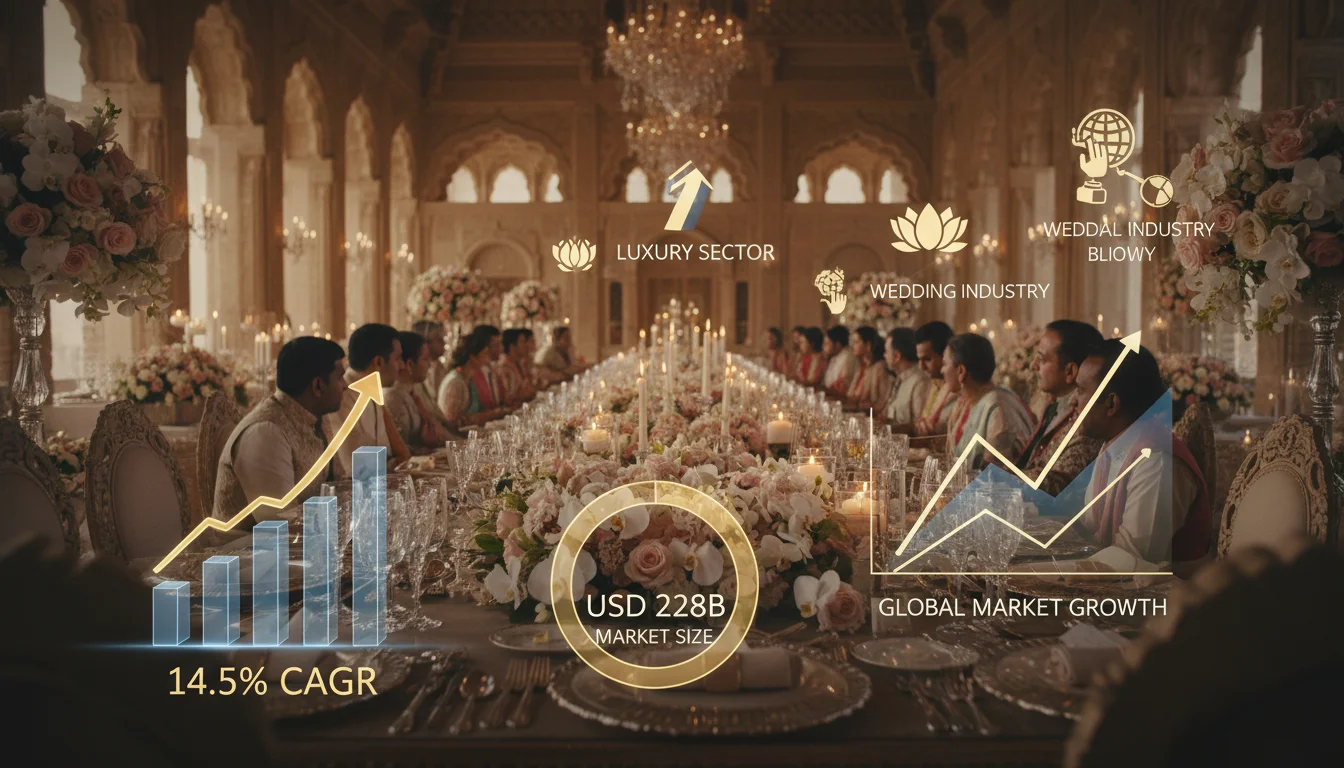
The financial magnitude of the Indian wedding services market is staggering, demonstrating exceptional resilience and aggressive expansion. Quantitative analyses indicate that the market was valued between USD 103.93 billion and USD 105.55 billion in 2024. Economic forecasting models project this valuation to surge dramatically, reaching an estimated USD 228.69 billion to USD 238.18 billion by 2030, propelled by a formidable compound annual growth rate (CAGR) ranging from 14.3% to 14.5% over the forecast period. This macro-level economic velocity is mirrored in the performance of major hospitality and tourism stocks associated with the sector, where entities such as Chalet, EIH Ltd, Indigo, and Ethos Ltd reflect significant market capitalizations driven, in part, by event-based hospitality revenues.
At the micro-economic level, consumer spending exhibits a steep upward trajectory. The average cost of hosting a wedding celebration in India escalated from Rs 20 lakhs in 2022 to approximately Rs 29.6 lakhs in 2024, before climbing further to Rs 39.5 lakhs by early 2025—an 8% year-over-year increase reflecting both inflationary pressures and elevated experiential demands. Regional disparities are notable, with cities like Jaipur leading the demographic with an average wedding expenditure of Rs 73 lakhs. Venue booking and catering services represent the lion’s share of this capital deployment, accounting for over 30% of the total market revenue. On average, booking physical venues requires an expenditure of Rs 6 lakhs, though 40% of demographics report spending Rs 7.5 lakhs, and nearly a third invest Rs 10 lakhs or more solely on the location. Furthermore, the financial dynamics are evolving, with the average wedding loan size now standing at Rs 15.5 lakhs, indicating a shift toward structured financial planning.
- Overall Market Value: USD 103.93B - 105.55B (2024-2025 Estimate) rising to USD 228.69B - 238.18B (2030 Projection); 14.3% - 14.5% CAGR.
- Average Domestic Wedding Budget: Rs 39.5 Lakhs (8% YoY Increase).
- Average Destination Wedding Budget: Rs 51.1 Lakhs.
- High-End Budget Allocation: 17% of consumers spend over Rs 50 Lakhs.
- Venue & Catering Market Share: Greater than 30% of total revenue.
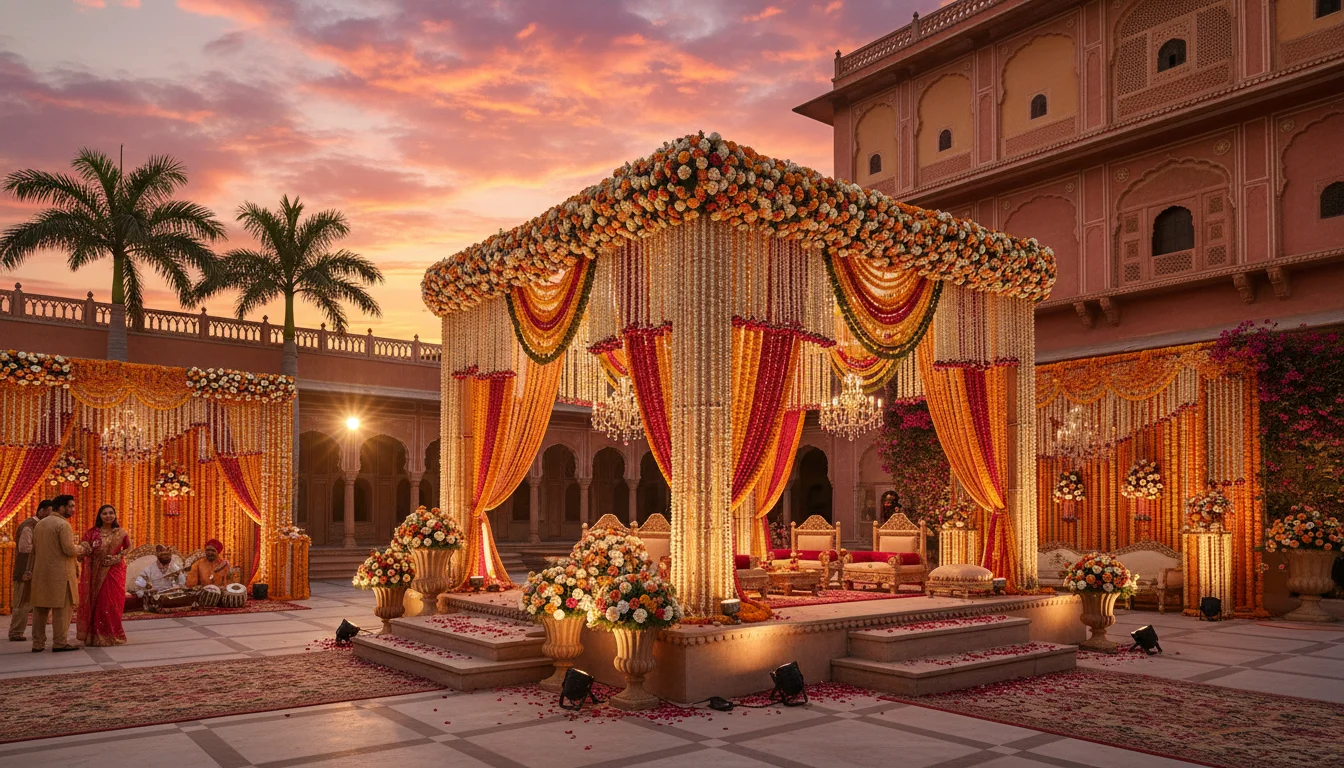
The operational landscape is currently defined by several transformative trends. Foremost is the exponential rise of destination weddings. Approximately 9% of Indian weddings now command a budget exceeding Rs 1 Crore, and over 60% of these elite events are executed as destination weddings. While 89% of these events remain localized within India—favoring heritage and coastal states like Rajasthan, Goa, and Kerala—the international destination segment continues to grow at a projected CAGR of 15.3%.
Simultaneously, the vendor ecosystem has become increasingly dense. Modern Indian couples hire an average of 10 distinct wedding vendors per event to curate highly personalized experiences. Within this matrix, wedding photographers experience the highest demand (secured by 77% to 79% of couples), closely followed by bridal makeup artists (71% to 73%), videography services (67% to 70%), and mehndi artists (69% to 70%). This fragmentation highlights a shift toward extreme personalization, where 63% of couples incorporate multiple sophisticated outfit changes and 52% prioritize bespoke aesthetic ambiances.
Key Challenges Faced by Businesses
Despite the immense capital flowing through the sector, venues and service providers navigate a labyrinth of severe structural and operational challenges that inhibit scalability and threaten service delivery.
A primary hurdle is the persistent offline bias and discoverability bottleneck. Historically, the wedding industry relied on localized, word-of-mouth networks. This creates a highly inequitable discovery process where highly capable, mid-tier hotels and independent heritage venues struggle for visibility against legacy brands. Furthermore, the industry is plagued by fierce competition and vendor saturation. The relatively low barrier to entry for services like photography and floral decor results in new vendors mushrooming overnight, often offering unsustainably low pricing packages to secure market share. Established businesses are subsequently pressured into over-commitment with unrealistic margins, leading to a degradation in service quality and severe reputational damage.
Supply chain volatility represents a critical operational threat, exacerbated by the auspicious timing of Indian weddings. During peak matrimonial seasons, resources are stretched to the breaking point. For instance, in cities like Lucknow, the convergence of up to 15,000 weddings within a mere two-month window severely depletes municipal resources, leading to shortages of commercial LPG cylinders for caterers and venues. Beyond municipal resource constraints, location logistics present a distinct nightmare, including permit management and redundant backup planning across multiple venues for multi-day events.
Finally, the sector is uniquely burdened by multi-generational planning dynamics and client coordination chaos. Approximately 85% of Indian families experience friction due to multi-generational planning, with 70% of major decisions requiring complex approval workflows across different age groups. Without centralized digital planning systems, vendors suffer from communication chaos—receiving conflicting instructions via fragmented WhatsApp groups from the couple, planners, and extended family members simultaneously.
Digital Landscape in India (Contextual to the Industry)
The deep penetration of high-speed internet and the ubiquitous adoption of smartphones have fundamentally rewritten the consumer journey within the Indian wedding sector. The traditional paradigm has been replaced by a digital-first, highly individualized, and content-driven discovery process.
Internet and Social Media Usage
Demographic shifts are driving this digital reliance. The average age for both love and arranged marriages in India has stabilized at 28 to 29 years old. These digitally native consumers are taking complete control of their wedding logistics. Digital platforms have transitioned from serving as secondary inspiration boards to acting as primary procurement and validation channels. Currently, 87% of engaged couples rely predominantly on visual social media platforms for comprehensive wedding inspiration, aesthetic benchmarking, and direct vendor research.
This digital adoption extends deep into the financial execution of the event. The integration of financial technology is surging, with 38% of consumers now utilizing digital transaction modes for large-scale vendor payments. Contemporary studies underscore that social media influence and digital brand perception have completely outpaced traditional marketing methodologies.
Popular Platforms Among the Target Audience
The platforms dominating the wedding discovery, planning, and execution phases are highly segmented. The origin point of the consumer journey increasingly begins on digital matchmaking and dating platforms like Bumble, Hinge, and Shaadi.com. Once the engagement is formalized, the focus shifts entirely to visual search engines. Instagram and Pinterest serve as the absolute apex of the discovery funnel.
Visual storytelling on these platforms acts as the primary differentiator for luxury venues, decorators, and photographers. The algorithmic preference for high-definition Reels, drone footage of sprawling properties, and curated aesthetics has effectively rendered traditional printed brochures obsolete.
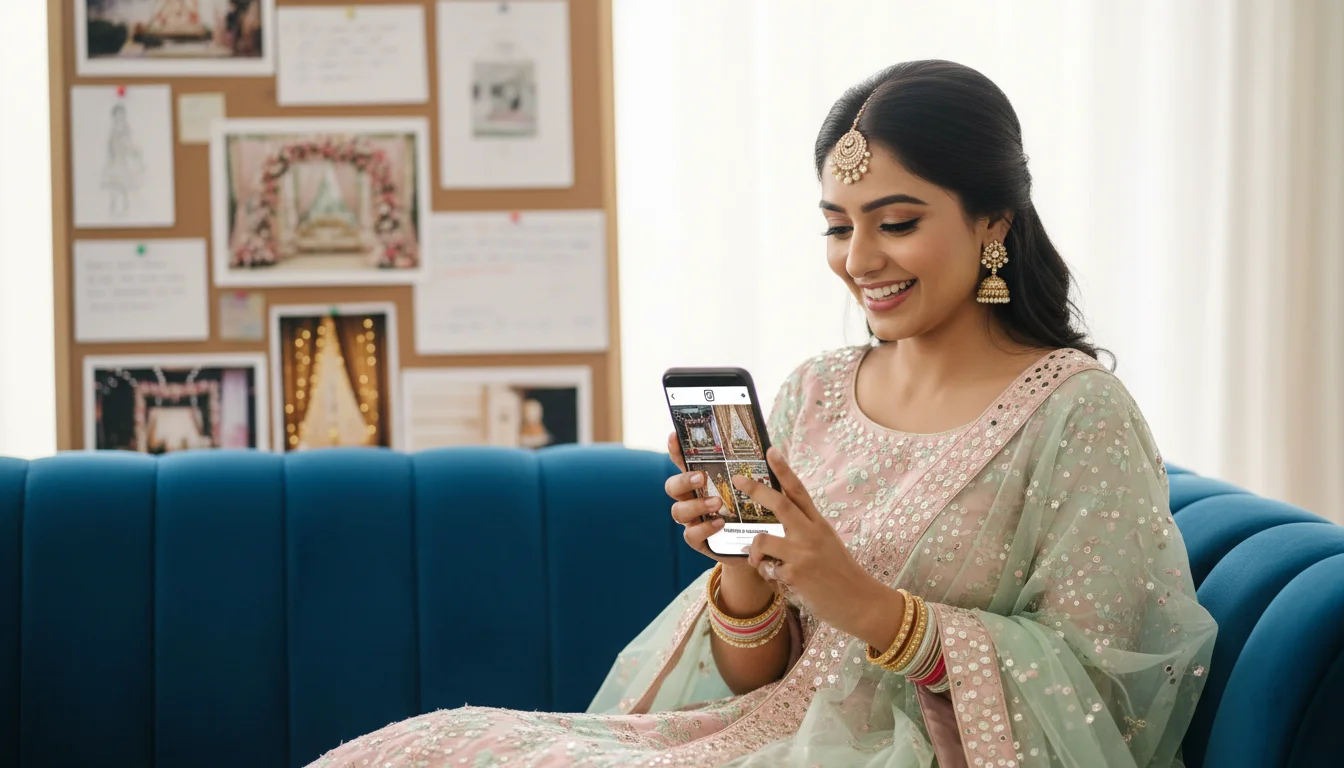
For the logistical and communication phases, WhatsApp operates as the central nervous system of the Indian wedding. It is not merely a messaging application; it is the primary project management tool. Statistical data reveals that 57.4% of couples utilize WhatsApp to officially announce their engagements, while 58.6% depend on it to disseminate crucial event timelines, manage RSVPs, and coordinate across deeply fragmented extended family networks. However, the reliance on WhatsApp often leads to organizational chaos without supplementary software. Consequently, industry-specific aggregators and comprehensive planning applications—such as WedMeGood, WeddingWire India, and Weddingz—function as critical middle-funnel evaluation and organization tools. Consumers migrate to these platforms to read verified reviews, utilize budget calculators, compare transparent pricing matrices, and authenticate vendors they initially discovered via Instagram aesthetics.
Consumer Online Behavior
The modern Indian couple exhibits a highly complex, multi-channel online behavior pattern characterized by extensive research and a demand for immediate digital convenience. Vendor hiring decisions are exceptionally intricate; over 40% of the target audience reports utilizing multiple intersecting mediums—blending offline family recommendations with rigorous validation across wedding applications and social media platforms—before finalizing a contract.
Aesthetic validation is a non-negotiable prerequisite. Consumers engage in content-driven decision-making, expecting high-definition, immersive visual proof of a vendor’s capabilities. A heritage venue or luxury caterer that relies on outdated, poorly lit photography will instantly lose credibility, regardless of its physical excellence. Furthermore, User-Generated Content (UGC) provides vital social proof. Prospective clients actively search for organically tagged photos from previous weddings at a specific venue to gauge the authentic guest experience versus the highly stylized, staged promotional material published by the vendor.
Consumers also demonstrate a markedly low tolerance for manual, slow-response systems. Features that were once considered premium luxuries—such as instant budget estimators, digital venue availability calendars, and AI-powered matching algorithms—are rapidly becoming baseline expectations. In an era where tech-savvy couples experiment with virtual wedding previews and voice-based planners, vendors lacking a seamless digital interface are actively bypassed. Finally, post-pandemic behavior has permanently normalized the integration of virtual and augmented reality elements into physical ceremonies. The live-streaming of events for international guests, Non-Resident Indians (NRIs), or elderly relatives unable to travel is no longer a temporary crisis measure, but a permanent, expected technological amenity embedded into the modern venue package.
Digital Marketing Opportunities
The intersection of a booming, multi-billion-dollar economic sector and prevalent operational inefficiencies presents massive, untapped digital marketing opportunities. Strategic, full-funnel digital interventions can resolve legacy logistical challenges while concurrently unlocking highly lucrative new revenue streams for venues and service providers.
Solving Key Industry Challenges
The historical reliance on closed, biased planner networks and offline word-of-mouth recommendations can be bypassed entirely through aggressive Search Engine Optimization (SEO) and targeted paid digital advertising. By optimizing digital architectures for high-intent search queries, capable but less-renowned venues can project themselves directly into the consideration set of active buyers, democratizing the discovery process and leveling the playing field against legacy hospitality giants.
Furthermore, customized digital marketing ecosystems and robust Customer Relationship Management (CRM) tools can directly mitigate the communication chaos and multi-generational friction inherent in Indian weddings. By utilizing centralized project management software integrated with automated email workflows and verified WhatsApp business APIs, venues can provide transparent, documented communication. This infrastructure allows the primary couple to effortlessly share professional, standardized digital proposals, immersive virtual tours, and definitive cost breakdowns with family elders, thereby streamlining complex approval workflows and minimizing financial conflicts.
In a fiercely competitive market frequently driven to the bottom by predatory pricing wars, premium brand positioning is the only sustainable defense against vendor saturation and over-commitment. Elite digital branding—characterized by superior website user experience (UX), thought-leadership content, and high-end cinematic visual storytelling—elevates a business out of the commodity pricing tier. Digital marketing effectively shifts the consumer’s psychological focus from analyzing baseline costs to valuing prestige, aesthetic reliability, and experiential exclusivity.
Best Strategies for Venues and Services
To capitalize on the current market dynamics, businesses must deploy a synchronized, omni-channel digital strategy that touches every phase of the consumer journey:
- Search Engine Optimization (SEO): This forms the most critical driver of bottom-of-funnel, high-intent traffic. With 89% of couples initiating their venue search online, dominating localized search engine results is imperative. The strategy must focus on geographic qualifiers (Local SEO), ensuring that Google My Business profiles are meticulously optimized with seasonal imagery, verified reviews, and precise mapping data.
- Visual Social Media and Content Marketing: Venues must maintain a rigorous seasonal content calendar that highlights the property across varying lighting conditions, architectural setups, and cultural ceremonies. Strategic content deployment should include drone videography, behind-the-scenes time-lapses of decor setups, and professionally edited highlight reels of real weddings.
- Targeted Paid Advertising: Using Google and Meta (Facebook/Instagram), campaigns must be hyper-segmented based on demographic data, life-event status (specifically targeting users marked as “Engaged”), financial affluence markers, and precise geographic radii.
- Influencer and Strategic B2B Partnerships: Collaborating with macro and micro-influencers within bridal fashion, luxury travel, and lifestyle niches allows venues to leverage borrowed credibility. Furthermore, establishing B2B digital partnerships—where venues cross-promote with top-tier decorators, caterers, and photographers—creates a powerful network effect of digital referrals.
Local and Global Case Studies
The efficacy of these digital marketing frameworks is validated by numerous domestic and international case studies.
Within the domestic landscape, The Tamarind Tree, a heritage wedding venue in Bangalore, faced the challenge of translating its physical beauty into tangible digital inquiries. By implementing a data-driven strategy combining social media marketing, targeted SEO, and rich content marketing, the venue experienced a transformative surge in organic traffic and high-quality leads. Similarly, at the platform level, WedMeGood recognized that authoritative trust is the ultimate currency. Through a strategic digital PR and content marketing campaign centered around their “Annual Wedding Industry Report,” they secured massive digital footprints across major national publications, solidifying their position as the definitive industry authority.
Global examples further reinforce these methodologies. Mountain Shadows Retreat, a premium venue in the Sierra Nevadas, overhauled its digital presence by moving away from purely organic social media toward a structured lead-generation ecosystem.
By completely redesigning their website to focus on UX/UI conversion optimization and launching precision-targeted Google Ads, they captured previously untapped market segments, turning passive social media followers into active, high-value bookings. In Australia, a Hunter Valley Vineyard venue achieved a remarkable 247% increase in qualified leads and an 89% improvement in booking conversions simply by implementing a visual content marketing strategy strictly aligned with their seasonal vine cycles, demonstrating the power of synchronized visual aesthetics. In the UK, Amington Hall secured 76 high-value bookings within a mere six months by implementing an end-to-end lead nurturing CRM system coupled with precision-targeted Meta ad campaigns, highlighting the absolute necessity of rapid digital lead response.
Competitive Analysis
The digital landscape for Indian wedding services is highly stratified, presenting a complex competitive matrix. The market is currently dominated by massive, tech-enabled aggregators at the apex, luxury hospitality conglomerates occupying the ultra-premium tier, and a vast, highly fragmented ecosystem of independent venues and boutique vendors battling for visibility in the middle market.
Current Digital Presence of Top Businesses
The digital traffic ecosystem is overwhelmingly commanded by platform aggregators. WedMeGood holds the premier position, boasting approximately 1.9 million monthly visits. Its digital presence is characterized by a highly engaged user base, indicated by an optimized 51.42% bounce rate and an impressive average of 3.7 pages viewed per visit. WeddingWire India follows closely with roughly 1.3 million monthly visits, while Oyo-backed Weddingz.in captures substantial organic search volumes with over 521,000 monthly visits. These platforms maintain absolute digital dominance because they have successfully digitized the entire vendor discovery, rigorous review, and booking pipeline, offering end-to-end ecosystems that trap users within their digital walls. Specialized tech aggregators like URAHL, focusing strictly on the premium and luxury planner segment, and platforms like MyWedding360 and ShaadiSphere are also emerging, offering map-based venue selection modules and virtual venue tours that push the boundaries of digital convenience.
Conversely, top-tier traditional luxury hospitality chains—such as the Taj Group, Oberoi Hotels, ITC, and Marriott—do not rely heavily on these third-party aggregators. Instead, they leverage their immense, decades-old brand equity through independent, highly sophisticated digital marketing ecosystems. Their strategy focuses heavily on the lucrative destination wedding segment, promoting integrated packages that highlight architectural heritage, culinary mastery, and flawless guest management. Following the pandemic, these chains executed brilliant digital pivots, successfully capturing diverted international destination wedding demand by marketing heavily to High Net Worth Individuals through targeted digital PR and exclusive, high-touch digital concierges.
In the bespoke event coordination sector, elite luxury planners like The Wedding Design Company, Shaadi Squad, and Motwane Entertainment dominate the ultra-luxury narrative. Their digital presence is highly curated and intentionally exclusionary, relying almost exclusively on Instagram to showcase high-profile celebrity weddings. Their websites function less as traditional lead-generation funnels and more as exclusive digital art galleries, reinforcing an aura of absolute scarcity and prestige. Regionally, planners like The Tales of Tradition, Crimson and Cherry, and 3Production in Bangalore maintain strong digital footholds by showcasing highly specific niches, such as cross-cultural weddings blending traditional protocols with contemporary storytelling.
What the Market Leaders are Doing Well
The entities dominating this space share several critical digital competencies. First, they execute immaculate visual storytelling. Leaders never compromise on the quality of their visual assets; every image is professionally color-graded, and every video is cinematically edited. They implicitly understand that they are not merely selling a physical space or a catering menu; they are selling an aspirational lifestyle. Second, platforms like WedMeGood and WeddingWire excel by providing comprehensive digital toolsets—ranging from interactive budget calculators and digital checklists to personalized vendor matching algorithms. These tools effectively lock users into their digital ecosystem early in the planning process. Finally, top players meticulously manage their online reputations. They actively solicit post-event reviews, prominently showcase detailed testimonials, and heavily publicize industry awards, creating a formidable moat of trust.
Gaps and Opportunities to Outperform
Despite the dominance of market leaders, significant structural and strategic gaps remain that mid-tier venues, emerging planners, and independent vendors can aggressively exploit.
The most prominent vulnerability is the localization gap. While massive aggregators rank exceptionally well for broad, national search terms, their localized, city-specific pages are frequently generic, automated directories lacking brand personality. Independent venues can consistently outperform these massive aggregators on specific long-tail, hyper-local search queries by creating deeply detailed, location-specific landing pages that are rigorously optimized for local SEO.
Furthermore, the industry suffers from a severe “speed to lead” gap. Many traditional, highly regarded venues suffer from abysmal digital response times. By implementing automated, highly personalized CRM workflows via email and integrated WhatsApp Business APIs, independent vendors can instantly outmaneuver legacy competitors who remain reliant on slow, manual sales processes.
Finally, an educational content void exists. While the digital landscape is saturated with inspirational content, there is a distinct lack of high-quality, transparent educational material. Venues and planners that publish guides on granular budget breakdowns, logistical timeline planning, and the specific protocols for multi-cultural ceremonies will capture highly intent-driven traffic.
Recommended Strategy for Wedding Venues and Services in India
To successfully capture and retain market share, wedding enterprises must adopt a sophisticated, full-funnel digital marketing strategy. This necessitates moving far beyond sporadic, ad-hoc social media posting toward engineering a cohesive, automated system designed specifically to attract, nurture, and convert high-value leads.
Target Audience Persona Profiling
The modern digital strategy must be engineered to cater to a complex, multi-tiered decision-making unit, as Indian weddings are inherently communal financial events.
-
Primary Persona: The Modern Couple (The Initiators)
- Demographics: Aged 27 to 32, predominantly urban professionals residing in Tier-1 and Tier-2 cities, possessing high digital literacy and significant disposable income.
- Behavior: They initiate the search process 6 to 12 months in advance, almost exclusively utilizing mobile devices. They place the highest premium on visual aesthetics and frictionless digital convenience.
- Pain Points: They are overwhelmed by fragmented communication across family channels and strongly averse to pushy, traditional sales tactics.
- Digital Haunts: Instagram, Pinterest, specialized wedding aggregator applications, and premium lifestyle digital publications.
-
Secondary Persona: The Family Patriarch/Matriarch (The Approvers)
- Demographics: Aged 55 to 65, representing the traditional family core. While financially conservative, they are willing to deploy significant capital to ensure social prestige.
- Behavior: They frequently control the ultimate budgetary approval. Their decision-making relies heavily on established trust, legacy reputation, and guest comfort.
- Pain Points: They harbor concerns regarding strict cultural and religious compliance and demand absolute financial transparency.
- Digital Haunts: WhatsApp (for reviewing portfolios forwarded by the couple), Google Reviews for reputation verification, and direct navigation of vendor websites.
Recommended Channels and Campaign Types
To effectively engage these distinct personas, an omni-channel approach is required.
- 1. Precision Omni-Channel Lead Generation: Enterprises must deploy precision-targeted Meta (Facebook and Instagram) lead generation campaigns. These campaigns should utilize high-definition, immersive video creatives showcasing the venue’s absolute versatility.
Targeting parameters must be rigorously defined, focusing on users aged 25-35, with relationship statuses actively set to “Engaged,” and cross-referenced with interests aligned with luxury travel, bridal fashion, and fine jewelry.
Search Engine Dominance Architecture (Google Ads & SEO)
Simultaneously, businesses should implement Google Search Ads targeting exact-match, high-intent, bottom-of-funnel keywords to capture couples who are actively ready to initiate bookings. In tandem, significant capital and effort must be invested in technical and local SEO to build long-term organic domain authority, thereby systematically reducing the enterprise’s dependency on paid advertising spend over the subsequent financial quarters.
Automated Nurture Funnels (WhatsApp & Email)
The most critical point of failure in the industry is allowing warm leads to go cold. Venues must integrate robust CRM systems that trigger an immediate, highly personalized WhatsApp message and a beautifully formatted HTML email the very moment an inquiry form is submitted. This automated workflow should drip-feed high-value content over several weeks—sending 360-degree virtual tours, expansive real-wedding galleries, and video testimonials—to keep the brand top-of-mind during the couple’s prolonged evaluation phase.
Content Ideas Specific to the Industry
Content is the fuel that powers the digital marketing engine. Businesses must meticulously segment their content production to address the specific psychological needs at different stages of the buyer’s journey.
- Inspirational Content (Top of Funnel): Produce high-quality Instagram Reels showcasing a venue’s dynamic transformation—from a vibrant, sunlit daytime Haldi ceremony to an opulent, glamorous evening Sangeet. Utilize drone sweeps to capture the majestic scale of the property, and focus on highly emotional “first look” highlight photography.
- Educational Content (Middle of Funnel): Develop deeply detailed blog posts and downloadable PDF guides. Critical topics include transparent resources such as “The Ultimate Guide to Hosting a 500-Guest Wedding in [City],” “Understanding Venue Budgets: A Transparent Financial Breakdown,” or “Architecting a Seamless Multi-Cultural Ceremony Setup.”
- Validation Content (Bottom of Funnel): Deploy in-depth video testimonials featuring not just the couple, but the parents, addressing the secondary persona’s anxieties. Publish highly detailed “Real Wedding” case studies that explicitly detail how the venue or planner successfully managed severe logistical challenges, mitigated poor weather conditions, or flawlessly executed highly specialized regional dietary requirements.
Budget-Friendly Digital Marketing Approaches
For mid-tier venues or independent vendors lacking massive enterprise marketing budgets, exceptionally high return on investment can be achieved through strategic, zero-cost or low-cost tactical executions.
First, relentless Google My Business (GMB) optimization is entirely free and disproportionately effective. Ensuring the profile is continually updated with fresh, seasonal photography, accurate operational hours, and a pre-populated Q&A section that addresses common logistical hurdles dramatically elevates local search visibility. Second, implementing aggressive User-Generated Content (UGC) harvesting strategies provides free, highly persuasive marketing material. Actively encouraging couples and guests to tag the venue, and subsequently reposting this content, provides authentic social proof that resonates far more deeply than expensive, staged photoshoots. Finally, executing micro-influencer bartering arrangements—collaborating with local micro-influencers possessing 10,000 to 50,000 highly engaged followers in the regional fashion or makeup space by offering the venue for stylized photoshoots in exchange for tagged content—provides immense mutual digital benefit at zero capital cost.
Keywords & SEO Opportunities
A scientifically structured, data-driven keyword strategy is the foundational bedrock of online visibility. Indian couples utilize highly specific, structurally complex query formats when searching for wedding logistics, blending broad aspirational terms with hyper-local, amenity-driven parameters.
High-Intent Keywords for Ranking
High-intent primary keywords typically possess massive search volumes and indicate a user who is actively transitioning into the procurement phase. However, these terms are fiercely competitive, often dominated by the massive aggregators. A blended approach is necessary to capture segments of this broad traffic while qualifying the user’s specific intent.
| Keyword Category | Search Query Example | Est. Monthly Search Volume | Intent Phase |
|---|---|---|---|
| Broad Industry Search | “wedding venues” | 823,000 | Consideration / Top Funnel |
| Concept Specific | “destination wedding” | 135,000 | Consideration / Top Funnel |
| Service Specific | “wedding planner” | 246,000 | Consideration / Top Funnel |
| Product Specific | “wedding bands” | 201,000 | Decision / Mid Funnel |
| Location Broad | “wedding venue in [city]” | Varies | Decision / Bottom Funnel |
| Venue Typology | “banquet hall [location]” | Varies | Decision / Bottom Funnel |
Long-Tail Keyword Opportunities (India-Specific)
Long-tail keywords represent the strategic high ground where independent venues and specific service providers can achieve absolute dominance. While the aggregate search volume for these terms is lower, the conversion probability is exponentially higher because the user possesses exact logistical clarity regarding their requirements.
1. Amenity, Capacity, and Facility-Specific Queries
- “AC banquet hall with extensive parking in [specific area]”
- “luxury wedding venue with guest accommodation in [city]”
- “banquet hall with premium in-house catering near me”
- “1000 capacity outdoor wedding lawn [location]”
2. Occasion and Ritual-Specific Queries
- “Premium Sangeet venue in [city]”
- “Mehendi venue with scenic outdoor seating”
- “Expansive lawn for baraat gathering”
- “Intimate ring ceremony hall in [neighborhood]”
3. Budget, Typology, and Style Specific Queries
- “Budget-friendly wedding venue in [city]”
- “Luxury heritage wedding resort in [state]”
- “Private farmhouse for intimate micro-wedding in [location]”
- “Temple wedding venues with modern amenities”
4. The Educational Skyscraper Strategy
- “The Top 10 Best Wedding Venues in [City] Under Rs 10 Lakhs”
- “Step-by-Step Marriage Registration Process in [State]”
- “A Complete Financial Breakdown of a Destination Wedding in Goa”
- “Indoor Banquet vs. Outdoor Lawn Venues: A Logistical Analysis”
To continuously identify these opportunities, vendors must systematically execute keyword gap analyses utilizing tools like Semrush or Ahrefs, whilst heavily monitoring Google Search features such as “People Also Ask” and autocomplete suggestions to mine localized, conversational search terms.
Implementation Roadmap
Digital transformation within the high-stakes wedding industry cannot be executed overnight. It requires a systematic, phased rollout to prevent catastrophic operational disruption while ensuring maximum return on digital investment.
Phase 1: Short-Term Quick Wins (Month 1–3)
The immediate organizational objective is to aggressively patch “leaky sales funnels” and establish a baseline digital infrastructure capable of capturing and processing existing market demand.
1. Digital Infrastructure Audit and Optimization (Weeks 1-4):
- Execute a comprehensive technical audit of the existing website infrastructure. Rectify broken links, optimize mobile loading speeds, and ensure all inquiry forms are functional and route directly into a centralized CRM.
- Claim, verify, and exhaustively optimize the Google My Business listing. Upload a minimum of 50 high-resolution images and proactively seed the Q&A section with detailed answers.
- Standardize all social media handles and nomenclature, ensuring bio links utilize routing software to direct traffic to conversion-optimized landing pages.
2. Immediate Lead Generation Activation (Weeks 5-8):
- Launch hyper-targeted Meta (Facebook/Instagram) Lead Generation campaigns. Utilize existing, top-performing assets highlighting luxury exclusivity or budget transparency.
- Deploy Google Search Ads targeting exact-match, high-intent local keywords to generate immediate inbound inquiries.
-
Implement an automated WhatsApp Business API response sequence for all incoming leads, guaranteeing a response time of under 5 minutes.
- Reputation Seeding and Aggregation (Weeks 9-12): Initiate a systematic, automated review generation campaign. Contact past clients from the previous 12 to 18 months and carefully incentivize them to leave highly detailed reviews on Google and critical platforms like WedMeGood and WeddingWire India.
Phase 2: Long-Term Strategic Growth (Month 6–12)
With a baseline lead flow firmly established, the strategic focus shifts toward building impenetrable organic domain authority, exponentially increasing brand prestige, and integrating advanced, proprietary technological solutions.
1. SEO Dominance and Content Architecture Buildout (Months 6-8):
- Aggressively implement the Skyscraper Technique across the company’s digital publication platforms. Develop massive, definitive, 3000-word guides on local wedding planning to permanently capture organic, top-of-funnel search traffic.
- Construct specific, dedicated landing pages for every granular subset of service offered (e.g., engineering a distinct page optimized entirely for “Corporate Events,” another for “Destination Sangeets”).
- Execute a rigorous, localized backlink building campaign. Form digital alliances with local florists, high-end photographers, and bespoke catering companies for cross-linked digital mentions and guest blog posts to build localized domain authority.
2. Advanced Visual Production and Influencer Integration (Months 9-10):
- Commission premium cinematic video production and comprehensive drone flyovers of the venue during peak, fully decorated wedding setups, capturing the absolute maximum aesthetic potential of the space.
- Develop interactive, virtual 360-degree venue tours. This allows NRI clients or geographically distant extended families to conduct immersive site visits digitally, a feature proven to drastically increase conversion rates for destination weddings.
- Execute highly strategic influencer partnerships. Host stylized, narrative-driven photoshoots with local bridal influencers to tap directly into their highly engaged, trusting follower bases.
3. System Automation and Emerging Tech Integration (Months 11-12):
- Fully integrate digital ecosystems where intelligent CRM systems automatically manage lead scoring, deploy automated email drip campaigns based on user behavior, and dispatch digital contracts and payment gateways via digital wallets.
- Explore and integrate emerging technological frontiers. Offer integrated, high-definition live-streaming hardware capabilities as a baseline package inclusion, or deploy agentic AI-driven guest management interfaces (similar to Wedd.AI functionalities) to assist couples in managing chaotic WhatsApp RSVPs, thereby positioning the venue not just as a physical space, but as a cutting-edge, premium service provider.
Conclusion
The Indian wedding industry has irreversibly crossed the digital rubicon. As market valuations soar toward an astonishing USD 238 Billion by 2030, the consumer demographic driving this massive economic engine has fundamentally evolved. They are inherently digital natives who demand uncompromising visual excellence, absolute operational transparency, and seamless digital convenience. For wedding venues, independent planners, and specialized service providers, relying on traditional offline referral networks and legacy hotel relationships is no longer a viable, sustainable business strategy; it is a direct path to commercial obsolescence.
To survive and thrive, businesses must elevate their digital presence from serving as a passive, static brochure to functioning as an active, high-converting revenue ecosystem. This requires mastering highly localized SEO, deploying precision-targeted paid advertising, leveraging the visual dominance of platforms like Instagram, and utilizing robust, automated CRM systems to solve the complex, multi-generational communication challenges that define the Indian wedding experience.
Executing a digital transformation of this magnitude and complexity requires highly specialized, battle-tested expertise. Gurkha Technology, a premier digital marketing company based in Nepal, possesses the exact technological infrastructure and strategic capabilities required to digitize, optimize, and exponentially grow wedding brands across the South Asian market.
Through their proven mastery of the Skyscraper Technique for dominating search engine rankings, advanced Meta and Google Ads management for precise demographic targeting, and comprehensive Web and E-commerce development focused on superior UI/UX, Gurkha Technology builds digital ecosystems that consistently convert passive scrollers into high-value bookings. Furthermore, their elite expertise in visual storytelling, Meta Verification, automated influencer partnerships, and the deployment of Agentic AI tools for operational automation ensures that a venue’s digital representation is as flawless, sophisticated, and efficient as the physical hospitality it provides.
Wedding enterprises looking to aggressively secure their market share, outmaneuver massive tech aggregators, and attract premium, high-net-worth clientele must view digital marketing not as a secondary operational expense, but as their most critical, foundational infrastructure investment. Businesses are strongly encouraged to leverage Gurkha Technology’s specialized free consultation services to architect a bespoke, high-performance digital marketing strategy tailored specifically for the hyper-competitive Indian wedding market. Connect directly with their strategic team to initiate this vital digital transformation.