Digital Marketing for Indian Ride-Hailing: Growth & Strategy
Digital Marketing for Ride-Hailing/Taxi Companies in India
Industry Overview
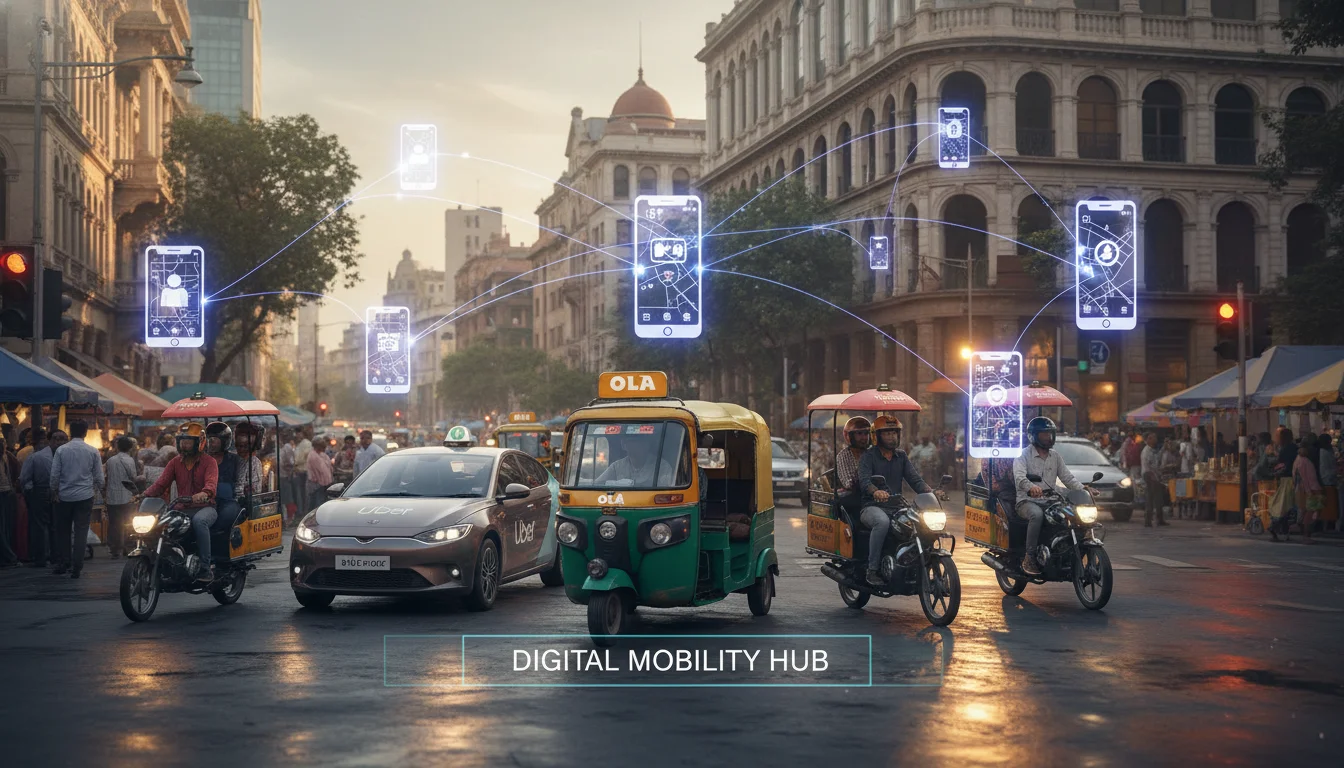
The ride-hailing and taxi industry in India represents one of the most dynamic and rapidly evolving sectors within the broader digital economy. Originally emerging as an antidote to the fragmented, unorganized, and often unreliable local taxi syndicates, the sector has transformed into a highly sophisticated, technology-driven ecosystem. As of 2026, this landscape extends far beyond the traditional four-wheeler cab aggregators. It now encompasses a massive portfolio of micro-mobility solutions, including auto-rickshaws, bike-taxis, and an accelerating fleet of electric vehicles (EVs). This ecosystem functions as a complex, two-sided digital marketplace, wherein the aggregator platforms must simultaneously manage the algorithmic acquisition, retention, and satisfaction of both riders generating demand and driver-partners supplying the transit. The socio-economic ramifications of this industry are profound. Ride-hailing platforms now serve as critical civic infrastructure for urban transportation while simultaneously providing vast gig-economy employment. For example, specific platform categories like auto-rickshaws and bike-taxis alone were projected to support over 00360 billion in economic activity by 2024, facilitating extensive local commerce and secondary job creation in vehicle maintenance and allied sectors across the subcontinent.
The financial trajectory of the Indian ride-hailing market indicates aggressive and sustained expansion, though precise valuations vary depending on the segmentation methodologies applied by various macroeconomic research institutions. Current operational data and forecasts suggest that the broader ride-hailing market in India generated approximately USD 2.50 billion to USD 2.78 billion in recent baseline years, with expectations to surge to USD 11.06 billion by 2033. This expansion is characterized by a robust Compound Annual Growth Rate (CAGR) of 20.7% spanning the forecast period. Broader mobility estimates, which account for traditional and shared mobility models beyond strict application-based e-hailing, place the long-term total addressable market significantly higher, with holistic shared mobility market valuations projected to reach an astounding USD 56.39 billion by 2030, growing at an unprecedented CAGR of 65.3%.
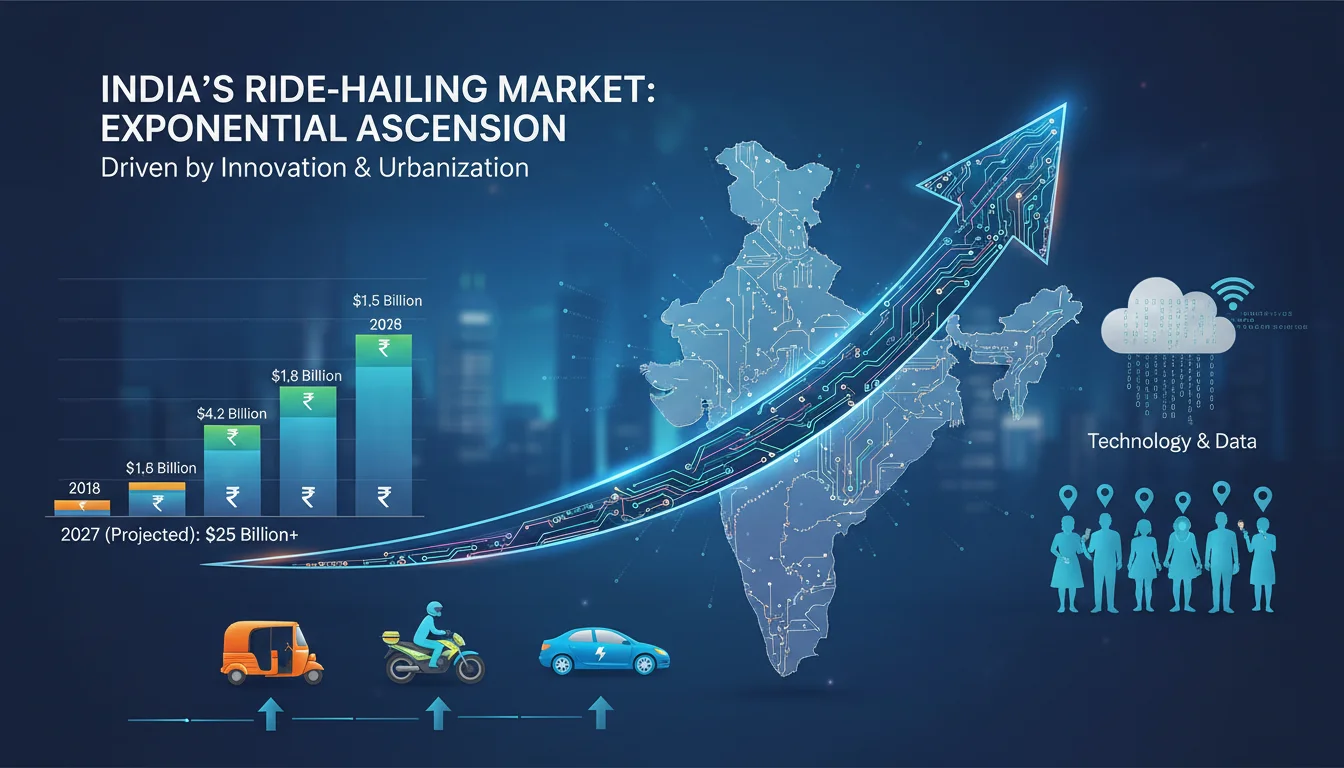
| Market Segment Definition | Baseline Valuation (USD Billion) | Forecast Valuation (USD Billion) | Forecast Year | Projected CAGR |
|---|---|---|---|---|
| Comprehensive Ride-Hailing | 2.50 | 11.06 | 2033 | 20.70% |
| E-Hailing Specific Segment | 2.78 | 4.92 | 2030 | 12.10% |
| Broader Shared Mobility | 2.76 | 56.39 | 2030 | 65.30% |
| Holistic Traditional & App Taxi | 20.60 (Current Estimate) | N/A | N/A | Strong Growth |
A critical structural shift is currently defining the market’s growth trajectory: the decisive pivot from premium four-wheeler formats to utility-driven micro-mobility. Incremental trip volume is no longer dominated by metro-heavy cab demand. Instead, the expansion engine is firmly rooted in auto-rickshaws and two-wheelers, particularly penetrating non-metro markets and Tier-2 cities. Year-over-year growth rates for these smaller, agile vehicle types consistently and significantly outpace traditional cabs. This paradigm shift indicates that affordability, high-frequency short-distance travel, and pure utility now serve as the primary demand drivers, signifying a maturation of the market where deep geographic penetration relies heavily on hyper-local, budget-friendly transport. Furthermore, the industry is experiencing a pronounced shift toward electrification. Driven by severe urban environmental concerns and total-cost-of-ownership (TCO) optimizations over the vehicle’s lifespan, the integration of EVs is transitioning from a niche offering to a foundational pillar of future mobility.
Despite this exponential top-line growth, ride-hailing enterprises operate within a highly volatile matrix of operational, regulatory, and socio-economic challenges. The most critical friction point in this two-sided marketplace is severe driver dissatisfaction and subsequent attrition. The traditional business models utilized by early incumbents relied heavily on high commission rates00often extracting upwards of 20% to 30% from the driver’s gross fare. Historical data mapping incentive structures, such as the minimum business guarantee models, reveal that while gross earnings might appear substantial, the net take-home pay for drivers, especially those leasing vehicles, is severely diminished by platform commissions, fuel costs, and vehicle maintenance. This has historically sparked widespread strikes, high platform churn rates, and deteriorating service quality. Consequently, the traditional commission model is currently being aggressively challenged by newer, zero-commission subscription-based models, forcing legacy platforms to fundamentally restructure their unit economics to retain driver supply.
From the demand side, customer dissatisfaction stems predominantly from opaque dynamic pricing algorithms, commonly known as surge fares, combined with frequent ride cancellations by drivers and prolonged wait times. While complex algorithms are deployed to balance supply and demand dynamically, the lack of perceived equity and transparency in these pricing mechanisms severely deteriorates consumer brand trust. Furthermore, operating within India requires navigating a labyrinthine system of state-specific transport regulations. The fragmentation of regulatory policies across state boundaries00especially concerning the legality of bike-taxis, commercial vehicle permit caps, and mandated passenger safety protocols00imposes substantial compliance costs. For instance, in states like Maharashtra, commercial vehicle permits account for a massive fraction of all registrations, highlighting the regulatory complexities faced by fleet operators attempting to scale seamlessly across state lines. Additionally, while electrification is a universally acknowledged megatrend, the immediate transition is hindered by the high upfront TCO for commercial EVs and a severe, localized lack of charging infrastructure outside core metropolitan zones.
Digital Landscape in India (Contextual to the Industry)
India00s overarching digital ecosystem provides an exceptionally fertile, unprecedented environment for the proliferation of ride-hailing platforms. The landscape is characterized by deep internet penetration, globally competitive low data costs, and deeply entrenched mobile-first consumer habits. As the industry entered 2024 and progressed into 2026, India boasted approximately 751.5 million internet users, reflecting a national internet penetration rate of 52.4%. The widespread availability of highly affordable 4G networks00which dominate 82.7% of the data technology share00and the accelerating, aggressive rollout of 5G infrastructure have catalyzed a massive surge in data consumption. Average monthly data consumption per user reached an astounding 20.27GB, reflecting a compound annual growth rate of 54% over the past decade. This robust, high-speed digital infrastructure is the fundamental prerequisite that makes real-time, GPS-reliant, app-based ride-hailing physically and economically viable across the vast subcontinent.
The intersection of mobility marketing and digital media consumption is heavily, almost exclusively, skewed toward mobile platforms. The digital media spending landscape has witnessed a definitive shift, with mobile platforms now accounting for a dominant 78% share of total digital media expenditures, leaving desktop platforms with a diminishing minority share. Furthermore, India is home to approximately 462 million active social media users, equating to roughly 32.2% of the total population. The demographic composition of this user base is critical for ride-hailing operators: Millennials and Generation Z drive the vast majority of social conversations and digital transactions. Statistical models indicate that 52.3% of social media interactions originate from millennials, with an additional 28.4% generated by Gen Z. For ride-hailing companies, this demographic overlap is essential; the primary early adopters and high-frequency users of on-demand urban mobility are the exact same cohorts actively engaging with digital video, social commerce, and influencer-driven content.
The fragmentation of consumer attention across the internet dictates a highly nuanced, multi-platform marketing approach. However, specific digital networks overwhelmingly dominate the mobility sector’s target audience. Meta-owned platforms00specifically Instagram and Facebook00maintain a massive, entrenched reach, each capturing around 25% of the total Indian population. Instagram serves as the primary engine for visual brand building, targeted influencer collaborations, and the dissemination of viral, short-form video content, which has proven highly effective for targeting younger demographics. Concurrently, YouTube commands a near-universal presence among Indian internet users, with 97% of connected Indians consuming online video content. This makes YouTube a critical channel for top-of-funnel brand awareness, long-form storytelling, and crucial instructional content, such as comprehensive driver onboarding tutorials. Furthermore, the rise of localized and vernacular platforms is reshaping digital outreach.
With nearly 73% of internet users consuming content in regional languages such as Hindi, Tamil, or Bengali, the integration of localized digital ad formats on platforms like ShareChat, alongside the deployment of WhatsApp Business API for direct conversational commerce and booking integration, has transitioned from an optional tactic to an an indispensable strategic imperative.
The behavioral psychology of the Indian ride-hailing consumer online is defined by an absolute demand for frictionless utility, extreme price sensitivity, and a heavy reliance on digital social proof. Urban congestion and the chaotic nature of public transit have conditioned users to value speed, efficiency, and reliability above all other metrics. Consumer behavior data indicates that when evaluating mobility platforms, 31% of users prioritize quick driver arrival, while 29% heavily weigh how quickly their initial ride request is accepted by the algorithmic dispatch. Digital campaigns that promise00and operational infrastructures that consistently deliver00highly accurate estimated times of arrival (ETAs) and absolute zero-cancellation guarantees form the baseline of modern consumer trust.
Price discovery remains a central tenet of user behavior. Indian consumers actively and habitually cross-reference multiple ride-hailing applications simultaneously before confirming a booking, seeking the lowest possible fare or the quickest immediate availability. Consequently, platform loyalty is notoriously fragile. However, empirical studies reveal that platforms capable of combining highly competitive pricing with professional driver behavior and, most importantly, transparent dynamic pricing algorithms tend to retain users significantly longer. When consumers perceive the pricing mechanism as equitable rather than exploitative, satisfaction metrics rise considerably. Demographic nuances also heavily influence online booking behaviors. While younger demographics are the primary drivers of the shift toward high-frequency bike-taxis and budget auto-rickshaws, older demographics demonstrate distinct behavioral patterns. Post-pandemic consumer research indicates that Baby Boomers and Gen X populations maintain highly stable usage patterns of traditional four-wheeler cabs, actively prioritizing perceived physical safety, health hygiene, and comfort over mere cost-saving measures. Understanding these granular digital behaviors is essential for crafting targeted, high-converting digital marketing campaigns.
Digital Marketing Opportunities
Digital marketing within the Indian ride-hailing sector has evolved far beyond basic promotional banner advertising; it now serves as a structural, operational solution to the industry’s most pressing foundational challenges. The inherent friction of the two-sided marketplace requires marketing strategies that concurrently optimize supply and demand. To combat the severe challenge of driver attrition, ride-hailing firms can deploy highly targeted, localized lead generation campaigns focusing intensely on transparent earnings potential, the benefits of zero-commission subscription models, and comprehensive driver welfare programs. By utilizing digital channels to reframe the driver not as a subservient gig worker, but as an independent micro-entrepreneur utilizing a software-as-a-service (SaaS) platform, brands can fundamentally alter the supply-side narrative and rebuild trust. Conversely, to address consumer dissatisfaction regarding dynamic pricing and abrupt cancellations, marketing communications must pivot toward absolute transparency and proactive expectation management. Content marketing strategies that educate users on the precise mechanics of how surge pricing ultimately ensures driver availability during critical peak hours, or campaigns that highlight rigorous digital driver background checks and integrated in-app safety features, serve to directly neutralize core user anxieties.
To capture market share in 2026, ride-hailing companies must deploy a sophisticated amalgamation of digital strategies. Hyper-local Search Engine Optimization (SEO) represents the bedrock of capturing immediate, high-intent demand. Urban mobility is inherently geographic; consumers do not search for abstract global mobility solutions, they query specific, immediate needs such as “cab service near me” or “airport taxi Mumbai.” Dominating the local SEO landscape through meticulously optimized Google Business Profiles, highly localized dynamic landing pages, and city-specific long-tail keyword targeting ensures that a platform captures users at the exact moment of transactional intent, effectively bridging the gap between digital search and physical fulfillment.
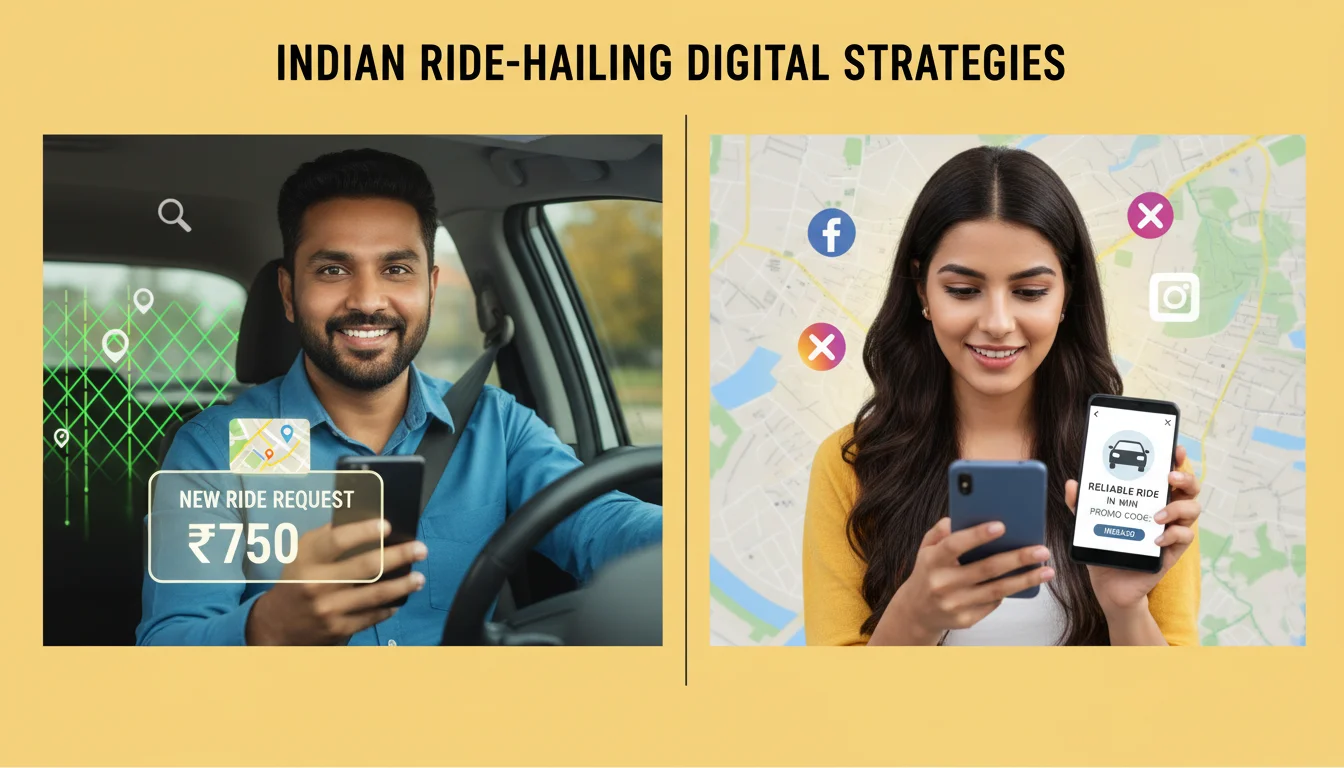
Complementing organic search, performance marketing and dynamic programmatic bidding allow platforms to scale rapidly. Paid search and social media advertising must be entirely data-driven. Employing advanced performance marketing tactics00such as strict geo-fencing of mobile advertisements around high-traffic urban transit hubs, IT parks, and entertainment districts during peak commute hours00maximizes the return on ad spend (ROAS). By 2026, utilizing artificial intelligence automation tools for predictive bidding and dynamic creative optimization allows advertising campaigns to adjust parameters in real-time, reacting instantly to local weather anomalies, sudden traffic gridlocks, and historical localized demand patterns without human intervention.
In India’s highly cluttered and perpetually noisy digital space, brand affinity is frequently established through cultural resonance, localized humor, and nostalgia. Viral social media marketing campaigns, which integrate mobility solutions seamlessly into popular culture or rely on highly shareable, user-generated meme content, drastically lower overall customer acquisition costs. The strategic focus must be placed on cultivating a brand personality that acknowledges and resonates with the vibrant, chaotic reality of Indian urban transport, inviting the audience to co-create the narrative rather than passively consume corporate messaging. This cultural integration is vastly accelerated through strategic micro-influencer partnerships. Influencer marketing effectively bridges the inherent corporate trust deficit. By leveraging hyper-local creators who communicate natively in regional dialects and who authentically understand hyper-local commuter struggles, brands generate powerful social proof. This strategy has proven particularly devastating to incumbents when launching alternative services in Tier-2 and Tier-3 cities, where community-level trust consistently outweighs national brand recognition.
Finally, the most potent, mathematically sound growth mechanism in the ride-hailing arsenal is the digitally engineered dual-sided referral loop. Incentivizing existing riders to refer their social network, and crucially, heavily rewarding existing driver-partners for onboarding new drivers, creates a self-sustaining viral expansion mechanism. Modern digital platforms facilitate the seamless algorithmic tracking and instant financial payout of these incentives, making frictionless referral programs the absolute backbone of scaling operations efficiently.
Analyzing historical and contemporary case studies provides a masterclass in these digital methodologies. When Uber initially executed its market entry into India, it aggressively bypassed traditional, expensive mass media. Instead, it utilized a highly targeted influencer marketing strategy known as the “Rider Zero” campaign, offering exclusive early access to culturally influential figures who subsequently generated massive pre-launch digital anticipation. This top-of-funnel awareness was immediately followed by the “Office Hero” referral campaign, deeply contextualized to the specific pain points of the Indian professional’s daily commute. By exploiting the rich Indian festival tradition, Uber amplified its reach by offering highly contextualized digital promotions during events like Holi and major cricket matches, driving massive, cost-effective user acquisition through localized digital amplification.
Conversely, Rapido successfully challenged the entrenched Uber and Ola duopoly not by attempting to outspend them on customer subsidies, but by digitally disrupting the driver supply chain. Rapido recognized that the true bottleneck was driver willingness. Through targeted digital outreach, Rapido heavily promoted its innovative SaaS-like subscription model, which replaced the hated percentage commission with a flat daily access fee. This specific digital narrative resonated deeply with a massive population of disillusioned gig workers. The resulting massive supply-side onboarding inevitably ensured high rider reliability, propelling Rapido to absolute market leadership in overall ride volumes. Their product scale was guided by critical factors including relentless primary research, focusing on core technology in the initial phases, and listening intently to early customer feedback to iterate their mobile application continuously.
In the premium segment, BluSmart carved out a highly defensible niche in a saturated market by focusing entirely on an electrified, zero-emission fleet. Entering the market amidst skepticism regarding India’s EV infrastructure, BluSmart launched aggressive digital campaigns directly addressing urban eco-anxiety. By capitalizing on events like World EV Day, they highlighted impressive operational metrics, such as crossing 140 million clean kilometers and saving thousands of tonnes of CO2.
By aligning their digital narrative with the global corporate sustainability movement and utilizing precise digital targeting aimed at eco-conscious corporate commuters, BluSmart established a premium market position that remains highly resistant to traditional price-war tactics.
Competitive Analysis
The digital landscape of the Indian mobility sector is currently fiercely contested by several major entities, each leveraging highly distinct marketing narratives, technological infrastructures, and operational unit economics. The market has evolved from a stagnant duopoly into a fragmented, highly competitive arena where technological agility and digital narrative control dictate market share.
Rapido
Primary Market Focus: Mass market utility, Two/Three wheelers, Emerging Cabs
Core Digital Narrative & Strategic Advantage: Extreme affordability; Driver empowerment via a zero-commission subscription SaaS model. Commands ~50% combined market share.
Notable Vulnerabilities & Market Gaps: Lingering perception as primarily a bike-taxi service; faces regulatory hurdles in specific state jurisdictions.
Uber
Primary Market Focus: Global standardization, Multi-modal (Premium Cabs, Auto, Moto)
Core Digital Narrative & Strategic Advantage: Unmatched reliability, technological superiority, and highly aggressive, data-driven programmatic performance marketing.
Notable Vulnerabilities & Market Gaps: Perceived high consumer pricing during surges; intense ongoing friction regarding driver commission structures.
Ola
Primary Market Focus: First-mover Indian aggregator, Diverse vehicle fleet
Core Digital Narrative & Strategic Advantage: Brand ubiquity across the subcontinent; deep national integration and localized operational history.
Notable Vulnerabilities & Market Gaps: Severe customer backlash and brand damage over algorithmic driver cancellations and opaque surge pricing mechanisms.
BluSmart
Primary Market Focus: Premium corporate transit, Environmentally conscious users
Core Digital Narrative & Strategic Advantage: 100% Electric Vehicle fleet; Guaranteed zero cancellations; heavy emphasis on clean mobility and sustainability metrics.
Notable Vulnerabilities & Market Gaps: Geographically constrained operations (primarily Delhi-NCR/Bangalore); significantly lower overall fleet volume compared to legacy peers.
Namma Yatri
Primary Market Focus: Open-source mobility, Auto-rickshaws
Core Digital Narrative & Strategic Advantage: Backed by the Open Network for Digital Commerce (ONDC); Flat subscription fee model appealing deeply to local drivers.
Notable Vulnerabilities & Market Gaps: Lacks the massive venture-capital marketing budgets of global incumbents; highly localized adoption curve.
A granular analysis of competitor strengths reveals sophisticated digital execution. Rapido has masterfully localized its digital presence across the subcontinent. Their marketing deeply acknowledges the highly specific pain points of navigating chaotic Indian traffic, utilizing highly relatable, vernacular video content to push their two-wheeler and auto services to the masses. Furthermore, their strategic pivot to aggressively market their zero-commission model directly to drivers via targeted digital channels has fundamentally altered the supply-side dynamics of the entire industry, proving that B2B digital marketing is just as crucial as consumer outreach. Uber00s digital dominance, meanwhile, is rooted entirely in its data infrastructure. Their performance marketing apparatus is unparalleled; they utilize advanced programmatic advertising, dynamic search engine bidding, and highly personalized real-time Customer Relationship Management (CRM) tools00such as automated push notifications and localized emails00to trigger immediate platform usage based on precise user contexts, such as local rainfall, late-night hours, or proximity to an airport. In contrast, BluSmart excels in digital brand positioning. Their online presence is deliberately sleek and premium, focusing heavily on LinkedIn and targeted social channels to acquire high-value corporate clients. They effectively utilize data storytelling00prominently showcasing precise metrics like CO2 emissions saved per ride00to build a loyal, ideologically aligned customer base that values mission over minor price discrepancies.
However, the current competitive matrix reveals several highly exploitable vulnerabilities that new entrants or scaling regional players can capitalize upon.
- First, the intense, almost singular focus on major metropolitan hubs by giants like Uber and Ola leaves a massive, highly lucrative void in Tier-2 and Tier-3 cities. A localized ride-hailing company can drastically outperform national giants in these regions by implementing hyper-local SEO strategies, deploying vernacular digital marketing campaigns that respect regional dialects, and establishing deep, community-level trust that algorithms cannot replicate.
- Second, the pervasive algorithmic opacity regarding dynamic pricing provides a massive opportunity for a challenger brand to position itself entirely on absolute price transparency. Digital campaigns that explicitly guarantee flat rates or mathematically capped surge pricing can serve as a devastatingly powerful market differentiator against incumbents.
- Finally, continuous driver dissatisfaction remains the Achilles heel of the dominant platforms. A scaling platform can dedicate a substantial portion of its digital marketing budget strictly toward driver acquisition and long-term retention. By utilizing platforms like YouTube and WhatsApp to transparently communicate vastly superior unit economics, a challenger can secure the vital supply side, which inevitably ensures the consumer reliability necessary to steal market share.
Recommended Strategy for Ride-Hailing Companies in India
To successfully navigate and dominate this highly complex landscape, ride-hailing operators must deploy a comprehensive, full-funnel digital marketing strategy. This approach must balance aggressive, data-driven customer acquisition with deeply personalized, algorithmically guided retention mechanisms.
Effective audience segmentation requires moving far beyond broad, generic demographics to highly specific, intent-based digital profiling.
- The Hyper-Commuter: generally comprising Gen Z and Young Millennials aged 18 to 28. Located primarily in metro and Tier-2 city centers, university campuses, and sprawling IT corridors, this demographic is defined by extreme price sensitivity, time-scarcity, and exceptionally high digital literacy. They overwhelmingly prefer agile solutions like bike-taxis and auto-rickshaws for solo travel. Marketing to this segment requires campaigns emphasizing absolute speed, rock-bottom affordability, and engagement through viral, meme-based digital content on platforms like Instagram Reels.
- The Corporate Professional: encompassing Older Millennials and Gen X populations aged 29 to 45. Concentrated around corporate parks, premium residential complexes, and airport transit routes, their preferences skew heavily toward absolute reliability, physical comfort, safety, and administrative necessities like GST-compliant digital invoicing. They form the core user base for premium four-wheelers and emerging EV fleets. Marketing here must pivot to highlight zero-cancellation guarantees, highly professional driver vetting, and eco-friendly transit solutions.
- The Safety-Conscious User: encompassing women and elderly commuters across pan-India geographies. Their primary decision-making factors are robust security features, transparent driver background checks, and reliable in-app SOS functionalities. Marketing must foreground trust, showcasing rigorous vetting processes and the seamless integration of live trip-sharing technologies.
- The Driver-Partner: Representing the supply side and typically aged 21 to 50, they often reside in peri-urban areas. Their absolute priorities are transparent earnings, low or zero commission structures, instantaneous daily payouts, and fundamental platform respect. Digital marketing directed at this segment must emphasize financial independence, community support, and the concrete mathematical benefits of subscription-based operational models.
To engage these personas, specific digital channels and advanced campaign types must be orchestrated.
- Search Engine Optimization and Google Ads: form the foundation of capturing high-intent transactional demand. Google Ads must be run continuously utilizing sophisticated geo-modifiers, specifically targeting users physically located near major transit hubs. Concurrently, organic SEO efforts must focus obsessively on dominating the Google “Local Pack” and Maps integration to capture immediate ride requests reliably.
- Vernacular Social Media Ads: across Meta platforms and YouTube are essential. Utilizing short-form video in local languages drives highly efficient app installs. The content must be highly relatable, dramatically showcasing daily commuter frustrations and the seamless, instantaneous resolution provided by the specific app.
- Conversational Commerce via the WhatsApp Business API: represents a massive strategic advantage. Given WhatsApp’s absolute ubiquity in India, allowing users to initiate ride bookings, receive real-time algorithmic ETAs, and access automated customer support entirely within a WhatsApp chatbot significantly reduces the friction of native app downloads and dramatically increases long-term user retention.
- Programmatic and Contextual Advertising: utilizing automated buying to display advertisements dynamically00for instance, triggering specific ad creatives highlighting immediate car availability during sudden, localized rainstorms or public transit failures.
Content ideation must be highly specific to the friction points of Indian mobility.
An educational transparency series utilizing short videos to explain precisely how the matching algorithm works or the economic necessity of dynamic pricing can effectively demystify the technology and rebuild eroded consumer trust. Driver highlight stories, which showcase the personal lives, struggles, and aspirations of driver-partners, are crucial for fostering consumer empathy and humanizing the brand, offsetting the negative perception of algorithmic corporate exploitation. Hyper-local digital guides00such as targeted blog posts or localized social media threads detailing “Best late-night food spots in Bengaluru” or “Navigating the Diwali rush in Delhi”00subtly and effectively integrate the ride-hailing application as the essential, invisible mobility partner. Additionally, animated infographics providing clear walkthroughs of in-app safety features, detailing how to trigger SOS alerts or verify driver identities, directly address the safety-conscious persona.
For regional startups or scaling brands operating without the luxury of multi-billion-dollar venture capital funding, asymmetric, budget-friendly digital marketing approaches are strictly required. Physical fleet branding acts as a highly effective, low-cost out-of-home (OOH) media channel. Wrapping operational vehicles in highly visible QR codes and bold digital calls-to-action transforms the existing fleet into a roaming network of billboards, seamlessly blending offline physical visibility with immediate digital acquisition. Cultivating hyper-local partnerships is another highly efficient strategy. By partnering with local restaurants, high-traffic pubs, and regional event organizers to provide customized, trackable digital promo codes for their patrons, a platform turns local businesses into a decentralized, commission-based affiliate marketing network. Ultimately, aggressive referral engineering remains the most cost-effective growth vector. By heavily subsidizing acquisition costs through automated, in-app rewards for users and drivers who expand the network, a platform can lower its overall Customer Acquisition Cost (CAC) significantly compared to relying entirely on cold, programmatic ad targeting.
Keywords & SEO Opportunities
Within the hyper-competitive mobility sector, a robust SEO strategy must explicitly bifurcate its focus between capturing immediate, high-intent transactional queries and nurturing broader, informational long-tail searches. The evolution of SEO in India has moved aggressively from mechanical keyword stuffing toward semantic analysis and contextual relevance, driven by search engine algorithms like BERT and RankBrain.
High-intent keywords are transactional in nature; they indicate a user is actively, immediately seeking a ride. These terms are highly competitive, characterized by massive search volumes, and require a flawless technical SEO foundation coupled with obsessive Google Business Profile optimization to rank within the localized map pack.
Target Keyword Cluster
- taxi near me / cabs near me: 246,000 - 1,500,000+ - Immediate, urgent need. Highly location-dependent. Requires perfect local SEO execution.
- cab service near me: 135,000 - Immediate need, often skewing toward corporate, premium, or scheduled service requirements.
- ola cab booking / uber taxi: 74,000 - 246,000 - Navigational/Brand intent. Represents a high-value opportunity to run competitor conquesting ad campaigns.
- airport taxi / city taxi: 74,000 - 90,500 - High ticket value. Often implies pre-planned transit, allowing for targeted landing page optimization.
Conversely, long-tail keyword opportunities are less fiercely competitive, highly specific, and consistently boast vastly superior conversion rates due to their exact alignment with user intent. By 2026, data indicates that 62% of searches conducted in regional Indian languages (such as Hindi, Tamil, and Bengali) generate natural language, long-tail patterns. Targeting these specific phrases00especially to capture the explosive growth in voice search queries via mobile assistants00constitutes a critical, highly defensible strategic moat.
Strategic long-tail targeting should focus on location combined with a highly specific user need, such as late night safe taxi service in [City/Neighborhood], prepaid airport taxi from [Location] to [Airport Name], or cheap bike taxi for daily commute in [City]. Event and context-specific queries also yield high conversion rates, including searches like outstation cab booking from [City A] to or reliable cab service for corporate events in [City]. Furthermore, informational, trust-based queries offer immense top-of-funnel value. Creating authoritative blog content around queries like how to calculate taxi fare per km in [City], which is the safest cab app for women in India, or critically for the supply side, how to join as a driver without commission in [City], establishes the platform as an industry authority. Optimizing for this vast array of long-tail keywords requires deploying programmatic SEO architectures, generating hundreds of unique, location-specific, and route-specific landing pages dynamically to capture hyper-granular, highly qualified search traffic efficiently.
Implementation Roadmap
To transition from theoretical strategy to operational execution, a rigorously phased implementation roadmap is essential. This timeline prioritizes immediate, high-impact cash-flow generation and operational stabilization before gradually transitioning toward complex, long-term brand equity building and technological integration.
The initial phase, encompassing Short-Term Quick Wins (Months 1003), focuses strictly on capturing existing market demand, optimizing current digital real estate, and kickstarting the critical supply loop of driver acquisition. During the first month, the absolute priority is establishing a flawless digital foundation and optimizing Local SEO. This requires conducting a comprehensive audit and optimization of mobile app store listings (ASO), aggressively targeting high-intent mobility keywords to drive organic installations. Simultaneously, the marketing team must claim, rigorously verify, and obsessively optimize Google Business Profiles for every operating city. Ensuring pinpoint accuracy of NAP (Name, Address, Phone) data is the only way to reliably capture the massive volume of “near me” localized searches. The technical deployment of advanced tracking architecture00including Meta Pixels, Google Analytics 4, and mobile measurement partners like AppsFlyer00must be finalized to ensure precise, granular attribution of all subsequent marketing expenditures. Moving into the second month, focus shifts heavily to driver acquisition and fleet branding. Marketing teams should launch highly targeted, B2B-style lead generation campaigns across Meta platforms. These campaigns must specifically target the demographics most likely to onboard as drivers, utilizing ad copy that aggressively highlights transparent earnings, zero-commission structures, and immediate payout benefits. Concurrently, implementing massive QR-code-based fleet branding on all active vehicles turns physical transit into a driver of organic app downloads. By the third month, the platform must activate the dual-sided referral engine within the application codebase, algorithmically subsidizing user and driver acquisition. This is paired with the launch of hyper-local Google Search campaigns, tightly geo-fenced around strategic, high-yield transit hubs like airports and railway stations, bidding aggressively on high-intent keywords.
The secondary phase outlines the Long-Term Strategy (Months 60012), shifting the organizational focus toward sustainable, organic growth, leveraging advanced artificial intelligence, and achieving deeper cultural integration. Throughout months four to six, the marketing apparatus must roll out a comprehensive, localized content ecosystem. This involves deploying vernacular content across Instagram Reels and YouTube Shorts, directly addressing regional commuter nuances. Activating strategic partnerships with local micro-influencers to generate authentic, User-Generated Content (UGC) style reviews will solidify community trust, particularly regarding safety protocols and ETA accuracy. Entering months seven to nine, the technological complexity increases with the deployment of programmatic SEO infrastructure. This allows the automated generation of highly optimized landing pages for thousands of specific, city-to-city or neighborhood-level route queries, capturing the massive volume of long-tail search traffic. Operationally, the complete integration of booking mechanisms and customer support into the WhatsApp Business API must be finalized, allowing users to bypass native app friction entirely. Finally, as the roadmap culminates in months ten through twelve, the platform must embrace AI-driven automation. Implementing AI tools for dynamic pricing optimization, smart route forecasting, and Dynamic Creative Optimization (DCO) allows the marketing and operational algorithms to tailor ad copy, imagery, and pricing instantly based on real-time user location, time of day, and hyperlocal weather conditions. This period also marks the evolution toward becoming a broader mobility superapp, utilizing the established user base to cross-sell adjacent services, ultimately culminating in high-production brand campaigns focusing on larger socio-economic themes to cement deep, inter-generational brand loyalty.
Conclusion
The Indian ride-hailing and localized taxi industry stands at a critical, highly lucrative inflection point in 2026. As the broader shared mobility market rapidly expands toward a projected USD 56.39 billion valuation by the decade’s end, the fundamental operational paradigms governing success are undergoing a violent shift.
The market is transitioning decisively away from a reliance on premium four-wheeler formats toward high-frequency, mass-market micro-mobility solutions like auto-rickshaws and two-wheelers. Simultaneously, the supply-side economics are experiencing a revolution, moving away from historically exploitative, opaque commission structures toward highly transparent, SaaS-inspired, subscription-based driver networks. Within this hyper-competitive, digitally native ecosystem, enduring market success is no longer dictated solely by the sheer physical size of a vehicle fleet or the depth of venture capital subsidies. Instead, market dominance is increasingly determined by the precision, agility, and sophistication of a company’s underlying digital marketing infrastructure.
A rigorous, meticulously data-driven digital strategy is not an optional operational luxury; it is the fundamental mechanism through which physical supply is acquired, consumer demand is sustainably generated, and absolute market equilibrium is maintained across millions of daily algorithmic interactions. Mobility companies that fail to master the nuances of hyper-local SEO, vernacular social media engagement, and advanced, AI-driven performance marketing will inevitably succumb to unsustainably high customer acquisition costs and crippling rates of driver churn. Conversely, brands that aggressively deploy transparent, culturally resonant digital narratives00backed by flawless, frictionless technological execution00will successfully capture and monetize the vast, largely untapped potential of India’s rapidly digitizing Tier-2 and Tier-3 urban centers.
Executing a full-funnel digital strategy of this immense magnitude requires deep, localized market intuition combined with highly specialized technical expertise. Gurkha Technology, an established and premier digital marketing and IT services agency headquartered in Kathmandu, Nepal, possesses the exact regional acumen and technical proficiency required to drive this specific sectoral transformation. Since its foundational establishment in 2013, Gurkha Technology has specialized deeply in comprehensive Search Engine Optimization, highly sophisticated Social Media Marketing, and robust, scalable Web and E-commerce Application Development frameworks. With a proven portfolio of delivering exceptional, data-driven results and a deep understanding of the unique digital consumer behaviors prevalent across the South Asian subcontinent, they provide bespoke marketing strategies tailored specifically for high-growth sectors. By partnering with Gurkha Technology, ride-hailing enterprises operating in India can effectively leverage highly specialized, cross-border digital expertise, ensuring that their foundational marketing architecture is not only technologically scalable and hyper-localized but mathematically engineered to systematically outperform deeply entrenched industry incumbents in the complex, ever-evolving landscape of Indian mobility.