Digital Marketing in Indian Retail: Growth, Trends & Insights
Industry Overview
The macroeconomic architecture of the Indian retail sector is currently experiencing a profound and unprecedented structural transformation. Historically characterized by highly fragmented, localized, and unorganized trade, the ecosystem is rapidly evolving into a digitally integrated, omnichannel powerhouse. As of 2025, the Indian retail market has achieved a staggering valuation of approximately USD 1,124.2 billion, maintaining its formidable position as the third-largest retail market globally. The trajectory of this expansion is driven by robust domestic consumption, favorable demographic dividends, and aggressive infrastructural development, with the market projected to grow at a Compound Annual Growth Rate (CAGR) of 12.80%, eventually reaching an estimated USD 3,505.4 billion by the year 2034. Alternate economic models and reports align closely with this projection, suggesting the market will effortlessly skyrocket past the USD 2 trillion mark well before the end of the decade, acting as a critical engine for national GDP, to which it already contributes over 10 percent while employing approximately 8 percent of the total workforce.
This aggressive market expansion is deeply intertwined with rising per capita income and macroeconomic policy shifts. India’s per capita GDP is steadily marching toward the critical USD 3,500 to USD 4,000 threshold, a globally recognized economic tipping point that historically unlocks massive waves of discretionary spending and exponential e-retail growth. Recent fiscal and monetary interventions, such as the elevation of personal tax exemption limits to INR 12,00,000 (approximately USD 14,000) in the 2025 budget, are expected to inject substantial liquidity into the middle class, boosting disposable income for tens of millions of taxpayers. Consequently, household consumption is anticipated to add USD 1.5 trillion in new spending, effectively propelling half of all Indian households into middle or affluent socioeconomic tiers by 2030.
Within this macro-environment, the grocery and daily essential retail sector remains the undisputed backbone of Indian commerce, accounting for two-thirds of total consumer spending and representing 15 to 20 percent of the nation’s GDP. The operational landscape of this sector is exceptionally complex. It is anchored by the traditional, unorganized sector—comprising an estimated 12 to 13 million small neighborhood “kirana” stores. These micro-retailers have historically commanded roughly 90 percent of the market share and continue to survive the onslaught of modern retail due to their geographical proximity, deep familial relationships with consumers, provision of informal monthly credit, and minimal operational overhead.
However, modern retail formats—including hypermarkets, multi-brand supermarkets, and organized convenience stores—are rapidly capturing market share, particularly in urban metropolises such as Delhi NCR, Mumbai, Bengaluru, Chennai, and Pune, with the southern states currently holding the highest concentration of organized retail infrastructure. The physical expansion of these entities is evident in commercial real estate metrics; retail leasing surged by 65 percent year-over-year in recent quarters, reaching a record 8.9 million square feet of fresh supply driven by aggressive brand expansions.
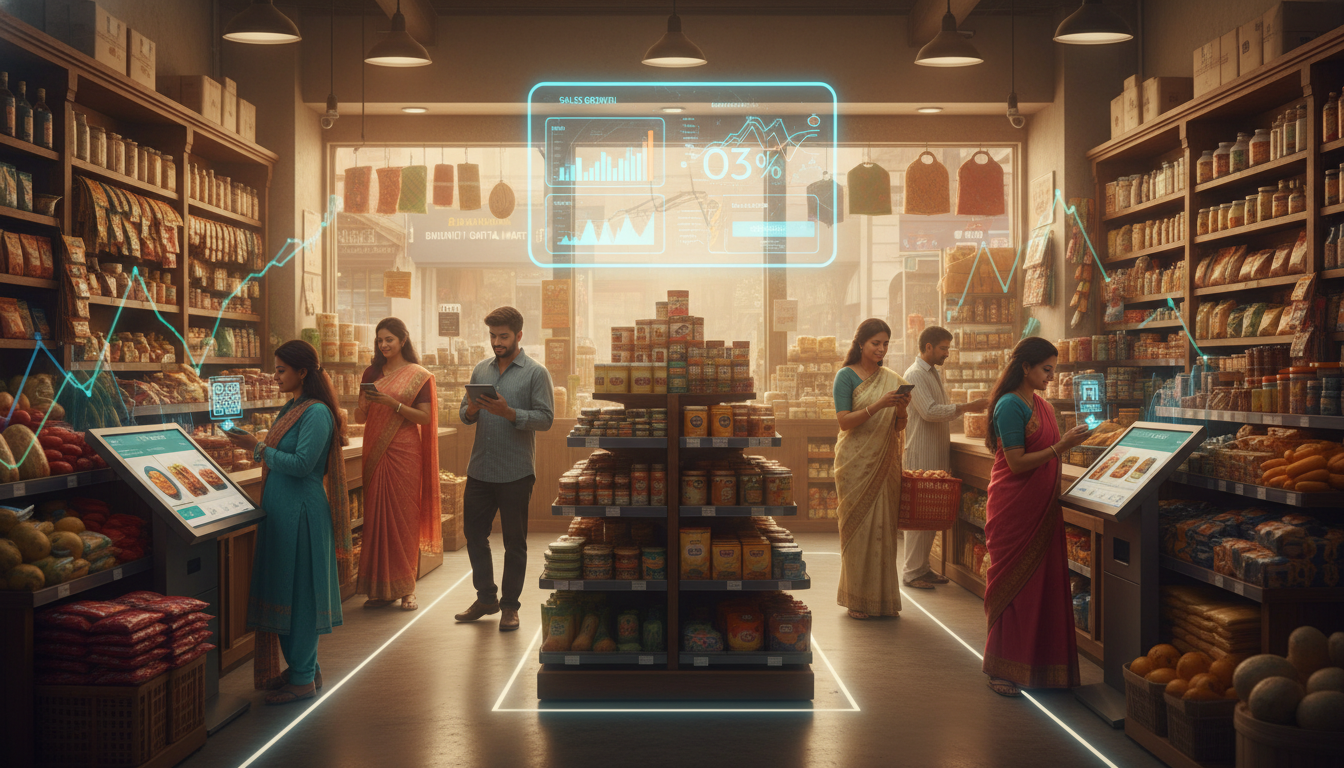
Furthermore, the industry is witnessing a geographical democratization of consumption. Growth is no longer confined to Tier I metropolitan areas. Tier II and Tier III cities have emerged as the fastest-growing consumer hubs in the country, expected to add nearly 100 million new consumers to the branded and organized retail sector by 2030. The infusion of artificial intelligence in supply chain logistics and a surge in rural consumption patterns are acting as twin engines propelling these emerging markets. Concurrently, the sector has been disrupted by the meteoric rise of quick commerce (q-commerce). India has established itself as the world’s first truly scaled q-commerce market, operating across more than 80 cities and expanding at an unprecedented CAGR of 70 to 80 percent. This segment, valued at over INR 64,000 crore in 2025, has permanently altered consumer expectations, normalizing 10-to-30-minute delivery cycles for groceries, fresh produce, and increasingly, general merchandise.
Despite these overwhelmingly positive macroeconomic indicators, physical supermarkets and retail shops operate in an environment fraught with systemic vulnerabilities and operational friction. The modern Indian retailer must navigate a labyrinth of financial, technological, and behavioral challenges to achieve sustainable profitability.
-
Hyper-Competitive Price Sensitivity
Indian consumers exhibit extraordinary price consciousness. Supermarkets are forced into relentless, margin-destroying price wars against deep-pocketed multinational e-commerce giants that subsidize losses for market share, as well as against unorganized kirana stores that operate with virtually zero regulatory overhead.
-
Logistical and Supply Chain Friction
Managing complex cold chains for fresh produce, optimizing warehousing, and executing flawless last-mile distribution across India’s congested urban infrastructure remains highly capital-intensive. The rise of 10-minute q-commerce has set an operational standard that traditional supermarkets struggle to meet without massive technological investments.
-
Digital Transformation and Integration Costs
Transitioning from legacy, siloed Point of Sale (POS) systems to sophisticated, cloud-based omni-channel Customer Relationship Management (CRM) software requires capital expenditures that small to medium enterprises (SMEs) frequently lack, creating a widening technological gap between regional players and national conglomerates.
-
Erosion of Traditional Customer Loyalty
The digitization of the retail journey has severely diluted traditional store loyalty. With 73 percent of purchase decisions now influenced by online marketplaces, peer recommendations, and digital reviews, retaining a customer relies entirely on continuous digital engagement rather than mere geographical convenience.
-
Regulatory and Compliance Burdens
Retailers must continuously adapt to a highly complicated regulatory environment involving stringent labor laws, intricate Goods and Services Tax (GST) compliance frameworks, and evolving Foreign Direct Investment (FDI) policies that frequently shift the competitive balance in multi-brand retail and inventory-based e-commerce models.
-
Sustainability and Evolving Preferences
The modern consumer is increasingly shifting toward health-conscious choices, organic products, and sustainable packaging. Retailers face immense pressure to overhaul supply chains to eliminate plastic waste and source eco-friendly products, which often carry higher procurement costs.
Digital Landscape in India (Contextual to the Industry)
Understanding the efficacy of digital marketing within the Indian retail sector requires a deep analysis of the nation’s underlying digital infrastructure and the behavioral paradigms of its connected populace. The digital architecture supporting India’s retail boom is formidable, characterized by widespread smartphone penetration, globally unparalleled low data costs, and the aggressive rollout of high-speed broadband across remote geographies. This digital democratization has culminated in an internet user base exceeding 500 million active individuals, with more than 270 million actively transacting online, positioning India as the world’s second-largest e-retail market by user base.
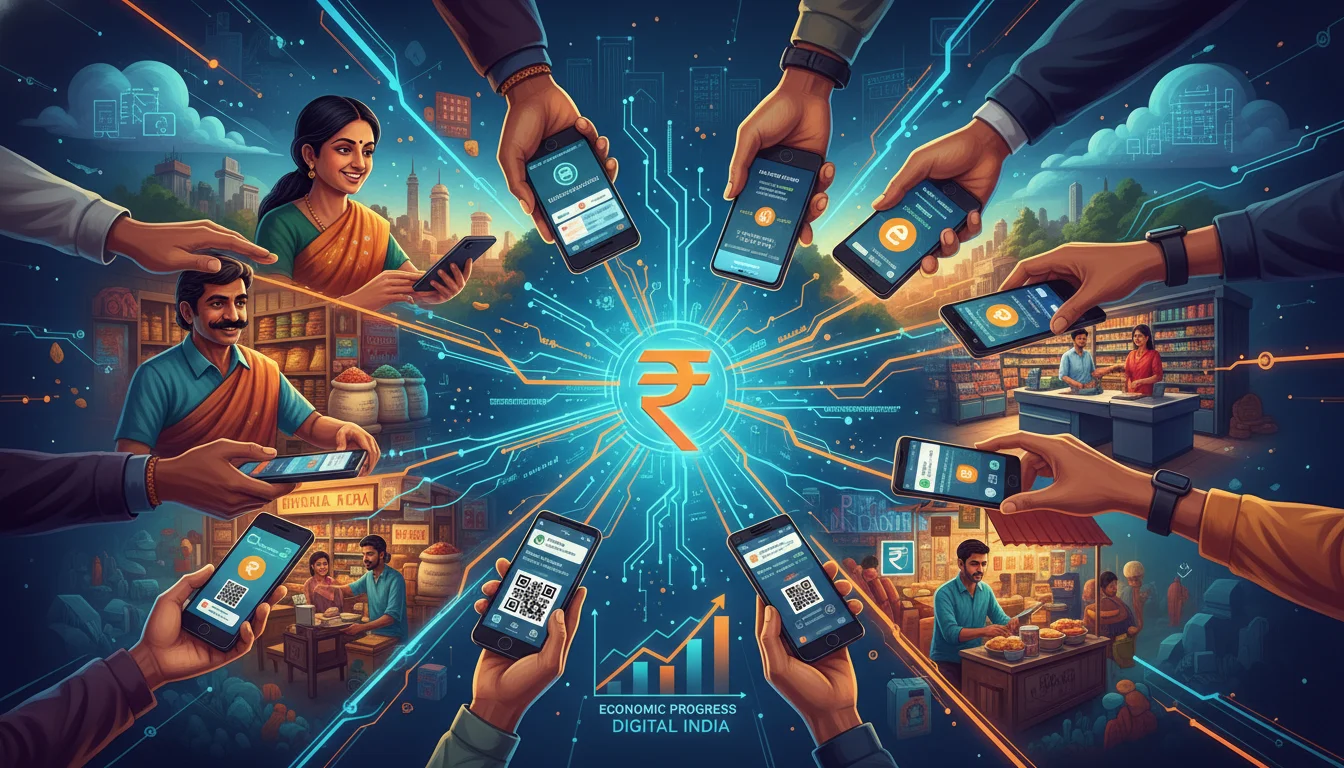
The absolute cornerstone of this digital transformation is the Unified Payments Interface (UPI) developed by the National Payments Corporation of India. By the conclusion of 2025, UPI has completely usurped physical cash as the dominant transaction medium across the nation. In a single fiscal year, UPI successfully processed over 185.8 billion transactions, representing 83.4 percent of the total digital payment volume and completely removing the transactional friction that historically plagued online-to-offline retail transitions. This seamless payment ecosystem ensures that consumers transitioning from digital product discovery to physical checkout experience zero hesitation.
The demographic composition of India’s digital consumer base is heavily skewed toward younger, digitally native populations, fundamentally altering the mechanisms of brand discovery. Generation Z, comprising individuals born between 1996 and 2010, has matured into the most economically potent demographic cohort in the nation’s history. By 2025, Gen Z accounts for 43 percent of India’s total consumption, commanding a direct and independent spending power of USD 250 billion. For this demographic, digital media is not an optional overlay on reality; it is the primary lens through which reality is perceived and evaluated.
This generational shift has catalyzed the rise of social commerce. Traditional search engines are frequently bypassed in favor of visual and community-driven platforms. Online marketplaces and social platforms now influence nearly three-quarters of all purchase decisions.
For instance, YouTube reviews sway 40 percent of consumer choices, while peer recommendations and micro-influencer content on platforms like Instagram and WhatsApp guide 51 percent of transactions. Social media usage is no longer confined to youth; data indicates that 33 percent of Gen Xers and 35 percent of baby boomers are actively utilizing platforms like TikTok and Instagram, forcing retail brands to maintain authentic, cross-generational messaging strategies.
Consumer behavior within the specific context of grocery and supermarket retail has grown incredibly nuanced, segmented heavily by regional identity and city tier. The Indian consumer market cannot be treated as a monolith. In the Northern regions, retail brands are frequently associated with social status, leading to a significantly higher volume of branded search queries and a preference for trend-driven lifestyle products. Conversely, consumers in the Southern states view brand names primarily as markers of intrinsic product quality, which manifests in distinct catalog and promotional preferences.
Furthermore, digital maturity dictates purchasing volume. In highly mature urban markets such as Vadodara or Coimbatore, high e-retail penetration and affluence result in approximately 40 percent higher digital spending per shopper compared to nascent markets like Prayagraj. These affluent urban shoppers display a profound preference for premium products, resulting in average selling prices that are 10 to 25 percent higher across grocery and lifestyle categories. However, the volume of growth is shifting outward. Over 60 percent of all e-commerce transactions now originate in Tier II and Tier III cities, unlocking massive growth in remote, previously brand-starved geographies.
The modern consumer journey is entirely non-linear and demands absolute omnichannel integration. A typical Indian shopper might discover an artisanal coffee brand via an algorithmic Instagram Reel, verify its flavor profile through a trusted YouTube lifestyle vlogger, compare its pricing across Amazon Fresh and Blinkit, and ultimately execute the purchase via a localized WhatsApp business message sent directly to their neighborhood supermarket for immediate delivery. This fragmented, multi-touchpoint journey mandates that retail businesses abandon siloed operations and establish a ubiquitous, synchronized digital presence that flawlessly bridges online inspiration with offline fulfillment.
Digital Marketing Opportunities
The compounding challenges of hyper-competitive price wars, wavering customer loyalty, and rapid unorganized competition can be systematically dismantled through the aggressive, intelligent application of digital marketing. For regional supermarkets and localized retail shops, digital marketing serves as the ultimate equalizer. It allows independent retailers to bypass the sheer capital dominance of national conglomerates by leveraging highly targeted data, localized community trust, and agile content deployment.
Strategic Solutions to Core Industry Friction
Digital marketing provides specific, measurable mechanisms to solve the retail industry’s most pressing vulnerabilities. To combat extreme price sensitivity, supermarkets must transition consumer focus from raw cost to perceived value. By utilizing high-definition video marketing and content-rich social media campaigns, retailers can spotlight organic sourcing, stringent hygiene standards, and exclusive international brand partnerships, effectively justifying premium pricing models and insulating margins from discount-driven competitors.
To address the erosion of traditional loyalty, retailers must implement localized, artificial intelligence-driven Customer Relationship Management (CRM) workflows. By analyzing historical purchase data, a supermarket can deploy predictive marketing. If algorithms detect that a household purchases specific baby care products or bulk rice every three weeks, an automated, personalized WhatsApp or email reminder sent on the eighteenth day dramatically increases the probability of retention, preempting the customer’s urge to browse competing digital marketplaces. Furthermore, to bridge the online-to-offline (O2O) gap, deploying hyper-local Search Engine Optimization (SEO) and geo-fenced paid advertising ensures that when a nearby consumer exhibits high digital intent for daily essentials, the local physical store captures that query and successfully converts it into immediate foot traffic.
High-Impact Digital Strategies for Supermarkets
The deployment of a successful digital architecture for Indian retailers relies on an integrated, multi-channel strategy encompassing search visibility, conversational commerce, visual persuasion, and dynamic advertising.
Hyper-Local SEO and Business Profile Optimization
For physical retail entities, geographic proximity is their greatest intrinsic asset. Optimizing for proximity-based “near me” search queries is the foundational layer of digital acquisition. A meticulously optimized Google Business Profile (GBP) functions as a digital storefront. Retailers must populate their profiles with real-time inventory updates, weekly digital promotional flyers, high-resolution interior photography, and rigorous, responsive review management. As mobile traffic dominates the Indian internet landscape, maintaining a mobile-first, rapidly loading website optimized for local keywords guarantees visibility when consumers make impulsive purchasing decisions.
WhatsApp Marketing and Conversational Commerce
Within the Indian digital ecosystem, WhatsApp transcends its origins as a simple messaging application; it functions as the nation’s primary digital communication and commerce infrastructure. Small and medium retail businesses can leverage the WhatsApp Business API to broadcast daily promotional deals, facilitate seamless order placement, and provide instantaneous customer support. This conversational strategy acts as the digital evolution of the traditional kirana store’s personal touch, fostering an environment of high trust and generating conversion rates that frequently outpace conventional paid advertising matrices.
Social Media and Micro-Influencer Collaborations
While national mega-brands utilize celebrity macro-influencers to build broad, top-of-funnel awareness, localized supermarkets achieve superior Return on Investment (ROI) through regional micro-influencers. Analytics reveal that micro-influencer content drives brand distinction at a rate 4.8 times higher than standard category benchmarks. Collaborating with local food bloggers, regional fitness enthusiasts, or neighborhood community groups to showcase a supermarket’s fresh organic produce or exclusive imported goods builds authentic, localized trust that national algorithms cannot synthetically replicate. Furthermore, actively leveraging user-generated content (UGC)—such as encouraging shoppers to post cooking reels using store-bought ingredients via specific hashtag challenges—adds a powerful, organic community-driven layer to paid campaigns.
Artificial Intelligence and Dynamic Campaign Architecture
The frontier of retail marketing involves utilizing artificial intelligence to automate, predict, and optimize advertising delivery. Advanced platforms like Google’s Performance Max (PMax) allow supermarkets to dynamically allocate advertising budgets across Search, Display, YouTube, and Maps based strictly on real-time conversion probability. A profound emerging opportunity lies in Connected TV (CTV). Innovative brands in India, such as Kia, have pioneered the use of Shoppable CTV features—displaying scannable QR codes during television advertisements. When applied to the supermarket sector, a consumer watching streaming content can scan a QR code on a grocery advertisement and be immediately redirected to a localized landing page for instantaneous digital checkout or to claim an in-store discount voucher, seamlessly merging offline awareness with digital lead generation.
Transformational Case Studies
Analyzing the successful digital pivots of prominent Indian retail brands provides a blueprint for effective strategy execution.
The Blinkit Masterclass: Q-Commerce and Meme Marketing
Blinkit (formerly Grofers) successfully executed a massive digital repositioning to capture an astounding 46 percent market share in the Indian online grocery delivery sector. Blinkit’s core innovation was transitioning the perception of grocery shopping from a mundane household chore into an engaging lifestyle experience. The brand leaned heavily into meme marketing, real-time topical content, and humor across platforms like Instagram and Twitter, deeply resonating with urban millennials and Gen Z. They paired this cultural relevance with sleek, minimalist packaging, transforming the delivery arrival into a “social statement” that consumers actively desired to photograph and share online. This organic social engine, paired with massive investments in AI-driven route optimization, resulted in an 85 percent spike in social engagement, a 40 percent increase in brand recall, and over INR 3,500 crore in Gross Merchandise Value (GMV) by 2024.
BigBasket’s Data-Driven Content Ecosystem
Operating on an inventory-based model, BigBasket established long-term brand equity through highly technical digital marketing. Recognizing that grocery purchases are highly repetitive, BigBasket invested deeply in SEO and content marketing by developing exhaustive recipe blogs, comprehensive nutritional guides, and detailed ingredient sourcing stories. This content strategy was interwoven with sophisticated email analytics.
By rigorously tracking open rates and Click-Through Rates (CTR), BigBasket’s marketing algorithms delivered hyper-personalized product recommendations based on an individual user’s exact browsing and purchasing history. This dual-pronged approach—capturing top-of-funnel discovery traffic through informational SEO and maximizing customer lifetime value through interactive, personalized emails—cemented BigBasket as a high-trust, high-retention market leader.
4. Competitive Analysis
To formulate a winning strategy, regional retail businesses must fundamentally understand the digital maturity and operational frameworks of the top-tier competitors dominating the Indian landscape. Analyzing these mega-corporations reveals precisely what they do well, while simultaneously exposing the structural vulnerabilities that agile, localized supermarkets can ruthlessly exploit.
Digital Presence and Strengths of Top Market Players
| Competitor Entity | Core Digital Strategy and Market Positioning | Key Strengths and Capabilities |
|---|---|---|
| BigBasket (Tata Group) | Positioned as the premier destination for planned, large-basket monthly household stocking. | Unrivaled dominance in long-form SEO content, highly personalized interactive email marketing, and deep inventory curation. |
| Blinkit (Zomato) | The undisputed leader in urban, impulse-driven, and emergency q-commerce purchasing. | Hyper-engaging, culturally relevant meme marketing, unmatched social media velocity, and sub-10-minute AI-optimized delivery networks. |
| JioMart (Reliance Retail) | Designed as a massive omnichannel ecosystem connecting local kiranas with Reliance’s vast digital and telecom infrastructure. | Unmatched physical reach in emerging Tier II and III cities, heavily subsidized customer acquisition, and deep WhatsApp ordering integration. |
| Zepto | Rapidly capturing metro market share by strictly focusing on technological precision in the quick-commerce space. | Algorithmically precise supply chain management, heavy capital investment in localized “dark stores,” and aggressive performance advertising. |
| Amazon Fresh / Pantry | Relies on the immense trust and integrated loyalty mechanics of the broader Amazon Prime ecosystem. | Infinite customer data lakes for predictive algorithmic pricing, unparalleled logistical infrastructure, and absolute dominance in high-intent search queries. |
The national conglomerates excel primarily in the realms of predictive personalization and seamless ecosystem integration. They possess the financial capital to build massive data lakes, allowing their algorithms to predict regional inventory needs with frightening accuracy and customize application interfaces for every unique user. Their application aesthetics and User Interfaces (UI) are meticulously engineered to minimize friction at checkout. Furthermore, they utilize their vast treasuries to subsidize initial customer acquisition costs through deep discounting, free delivery thresholds, and loss-leader pricing models that independent retailers mathematically cannot match. They have also mastered the mechanics of omnichannel synchronization, ensuring that physical stock resting in massive exurban warehouses perfectly mirrors digital availability in real time.
Gaps and Strategic Opportunities to Outperform
Despite their overwhelming technological superiority and capital abundance, mega-retailers possess inherent structural vulnerabilities. Their massive scale creates rigidities that agile, community-focused regional supermarkets can successfully exploit.
The most significant vulnerability is the Lack of Authentic Community Integration. National brands operate via algorithms and dark stores, a model that inherently dilutes their ability to form authentic, localized bonds. A regional supermarket has a physical footprint embedded in the neighborhood. By utilizing digital channels to sponsor local community events, partnering with neighborhood schools, or spotlighting local charities, a supermarket can build a digital persona of deep community investment that a sterile national application simply cannot replicate.
Secondly, national platforms suffer from Rigidity in Vernacular and Cultural Nuance. While national players deploy standardized digital advertisements, local retailers can deploy highly specific, vernacular-language campaigns that cater to micro-regional festivals, localized dietary habits, and hyper-specific cultural nuances that overarching algorithms frequently overlook or misunderstand.
Thirdly, the q-commerce revolution has created a massive Human Customer Service Gap. Modern grocery applications rely almost exclusively on automated chatbots for dispute resolution, an experience that intensely frustrates consumers seeking nuanced answers regarding refunds or product quality. Regional shops that actively utilize WhatsApp Business API can provide direct, human-to-human digital customer service. This approach seamlessly merges modern digital convenience with the deeply trusted, historical “Kirana” relationship model, fostering immense customer loyalty.
Finally, there is a growing consumer backlash regarding Sustainability and Quality Transparency. Consumers are increasingly skeptical of the quality and origin of fresh produce dispatched from opaque “dark stores,” and are highly critical of the excessive plastic packaging utilized by q-commerce companies. Physical supermarkets can exploit this by utilizing video content on platforms like Instagram and Facebook to offer transparent, behind-the-scenes digital tours of their fresh produce sourcing networks, bakery operations, and stringent hygiene standards. By visually proving their commitment to eco-friendly practices and local sourcing, independent retailers can leverage their physical footprint as a supreme trust-building asset.
5. Recommended Strategy for Supermarkets and Retail Shops in India
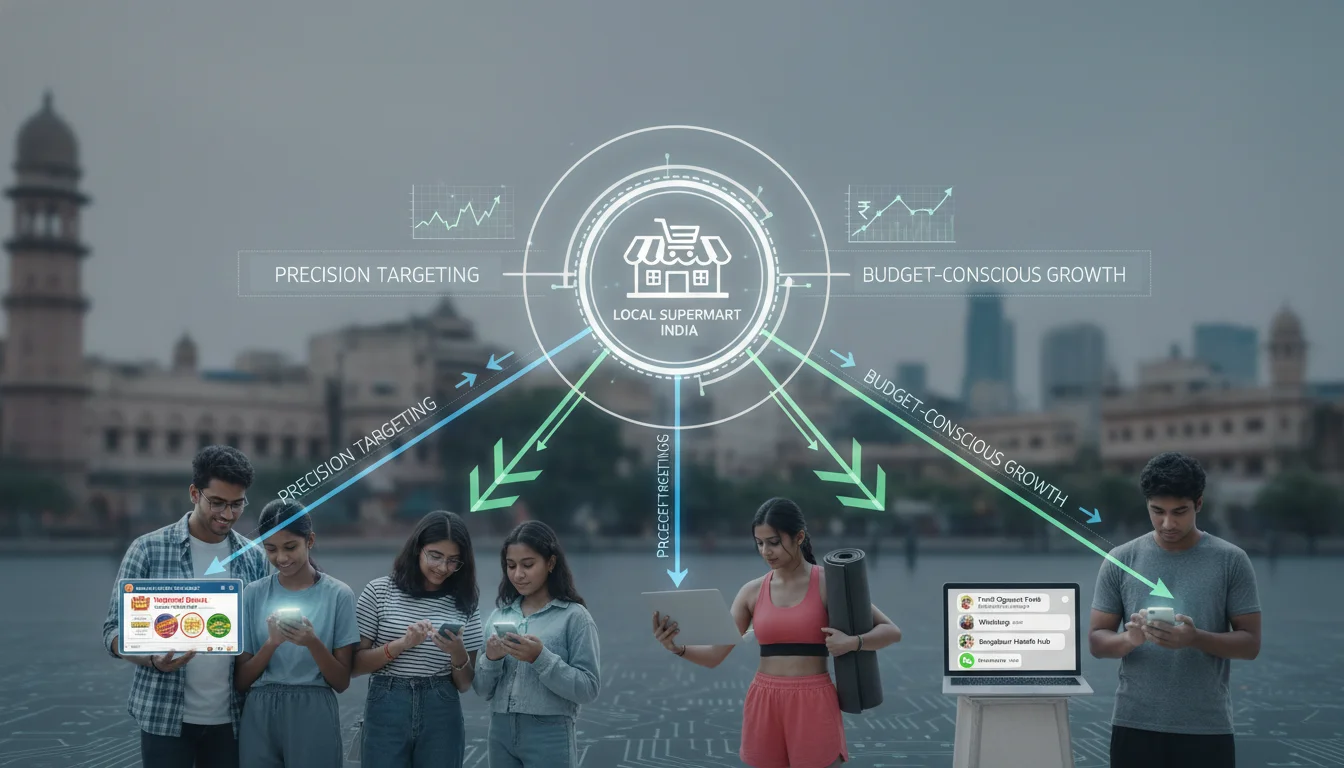
To survive the pressures of national conglomerates and thrive in the modern economy, an independent regional supermarket must adopt a highly localized, digitally aggressive, yet meticulously budget-conscious marketing framework. Success relies on precise targeting, strategic channel selection, and value-driven content creation.
Target Audience Personas
Executing effective digital marketing requires a granular understanding of the psychographics driving Indian consumer behavior. Marketing messages must be uniquely tailored to specific behavioral segments rather than broadcast generically.
Persona 1: The Aspiring Middle Class (Age 28–45)
This segment is the economic bedrock of India’s consumption boom, projected to expand to over 580 million individuals by 2025. They are actively transitioning from purchasing unbranded, loose commodities to seeking affordable premium brands and standardized quality. They place high value on education, family health, and upward social mobility.
- Digital Behavior: They are highly active on Facebook and utilize WhatsApp as their primary communication tool. Their purchasing decisions are heavily influenced by peer reviews and digital promotional catalogs. They respond exceptionally well to structured loyalty programs, digital discount bundling, and direct-to-home convenience.
Persona 2: Gen Z and Young Urban Professionals (Age 18–27)
Representing the largest and wealthiest youth cohort in history, this segment is driven by aesthetics, extreme convenience, and lifestyle upgrades. They view spending as an investment in personal branding and experiences rather than mere survival utility.
- Digital Behavior: They bypass traditional search engines, discovering products primarily through algorithmic feeds on Instagram Reels, YouTube Shorts, and influencer curation. They possess an absolute intolerance for clunky UI and expect seamless mobile experiences coupled with ultra-fast fulfillment. They are highly receptive to meme marketing, culturally relevant humor, and brands that take authentic social stances.
Persona 3: Health, Wellness, and Sustainability Enthusiasts
A psychographic segment that crosses traditional age barriers, this highly profitable demographic is intensely focused on clean labels, organic sourcing, vegan alternatives, and eco-friendly packaging.
- Digital Behavior: They are active researchers. They utilize long-tail, high-intent search queries (e.g., “where to buy organic quinoa near me”) and consume long-form educational content. They read recipe blogs, watch detailed nutritional breakdown videos, and actively seek out brands that demonstrate transparent Environmental, Social, and Governance (ESG) initiatives.
Recommended Channels and Campaign Architecture
A multi-tiered, full-funnel channel approach ensures comprehensive market penetration and maximum budget efficiency.
| Sales Funnel Stage | Recommended Digital Channel | Campaign Strategy and Implementation |
|---|---|---|
| Top-of-Funnel (Awareness) | Meta Ads (Instagram/Facebook Reels) & YouTube Shorts | Deploy engaging, highly visual short-form video content showcasing vibrant fresh produce, pristine store hygiene, and limited-time mega-offers. Crucially, these advertisements must be strictly geo-fenced to a tight radius (e.g., 5 to 10 kilometers) around the physical store to mathematically eliminate wasted ad spend. |
| Mid-Funnel (Engagement & Retention) | WhatsApp Business API & Targeted Email Marketing | Establish automated communication workflows. Broadcast personalized weekly digital flyers, exclusive mobile-only discount codes, and automated replenishment reminders based on past purchase cycles. WhatsApp serves as the primary engine for locking in repeat business. |
| Bottom-of-Funnel (Direct Conversion) | Google Search Ads & Local SEO (Google Business Profile) | Capture immediate, high-intent queries. Deploy Search Ads targeting specific long-tail keywords relevant to the local neighborhood. |
Ensure the Google Business Profile is perfectly optimized to capture zero-click local traffic seeking immediate directions or contact information.
Industry-Specific Content Ideation
Content must pivot away from aggressive sales pitches toward utility, education, and community integration.
- Utility and Education: Produce high-quality short videos demonstrating practical skills, such as how to select the ripest seasonal mangoes, quick 10-minute dinner recipes utilizing ingredients currently on sale, or detailed breakdowns of the nutritional benefits of trending superfoods.
- Community-Centric Storytelling: Create content that highlights the human element of the supply chain. Profile the local farmers who supply the store’s daily vegetables, or interview long-term employees. This humanizes the corporate entity and creates a powerful emotional moat against sterile e-commerce giants.
- Dynamic Bundling and Gamification: Synchronize digital messaging with physical consumer habits. Promote pre-packaged “weekend binge-watching snack bundles” heavily via push notifications on Thursday and Friday evenings. Encourage User-Generated Content (UGC) by running contests where customers post pictures of meals cooked with the store’s ingredients using a branded hashtag to win loyalty points.
Budget-Friendly Digital Marketing Approaches
Effective digital marketing does not require the bottomless capital of a venture-backed startup. For established small to medium retail enterprises in India (e.g., businesses with annual revenues between INR 1 Crore and 5 Crore), an optimal marketing budget ranges between 5 to 8 percent of total gross revenue, allocated strategically to ensure measurable ROI.
Consider a practical example: A local retail shop generating INR 5,00,000 in monthly revenue allocates a highly conservative budget of INR 40,000 to digital marketing. By avoiding broad national keywords and focusing expenditures strictly on geo-targeted Google Ads and automated WhatsApp deals, this exact financial model successfully yielded a 25 percent increase in localized order volume.
Optimal Budget Allocation Matrix:
- 35% – 45% (Paid Acquisition): Strictly geo-fenced Google Ads (Search/PMax) and Meta Ads aimed at driving immediate, highly measurable foot traffic and online app conversions.
- 25% – 30% (Content & Organic SEO): Investment in high-quality interior store photography, freelance short-form video production, and ongoing local SEO profile management.
- 15% – 20% (Technical Infrastructure): Subscription costs for reliable web hosting, CRM software integrations, WhatsApp Business API messaging costs, and digital loyalty program management.
- 5% – 10% (Automation & Direct Marketing): Developing automated customer journeys via Email and SMS platforms to maximize long-term customer lifetime value.
Keywords & SEO Opportunities
Effective Search Engine Optimization within the hyper-competitive grocery sector demands a strategic pivot away from broad, high-volume terms toward hyper-specific, high-intent queries. This strategy is critical given the rapid proliferation of artificial intelligence search assistants and voice-activated search technologies.
The Architecture of Search Intent: Head vs. Long-Tail Keywords
Broad “Head” or “Short-Tail” keywords (e.g., “grocery store,” “mobile phones”) generate massive global search volumes but suffer from abysmal conversion rates and face insurmountable competitive barriers erected by entities like Amazon, Tata, and Walmart. Conversely, Long-Tail keywords are highly specific phrases—typically comprising three or more words—that signal deep commercial intent. While they attract lower individual search volumes, they collectively account for over 70 to 91 percent of all web searches and yield conversion rates up to 2.5 times higher than generic terms, because they intercept the consumer at the exact precipice of the purchasing decision.
To illustrate global search architectures and their corresponding localized adaptations, analyzing global volume data provides immense strategic value:
| Keyword Category | Global / US Reference Example | Monthly Search Volume | India-Specific Contextual Adaptation | Commercial Intent Level |
|---|---|---|---|---|
| Short-Tail (Head) | grocery near me | 514,800 | supermarket near [Neighborhood Name] | Low (Browsing/Informational) |
| Mid-Tail | asian grocery store | 450,000 | indian online grocery delivery | Medium (Consideration) |
| Long-Tail / Niche | health food store near me | 118,300 | organic gluten-free snacks near me | High (Transactional) |
| Brand/Competitor | tesco online shopping | 301,000 | big basket 1 rs grocery sale | High (Brand-Specific Search) |
| Service Specific | 24 hour grocery store | 31,200 | 24 hour grocery delivery in Mumbai | Extremely High (Emergency/Immediate) |
Strategic SEO Execution for Indian Retailers
To dominate localized search results, regional supermarkets must execute across three specific technical vectors:
- Conversational and Voice Search Optimization: Market projections indicate that nearly 50 percent of digital searches in the near future will be voice-based, frequently executed in vernacular Indian languages via mobile smart assistants. A consumer typing on a keyboard might search “organic milk Delhi,” but a voice searcher utilizing natural speech patterns will ask, “Where can I get fresh organic milk delivered today near me?” Supermarkets must construct content formats, such as comprehensive Frequently Asked Questions (FAQ) pages on their websites, that directly mirror and answer these natural language conversational queries, thereby capturing highly coveted voice search snippets.
- Adherence to E-E-A-T Principles: Google’s search algorithms heavily prioritize content that demonstrates Experience, Expertise, Authoritativeness, and Trustworthiness (E-E-A-T). In the context of food and grocery retail, this is paramount. Retailers can signal high E-E-A-T by ensuring all digital product descriptions are meticulously accurate, citing verified nutritional facts for health foods, maintaining a high volume of consistently positive Google reviews, and linking out to the recognized websites of their trusted local farming suppliers.
- Mining Customer Feedback for Lexical Accuracy: The most authentic, high-converting long-tail keywords are rarely found in generic keyword planning tools; they reside within a brand’s own User-Generated Content (UGC) and online reviews. By rigorously analyzing the exact phrasing and terminology that real Indian customers use to describe products in their reviews, digital marketers uncover a goldmine of natural, intent-heavy phrasing that can be directly incorporated into product page metadata and ad copy.
Implementation Roadmap
Digital transformation within a physical retail environment cannot be executed simultaneously across all vectors without causing catastrophic operational disruption. A phased, sequential roadmap prevents organizational overwhelm and ensures that initial marketing expenditures generate immediate cash flow, which in turn funds longer-term strategic ecosystem investments.
Phase 1: Short-Term Quick Wins (Month 1 – 3)
The primary objective of the initial phase is to establish foundational digital visibility, aggressively capture existing local search demand, and secure immediate, measurable Return on Investment (ROI) to validate the digital strategy.
- Month 1: Digital Real Estate Domination. The absolute priority is to claim, verify, and comprehensively overhaul the Google Business Profile (GBP). Retailers must upload high-resolution imagery of the store interior to build trust, update precise operating hours, and accurately categorize core inventory. Simultaneously, implement an aggressive in-store physical campaign utilizing checkout counter QR codes to incentivize satisfied walk-in customers to leave immediate, positive digital reviews, rapidly boosting local SEO rankings.
- Month 2: Conversational Commerce Activation. Roll out a fully verified WhatsApp Business API account. The operational priority is to digitize the existing, historical customer ledger or phone database. Initiate a weekly broadcast of highly visual, exclusive “Digital-Only” promotional deals to incentivize customer opt-ins and establish a direct, zero-cost communication pipeline to the local neighborhood.
- Month 3: Hyper-Local Paid Acquisition. Launch highly restricted, geo-fenced Google Search Advertising targeting high-intent long-tail keywords (e.g., “fresh grocery delivery near”). Concurrently, deploy a low-budget Meta (Instagram/Facebook) awareness campaign strictly within a 5-kilometer radius of the storefront. The creative assets must clearly highlight the store’s unique selling propositions, such as guaranteed fresh organic produce or rapid 1-hour local delivery.
Phase 2: Long-Term Strategy & Ecosystem Building (Month 6 – 12)
The objective of the secondary phase is to transition the business from relying on purely transactional, single-touch marketing toward building a high-retention digital ecosystem and a synchronized omnichannel brand presence.
- Month 6: Custom E-Commerce Integration. Deploy a lightweight, highly mobile-optimized e-commerce website or a dedicated white-label application. This platform must allow customers to browse live, synchronized inventory, place secure digital orders, and choose between scheduled home deliveries or rapid in-store pickups (Click-and-Collect methodologies).
- Month 8: Content Architecture and SEO Scaling. Launch an on-site blog or dedicated content hub featuring localized recipes, household management tips, and detailed sustainability initiatives to organically rank for mid-tail educational search queries.
Begin establishing formal partnerships with local micro-influencers to create authentic, community-driven social media content that drives brand distinction.
- Month 10: Artificial Intelligence and Predictive Automation. Integrate an advanced CRM software system to monitor and analyze individual purchasing behavior across both physical and digital touchpoints. Begin utilizing predictive analytics to deploy automated replenishment reminders, ensuring customers receive targeted notifications exactly when they are statistically likely to run out of staple goods.
- Month 12: Absolute Omnichannel Synchronization. Achieve total functional parity between the physical storefront and all digital platforms. Ensure that loyalty points earned via physical purchases can be seamlessly redeemed online, and vice versa. Utilize the massive proprietary data lake gathered over the preceding twelve months to fuel Google Performance Max (PMax) campaigns, allowing AI algorithms to dynamically allocate advertising budgets across all Google channels with maximum financial efficiency.
Conclusion
The Indian retail and grocery sector has permanently crossed the digital Rubicon. Currently valued at over USD 1 trillion and accelerating on a trajectory toward USD 3.5 trillion by 2034, the market offers historically unprecedented economic upside. However, this prosperity is exclusively reserved for enterprises capable of adapting to the stringent, technologically complex demands of the modern consumer.
Digital marketing is no longer a supplementary, experimental growth tactic for supermarkets and retail shops in India; it is an absolute, existential requirement. The mainstream proliferation of ultra-fast quick commerce, the exponential rise and immense purchasing power of the digitally native Gen Z demographic, and the ubiquitous adoption of frictionless digital payment infrastructures have fundamentally rewired the cognitive pathways by which Indians discover, evaluate, and purchase their daily household goods. Retail businesses that stubbornly rely solely on historical foot traffic and the legacy advantage of physical presence are highly vulnerable to systematic disruption by tech-enabled national conglomerates and agile, data-driven insurgents.
Conversely, regional supermarkets that proactively embrace hyper-local SEO optimization, conversational WhatsApp commerce ecosystems, data-driven personalization algorithms, and highly engaging social media storytelling can effectively neutralize the massive scale advantages of overarching corporate entities. By intelligently combining the inherent trust and deep physical proximity of traditional retail with the analytical precision of modern digital ecosystems, localized retailers can achieve outsized, sustainable market dominance.
Strategic Next Steps and Technical Partnership
Executing a sophisticated, full-funnel omnichannel digital transformation requires deep, specialized technical expertise. The operational complexities of integrating highly technical local SEO, optimizing server-side web speeds for mobile dominance, managing predictive CRM data flows, and producing culturally resonant, high-conversion ad creatives necessitate partnering with dedicated digital marketing specialists. An independent retailer attempting to build this infrastructure in-house risks massive capital burn and critical operational distraction.
For businesses aiming to scale aggressively and efficiently without absorbing the massive financial overhead of an internal marketing department, Gurkha Technology represents an optimal, high-leverage strategic partner. Operating as a premier digital marketing and tech agency, Gurkha Technology provides the exact, comprehensive suite of specialized services required to flawlessly execute the complex strategies outlined within this report.
Their proven, cross-industry expertise encompasses:
- Advanced Search Engine Optimization (SEO): Architecting robust local and technical SEO frameworks to dominate search rankings, driving highly measurable, high-intent foot traffic and online order volume directly to the business.
- AI-Powered Advertising Management: Mastery over highly complex algorithmic platforms, including Google Ads Performance Max (PMax) and sophisticated Meta Advertising ecosystems, ensuring that every rupee of marketing capital is maximized for quantifiable ROI.
- Custom E-commerce and Web Architecture: Engineering ultra-fast, user-friendly, and highly secure digital storefronts tailored to unique brand identities, fully capable of handling complex, real-time inventory databases and secure digital transactions.
- Holistic Brand Identity and Content Strategy: Developing compelling, distinct brand voices and managing comprehensive social media architectures—ranging from Meta Verification protocols to TikTok and Instagram Reel optimization—that deeply resonate with modern, high-spending demographics.
By leveraging the rigorous data-driven strategies and advanced technical infrastructure provided by Gurkha Technology, supermarkets and retail shops can confidently navigate the immense complexities of the modern Indian digital landscape, successfully transforming current operational challenges into engines for sustainable, highly scalable digital growth.