Digital Marketing for Indian Photography Services
Research Report: Digital Marketing for Photography and Videography Services in India
Industry Overview
The photography and videography services sector within the Indian subcontinent is currently navigating a period of unprecedented structural evolution and economic expansion. Once relegated to the periphery of event management and traditional documentation, professional visual services have aggressively transitioned into a cornerstone of brand identity, corporate communication, and high-net-worth personal legacy creation. This metamorphosis is occurring against a backdrop of sweeping macroeconomic growth and digital integration. According to comprehensive industry projections, the Indian media and entertainment sector is anticipated to expand at a compound annual growth rate (CAGR) of 10.5% between 2022 and 2030. Visual content serves as the primary catalyst for this growth, dictating the operational parameters for both individual creators and large-scale media production studios.
To comprehend the sheer scale of the visual services market, one must first examine the commercial photography and hardware sectors. The Indian photographic services market was independently valued at approximately USD 85 million in 2023, following an aggressive historic growth trajectory. On a global scale, the broader photography services market is accelerating at a CAGR of 4.8%, with projections indicating a market volume of USD 11.57 billion by 2029. Hardware adoption metrics further corroborate this rapid expansion. Driven by a tech-savvy population and rising per capita disposable income—which reached an estimated ₹2.14 lakh in the 2023-2024 fiscal year—the Indian digital camera and accessories market is forecasted to achieve a valuation of USD 3.03 billion by 2030. Notably, the resilience of the Indian wedding photography market has single-handedly counteracted global slumps in digital camera sales; industry executives report that specialized lens sales in India surged from 12,000 to 33,000 units predominantly due to the insatiable demand from local wedding photographers.
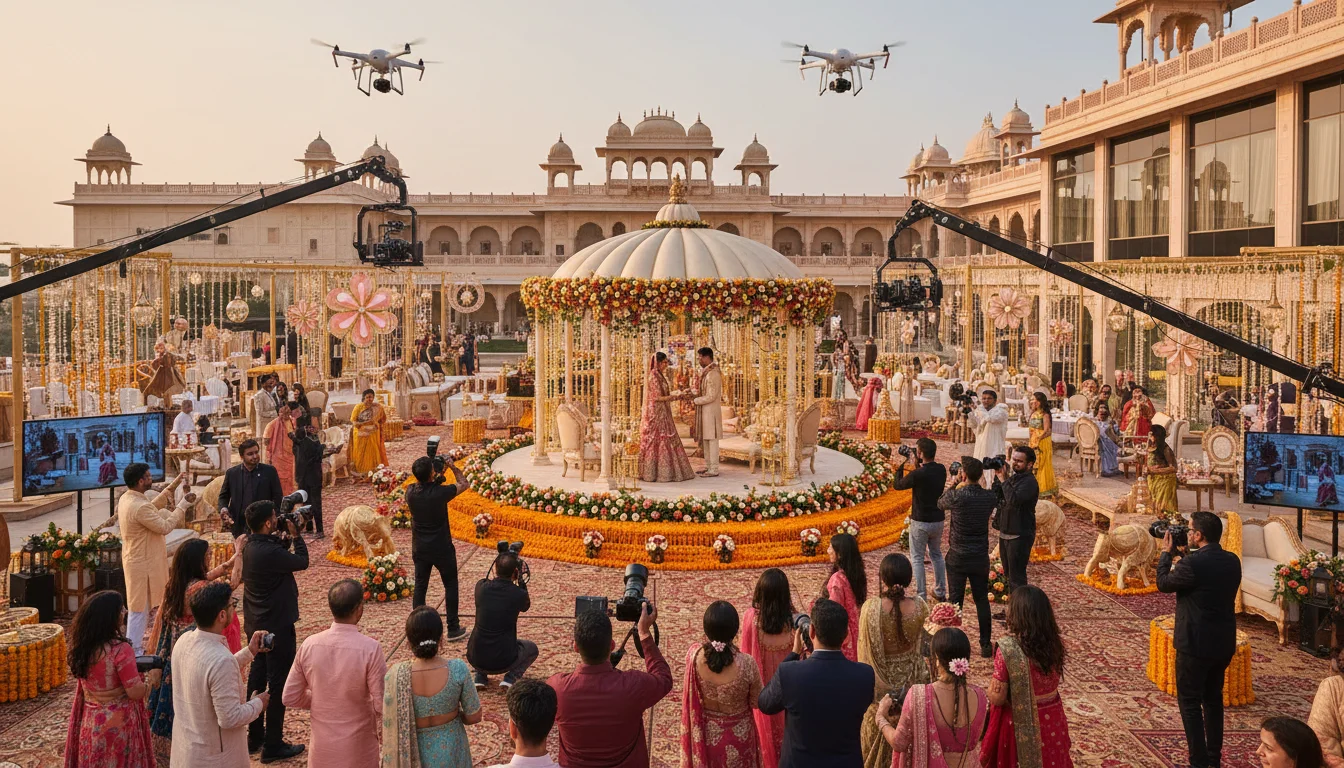
The Indian wedding industry represents an economic juggernaut that rivals the gross domestic product of several sovereign nations. Valued at an estimated ₹3.75 lakh crore (approximately USD 50 billion) annually, the sector facilitates over 10 million weddings each year. The economic velocity generated during peak festive and wedding seasons is staggering. During a concentrated 23-day period between November and December 2023, an estimated 3.5 million weddings took place across the country, generating an anticipated capital flow of US$ 57.2 billion (₹4,74,000 crore) in wedding-related expenditures. Within this massive ecosystem, photography and videography have transitioned from standard event coverage to highly produced, cinematic endeavors encompassing pre-wedding shoots, documentary-style storytelling, and specialized sub-genres such as aerial drone cinematography.
Parallel to the wedding sector, the commercial and real estate photography markets are experiencing exponential demand. As the Indian real estate market tracks toward a projected valuation of USD 1.04 trillion by 2029, developers and architectural firms increasingly rely on sophisticated visual marketing to drive sales. Over 95% of property buyers now initiate their purchasing journey through online searches, rendering high-fidelity imagery, 360-degree virtual tours, and aerial drone perspectives non-negotiable assets for commercial property listings. Furthermore, the expansion of the digital commerce landscape has precipitated a parallel boom in e-commerce product photography, where the visual representation of a product directly correlates with its conversion rate.
Despite the overwhelming volume of market opportunities, the photography and videography industry remains fraught with severe systemic challenges and operational hurdles. The most pressing existential threat to visual service providers is a widening profitability gap. Extensive industry surveys indicate that while 65% to 77% of photography businesses have experienced a marked increase in operational costs—encompassing equipment upgrades, software licensing, and travel expenses—their pricing models have largely stagnated. This margin compression is exacerbated by intense market fragmentation and rampant undercutting by amateur operators who utilize subsidized pricing to enter the market, thereby devaluing professional services.
Furthermore, professional studios are confronting an unpredictable economic climate and the psychological toll of creative burnout. Inquiries are often highly seasonal, spiking aggressively during the November-to-February wedding season and dropping precipitously thereafter, leading to dangerous fluctuations in cash flow. The rapid democratization of high-end consumer technology also poses a unique challenge. Modern smartphones equipped with 200MP sensors, advanced computational photography, and cinematic video modes empower everyday consumers to capture high-quality visuals, forcing professional studios to continuously justify their premium value propositions. Consequently, businesses within this industry must pivot from volume-based survival models to value-based differentiation. This strategic transition is entirely dependent on the implementation of sophisticated, data-driven digital marketing architectures capable of targeting high-net-worth clientele and communicating intrinsic artistic value.
Digital Landscape in India (Contextual to the Industry)
Understanding the nuances of the digital consumer landscape in India is an absolute prerequisite for deploying effective marketing campaigns within the photography and videography sector. With a rapidly expanding base of over 700 million internet users, the digital ecosystem has matured far beyond the traditional tier-1 metropolitan hubs (such as Mumbai, Delhi, and Bangalore) into a vast, highly engaged tier-2, tier-3, and rural market. This unprecedented geographical expansion has birthed an internet user base characterized by three primary behavioral pillars: an overwhelming preference for mobile-first consumption, an insatiable appetite for short-form video content, and a profound demand for linguistic diversity.
The most critical behavioral shift dictating modern marketing efficacy is the demand for vernacular and regional content. Currently, over 73% of Indian internet subscribers consume digital content in regional languages, rendering traditional English-only marketing strategies obsolete for broad market penetration. The data supporting this linguistic transition is unequivocal: 86% of Indian consumers exhibit a strong preference for content delivered in their native language, while 84% report that regional content is significantly more trustworthy and relatable. For photography and videography studios—particularly those targeting localized wedding markets or regional commercial enterprises—communication in Hindi, Tamil, Bengali, Telugu, Marathi, and other regional dialects is no longer a localized tactic; it is a foundational strategic requirement.
Content deployed in vernacular languages frequently achieves engagement rates 1.5 to 2 times higher than equivalent English-first content. This elevated engagement directly translates into commercial outcomes, with 45% of users indicating that they make purchasing decisions based on videos produced by creators operating in their native tongue. When a visual brand communicates in a regional dialect, it transcends the role of a transactional vendor and becomes integrated into the cultural fabric of the community it serves.
Video consumption patterns further define the Indian digital landscape. Short-form video has unequivocally replaced static imagery as the dominant mechanism for brand discovery and top-of-funnel engagement. Within this arena, Meta’s Instagram Reels has established absolute supremacy. Reels are the preferred platform for 92% of surveyed users and are consumed daily by 95% of the demographic. The platform acts as the primary cultural engine for the Indian internet, driving trends, aesthetics, and viral challenges while generating approximately 33% higher engagement than competing short-form platforms. Crucially for businesses, 80% of Indians report discovering new brands through Meta’s platforms, with Reels advertising delivering twice the top-of-mind recall and four times the message association compared to traditional long-form video advertisements.
However, the short-form video landscape is not a monolith, and consumer behavior dictates a bifurcated approach to video consumption. While Instagram Reels serve as the primary vehicle for fast, viral discovery, YouTube Shorts provide a fundamentally different utility based on search intent. Because YouTube operates as the world’s second-largest search engine, users engage with Shorts to actively seek solutions, tutorials, and specific information. For a photography business, a Reel might showcase a highly stylized, cinematic 15-second wedding teaser designed to evoke emotion, whereas a YouTube Short might address practical queries such as “Top 5 posing tips for a pre-wedding shoot,” thereby building long-term trust and domain authority. Furthermore, the market encompasses indigenous short-form platforms such as Moj and Josh, which have captured immense market share in tier-2 and tier-3 cities. Josh alone reports 115 million monthly active users, with 60% of its user base originating from non-metropolitan areas.
Consumer online behavior related specifically to the procurement of high-ticket visual services is heavily reliant on localized search intent and zero-friction communication pathways. High-value transactions, such as booking a destination wedding photographer or a corporate real estate videographer, rarely occur through impulse social media clicks.
Instead, they rely heavily on Google Search. Approximately 46% of all Google searches carry local intent, and a staggering 88% of consumers who perform a local search on a mobile device visit or contact a related business within 24 hours.
Once this initial digital discovery occurs, the velocity of communication becomes the deciding factor in securing a contract. In the Indian market, WhatsApp has transcended its origins as a peer-to-peer messaging application to become the de facto channel for commercial transactions and customer relationship management (CRM). Consumers inherently expect immediate, personalized responses, seamless portfolio sharing, and the frictionless delivery of quotations and invoices directly through secure WhatsApp messaging protocols. Studios that force prospective clients to navigate complex email threads or clunky website contact forms experience severe lead attrition, as the modern Indian consumer demands that high-end service providers meet them on the platforms they already utilize continuously throughout the day.
Digital Marketing Opportunities
Digital marketing provides the precise, scalable mechanisms required to systematically dismantle the industry’s profitability gaps, bypass market saturation, and neutralize seasonal unpredictability. By transitioning from passive reliance on word-of-mouth referral networks to the deployment of active, data-driven acquisition engines, photography and videography businesses can stabilize their cash flows, elevate their perceived brand equity, and assert control over their client pipelines.
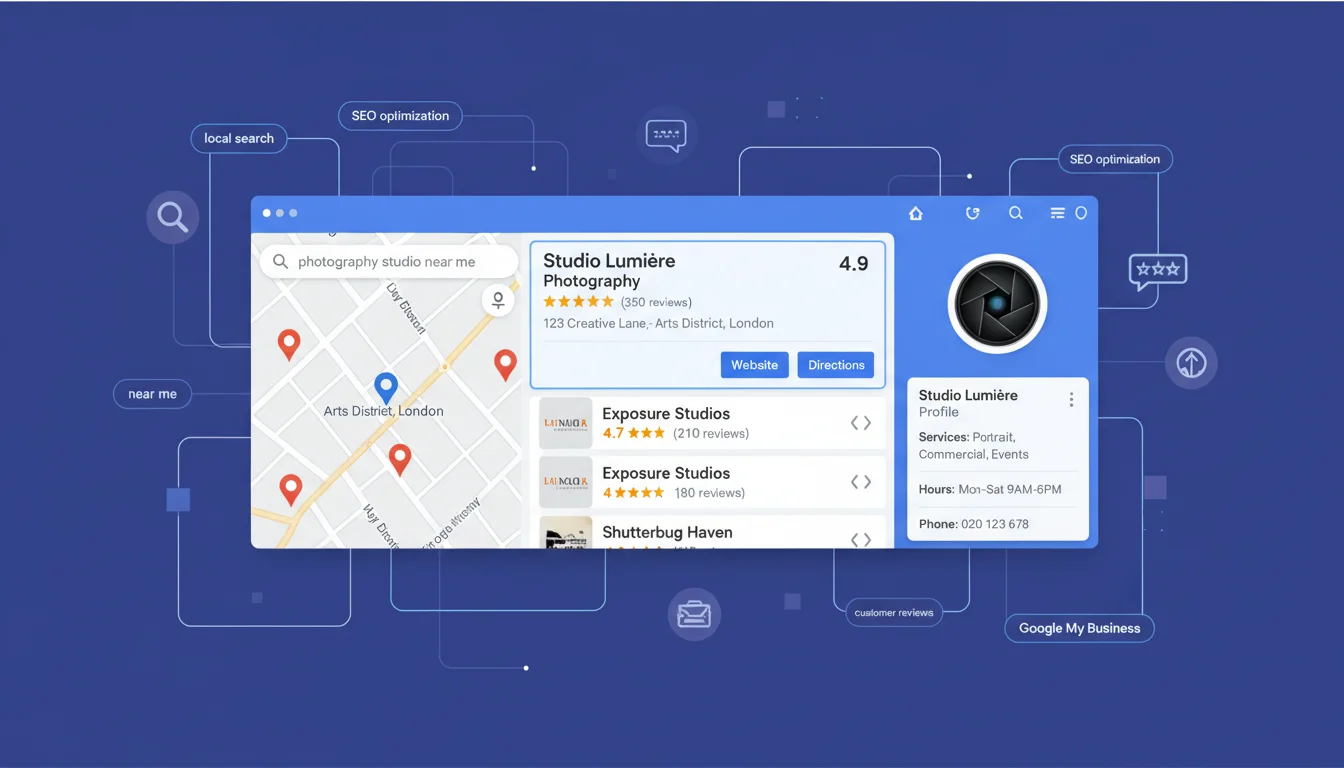
The most immediate and lucrative opportunity resides in the optimization of localized Search Engine Optimization (SEO). Because the vast majority of visual services are geographically bound, dominating the Google Local Pack—the prominent map-based results that appear above traditional organic listings—is mathematically the highest return-on-investment (ROI) marketing activity available. By aggressively optimizing a Google Business Profile (GBP) with consistent Name, Address, and Phone number (NAP) architecture, uploading high-resolution portfolio imagery, and instituting a systemic review-generation process, studios can capture highly qualified traffic at the exact moment of commercial intent.
SEO Strategy
-
GBP Optimization
Enhancing Google Business Profile with rich media, accurate operating hours, and localized descriptions.
Direct visibility in the Google Local Pack, leading to higher phone call and direction request volumes.
-
Review Velocity
Systematically requesting clients to leave reviews containing specific long-tail keywords (e.g., “candid wedding photographer”).
Increased localized trust signals; algorithmic prioritization over competitors with static or sparse review profiles.
-
Localized Landing Pages
Developing dedicated website pages for specific cities or service areas (e.g., “Commercial Photography in Pune”).
Capture of long-tail, high-intent organic search traffic that bypasses national-level generic competition.
-
Image SEO
Replacing generic image file names with descriptive keywords and meticulously optimizing alt-text metadata.
Dominance in Google Image Search, serving as a primary discovery vector for clients seeking visual inspiration.
The bifurcation of short-form video strategies presents an equally massive opportunity for organic growth and brand positioning. Forward-thinking studios are leveraging the distinct algorithmic advantages of both Meta and Alphabet platforms. Instagram Reels are systematically deployed to display raw, emotional, and visually arresting behind-the-scenes footage. By capitalizing on trending audio tracks and participating in platform-specific aesthetic trends, photographers can rapidly build brand personality and achieve explosive top-of-funnel follower growth. Concurrently, YouTube Shorts are utilized as an educational vehicle. Because YouTube Shorts operate within a search ecosystem, content tailored to specific user queries continues to accrue views and generate leads long after the initial publication date, establishing a foundation of long-term digital authority.
Another critical opportunity lies in the adoption of marketing automation and specialized Customer Relationship Management (CRM) tools. The administrative burden of managing inquiries, tracking communications, drafting customized proposals, and pursuing delayed payments is a primary cause of operational inefficiency for creative professionals. By integrating WhatsApp Business APIs through software providers such as WATI, AiSensy, or Groweon, studios can deploy automated, intelligent communication architectures. These systems facilitate automated welcome messaging, the instant dispatch of rich-media pricing catalogs, and the execution of abandoned-inquiry recovery sequences. This ensures that leads generated during late-night hours or while the photographer is actively engaged in a shoot are immediately nurtured, drastically reducing lead leakage to faster-responding competitors.
The efficacy of these digital marketing approaches is well-documented through numerous localized case studies. For instance, Aditya Bedre, an Indian motorsport photographer, faced severe operational bottlenecks due to the high-velocity nature of race weekends, which left little time for administrative paperwork. By implementing GoPickle—an automated workflow tool tailored for creative professionals—he was able to generate branded quotation templates and convert quotes to invoices with a single tap. This automation reduced administrative overhead from hours to minutes, accelerating client confirmations and facilitating faster payment cycles.
In the broader digital marketing landscape, agencies in India have demonstrated the explosive ROI potential of structured campaigns. One case study details a digital marketing agency achieving a 300% ROI for a client through a sophisticated amalgamation of highly targeted Facebook and Instagram advertisements, micro-influencer collaborations, and the deployment of professional visual content. Another specific example highlights a commercial photography business that secured multiple lucrative corporate contracts following a 300% year-over-year increase in organic website traffic, an outcome achieved strictly through meticulous localized SEO development and optimized copywriting.
Finally, the shift toward business model diversification represents a significant opportunity enabled by digital platforms. Approximately 10% of photographers are now operating across multiple disciplines—such as combining high-end wedding documentation with off-season architectural photography—to stabilize revenue streams. Furthermore, digital marketing facilitates the transition from low-margin digital file delivery to high-margin printed albums and wall art. By integrating sophisticated e-commerce gallery platforms (such as those provided by Zenfolio or Pixieset), studios can utilize targeted email promotions, automated shopping cart recovery campaigns, and strategic print credits to significantly boost post-shoot profitability.
Competitive Analysis
The Indian photography and videography market is characterized by a stark operational dichotomy: a small cadre of elite, digitally sophisticated studios commanding premium pricing, juxtaposed against a vast sea of highly skilled but digitally illiterate freelancers competing fiercely on price. Analyzing the digital footprints of top-tier businesses reveals the exacting standards required for market dominance, while simultaneously exposing the prevailing systemic vulnerabilities that new entrants or scaling studios can aggressively exploit.
Top players in the Indian wedding and luxury photography market, such as WeddingNama, Studio A (founded by Amar Ramesh), KnotsbyAMP, and Photo Tantra, demonstrate an absolute mastery over premium brand positioning and emotional digital storytelling. A meticulous analysis of WeddingNama’s digital presence serves as a masterclass in modern photographic marketing. Their website architecture relies heavily on precise niche categorization, segregating portfolios into highly specific verticals such as “Photography,” “Films,” “Black & White,” and “WNCouple Stories”. This structural decision is not merely an aesthetic choice; it functions as a highly sophisticated SEO tactic. By organizing content in this manner, they create dense, topic-specific landing pages that search engines heavily favor.
Furthermore, WeddingNama utilizes rigorous on-page SEO techniques. They deploy keyword-rich alt text on their portfolio images—targeting high-value search phrases such as “Luxury Destination Indian wedding”—and maintain strict H1 and H2 heading hierarchies to ensure search engines accurately index their visual assets. Their copywriting avoids the commoditized, desperate language often found on entry-level photography websites. Instead, they position their services as “UnScripted, Raw, Authentic” experiences, carefully targeting the ultra-high-net-worth (UHNW) demographic that values discretion and artistic vision over standardized posing.
Similarly, leaders in the commercial and real estate photography sectors emphasize technological superiority and specialized B2B service delivery. Top commercial studios do not merely offer “photos”; they position themselves as visual marketing partners.
They utilize cutting-edge 3D rendering services, interactive 360-degree virtual tours, and high-altitude drone videography to cater directly to the needs of developers, architects, and government infrastructural projects. Their digital marketing efforts focus heavily on demonstrating tangible ROI to corporate clients, illustrating how superior visual assets accelerate property sales or enhance e-commerce conversion rates.
However, when examining the broader market beyond the top 1%, severe digital operational gaps become glaringly apparent. The most pervasive vulnerability is the industry’s overwhelming reliance on third-party wedding aggregator platforms, such as WedMeGood, WeddingSutra, and various event planning directories, for lead generation. While these platforms initially offer high visibility, they fundamentally commoditize the photographer. Industry practitioners and studio owners report that aggregators frequently yield low-quality, price-shopping leads characterized by clients who disappear after receiving a quotation. Furthermore, these platforms enforce non-transparent ranking algorithms, maintain strict no-refund policies on advertising spend, and deliberately restrict the photographer’s ability to control the direct client relationship. The over-reliance on aggregators strips businesses of their proprietary brand equity, forcing them into a perpetual race to the bottom regarding pricing and eroding long-term profitability.
Competitive Gaps in the Indian Market
Strategic Opportunity for Disruption
Aggregator Platform Dependency
Building a proprietary, independent lead generation engine using localized SEO and targeted Meta advertising to capture leads before they enter aggregator funnels.
English-Only Digital Footprints
Producing and distributing high-quality portfolio content and client testimonials in regional languages (Hindi, Tamil, Bengali) to capture the 73% of users ignored by premium studios.
Neglected Local SEO Profiles
Aggressively claiming, updating, and optimizing Google Business Profiles with fresh imagery, weekly updates, and keyword-rich review generation to dominate local map searches.
Manual Lead Response Times
Implementing an AI-driven WhatsApp CRM (e.g., Groweon, Clientify) to guarantee instantaneous, 24/7 lead responses, capturing clients while competitors are occupied on shoots or offline.
Generic Portfolio Displays
Transitioning from static image galleries to immersive, narrative-driven case studies (incorporating short-form video) that explain the creative process and justify premium pricing.
Further opportunities to outperform competitors exist within the realm of B2B marketing. Many real estate and commercial photographers fail to utilize platforms like LinkedIn effectively. A significant gap exists for studios willing to execute targeted outbound campaigns aimed at local real estate developers, advertising agency art directors, and e-commerce brand managers. Additionally, the failure to leverage video testimonials and behind-the-scenes content leaves many studios appearing generic; in an era where trust is paramount, the absence of humanizing, narrative-driven content is a fatal flaw. Studios that pivot toward authentic storytelling, technological automation, and proprietary lead generation will seamlessly bypass competitors tethered to outdated, manual operational models.
Recommended Strategy for Photography and Videography Services in India
To successfully navigate the complexities of the modern Indian visual services market, businesses must adopt a sophisticated, multi-channel, full-funnel digital strategy. This strategy must meticulously balance the projection of high-end, premium brand perception with aggressive, highly automated lead capture mechanisms. The following recommendations provide a comprehensive blueprint for achieving market dominance.
Target Audience Personas
The strategic architecture must be bifurcated based on distinct, highly profiled buyer personas, as the messaging and channels required for each differ fundamentally:
-
The Luxury B2C Client (Weddings, Maternity, and Legacy Events):
This persona primarily consists of engaged couples and young families (typically aged 24-35) residing in tier-1 and tier-2 cities, as well as affluent Non-Resident Indians (NRIs) planning elaborate destination weddings within the subcontinent. Their aesthetic preferences lean heavily toward cinematic, documentary-style, and candid storytelling rather than traditional, static portraiture. They place a massive premium on authenticity, aesthetic cohesion, and seamless social media integration (e.g., the expectation of receiving high-quality, edited Reels within 24 hours of the event for immediate Instagram publication). They demand frictionless, premium communication and expect service providers to operate as trusted consultants rather than mere vendors.
-
The B2B Decision Maker (Real Estate, Corporate, Architecture, and E-commerce):
This persona includes marketing directors, real estate developers, architectural firm partners, and e-commerce brand managers (typically aged 30-55). Their primary psychological driver is definitive Return on Investment (ROI). They require visual assets that tangibly accelerate their own sales cycles—such as interactive 360-degree virtual tours, high-conversion product photography, and polished corporate documentary films. They evaluate visual vendors based on stringent criteria including absolute professionalism, rapid and reliable turnaround times, technological superiority (e.g., drone capabilities), and the ability to seamlessly integrate into existing corporate workflows.
Recommended Channels and Campaign Types
For targeting B2C clients, Meta’s platforms (Instagram and Facebook) remain the undisputed primary acquisition channels. Paid campaigns should focus heavily on high-visual-impact Lead Generation Ads, utilizing granular targeting parameters focused on specific life events (e.g., targeting users classified as “Newly Engaged” or users interacting with luxury bridal fashion accounts). However, reliance on paid media must be paralleled by aggressive organic short-form video strategies. Studios should deploy a consistent, high-frequency cadence of Reels to achieve broad reach and virality, while simultaneously utilizing YouTube Shorts to capture intent-driven search traffic.
Conversely, for B2B client acquisition, LinkedIn and Google Search Ads are paramount. Commercial and real estate photographers must leverage LinkedIn to distribute authoritative thought-leadership content. This includes publishing detailed case studies that articulate how high-quality architectural photography directly contributed to a property’s accelerated sale velocity or how a corporate video enhanced brand perception. Google Ads should be deployed to target high-intent, bottom-of-funnel search queries, utilizing precise geographic bounding to ensure advertising spend is not wasted on out-of-territory clicks.
Content Ideas Specific to the Industry
Content marketing must transcend the lazy practice of merely uploading static portfolio images. Effective content pillars designed to drive engagement and conversion include:
- Vernacular and Regional Storytelling: Producing behind-the-scenes videos, couple interviews, or client testimonials in the specific regional languages of the target market (e.g., Hindi, Tamil, Telugu, or Bengali). This approach builds deep, localized trust and resonates with the 84% of Indian consumers who find regional content more relatable.
- Educational and Authority-Building Content: Developing informative assets such as “How to pose naturally in front of the camera,” “A guide to selecting the perfect destination wedding venue in Udaipur,” or “How to prepare your commercial property for a 360-degree virtual tour”. This targets informational search intent and positions the photographer as an indispensable industry authority.
- Process Transparency and Technological Showcase: Creating time-lapse videos detailing intricate editing workflows, complex lighting setups, or the deployment of specialized drone technology. This content visually justifies premium pricing by exposing clients to the unseen labor, advanced equipment, and technical expertise required to produce high-end results.
Budget-Friendly Digital Marketing Approaches
For freelance photographers, independent operators, and boutique studios, capital-efficient digital marketing strategies are critical for survival and growth.
| Budget-Friendly Strategy | Execution Methodology | Key Benefits |
|---|---|---|
| Zero-Cost GBP Optimization | Claiming and verifying the Google Business Profile. Uploading 50+ high-resolution photos categorized by service. |
Ensuring NAP consistency
The absolute highest ROI activity; drives high-intent, local traffic entirely free of ad spend.
Review Keyword Seeding
Implementing a systemic post-shoot workflow that requests clients to leave reviews containing specific, targeted long-tail keywords.
Artificially boosts local map rankings by signaling relevance to Google’s local algorithm without requiring SEO retainers.
Affordable CRM Integration
Deploying budget-friendly CRM software designed for Indian businesses (e.g., TeleCRM, Groweon, or the free tier of HubSpot) integrated with WhatsApp.
Automates lead capture and follow-ups, ensuring no potential client is lost due to administrative delays, operating at a fraction of enterprise software costs.
Content Repurposing
Utilizing a single photoshoot to generate multiple content formats: a website blog post, an Instagram Reel, an email newsletter, and a Pinterest pin.
Maximizes digital visibility and multi-platform presence while minimizing the time spent on content creation.
Strategic Micro-Collaborations
Partnering with local event planners, boutique venue owners, and bridal makeup artists to cross-promote services on social media.
Taps into established, highly relevant local networks and generates qualified referrals without the expense of traditional advertising.
Furthermore, all marketing activities must be meticulously synchronized with the Indian festive and social calendar. The period from November through February represents the peak commercial season, encompassing major festivals like Dhanteras and Diwali, followed immediately by the primary wedding season. Studios must prepare and launch dedicated promotional materials, targeted ad campaigns, and seasonal offers well in advance of this window to maximize capture rates during periods of highest consumer liquidity.
Keywords & SEO Opportunities
Search Engine Optimization (SEO) represents the most sustainable, capital-efficient, and long-term client acquisition channel available to photography and videography businesses. However, success requires a sophisticated understanding of search intent. The strategy must vehemently avoid broad, highly competitive vanity terms in favor of hyper-specific, intent-driven phrasing.
High-Intent Keywords for Ranking
Generic search terms such as “wedding photographer” or “professional videographer” possess massive overall search volume, but they suffer from exceptionally low conversion probabilities due to a total lack of specificity and overwhelming national competition. Photographers must pivot their focus entirely toward transactional keywords that indicate immediate, localized hiring intent.
For B2C services, highly effective transactional keywords include:
- “Destination wedding photographer in [City]”
- “Affordable wedding photography packages [City]”
- “Candid wedding photographer near me”
- “Pre-wedding shoot locations in [City]”
- “Maternity photoshoot studio in [City]”
For B2B and commercial services, target phrases should include:
- “Commercial photographer in [City]”
- “Real estate drone photography [City]”
- “E-commerce product photographer near me”
- “Corporate event videographer”
Long-Tail Keyword Opportunities (India-Specific)
Long-tail keywords—search queries consisting of four or more words—are the undisputed engine of SEO conversion. They account for 70% of all Google searches and historically convert at 2.5 times the rate of broader head terms. In the specific context of the Indian market, embedding regional terminology, linguistic nuances, and specific cultural events into the keyword strategy yields highly qualified, low-competition traffic.
Cultural long-tail keywords provide a massive competitive advantage:
- “Telugu marriage ceremony candid photographer”
- “Best candid photographer for Anand Karaj in Delhi”
- “Haldi ceremony photography ideas and poses”
- “South Indian bridal portraits outdoor”
Furthermore, as search behavior evolves alongside artificial intelligence and voice search, query structures are becoming conversational. Optimizing for Question-Based Queries is critical:
- “How much does a pre-wedding shoot cost in Kerala?”
- “Which is the best outdoor location for a maternity shoot in Bangalore?”
- “How to choose a luxury wedding photographer for a destination wedding?”
Image and Visual Search Optimization
Because search engine crawlers cannot natively interpret visual data, Image SEO is a critical, often overlooked differentiator for visual businesses. Photographers must strictly abandon the use of default camera file names (e.g., IMG_9876.jpg) and replace them with highly descriptive, keyword-rich nomenclature (e.g., mumbai-taj-palace-candid-wedding-reception.jpg) prior to upload.
Equally important is the comprehensive application of alternative text (alt-text) metadata to every portfolio image. Alt-text must accurately describe the scene, the emotion, the specific venue, and the location. This meticulous categorization directly influences rankings within Google Image Search, which serves as a primary, top-of-funnel discovery tool for clients seeking visual inspiration and vendor shortlisting.
Implementation Roadmap
To prevent operational paralysis and ensure systematic execution, digital transformation must be implemented in phased intervals. This roadmap balances immediate revenue generation tactics with long-term, foundational structural growth.
Short-Term Quick Wins (Months 1–3)
The primary objective of the initial phase is to capture existing local demand, optimize the current digital footprint, and eliminate leaks within the sales funnel.
- Google Business Profile (GBP) Domination: Immediately claim, verify, and fully populate the GBP. Upload a minimum of 50 high-resolution exterior, interior, and portfolio images. Ensure absolute NAP (Name, Address, Phone) consistency across all digital directories. Implement a targeted email campaign to past clients requesting 15+ new, keyword-rich reviews.
- CRM and WhatsApp Automation Deployment: Select and deploy an affordable, India-optimized CRM platform (such as Zoho CRM, Freshsales, WATI, or Groweon) integrated directly with a WhatsApp Business API. Establish automated welcome messages for new inquiries, rapid delivery systems for pricing catalogs, and sequential abandoned-inquiry follow-ups.
- Website Technical and SEO Audit: Audit the existing portfolio website to ensure flawless mobile responsiveness and optimal load speeds. Systematically update all image file names and alt-text. Implement localized H1/H2 header tags on all primary service pages to signal geographic relevance to search engines.
- Social Media Recalibration: Pivot social media strategy away from static grid posting toward a dynamic, short-form video cadence. Develop a 30-day content calendar that relies heavily on trending audio tracks and raw, authentic behind-the-scenes footage deployed via Instagram Reels and YouTube Shorts.
Long-Term Strategy (Months 6–12)
The secondary phase shifts focus toward aggressively scaling organic traffic, building unassailable market authority, and diversifying long-term revenue streams.
- Vernacular Content Expansion: Accurately identify the primary regional demographic and linguistic preferences of the business’s target market. Begin translating core website landing pages and producing video content featuring native language voiceovers (e.g., Hindi, Tamil, or Bengali) to systematically capture high-converting tier-2 and tier-3 search volume.
- Paid Advertising Architecture: Launch highly targeted Google Search Ads focusing exclusively on high-intent transactional keywords (e.g., “Corporate videographer [City]”). Simultaneously, implement Meta (Facebook/Instagram) retargeting campaigns designed to re-engage prospective clients who visited the pricing or contact pages but failed to submit an inquiry.
- B2B LinkedIn Networking and Authority Building: For commercial and real estate photographers, initiate structured outbound connection campaigns on LinkedIn. Target local real estate developers, advertising agency art directors, and e-commerce managers, systematically sharing detailed case studies that prove the ROI of previous visual projects.
- Business Model Diversification and E-commerce Integration: Integrate sophisticated e-commerce capabilities directly into digital client delivery galleries. This facilitates the seamless upselling of high-margin printed albums, framed wall art, and automated post-shoot ordering, actively shifting reliance away from the stagnant flat-fee digital file delivery model.
- Seasonal Campaign Alignment: Synchronize all advanced marketing efforts with the predictable cadence of the Indian festive and wedding calendar. Prepare dedicated promotional materials, targeted ad campaigns, and specialized seasonal packages for peak periods (such as Diwali, Dhanteras, and the November-February wedding boom) a minimum of 60 days in advance.
Conclusion
The photography and videography industry in India is experiencing a profound, irreversible paradigm shift.
The convergence of a $50 billion cultural wedding market, an aggressively booming real estate sector, and a rapidly expanding tier-2 and tier-3 digital consumer base presents unprecedented economic opportunities for visual service providers. However, the era of relying solely on passive word-of-mouth referrals or maintaining static listings on commoditized aggregator platforms is definitively over. As profit margins face continuous downward pressure from escalating operational costs and the rapid democratization of high-end consumer technology, the ability to command premium pricing and control client acquisition through proprietary digital channels has become the sole determinant of long-term commercial survival.
To dominate this complex landscape, photography and videography businesses must transcend the basic display of digital portfolios. They must aggressively deploy localized SEO strategies to capture high-intent “near me” search traffic, and leverage the bifurcated short-form video ecosystem—utilizing Reels for virality and Shorts for searchability—to build unbreakable trust. Crucially, they must communicate in the vernacular regional languages that resonate deeply with the vast majority of the Indian populace. Furthermore, integrating AI-driven CRM architectures and WhatsApp automation is no longer an optional luxury; it is a fundamental operational requirement to meet the instant-gratification expectations of the modern consumer and eliminate fatal lead leakage.
Executing this sophisticated, multi-channel digital architecture requires technical precision, sustained effort, and deep market understanding. Gurkha Technology, an award-winning digital marketing and technology firm, possesses the specialized expertise necessary to architect and execute these highly complex strategies across the Indian subcontinent. With a proven, comprehensive portfolio encompassing both B2B and B2C digital transformations—ranging from customized UI/UX web development and high-availability hosting infrastructure to data-driven social media brand transformations, SEO supremacy, and TikTok advertising for major regional entities—Gurkha Technology provides the end-to-end digital infrastructure required to scale aggressively. By partnering with Gurkha Technology, photography and videography businesses can permanently transition their focus away from the exhausting complexities of algorithm management and digital lead generation, allowing them to focus their energy entirely on their core competency: capturing exceptional, lucrative visual narratives.