Digital Marketing Guide for Indian Dental Clinics
Industry Overview
The dental and oral care industry in India currently occupies a highly dynamic position at the intersection of a rapidly expanding national healthcare infrastructure and an increasingly sophisticated, consumer-driven wellness market. This environment presents a complex, multi-layered ecosystem comprising independent clinical practitioners, aggressively scaling corporate dental chains, and a highly lucrative, internationally focused dental tourism infrastructure. An accurate and actionable understanding of this industry necessitates a precise bifurcation of its primary commercial components: retail oral care products, clinical dental devices and equipment, and direct-to-patient clinical dental services.
Macroeconomic indicators and current market metrics reveal a period of sustained, robust growth across all these intersecting verticals. The Indian retail oral care market, fundamentally driven by an escalating national awareness of oral hygiene, a marked consumer shift toward premium herbal and natural product formulations, and the increasing adoption of electric toothbrushes, reached a comprehensive valuation of USD 1.1 billion in the year 2025. According to authoritative market projections, this segment is anticipated to expand steadily to reach USD 1.7 billion by 2034, registering a Compound Annual Growth Rate (CAGR) of 4.15%. Concurrently, the clinical foundation of the industry—the dental devices and equipment market—is experiencing an even steeper trajectory. Valued at USD 298.80 million in 2025, this sector is projected to reach USD 439.55 million by 2031, exhibiting a CAGR of 6.64%. Within this specific vertical, dental consumables dominate current revenue share at 67.94%, while advanced dental equipment, propelled by the widespread integration of digital dentistry technologies, represents the fastest-growing sub-segment with an anticipated 12.67% CAGR.
However, the most explosive and strategically vital growth vector within the broader Indian dental industry is the dental tourism and high-end cosmetic clinical services market. The Indian dental tourism sector generated an estimated USD 1,592.8 million in revenue in 2025 and is forecast to surge to an extraordinary USD 7,162.9 million by 2033, demonstrating a remarkable 20.9% CAGR. This massive influx of international patients, particularly originating from Western nations such as Australia where domestic healthcare and implant costs are often prohibitively high, is fundamentally altering the revenue models and technological investments of tier-1 city clinics across India. Within this high-value sector, dental implants represent the largest revenue-generating service, while overall dental cosmetics represent the fastest-growing, most lucrative segment.
Market Projection Summary
-
Oral Care Products: USD 1.10 Billion (2025) to USD 1.70 Billion (2034) CAGR: 4.15% -
Dental Devices: USD 298.80 Million (2025) to USD 439.55 Million (2031) CAGR: 6.64% -
Dental Tourism: USD 1,592.80 Million (2025) to USD 7,162.90 Million (2033) CAGR: 20.90%
Beneath these macroscopic growth figures lie profound structural, epidemiological, and operational challenges that define the day-to-day reality of operating a dental business in India. The epidemiology of oral health across the subcontinent reveals a stark and pressing reality: approximately 95% of the total population suffers from some form of dental disease. Detailed cohort studies demonstrate progressive accumulation of dental disease across the lifespan, with cumulative incidences reaching 50% in 5-year-olds, escalating to 79.2% in adults aged 35–44, and peaking at 84.7% in populations aged 65–74. This widespread pathology is significantly exacerbated by deleterious cultural habits, most notably the widespread consumption of smokeless tobacco and betel nut, which has tragically positioned India as the global epicenter for oral cancer.
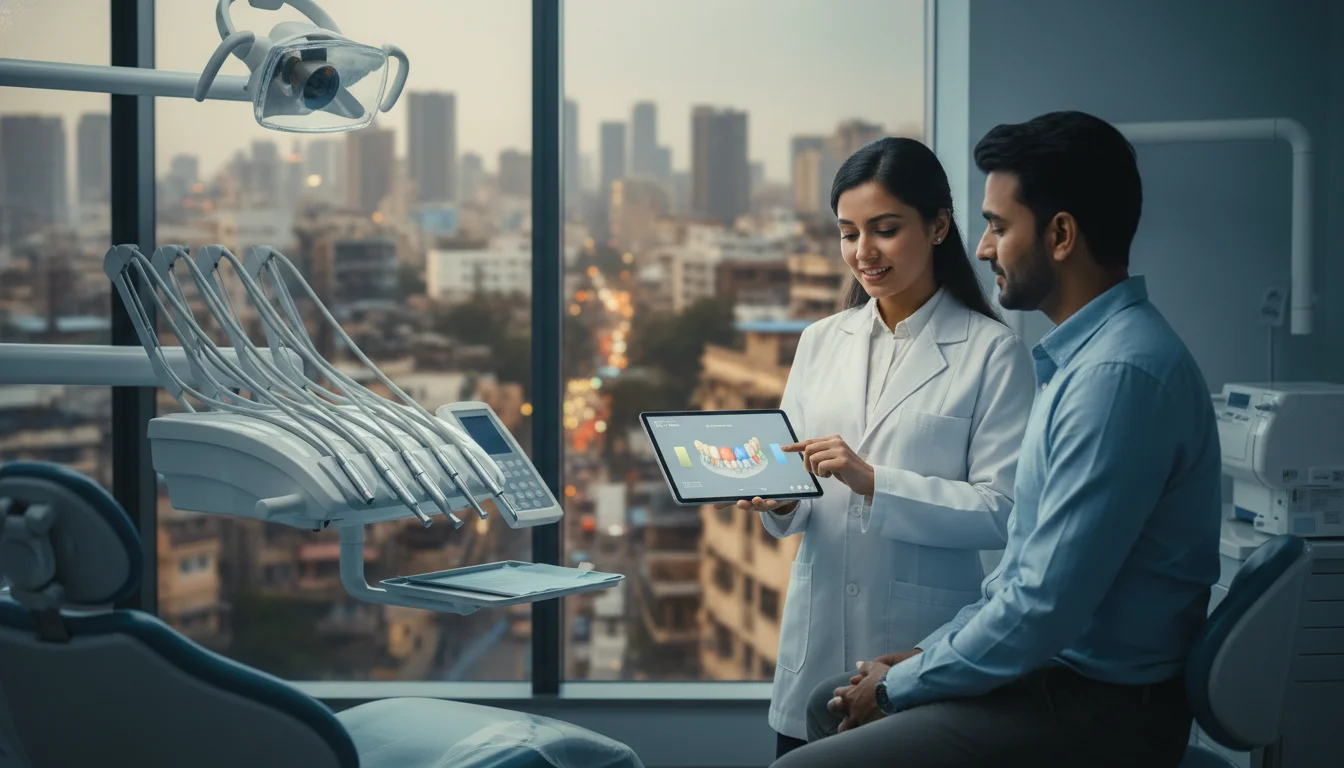
Despite this overwhelming prevalence of clinical need, the industry is severely constrained by an inadequate, misaligned, and unevenly distributed workforce. With approximately 2.7 lakh registered dentists responsible for serving a population of 1.39 billion, the practitioner-to-patient ratio remains vastly sub-optimal when compared to global health standards. Furthermore, dental professionals are overwhelmingly concentrated in affluent urban metropolitan areas due to the lack of viable economic models and government infrastructure in rural zones. This geographic disparity leaves over 70% of the rural Indian population critically underserved, facing severe barriers regarding access to skilled professionals and modern dental equipment.
For clinics operating within saturated urban and semi-urban centers, the primary business challenges shift dramatically from access provision to hyper-competition, consumer economics, and brand trust. Economic constraints remain the single most significant barrier to dental service utilization across the nation. Utilizing the Andersen health behavior model, researchers have identified that predisposing, enabling, and contextual factors typically outweigh actual clinical need when Indian patients decide whether to seek care. Specifically, 6.4% to 48% of surveyed individuals cite an absolute lack of funds as the primary reason for deferring necessary treatment, while up to 61.32% report that the high cost of dental procedures acts as a prohibitive barrier.
Additionally, the clinical sector suffers from a severe, structural lack of standardization concerning pricing, hygiene protocols, and overall treatment quality. Patients frequently encounter highly variable price points for identical procedures within the same geographic vicinity, fostering a climate of deep skepticism. This lack of transparency is compounded by documented ethical challenges within the profession. Exploratory qualitative research into the Indian dental scenario highlights widespread patient and peer concerns regarding inadequate sterilization and waste management, the commercial clustering of clinics in urban areas, poor informed consent processes, and a general disagreement on standardized treatment modalities. Consequently, establishing unshakeable digital trust and demonstrating absolute pricing transparency have emerged as the most critical operational imperatives for any dental business seeking to survive and scale in the modern Indian market.
Digital Landscape in India (Contextual to the Industry)
The rapid and pervasive digital transformation of the Indian consumer has fundamentally rewritten the patient acquisition playbook for dental clinics and healthcare providers. The traditional, analog reliance on inter-personal, word-of-mouth referrals and mere physical geographic proximity has been decisively eclipsed by sophisticated, highly networked digital research behaviors. As of 2024, comprehensive market reports indicate that approximately 65% of urban Indians now rely entirely on digital platforms—encompassing search engines, specialized e-commerce portals, and social media networks—to investigate healthcare providers and oral care options prior to making any purchasing or appointment booking decision.
The modern Indian dental patient engages in a highly protracted, non-linear decision-making journey that blends clinical research with consumer shopping behaviors. Analytical data sourced directly from search engines indicates that prospective patients spend an average of two weeks researching symptoms, comparing procedural options, and evaluating local providers before finally committing to a dental appointment. This extended consideration phase is heavily concentrated on mobile devices and is driven by an intense, culturally ingrained demand for social proof and peer validation. In major metropolitan centers such as Mumbai, Delhi, Pune, and Bengaluru, peer-to-peer validation via online reviews has become the paramount currency of consumer trust. A dental clinic that possesses state-of-the-art physical infrastructure but lacks a robust, carefully managed digital review profile will consistently lose vital market share to technically inferior competitors that maintain a high volume of reviews with an aggregate Google rating of 4.5 stars or higher.
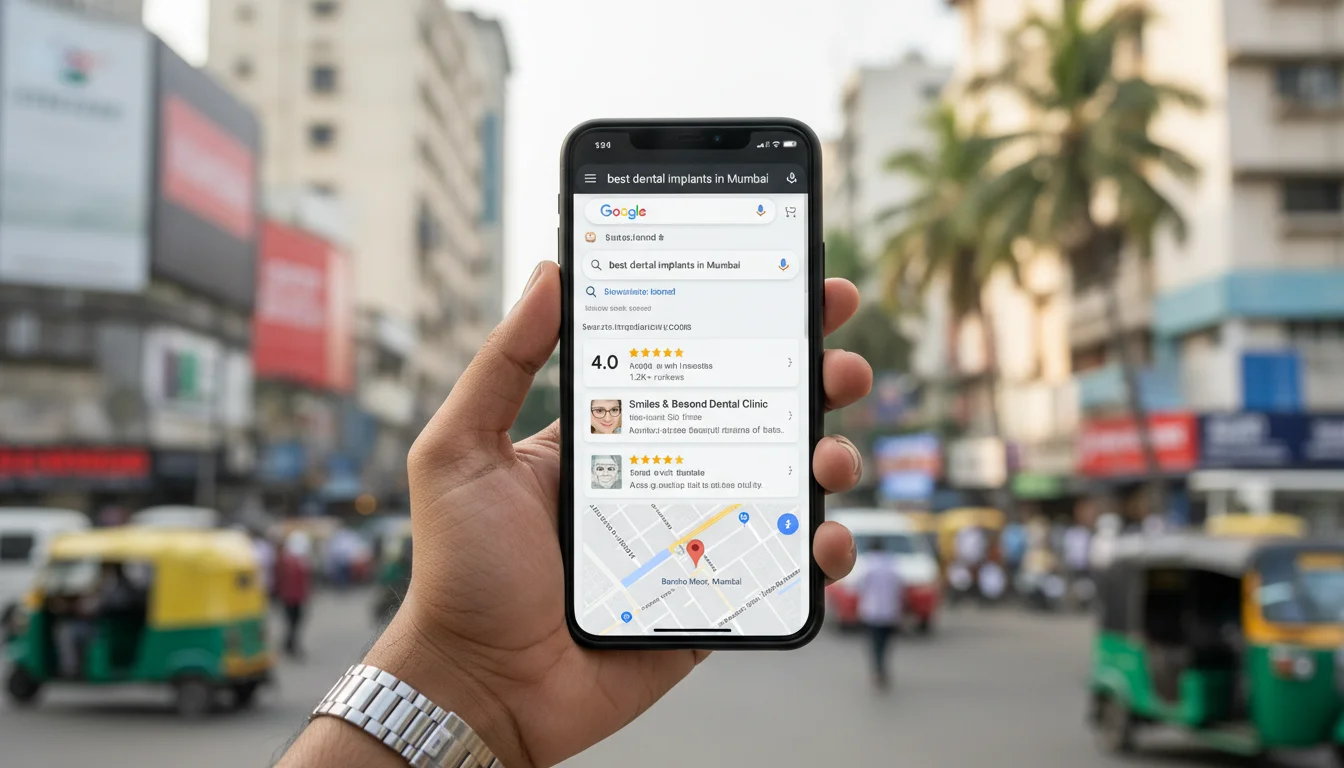
Search behavior within the Indian dental sector is acutely hyper-local and highly transactional. When patients experience acute dental pain, require emergency extractions, or seek immediate cosmetic consultations, their search parameters are generally restricted to a tight 3-to-5 kilometer radius from their immediate residential or workplace location. Consequently, search queries frequently take the form of “specific service + localized neighborhood,” such as “root canal Kothrud,” “dental implants Powai,” or “teeth whitening Baner,” rather than broad searches for specific clinic brand names. This indicates a market where procedural need drastically outweighs brand loyalty during the initial discovery phase.
The digital platforms dominating this healthcare ecosystem are distinctly stratified by user intent: Google dominates high-intent, bottom-of-the-funnel discovery; Instagram rules visual validation and top-of-the-funnel aesthetic awareness; and WhatsApp functions as the ultimate operational communication and conversion engine.
On Instagram and YouTube, tech-savvy millennials and Generation Z consumers actively consume and engage with short-form video content demonstrating aesthetic procedures. Given that approximately 70% of the urban population expresses a strong preference for aesthetic dental procedures over purely functional ones, content showcasing teeth whitening, veneer applications, and clear aligner transformations generates millions of localized views. This younger demographic heavily prioritizes aesthetics and responds significantly better to authentic, peer-shared experiences and specialized influencer demonstrations than to traditional, sterile clinical advertising.
Furthermore, the digital search landscape in 2026 is experiencing a seismic technological shift due to the deep integration of Artificial Intelligence (AI) into core search engine architectures. Large Language Models (LLMs) and AI Overviews now intercept, process, and summarize approximately 89% of all clinical healthcare queries. When a prospective patient queries an informational question such as “how long does Invisalign take” or “average cost of implants,” the search engine generates a comprehensive, zero-click AI summary directly at the top of the results page. This architectural shift has drastically reduced organic click-through rates to traditional dental blog posts by up to 61%, falling from 1.76% to just 0.61%.
However, a critical nuance exists within this AI integration that dictates local marketing strategy: search engines have entirely removed AI overviews for localized, high-intent provider discovery searches such as “dentist near me” or “emergency dentist Mumbai”. Google’s algorithmic approach to local healthcare searches went from 100% AI Overview coverage in December 2023 to 0% by the end of 2025. This bifurcates the digital landscape entirely. It requires clinics to aggressively separate their local visibility strategies (focused purely on Map Packs and Google Business Profiles) from their broad educational content strategies (which must now be optimized for AI ingestion rather than traditional human clicks). Understanding this algorithmic dichotomy is the foundational requirement for any successful dental marketing campaign in India today.
3. Digital Marketing Opportunities
The profound operational and economic challenges faced by Indian dental clinics—ranging from patient skepticism and pricing friction to hyper-local competition—can be systematically dismantled through precision-engineered digital marketing strategies. Digital marketing in this specific healthcare sector is no longer merely an optional promotional vehicle; it has evolved into a mandatory, integrated mechanism for establishing clinical authority, ensuring pricing transparency, modernizing patient communications, and driving measurable revenue growth.
To combat the pervasive issue of patient skepticism regarding treatment costs and the fear of hidden fees, digital platforms provide an unprecedented opportunity for radical transparency. By proactively publishing clear, range-based pricing structures for high-ticket procedures such as dental implants—which typically range from ₹16,000 to ₹60,000 for a single titanium tooth in India—clinics can immediately bypass the primary friction point of price ambiguity. Coupling this digital transparency with heavily promoted digital financial solutions, such as the 0% Equated Monthly Installment (EMI) plans utilized by market leaders like Sabka Dentist, fundamentally alters the consumer psychology. This strategy transforms a prohibitively expensive, terrifying surgical procedure into a manageable, highly predictable monthly subscription, directly neutralizing the primary economic barrier to care identified in Indian demographic studies.
The most potent and immediately measurable digital marketing strategy for rapid patient acquisition lies in the deployment of Google Ads, specifically when combined with highly optimized, procedure-specific landing pages. A comprehensive clinical case study involving Bixeltek, a specialized digital marketing agency, demonstrates the extreme efficacy of this approach. Tasked with solving the core problem of a clinic failing to rank for high-value treatments despite intense local competition, the agency deployed a hyper-focused Google Ads strategy. By aggressively targeting high-intent, high-value procedure queries (such as specific searches for dental implants, root canal therapies, and emergency services) rather than wasting budget on generic terms like “best dental clinic,” the subject clinic generated 212 highly qualified phone calls and 72 direct new patient leads within a single 30-day window. Crucially, the campaign’s success relied heavily on robust negative keyword lists and IP filtering to actively block 137 invalid clicks, thereby protecting the advertising budget from low-intent browsers and malicious competitor click-fraud.
Organic search visibility (SEO) presents a secondary, highly lucrative, and infinitely compounding opportunity, particularly through the deployment of an advanced “Multi-Profile Strategy.” In standard multi-specialty Indian clinics housing several doctors, standard practice dictates utilizing a single, monolithic Google Business Profile (GBP) for the entire facility. However, modern local algorithms actively penalize generalized profiles when users search for highly specific niches. By assigning distinct, dedicated GBP listings to individual practitioners based strictly on their clinical specialty—for example, categorizing Dr. A exclusively as an “Orthodontist,” Dr. B as a “Periodontist,” and Dr. C as a “Cosmetic Dentist” all operating at the same physical address—clinics effectively multiply their entry points in the local Map Pack. This strategy entirely bypasses algorithmic suppression filters that hide duplicate generic categories, allowing a single practice to perfectly match specific patient search intents and dominate up to four times the digital real estate of a competitor using a single profile.
Influencer marketing has also emerged from the fringes to become a vital, highly converting patient acquisition channel in the Indian aesthetic dental market. While the broader FMCG consumer market relies heavily on massive celebrity endorsements, clinical dental marketing thrives on authenticity, utilizing macro and micro-influencer collaborations. Dental influencers—practicing clinicians who have amassed substantial followings, such as Dr. Viraj Talsania or Dr. Anisa Patel Shaikh—serve an educational role, demystifying complex procedures, showcasing their expertise, and humanizing the often-sterile clinical experience. Even major corporate entities recognize this shift; Colgate-Palmolive India officially stated that their absolute number one influencer is a practicing dentist, Dr. Gunjit Jain. Furthermore, hyper-local collaborations with regional lifestyle micro-influencers (e.g., local wedding photographers, fitness coaches, or fashion bloggers with 10k–50k followers) yield massive dividends. By documenting an influencer’s cosmetic dentistry journey—from initial consultation through aligner usage to the final reveal—clinics generate highly authentic, localized content that resonates deeply with urban demographics, frequently resulting in a doubling of case acceptance rates for cosmetic procedures.
Finally, the adoption of WhatsApp automation represents a transformative operational and marketing opportunity uniquely suited to the Indian market. By integrating automated workflows directly into the messaging application where Indian consumers spend the vast majority of their digital lives, clinics can engineer entirely frictionless patient experiences. Advanced systems, such as those developed by Trudosys and Dentobees, act as digital receptionists. They facilitate instant, asynchronous appointment bookings, broadcast pre-operative instructions, deliver precise post-operative care tips, and automatically solicit Google reviews at the exact moment of highest patient satisfaction. This systemic WhatsApp automation has been empirically shown to reduce appointment no-show rates by an astounding 30% to 40%, while simultaneously freeing up physical front-desk staff to focus on in-clinic patient experience.
Despite these vast opportunities, a severe under-investment crisis currently plagues the industry. The 2026 State of Dental Practice Marketing report reveals that nearly half of all dental practices invest less than $2,500 per month in comprehensive marketing efforts, falling drastically short of the industry benchmark which dictates allocating 10% to 15% of total revenue to growth initiatives. Furthermore, 85% of practices struggle severely with brand differentiation, opting to market “everything to everyone,” which dilutes their message and renders them invisible in crowded local markets. Clinics that recognize this gap and invest aggressively in the aforementioned strategies will inherently capture outsized market share.
4. Competitive Analysis
The Indian dental market is highly fragmented, characterized by a vast sea of independent sole practitioners operating alongside aggressively expanding, highly capitalized corporate dental chains. Analyzing the digital posture, operational scale, and marketing strategies of market leaders such as Sabka Dentist, Clove Dental, and Apollo Dental provides a necessary baseline against which independent clinics must strategize and differentiate.
Clove Dental, firmly established as India’s largest and most trusted dental network, operates an expansive footprint of over 650 state-of-the-art clinics nationwide. Their digital strategy relies heavily on absolute financial scale and technological positioning.
In early 2025, the company announced a massive ₹100 crore financial investment specifically earmarked to open 50 new advanced facilities integrating cutting-edge digital dentistry, including Cone Beam Computed Tomography (CBCT) and fully digital radiography workflows. Marketing this technological superiority serves as a core pillar of their brand, appealing directly to affluent urban demographics seeking modern, pain-free, and highly precise clinical experiences. Digitally, Clove Dental executes a strategy of dominating paid search. Utilizing agencies like Unbundl to scale their Google Ads architecture, they ensure their brand captures the highest volume of commercial intent across every micro-market they inhabit, effectively outbidding local independents for high-value keywords.
Sabka Dentist, managing an impressive network of over 112 company-owned clinics primarily across Mumbai, Pune, Ahmedabad, Surat, and Bangalore, employs a vastly different, yet highly effective digital model. Their strategy is predicated on mass accessibility, profound financial engineering, and high-volume educational content. Sabka Dentist’s digital presence is anchored by an exhaustive content marketing strategy that targets informational, long-tail search queries. They deploy comprehensive educational assets, such as “100 FAQs About Clear Aligners” and “100 FAQs About Braces,” and have innovated by publishing proprietary AI prompts specifically designed to help patients independently research orthodontic treatments. Operationally, their primary patient acquisition and conversion mechanism is the aggressive digital promotion of free initial clinical consultations—packaging a free check-up, estimate, and digital scan—paired inextricably with NO COST EMI plans starting at a highly accessible ₹2,000 per month through financial partners like Bajaj Finserv and FIBE. This combination of educational dominance and frictionless financing has resulted in a formidable digital reputation, with their clinics maintaining a stellar 4.8-star average across thousands of Google listings, serving as a massive conversion engine.
Other significant corporate players include Apollo Dental, which operates over 125 centers across 25 cities, and large-scale localized private clinics such as Ceramco Dental Clinic, which grew from a single chair to India’s largest private single-location clinic boasting 17 chairs.
Competitive Gaps in the Corporate Model
Despite the operational efficiency, marketing budgets, and geographic saturation of these massive conglomerates, significant competitive gaps exist that independent clinics can and must exploit. Qualitative research into the ethical challenges and patient complaints within the Indian dental sector highlights several structural vulnerabilities inherent to the large corporate chain model. Chief among these are widespread patient concerns regarding the overt commercialization of clinical care, a severe lack of personalized continuity (patients frequently complain of seeing different, rotating junior doctors upon return visits rather than a dedicated practitioner), and the prevailing perception of being aggressively upsold on unnecessary, high-margin procedures to meet corporate revenue quotas.
These vulnerabilities provide a distinct, highly actionable strategic opening for independent clinics. Independent practitioners can outmaneuver massive corporate chains by leaning heavily into personal branding, clinical continuity, and hyper-local trust. While a massive chain is forced to market a sterile corporate logo and standardized protocols, an independent clinic can market the localized expertise, long-term commitment, and human empathy of its lead clinician. By deploying a multi-profile SEO strategy—building localized digital dominance specifically around individual doctor profiles rather than a generic clinic brand—independents can successfully capture high-intent patients who are actively seeking a dedicated, trustworthy, long-term healthcare partner rather than a transactional corporate experience. Furthermore, independent clinics possess the agility to rapidly adopt personalized, direct-to-patient communication tools, such as highly customized WhatsApp conversational interactions, whereas corporate chains are often bogged down by impersonal, heavily rigid CRM auto-responders.
5. Recommended Strategy for Dentists and Clinics in India
To successfully navigate this complex, highly competitive matrix, dental clinics must abandon monolithic, generalized marketing efforts. Instead, they must deploy a multi-channel strategy that is meticulously tailored to distinct demographic segments. Messaging, platform selection, and conversion mechanisms must adapt fluidly to specific patient personas to maximize return on advertising spend and ensure sustainable clinical growth.
Target Audience Personas and Demographic Targeting
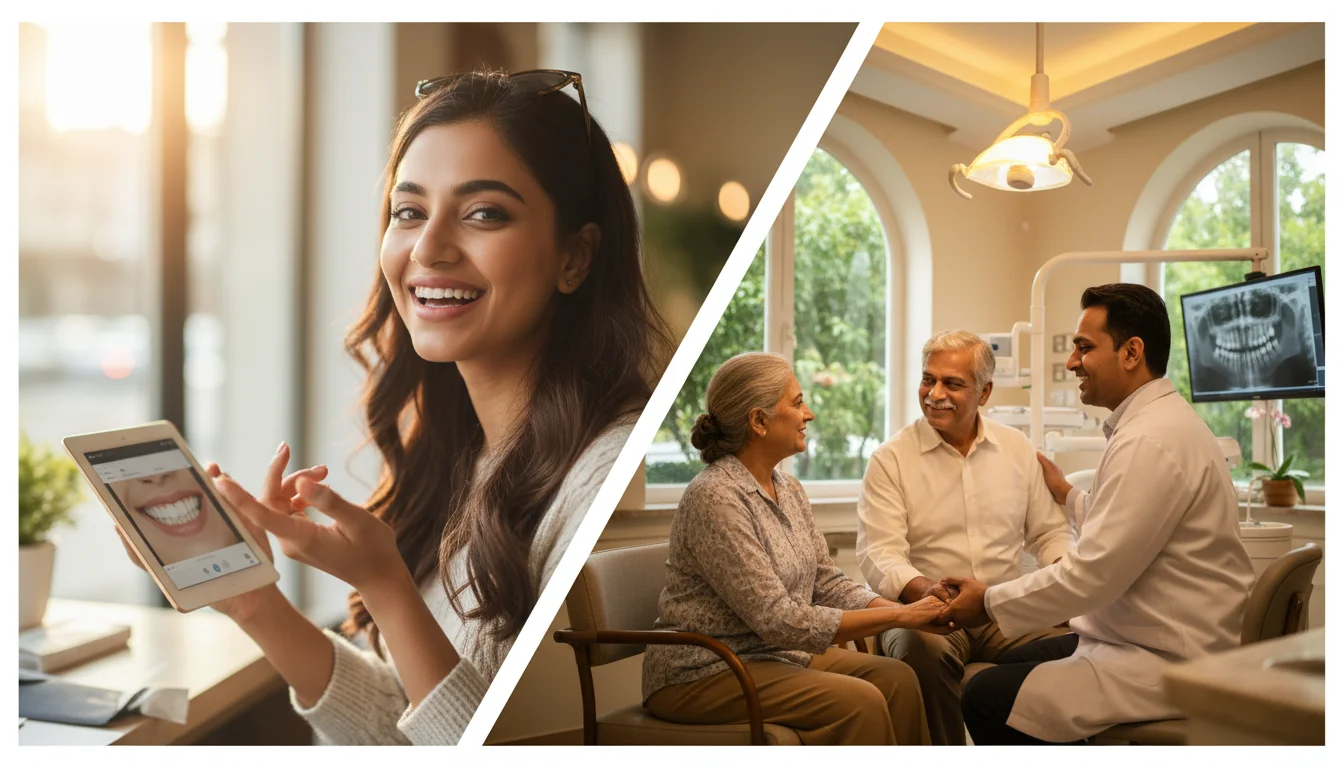
- The Urban Aesthetic Seeker (Ages 18–35): Comprising Generation Z and younger tech-savvy millennials, this demographic prioritizes cosmetic enhancements and proactive aesthetic maintenance, heavily propelled by social media appearance standards, peer influence, and workplace aesthetics. They are highly responsive to visual-first platforms (Instagram Reels, YouTube Shorts) and primarily seek non-invasive or minimally invasive treatments such as clear aligners, ceramic veneers, and professional laser teeth whitening. Messaging tailored for this group must emphasize speed of treatment, aesthetic perfection, the use of advanced digital monitoring technology, and highly flexible, digital-first payment options.
- The High-Value Restorative Patient (Ages 45–65+): This older demographic commands significantly higher disposable income and actively seeks profound functional restoration. Their clinical needs center on high-ticket procedures including single or multiple dental implants, full-mouth rehabilitations, and advanced prosthodontics. Their digital journey is heavily research-driven and text-based; they utilize Google Search extensively to read long-form reviews, research the biological longevity of various materials, and seek rigorous validation of the lead clinician’s surgical credentials and post-operative complication rates.
- The Price-Conscious Evaluator (All Ages, Middle-Income): Representing the vast bulk of the Indian middle-class market, this persona cross-references multiple local clinics to find the optimal balance between acceptable clinical quality and absolute affordability. They actively search for exact, transparent pricing structures, the availability of zero-interest EMI facilities, and comparative cost data between nearby clinics. They are highly responsive to bundled preventive packages and free initial consultation offers.
Furthermore, clinics must be acutely aware of socio-cultural perceptions regarding the “dentist persona” in India. Extensive cross-sectional observational studies involving thousands of Indian adults and children reveal distinct biases regarding clinical appearance. The data indicates that patients implicitly associate higher reliability and comfort with male dentists who are clean-shaven with short hair and a fair complexion, while female dentists wearing light makeup, minimal jewelry, and hair tied neatly are perceived as the most highly desirable and trustworthy. While clinical skill is paramount, aligning the visual presentation of the clinical team in digital assets (website photos, social media videos) with these documented demographic preferences subconsciously reduces patient anxiety and increases conversion rates.
Recommended Channels and Content Architecture
For maximum return on investment, clinics must concentrate their financial and creative resources on three primary digital pillars:
- Hyper-Local SEO and Profile Optimization: The absolute foundation of the digital strategy must be the total optimization of the Google Business Profile (GBP). Given that Indian patients make definitive booking decisions within a tight 3-to-5 kilometer radius, the GBP must act as an immersive digital storefront. It should be continuously updated with geotagged clinical photographs, highly detailed service listings, and weekly educational posts. Crucially, the clinic must institute an aggressive, automated review-generation protocol to surpass the critical local threshold of possessing 100+ reviews with a rating strictly exceeding 4.5 stars.
- Visual Social Media Marketing (Instagram & YouTube): Social media must serve as undeniable clinical proof. Dental practices must immediately transition away from posting generic, highly polished stock imagery and instead publish authentic, raw clinical reality. Recommended content includes high-definition macro-photography of procedural outcomes, engaging time-lapse videos of orthodontic progress, and behind-the-scenes footage of the clinic’s sterilization and autoclaving protocols. Short-form video (Instagram Reels) featuring the lead clinician directly answering common patient questions fosters intense parasocial trust.
- Direct Messaging Automation (WhatsApp Integration): WhatsApp must be transitioned from a mere passive contact number to an active, end-to-end automated CRM ecosystem.
Clinics should utilize the WhatsApp Business API (via providers like WATI or Dentobees) to deploy conversational chatbot architectures. These systems allow patients to seamlessly view treatment menus, check available doctor slots, and book appointments instantly in real-time without requiring any human front-desk intervention. Post-treatment, the system must be programmed to automatically dispatch specific recovery instructions based on the procedure performed, and exactly 48 hours later, automatically send a polite link soliciting a Google review.
Budget-Friendly Digital Marketing Approaches
For independent clinics operating with constrained initial marketing capital, highly effective zero-to-low-cost strategic approaches exist to bootstrap growth:
- Local Directory Listings: Claiming, verifying, and meticulously detailing local directory listings across platforms like JustDial, Practo, and Lybrate costs absolutely nothing but yields exceptionally high local search authority and referral traffic.
- Digital Referral Programs: Initiating a digital referral program via WhatsApp—where existing, satisfied patients receive automated messages offering complimentary scaling or diagnostic scans for successfully referring family members—leverages the existing patient base as the primary, lowest-cost acquisition channel.
- Internal Content Production: The internal production of educational clinical content utilizing inexpensive smartphone macro-lenses (to clearly showcase before-and-after aesthetic cases) provides high-engagement social media assets without the prohibitive requirement of hiring expensive external video production agencies.
Keywords & SEO Opportunities
The semantic architecture and keyword targeting of a dental clinic’s website ultimately dictate its visibility during the critical micro-moments when a patient exhibits immediate commercial intent. In the Indian market, a successful keyword strategy must intricately balance the dual consumer demands of immediate geographic proximity and intense cost sensitivity.
High-Intent Transactional Keywords
High-intent queries occur exclusively at the bottom of the digital funnel, when the prospective patient has completely bypassed the informational research phase and is actively seeking immediate clinical intervention or a consultation booking. These searches typically combine a specific clinical service, a tight geographic modifier, and an element of extreme urgency or transactional readiness. Dental SEO and paid advertising budgets must target these exact phrases aggressively, as they yield the highest immediate conversion rates and the lowest cost-per-acquisition.
| Keyword Structure | Example Queries (India-Specific) | Strategic Application & Implementation Notes |
|---|---|---|
| Emergency/Urgency | “Emergency dentist open now Mumbai”, “Wisdom tooth extraction near me” | Target aggressively via Google Ads with call extensions; optimize GBP attributes with “24/7” or “Emergency Services” tags to capture immediate, high-converting pain-driven traffic. |
| Specialist + Location | “Best orthodontist in Kothrud”, “Dental implant specialist Delhi” | Crucial for the Multi-Profile strategy. Optimize individual doctor GBP profiles to rank for specialized roles rather than generic clinic names, bypassing algorithmic duplicate filters. |
| Procedure + Price | “Dental implants cost in Bengaluru”, “Invisalign price EMI India” | Develop dedicated, highly specific service landing pages featuring fully transparent pricing matrices, cost breakdown charts, and prominent 0% EMI financing options to capture price-sensitive researchers. |
| Brand Competitor | “Alternative to Clove Dental”, “Sabka dentist vs independent clinic” | Create objective, comparative content pages highlighting the benefits of personalized, continuous care provided by independent practitioners versus the high-turnover corporate chain model. |
Long-Tail Informational Keywords
While high-intent keywords drive immediate, transactional bookings, long-tail informational keywords serve to capture patients during their extended, two-week digital research window. These highly specific search phrases typically have much lower overall monthly search volumes individually, but they face virtually zero competition from massive corporate chains whose SEO strategies focus purely on broad, generic terms. Furthermore, heavily optimizing for these conversational, question-based queries aligns perfectly with the explosive rise of mobile voice search and Google’s AI Overviews architecture.
Long-tail opportunities particularly abound in complex, high-ticket clinical procedures where patient anxiety, fear of pain, and financial risk are at their absolute highest. Examples of highly valuable long-tail keywords in the Indian context include:
| Long-Tail Keyword Phrase | Monthly Volume | CPC (USD) | Search Intent |
|---|---|---|---|
| “Average cost of dental implants per tooth” | 720 | N/A | Deep Informational / Financial Planning |
| “Affordable cosmetic dentist near me for teeth veneers” | 200 | $5.80 | Highly Transactional / Price-Conscious |
| “Top-rated dental clinic for implant restoration” | 150 | $7.30 | Quality-Focused / Restorative Needs |
| “Certified dental hygienists for deep teeth cleaning” | 250 | $4.00 | Preventive Care / Trust-Seeking |
To effectively capture and monetize this highly specific long-tail traffic, clinics must construct sophisticated “Content Hubs.” These hubs act as interlinked digital ecosystems consisting of highly detailed blog posts, expanding FAQ accordions, and exhaustive procedural breakdown pages. For example, publishing a single, highly detailed web page analyzing the exact cost breakdown of dental implants in India—specifically detailing the price and biological differences between premium brands like Straumann or Nobel Biocare versus localized, budget-friendly Indian implant brands—will successfully capture massive amounts of highly qualified, late-stage research traffic that is actively preparing to spend money.
Crucially, integrating specific structured data code (Schema markup) into these exhaustive FAQ pages ensures that Google’s algorithm can seamlessly extract these precise answers to populate its zero-click AI Overviews. This highly technical SEO maneuver positions the clinic as the definitive, unquestionable regional authority on the subject, building immense brand trust before the patient even clicks through to the website.
Implementation Roadmap
Executing a comprehensive digital transformation within a functional dental clinic requires a highly structured, phased methodology. Attempting to implement all strategies simultaneously inevitably leads to staff burnout, operational paralysis, and wasted capital. A phased rollout ensures early return on investment (ROI) from quick wins, which can then be reinvested to fund subsequent, more complex expansion phases.
Phase 1: Short-Term Quick Wins & Infrastructure (Months 1–3)
The immediate objective in the first quarter is to seal existing digital leaks, optimize current assets, and capture the massive volume of existing bottom-of-the-funnel local demand.
| Month | Strategic Focus | Key Action Items & Technical Implementations |
|---|---|---|
| Month 1 | Digital Foundation & Local SEO Optimization | Conduct a complete, rigorous audit of the clinic’s Google Business Profile. Ensure absolute NAP (Name, Address, Phone Number) consistency across all local Indian healthcare directories including JustDial, Practo, and Lybrate. If the clinic houses multiple specialists, immediately initiate the multi-profile strategy by creating discrete, specialized GBP listings for each individual practitioner. Deploy the WhatsApp Business API. Configure automated greeting messages, digital intake forms, and an immediate post-appointment review solicitation sequence. |
| Month 2 | High-Intent Paid Acquisition | Launch highly targeted Google Search campaigns strictly ring-fenced around high-margin procedures (implants, clear aligners) utilizing a strict 3-to-5 kilometer geo-fencing radius. Ensure all advertisements direct traffic not to the generic homepage, but to specifically designed, mobile-optimized landing pages that feature clear pricing matrices, doctor credentials, and direct WhatsApp booking buttons. |
| Month 3 | Social Proof & Visual Generation | Institute rigorous clinical protocols for capturing high-quality visual data. Train dental assistants and staff to utilize standardized ring-lighting and macro-lenses for consistent photography of before-and-after cases. Begin publishing 2-3 Instagram Reels per week focusing strictly on authentic patient testimonials, behind-the-scenes sterilization processes to build trust, and rapid, face-to-camera Q&A sessions. |
Phase 2: Long-Term Strategy, Tech Adoption & Scalability (Months 4–12)
With baseline lead generation stabilized and automated, the strategic focus shifts to profound asset creation, regional brand authority, and advanced technological integration.
| Month | Strategic Focus | Key Action Items & Technical Implementations |
|---|---|---|
| Months 4–6 | Content Dominance & AI Preparation | Identify the top 50 specific questions patients ask during physical consultations. |
- Transform these directly into comprehensive, SEO-optimized blog posts and rich FAQ pages to capture long-tail and AI Overview search traffic.
- Produce highly professional, long-form video content for YouTube detailing complex procedure walkthroughs, catering specifically to the intensive, prolonged research behavior of high-value restorative patients.
Months 7–9: Influencer Collaborations & Community Integration
Identify and approach local, highly relevant micro-influencers (10k-50k followers) whose specific audiences closely align with the clinic’s demographic targets. Structure mutually beneficial barter agreements: provide complimentary or heavily discounted cosmetic treatments (e.g., laser teeth whitening or aligners) in direct exchange for a documented, multi-part Instagram story and reel series charting their treatment journey from start to finish.
Months 10–12: Advanced Ecosystem & Workflow Integration
Fully integrate robust digital clinic management software (ERP) with all marketing channels. Implement sophisticated email and WhatsApp recall campaigns based on precise clinical timelines (e.g., automated messages for a 6-month prophylaxis cleaning appointment or a 1-year implant stability review).
Begin aggressively transitioning toward fully digital clinical workflows by acquiring equipment like DGSHAPE milling machines or intra-oral scanners. Prominently feature this profound technological sophistication in all digital marketing collateral to successfully position the independent clinic as technologically superior to elite corporate chains.
8. Conclusion
The Indian dental and oral healthcare landscape has officially reached a critical, irreversible inflection point. As sheer epidemiological demand for care continues to rise concurrently with expanding middle-class purchasing power and a massive, highly lucrative influx of international medical tourism, the pure financial opportunity within the sector is historically unprecedented. However, the fundamental mechanisms of patient acquisition have completely and permanently shifted away from geographic proximity, print advertising, and analog referrals, moving decisively toward digital validation, algorithmic discovery, and instantaneous technological convenience.
In a modern healthcare environment where 89% of all clinical informational queries are intercepted and summarized by Artificial Intelligence, where prospective patients ruthlessly evaluate clinics based on their Google review aggregate within a tight 5-kilometer radius, and where seamless communication is demanded instantaneously via WhatsApp, digital marketing can no longer be viewed as an ancillary business function. It has become the absolute central nervous system of any viable, modern dental practice operating in India.
Clinics that fail to comprehend and adapt to this new digital reality will find themselves increasingly marginalized. They will inevitably bleed high-value cosmetic and implant cases to heavily capitalized corporate chains and digitally agile independent competitors who understand how to manipulate local search algorithms and leverage social proof. Conversely, clinics that systematically deploy hyper-local SEO through multi-profile strategies, boldly embrace highly transparent procedural pricing models coupled with EMI financing, harness the authentic visual storytelling power of social media micro-influencers, and deeply automate their patient relationship management via WhatsApp will not only capture outsized local market share but will firmly insulate their practices against future algorithmic shifts and corporate competitive disruptions.
Executing a digital transformation of this extreme magnitude requires highly specialized technical expertise that spans complex search engine algorithms, high-efficiency programmatic advertising, clinical content architecture, and deep backend systems integration. This level of technical execution is precisely where Gurkha Technology provides an invaluable, asymmetrical competitive advantage. Operating as a premier digital marketing and technology firm based in Nepal, Gurkha Technology possesses the deep regional cultural understanding and the elite technical proficiency required to engineer comprehensive, end-to-end growth systems for the rapidly evolving Indian healthcare market.
Gurkha Technology’s comprehensive suite of services is specifically engineered to entirely eliminate the friction of modern patient acquisition. Through advanced SEO services utilizing elite strategies like the “Skyscraper Technique” designed to absolutely dominate search engine results, they ensure clinics capture the maximum volume of high-intent commercial traffic within their specific local radius. Their profound expertise in comprehensive social media management and precise, data-driven Google and Meta advertising guarantees that marketing capital is deployed with surgical efficiency, reaching the exact demographic profiles required for high-margin procedural growth. Furthermore, Gurkha Technology’s robust web design, custom application development, and technological stack integration capabilities enable traditional clinics to transition smoothly into the modern era of automated WhatsApp patient management and seamless, frictionless digital booking infrastructures. For dental practices in India determined to scale operations rapidly, elevate their clinical brand authority, and secure unshakeable long-term market dominance, partnering with Gurkha Technology represents the decisive, highly strategic first step toward executing a flawless and highly profitable digital transformation.