Digital Marketing for Indian Construction & Infrastructure
Industry Overview
Brief Description of Construction and Infrastructure Companies in India
The construction and infrastructure sector in India functions as the central artery of the nation’s economic engine, serving as a primary catalyst for industrial growth, urbanization, and employment generation. The landscape comprises a vast and diverse ecosystem of corporate entities. At the apex are massive multi-national Engineering, Procurement, and Construction (EPC) conglomerates that execute sovereign-level infrastructure projects. Beneath them lies a highly fragmented but critical tier of mid-sized regional contractors, specialized architectural firms, heavy machinery distributors, and building material suppliers. These companies operate across highly segmented domains: heavy civil infrastructure (national highways, bridges, railway freight corridors, deep-water ports), commercial and institutional development, large-scale residential real estate, and industrial facilities such as manufacturing plants, data centers, and logistics parks.
A defining characteristic of the Indian construction market is the dual nature of its clientele. On one side is the Business-to-Government (B2G) and Business-to-Business (B2B) ecosystem, which drives macro-level infrastructure projects funded by federal capital expenditure and institutional investments. On the other side is the Business-to-Consumer (B2C) segment, which fuels the residential real estate, urban housing, and personalized homebuilding markets. Each of these segments operates with distinct procurement cycles, risk appetites, and communication preferences, necessitating highly tailored digital marketing and outreach architectures.
Current Market Size, Growth, and Trends
The scale of the Indian construction and infrastructure industry is currently experiencing an unprecedented and historic expansion, meticulously aligned with the central government’s ambitious macro-economic vision of achieving a US$ 5 trillion economy by 2025. Projections indicate that by 2030, the construction sector will contribute a staggering US$ 1 trillion to India’s total economic output, simultaneously acting as an employment multiplier by creating jobs for an additional 100 million individuals. As the growth accelerates, India is unequivocally positioned to become the third-largest global construction market by 2025.
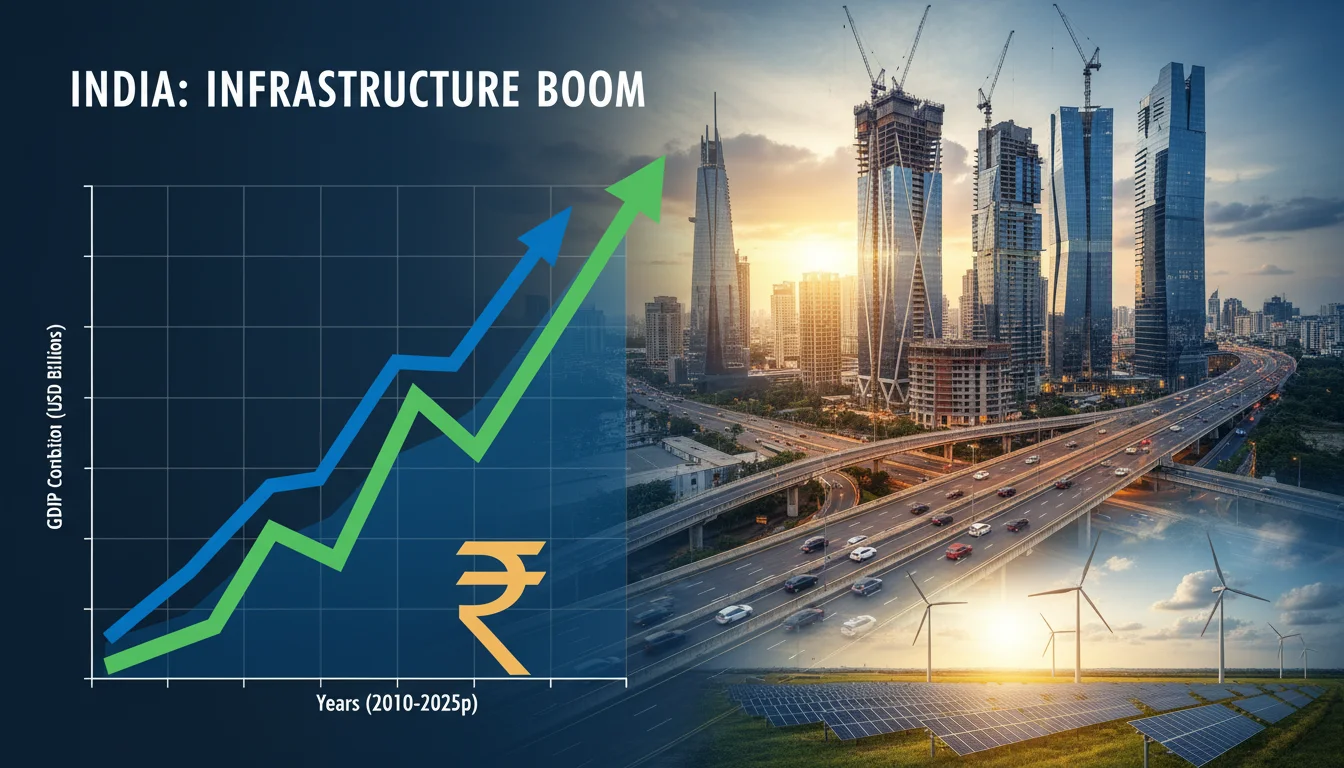

Recent fiscal policies and federal budgetary allocations heavily support this aggressive growth trajectory. The Union Budget 2025-26 increased the capital investment outlay for infrastructure to an unprecedented Rs. 11.21 lakh crore (US$ 128.64 billion), representing 3.1% of the national GDP. Furthermore, this is complemented by the continuation of 50-year interest-free loans to state governments to incentivize capital expenditure at the regional level, with an enhanced outlay of Rs. 1.5 lakh crore (US$ 17.30 billion). Long-term financial models crafted by CRISIL in their Infrastructure Yearbook 2023 suggest that India will spend nearly Rs. 143 lakh crore (US$ 1,727.05 billion) on infrastructure over the seven fiscal years leading to 2030, which more than doubles the near Rs. 67 lakh crore spent in the preceding seven years.
Foreign Direct Investment (FDI) serves as an equally critical growth engine. The construction development sector (townships, housing, built-up infrastructure) and construction activities have collectively received over US$ 64 billion in FDI inflows between April 2000 and June 2025, making it the 6th largest recipient of FDI in the country. The interplay between foreign capital and surging domestic investments—spurred by household savings, corporate balance sheet resolutions, and initiatives like ‘Make in India’ and Production Linked Incentive (PLI) schemes—creates a highly capitalized environment for developers and contractors.
The industry’s expansion is not uniform but concentrated within high-growth sub-segments, which present targeted opportunities for specialized contractors:
| Infrastructure Segment | Current Status & Growth Projections | Key Drivers & Federal Initiatives |
|---|---|---|
| Real Estate & Urban Transit | Projected to reach US$ 5.8 trillion by 2047 (15.5% of economic output). India possesses the 3rd largest global metro network. | Rapid urbanization (50% of the population will be urban by 2046). Pradhan Mantri Awas Yojana-Urban (PMAY-U) sanctioned 1.18 crore houses. |
| Logistics & Warehousing | Revenue generation potential of US$ 8.9 billion in the upcoming decade. Demand expected to reach 159 million sq. ft by 2047. | E-commerce expansion, manufacturing booms, National Logistics Policy 2022, and PM GatiShakti master plan. |
| Roads & Highways | Government target of a 2 lakh km national highway network by 2025. Adding 13,000 km annually (5-8% increase). | Bharatmala Pariyojana and Special Accelerated Road Development Programme (SARDP-NE). |
| Construction Equipment | Valued at US$ 9.5 billion, the 3rd largest globally. Achieved 26% growth in FY24, projected to be 2nd largest by 2030. | Capital expenditure surge, demand for heavy earthmoving machinery in challenging terrains. |
Alongside raw financial growth, several macro-trends are actively reshaping the operational framework of this industry. Digitalization at the federal level is accelerating, most notably through the PM GatiShakti portal, which has integrated 44 Central Ministries and 36 States/UTs to provide the private sector with shared data and maps to eliminate logistical planning bottlenecks. There is also a massive shift toward alternative investment vehicles. The Indian Real Estate Investment Trusts (REITs) market is projected to surpass US$ 25 billion by 2029, while the Infrastructure Investment Trust (InvIT) market is expected to reach US$ 258 billion by 2030, democratizing retail access to infrastructure capital. Furthermore, sustainability has transitioned from a fringe concern to a regulatory imperative. Aligned with India’s 2070 net-zero emissions target, the sector is increasingly prioritizing sustainable urban development, green roofs, vertical gardens, whole-life carbon assessments, and massive renewable energy installations.
Key Challenges Faced by Businesses in this Industry
Despite the immense macro-economic tailwinds, Indian construction and infrastructure companies face profound, systemic challenges that directly impact their market positioning, cash flow, and operational efficiency. Digital marketing is uniquely positioned to address these friction points, but one must first understand their root causes.
The most prominent challenge is the structural complexity of the sales and procurement cycle. Unlike retail, consumer goods, or Software as a Service (SaaS), construction involves exceptionally long sales cycles—often spanning 6 to 18 months from the initial digital touchpoint to the ultimate contract signing. The decision-making process is rarely unilateral; it is highly scrutinized and involves multi-stakeholder purchasing committees typically comprising 6 to 10 individuals, including procurement officers, financial directors, structural engineers, and government regulatory bodies. This complexity requires marketing systems capable of sustaining engagement over multi-quarter periods without fatiguing the prospect.
Furthermore, the industry operates within highly regulated environments requiring strict compliance, transparency, and risk mitigation. The financial stakes are exceptionally high, meaning reputation risk is a persistent existential threat. In a sector where a single commercial or industrial project can be worth anywhere from INR 50 Lakhs to over INR 50 Crores, trust is the ultimate currency. A single poorly executed project, or rumors of financial insolvency, can tarnish a contractor’s brand reputation for decades, effectively locking them out of lucrative future tenders.
Digitally and technologically, the industry suffers from a severe adoption lag. A substantial majority of Indian mid-tier construction firms operate with a minimal or non-existent digital presence. They often rely on static, brochure-style websites completely devoid of Search Engine Optimization (SEO) strategies, structured lead capture funnels, or consistent content marketing. There is a dangerous over-reliance on traditional word-of-mouth referrals, legacy information systems, and opaque pricing models. This reliance on analog methodologies frequently leads to information gaps, miscommunications between contractors and clients regarding material costs, and a pervasive consumer fear of hidden charges and timeline delays. As the primary buyer demographic shifts toward tech-savvy millennials and digitally native corporate procurement officers, this technological inertia presents a critical vulnerability for incumbent firms and a massive opportunity for digitally agile disruptors who prioritize transparency and data-driven client portals.
Digital Landscape in India (Contextual to the Industry)
Internet & Social Media Usage Relevant to Construction
India’s digital ecosystem has undergone a radical and irreversible transformation, evolving into a mobile-first economy characterized by deep internet penetration, ubiquitous high-speed data access, and prolific social media consumption. The national internet user base, which stood at a formidable 1.2 billion in 2023, is projected to reach an astounding 1.6 billion by 2050. Crucially, the architectural paradigm of this digital access is entirely mobile-centric; over 85% of Indian internet users access the web primarily through smartphones, mandating that any digital marketing endeavor for construction firms be flawlessly optimized for mobile screens and varying bandwidth speeds.
A highly consequential demographic shift is the rapid digitization of non-urban areas.
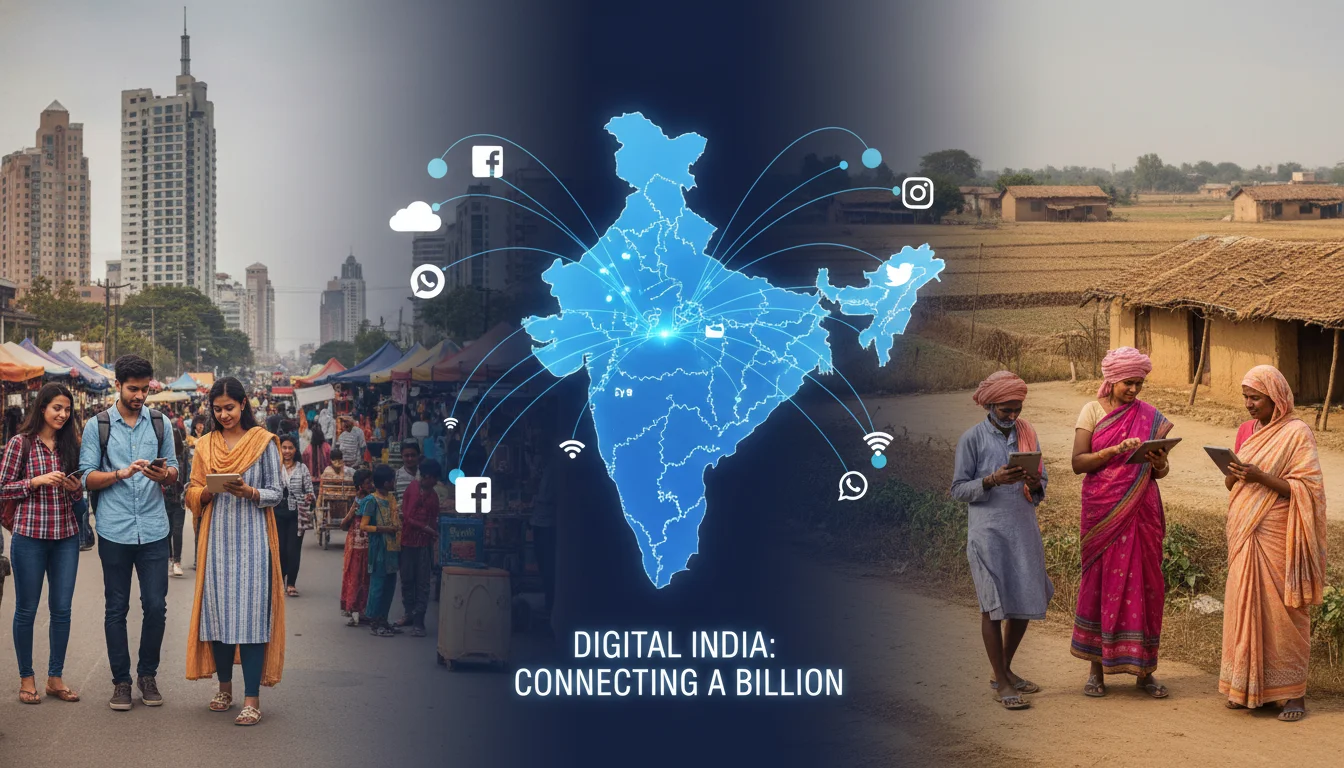
Rural India now drives significant digital growth, accounting for approximately 488 million users, which constitutes 55% of all Indian internet users. For infrastructure developers, material suppliers (cement, steel), and heavy equipment manufacturers, this rural and semi-urban penetration opens up vast new geographic markets that were previously inaccessible through traditional localized advertising. The penetration of social media and instant messaging applications has fundamentally altered how businesses communicate, shifting the expectation from asynchronous email correspondence to real-time, rich-media conversational interfaces.
Popular Platforms Among the Target Audience
- WhatsApp: In the Indian context, WhatsApp transcends its origins as a mere messaging application; it functions as the dominant business communication protocol and a foundational layer of digital commerce. With over 853 million active users in 2025, India remains the largest WhatsApp market globally. For construction and real estate firms, WhatsApp is utilized for real business engagement—not just passive updates. It boasts an unprecedented 98% open rate, vastly outperforming traditional email marketing (15-25% open rates) and SMS campaigns (30-40%). Because Indian consumers have trained themselves to respond to WhatsApp messages as part of their daily routine, it serves as the ultimate platform for sharing site progress photos, PDF brochures, voice notes, and executing automated lead qualification via chatbot APIs.
- LinkedIn: For B2B infrastructure companies, EPC contractors, and high-end architectural suppliers targeting government officials, urban planners, and corporate real estate developers, LinkedIn is the premier platform for demand generation. It is extensively utilized for Account-Based Marketing (ABM) and thought leadership. Leading firms utilize LinkedIn’s advanced, granular targeting capabilities to disseminate technical whitepapers and infrastructure case studies directly to specific job functions (e.g., procurement managers, municipal engineers), effectively bypassing gatekeepers.
- YouTube and Video Platforms: Construction is an inherently visual and physical industry, making YouTube an indispensable asset for brand building. High-quality project walkthroughs, drone cinematography of massive infrastructure developments, and time-lapse construction videos are highly effective at building brand credibility and demonstrating engineering competence.
- Meta (Facebook and Instagram): While traditionally viewed as B2C channels, the Meta ecosystem is vital for residential developers, interior architecture firms, civil contractors, and building material brands. Facebook Lead Ads are heavily utilized to capture high-intent localized queries through incentives like “Get Free Site Plan,” while Instagram functions as a dynamic, highly curated portfolio showcasing completed projects, architectural visualization (ArchViz), and lifestyle aesthetics.
Consumer Online Behavior Related to Construction
The modern Indian buyer’s journey—whether an enterprise procurement officer selecting an EPC contractor or a millennial purchasing their first home—is overwhelmingly digital-first. Current behavioral statistics indicate that 81% of consumers research companies online before making a purchase decision, and 97% will rigorously scrutinize a company’s online presence, reviews, and digital footprint to establish a baseline of trust before initiating contact.
In the B2B construction sector, the purchasing process is labyrinthine. Extensive research demonstrates that Indian B2B buying processes typically involve over 40 distinct touchpoints spanning across digital channels, social media, and physical interactions. However, a critical analytical insight reveals that attempting to meticulously map and optimize every single touchpoint leads to organizational analysis paralysis. Instead, successful firms identify and obsess over 5 to 7 critical “moments of truth” that disproportionately influence the final procurement decision. For example, in the building materials sector, these moments might include the clarity of technical specifications on the website, the seamlessness of ordering a physical sample, and the flexibility of digital credit terms. Furthermore, McKinsey’s “rule of thirds” applies heavily to modern B2B buyers (categorized as adapters, innovators, and seekers): at any given stage of the buying journey, one-third of customers desire in-person interactions, one-third want remote human communication (video calls), and one-third prefer complete digital self-serve options.
In the B2C residential and homebuilding sector, technology has simplified, accelerated, and brought transparency to the property acquisition process. In 2024, 68% of homebuyers relied on tech-driven solutions to initiate their property search, a figure projected to rise to 78% by 2025. A remarkable 72% of first-time homebuyers use digital platforms to explore listings, compare builders, and shortlist properties before ever contacting an agent or visiting a site. Consequently, there is an surging, uncompromising demand for immersive digital experiences. Homebuyers increasingly expect high-fidelity 3D house designs and Virtual Reality (VR) walkthroughs, allowing them to visualize spatial flow, lighting, and furniture placement long before the physical foundation is poured. This technological integration drastically mitigates the consumer’s risk of requesting expensive modifications during the build phase. Furthermore, smart home technology has transitioned from a luxury add-on to a critical decision-making factor, with tech-enabled homes generating a 23% increase in buyer interest and selling 32% faster on average than traditional properties.
Digital Marketing Opportunities
Solving Key Challenges Through Digital Marketing
Digital marketing provides structural, scalable solutions to the inherent challenges of the Indian construction sector. The agonizingly long, complex sales cycle involving multiple stakeholders can be actively managed and significantly shortened through the deployment of automated lead nurturing and digital Account-Based Marketing (ABM). By utilizing advanced Customer Relationship Management (CRM) tools integrated with automated email or WhatsApp drip sequences, construction firms can continuously educate prospects, share vital project milestones, and address common objections over an 18-month period without exhausting human sales capital.
The industry’s reputation and transparency challenges are directly mitigated through strategic content deployment and customer experience mapping. Modern consumers are described as “digital kangaroos,” ready to abandon a brand with a single click if their digital experience is sub-par. Firms that deploy transparent digital platforms—offering real-time timeline tracking, daily workforce attendance reports, and live material procurement logs—proactively assuage the deep-seated fears of hidden charges and timeline delays that plague property owners. By shifting from a static brochure website to an interactive, data-driven digital presence, construction firms fundamentally transition from being perceived as opaque, untrustworthy contractors to tech-enabled, collaborative partners.
Best Strategies for Construction and Infrastructure Companies in India
Search Engine Optimization (SEO) and Generative Engine Optimization (GEO)
While traditional search engine optimization remains foundational, the winning strategy in 2026 demands a highly nuanced, localized, and intent-driven approach. A high-performing local SEO strategy for Indian construction companies requires precision-tuned Google Business Profiles (GBP), hyperlocal keyword structuring, consistent Name, Address, Phone (NAP) signals across directories, and geo-optimized content marketing. For mid-tier regional contractors, dominating local search intent (e.g., “best civil contractor in Noida”) yields vastly superior ROI and conversion rates compared to squandering budget competing for highly competitive, broad national keywords.
Furthermore, the explosive rise of Artificial Intelligence has introduced a critical new frontier: Generative Engine Optimization (GEO). As Indian buyers increasingly bypass traditional search engines to ask Large Language Models (LLMs) like ChatGPT, Perplexity, or Gemini for B2B recommendations, construction firms must restructure their digital content to serve as a primary, citable source of truth for AI bots. This dual-engine approach ensures visibility across both traditional Google Search and emerging AI answer engines, utilizing deep content clusters to establish undeniable topical authority.
WhatsApp Marketing and Conversational Commerce
Given its staggering 98% open rate and deep cultural integration, WhatsApp is unequivocally the most potent conversion and retention tool in the Indian market. Traditional marketing funnels relying on static web forms are broken; successful modern strategies replace these with interactive, frictionless WhatsApp conversations. By deploying AI-driven WhatsApp chatbots and automation workflows, construction companies can automate the initial, labor-intensive lead qualification process.
The bot can instantly engage inbound leads, asking them to define their project scope, budget constraints, and timelines before intelligently routing only the highly qualified prospects to human sales representatives. Furthermore, WhatsApp serves as an ideal, intimate channel for sending rich media—such as structural CAD drawings, 30-second site progress videos, PDF brochures, and personalized voice notes—which resonate deeply with Indian consumers who value interpersonal rapport.
Targeted Paid Advertising and Social Media Retargeting
An effective paid advertising strategy leverages the high-intent nature of Google Ads alongside the visual, disruptive appeal of Meta (Facebook/Instagram) Ads. Google Search Ads are aggressively deployed for bottom-of-the-funnel queries where the user is ready to procure (e.g., “commercial construction contractors,” “turnkey construction company”). A well-structured Google Ads campaign can generate same-day, high-quality inquiries.
Conversely, display advertising and social media are utilized for brand awareness, portfolio showcasing, and sophisticated retargeting. Combining compelling visual narratives—such as high-definition drone footage of completed projects or photorealistic 3D architectural renderings—with clear, low-friction calls-to-action like “Free Site Estimate” or “Design Consultation” generates a steady stream of highly qualified local leads.
Content Marketing and Regional Language Localization
Content marketing in the heavy construction sector is not about viral trends; it involves transforming the firm from a mere commodity service provider into an undisputed industry authority. Producing high-quality, long-form case studies, detailed project showcases, and educational content detailing building materials, structural integrity, and regulatory compliance builds immense, unshakeable trust.
Crucially, in the diverse Indian market, localization is a massive, often overlooked growth lever. India’s profound linguistic diversity dictates that regional language voice-overs and culturally localized content significantly out-perform generic national campaigns. An educational video explaining home construction costs or smart building tech delivered natively in Tamil, Marathi, Malayalam, or Bengali will resonate far more deeply in those respective states than generic English or Hindi content. Regional content bypasses consumer skepticism, signaling to the prospect that the brand intimately understands their specific cultural, geographic, and climatic context, thereby drastically accelerating the trust-building phase.
Influencer Marketing and B2B Thought Leadership
The Indian influencer marketing industry, valued at ₹3,600 crore in 2024 and forecasting 25% growth, is experiencing a paradigm shift from prioritizing raw follower counts to valuing content quality, niche relevance, and brand safety. In the B2B construction and manufacturing verticals, where 85% of marketers now prioritize content quality, this translates to strategic partnerships with macro and micro-influencers such as renowned local architects, structural engineering professors, real estate market analysts, and construction technology vloggers.
By having recognized industry experts objectively review a firm’s utilization of smart building technology, IoT integration, or sustainable green materials, construction companies can bypass traditional advertising skepticism and tap directly into the influencer’s hard-earned credibility to shorten procurement cycles.
Local and Global Examples/Case Studies
- Larsen & Toubro (L&T) - India: L&T utilized a highly sophisticated Account-Based Marketing (ABM) strategy on LinkedIn, deploying insight-driven, industry-specific content to rigorously filtered job functions. This layered approach resulted in an 8X engagement rate compared to industry benchmarks and successfully generated a massive US$ 35 million sales funnel at a highly efficient Cost Per Lead (CPL) of $39.93. Furthermore, their utilization of cinematic drone cinematography to highlight landmark projects like the Atal Setu and the Ayodhya Ram Mandir drove record engagement on YouTube, reinforcing their dominant role in national progress.
- The Korte Company - Global Insight: A major design-build firm in the U.S., The Korte Company possessed strong top-of-funnel website traffic but suffered from poor lead conversion because their site functioned as a static digital brochure. By comprehensively analyzing existing traffic, optimizing high-traffic pages, changing UX layouts, and creating highly relevant downloadable content (whitepapers, guides) tailored to B2B buyers, they transitioned their site into a lead generation engine, resulting in a staggering 650% increase in monthly contact generation over two years.
- Grande Forge - India (Noida): A distinguished manufacturer of luxury architectural metalwork and railings faced stagnant sales and low online visibility despite a strong offline reputation among architects. By executing a meticulous SEO audit and heavily targeting high-intent, long-tail keywords like “luxury staircase railings” and “custom balustrade design,” combined with optimizing their site for lead capture, they significantly expanded their market penetration among affluent homeowners and elite real estate developers.
- Digital Atrium Mid-Sized Contractor Case - India: A mid-sized residential and commercial contractor completely overhauled their outdated digital presence by deploying fast, mobile-optimized landing pages seamlessly integrated with live chat and a corporate CRM. By combining hyper-local SEO optimization for terms like “general contractor near me” with tightly themed Google Search Ads and Facebook video testimonial campaigns, they drastically reduced their Cost Per Acquisition (CPA) and built a predictable, scalable digital lead generation system.
Competitive Analysis
Current Digital Presence of Top Construction Companies in India
The Indian construction sector is dominated by colossal corporate entities that command billions in revenue. To contextualize the competitive landscape, one must look at the financial scale of these titans:
| Rank | Company Name | Revenue (2022 Data in INR Crore) | Key Specializations |
|---|---|---|---|
| 1 | Larsen & Toubro Ltd. (L&T) | 147,813.26 | Turnkey EPC, Heavy Civil, Defense, IT |
| 2 | Reliance Infrastructure Ltd. | 20,972.00 | Power, Roads, Metro Rail Systems |
| 3 | Macrotech Developers (Lodha) | 2,534.00 | Luxury Residential, Commercial Real Estate |
| 4 | Punj Lloyd Ltd. | 1,500.00 | Oil & Gas, Infrastructure |
| 5 | Sadbhav Engineering Ltd. | 1,200.00 | Roads, Highways, Mining |
| 6 | Tata Projects Ltd. | 1,000.00 | Urban Infrastructure, Refineries, Clean Energy |
| 7 | Hindustan Construction Co. (HCC) | 900.00 | Hydroelectric, Transportation, Water |
| 8 | Nagarjuna Construction Co. (NCC) | 800.00 | Real Estate, Water Management |
Data sourced from recent industry compilations.
These industry titans leverage their immense scale and historical legacies, but their approaches to digital marketing reveal distinct strategic profiles. On a global scale, Indian firms like L&T are competing fiercely with massive state-backed Chinese engineering corporations (like China State Construction Engineering Corp) and European giants (like STRABAG SE and Eiffage) on the ENR Top 250 Global Contractors list.
Larsen & Toubro (L&T):
As the undisputed largest construction company in India, L&T has mastered the art of digital brand reinforcement. Their strategy emphasizes the execution of landmark, nation-building projects (e.g., Delhi and Mumbai Airports, the Statue of Unity, Lotus Temple). They utilize high-production-value content, including cinematic drone footage and emotional storytelling on YouTube, to engage a broad national audience and foster Indian pride. In the B2B sphere, their precision-targeted LinkedIn campaigns effectively reach procurement officers and government officials. They also execute targeted digital campaigns for their subsidiaries, such as the ‘Late Lateef 2021’ campaign aimed at educating millennials on tax-saving mutual funds across YouTube, Facebook, Twitter, and LinkedIn.
Tata Projects:
Leveraging the diversified strength and legendary trust of the Tata Group, Tata Projects employs a highly structured, data-driven digital marketing strategy. The conglomerate excels in utilizing a diversified product portfolio—ranging from TCS IT services to Tata Steel—to cross-pollinate B2B opportunities. They effectively blend traditional public relations with modern digital SEO, content marketing, and data analytics to maintain a customer-centric approach. Their digital presence is highly corporate and transparent; their annual integrated reports are heavily digitized, adhering to global sustainability (GRI) frameworks, which appeals profoundly to international investors and eco-conscious institutional stakeholders.
Hindustan Construction Company (HCC):
HCC focuses its digital narrative strictly on innovative construction techniques, sustainability, and overcoming extreme engineering challenges. By highlighting their engineering prowess through detailed case studies of complex topographies and massive civil structures, they position themselves as specialized thought leaders in infrastructure resilience rather than generic builders.
What They Are Doing Well
The top-tier companies excel in omnichannel brand authority. They do not merely sell construction services; they market national progress, safety, and economic mobilization. Their digital assets are flawlessly optimized for corporate governance, investor relations, and massive B2B/B2G procurement cycles.
They successfully use LinkedIn for highly specific Account-Based Marketing, ensuring their technical content reaches key decision-makers rather than being wasted on the general public. Furthermore, they have recognized the immense power of video marketing, utilizing YouTube to visually document the scale and technological sophistication of their projects, thereby shortening the sales cycle for specialized segments by providing undeniable visual proof of capability.
Gaps and Opportunities to Outperform Them
While the enterprise giants completely dominate national branding and massive sovereign tenders, massive tactical and strategic gaps exist in the digital execution of mid-tier, regional, and specialized construction companies. This “digital gap” represents a highly lucrative opportunity for agile, data-driven businesses to capture market share.
- Short-Term Thinking and Inconsistency: Many mid-tier Indian SMEs treat digital marketing as a short-term tactical expense rather than a compounding, long-term strategic asset. They expect instant results from SEO, prematurely halt campaigns after 30 days, frequently switch agencies, or pivot their strategy every quarter. This severe inconsistency destroys compounding growth and brand equity.
- Poor Funnel Architecture and Analytics Black Holes: A pervasive and expensive mistake is running paid traffic directly to unoptimized, slow-loading homepages without a clear, specific landing page or lead capture strategy. Furthermore, over 60% of SMEs ignore data analytics, operating without tracking pixels, incrementality measurement, or CRM integration. By not tracking conversions, their marketing spend becomes guesswork rather than an optimized science.
- Ignoring Hyper-Local SEO Intent: Many ambitious firms attempt to rank for broad, highly competitive national keywords (e.g., “construction company India”) and fail, completely ignoring the highly profitable, low-competition hyper-local searches (e.g., “commercial builder in Ahmedabad” or “best SEO agency in Delhi”) that actually drive ready-to-buy local leads.
- Generic Content vs. Regional Nuance: The reliance on generic, English-only content ignores the massive shift toward regional language consumption in India. Mid-tier companies that adopt culturally nuanced, localized content strategies instantly build stronger rapport and trust within specific geographic markets than national conglomerates broadcasting a monolithic English message.
- Failure to Automate Lead Communication: Despite the ubiquitous prominence of WhatsApp, many contractors still rely on manual follow-ups, leading to slow response times and dropped leads. Firms that implement automated WhatsApp qualification flows and seamless CRM routing can easily outmaneuver slower, larger competitors by responding to buyer intent instantaneously, capitalizing on the “digital kangaroo” behavior.
Recommended Strategy for Construction and Infrastructure Companies in India
Target Audience Personas
To architect a successful, high-ROI digital strategy, marketing efforts must abandon the flawed approach of selling to “everyone” and instead be tailored to distinct, thoroughly researched buyer personas. In the Indian infrastructure market, these are broadly divided into B2B and B2C archetypes.
Persona 1: The B2B Infrastructure Decision Maker (Government & Private Developer)
- Demographics & Role: Age 40-60. Typically holds titles such as VP of Procurement, Chief Structural Engineer, Municipal Project Director, or Supply Chain Head. Located primarily in Tier-1 metros or rapidly developing Tier-2 industrial corridors.
- Preferences & Behavior: They are highly analytical, distinctly risk-averse, and driven by regulatory compliance, long-term ROI, and technical precision. They do not make impulsive decisions; they operate within a purchasing committee of 6 to 10 stakeholders. They highly value deep technical data, Building Information Modeling (BIM) capabilities, and transparent ESG reporting.
- Pain Points: Chronic supply chain unreliability, hidden escalation costs, regulatory non-compliance, and project handover delays.
- Information Sources: LinkedIn, industry-specific trade publications, peer referrals, and increasingly, specialized B2B answer engines (AI-driven research tools like Perplexity or Gemini).
Persona 2: The Modern Indian Homebuyer / Private Plot Owner (B2C)
- Demographics & Role: Age 28-45. Upwardly mobile corporate professionals, tech-savvy millennials, or Non-Resident Indians (NRIs) investing capital back into the domestic real estate market.
- Preferences & Behavior: They are unequivocally mobile-first consumers who conduct over 70% of their research online before making contact with a builder. They expect ultimate convenience, absolute pricing transparency, and high-quality visual representations of their future investment. They heavily favor smart home IoT integrations and sustainable, energy-efficient designs.
- Pain Points: Profound fear of unscrupulous or unorganized contractors, severe lack of transparency in material procurement quality (e.g., cement/steel grades), timeline delays, and the cognitive inability to visualize the final structure from traditional 2D floor plans.
- Information Sources: Google Search for local builders, Instagram for architectural inspiration and interior design trends, YouTube for property walkthroughs, and WhatsApp for direct, frictionless communication.
Recommended Channels and Campaign Types
To effectively capture these personas, construction firms must deploy a multi-channel matrix that aligns the medium with the buyer’s intent.
-
Campaign Type: Account-Based Marketing (ABM)
- Primary Channel: LinkedIn
- Target Persona: B2B Decision Makers
- Objective & Strategic Execution: Deploy highly targeted sponsored updates and Lead Gen forms aimed at specific job titles (e.g., “Procurement Head” in manufacturing). Distribute technical whitepapers, cost-benefit analyses, and infrastructure case studies.
-
Campaign Type: High-Intent Search Capture
- Primary Channel: Google Ads (Search/Local)
- Target Persona: B2B & B2C
- Objective & Strategic Execution: Target bottom-of-funnel queries with exact location modifiers. Route traffic strictly to fast, mobile-optimized, service-specific landing pages with clear CTAs (e.g., “Request Quote” or “Call Now”).
-
Campaign Type: Visual Portfolio Retargeting
- Primary Channel: Meta (Facebook/IG) & YouTube
- Target Persona: B2C Homebuyers
- Objective & Strategic Execution: Deploy drone footage, time-lapse construction sequences, and photorealistic 3D architectural renderings. Utilize Facebook Lead Ads offering high-value incentives like “Free Site Consultations” to capture contact data efficiently.
-
Campaign Type: Conversational Commerce
- Primary Channel: WhatsApp Business API
- Target Persona: B2B & B2C
- Objective & Strategic Execution: Replace static, low-converting website forms with dynamic click-to-WhatsApp buttons. Implement automated logic-based chat flows to qualify leads in real-time based on budget and location before routing to a human sales agent to close the conversation.
Content Ideas Specific to Construction and Infrastructure
- Immersive Project Showcases (VR & AR): Move aggressively beyond 2D blueprints. Utilize 3D Virtual Reality (VR) and Augmented Reality (AR) walkthroughs to allow prospective clients to physically experience spatial layouts, lighting, and material finishes before construction begins. This drastically increases buyer confidence, speeds up decision-making, and reduces costly mid-project change orders.
- Tech-Driven Transparency Dashboards: Create content that highlights the firm’s use of modern construction management software. Showcasing features like real-time timeline tracking, daily workforce attendance logs, and live material procurement records directly addresses the primary consumer fear of hidden contractor costs and corruption.
- Regional Language Educational Series: Produce high-quality, short-form video content addressing common construction queries (e.g., “How to choose the right TMT bar,” “Understanding local building codes”) delivered natively in regional languages like Tamil, Telugu, Marathi, or Bengali. This hyper-local approach builds community trust far faster than generic English campaigns.
- Technical Deep-Dives for B2B: Publish detailed, data-rich case studies on how the firm solved complex logistical, geological, or engineering challenges on past projects. Highlight the integration of Building Information Modeling (BIM), IoT smart building sensors, and whole-life carbon assessments.
Budget-Friendly Digital Marketing Approaches
For mid-tier firms and ambitious SMEs, establishing a highly effective digital ecosystem does not require the astronomical budgets of a national conglomerate. A strategic reallocation of resources yields significant ROI.
- Hyper-Local SEO Foundation: Optimizing a Google Business Profile (GBP) and ensuring consistent NAP citations across local directories is entirely free and yields immense ROI by capturing high-converting local “near me” searches.
-
Cost-Effective CRM Integration: A fatal error is operating without a CRM. Instead of complex enterprise solutions like Salesforce (which can be cost-prohibitive), Indian SMEs can adopt highly budget-friendly, localized CRM tools to manage lead pipelines and automate follow-ups.
- Zoho CRM: Excellent for feature-rich automation (Starting at ₹800/user/month).
- Kylas Sales CRM: Ideal for growing teams requiring unlimited users (Starting at ₹12,999/month).
- Groweon CRM: Tailored for manufacturing and distribution MSMEs (Starting at ₹999/user/month).
- Outsourcing Lead Generation: Building an internal B2B sales development team can cost ₹15-30 lakhs annually per representative.
Outsourcing to specialized Indian lead generation agencies (such as LeadRoad, SalesAladin, or LeadoConnect) can reduce costs by 40-60% while providing instant access to proven multi-channel outreach methodologies and WhatsApp infrastructure.
- Leveraging Existing Raw Assets: Rather than hiring expensive professional production crews for every post, site managers can use standard modern smartphones to record daily 30-second progress updates. When compiled into a time-lapse and shared via WhatsApp status or Instagram Reels, this raw, authentic content is highly engaging, demonstrates transparent progress, and costs almost nothing to produce.
6. Keywords & SEO Opportunities
A scientifically structured keyword strategy is the critical foundation for capturing existing market demand and intercepting buyers at the exact moment of inquiry. In the highly competitive Indian market, prioritizing keywords using the ICE framework—Impact (potential business volume), Confidence (ability to rank against competitors), and Ease (content creation difficulty)—is a highly effective methodology to maximize ROI.
High-Intent Keywords for Ranking
High-intent (transactional or bottom-of-the-funnel) keywords indicate that the searcher has completed their initial research and is actively looking to hire a contractor, procure materials, or request a quote immediately. While the raw search volume for these terms may be lower than broad educational terms, the conversion rates are exceptionally high. Paid search (Google Ads) is often necessary and highly recommended to supplement organic visibility for these lucrative queries, where the Cost Per Click (typically INR 30-80 for construction keywords) is easily justified by the massive project values (INR 50L+) at stake.
| Keyword Category | High-Intent Examples (India-Specific) | Target Audience / Intent |
|---|---|---|
| Commercial / Industrial | commercial construction contractor [City], industrial building contractor, turnkey construction company India | B2B Procurement, Private Developers ready to award contracts. |
| Residential Build | best construction company in [Location], villa construction company, hire home builder [City], civil contractor in Noida | B2C Homeowners, Plot Owners actively seeking builders. |
| Remodeling / Renovation | renovation services near me, home remodeling [City name] | B2C Homeowners requiring immediate project estimates. |
| B2B Services | hire SEO company India, best SEO agency Ahmedabad | B2B Service procurement (applicable to agencies targeting the sector). |
Long-Tail Keyword Opportunities (India-Specific)
Long-tail keywords (phrases typically comprising 4 or more words) are highly specific queries utilized by users closer to the point of purchase, or those utilizing voice search functionalities. In the Indian digital context, long-tail and city-specific keywords are significantly easier to rank for than broad national terms due to vastly lower domain competition. They align perfectly with educational content marketing, allowing a firm to capture traffic early in the 18-month buying cycle and build trust.
| Long-Tail Keyword Pattern | Example Queries | Recommended Content Strategy |
|---|---|---|
| cost in India | warehouse construction cost per sq ft in Gujarat, home construction cost in Bangalore 2026 | Detailed, transparent pricing guides and interactive cost calculators. |
| How to [Action] | how to choose a civil contractor in Hyderabad, how to build a tiny house DIY | Long-form educational blog posts, YouTube video tutorials in regional languages. |
| for [Industry] | structural engineering services for hospitals in India, HVAC installation for data centers Mumbai | Deep-dive B2B case studies, technical whitepapers emphasizing compliance. |
| Highly Specific Product | contemporary Art Deco-influenced staircase railings Delhi | Product/Service specific landing pages with high-resolution image galleries and clear specifications. |
Crucial SEO Evolution Note: For modern long-tail strategies, simply creating isolated blog posts is insufficient. Firms must group similar search queries and address them with specialized “content clusters” to build undeniable Topical Authority. This approach is the fundamental engine behind Generative Engine Optimization (GEO). By executing deep technical audits (Core Web Vitals, Schema Markup) and securing high-Domain Authority (DA 40+) backlinks, construction firms ensure that when procurement officers ask AI engines (like ChatGPT or Gemini) for contractor recommendations, the LLM cites their brand as the primary source of truth.
7. Implementation Roadmap
To prevent organizational execution paralysis—a common fate for SMEs lacking clear direction—the digital marketing strategy must be rigorously phased. This implementation roadmap outlines a progressive integration of digital capabilities designed to generate rapid initial returns while meticulously constructing a sustainable, compounding digital asset over a 12-month period.
Short-Term Quick Wins (1–3 Months)
Objective: Establish foundational digital hygiene, plug existing leaks in the sales funnel, and aggressively capture immediate local demand.
-
Month 1: Digital Infrastructure & Local SEO Cleanup
- Conduct a comprehensive technical SEO overhaul of the existing website. Focus obsessively on site speed, mobile optimization (Core Web Vitals), and structured data integration, as mobile UX directly dictates conversion rates in India.
- Claim, rigorously verify, and hyper-optimize the Google Business Profile (GBP). Ensure accurate NAP (Name, Address, Phone) signals, upload high-quality site photos, and structure descriptions around localized keywords.
- Register the business on prominent local Indian B2B directories (IndiaMART, JustDial, Sulekha) to build foundational local citations and backlink authority.
-
Month 2: Lead Capture & CRM Implementation
- Deploy a budget-friendly, scalable CRM (e.g., Zoho CRM or Agile CRM) to centralize all existing and future contacts. Eliminate manual spreadsheets to ensure no lead is lost and data hygiene is maintained.
- Integrate a WhatsApp Business API directly into the website, replacing slow, high-friction email contact forms. Set up automated, logic-based pre-qualification chat flows to engage visitors instantly, categorize their intent, and route them to sales.
-
Month 3: High-Intent Paid Campaigns
- Launch highly targeted Google Search Ads focusing strictly on bottom-of-funnel, high-intent localized keywords (e.g., “turnkey construction company in [City]”). Route this traffic exclusively to service-specific landing pages, never the homepage.
- Implement Meta (Facebook/Instagram) Lead Ads featuring strong visual assets (time-lapse videos of completed projects) and clear lead magnets (e.g., “Free Site Inspection”) directed at strictly geo-fenced local areas to maximize budget efficiency.
Long-Term Strategy (6–12 Months)
Objective: Build unshakeable brand authority, automate B2B relationship nurturing, and dominate regional and AI-driven search landscapes.
-
Months 4-6: Content Marketing & Regional Expansion
- Begin executing a targeted SEO content strategy based on the long-tail informational queries identified via the ICE framework. Develop comprehensive guides that address the “moments of truth” in the buyer journey (e.g., material selections, cost estimates).
- Initiate regional language content creation. Translate top-performing pages and record voice-overs in the dominant local languages (e.g., Gujarati, Tamil) of the target operational areas to rapidly build community trust and lower customer acquisition costs.
- Launch a sustained LinkedIn Account-Based Marketing (ABM) campaign targeting procurement heads and structural engineers in target organizations with specialized, data-heavy case studies.
-
Months 7-9: Advanced Technologies & Influencer Integration
- Integrate 3D Virtual Reality (VR) walkthroughs, Augmented Reality (AR) site overlays, and digital twin representations into the website. This provides immersive project demonstrations for prospective B2C homebuyers and technical B2B developers, drastically shortening the sales cycle.
- Partner with regional micro-influencers—such as highly respected local architects, real estate analysts, or tech vloggers—to objectively review projects or discuss the firm’s technological integrations. This leverages their established trust networks to validate the firm’s credibility.
-
Months 10-12: Generative Engine Optimization (GEO) & Scale
- Restructure all digital content to address the monumental shift toward AI answer engines. Build deep, interconnected “content clusters” around core operational capabilities to ensure LLMs (like ChatGPT or Perplexity) cite the firm as an authoritative source.
- Analyze 12 months of compiled CRM data and marketing incrementality models to refine the marketing mix. Identify the most profitable touchpoints in the customer journey and dynamically reallocate the marketing budget toward the channels delivering the highest ROI, effectively transitioning from intuition-based marketing to data science.
8. Conclusion
Summary of Why Digital Marketing is Crucial for Construction Companies in India
The Indian construction and infrastructure sector stands at a critical, historic technological inflection point. As the industry accelerates aggressively toward a US$ 1 trillion output valuation by 2030, driven by immense federal capital expenditure and foreign direct investment, the analog operational paradigms of the past are rapidly becoming obsolete. The contemporary Indian consumer, the ambitious NRI investor, and the highly scrutinized enterprise decision-maker are all unequivocally mobile-first.
They rely heavily on digital research, demand immersive visual proof, and expect immediate, transparent, and frictionless communication. In this high-stakes environment, digital marketing is no longer a peripheral tactical expense or an experimental luxury; it is a core, mission-critical business asset that directly solves the industry’s most entrenched challenges. By leveraging precision hyper-local SEO, Generative Engine Optimization (GEO) to capture AI-driven queries, conversational WhatsApp automation to intercept intent, and immersive 3D/VR technologies to visualize outcomes, construction firms can drastically reduce their notoriously long 18-month sales cycles. Furthermore, transparent digital portals and culturally nuanced regional language campaigns establish unprecedented trust across India’s diverse linguistic divides. Mid-tier and regional companies that aggressively adopt and master this digital architecture will seamlessly capture market share and outmaneuver larger, slower incumbents. Conversely, those that resist modernization, relying on opaque pricing and outdated networking, will inevitably face dwindling project pipelines and competitive irrelevance.
Call-to-Action and How Gurkha Technology Can Help
To thrive in this hyper-competitive and dynamic landscape, construction and infrastructure companies must immediately pivot from fragmented, short-term advertising gambits to a cohesive, data-driven digital ecosystem. Firms must prioritize hyper-local visibility, implement sophisticated CRM and WhatsApp communication channels, and deploy rich, immersive content that resonates with the specific cultural and behavioral nuances of their target demographics.
Executing a multi-channel digital transformation of this magnitude requires a strategic partner who possesses a profound, native understanding of the South Asian digital ecosystem. Gurkha Technology, a premier digital marketing company in Nepal, is uniquely positioned to architect and engineer this exact transformation for ambitious infrastructure brands.
Gurkha Technology specializes in the philosophy of Digitizing, Optimizing, and Thriving. By moving far beyond generic, off-the-shelf marketing templates, they deliver bespoke solutions tailored to the precise behavioral dynamics, internet penetration rates, and mobile infrastructure of the local ecosystem. Their comprehensive suite of technical and creative capabilities aligns perfectly with the complex needs of the construction sector:
-
Integrated Digital Launches & Authoritative Branding
Through deep strategy analytics, consultation, and brand building, Gurkha Technology establishes the authoritative, unshakeable public image required for high-stakes construction firms. Their success in managing the complex public image of large entities like the Nepal Airlines Corporation (targeting international demographics) and multi-location franchises demonstrates their capability to handle enterprise-level reputation management.
-
Custom Web & Technical App Development
Recognizing that a construction firm’s website is its primary sales deck, Gurkha Technology designs immersive, fast, and highly user-friendly web architectures. Ranging from custom WordPress builds to bespoke applications, they provide the robust technical foundation crucial for hosting the 3D Virtual Reality (VR) walkthroughs, digital twins, and transparent client portals that modern homebuyers and B2B developers demand.
-
Advanced Advertising & Search Optimization
Utilizing highly specific performance insights and incrementality measurement, they execute specialized Local SEO and fully optimized Google Ads management. Their strategies are tailored to aggressively capture the high-intent queries of local and regional developers while maintaining efficient Customer Acquisition Costs.
-
Short-Form Storytelling & Social Ecosystem Management
Intimately understanding the “psychology of the scroll,” they excel in producing and managing engaging short-form video content (Reels/TikTok guides) and executing precise Meta Verification and Facebook Boosting. This allows them to turn raw, on-site construction footage into compelling, trust-building brand narratives that capture increasingly short consumer attention spans.
-
Technology for Cultural Resonance
Their unique expertise in utilizing technology for the thoughtful preservation of local culture positions them perfectly to execute the highly nuanced regional language strategies required to build trust in diverse geographic markets.
By partnering with Gurkha Technology, construction and infrastructure companies can seamlessly bridge the digital gap. Together, they can convert complex engineering capabilities into compelling, frictionless digital experiences that drive highly qualified leads, compress lengthy sales cycles, and secure long-term, compounding market dominance in the booming South Asian infrastructure sector.