Indian Bakery Digital Marketing Report: Trends & Market Growth
Strategic Intelligence Report: Digital Marketing for Bakeries and Confectioneries in India
Industry Overview
Brief Description of the Bakeries and Confectioneries in India
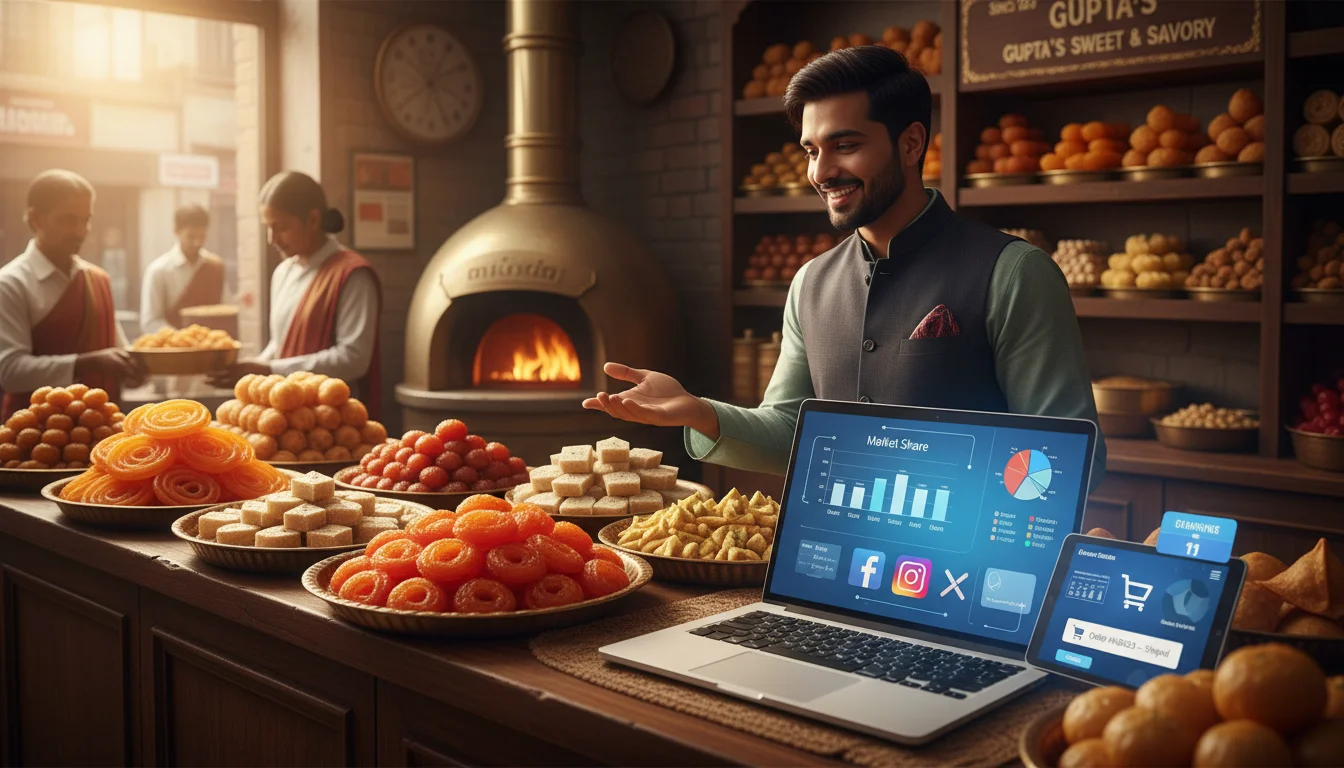
The bakery and confectionery sector constitutes one of the most robust, dynamically evolving, and structurally significant segments of the broader Indian food processing industry. Historically characterized by a highly fragmented landscape dominated by unorganized, local neighborhood bakeries relying on foot traffic and word-of-mouth, the industry is currently undergoing an unprecedented structural transformation. The contemporary market encompasses an immensely diverse array of product categories, ranging from foundational daily staples such as breads and rusks to indulgence-led categories encompassing cakes, pastries, sweet biscuits, chocolates, gums, and specialized sugar confectioneries.
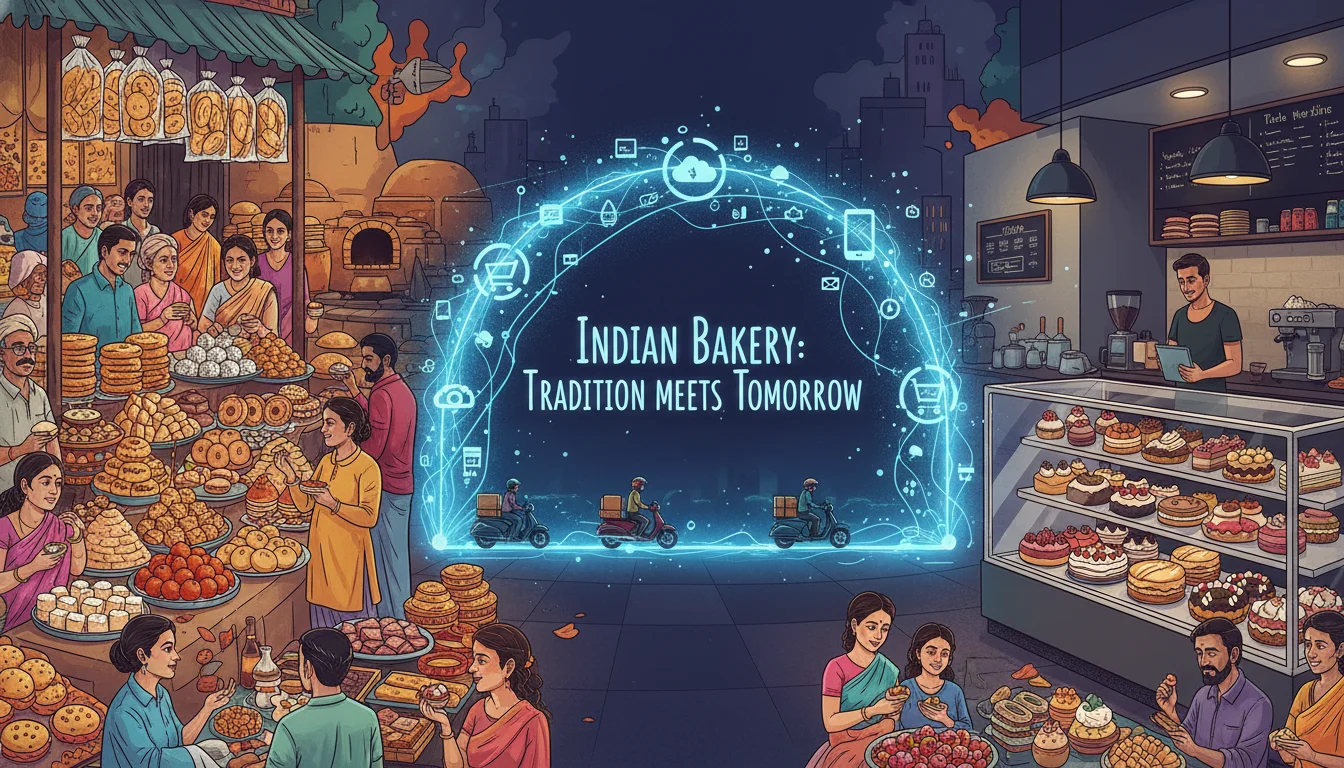
This transformation is driven by a confluence of macroeconomic and socio-cultural factors, primarily the shifting dietary paradigms of the urban Indian consumer, a burgeoning appetite for global fusion foods, and the rapid, aggressive expansion of modern retail and e-commerce infrastructures. The manufacturing and distribution footprint, while expanding nationally, exhibits distinct regional concentrations. Southern India currently dominates the high-volume biscuits and cookies segment, demonstrating accelerating organized retail penetration. Nationally, the top ten manufacturing states account for an overwhelming 84% of total employment within the bread and bakery industry. Maharashtra, anchored by the commercial hubs of Mumbai and Pune, serves as a primary epicenter for both domestic consumption and the export of rusks and toasted breads. Concurrently, Karnataka has emerged as a distinct market leader in the celebration segment, with Bengaluru widely recognized as the “Cake Capital” of India, recording an astonishing 8.5 million digital cake orders in the year 2023 alone. Furthermore, North India commands a substantial 30% national market share, supported by dense urban populations in the Delhi National Capital Region (NCR) and a demonstrably higher per capita consumption of western bakery formats.
The broader Indian food-processing sector, which houses the bakery industry, has witnessed remarkable expansion, demonstrating an Average Annual Growth Rate (AAGR) of approximately 6.55% over the last nine years ending in the 2023-2024 financial year. This sector constitutes 7.93% of the total manufacturing share and provides 12.91% of employment within the organized manufacturing sector, underscoring its critical role in the national economy. Supported by India’s status as a leading global producer of raw materials such as wheat, sugarcane, milk, and spices, the industry possesses a profound intrinsic capacity for value addition.
Current Market Size, Growth, and Trends
The financial trajectory of the Indian bakery market illustrates extraordinary economic health and sustained consumer demand. Valued at approximately USD 11.07 billion to USD 15.05 billion in the 2024-2025 period, conservative and aggressive economic models project the market to reach between USD 21.66 billion and USD 34.07 billion by the 2030-2035 forecasting window. This dramatic expansion reflects a projected Compound Annual Growth Rate (CAGR) generally estimated between 8.37% and 10.9%. The organized sector, comprising established corporate brands, artisanal bakery chains, and digital-first Direct-to-Consumer (D2C) entities, is systematically capturing market share from the traditional unorganized sector. This capture is driven by escalating middle-class incomes, shifting consumer demands for strict hygiene standards, consistent quality assurance, and the proliferation of supermarkets, malls, and specialized e-commerce platforms.
Several macro-trends are dictating the current pace and strategic direction of this growth. Foremost among these is the undeniable wave of premiumisation and the emphasis on visual and multi-sensorial appeal. Packaged sweet bakery products are increasingly viewed as high-end, indulgence-led categories that must compete directly with premium ice creams and traditional mithai. Consumers are demanding elevated experiential quotients, choosing gift-worthy visual packaging, multi-textural experiences (such as innovative liquid fillings), and global fusion flavors.
Simultaneously, the market is experiencing a profound pivot toward health and wellness innovations, propelled heavily by the Food Safety and Standards Authority of India’s (FSSAI) Eat Right India initiative. This regulatory and cultural shift has pushed bakeries to reformulate foundational products, resulting in a surge of healthy bakery options. There is immense consumer demand for probiotic rusks, gluten-free pastries, vegan and plant-based baking, and functional goods fortified with protein, fiber, and prebiotics. Refined sugar is actively being replaced by natural sweeteners such as stevia, jaggery, and dates. The modern Indian consumer is increasingly conscious of clean-label ingredients, driving artisanal bakeries to experiment with regional flours like ragi and sorghum while building pan-India supply chains through direct-to-consumer digital models.
Government interventions have also acted as a powerful catalyst for modernization. The Ministry of Food Processing Industries’ Pradhan Mantri Kisan SAMPADA Yojana and the PMFME scheme have directly encouraged bakery startups through mega food park schemes, cold chain logistics subsidies, and financial support for over 2,000 bakery units. This has attracted massive foreign capital, with the processed food sector securing USD 7.21 billion in Foreign Direct Investment (FDI) inflows over the past decade. These investments have fortified the industry’s export capabilities. India is not merely consuming baked goods; it is becoming a prominent global supplier. In the 2023–2024 period, India exported 2,148 shipments of bakery products—driven heavily by a 60% share in sweet biscuits—to regions including the UAE, the United Kingdom, and Southeast Asia, contributing to total processed food exports amounting to USD 10.09 billion.
Key Challenges Faced by Businesses in this Industry
Despite the overwhelming positive growth metrics, bakeries operate within a high-friction, operationally complex environment characterized by distinct challenges that digital marketing and technology must solve.
The foremost challenge is the inherent perishability of the product intertwined with the complexities of micro-logistics. Baked goods, particularly fresh cakes, artisanal breads, and cream-filled pastries, possess notoriously short shelf lives. Managing real-time consumer delivery expectations while preventing product degradation is a monumental operational hurdle. The rise of the 10-minute quick commerce (q-commerce) delivery model places immense, unprecedented pressure on supply chain efficiency, demanding flawless inventory prediction and cold-chain integrity.
Furthermore, the industry is experiencing intense market fragmentation and cutthroat competition. The barrier to entry for local, home-based bakers is exceptionally low, resulting in a hyper-competitive landscape where thousands of micro-entrepreneurs vie for the same localized digital real estate. Established corporate brands must continuously fight for visibility on digital shelves against both these agile artisanal startups and massive Fast-Moving Consumer Goods (FMCG) giants. This intense competition makes customer acquisition costs (CAC) volatile and requires continuous investment in brand differentiation.
Finally, bakeries are highly vulnerable to fluctuating input costs and macroeconomic pressures. Inflationary spikes affecting foundational raw materials—particularly wheat, dairy, and refined sugar—compress profit margins severely. High sugar content is facing both regulatory scrutiny and shifting consumer backlash, forcing costly product reformulations. To maintain profitability amid these supply chain constraints, brands are forced to rely heavily on premiumisation and value-added product lines.
Digital Landscape in India (Contextual to the Industry)
Internet & Social Media Usage Relevant to Bakeries and Confectioneries
The digital ecosystem in India has matured into the primary, unavoidable battlefield for consumer attention, brand equity, and transactional volume. The fourth edition of the ET Brand Equity–Ipsos report for the 2024–2025 financial year starkly highlights this reality: digital advertising spending in India grew by a massive 20% year-over-year to reach ₹49,000 crore. This establishes digital platforms as India’s unquestioned largest advertising medium, commanding a 44% share of total advertising expenditure, dwarfing television (27%) and print media.
For the bakery and confectionery industry, this systemic digitization is profound. The modern Indian consumer spends an average of 5 hours daily surfing the internet and engaging with social media platforms. Consequently, the entire consumer journey—from discovering a new seasonal pastry flavor and validating its quality through reviews, to ordering a customized birthday cake or managing a daily artisanal bread subscription—has transitioned into a predominantly mobile-first, digital activity. With internet penetration expanding rapidly across Tier-2 and Tier-3 cities, the digital landscape is no longer restricted to urban metros, opening massive new consumer bases for D2C bakery brands.
Popular Platforms Among the Target Audience
The choice of digital platform heavily influences consumer interaction models, and bakery brands must tailor their presence across specific digital ecosystems to capture intent effectively. Social media networks, primarily Instagram and Facebook, are the undisputed leaders for food discovery and top-of-funnel brand awareness.
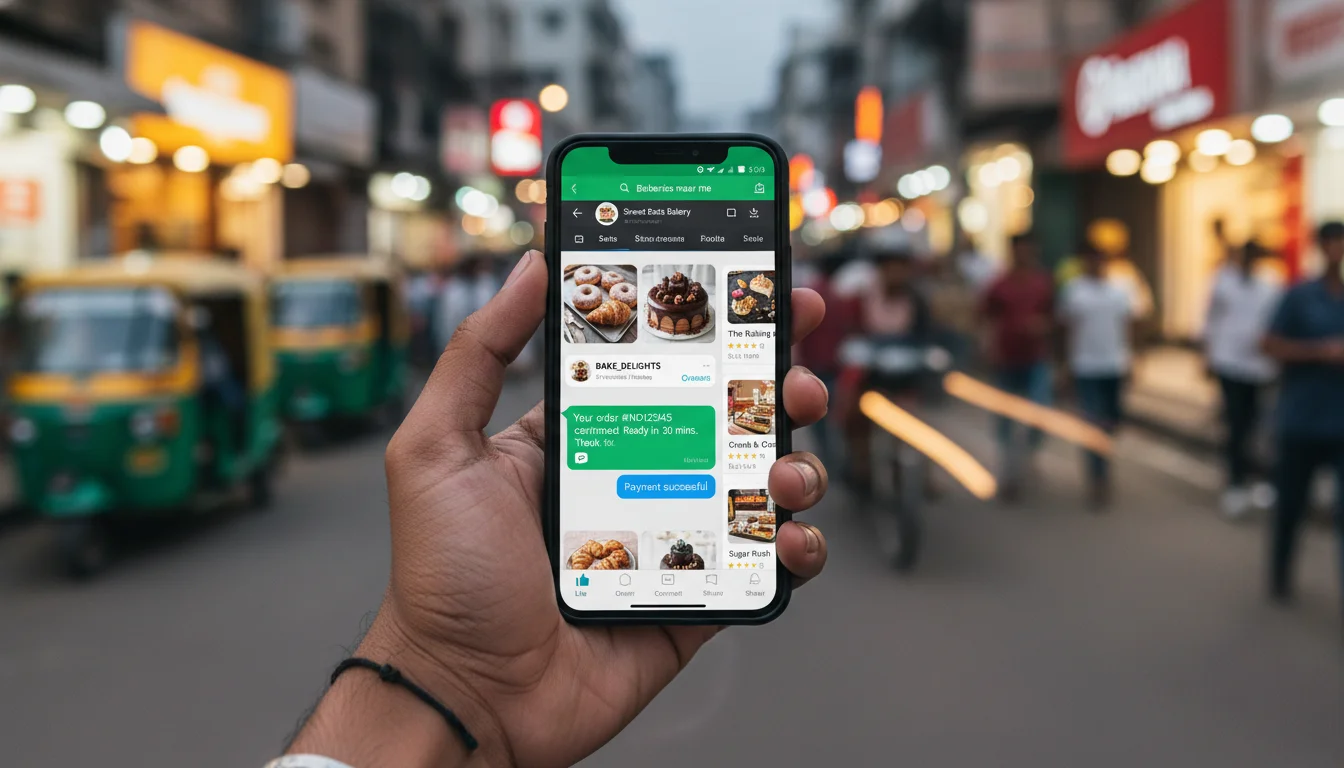
Visual platforms are essential for a category that relies heavily on sensory appeal. Data indicates that approximately 62% of Indian consumers report trying new food products after repeated exposure to them on Facebook or Instagram. These platforms serve as the primary venues for brand storytelling, visual indulgence, influencer collaborations, and community building. Gen-Z consumers, in particular, are driving immense demand for short-form video content (Instagram Reels, YouTube Shorts), demanding entertaining, multi-textural, and highly visual content to influence their impulsive buying decisions.
WhatsApp has entirely transcended its origins as a basic messaging application to become a highly sophisticated, full-funnel conversational commerce engine in India. Through the WhatsApp Business API, bakeries are establishing direct, intimate communication lines with their customer base. WhatsApp boasts an extraordinary average open rate of 98%, significantly outperforming the 20-25% average open rates of traditional email marketing. Bakeries utilize this platform to share rich-media digital catalogs, process transactions directly within the chat interface, provide real-time order tracking, and execute highly personalized festive broadcast campaigns, effectively bridging the gap between product discovery and immediate purchase.
Crucially, the digital landscape in 2026 is heavily dominated by Quick Commerce (Q-Commerce) Aggregators. Platforms such as Zepto, Blinkit (owned by Zomato), and Swiggy Instamart are no longer merely last-mile delivery mechanisms; they function as the new, high-intent search engines for FMCG and bakery products. The quick commerce sector in India experienced explosive growth, expanding from USD 300 million in 2022 to a staggering USD 7.1 billion in 2025, with projections anticipating a USD 40 billion market by 2030. Blinkit currently leads with a 45–46% market share, followed by Swiggy Instamart (25–27%) and Zepto (21–30%). For daily consumables like bread, biscuits, and impulse-buy pastries, consumer search behavior begins directly on these aggregator applications, completely bypassing traditional Google searches.
Consumer Online Behavior Related to Bakeries and Confectioneries
The online behavior of the modern Indian bakery consumer is fundamentally driven by three core pillars: aesthetics, impulse, and hyper-convenience.
Aesthetics command sharing behavior and brand virality. A comprehensive 2025 consumer survey revealed that 56% of Indian consumers are motivated to share their food experiences on social media exclusively if the visuals or aesthetics are memorable. This prioritization of visual appeal has cemented the “camera-first” baking trend. Consumers expect cakes and pastries to be highly “Instagrammable,” meaning the visual presentation directly correlates to digital engagement and subsequent sales volume. The consumer connects indulgence deeply to visual premiumness and multi-textural experiences at first sight.
Furthermore, the consumer purchasing window has entirely collapsed. Historically, consumers would visit a bakery or place an online order for a cake days in advance. However, the quick commerce revolution, fueled by companies operating networks of thousands of localized dark stores, has completely reconditioned urban consumer expectations. Buyers now expect 10-to-15-minute deliveries not just for daily grocery needs, but for fulfilling sudden cravings, executing last-minute gifting, and procuring daily fresh bread. Consequently, search intent has shifted dramatically from generic, informational queries to hyper-local, high-intent transactional queries.
Additionally, consumer behavior shows distinct nuances across demographics. Women, particularly in urban markets, display a significantly higher propensity and loyalty toward brands that offer personalized, subscription-based replenishment services for staple bakery items. Meanwhile, the broader consumer base is increasingly utilizing digital health apps and Generative AI tools to research the nutritional value and clean-label credentials of baked goods before making a purchase, indicating that transparency is now as critical as taste.
Digital Marketing Opportunities
How Digital Marketing Can Solve Key Challenges
Digital marketing acts as the critical, intelligent bridge between the inherent perishability of bakery goods, complex micro-logistics, and instantaneous consumer demand. By leveraging predictive data analytics and programmatic advertising algorithms, bakeries can precisely forecast demand spikes based on historical trends, weather patterns, and localized events. This allows brands to match dynamic ad spend with specific, perishable inventory windows—for example, aggressively pushing ads for cream pastries on a Friday evening to clear weekend inventory, thereby drastically minimizing wastage.
Furthermore, hyper-local geographical targeting ensures that marketing capital is only expended on consumers who reside within a strict, deliverable radius (e.g., a 5km radius from a specific outlet or dark store). This precision eliminates wasted impressions, optimizes last-mile delivery logistics, and guarantees that delicate products arrive in pristine condition, safeguarding brand equity.
Best Strategies for Bakeries and Confectioneries in India
To capture and retain market share in the highly competitive 2026 landscape, bakery brands must deploy an integrated, full-funnel, multi-channel digital strategy.
Quick Commerce Retail Media Optimization
Simply listing a product catalog on Zepto or Blinkit is no longer sufficient; brands must actively fight to win the digital shelf space. This requires treating q-commerce platforms as primary advertising ecosystems. Strategy dictates utilizing the “Seller Hub Signal” matrix to allocate performance marketing budgets efficiently. Brands must bid aggressively on “High Search + High Conversion” keywords to defend their category leadership and protect market share from aggressive competitors. Simultaneously, listing optimization is paramount; brands must continuously experiment with listing content, high-resolution immersive front-of-pack (FOP) imagery, and rigorous management of ratings and reviews to drive algorithmic visibility.
WhatsApp Conversational Commerce Integration
Implementing the WhatsApp Business API fundamentally transforms customer service into a high-converting sales channel. Bakeries must establish automated workflows that handle routine product queries, share comprehensive, beautifully designed festive catalogs, and send strategic cart abandonment reminders. This strategy is exceptionally powerful for generating repeat business, collecting post-delivery feedback, and managing recurring subscription models for daily household consumables like artisanal sourdough or multigrain bread.
Visual Social Media & Influencer Marketing
Because packaged sweet bakery items lack the inherent, traditional dessert appeal of ice cream or mithai, they require a massive injection of experiential marketing. Collaborating strategically with local food vloggers and micro-influencers provides vital authentic, third-party validation and massive reach. Content strategy must focus heavily on showcasing multi-textural experiences—the satisfying pull of a cheese-stuffed croissant, the intricate layers of a puff pastry, or the slow drip of a dark chocolate glaze. Utilizing Instagram Reels and YouTube Shorts to display these sensory cues taps directly into the impulse-buying psychology of the Gen-Z and Millennial consumer.
Search Engine Optimization (SEO) & Hyper-Local Discovery
While q-commerce handles impulse buys, organic Google Search remains the absolute dominant channel for high-ticket, deliberate purchases such as multi-tiered wedding cakes, corporate gifting hampers, or highly customized theme cakes. A robust Local SEO strategy is non-negotiable. This involves obsessively optimizing Google My Business (GMB) profiles with high-resolution imagery, securing and responding to authentic customer reviews, and ensuring precise location data to capture local foot traffic and hyper-local delivery intent. Furthermore, content SEO—creating valuable blogs around healthy baking, ingredient sourcing, and recipes—builds long-term brand authority.
Local and Global Examples/Case Studies
Empirical evidence from the Indian market emphatically underscores the transformative efficacy of these digital strategies when executed correctly.
The Baker’s Dozen: This artisanal brand executed a masterclass in digital funnel optimization. By meticulously tracking ad spend against results, they applied strict filters to non-performing content and reallocated budgets toward high-visibility assets. They distinctly separated brand awareness campaigns from pure conversion campaigns. This strategic division resulted in scaling their Instagram audience from 2,000 to over 12,000 highly engaged followers in just four months. Concurrently, they established an entirely new online sales channel that generated over 300 orders per month across five major Indian cities, achieving highly scalable revenue with a consistently healthy Return on Ad Spend (ROAS).
Monginis: A legacy giant with over 1,000 outlets, Monginis demonstrated the power of overhauling technical SEO and embracing an omnichannel digital franchise model. By engaging a digital agency to resolve technical bottlenecks and focus on high-intent keywords, Monginis achieved staggering results: a 350% improvement in Cost Per Acquisition (CPA), a 300% reduction in Cost Per Click (CPC), and a massive 400% increase in overall digital conversions. Their organic SEO traffic surged by 70%.
Crucially, they actively managed their online reputation, systematically eliminating negative local reviews and elevating their directory ratings from 1-star to 4-5 stars across the board. They further leveraged Facebook’s behavioral targeting to reach users celebrating imminent birthdays and anniversaries, directly driving occasion-based sales.
Mad Bakers (Raipur): Facing stiff local competition in a Tier-2 city, this eggless bakery brand deployed customized social media engagement and aggressive, year-round promotional campaigns mapped to specific events (New Year, Christmas, Rakshabandhan). This focused digital branding pivot resulted in a significant and sustained surge in their daily volume for highly customized, high-margin cake orders, proving that sophisticated digital marketing is equally effective outside Tier-1 metros.
Jaipur Food Company: Demonstrating the sheer power of conversational commerce, this small enterprise transitioned from traditional email-based customer service to the WhatsApp Business API. The operational shift was revolutionary. They witnessed a 5x increase in customer inquiries, their order conversion rate leaped from a mere 8% to an impressive 52%, and their aggregate customer satisfaction scores increased by 40%. Similarly, Purple Panchi, a D2C brand, created a full in-chat shopping experience on WhatsApp where customers could browse catalogs and complete transactions without ever visiting a traditional website, vastly reducing purchase friction.
K Bakery (Nagpur): A local bakery utilized localized SEO tactics, primarily optimizing their Google My Business listing and actively acquiring positive customer reviews. This foundational strategy drastically improved their visibility in local search results, directly resulting in a steady, measurable increase in physical foot traffic and a notable uptick in overall sales volume.
The Home Bakers Micro-Economy: On a grassroots level, thousands of solo female entrepreneurs across India are utilizing digital platforms to bypass traditional barriers to entry. They leverage Instagram for meticulous visual branding and trust-building, whilst utilizing WhatsApp for micro-logistics and community management. This combination allows them to successfully compete for customized cake orders without the crippling overhead costs of physical storefronts, illustrating the democratizing power of the digital creator economy.
Competitive Analysis
To establish a strategic baseline for success, a rigorous analysis of the digital footprints and marketing funnels of industry leaders is imperative. The Indian market features a complex mix of legacy bakery chains, highly premium artisanal brands, and massive, logistics-driven gifting networks.
Current Digital Presence of Top Businesses in India
| Brand / Competitor | Primary Digital Strengths & Market Positioning | Key Channels Utilized |
|---|---|---|
| Theobroma | Premium indulgence positioning, exceptional brand storytelling, and highly aesthetic visual merchandising that commands brand loyalty. | Instagram, Deep Email Marketing, Strategic Influencer Partnerships. |
| Monginis | Massive hyper-local footprint (1,000+ stores), absolute dominance in local SEO, and sophisticated omnichannel integration combining physical stores with a digital franchise model. | Search Engine Optimization (SEO), Facebook Behavioral Ads, Proprietary Mobile Application. |
| Ferns N Petals (FNP) | Aggressive performance marketing, highly effective occasion-based retargeting, and a rapid 30-minute delivery ecosystem spanning 36 cities. | Programmatic Advertising, Chatbots, Contextual Content Marketing (Affiliate/Blogs). |
What They Are Doing Well
Theobroma excels remarkably in building and sustaining an aspirational, premium brand identity. Their digital strategy, spearheaded by specialized marketing leadership, does not merely push transactional product ads; rather, it curates a cohesive aesthetic lifestyle. They utilize deep, ongoing market research—analyzing website traffic, social media engagement, and sales data—to identify market gaps and develop new flavors that cater precisely to evolving consumer demands. Their email marketing is highly sophisticated; by collecting data both in-store and online, they send personalized newsletters featuring new product drops and limited-edition releases, nurturing long-term customer relationships. Furthermore, during the COVID-19 pandemic, they astutely utilized Instagram Highlights to transparently showcase their hygiene and sanitation practices, fostering immense consumer trust when anxiety was high.
Monginis dominates through sheer scale and technical digital execution. Their introduction of a “Digital Franchise” model allows local partners to operate localized websites under the Monginis umbrella, expanding their e-commerce footprint massively. As detailed previously, their mastery of On-Page and Off-Page SEO has secured top 10 Google rankings for major competitive keywords across numerous localities. On social media, they successfully manage a highly interactive Facebook presence with over 81,000 engaged fans, utilizing the platform’s detailed targeting algorithms to reach users specifically based on interests, behaviors, and upcoming personal milestones like birthdays.
Ferns N Petals (FNP) operates what is arguably the most sophisticated digital marketing funnel in the Indian gifting and bakery sector. They map the customer journey with extreme precision, utilizing the AIDA (Awareness, Interest, Desire, Action) model. At the “Interest” stage, FNP deploys aggressive mobile retargeting ads to remind customers of upcoming occasions like anniversaries, directly leveraging previous purchase data to increase Customer Lifetime Value (CLTV). They secure top-of-mind awareness through contextual content marketing, publishing highly optimized SEO articles around events like Valentine’s Day and Mother’s Day. Furthermore, their integration of highly responsive, human-touch chatbots ensures that customer servicing is seamless, driving immediate action.
Gaps and Opportunities to Outperform Them
While these industry giants hold dominant positions in their respective operational spheres, distinct vulnerabilities and strategic gaps exist that agile, digitally native bakery brands can aggressively exploit to gain market share:
- Underutilization of Q-Commerce as an Advertising Ecosystem: Legacy brands frequently treat rapid platforms like Blinkit, Zepto, or Instamart merely as passive distribution channels or digital catalogs. Agile bakeries can severely outperform them by treating these platforms as primary advertising engines—aggressively bidding on high-conversion in-app keywords, optimizing product titles for algorithmic discovery, and utilizing hyper-targeted geo-fenced momentum to secure the top digital shelf positions.
- Lack of Hyper-Personalized Conversational Commerce: While massive brands like FNP utilize AI chatbots for basic routing, very few traditional bakeries have mastered the WhatsApp Business API for end-to-end, personalized purchasing. Offering a completely frictionless, catalog-to-checkout experience entirely within a WhatsApp chat thread—combined with personalized audio messages or immediate human intervention—provides a significant competitive edge in customer experience over impersonal corporate websites.
- Tier-2 and Tier-3 City Digital Penetration: Top premium brands like Theobroma are heavily concentrated in Tier-1 metropolitan hubs. However, smartphone adoption, digital content consumption, and disposable incomes in Tier-2 and Tier-3 cities are surging simultaneously. Deploying highly localized SEO strategies, combined with vernacular social media content and culturally resonant messaging targeting these specific regional demographics, represents a massive, largely untapped value pool for regional bakeries.
- The “Healthy-Indulgence” Content and Transparency Gap: There remains a notable disconnect between the rapidly rising consumer demand for clean-label, vegan, gluten-free, and millet-based baked goods, and the generic promotional content produced by mainstream corporate brands. Smaller bakeries can capture a fiercely loyal, highly health-conscious niche by developing deep, educational, and transparent content. Documenting the sourcing of local ingredients, explaining the functional benefits of prebiotics, and showcasing a chemical-free preservation process builds a brand narrative that legacy sugar-heavy brands cannot easily replicate.
Recommended Strategy for Bakeries and Confectioneries in India
Target Audience Persona
To execute precision marketing that maximizes Return on Ad Spend (ROAS), Indian bakeries must move beyond generic demographic targeting and segment their audiences into distinct, data-backed psychographic personas:
- The Urban Millennial (Age 25–40, Tier-1 & Tier-2 Metros): This demographic is highly focused on convenience, consistent quality, and increasingly, health and wellness. They are the primary target market for high-value subscription models (e.g., daily artisanal sourdough, high-protein breads, low-sugar breakfast pastries). They value extreme transparency regarding ingredients, clean labels, and frictionless delivery via q-commerce platforms. This persona, particularly female consumers within this bracket, exhibits strong brand loyalty to businesses that offer personalized replenishment services.
- The Gen-Z Indulger (Age 18–24, Pan-India): This cohort is fundamentally driven by aesthetics, flavor novelty, multi-sensorial experiences, and social validation.
They are the core, highest-frequency users of packaged sliced cakes, premium dessert-centric items, and impulse buys. They do not search on Google; they discover food organically via the algorithmic feeds of Instagram Reels, YouTube Shorts, and influencer reviews. They prioritize products featuring innovative fusion flavors, gift-worthy premium packaging, and highly “Instagrammable” visual textures.
- The Corporate & Event Planner (Age 30–50, Urban Centers): This B2B/B2C hybrid persona focuses on high-ticket, high-volume orders—customized corporate gifting hampers, festive employee rewards, and large-scale event catering (weddings, anniversaries). Their purchase journey is highly deliberate, relying heavily on traditional Google Search, peer networking, and detailed email consultations. For this demographic, reliability, immaculate professional presentation, and flexible customization options are the paramount purchase drivers.
Recommended Channels and Campaign Types
A highly synchronized, omnichannel approach is required to effectively nurture these diverse personas through the purchasing funnel:
- Q-Commerce Performance Marketing (Bottom Funnel): Run aggressive, sponsored product visibility ads directly on Zepto, Blinkit, and Swiggy Instamart. Capitalize on peak impulse-craving hours (typically 4:00 PM – 7:00 PM and late-night post-dinner windows). Focus bidding strategies on generic, high-volume terms like “chocolate cake,” “fresh bread,” or “midnight craving” to capture immediate demand.
- WhatsApp Broadcasts & Automated Flows (Mid-to-Bottom Funnel): Deploy the WhatsApp Business API to execute campaigns deeply integrated with the customer lifecycle. Implement automated workflows to send highly personalized birthday-month discount codes, abandoned cart recovery alerts, and exclusive first-access notifications for new seasonal menu launches.
- Hyper-Local Meta Ads (Facebook/Instagram - Top-to-Mid Funnel): Utilize Meta’s precise radius targeting capabilities (e.g., targeting exclusively within a 5km radius around the bakery storefront or designated dark store). Deploy dynamic catalog ads that automatically showcase top-selling items or recently viewed products to users, maximizing relevancy and driving local store visits or immediate digital orders.
Content Ideas Specific to Bakeries in India
Content must pivot completely from static, mundane broadcasting to active, culturally resonant storytelling, strictly mapped to the rich Indian cultural and festive calendar:
- Sequential Festive Fusion Campaigns: India’s diverse, year-round festival cycle provides continuous marketing momentum. Content should anticipate these events weeks in advance. For example, transition from promoting Thandai-flavored fusion desserts for Holi in March, to Modak-inspired baked goods for Ganesh Chaturthi in September, moving to elaborately packaged gifting hampers for Diwali in October, and culminating in premium plum cakes and corporate hampers for Christmas in December.
- Behind-the-Scenes (BTS) Transparency and Craftsmanship: Produce high-quality, short-form video content showcasing the actual baking process. Videos detailing the rhythmic kneading of artisanal dough, the extreme precision of cake frosting, or the careful sourcing of regional, organic flours (like ragi and sorghum) serve to build profound consumer trust and effectively justify premium price points.
- User-Generated Content (UGC) & Community Amplification: Actively incentivize customers to document their celebrations featuring the bakery’s products using specific branded hashtags. Repurposing this UGC on the brand’s official channels serves as the ultimate form of authentic social proof, significantly lowering resistance for new buyers.
Budget-Friendly Digital Marketing Approaches
For small to medium-sized bakery enterprises, budget allocation must be ruthlessly tied to measurable Return on Investment (ROI). The recommended overarching digital marketing budget for an Indian SME typically ranges from 5% to 12% of total annual gross revenue, heavily influenced by the business’s current lifecycle stage and the aggressive nature of local competition. For instance, an established bakery generating ₹2 crore in annual revenue should strategically allocate between ₹10 lakh and ₹16 lakh specifically toward digital marketing initiatives.
Strategic Allocation Framework (Based on a typical 5-8% Revenue Baseline):
| Channel Segment | Recommended Budget Allocation | Strategic Purpose & ROI Expectation |
|---|---|---|
| Paid Campaigns (Google/Meta/Q-commerce) | 35% - 40% | Generates immediate, predictable demand; defends branded search terms; drives high-intent local traffic during key sales periods. Delivers the fastest ROI. |
| Content Marketing & SEO | 20% - 25% | A long-term investment strategy. Builds domain authority, generates highly qualified organic traffic over time, and significantly lowers blended Customer Acquisition Costs (CAC). |
| Social Media Organic & Community Mgt. | 15% - 20% | Fosters brand storytelling, curates aesthetic appeal, manages customer interactions, and amplifies user-generated content to build brand loyalty. |
| Email & WhatsApp Marketing (Retention) | 10% - 15% | Focuses entirely on lead nurturing, driving repeat purchases, managing subscriptions, and maximizing the lifetime value of existing customers. |
A highly critical, budget-friendly imperative is to leverage Google My Business (GMB) obsessively. GMB is a free tool but functions as the most powerful local SEO asset available. Ensuring a consistent influx of fresh reviews, uploading weekly operational photos, and utilizing Google Posts for daily promotions requires time and consistency rather than immense capital, yet it yields exceptionally high foot-traffic conversion rates. Furthermore, businesses must avoid exceptionally low-priced, “all-inclusive” marketing packages (e.g., ₹3,000/month), as they generally fail to provide the dedicated ad spend or strategic depth required to train algorithms effectively.
Keywords & SEO Opportunities
As global search algorithms transition rapidly toward Generative AI experiences, such as Google’s Search Generative Experience (SGE) and AI Overviews (AEO), traditional SEO strategies for bakeries must evolve. Algorithms now heavily prioritize high-trust, authoritative sources that answer specific consumer queries clearly, concisely, and accurately.
High-Intent Keywords for Ranking
High-intent keywords act as powerful behavioral signals indicating that the user has moved to the absolute bottom of the marketing funnel and is ready to execute a purchase immediately. While these terms are highly competitive and require significant effort or ad spend to rank for, they are essential for direct, immediate revenue generation.
| Keyword / Search Phrase | Search Volume Context | SEO Competition Context | Strategic Value & Intent |
|---|---|---|---|
| cake shop in [city], best bakery in [city] | High | Extremely High | Captures immediate, localized foot traffic and directs online ordering for general consumers. |
| birthday cake delivery [city], custom cakes [zip code] | High | High | Targets consumers actively seeking hyper-local fulfillment and logistics solutions for events. |
| book a cake consultation, custom cake quote | Medium | Moderate | Ideal for capturing high-ticket B2B clients, corporate events, and premium wedding cake orders. |
| baking tray, cake pans, cake flour | 49,500 – 74,000 | High | Targets the home-baking demographic; useful for bakeries expanding into selling ingredients or merchandise. |
| chocolate chip banana bread, vegan cakes | 74,000+ | Moderate | Captures highly specific craving, flavor, and dietary niche searches with strong purchase intent. |
Long-Tail Keyword Opportunities (India-Specific)
Long-tail keywords—phrases typically containing three or more words—are drastically less competitive, significantly cheaper to bid on in Pay-Per-Click (PPC) ad campaigns, and boast vastly higher conversion rates due to the precise specificity of the user’s search intent.
- Location + Specialty Integration: Targeting phrases like “artisan bakery Mumbai”, “eggless custom cakes in Pune”, or “best red velvet cake delivery in Bangalore” perfectly aligns consumer cravings with geographic availability.
- Dietary + Occasion Specificity: Optimizing for highly specific needs such as “gluten free birthday cake for kids”, “millet based sugar free cookies online”, or “healthy banana bread delivery” captures the rapidly growing health-conscious demographic that standard bakeries often ignore.
- Educational / DIY Intent: Creating content around “pastry making classes India” or “cake decoration classes in Pune” serves a dual purpose. It builds immense brand authority by establishing the bakery’s chefs as industry experts, and it opens up lucrative secondary revenue streams through ticketed workshops and online masterclasses.
By intelligently structuring website architecture—specifically creating dedicated, optimized landing pages for individual cities (e.g., a page solely for “Cake Delivery in Gurgaon”) and distinct product sub-categories (e.g., “Eggless Chocolate Truffle Cakes”)—bakeries can systematically capture and convert this localized, long-tail traffic.
Implementation Roadmap
Executing a digital transformation of this magnitude requires a highly disciplined, phased approach. This ensures sustainable, manageable growth without overwhelming the bakery’s existing operational capacity or supply chain.
Short-Term Quick Wins (1–3 Months)
Strategic Objective: Capture existing local demand, patch immediate digital leaks, establish rapid conversion channels, and modernize customer communication.
-
Month 1: Digital Foundation, Local SEO, and Asset Audit
- Initiate a comprehensive audit of the existing website.
- Ensure absolute mobile-responsiveness and sub-three-second page load speeds, as the Indian consumer journey is overwhelmingly mobile-first.
- Claim, rigorously verify, and fully optimize the Google My Business (GMB) profile. Upload high-resolution menus, vibrant exterior/interior store photos, and seed the profile with authentic 5-star reviews to immediately boost local foot traffic.
- Standardize brand aesthetics across all existing social media platforms (Facebook, Instagram) to ensure a cohesive visual identity.
Month 2: Q-Commerce Integration & Performance Optimization
- Execute technical onboarding and list all relevant product catalogs on major quick commerce platforms (Zepto, Blinkit, Swiggy Instamart).
- Optimize product listings using the “Seller Hub Signal” matrix. Allocate initial, aggressive ad budgets specifically to product categories demonstrating “High Search + High Conversion” metrics to immediately capture market share and train the platform algorithms to favor the brand.
Month 3: Conversational Commerce Launch
- Successfully integrate and verify the official WhatsApp Business API.
- Develop and deploy a basic, intuitive chatbot flow capable of handling common FAQs (store locations, operational timings, menu inquiries). Simultaneously, configure automated API templates for order confirmations, dispatch notifications, and real-time delivery tracking to drastically enhance the post-purchase customer experience.
Long-Term Strategy (6–12 Months)
Strategic Objective: Build unshakeable brand equity, foster deep community loyalty, scale omnichannel revenues, and establish absolute dominance in specific culinary niches.
Months 4–6: Content Ecosystem & Social Amplification
- Design and launch a highly structured organic social media content calendar meticulously mapped to major Indian festivals. Execute specific, tailored campaigns for events ranging from Raksha Bandhan to Diwali, ensuring product alignment with cultural celebrations.
- Initiate a systematic micro-influencer collaboration program. Invite local food bloggers and lifestyle influencers for exclusive tasting sessions or kitchen tours to generate high-quality user-generated content (UGC) and invaluable social proof.
Months 7–9: Advanced SEO, Inbound Marketing, & Retention
- Develop a comprehensive, high-quality blog targeting long-tail queries and health-conscious consumer trends (e.g., publishing detailed articles on “The Nutritional Benefits of Ragi Bread” or “A Guide to Choosing the Perfect Wedding Cake”). This aligns perfectly with AI Overview optimization, firmly positioning the brand as a topical authority.
- Implement targeted, highly segmented email and WhatsApp marketing campaigns focusing heavily on customer retention. Segment audiences based on their past purchase behavior (e.g., creating a VIP segment for frequent buyers) to deliver hyper-personalized offers.
Months 10–12: Programmatic Expansion, Subscriptions, & Data Analytics
- Scale paid advertising operations across the Google Ads and Meta Ads ecosystems. Allocate higher budget percentages (scaling up to 40% of total marketing spend) to fuel proven, high-ROI campaigns, particularly those driving high-margin customized cake orders.
- Launch digital subscription models for daily household staples (breads, rusks) to guarantee recurring revenue streams.
- Implement advanced cohort data analysis to precisely measure Customer Lifetime Value (CLTV) and Customer Acquisition Cost (CAC), utilizing this data to constantly refine hyper-personalized product recommendations across all digital touchpoints.
Conclusion
The Indian bakery and confectionery sector is currently undergoing a profound and irreversible metamorphosis. This evolution is relentlessly catalyzed by a distinct cultural shift toward premiumisation, the rising dominance of health-conscious consumption patterns, and the blistering, unrelenting speed of the quick commerce revolution. The traditional reliance on physical foot traffic, localized word-of-mouth, and static storefronts is no longer a viable, standalone strategy for sustained commercial growth. In a rapidly expanding market that is projected to potentially surpass USD 34 billion by 2035, highly sophisticated digital marketing has evolved from a supplementary promotional tactic into the core, indispensable operational nervous system of any successful bakery enterprise.
Whether it involves navigating the complex algorithmic bidding strategies required to dominate the digital shelves of Blinkit and Zepto, transforming mundane customer service channels into high-converting revenue engines via the WhatsApp Business API, or architecting a visually irresistible, lifestyle-centric brand identity on Instagram, the mandate for the industry is unequivocally clear. Bakeries must meet the modern Indian consumer exactly where their attention resides—firmly locked onto their mobile digital devices, demanding immediate gratification, aesthetic perfection, and seamless convenience.
However, executing a comprehensive digital transformation of this magnitude requires deep, specialized domain expertise, advanced technological fluency, and an intimate, data-driven understanding of rapidly shifting consumer psychology. Navigating this complex digital ecosystem independently often leads to wasted ad spend and diluted brand messaging. This is precisely where specialized, expert agency partnerships become an invaluable, necessary investment for scale.
Gurkha Technology, a premier, globally-minded digital marketing agency headquartered in Nepal, possesses the exact robust technological capabilities, creative talent, and strategic acumen necessary to architect and flawlessly execute these highly complex strategies for the dynamic Indian market. With a comprehensive suite of expert services spanning advanced Search Engine Optimization (SEO), high-conversion Social Media Marketing, precise Pay-Per-Click (PPC) advertising management, and full-scale, narrative-driven content strategy, Gurkha Technology is uniquely and powerfully positioned to elevate bakery brands from being mere local favorites to absolute market leaders. By partnering strategically with Gurkha Technology, bakeries can leverage world-class, data-driven methodologies and relentless creative excellence to systematically capture digital market share, optimize their marketing budgets for maximum ROI, and ultimately drive exponential, sustainable revenue growth in an increasingly hyper-competitive landscape.