Digital Marketing for Indian Ayurvedic Products: Strategy
Industry Overview
The Convergence of Ancient Wisdom and Modern Commercial Infrastructure
The Ayurvedic and herbal product manufacturing industry in India is currently traversing a profound structural and commercial transformation. This sector is evolving from a historically fragmented ecosystem reliant on traditional, local apothecaries into a highly formalized, clinically validated, and globally integrated consumer goods industry. Rooted in a medical tradition that spans over five millennia, Ayurveda operates on the fundamental principle of holistic healing, addressing the mind, body, and spirit by balancing the primary human constitutions, or doshas—vata, pitta, and kapha. However, the contemporary iteration of this industry is increasingly characterized by advanced scientific validation, standardized botanical extraction methodologies, and aggressive digital-first distribution models.
The market architecture is broadly categorized into two primary segments that command distinct consumer behaviors and marketing approaches: healthcare products and personal care. The healthcare segment encompasses traditional medicines, dietary supplements, immunity boosters, and functional foods, while the personal care and cosmetics segment includes skincare, haircare, and oral hygiene products. The personal care and beauty segment is particularly robust and rapidly expanding. Modern consumers increasingly perceive Ayurvedic cosmetics as safer, non-toxic, and highly effective alternatives to synthetic chemical counterparts. These formulations heavily utilize time-tested, culturally resonant ingredients such as aloe vera, neem, turmeric, holy basil (tulsi), saffron, and sandalwood, which possess documented therapeutic and dermatological properties.
Furthermore, the industry is witnessing significant horizontal diversification into adjacent categories such as nutraceuticals and “mind-body” wellness products. Herbal medicine companies are aggressively combining traditional herbal wisdom with modern, convenient delivery formats, launching innovations such as adaptogenic gummies, effervescent tablets, and concentrated serums. This modernization bridges the gap between ancient efficacy and contemporary consumer convenience, setting the stage for unprecedented market expansion.
Current Market Size, Growth Trajectory, and Macroeconomic Trends
The economic valuation of the Indian Ayurvedic and herbal market presents a compelling narrative of sustained, aggressive growth driven by accelerating domestic consumption and a rapidly expanding export footprint. The data indicates exceptional momentum across multiple forecasting models and institutional analyses.

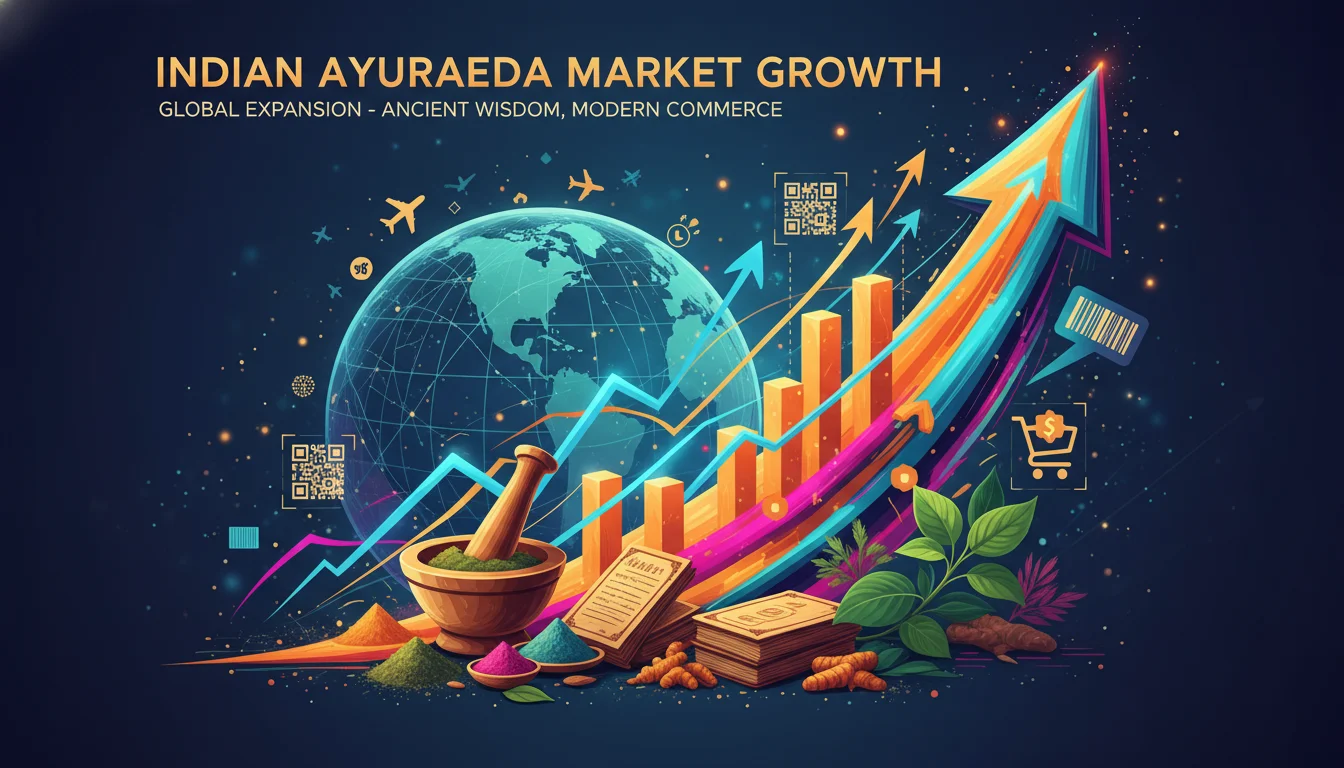
Domestically, the Indian Ayurvedic products market generated a substantial revenue of INR 1,017.51 Billion in 2025 and is projected to scale to an immense INR 3,728.75 Billion by 2034, registering a Compound Annual Growth Rate (CAGR) of 15.52%. Alternative estimates evaluating the core domestic product segment value the market at USD 847.30 Million in 2024, forecasting a robust expansion to USD 2.92 Billion by 2034 at a 13.20% CAGR. When evaluating the broader global landscape, the worldwide Ayurveda market is projected to surge from USD 20.42 Billion in 2025 to an estimated USD 85.83 Billion by 2033, growing at a phenomenal CAGR of 19.72%.
India remains the pivotal growth engine within the dominant Asia-Pacific region, which holds a 78.62% share of the global market. India commands an unparalleled strategic advantage due to its vast botanical biodiversity, historically established manufacturing base, and deep cultural acceptance of holistic medicine. The export potential serves as a critical growth vector for domestic manufacturers; in 2023, exports of Indian Ayurvedic products grew by an impressive 17%, successfully crossing the highly anticipated USD 1 Billion threshold.
To contextualize the scale, trajectory, and segmentation of this industry, the following table synthesizes the varying market size projections and segment dominance based on the analyzed intelligence.
| Market Dimension | Baseline Valuation (Year) | Projected Valuation (Year) | Compound Annual Growth Rate | Key Dominant Segments & Observations |
|---|---|---|---|---|
| India Ayurvedic Market (INR) | INR 1,017.51 Billion | INR 3,728.75 Billion | 15.52% | Driven by premium urban consumption and digital media exposure. |
| India Core Products (USD) | USD 847.30 Million | USD 2.92 Billion | 13.20% | High demand for herbal extracts and herbomineral formulations. |
| Global Ayurveda Market (USD) | USD 20.42 Billion | USD 85.83 Billion | 19.72% | Skin/Hair commands the largest indication share at 25.57%. |
| Indian Herbal Medicine (USD) | USD 4.56 Billion | USD 7.23 Billion | 8.00% | Transitioning rapidly into dietary supplements and nutraceuticals. |
| Indian Nutraceutical Market (USD) | USD 4.00 Billion (Estimated) | USD 10.00 Billion | 21.00% | Blending traditional herbs with modern gummy and tablet formats. |
This exponential growth is sustained by rigorous governmental and institutional support. The Ministry of AYUSH continues to invest heavily in research infrastructure, quality standardization, and international marketing campaigns to bolster India’s standing as a world leader in holistic wellness. Furthermore, the scientific validation of traditional medicine is accelerating at an unprecedented pace. This is evidenced by the Council of Scientific & Industrial Research (CSIR) validating 15 new herbal drug formulations through clinical trials in 2023, thereby allowing manufacturers to meet stringent WHO-GMP standards and compete aggressively in highly regulated global markets.
Key Challenges Faced by Businesses in this Industry
Despite the highly favorable macroeconomic environment, Ayurvedic and herbal product manufacturers in India face a labyrinth of operational, regulatory, and perception-based challenges that threaten scaling efforts.
The primary challenge revolves around persistent consumer skepticism and the absolute demand for brand transparency. While the heritage of Ayurveda is culturally respected, the modern consumer is highly discerning and inherently suspicious of greenwashing. Research reveals that a staggering 58% of respondents in a primary survey were unsure whether the Ayurvedic or herbal personal care products they regularly used actually contained hidden chemical ingredients. Furthermore, despite the resurgence of interest in traditional medicine following the COVID-19 pandemic, one in five Indian consumers still perceives Ayurvedic beauty practices as “old-fashioned” or archaic. Overcoming this dichotomy—honoring ancient, traditional roots while simultaneously appealing to a modern, scientifically literate, and aesthetically demanding demographic—requires a highly sophisticated and delicate marketing equilibrium.
Regulatory hurdles present another significant, often insurmountable barrier for smaller manufacturers. Formulations must strictly comply with AYUSH ministry guidelines domestically, while lucrative export markets require adherence to vastly different and far more stringent regulatory frameworks. For instance, exporting to the United States requires compliance with FDA 21 CFR Part 111 for dietary supplements, while Middle Eastern markets demand strict Halal certifications. Products marketed legally as “medicines” in India often require complete strategic rebranding as “wellness products” or “dietary supplements” in Western markets to bypass restrictive pharmaceutical regulations and advertising bans.
Additionally, the digital saturation of the Direct-to-Consumer (D2C) space has dramatically escalated operational costs. Customer acquisition costs (CAC) across the Indian D2C sector have risen by approximately 30% year-over-year, driven by intense competition for digital ad inventory. With over 50,000 Ayurveda-related products listed on Amazon India alone, new and mid-sized manufacturers struggle to achieve visibility amidst hyper-competition. Furthermore, the rapid inventory turnover demanded by modern quick commerce platforms places immense strain on supply chains, requiring manufacturers to maintain complex, multi-node logistics networks.
Digital Landscape in India (Contextual to the Industry)
Internet Penetration, Social Media Usage, and the D2C Revolution
India’s digital ecosystem has reached an unprecedented scale and maturity, fundamentally altering how Ayurvedic and herbal products are discovered, evaluated, and purchased. The nation currently boasts over 800 million active internet users and processes over 100 billion Unified Payments Interface (UPI) transactions annually, creating a frictionless environment for online commerce. Supported by this robust digital infrastructure, the Indian D2C market, currently valued at over USD 80 Billion, is aggressively projected to reach the USD 100 Billion mark shortly, firmly establishing India as the third-largest D2C ecosystem globally, trailing only the United States and China.
For Ayurvedic manufacturers, this digital landscape has shifted the locus of commercial power away from traditional, physical brick-and-mortar pharmacies and local distributors directly to digital storefronts and social media feeds. Urban and metropolitan households are demonstrating particularly strong uptake of premium Ayurvedic products, a trend driven by higher disposable incomes and continuous, algorithmically curated exposure to global wellness trends via digital media. However, this digital saturation presents a double-edged sword.
Consumers now scroll past hundreds of competing brand messages daily on platforms like Instagram and Facebook, rendering generic, broad-stroke marketing entirely obsolete and necessitating hyper-targeted, data-driven digital approaches.
Popular Platforms Among the Target Audience
Instagram and the Meta Ecosystem
Instagram remains the undisputed powerhouse for visual discovery, brand building, and top-of-funnel awareness, particularly for Ayurvedic cosmetics, skincare, and lifestyle wellness brands. Consumers heavily gravitate toward short-form video content, specifically Instagram Reels, that visually demonstrate product application rituals, provide easily digestible ingredient education, and showcase authentic before-and-after skin or hair transformations. The platform is crucial for executing influencer marketing campaigns, building brand trust, and establishing a modern aesthetic that directly combats the “old-fashioned” stigma associated with Ayurveda.
Google Search and YouTube
When consumers transition from passive discovery on social media to active, high-intent research, Google becomes the dominant platform. High-intent commercial queries, such as “best Ayurvedic products for skin” or “Ayurvedic face cream manufacturer in India,” are effectively captured through meticulously targeted Google Search Ads and deep, authoritative SEO strategies. YouTube serves as the primary educational hub, where consumers seek long-form, detailed content explaining complex Ayurvedic concepts, such as dosha balancing techniques, the clinical benefits of adaptogens like Ashwagandha, and detailed reviews by certified Ayurvedic practitioners.
The Quick Commerce Revolution (Blinkit, Zepto, Swiggy Instamart)
The most disruptive shift in the Indian digital retail landscape is the rapid ascent of Quick Commerce (Q-commerce). The Q-commerce market in India currently represents a massive ₹33,000 Crore opportunity, with platforms like Blinkit, Zepto, and Swiggy Instamart promising and delivering FMCG, wellness, and personal care products in under 10 minutes. Advertising on these platforms has evolved into a highly lucrative necessity; Blinkit’s ad revenue, for instance, grew by a staggering 220% year-over-year, significantly outpacing its gross merchandise value growth, indicating that brands are heavily investing in point-of-sale visibility within the quick commerce ecosystem. For Ayurvedic brands, ensuring dark store availability and optimizing product listings for quick commerce is no longer an optional strategy but a baseline requirement for penetrating urban markets and satisfying the modern consumer’s demand for instant gratification.
WhatsApp Business API and Conversational Commerce
With over 3 billion monthly active users globally, WhatsApp has evolved in India from a simple messaging application into a comprehensive, full-funnel CRM and commerce platform. Leveraging sophisticated automation tools like Wati, Gallabox, Pragma, and Brevo, Ayurvedic D2C brands can execute automated order updates, facilitate complex abandon-cart recovery workflows, conduct conversational selling, and provide personalized post-purchase education directly in the consumer’s most trusted messaging inbox.
Consumer Online Behavior Related to Ayurvedic Products
The online behavior and psychological drivers of the Indian Ayurvedic consumer have undergone a tectonic shift since 2024. The contemporary buyer is characterized by industry analysts as highly informed, highly impatient, and strictly intentional.
The analysis indicates a profound, irreversible move toward extreme “ingredient awareness” and the “clean label revolution.” Consumers no longer blindly trust broad marketing labels claiming products to be “100% natural” or “herbal.” Instead, they exhibit hardcore label-reading behaviors. They actively use Google to research scientific botanical names, rigorously check for clinical certifications, and categorically reject “proprietary blends” that obscure exact ingredient concentrations. There is a specific, uncompromising demand for formulations that are entirely free from parabens, sulfates, and synthetic fragrances. Market data highlights this shift, showing that 31% of Indian respondents actively seek out skincare containing natural or organic features, notably higher than the 23% average of global respondents.
Furthermore, the concept of wellness has transitioned from a reactive, pharmaceutical treatment of existing ailments to a proactive, highly integrated lifestyle baseline. Consumers now purchase Ayurvedic products as daily tools for energy enhancement, mental clarity, immunity fortification, and restorative sleep. In the beauty and personal care sector, the dominant online search trend is “skinimalism.” Consumers are rapidly abandoning elaborate, multi-product 10-step routines in favor of minimalist, multifunctional products that focus on foundational cellular repair, microbiome health, and skin barrier fortification. The desire for holistic emotional balance is also fueling intense demand for Ayurvedic aromatherapies and adaptogenic supplements that specifically target the brain-skin axis, proving that consumers view external beauty as a direct reflection of internal health.
Consequently, the digital discovery and consideration phase is heavily reliant on authoritative, snackable educational content. Consumers expect brands to demystify dense ancient texts into accessible digital formats. They actively engage with interactive digital elements, such as AI-driven skin diagnostics and dosha-assessment quizzes, to receive hyper-personalized product recommendations before committing to a purchase.
Digital Marketing Opportunities
Solving Key Industry Challenges through Digital Ecosystems
Digital marketing provides the precise, scalable mechanisms required to systematically solve the legacy challenges plaguing the Ayurvedic industry. The widespread consumer skepticism regarding chemical adulteration and greenwashing can be directly and effectively combated through radical digital transparency. By utilizing modern website architectures that prominently feature verifiable lab reports, third-party GMP certifications, behind-the-scenes ingredient sourcing videos, and peer-reviewed clinical trial data, brands can digitally engineer trust.
The pervasive perception of Ayurveda as an “old-fashioned” or outdated practice is easily neutralized through sophisticated, minimalist brand aesthetics, intuitive UX/UI design, and high-production-value video content that recontextualizes ancient wellness rituals for the fast-paced modern lifestyle. Furthermore, advanced digital marketing analytics and machine learning algorithms allow brands to solve the critical issue of escalating customer acquisition costs. By pivoting away from expensive, unmeasurable mass media broadcasting toward hyper-segmented, data-driven targeting, manufacturers ensure that marketing budgets are deployed exclusively toward high-intent consumers, thereby maximizing capital efficiency.
Best Strategies for Ayurvedic and Herbal Product Manufacturers
Extensive market analysis reveals that the most successful digital strategies for Ayurvedic brands rely on a synchronized, multi-channel approach that blends educational authority with aggressive performance marketing.
Search Engine Optimization (SEO) and Content Marketing
SEO serves as the fundamental cornerstone of sustainable, high-margin digital growth for Ayurvedic brands, acting to capture consumers during their intense, self-directed research phases. A robust SEO strategy requires moving beyond highly competitive, generic keywords to target hyper-specific, long-tail queries reflecting deep buyer intent. This strategy relies heavily on creating deep, authoritative content designed to satisfy Google’s E-E-A-T (Experience, Expertise, Authoritativeness, and Trustworthiness) criteria. For example, rather than merely listing a product as a “memory booster,” an optimized page will detail the neuroprotective biochemical properties of Bacopa monnieri (Brahmi), referencing classical Ayurvedic texts directly alongside modern clinical study citations. Educational blogs addressing highly specific conditions act as powerful organic funnels, drawing niche, pre-qualified traffic that converts at significantly higher rates. Furthermore, for international expansion, localized SEO focusing on compliance-friendly terminology is required to navigate global regulatory algorithms.
Social Media and Meta Advertising
Instagram and Facebook remain indispensable for driving top-of-funnel brand awareness and visual persuasion. For small to mid-sized Ayurvedic brands, the most profitable ad strategy involves a heavy reliance on sophisticated retargeting funnels. Recognizing that over 90% of users do not purchase on their initial website visit, retargeting previous website visitors, Instagram engagers, and cart abandoners yields the highest Return on Ad Spend (ROAS). Winning ad formats for Ayurvedic cosmetics strictly avoid exaggerated, policy-violating claims. Instead, they focus on authentic user-generated content (UGC), verified customer testimonials, and transparent “before-and-after” transformation reels. For ingestible health and wellness products, compliance-friendly messaging is absolutely critical to prevent ad account suspensions, requiring a delicate, expertly managed balance between persuasive consumer marketing and strict regulatory adherence.
Influencer Marketing and Authority Building
The influencer marketing paradigm for clinical Ayurveda deviates significantly from general FMCG and fast-fashion strategies.
While massive celebrity endorsements offer broad reach, they frequently lack credibility and authenticity in the specialized healthcare space. The true strategic opportunity lies in partnering with hyper-niche micro-influencers (10,000–50,000 followers) and, crucially, certified Ayurvedic practitioners, such as BAMS (Bachelor of Ayurvedic Medicine and Surgery) doctors. These authorities provide educational, long-form videos that clinically validate the brand’s scientific claims, offering a layer of professional, medical credibility that general lifestyle influencers cannot replicate. Utilizing advanced influencer management platforms equipped with AI-powered authenticity scores and fraud detection ensures transparent ROI tracking and eliminates budget waste on fake followers.
Quick Commerce Optimization:
To capitalize on the 10-minute delivery revolution sweeping urban India, Ayurvedic brands must radically shift their perspective, treating platforms like Blinkit, Zepto, and Swiggy Instamart not merely as rapid logistics channels, but as highly potent, high-conversion advertising networks. The operational strategy requires listing fast-moving SKUs—such as herbal teas, daily personal care items, and immunity shots—and investing in platform-specific advertising modules to dominate category shelf space and search results within the app. Achieving profitability in Q-commerce demands rigorous optimization of unit economics, adapting packaging for hyperlocal motorcycle delivery, and strategically bundling products to increase the Average Order Value (AOV), which is necessary to offset high platform commissions (ranging from 5% to 18%) and associated dark store fulfillment fees.
Local and Global Examples and Case Studies
The digital success of modern Ayurvedic brands clearly illustrates the efficacy of these targeted strategies.
Global Luxury Expansion:
Brands such as Kama Ayurveda and Forest Essentials have successfully pioneered the export of “A-beauty” (Ayurvedic beauty) to highly lucrative international markets. They achieved this by combining authentic, traditional formulations with luxurious, modern digital aesthetics and sophisticated omnichannel retail experiences, effectively creating globally resonant prestige brands that command high price premiums.
Domestic D2C Disruption:
The rapid domestic ascent of “science-led” D2C brands, such as Minimalist, demonstrates the immense commercial power of radical transparency. By openly discussing exact ingredient concentrations, publishing lab results, and avoiding the vague “generic natural” trope, they successfully captured a highly educated, ingredient-conscious Indian demographic that was previously underserved by traditional brands.
Agency Performance Metrics:
Case studies from specialized digital marketing agencies highlight the rapid scalability of these strategies. For instance, a growing Ayurvedic skincare brand in India executed a complete SEO restructuring combined with a highly targeted Meta Ads retargeting funnel. Within five months, this aligned strategy resulted in a 230% increase in organic search traffic, a 180% growth in direct online sales, and a highly profitable 3.5X return on ad spend (ROAS), while improving the overall website conversion rate by 40%.
Legacy Brand Positioning:
The historic campaign by Vicco, utilizing the famous tagline “Vicco Turmeric, nahi cosmetic” (Vicco Turmeric, not cosmetic), serves as a foundational case study in positioning. This early form of content marketing perfectly highlighted the brand’s absolute focus on natural ingredients, deliberately contrasting itself against chemically laden competitors to build enduring multi-generational trust.
4. Competitive Analysis
Current Digital Presence of Top Ayurvedic Businesses in India
The competitive landscape of the Indian Ayurvedic market is characterized by a fascinating dichotomy between massive, legacy FMCG conglomerates with deep offline distribution networks and agile, digitally native D2C brands that dominate online narratives. Analyzing the top players reveals distinct strategic profiles, significant variations in digital maturity, and clear vulnerabilities.
The following table provides a comparative framework of the major market players:
| Brand Entity | Digital Maturity | Primary Market Strength | Key Digital Vulnerability | Core Target Demographic |
|---|---|---|---|---|
| Patanjali Ayurved | Low to Developing | Massive brand recall, offline retail, pricing. | Weak D2C UX, low premium aesthetic appeal. | Mass market, Rural, Traditionalists. |
| Dabur India | High | Omnichannel presence, strong Q-commerce. | Dilution of niche specialty, broad messaging. | Broad base, Family wellness, Urban/Rural mix. |
| Himalaya Wellness | High | Deep SEO, widespread influencer integration. | Pricing pressure from clinical D2C brands. | Urban youth, Personal care, Students. |
| Luxury D2C (e.g., Kama) | Very High | Aesthetics, Personalization, Trust building. | Extremely high Customer Acquisition Costs. | Metro elite, International buyers, Expatriates. |
Detailed Analysis of What They Are Doing Well
Patanjali Ayurved Ltd: Operating with unprecedented rural and semi-urban penetration, Patanjali commands massive revenue, reporting INR 31,800 Crores in FY 2023. The brand thrives on deep cultural resonance, hyper-aggressive pricing, and the immense personal influence and public relations power of its founder, Baba Ramdev. It has successfully positioned itself as the ultimate swadeshi (homegrown) alternative to foreign multinational corporations, utilizing a highly effective, community-driven word-of-mouth marketing strategy that initially required very little traditional advertising spend.
Dabur India Ltd: As a deeply established legacy brand founded in 1884, Dabur has aggressively and successfully modernized its marketing apparatus. Demonstrating a commitment to digital transformation, Dabur currently allocates approximately 45% of its massive media budget to digital channels. The company exhibits a masterful, data-driven understanding of diverse customer demographics, successfully maintaining premium product lines for urbanites while simultaneously offering value-for-money options for rural consumers. Dabur has established a robust presence on all major e-commerce marketplaces and has rapidly adapted to quick commerce platforms, successfully capitalizing on high-intent searches for classical formulations and daily immunity boosters like Chyawanprash.
Himalaya Wellness: Positioned strategically as a premium, science-backed herbal brand, Himalaya has heavily invested in holistic digital transformation. The brand excels in organic SEO, targeted digital advertising, and widespread, continuous influencer partnerships. Himalaya has successfully bridged the psychological gap between pharmaceutical credibility and herbal safety, making its personal care and wellness products highly trusted and frequently recommended, particularly among urban consumers and younger demographics.
Luxury and D2C Disruptors (Kama Ayurveda, Forest Essentials, Kapiva): These agile brands absolutely dominate the digital-first, luxury, and highly specialized functional wellness spaces. They operate highly optimized, conversion-focused D2C websites and command a pristine, visually stunning omnichannel presence. Their strengths lie in unparalleled brand aesthetics, rigorous and highly publicized ingredient transparency, and the sophisticated use of digital storytelling to elevate the perceived value of their formulations. They actively utilize AI personalization engines and rapidly leverage global micro-trends, such as barrier repair and skinimalism, faster than larger conglomerates can adapt.
Gaps and Opportunities to Outperform Them
For mid-sized manufacturers, regional players, and new D2C entrants, attempting to compete directly with Patanjali on price or Dabur on mass offline distribution is a structurally flawed and highly risky strategy. The clear path to outperformance lies in aggressively exploiting the specific gaps these massive entities leave behind in the digital space.
1. The “Clinical Ayurveda” Innovation Gap:
Traditional giants rely heavily on broad heritage and general wellness claims. New and growing brands can systematically outperform them by marrying traditional Ayurveda with modern, verifiable clinical science. By prominently highlighting standardized botanical extract percentages, funding and publishing independent clinical trials, and utilizing dermatological and BAMS endorsements in all digital media, newer brands can capture the highly lucrative “Scientific Naturalist” demographic that demands proof over heritage.
2. Hyper-Personalization and Diagnostic Tech:
Mass-market brands offer generalized, one-size-fits-all products. D2C brands can create a powerful competitive moat by utilizing AI-driven digital diagnostics and detailed dosha-assessment quizzes directly on their e-commerce platforms. By recommending specific, customized product routines based on a user’s exact current skin barrier condition, stress levels, or dosha profile, brands create an engaging digital experience that fosters intense customer loyalty and dramatically higher lifetime value, something legacy retail models cannot replicate.
3. Digital Agility and Community Integration:
While giants like Patanjali lack an integrated, sophisticated digital campaign strategy—with e-commerce contributing to less than 10% of their total revenue—agile brands can build deeply engaging, community-driven ecosystems. Creating educational content hubs distributed through WhatsApp channels and partnering with micro-influencers allows a brand to establish itself as a trusted daily health advisor, not merely a transactional vendor. This approach effectively lowers long-term acquisition costs and builds a highly defensible, digital-first brand community.
Recommended Strategy for Ayurvedic and Herbal Product Manufacturers in India
Target Audience Persona Mapping
To maximize the return on digital marketing investments, Ayurvedic brands must move beyond demographic targeting and design campaigns tailored to specific, highly nuanced consumer psychographics. The deep analysis identifies three core personas actively driving the digital Ayurvedic market:
- The Holistic Traditionalist (Age 35-60+): Residing across Tier 1, Tier 2, and increasingly Tier 3 cities, this consumer turns to Ayurvedic products out of profound dissatisfaction with the side effects, costs, and superficiality of allopathic medicine. They seek long-term, systemic management for chronic issues such as joint pain, diabetes, hypertension, and overall immunity. They are highly responsive to long-form educational content featuring certified BAMS doctors. Their purchasing decisions are driven by the presence of traditional, classical formulations (such as Chyawanprash, Triphala, or Ashwagandha roots) and strong, highly visible AYUSH and GMP certifications.
- The Clean-Label Urbanite (Age 22-40): A highly connected metropolitan consumer who is constantly active on Instagram, Pinterest, and quick commerce applications. They prioritize planetary sustainability, eco-friendly packaging, cruelty-free testing, and products unequivocally free from parabens, sulfates, and artificial fragrances. They represent the primary, most lucrative market for Ayurvedic cosmetics and premium skincare. They deeply value the “skinimalism” trend, seeking microbiome-friendly, multi-tasking formulations. Their brand loyalty is heavily influenced by high-quality aesthetic UGC, transparent ingredient lists, and endorsements from trusted micro-influencers.
- The Scientific Naturalist (Age 25-45): A highly educated, discerning, and often skeptical consumer who absolutely demands empirical evidence. They actively research the complex biochemical mechanisms of herbs, such as how adaptogens specifically target the brain-skin axis to reduce cortisol-induced inflammation. They require absolute, verifiable transparency regarding ingredient sourcing and demand standardized extract ratios rather than vague proprietary blends. Highly detailed blog posts, downloadable white papers, and links to clinical validation studies drive their purchasing decisions and brand trust.
Recommended Channels and Campaign Types
A synchronized, full-funnel, multi-channel approach is mandatory for success.
- Google Search & Shopping (Bottom-of-Funnel Conversion): Deploy high-intent, hyper-targeted search campaigns capturing consumers who are actively looking to make an immediate purchase (e.g., “buy standardized Brahmi capsules online”). Google Shopping ads must visually highlight the product packaging alongside competitive pricing and aggregate review ratings to capture immediate demand and outbid competitors on digital shelves.
- Meta (Facebook & Instagram) Advertising (Mid/Top-of-Funnel Nurturing): Utilize Meta ad platforms primarily for high-efficiency retargeting and visual brand discovery. Campaigns should focus heavily on carousel ads that break down and explain specific ingredient benefits, alongside short-form video reels visually demonstrating product efficacy. Retargeting pixels should be optimized to dynamically display the exact products that users abandoned in their carts, coupled with a time-sensitive discount code.
- WhatsApp Marketing (Retention, Support & LTV): Implement an enterprise-grade WhatsApp Business API solution (such as Pragma, Wati, or Interakt) to provide a unified digital inbox for customer support. This channel is critical for sending automated, branded delivery tracking notifications and executing conversational commerce. WhatsApp is uniquely effective in the Indian market for converting risky Cash-on-Delivery (COD) orders into secure prepaid transactions via UPI links, and for sending personalized product replenishment reminders to drive recurring revenue.
- Quick Commerce (Hyperlocal Instant Distribution): For fast-moving consumer goods (FMCG), immediately list products on Zepto, Blinkit, and Swiggy Instamart. Run platform-specific search and display ads (e.g., purchasing Blinkit ad credits) to ensure the brand appears at the top of the app when users search for immediate wellness or personal care needs, capturing impulse purchases.
Content Ideas Specific to Ayurvedic Manufacturers
Digital content must aggressively transition from generic promotional material to highly specialized, value-driven education.
- Biochemical Ingredient Deep-Dives: Create serialized content (blogs, carousel posts, YouTube videos) breaking down a single ingredient in exhaustive detail (e.g., “The Science of Manjistha”). Explain its traditional Ayurvedic use, detail the modern clinical backing proving its efficacy, and highlight its exact percentage and role within the brand’s specific product formulation.
- Experiential Ritual Demonstrations: Instead of merely posting a static image of a bottle of hair oil, produce high-quality, ASMR-style videos demonstrating the traditional Shiroabhyanga (Ayurvedic head massage) technique using the product. This promotes the holistic, relaxing experience over the mere physical item, appealing directly to the consumer’s desire for emotional well-being.
- Radical Manufacturing Transparency: Publish documentary-style “behind-the-scenes” videos of the brand’s GMP-certified manufacturing facilities. Visually showcasing the highly hygienic, technologically advanced botanical extraction processes builds immense, unshakeable trust, particularly among the skeptical “Scientific Naturalist” persona.
Budget-Friendly Digital Marketing Approaches
For small, growing brands operating with a constrained monthly marketing budget of approximately ₹25,000 to ₹50,000, extreme capital efficiency is critical.
- Prioritize Ruthless Retargeting: Allocate the vast majority of the paid advertising budget to retargeting warm audiences who have already interacted with the brand, rather than spending heavily on broad, cold audience outreach. Retargeting yields the highest profitability and lowest cost per acquisition.
- Leverage Niche Micro-Influencers: Execute barter deals, affiliate commissions, or small-scale paid partnerships with regional language influencers and micro-influencers (10,000–50,000 followers). These creators yield significantly higher engagement rates and foster deeper trust per rupee spent compared to highly expensive, generalized celebrity endorsements.
- Organic SEO Aggregation: Focus intensely on long-tail organic SEO. This requires a significant investment of time and specialized knowledge rather than continuous capital expenditure. By dominating highly niche search queries over several months, brands can acquire highly qualified customers essentially for free over the long term.
Keywords & SEO Opportunities
The Strategic Value of Long-Tail Keywords in Ayurveda
In the highly saturated and competitive Ayurvedic sector, broad “head terms” (e.g., “Ayurveda,” “herbal products,” or “natural skincare”) are entirely dominated by Wikipedia, massive health portals like WebMD, and giant legacy conglomerates with immense domain authority. However, data proves that these broad terms rarely indicate a consumer’s readiness to purchase; they primarily represent early-stage informational intent.
The absolute strategic imperative for growing brands lies in aggressively targeting long-tail keywords (specific phrases consisting of 3 to 5 or more words). These long-tail queries account for over 70% of all online searches in India.
Furthermore, they mimic natural conversational language and voice searches, and most importantly, they convert at significantly higher rates because the user searching for them has a highly clear, actionable, and immediate intent to solve a specific problem or purchase a specific solution.
Furthermore, keyword research for the Indian market must intimately account for the phenomenon of dual-language searching (Hinglish) and the simultaneous consumer use of common English names alongside traditional Ayurvedic botanical terms (e.g., searching for both “Indian Pennywort” and “Brahmi”).
High-Intent and Long-Tail Keyword Clusters
The following detailed table outlines high-value keyword opportunities segmented by product category, explicitly demonstrating the strategic transition from low-intent broad searches (which waste budget) to high-intent, hyper-specific queries that Ayurvedic brands must aggressively target.
| Product Category | Broad Keyword (Avoid/Low Intent) | High-Intent Long-Tail Keyword (Target for ROI) | Content & On-Page Optimization Strategy |
|---|---|---|---|
| General Skincare | Ayurvedic skincare | best Ayurvedic products for sensitive skin | Optimize Product Category Page; heavily emphasize “skin barrier repair” and non-irritating botanicals. |
| Acne/Blemishes | Neem face wash | Ayurvedic face cream for acne prone skin India | Product Page optimization; highlight non-comedogenic properties and clinical testing results. |
| Haircare & Scalp | Herbal hair oil | how to use Bhringraj oil for postpartum hair fall | Develop an Educational Blog post linking directly to the specific product; use step-by-step video embeds. |
| Mental Wellness | Stress relief herbs | best Ashwagandha extract capsules for sleep | Create a Clinical deep-dive landing page; cite adaptogenic studies and specify the withanolide concentration. |
| Immunity/Health | Immunity booster | buy organic Chyawanprash sugar free online | E-commerce product listing; focus heavily on the “clean label,” organic certification, and diabetic-friendly aspects. |
| B2B/Manufacturing | Ayurvedic manufacturer | GMP certified Ayurvedic third party manufacturer Kerala | B2B Lead Generation Landing Page; prominently highlight international export compliance and minimum order quantities. |
| Emerging Beauty Tech | Skin analysis | AI personalized Ayurvedic skincare routine | Build an interactive, lead-capturing quiz landing page that outputs custom product recommendations. |
Advanced SEO Implementation Tactics
- Rigorous On-Page Optimization: Integrate these identified long-tail keywords naturally and contextually into product titles, meta descriptions, alt tags for all images, and H1/H2 header structures. Crucially, ensure the website’s URL structure is exceptionally clean, descriptive, and hierarchical (e.g., domain.com/skincare/ayurvedic-face-cream-for-acne).
- Authoritative Educational Content Hubs: Develop a robust, deeply interconnected “Wellness Blog” or “Ayurvedic Knowledge Center.” Writing comprehensive, authoritative guides on foundational topics like “Understanding Vata Dosha Imbalance” captures significant top-of-funnel organic traffic. This traffic must then be systematically nurtured and directed through strategic internal linking to specific, relevant product solutions.
- Hyper-Local SEO Optimization: For Ayurvedic brands operating physical consultation clinics or localized distribution centers, optimizing Google Business Profiles for proximity searches like “Ayurvedic clinic near me” or “authentic Ayurveda stores near me” is absolutely essential for capturing immediate, high-converting foot traffic from mobile users.
7. Implementation Roadmap
To systematically execute these complex strategies without overwhelming internal resources, Ayurvedic manufacturers must follow a highly structured, phased implementation roadmap. This roadmap is designed to build digital maturity logically, ensuring the generation of early, self-sustaining cash flow in the short term to fund long-term brand equity and infrastructure expansion.
Phase 1: Short-Term Quick Wins & Infrastructure Foundation (Months 1–3)
The primary objective of the first quarter is to establish a flawless, high-converting digital foundation, initiate high-intent cash flow, and secure a dominant presence on foundational third-party marketplaces.
- Month 1: Digital Infrastructure & Comprehensive SEO Audit. Conduct a relentless, technical audit of the primary D2C website. Ensure perfect mobile optimization, sub-three-second load times, and crystal-clear, transparent ingredient listings that comply with advertising standards. Restructure URL hierarchies and overhaul existing product pages to seamlessly integrate the identified high-intent, long-tail keywords.
- Month 2: Marketplace Optimization & Bottom-of-Funnel Advertising. Launch highly optimized product listings on Amazon India. Utilize Amazon’s A+ content features to display professional, high-resolution photography of raw herbs and explicit, prominent displays of AYUSH and GMP certifications to build immediate consumer trust. Simultaneously, deploy Google Search and Google Shopping Ads targeting only highly specific, bottom-of-funnel keywords to generate immediate, profitable sales velocity.
- Month 3: WhatsApp Automation & Retargeting Setup. Integrate an enterprise WhatsApp Business API (e.g., Interakt, Wati, or Pragma) to automate abandoned cart recovery workflows, provide instant customer support, and manage COD order verifications to reduce return-to-origin (RTO) losses. Launch Meta retargeting campaigns aimed solely at warm website visitors who did not convert, utilizing authentic customer testimonial video creatives.
Phase 2: Medium-Term Scaling & Distribution Expansion (Months 4–6)
With the digital foundation generating consistent, predictable sales, the strategic focus shifts entirely to expanding distribution velocity and heavily leveraging social proof.
- Month 4: Quick Commerce Integration & Domination. Initiate aggressive onboarding with major quick commerce platforms (Blinkit, Zepto, Swiggy Instamart) exclusively for high-demand, fast-moving SKUs. Allocate a specific, dedicated marketing budget for platform-native advertising (e.g., purchasing Blinkit ad credits or Zepto Atom packages) to ensure high visibility and top-ranking search placement within local dark store delivery radii.
- Month 5: Micro-Influencer & Practitioner Activation. Launch highly structured, performance-tracked campaigns partnering with regional micro-influencers and clinically certified BAMS practitioners. Focus the content strictly on educational, “how-to” usage videos and authentic product reviews to build mid-funnel brand awareness and scientific credibility.
- Month 6: Content Hub Expansion & SEO Scaling. Massively scale the production of educational blogs and long-form YouTube content addressing highly specific consumer health concerns and dosha management strategies. This sustained content creation solidifies the brand’s E-E-A-T signals, significantly improving Google rankings for long-term, free organic traffic growth.
Phase 3: Long-Term Strategy, Loyalty & Global Market Expansion (Months 7–12)
The final phase of the first-year roadmap focuses intensely on cultivating unshakeable brand loyalty, implementing technological differentiation, and executing international expansion.
- Months 7-8: Advanced Personalization & Tech Integration. Implement sophisticated, AI-driven skin diagnostics or highly detailed dosha-assessment quizzes directly on the D2C platform. Offering these interactive tools to provide hyper-personalized product routines drives significantly higher Average Order Values (AOV) and creates a deeply engaging user experience that fosters long-term customer retention.
- Months 9-10: International Export Preparation & Execution. Leverage platforms like Amazon Global Selling to introduce top-performing products to highly lucrative NRI and international wellness markets in the UAE, UK, and USA. This critical step requires meticulous, proactive adherence to complex international labeling regulations (e.g., FDA 21 CFR Part 111 guidelines) and securing specific Halal certifications necessary for Gulf market penetration.
- Months 11-12: Deep Data Review and Loyalty Cultivation. Conduct a rigorous, forensic review of all Key Performance Indicators (KPIs) accumulated over the year, focusing obsessively on the ratio of Customer Acquisition Cost (CAC) to Customer Lifetime Value (LTV). Based on the data, launch automated subscription models for daily consumables and deploy WhatsApp-based loyalty programs to lock in highly profitable, recurring revenue from the acquired customer base.
8. Conclusion
The Indian Ayurvedic and herbal product manufacturing industry stands at a critical, highly lucrative historical inflection point. The convergence of a 5,000-year-old, deeply respected healing tradition with a rapidly expanding, digitally native, and wellness-obsessed consumer base presents an unprecedented global economic opportunity. However, the comprehensive market data unequivocally indicates that relying solely on cultural heritage or massive offline distribution is no longer a viable business strategy for future growth. The modern, highly educated consumer demands absolute transparency, rigorous clinical validation, hyper-personalized wellness solutions, and seamless, instant digital accessibility.
Digital marketing is no longer merely a promotional tool or a supplementary channel for Ayurvedic manufacturers; it is the fundamental, operational bridge that connects ancient botanical wisdom with modern consumer skepticism. Through the deployment of rigorous, E-E-A-T focused SEO, brands can effectively educate and guide consumers during their most critical, high-intent research phases.
Through highly sophisticated Meta advertising funnels and strategic micro-influencer partnerships, they can visually demonstrate empirical efficacy and build vital social proof. Through the strategic, technological integration of WhatsApp CRM automation and Quick Commerce logistics, they can deliver unparalleled customer service and the instant gratification that modern urbanites demand. Brands that successfully orchestrate these complex digital levers—masterfully marrying clean-label authenticity with aggressive technological agility—will inevitably capture and dominate the lion’s share of this multi-billion-dollar, rapidly expanding global market.
To successfully navigate this highly complex, hyper-competitive digital ecosystem, manufacturers require specialized, multi-disciplinary expertise that deeply understands both the stringent regulatory nuances of traditional medicine compliance and the absolute cutting edge of digital performance marketing. Gurkha Technology, a leading, highly specialized digital marketing company based in Nepal, can provide this exact pivotal advantage. By partnering with Gurkha Technology, Ayurvedic and herbal product manufacturers can access the high-level strategic insight, flawless technical implementation, and rigorous, data-driven campaign management necessary to aggressively scale their brands, dominate digital shelf space, and achieve enduring profitability across both domestic and international markets.