Digital Marketing for Indian Adventure Sports & Trekking
Industry Overview
Description of the Adventure Sports and Trekking Sector in India
The adventure sports and trekking sector in India has undergone a profound metamorphosis over the past decade, transitioning from a highly fragmented, niche market catering primarily to inbound foreign mountaineers into a mainstream, domestic-driven economic powerhouse. Benefiting from a geographical canvas that is arguably unmatched globally, the subcontinent offers a staggering diversity of topographical assets. These range from the towering, glaciated peaks of the Himalayan and Karakoram ranges in the north to the dense, biodiversity-rich tropical rainforests of the Western Ghats, the expansive arid deserts of Rajasthan, and the extensive coastlines of the southern peninsula. This topographical wealth permits a highly segmented adventure tourism product portfolio, neatly categorized into “soft adventure” and “hard adventure”.
Soft adventure, which includes activities requiring minimal prior experience such as low-altitude hiking, camping, wildlife safaris, and introductory water sports, currently dominates the market by capturing the broadest demographic base. These activities serve as the entry point for the burgeoning Indian middle class. Conversely, hard adventure requires specialized skills, physical conditioning, and technical equipment, encompassing high-altitude mountaineering, technical rock climbing, white-water rafting on Grade IV+ rapids, and extreme aerial sports like paragliding and skydiving.
Historically, adventure tourism in India was perceived as a physically demanding pursuit prioritized by a small subculture of purists. Today, a paradigm shift has occurred wherein the modern Indian traveler increasingly views adventure tourism not merely as a test of physical endurance, but as a holistic pursuit. It has become a mechanism for cultural immersion, psychological rejuvenation, and environmental connection, effectively blurring the lines between adventure, wellness, and eco-tourism.
Current Market Size, Growth, and Trends
The financial trajectory of the Indian adventure tourism market reflects its rapid mainstream integration. According to comprehensive market analyses, the adventure tourism market in India generated an estimated revenue of USD 16,730.30 million to USD 19,708.3 million between 2024 and 2025. Demonstrating extraordinary resilience and consumer demand, the sector is projected to experience an aggressive compound annual growth rate (CAGR) ranging from 17.43% to 20.9% over the forecast period stretching to 2033 and 2034. Forecasts suggest that the total market valuation will eclipse USD 86,090.8 million and potentially reach USD 88,460.8 million by the mid-2030s, positioning India as the fastest-growing regional market within the Asia-Pacific territory.
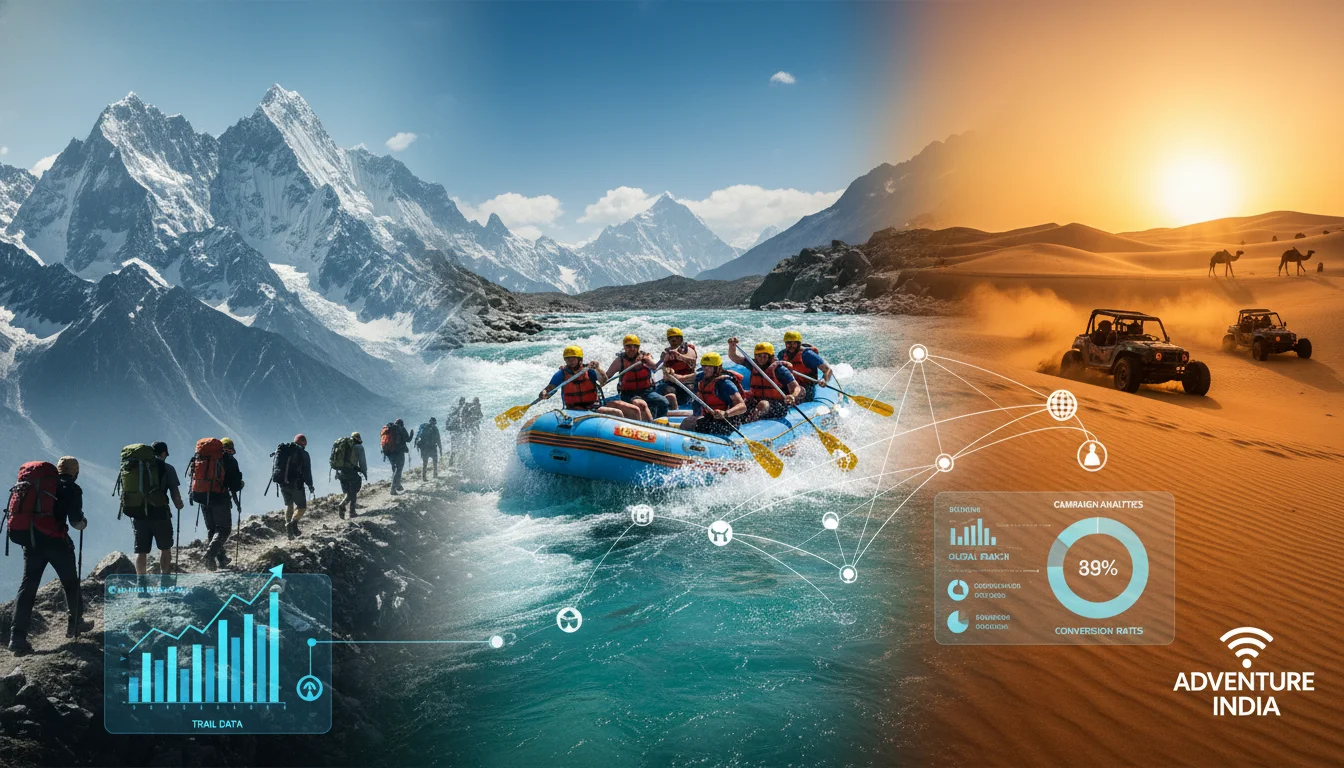
To understand the broader economic impact, one must also examine the ancillary sectors, such as the outdoor equipment and hiking gear market. As accessibility to remote trekking destinations improves, the demand for specialized apparel, footwear, and survival gear has surged. The India hiking gear and equipment market, valued at USD 251.76 million in 2025, is projected to reach USD 380.76 million by 2034, growing at a steady CAGR of 4.70%.
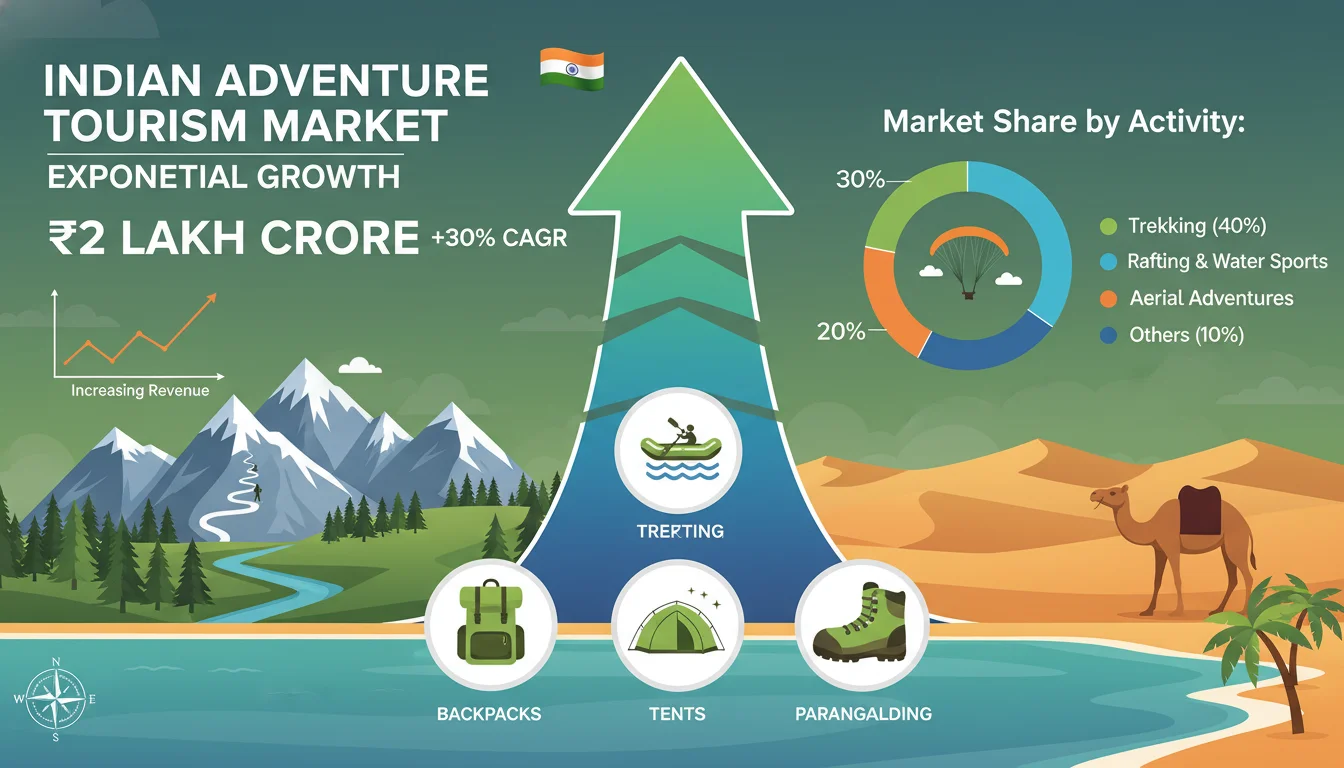
| Market Segment | 2024/2025 Estimated Valuation | Projected Valuation (2033/2034) | Estimated CAGR |
|---|---|---|---|
| Overall Adventure Tourism Market | USD 16.73B - 19.70B | USD 86.09B - 88.46B | 17.43% - 20.90% |
| Hiking Gear & Equipment | USD 251.76M | USD 380.76M | 4.70% |
| Sports Equipment & Outdoor Gear | INR 30 Billion | Ascending | N/A |
Data synthesized from market projections outlining the financial scope of the Indian adventure sector.
Several macro-trends are currently dictating the evolution of this industry. First is the pronounced demographic expansion. While solo travel and women-only expedition groups have seen a significant rise—supported by the development of safety-first itineraries and specialized female-led guide services—the “couples” demographic remains the most lucrative and fastest-growing revenue-generating segment. This reflects a growing cultural trend of adventurous honeymoons and active romantic getaways replacing traditional luxury resort stays.
Second is the profound integration of wellness and sustainability. The convergence of physical exertion and mental wellbeing has given rise to hybrid itineraries. High-altitude yoga, mindful forest bathing retreats, and “digital detox” treks are gaining immense popularity among corporate professionals seeking an antidote to urban burnout. Furthermore, modern travelers are increasingly eco-conscious, demanding that operators adhere to sustainable practices, utilize eco-friendly equipment, and actively contribute to the economic upliftment of local mountain communities.
Key Challenges Faced by Businesses in this Industry
Despite the highly optimistic macroeconomic forecasts, adventure sports and trekking operators in India operate within a volatile environment fraught with structural, regulatory, and environmental hurdles.
The most critical vulnerability of the Indian adventure tourism sector is the inconsistent application of safety regulations. While the Ministry of Tourism, in collaboration with the Adventure Tour Operators Association of India (ATOAI), has issued comprehensive Model Adventure Safety Guidelines detailing standard operating procedures, risk management protocols, and emergency rescue mechanisms, adherence remains largely voluntary at the state level. This regulatory fragmentation permits the proliferation of uncertified, budget-oriented operators who bypass expensive safety audits, utilize substandard or outdated equipment, and employ untrained personnel. Consequently, the industry periodically suffers from highly publicized, tragic accidents—such as fatal paragliding falls or rafting capsizes—which instantly erode consumer trust and trigger reactionary regulatory crackdowns. Legitimate, premium operators are thus forced to continuously defend their pricing structures against unsafe, cut-rate competitors.
Infrastructural deficits further constrain the operational scaling capabilities of adventure businesses. Adventure tourism inherently occurs in remote, ecologically fragile, and geographically challenging environments. India’s infrastructural gaps—ranging from poorly maintained mountain access roads and limited emergency helipad availability to a severe lack of hygienic base camp amenities and reliable digital connectivity—create massive logistical bottlenecks. Operators must absorb the astronomical costs of transporting supplies, maintaining equipment in extreme weather conditions, and executing complex human waste management protocols at high altitudes, which severely impacts profit margins.
Additionally, the sector is heavily plagued by seasonality. The dependency on specific climatic windows, such as the brief pre-monsoon and post-monsoon Himalayan trekking seasons, subjects the industry to extreme revenue volatility. This seasonality complicates workforce retention; operators struggle to maintain highly trained, certified technical guides and mountaineering experts year-round, often losing skilled personnel to competing sectors during the dormant off-season months. Managing this cash flow inconsistency while simultaneously dealing with the environmental degradation caused by seasonal overcrowding at popular destinations requires exceptional business acumen.
Digital Landscape in India (Contextual to the Industry)
Internet and Social Media Usage Relevant to the Industry
India’s digital ecosystem has undergone a revolutionary expansion, directly catalyzing the democratization and explosive growth of the adventure travel sector. As of 2025, the country boasts over 806 million internet users, representing a robust penetration rate of 55.3% of the total population. This connectivity is overwhelmingly mobile-centric; an estimated 88% of travel research and 65.37% of digital travel bookings are executed entirely via mobile devices.
The proliferation of affordable data tariffs has fundamentally altered content consumption habits, driving average monthly data consumption to a staggering 27.5 GB per smartphone user. This high-bandwidth environment has fueled an insatiable appetite for rich media, particularly streaming video, immersive digital experiences, and high-definition travel content. Consequently, India’s total digital advertising spend has surged to ₹49,000 crore, capturing 44% of the total advertising market. For the adventure tourism sector, this digital density means that the modern Indian traveler is hyper-connected, highly informed, and heavily influenced by digital media long before they finalize an itinerary or set foot on a mountain trail. The digital space is no longer just a promotional channel; it is the primary arena where destination discovery, safety verification, and commercial transactions occur.
Popular Platforms Among the Target Audience
The path to purchase for adventure travelers is highly fragmented, requiring operators to maintain an omnipresent footprint across several dominant digital platforms, each serving a distinct psychological purpose in the consumer journey.
The Meta ecosystem, comprising Instagram and Facebook, serves as the primary inspiration engine for adventure tourism.
The highly visual nature of Instagram perfectly aligns with the aesthetic appeal of Himalayan vistas, extreme sports photography, and the outdoor lifestyle. Travel brands have successfully utilized short-form video formats, such as Reels, to capture the shrinking attention span of the modern consumer, establishing Instagram not just as an awareness tool, but as a critical driver of desire. Facebook remains vital for community building, facilitating specialized groups where trekking enthusiasts exchange gear recommendations and trail updates.
YouTube has cemented its position as the undisputed leader in mid-funnel research and validation. Because adventure travel involves significant physical exertion and financial investment, travelers rely heavily on long-form YouTube vlogs, detailed gear reviews, and comprehensive itinerary breakdowns to assess the difficulty, safety, and visual payoff of a specific trek. Furthermore, YouTube Shorts are increasingly utilized by travelers for rapid inspiration, effectively competing with Instagram Reels.
In the unique context of the Indian digital market, WhatsApp transcends its role as a casual messaging application to function as a critical business-to-consumer (B2C) conversion and customer service mechanism. Adventure companies heavily utilize WhatsApp Business APIs for lead nurturing, sharing customized PDF itineraries, answering granular safety queries in real-time, and securely facilitating bookings. This establishes a highly personalized, high-trust communication channel that is essential for closing high-ticket adventure packages.
Finally, Google Search and the Google Business Profile (GBP) capture absolute commercial intent. While social media inspires the dream, Google Search captures the traveler actively looking to fulfill it. Organic search and local SEO are paramount for intercepting users searching for “trekking companies near me” or specific regional adventures. The Google ecosystem serves as the ultimate validation checkpoint where users verify the operational credibility, physical location, and peer reviews of an operator before transferring funds.
Consumer Online Behavior Related to Adventure Sports
The digital behavior of the Indian adventure traveler is currently characterized by intensive research protocols, a demand for absolute authenticity, and a growing preference for autonomy over standardization.
A pronounced shift away from traditional, rigid packaged tours toward “Do-It-Yourself” (DIY) travel planning is heavily evident. Indian consumers, particularly Millennials and Gen Z, prefer to exercise granular control over their itineraries, seeking flexibility and tailored experiences rather than boarding a standardized tour bus. Data indicates that over 86% of travelers are influenced by online channels during the research phase, meticulously comparing independent operators, reading peer reviews, and consulting independent travel blogs to piece together bespoke adventures.
Given the inherent physical risks associated with adventure sports, online consumer behavior is heavily skewed toward risk mitigation and trust verification. Travelers actively seek out robust social proof. They do not merely glance at aggregate star ratings; they meticulously read detailed user-generated content (UGC) to assess the competence of specific trek leaders, the quality and maintenance of safety equipment, and the operator’s crisis management track record. In a market with regulatory loopholes, an operator’s digital footprint, customer testimonials, and transparency regarding safety protocols serve as the primary proxy for their on-ground professionalism.
Furthermore, digital behavior indicates a rejection of superficial “checklist” tourism in favor of deep, transformative experiences. While the desire to capture visually stunning content for social media remains a powerful motivator, sophisticated travelers are increasingly drawn to authentic storytelling. They engage heavily with content that highlights eco-tourism, cultural immersion with indigenous communities, and personal physical challenge, actively aligning their purchasing decisions with brands that demonstrate environmental stewardship and ethical operations. This behavioral shift requires digital marketing to move beyond simple scenic photography to narrative-driven content that highlights the holistic value of the adventure.
Digital Marketing Opportunities
How Digital Marketing Can Solve Key Challenges
The profound structural challenges of the Indian adventure tourism sector—namely the pervasive safety and trust deficit, extreme seasonal revenue volatility, and infrastructural bottlenecks—can be systematically mitigated through the sophisticated application of digital marketing.
To overcome the safety and trust deficit caused by inconsistent regulatory enforcement, digital marketing must act as the primary mechanism for building institutional credibility. Through highly transparent content marketing, legitimate operators can visually and narratively demonstrate their rigorous safety protocols. By publishing behind-the-scenes videos of equipment audits, documenting the stringent certification and medical training processes of their guides, and clearly outlining high-altitude emergency evacuation plans, companies can directly address consumer anxieties. Furthermore, actively soliciting and prominently displaying verified customer testimonials and user-generated content acts as an irrefutable peer-to-peer trust signal. This digital transparency clearly differentiates premium, secure operators from hazardous, budget-oriented competitors, allowing them to justify higher price points based on guaranteed safety.
Digital marketing also provides the agility necessary to manage and manipulate seasonal demand. To combat the off-season revenue slump typical of Himalayan operators, companies can utilize predictive analytics, targeted email marketing, and paid social media campaigns to pivot consumer attention toward alternative geographies and activities. For example, an operator can seamlessly shift marketing spend from monsoon-affected northern treks to promote Western Ghats monsoon expeditions, desert safaris in Rajasthan, or coastal scuba diving certifications. Additionally, deploying early-bird digital discount campaigns and exclusive online loyalty programs can secure advance bookings and stabilize cash flow during historically dormant months.
Finally, digital platforms allow operators to meticulously manage customer expectations regarding remote infrastructure, thereby reducing on-ground friction. By utilizing virtual reality (VR) previews, highly detailed blog posts detailing exact base camp hygienic conditions, and comprehensive video gear guides, companies can thoroughly pre-qualify their leads. This digital education ensures that only physically capable and mentally prepared travelers embark on demanding treks, dramatically reducing operational disruptions, medical emergencies, and post-trip dissatisfaction.
Best Strategies for Adventure Sports and Trekking Companies
To aggressively capitalize on the expanding market, adventure operators must deploy a full-funnel digital strategy that flawlessly integrates search optimization, performance advertising, immersive content, and influencer partnerships.
Search Engine Optimization (SEO) and Semantic Content
SEO remains the bedrock of sustainable, long-term customer acquisition. In the current digital era, the strategy must transcend archaic keyword stuffing and focus on deep, semantic, intent-driven content. Operators should construct comprehensive “Knowledge Hubs” that answer the highly specific, long-tail queries users rely on during their extensive research phases. Articles addressing topics such as “How to prevent acute mountain sickness on the Roopkund trek,” “Best waterproof hiking boots for Himalayan winters,” or “Detailed packing list for the Chadar frozen river trek” establish the brand as an authoritative, indispensable industry voice. Furthermore, Local SEO, optimized relentlessly through Google Business Profiles, is absolutely critical for capturing high-intent, location-specific queries, ensuring visibility when tourists in a specific hub search for immediate local activities.
Performance Marketing (PPC and Paid Social)
While organic growth is vital for long-term brand equity, performance marketing drives immediate, scalable conversions. Google Search Ads should be deployed to capture high-intent, bottom-of-the-funnel searches where the user is ready to transact. Conversely, Meta Ads (Facebook and Instagram) excel at mid-funnel behavioral retargeting. By utilizing tracking pixels, an operator can retarget a user who abandoned a specific itinerary page with dynamic, visually captivating video ads, significantly lowering customer acquisition costs and recovering lost revenue.
Immersive Video and Micro-Storytelling
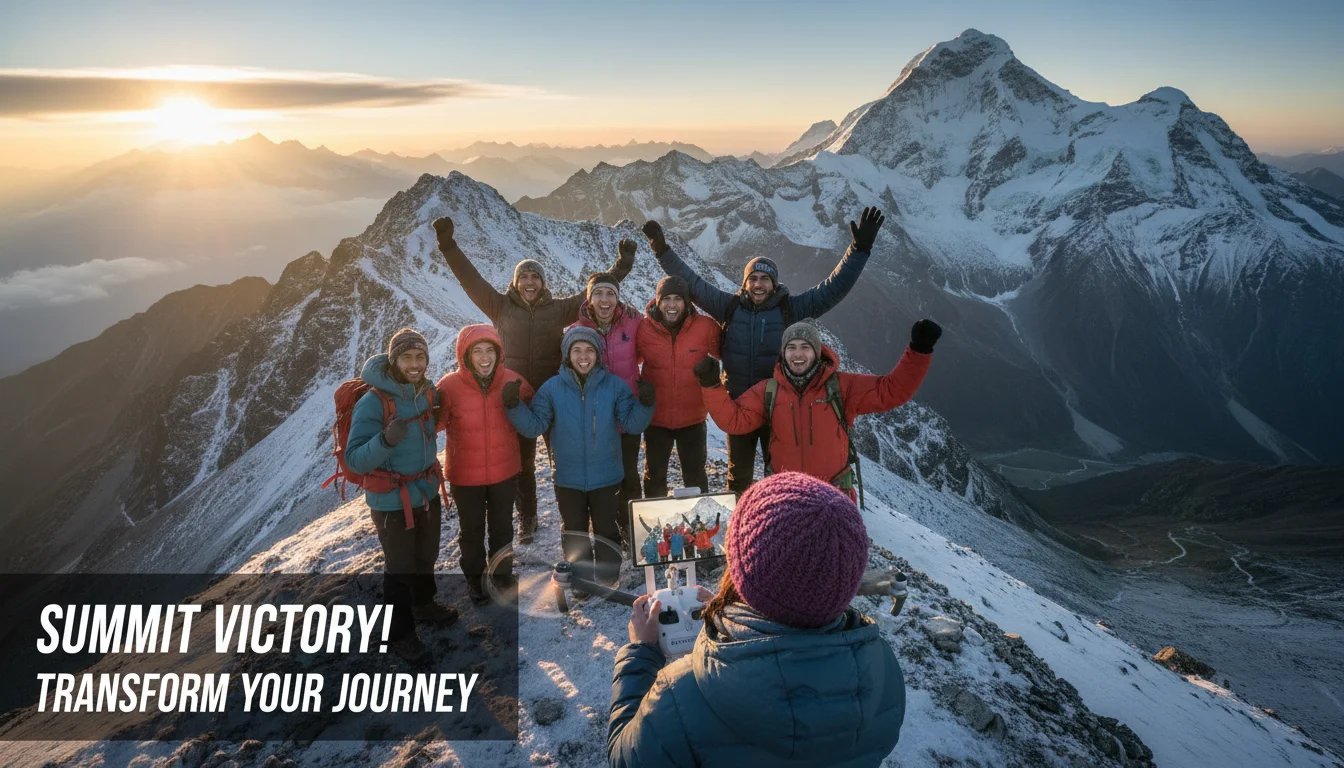
Adventure tourism is an inherently emotional and visual product. Brands must pivot toward a video-first strategy, specifically leveraging YouTube Shorts and Instagram Reels to deliver high-impact “micro-stories” that cater to contracted modern attention spans. Content should masterfully blend high-adrenaline drone footage with deeply human-centric narratives—focusing on the physical struggle of the ascent, the camaraderie forged within the group, the expertise of the local Pahari guides, and the serene, transformative beauty of the destination.
Niche Influencer and Micro-Creator Collaborations
The influencer economy in India is vast, but authenticity is paramount for adventure brands. Rather than relying on expensive, broad-reach celebrity endorsements, operators should forge strategic partnerships with niche micro-influencers and specialized outdoor vloggers possessing 5,000 to 50,000 followers.
These creators boast highly engaged, fiercely loyal audiences who implicitly trust their specific gear and expedition recommendations. Executing barter collaborations—where the creator receives a fully funded expedition in exchange for comprehensive, multi-platform digital documentation—offers an exceptionally cost-effective and highly credible marketing channel.
Local and Global Examples / Case Studies
Indiahikes: The Power of Content and Information Monopoly
Indiahikes stands as the premier case study of organic digital dominance within the Indian trekking space. Recognizing early in their inception that the primary barrier to domestic trekking was a profound lack of credible, organized information, Indiahikes invested heavily in building the largest, most meticulously documented database of trek information in the country. Their content strategy completely eschews AI-generated generic text in favor of deep, human-centric storytelling, exhaustive route maps, and highly detailed preparation guides. By providing immense, unparalleled value for free—effectively enabling thousands of travelers to undertake independent DIY treks—they built unshakeable brand authority and goodwill. To support this massive content library, they enhanced their technical SEO by implementing enterprise solutions like Scaleflex, reducing high-resolution image payloads by 60% and improving page load speeds by 50%, directly boosting their organic search rankings and mobile user experience. Their digital strategy, fundamentally rooted in utility and eco-tourism narratives (Green Trails), is so robust it won the ISB Global Case Study Competition.
Bikat Adventures: Skill-Based Progression and Gamification
Bikat Adventures utilizes a highly innovative, skill-based content strategy that effectively gamifies the outdoor adventure experience. Their digital marketing categorizes treks not merely by geographic location, but by a structured learning curve. They market beginner treks as explicit prerequisites for advanced mountaineering, ice climbing, or backcountry skiing courses. This strategic positioning effectively transforms one-time transactional customers into lifelong, repeat clients actively striving to “level up” their skills. Furthermore, they heavily leverage community-led marketing by hosting dedicated “Trekkers’ Blogs” directly on their site, utilizing authentic, unpolished user-generated content to build peer-to-peer trust and significantly lower the psychological barrier to entry for novices.
Thrillophilia: Aggregation and Conversion Rate Optimization
Operating primarily as an aggregator platform rather than a direct ground operator, Thrillophilia relies heavily on a high-octane, data-driven performance marketing strategy. Managing a massive inventory of both domestic and international travel experiences, they deploy aggressive, algorithmically optimized Google Ads and visually striking social media campaigns targeted at specific demographics (e.g., luxury honeymoons, weekend bikers). Their digital architecture is heavily optimized for conversion rate optimization (CRO); their landing pages utilize psychological urgency tactics, explicitly highlighting immediate financial savings and featuring prominent callback request buttons, driving users directly into a high-touch, consultative sales funnel.
4. Competitive Analysis
A meticulous analysis of the top players in the Indian adventure tourism market reveals distinct digital footprints, highlighting both industry best practices and strategic voids ripe for disruption by agile competitors.
Current Digital Presence of Top Businesses in India
| Company | Primary Digital Strategy | Core Strengths & Mechanisms | Identified Vulnerabilities |
|---|---|---|---|
| Indiahikes | Content Marketing, Organic SEO, Eco-Narrative | Unmatched informational authority; operates the largest trek database in India; compelling eco-tourism narrative (Green Trails); massive, sustained organic traffic acquisition. | Heavy reliance on strict, high-difficulty narratives and rigid protocols may inadvertently alienate casual, comfort-seeking demographics looking for softer adventures. |
| Trek The Himalayas (TTH) | Technical UX, Social Proof, Mobile Accessibility | Highly granular website filtering system; dedicated proprietary mobile app; transparent safety signaling; robust community ambassador program; exceptional integration of Google Reviews. | The sheer volume of inventory and highly detailed filtering options can induce choice paralysis for absolute beginners, despite the presence of a “Suggest a Trek” tool. |
| Thrillophilia | Performance Marketing, CRO, Aggregation | Extensive market reach through aggregation; aggressive, highly optimized ad spend; expertly designed landing pages maximizing conversion; diverse luxury and soft-adventure portfolio. | Operates fundamentally as a middleman broker, lacking the deep, intimate “mountaineer-led” brand trust and specialized authority that direct ground operators possess. |
| Bikat Adventures | Community Building, Skill Progression | Innovative gamified learning approach; extensive use of high-quality video proof (“See it to Believe it” campaigns); strong integration of user-generated content and trekker blogs. | Overall digital search visibility and organic footprint is currently narrower when compared to the massive, compounding organic reach of Indiahikes. |
| Shikhar Travels | Heritage Branding, B2B Focus | Over four decades of operational history; strong institutional trust; focuses heavily on international standards, safety certifications, and customized luxury/corporate expedition support. | Digital presence leans toward traditional, corporate B2B aesthetics, potentially missing the viral, visual engagement required to capture the younger Gen-Z and Millennial B2C market. |
What They Are Doing Well
The market leaders universally excel at constructing highly effective Trust Architectures. TTH, for instance, executes social proof flawlessly by prominently featuring verified Google reviews that specifically name individual trek leaders, guides, and cooks, while detailing the quality of base camp food and safety protocols. This directly and preemptively alleviates the most common pain points and fears of prospective trekkers. Indiahikes dominates the market through an Information Monopoly, realizing that the absolute best marketing strategy in this sector is supreme utility; their comprehensive, freely available trail documentation makes them the default starting point for any trekker’s research journey, ensuring brand recall. Bikat Adventures excels at Customer Lifetime Value Optimization through their structured skill-progression marketing, ensuring that a beginner who books a simple weekend hike is inducted into an educational ecosystem that eventually leads them to book highly profitable, technical mountaineering expeditions. Thrillophilia masters Frictionless Conversion, utilizing a seamless UX, transparent pricing, and targeted performance ads to capture users precisely at the moment when purchase intent is at its absolute peak.
Gaps and Opportunities to Outperform Them
Despite the entrenched dominance of these major players, significant strategic gaps exist that agile, emerging operators can aggressively exploit:
- Hyper-Personalization vs. Mass Aggregation: Large operators, by necessity of scale, often treat consumers as volume metrics, offering standardized itineraries. Emerging companies can outperform them by utilizing highly personalized, consultative sales approaches. By leveraging AI-driven WhatsApp chatbots combined with deep, expert human consultation, a smaller operator can craft bespoke itineraries tailored for high-net-worth individuals, specialized photography tours, or elderly trekkers—segments often overlooked by mass-market operators.
- Regional and Localized SEO Dominance: While the industry giants dominate national, high-volume search terms (e.g., “Himalayan treks”), they frequently underperform on hyper-local, vernacular searches. A regional operator can dominate “near me” and specific regional queries (e.g., “best local guide for Chadar frozen river trek Leh” or “certified scuba operator Havelock”) by aggressively optimizing their Google Business Profile, utilizing local dialects, and building localized backlinks, thereby capturing highly qualified, bottom-of-funnel traffic with minimal competition.
- Raw, Video-First Engagement: While established brands still rely heavily on polished written blogs and highly produced corporate videos, consumer preference is shifting rapidly to raw, authentic short-form video. A challenger brand that excels at producing high-quality, unfiltered Instagram Reels and YouTube Shorts—focusing on the authentic reality of the trek, including the struggles, the weather, and the unfiltered joy—can capture significant market share among Gen Z and Millennials who demand absolute authenticity over corporate polish.
- Radical Safety Transparency: Smaller companies can strongly differentiate themselves by adopting radical, uncompromising transparency regarding their safety protocols. Publishing real-time gear audit videos, live weather monitoring data feeds on their website, and detailing the precise medical qualifications of their on-ground staff creates a powerful, unique selling proposition (USP) in an industry historically plagued by safety anxieties and regulatory ambiguity.
5. Recommended Strategy for Adventure Companies in India
To successfully penetrate, scale, and secure market share within the highly competitive Indian adventure tourism market, operators must deploy a targeted, omnichannel strategy.
This approach must delicately balance aspirational, emotional storytelling with rigorous, frictionless conversion mechanics and safety signaling.
Target Audience Personas
Effective digital marketing in this sector requires granular demographic and psychographic segmentation. The primary target personas include:
-
The Gen-Z Thrill Seeker (Age 18-26)
Characteristics: Highly digital-native, budget-conscious but willing to spend on experiences over assets. They prioritize aesthetics, peer validation, and social media documentation (“do it for the gram”), constantly seeking unique, offbeat locations to build their personal brand.
Preferences: DIY travel planning, short weekend escapes from urban centers, and high-adrenaline soft adventures such as bungee jumping, white-water rafting, and introductory trekking.
-
The Corporate Escapist (Millennials, Age 27-40)
Characteristics: Possesses high disposable income, is severely time-poor, and experiences high levels of urban and professional stress.
Preferences: Seeks a careful blend of physical challenge and mental wellness, favoring digital detoxes and deep nature immersion. They are highly willing to pay a premium for logistical convenience, guaranteed safety, high-quality base camp amenities, and seamless booking experiences.
-
The Cultured Couple / Active Family (Age 30-55)
Characteristics: This represents the most lucrative financial segment. They are highly risk-averse, prioritize uncompromising safety standards, comfort, and educational or cultural elements over pure adrenaline.
Preferences: Soft adventure, multi-day wildlife safaris, culturally immersive trekking with expert local guides, and itineraries that guarantee robust emergency support and comfortable lodging.
Recommended Channels and Campaign Types
The marketing architecture must engage these personas across the entire customer journey, matching specific channels to the appropriate funnel stage:
-
Top-of-Funnel (Awareness & Inspiration)
Instagram Reels & YouTube Shorts: Deploy high-impact, visually arresting 15-to-30-second videos. These should showcase epic landscapes, dramatic drone videography, and the emotional climax of reaching a summit, designed specifically for the scroll-heavy behavior of Gen Z and Millennials.
Micro-Influencer Campaigns: Partner with niche outdoor creators to document the entire journey end-to-end, providing authentic, relatable inspiration that bypasses traditional ad blindness.
-
Middle-of-Funnel (Consideration & Education)
SEO-Driven Knowledge Hubs: Develop comprehensive, long-form blog posts and YouTube tutorials detailing technical gear requirements, fitness preparation routines, and altitude sickness prevention strategies. This content builds authority and trust during the extended 23-25 day research phase.
Email Nurture Sequences: Utilize automated drip campaigns offering tangible value (e.g., “A 12-Week Fitness Plan for Everest Base Camp” or “Ultimate Packing Checklist”) to keep the brand top-of-mind and continually educate the prospective traveler.
-
Bottom-of-Funnel (Conversion & Transaction)
Google Search Ads (SEM): Target high-intent transactional queries (e.g., “Book Kedarkantha winter trek 2026”) to capture users who have completed their research and are actively looking to purchase.
Meta Retargeting Ads: Serve dynamic advertisements featuring customer testimonials, safety certifications, and limited-time urgency discounts specifically to users who visited an itinerary page but failed to complete the booking.
WhatsApp Commerce: Utilize WhatsApp Business APIs for direct, personalized sales consultations. This allows sales teams to address final safety objections, customize packages, and securely process bookings in a format the Indian consumer inherently trusts.
Content Ideas Specific to the Industry
- “Behind the Scenes” Safety Series: Produce short, transparent videos demonstrating exactly how climbing ropes are inspected, how oxygen cylinders are tested before departure, and featuring interviews with the certified medical personnel on staff. This directly confronts and neutralizes the industry’s primary challenge regarding safety.
- “Zero-to-Summit” Progression Guides: Create content that maps out a multi-year journey for absolute beginners. (e.g., “Start with the Dayara Bugyal meadow walk, graduate to the Kuari Pass, and eventually conquer Stok Kangri”). This fosters long-term brand loyalty.
- Local Cultural Spotlights: Produce deep, documentary-style dives into the lives, traditions, and culinary expertise of the local Pahari guides and base camp cooks. This highlights the brand’s commitment to community upliftment, ethical employment, and sustainable tourism, resonating strongly with eco-conscious travelers.
- The “Unfiltered” Trekker Diaries: Publish authentic, user-generated vlogs featuring real clients—showcasing diverse body types, ages, and fitness levels—navigating both the physical struggles and the ultimate mental triumphs of the trail, emphasizing the transformative nature of the experience over pure aesthetics.
Budget-Friendly Digital Marketing Approaches
For startups, regional operators, and smaller companies lacking massive venture-backed advertising budgets, a lean, organic-heavy approach is absolutely essential for survival and growth:
- Master Local SEO: Claim, verify, and aggressively optimize the Google Business Profile (GBP). Ensure consistent NAP (Name, Address, Phone) data across all local directories, upload weekly high-quality photos of ongoing treks, and actively solicit and respond to customer reviews. This remains the most cost-effective method to capture local, high-intent search traffic.
- Leverage User-Generated Content (UGC): Implement a systematic operational process to collect photos, videos, and written testimonials from every returning trekker. Create a branded hashtag and incentivize sharing through post-trek contests or discount vouchers for future bookings. UGC provides a continuous stream of free, highly authentic marketing collateral that converts better than polished corporate photography.
- Barter Collaborations: Engage with emerging travel photographers, drone operators, and bloggers who are looking to build their portfolios. Offer complimentary treks or heavy discounts in exchange for a specified quota of high-quality images, raw video footage, and dedicated blog posts. This secures premium marketing assets without requiring direct capital expenditure.
Keywords & SEO Opportunities
In the highly competitive landscape of 2026, search engine algorithms have evolved significantly beyond simple keyword matching. They now deeply prioritize user intent, semantic relevance, and comprehensive topic coverage. An effective SEO strategy must intricately align content with the specific psychological stage and problem the user is attempting to solve.
High-Intent Keywords for Ranking
High-intent keywords are bottom-of-the-funnel (BOFU), transactional, or commercial queries indicating that the user has completed their educational research phase and is actively evaluating operators or preparing to make a financial transaction. While the absolute search volumes for these terms may be lower than broad head terms (like “India trekking”), the conversion rates are exceptionally high, making them the most valuable targets for both organic SEO and paid Search Engine Marketing (SEM).
-
Keyword Cluster / Pattern: book trek packages (e.g., book Kedarkantha trek packages)
Search Intent: Transactional
Recommended Target Page Type: Specific Itinerary Landing Page
Anticipated Conversion Rate: Very High -
Keyword Cluster / Pattern: affordable trekking companies in (e.g., affordable trekking companies in Himachal)
Search Intent: Commercial / Comparative
Recommended Target Page Type: Homepage / About Us / Core Pillar Page
Anticipated Conversion Rate: High -
Keyword Cluster / Pattern: customized adventure tours [Location] (e.g., customized adventure tours Ladakh)
Search Intent: Commercial
Recommended Target Page Type: Specialized Service/Consultation Page
Anticipated Conversion Rate: High -
Keyword Cluster / Pattern: [Location] river rafting online booking (e.g., Rishikesh river rafting online booking)
Search Intent: Transactional
Recommended Target Page Type: Direct Booking / Checkout Page
Anticipated Conversion Rate: Very High -
Keyword Cluster / Pattern: corporate adventure offsites near [City] (e.g., corporate adventure offsites near Bangalore)
Search Intent: Commercial / B2B
Recommended Target Page Type: Corporate Services Landing Page
Anticipated Conversion Rate: High (High Ticket Value) -
Keyword Cluster / Pattern: best rated trekking guides for [Peak Name]
Search Intent: Commercial / Trust
Recommended Target Page Type: Team/Guides Profile Page with Reviews
Anticipated Conversion Rate: Medium to High
Note: These keyword patterns should be localized by replacing brackets with specific regional modifiers to capture precise intent.
Long-Tail Keyword Opportunities (India-Specific)
Long-tail keywords represent conversational, highly specific, and often multi-word queries. They are absolutely crucial for bypassing the intense competition dominated by industry giants on broad terms.
Furthermore, as search behavior shifts toward Voice Search and AI Overviews (like Google’s SGE), optimizing for natural language questions is vital for maintaining visibility. These queries typically reflect informational intent, allowing operators to capture users early in the 23-25 day planning cycle and nurture them toward a booking.
Informational/Educational Long-Tail Queries:
- “How to prepare for a high altitude trek in the Himalayas”
- “Best waterproof trekking shoes under 5000 rupees in India”
- “Symptoms of acute mountain sickness and how to prevent it”
- “What to pack for a 7-day winter trek in Spiti Valley”
- “Is it safe to go trekking during the monsoon in the Western Ghats”
Niche & Demographic Specific Queries:
- “Safe solo female trekking groups in Himachal Pradesh”
- “Beginner friendly weekend treks near Bangalore under 3000”
- “Luxury camping and glamping sites in the Rajasthan desert”
- “Best Himalayan treks for families with children under 10”
Hyper-Local & Trust-Driven Queries:
- “ATOAI certified scuba diving operators in Andaman Islands”
- “Best local pahari guide for Chadar frozen river trek”
- “Government approved paragliding operators in Bir Billing”
By developing dedicated, high-quality, and deeply researched blog posts, video guides, and FAQ sections around these specific long-tail queries, an operator can systematically capture highly qualified traffic, build immense brand authority, and funnel educated users toward their transactional pages.
Implementation Roadmap
Executing a comprehensive digital transformation requires a disciplined, phased approach, prioritizing foundational technical elements before scaling into advanced automation and community-building tactics.
Short-Term Quick Wins (Month 1–3)
Objective: Establish a flawless digital foundation, plug existing conversion leaks, and capture immediate local intent.
- Month 1: Digital Audit & Technical Infrastructure:
- Conduct a comprehensive technical SEO audit to optimize website load speeds, ensure flawless mobile responsiveness (crucial given the 88% mobile research rate), and rectify broken links.
- Claim, rigorously verify, and fully optimize the Google Business Profile (GBP) with accurate contact details, high-resolution imagery, and targeted service descriptions to immediately boost local visibility.
- Implement and verify foundational analytics tracking (Google Analytics 4, Meta Pixel, Google Tag Manager) to ensure all subsequent user behavior and ad campaigns are meticulously measurable.
- Month 2: Content Optimization & Social Proof Activation:
- Revamp existing top-performing itinerary landing pages to improve Conversion Rate Optimization (CRO). Integrate clear Call-to-Actions (CTAs), urgency triggers, high-quality visuals, and prominent trust badges (e.g., ATOAI certification logos, safety guarantees).
- Launch an automated email or WhatsApp outreach campaign targeting past customers to solicit detailed reviews on Google and TripAdvisor, instantly boosting social proof.
- Begin a sustained content marketing effort, publishing 2-3 high-quality, long-tail SEO blog posts per week focusing strictly on gear, preparation, and safety.
- Month 3: Performance Marketing & Retargeting Launch:
- Launch highly targeted Google Search Ads focusing exclusively on high-intent, bottom-of-funnel keywords (transactional intent) for upcoming seasonal treks.
- Initiate Meta (Facebook/Instagram) retargeting campaigns aimed specifically at users who visited the site, viewed an itinerary, but abandoned the session before booking, utilizing video testimonials to close the sale.
Long-Term Strategy (Month 6–12)
Objective: Scale audience acquisition, build unshakeable brand authority, and foster a highly loyal, self-sustaining community.
- Month 4-6: Video Dominance & Micro-Influencer Integration:
- Shift the content focus decisively toward video-first media. Launch a consistent schedule of YouTube Shorts and Instagram Reels focusing on the “unfiltered” trekking experience, rigorous safety audits, and behind-the-scenes operations.
- Identify, vet, and secure barter collaborations with 5-10 relevant micro-influencers in the travel, fitness, and lifestyle space to generate an ongoing stream of authentic UGC.
- Month 7-9: Community Building & Loyalty Ecosystems:
- Develop and launch an “Ambassador Program” or digital loyalty tier (modeling the success of TTH and Bikat Adventures). Reward repeat trekkers with structured discounts, exclusive early access to new routes, and incentivize peer-to-peer referrals.
- Diversify the product offering by introducing highly specialized, niche itineraries (e.g., astrophotography tours, corporate leadership offsites) and market them via highly targeted LinkedIn B2B campaigns and programmatic display ads.
- Month 10-12: Advanced Automation & Data-Driven Expansion:
- Implement AI-driven marketing automation. Utilize intelligent chatbots for 24/7 initial customer inquiries and deploy hyper-personalized email and WhatsApp marketing sequences based on granular user browsing behavior and past purchase history.
- Conduct a deep analysis of the 12 months of accumulated data to refine Customer Acquisition Cost (CAC) models, identify the most profitable demographic segments, and reallocate the marketing budget strictly to the highest-performing channels for the upcoming fiscal year.
Conclusion
The Indian adventure sports and trekking industry is currently traversing a period of explosive, unprecedented growth. Transitioning rapidly from a niche, purist pursuit to a multi-billion-dollar economic pillar, the sector is being propelled by a vast, digitally connected domestic demographic that increasingly values transformative, experiential travel, mental wellness, and eco-consciousness over traditional leisure tourism. However, this highly lucrative landscape is simultaneously fraught with intense competition, extreme seasonal volatility, infrastructural deficits, and critical safety and regulatory challenges.
In this complex environment, digital marketing is no longer merely a peripheral promotional tool; it is the absolute central nervous system of a successful adventure brand. A sophisticated, omnipresent digital footprint is the primary mechanism through which an operator establishes institutional trust, communicates unyielding safety standards, captures hyper-specific consumer intent, and ultimately converts digital browsers into lifelong, loyal brand advocates. Adventure companies that fail to adapt to intent-based SEO, short-form immersive video storytelling, and personalized, omnichannel booking experiences will invariably lose market share to more agile, digitally sophisticated competitors who understand the evolving psychology of the modern Indian traveler.
Driving Growth with Gurkha Technology
To successfully execute this complex digital transformation, partnering with an agency that possesses a deep, nuanced understanding of the Himalayan adventure ecosystem and the South Asian digital landscape is paramount. Gurkha Technology, an award-winning digital marketing company based in Kathmandu, Nepal, is uniquely positioned to serve this specific travel niche.
Operating at the very heart of global adventure tourism, Gurkha Technology understands the distinct operational realities, extreme logistical hurdles, and unique consumer psychologies associated with high-altitude trekking and adventure sports. Guided by their core philosophy to “Digitize, Optimize, Thrive,” the agency offers a comprehensive suite of bespoke services designed specifically for sustainable growth:
- Targeted SEO and Content Strategies: Crafting deep, intent-driven content campaigns that establish unshakeable industry authority and capture high-converting organic traffic.
- Precision Performance Marketing: Executing highly optimized Google Ads and Meta campaigns specifically tailored to the unique mobile-first user behaviors and device preferences of the regional market.
- Web Development & Seamless UX: Building incredibly fast, scalable, and visually immersive booking platforms that streamline the customer journey, removing friction from inspiration to secure transaction.
- Engaging Visual Storytelling: Leveraging deep expertise in social media management, including Meta Verification and TikTok/Reels optimization, to capture the modern traveler’s attention through high-impact micro-storytelling.
For adventure sports and trekking companies in India looking to scale their operations, elevate their brand prestige, ensure consumer trust, and dominate the digital landscape, a strategic partnership with Gurkha Technology provides the technical expertise and regional insight necessary to navigate the digital terrain and achieve lasting, profitable growth.