2026 B2B Marketing Agency Retainer Fees Benchmark
B2B Marketing Agency Retainer Fees: A 2026 Pricing Benchmark Study
The Macroeconomic Paradox of B2B Marketing in 2026
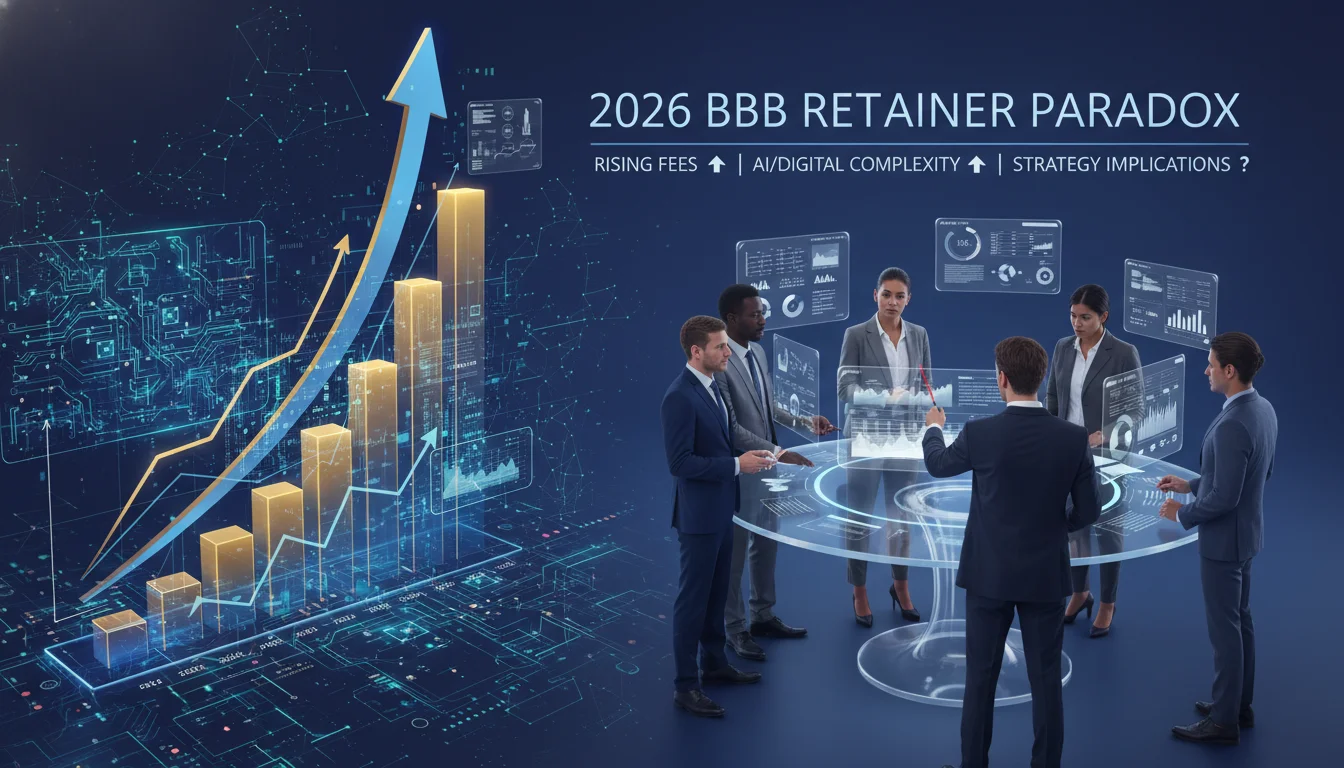
The business-to-business (B2B) marketing landscape in 2026 operates under a profound economic paradox. The widespread institutionalization of generative artificial intelligence has drastically reduced the marginal cost of content production, code generation, and routine data analysis. Consequently, a casual observer might assume that marketing agency retainer fees have plummeted. The reality, however, is precisely the opposite. As the barrier to creating digital assets has collapsed, the digital ecosystem has become saturated, severely degrading the efficacy of traditional inbound marketing tactics and drastically elevating the cost of capturing genuine buyer intent.
Recent benchmarks illustrate the severity of this shift, indicating that the median Software-as-a-Service (SaaS) company now spends $2.00 to acquire $1.00 of new Annual Recurring Revenue (ARR). This represents a staggering 14% increase in customer acquisition costs (CAC) since 2023, forcing organizations to reevaluate their entire go-to-market architecture. Concurrently, baseline marketing budgets have escalated, with $1 million now universally recognized as the absolute minimum threshold for mid-market B2B growth initiatives.
This macroeconomic tension has fundamentally restructured the pricing architecture of B2B marketing agencies. Elite service providers have repositioned their value propositions away from the commoditized production of deliverables and toward the strategic orchestration of complex technical integrations, revenue accountability, and compliance governance. In 2026, average digital marketing agency retainers continue to span a massive spectrum, ranging from $1,000 to $10,000 monthly for small-to-medium businesses, escalating to $5,000 to $25,000+ for mid-market SaaS and E-commerce entities, and surging to $50,000 to $500,000+ for comprehensive enterprise-level strategic engagements.
The underlying mechanism driving these costs is a transition from labor-based billing to outcome-based and infrastructure-based pricing. As traditional organic search traffic plummets and buyer trust wanes, agencies are forced to invest heavily in specialized talent—such as data scientists, Revenue Operations (RevOps) architects, and Generative Engine Optimization (GEO) specialists. This report provides an exhaustive, data-driven analysis of 2026 B2B marketing agency retainer fees, unpacking the financial models, service-tier benchmarks, and operational archetypes that define the modern vendor-client ecosystem.
The C-Suite Budget Squeeze and the Brand Doom Loop
To accurately contextualize agency pricing in 2026, one must first examine the budgetary realities and internal political dynamics facing the modern Chief Marketing Officer (CMO). Despite rising acquisition costs and the explicit mandate to orchestrate complex digital transformations fueled by artificial intelligence, marketing budgets have largely stagnated relative to historical highs. The latest surveys indicate that marketing budgets currently rest at an average of 7.7% of total company revenue. This persistent financial constraint places immense pressure on marketing leaders to extract maximum, measurable value from their external agency partners, driving a ruthless pursuit of efficiency.
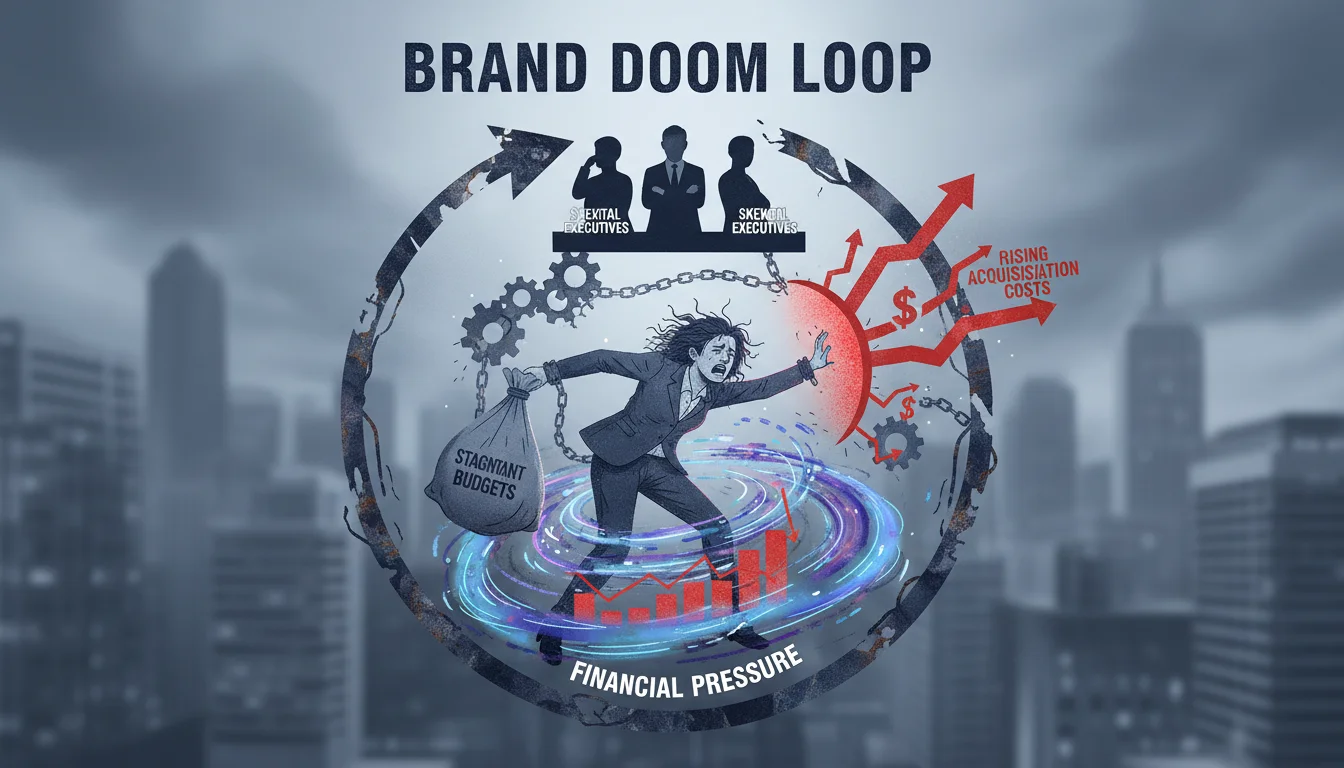
A defining friction point in 2026 agency relationships is the overwhelming demand from procurement and finance departments for immediate, quantifiable return on investment (ROI). This demand has inadvertently trapped many organizations in a destructive cycle identified by industry analysts as the “brand doom loop.” Current data indicates that 84% of companies are caught in this cycle, wherein underfunded brand measurement leads to an inability to clearly articulate pipeline impact. This lack of clarity fosters intense skepticism within the C-suite, which in turn leads to further budget constrictions for brand-building exercises. The implications for CMOs are severe; projections suggest that by 2027, over 40% of CMOs who advocate for larger brand budgets without flawless attribution models will permanently lose influence within the executive suite.
This dynamic directly impacts agency relationships and retainer structures. While benchmark data from professional networks strongly recommends a 60/40 budget split—where 60% of capital is dedicated to long-term brand building to prime future demand, and 40% is allocated to direct-response performance marketing to capture active buyers—most organizations inevitably force their agencies to focus exclusively on the 40%. Because organizational leadership is actively shifting funding away from broad brand awareness campaigns toward highly measurable product-led growth, agencies have been forced to abandon ambiguous retainers.
When an agency commands a $15,000 or $30,000 monthly retainer, procurement teams now expect the agency to supply and manage sophisticated multi-touch attribution models, incrementality testing frameworks, and Marketing Mix Modeling to prove that the agency’s interventions are the definitive cause of revenue lift. Former industry executives note that overcoming this risk-averse mentality requires profound strategic shifts, including measuring aided recall, sentiment, and share of voice to prove ROI to skeptical boards. The heavy administrative, analytical, and technical overhead required to provide this level of undeniable proof is a primary structural factor preventing agency fees from decreasing, even as generative AI automates the execution of basic creative deliverables.
The Internal Operational Realities of Agency Pricing
The fees charged to B2B clients are inextricably linked to the internal operational realities, margin pressures, and financial health of the marketing agencies themselves. 2026 is characterized by aggressive pricing recalibrations across the agency sector. Industry surveys tracking agency cash flow and pricing strategies reveal that an overwhelming 97% of creative and marketing agencies planned to raise their prices or have already implemented rate increases within the past calendar year.
These rate increases are rarely arbitrary; they are defensive maneuvers designed to combat systemic revenue leakage and rising overhead. A primary culprit eroding agency profitability is unchecked scope creep. Research indicates that nearly 80% of agencies rarely or only occasionally charge clients for work that falls outside the original parameters of a project scope. The financial toll is substantial, with more than half of surveyed agencies estimating losses between $1,000 and $5,000 every month due to unbilled revisions, unplanned strategy consultations, and bonus creative rounds. For 30% of the industry, these uncompensated losses exceed $5,000 per month.
To survive this margin compression, agencies are completely restructuring their pricing philosophies. There is a concerted movement away from traditional hourly billing, which industry thought leaders argue creates a hostile trust model and misaligns incentives by rewarding agencies for taking longer to complete tasks. Instead, agencies are adopting value-based pricing, which anchors the cost of the retainer to the financial value of the transformation delivered to the client, rather than the raw hours expended by agency personnel. This transition requires profound confidence from agency leadership to command premium fees based on projected revenue outcomes rather than labor inputs.
Furthermore, the operational costs of running a sophisticated agency have skyrocketed. The cost of essential enterprise-level marketing technology (MarTech) platforms, which agencies typically absorb so their clients do not have to purchase individual licenses, has outpaced standard inflation. Software prices have risen significantly year-over-year, compelling agencies to pass these infrastructural costs onto the client within the core retainer.
The Evolution of B2B Agency Pricing Models
The traditional dynamic of exchanging capital strictly for estimated labor hours is rapidly dissolving. In 2026, B2B marketing agencies primarily utilize seven core pricing models. The selection of a specific model fundamentally dictates the alignment of incentives between the client and the vendor, ultimately influencing the total cost of ownership and the quality of the resulting pipeline.
-
The Traditional Monthly Retainer (Flat Fee)
The flat monthly retainer remains the foundational bedrock of agency pricing, particularly for mid-market and enterprise engagements requiring continuous, multi-disciplinary support across long sales cycles. In the B2B SaaS sector, these retainers typically range from $3,000 to $25,000 per month, heavily dependent on the company’s growth stage, the complexity of the funnel, and the specified scope of work.
The primary mechanism involves the client paying a fixed, recurring fee for a predefined set of deliverables or a dedicated allocation of resource capacity. The strategic strength of the retainer model is absolute financial predictability for both parties. However, its greatest weakness is structural rigidity. In the highly volatile 2026 market, strategic priorities shift rapidly; clients locked into rigid deliverable schedules often find themselves paying for outputs they no longer need, leading to renegotiation friction instead of agile redirection of effort. Furthermore, flat retainers inherently lack performance accountability, introducing a significant risk of agency complacency when campaign results inevitably plateau.
Percentage of Ad Spend
Historically dominant in the paid media and performance marketing sectors, this model calculates the agency’s fee as a direct percentage—usually 10% to 20%—of the client’s total advertising budget. For a client spending between $20,000 and $200,000 monthly on platforms like Google or LinkedIn, the agency fee fluctuates correspondingly between $2,000 and $40,000.
This model is increasingly viewed by procurement officers as a relic of a bygone era because it creates a profound misalignment of incentives. It inherently rewards the agency for deploying larger budgets rather than optimizing campaign efficiency. In an environment where B2B acquisition costs are already inflated, penalizing a client for scaling their spend while simultaneously rewarding an agency for financial inefficiency is heavily scrutinized. Consequently, many modern brands are aggressively negotiating away from pure percentage-of-spend contracts.
Project-Based Fees
Reserved for discrete, bounded initiatives such as comprehensive website architecture overhauls, major brand narrative developments, or specific go-to-market product launches, project fees in the B2B space typically range from $10,000 to $50,000+. The project-based approach is often favored by specialized design and development agencies.
Project pricing offers absolute upfront budget clarity and defined timelines, making it highly attractive for capital expenditure planning. However, it is highly susceptible to the aforementioned scope creep if parameters are not meticulously documented. Furthermore, it is not a suitable model for continuous demand generation, iterative search engine optimization, or ongoing community management, all of which require perpetual refinement rather than a definitive endpoint.
Hourly Billing
Hourly rates for B2B marketing specialists in 2026 range from $150 to $500+ per hour. While providing ultimate flexibility for overflow work, highly specialized technical audits, or ad hoc consulting, hourly billing caps an agency’s earning potential and introduces severe budget unpredictability for the client.
The rapid acceleration of AI automation has rendered hourly billing increasingly obsolete for execution tasks. When an AI agent can execute a complex data segmentation, generate draft copy, or conduct a competitor analysis in mere seconds, billing for time actively penalizes the agency’s technological efficiency and disincentivizes the adoption of advanced tooling.
Pure Performance-Based Pricing
In a direct response to the brand doom loop and executive demands for ROI, a segment of agencies has adopted pure performance models. Compensation is explicitly tied to measurable outcomes, such as $150 to $400 per Sales Qualified Lead (SQL) or qualified meeting, or 5% to 15% of the attributed pipeline revenue generated.
While this model perfectly aligns financial incentives by ensuring clients only pay for tangible business growth, it requires flawless Customer Relationship Management (CRM) hygiene and sophisticated tracking architecture to function correctly. It introduces significant financial risk for the agency and frequently leads to bitter, protracted disputes over attribution crediting. Additionally, agencies operating under pure performance models may be perverse incentivized to manipulate lead scoring thresholds, prioritizing a high volume of borderline SQLs over genuine, high-intent pipeline quality.
The Hybrid Model (Retainer + Performance)
The hybrid model has definitively emerged as the gold standard for robust B2B growth partnerships in 2026. This structure combines a lowered base retainer—typically $2,000 to $15,000 per month—with performance accelerators, such as $200 to $500 per SQL or 5% to 10% of the influenced pipeline.
This model achieves an optimal commercial equilibrium. The base retainer covers the agency’s fixed operational costs, technological software overhead, and deep strategic planning efforts, while the performance bonuses align the agency’s profit margins directly with the client’s Net New ARR targets. It mitigates the existential risk of pure performance models for the agency while entirely eliminating the complacency associated with flat retainers.
Tiered Retainers
To combat pricing ambiguity and scope creep, agencies are increasingly productizing their services into transparent, tiered retainers based on predefined ad spend bands and channel counts. For instance, managing up to $10,000 in ad spend across a single channel might cost $1,250 per month, scaling logically up to $7,000+ for multi-channel, high-spend environments.
| Pricing Model | 2026 B2B SaaS Range | Incentive Alignment | Primary Risk Factor |
|---|---|---|---|
| Monthly Retainer | $3,000 – $25,000/mo | Balanced / Predictable | Agency complacency; Scope creep |
| Percentage of Spend | 10% – 20% of Ad Spend | Favors Agency | Incentivizes wasted media spend |
| Project-Based | $10,000 – $50,000+ | Clear Scope Definition | Requires rigid parameters |
| Hourly Rate | $150 – $500/hr | Unpredictable costs; Penalizes AI speed | |
| Performance-Based | $150 – $400 per SQL | Favors Client | Attribution disputes; Quality dilution |
| Hybrid (Base + Bonus) | $5,000 – $15,000 + 5-10% | Highly Aligned | Complex CRM integration required |
| Tiered Retainer | $1,250 – $7,000+/mo | Transparent / Scalable | Rigid customization constraints |
Structural Economics: B2B SaaS Growth Stages and Retainer Benchmarks
The size of a marketing agency retainer cannot be accurately analyzed in a vacuum; it is intrinsically linked to the client’s Annual Recurring Revenue (ARR) maturity stage and overarching financial targets. In the B2B SaaS sector, the allocation of marketing funds is a precise, benchmarked science. Overall marketing budgets generally consume 8% to 18% of target ARR. Within that budget, agency fees represent a strict 25% to 40% allocation, leaving the remaining funds for software tools, direct media distribution, and internal marketing headcount.
As a company scales through subsequent venture funding rounds, the strategic marketing mandate shifts profoundly, necessitating distinct agency archetypes and rapidly escalating retainer tiers.
Pre-Seed and Seed Stage ($0 – $1M ARR)
At the nascent stage of growth, SaaS companies allocate the highest percentage of their revenue target (15% to 25%) toward marketing, recognizing the existential need to establish market traction.
The benchmark agency retainer at this stage ranges from $3,000 to $8,000 per month. The strategic mandate is not unbridled scaling, but rather rigorous channel validation, Ideal Customer Profile (ICP) testing, and the generation of initial pipeline velocity. Engagements are typically narrow in scope, focusing on a single specialized agency to manage paid media testing and the iterative development of high-converting landing pages.
Series A ($1M – $5M ARR)
Having successfully validated their core thesis and secured product-market fit, Series A companies adjust their marketing budget to 10% to 18% of ARR.
The benchmark monthly agency retainer expands to $8,000 to $15,000. The operational focus shifts drastically toward scaling proven acquisition channels, initiating early-stage Account-Based Marketing (ABM) motions, and integrating marketing data deeply with the sales CRM. Agencies operating at this tier are expected to manage two to three distinct paid channels cohesively, requiring a broader array of strategic talent.
Series B ($5M – $20M ARR)
As the organization enters the aggressive scale-up phase, overall marketing spend normalizes to 8% to 15% of ARR.
At this critical inflection point, the monthly agency spend surges to $15,000 to $30,000. Often, a single full-service agency becomes a growth bottleneck due to a lack of deep, niche expertise. Consequently, the $30,000 budget is frequently bifurcated among highly specialized boutique agencies. For instance, an organization might retain one agency exclusively for complex technical SEO and content operations, while retaining a separate, specialized firm strictly for multi-channel demand generation and Revenue Operations.
Series C and Enterprise ($20M – $50M+ ARR)
At the enterprise maturity level, the marketing budget accounts for 6% to 12% of a massive, established ARR base.
Agency retainers scale accordingly, ranging from $25,000 to $75,000+ per month. The strategic mandate is highly sophisticated. Agencies must possess the organizational capability to execute global, multi-geo campaigns, orchestrate large-scale 1:1 Account-Based Marketing programs, and deliver enterprise-grade, multi-touch attribution reporting that satisfies public-market accounting standards and board-level scrutiny.
| Growth Stage | Typical ARR | Mktg Budget (% of ARR) | Monthly Agency Retainer | Core Strategic Mandate |
|---|---|---|---|---|
| Seed | $0 – $1M | 15% – 25% | $3,000 – $8,000 | Channel validation; ICP testing |
| Series A | $1M – $5M | 10% – 18% | $8,000 – $15,000 | Scaling proven channels; CRM integration |
| Series B | $5M – $20M | 8% – 15% | $15,000 – $30,000 | Multi-channel demand gen; RevOps |
| Series C+ | $20M – $50M+ | 6% – 12% | $25,000 – $75,000+ | Global ABM; Multi-touch attribution |
Enterprise Account-Based Marketing (ABM) and Revenue Operations (RevOps)
For enterprise B2B organizations possessing an Average Contract Value (ACV) exceeding $50,000, traditional, high-volume lead generation tactics are fundamentally ineffective. These organizations rely on highly orchestrated Sales-Led Growth (SLG) models, necessitating specialized agency support in Account-Based Marketing (ABM) and Revenue Operations (RevOps).
The complexity, scale, and strategic importance of these disciplines command the absolute highest retainers in the marketing industry.
The Economics of Enterprise ABM
Agencies architecting and executing enterprise ABM programs charge massive monthly retainers spanning from $60,000 to $120,000+. These premium fees reflect the intense manual research and strategic labor required to execute hyper-personalized “1:Few” and “1:1” account targeting. The scope of a $100,000-per-month ABM retainer extends far beyond digital advertising; it typically includes the direct orchestration of the client’s internal Sales Development Representatives (SDRs), providing them with bespoke outreach cadences, highly verticalized talk tracks, and executive enablement tools.
Furthermore, the content engine required to sustain enterprise ABM is prodigious. Agencies are contractually expected to deliver 10 to 15+ high-fidelity assets monthly, focusing heavily on bottom-of-funnel (BOFU) collateral, rigorous case studies, and personalized executive workshop materials tailored to specific target accounts.
Success in these engagements is not measured by superficial form fills or web traffic, but in deep funnel mathematics: for instance, targeting a universe of 2,000 accounts to achieve a 20% engagement rate (400 accounts), which must then be nurtured to drive 120 executive meetings, yielding 30 Sales Qualified Opportunities (SQOs), and ultimately securing 8 closed-won enterprise deals per operational cycle.
Revenue Operations (RevOps) as a Premium Service
Historically viewed as a back-office administrative function, RevOps has transcended its origins to become a highly sought-after, strategic agency specialization. The core objective of RevOps is the eradication of internal data silos by seamlessly connecting the CRM architecture (e.g., Salesforce), Marketing Automation Platforms (e.g., HubSpot or Marketo), Intent Data networks (e.g., 6sense), Customer Data Platforms (CDPs), and enterprise data warehouses.
RevOps agency pricing structures are highly stratified based on the depth of the intervention:
| RevOps Execution Model | Target Organization Profile | Pricing Benchmark | Contractual Structure |
|---|---|---|---|
| Fractional Leadership | Early-stage (Under $5M ARR) | $3,500 – $10,000/month | 3-10 hrs/week; Solo strategist |
| Mid-Tier ROaaS | Mid-market ($5M - $50M ARR) | $9,800 – $15,000/month | 10-15 hrs/week; Small pod |
| Full RevOps Pod | Scaling Enterprise | $15,000 – $27,000/month | 20-30 hrs/week; Full dedicated team |
| Project Consulting | Organizations needing total rebuilds | $15,000 – $150,000+ flat fee | Fixed scope architecture rebuild |
| In-House Equivalent | Large Enterprise | ~$22,500/month salary load | Permanent headcount (approx. 3 staff) |
Specialized agencies dominate this landscape by offering deep platform expertise. For instance, agencies like Revenue Reimagined focus on comprehensive transformation for mid-market companies ($10,000-$25,000/mo retainers), while OpFocus specializes in highly complex, Salesforce-centric technical optimization ($8,000-$20,000/mo retainers). Ascend RevOps targets the startup phase, offering fractional buildouts from zero ($3,000-$8,000/mo). Alternatively, peer-learning communities like Pavilion offer vetted talent connections for a $2,000+ annual membership.
The exceptionally high cost of RevOps services is justified by the strict requirement for validated platform mastery. High-growth companies require senior-level execution, not just strategic oversight. Agencies must maintain elite-level architectural certifications to govern complex custom objects, multi-touch attribution schemas, and post-sale telemetry designed to trigger expansion ARR based on product usage signals.
The Content Marketing and SEO Paradigm Shift
The content marketing and Search Engine Optimization (SEO) sectors have experienced the most violent disruption due to the proliferation of generative AI. While the raw cost of generating alphanumeric text has plummeted to near zero, the strategic deployment of content to capture genuine B2B buyer intent has never been more challenging—or more expensive.
The B2B Content Marketing Retainer
The financial and strategic gap between low-tier content vendors and elite strategic content partners is immense. While basic content production retainers range from $2,000 to $5,000 per month, full-service, strategic content programs for mid-market B2B companies run between $5,000 and $15,000 monthly. At the absolute highest echelon, full-stack content operations functioning as an outsourced corporate editorial desk command $15,000 to $50,000+ monthly.
The primary differentiator driving these massive cost discrepancies is overarching strategy. According to the Content Marketing Institute, an alarming 78% of B2B marketers report only moderate to minimal success with their content programs, and 45% admit they lack a scalable content creation model entirely. Those experiencing poor results consistently cite a lack of clear goals and distribution strategies, not a lack of raw writing ability.
Premium agency retainers fund the vital underlying architecture: rigorous audience research, buyer journey mapping, complex distribution algorithms, and the integration of original data studies. Top-tier agencies like Fractl focus heavily on digital PR paired with original research to earn high-authority media links, while agencies like Optimist align content strictly with pipeline growth, search intent, and conversion metrics. In an era where the internet is flooded with generic, AI-generated informational content (often derisively referred to as “AI slop”), human-led, highly opinionated content that leverages proprietary human experience and raw authenticity is the only format that effectively captures audience attention and market share.
Enterprise SEO and the Pivot to GEO
Traditional organic search dynamics are rapidly decaying. Industry benchmarking reveals that organic traffic and traditional paid search traffic metrics have recorded median declines of 1.25% and 39% respectively, accompanied by a painful 24% increase in Cost Per Click (CPC). Furthermore, Gartner research correctly predicted a massive 25% drop in traditional search engine volume by 2026, as AI chatbots and virtual agents become the primary answer engines for professionals.
In direct response, agencies have orchestrated a massive pivot from traditional SEO to Generative Engine Optimization (GEO). Ensuring a B2B brand is cited favorably within Google’s AI Overviews, OpenAI’s search products, and other Large Language Model outputs requires an entirely new skill set. It involves sophisticated prompt auditing, entity relationship mapping, and the aggressive, systematic establishment of E-E-A-T (Experience, Expertise, Authoritativeness, and Trustworthiness) signals. Because AI Overviews now appear in a vast majority of tracked, high-value keywords, enterprise SEO retainers have escalated sharply to encompass these complex new technical requirements:
| Enterprise SEO Service Tier | Estimated Monthly Retainer | Key Differentiators |
|---|---|---|
| Tier 1 (Base Enterprise) | $7,000 – $15,000 | Standard optimization, foundational technical audits |
| Tier 2 (Advanced Enterprise) | $15,000 – $30,000 | LLM optimization, deep competitive benchmarking |
| Tier 3 (Global / Complex) | $30,000 – $60,000+ | Multi-lingual, massive site architecture, full GEO integration |
These core retainers are further compounded by necessary ancillary investments, including $2,500 to $5,000 monthly merely for the enterprise SEO software tooling stack, and an additional $3,000 to $10,000 for bespoke content production and digital PR link acquisition, which are often billed entirely outside the core strategy retainer. Despite the sticker shock, building this specialized capability entirely in-house would cost upwards of $400,000 annually, cementing the financial validity and continued dominance of the external agency model. On the lower end of the spectrum, small-scale local SEO strategies run between $1,500 and $2,500, with comprehensive local packages peaking around $5,000.
Paid Media, Social Distribution, and Platform Economics
The B2B media buying landscape in 2026 is defined by a massive, deliberate reallocation of capital away from traditional search interfaces toward professional networking ecosystems and visually immersive platforms. This shift fundamentally alters how media buying and social management agencies structure their fees.
The LinkedIn Unit Economic Advantage
LinkedIn now commands an unprecedented 41% of total B2B advertising budgets, representing the largest single advertising investment for B2B enterprises globally. Conversely, non-branded search budgets have contracted significantly from 37% in 2024 to just 33% in 2025, while simultaneously suffering a 29% increase in CPC and a 26% drop in Click-Through Rates (CTR).
The financial justification for LinkedIn’s absolute dominance lies in deep-funnel, account-level unit economics. At a superficial level, LinkedIn’s global CPC benchmark sits at a premium of $5.58 (scaling to $6.40 for senior decision-makers), which appears exorbitant compared to Meta’s lower $1.60 CPC. However, modern B2B marketing targets holistic corporate accounts, not isolated individual contacts. When evaluating platform performance based on the critical metric of Cost Per Company Influenced, the narrative reverses completely: LinkedIn successfully delivers an influenced target company for €70.11, massively outperforming both Google Search (€110.37) and Meta (€128.70).
Agencies managing these complex, high-spend LinkedIn ABM campaigns require sophisticated data matching capabilities, API management, and deep CRM integration expertise.
This specific operational requirement easily justifies the $3,000 to $15,000+ monthly retainers charged by specialized paid media agencies to optimize budgets against company-level engagement rather than vanity click metrics.
Social Media Management Tiers
| Social Media Management Tier | Typical Monthly Range | Core Capabilities / Use Case | Main Operational Risk |
|---|---|---|---|
| Basic Small-Business | $500 – $2,500 | 1-2 platforms, limited static publishing | Frequently underpriced if video is expected |
| Mid-Market Management | $2,500 – $7,500 | Multi-platform, content production, strategy | Requires strong agency process discipline |
| Enterprise / High-Complexity | $7,500 – $20,000+ | High volume, deep analytics, executive reporting | Needs senior oversight and strict documentation |

The Generative AI Premium: Agentic Models and Compliance Governance
The integration of custom AI agents into corporate marketing workflows has birthed an entirely new category of specialized agency services, accompanied by radically novel pricing paradigms. By the onset of 2026, 34% of digital agencies had fully implemented AI across their operations, while another 28% were in the active implementation phase. Notably, these AI-enhanced services command premium rates, often billing 20% to 50% higher than their traditional manual equivalents due to the specialized engineering required.
The Agent Licensing and Outcome Model
- Value-Based Workflow Pricing: Agencies charge flat, high-margin fees based entirely on the business transformation achieved. A common benchmark is charging $5,000 per implemented automated workflow that demonstrably saves the client 10+ hours of labor per week. The agency is selling business transformation measured in ROI, not engineering hours.
- The Agent Licensing Model: In this increasingly prevalent paradigm, the agency retains the intellectual property ownership of the custom AI agent built for the client. The client pays a substantial upfront setup fee (e.g., $20,000) followed by a recurring monthly “Agent License” (e.g., $2,000 per month). This recurring license functions as a managed service retainer, covering continuous API maintenance, critical model drift correction, fluctuating token consumption costs, and necessary underlying model upgrades.
Cost structures for enterprise AI retainers generally span $2,000 to $20,000+ per month, with enterprise custom AI visibility and intelligence platforms running $15,000 to $25,000+ monthly. While steep, this is highly competitive against internal builds; maintaining an in-house AI team is estimated to cost between $733,500 and $1,279,000 annually, whereas outsourcing to a dedicated AI agency runs approximately $120,000 to $300,000 annually.
The $10 Billion Governance and Compliance Crisis
The most significant, yet frequently hidden, cost center of 2026 AI implementation lies in regulatory compliance and risk governance. Forrester research predicts a looming catastrophe: B2B companies will lose more than $10 billion in enterprise value due to the ungoverned, reckless use of generative AI. This loss manifests through legal settlements, declining stock prices, and disastrous client interactions caused by AI hallucinations. Furthermore, as a direct reaction to AI proliferation, Forrester predicts 20% of B2B sellers will be forced to engage in agent-led quote negotiations, and regulatory changes will increase assisted (human) service volumes by 30% as clients demand human verification.
To mitigate these catastrophic risks, B2B enterprises are forcing agencies to adhere to strict governance frameworks. With sweeping legislation like the EU AI Act fully enforced globally, agencies must ensure all AI marketing agents undergo formal compliance audits, continuous bias monitoring, and rigorous explainability documentation.
These stringent governance requirements have transformed the economics of AI development. Addressing data security, safe handling, and audit trails natively adds 20% to 35% to total AI project costs, frequently translating to $100,000 to $300,000 per enterprise system in compliance overhead alone. Furthermore, as user interaction volumes scale, the ongoing infrastructure and cloud compute costs (GPUs, vector databases, high-volume API token consumption) create highly volatile operational expenses. Consequently, Gartner predicts that by 2030, the cost per resolution for Generative AI agents will exceed $3.00, rendering them paradoxically more expensive than many offshore human agents. Agencies are factoring these massive, long-term operational liabilities into their 2026 retainer pricing.
Agency Profitability, Archetypes, and Market Bifurcation
The financial health and internal strategies of the agency ecosystem provide a crucial lens into the sustainability of 2026 pricing models. The digital services market is experiencing a severe structural bifurcation, heavily rewarding deep, technical specialization while severely punishing generalized “full-service” business models.
According to the exhaustive 2026 State of Digital Services report by Promethean Research, highly focused agencies significantly outperformed blended (full-service) agencies in both top-line revenue growth and bottom-line profitability. Specifically, specialized design and technical development agencies grew three times faster than blended agencies.
The most compelling data point regarding modern agency economics is the direct financial impact of service reduction. Agencies that made the difficult strategic decision to actively narrow their service mixes, refusing to operate outside their core technical competencies, achieved an average revenue growth of 13%, vastly outpacing the industry-wide average growth rate of 7.5%. Furthermore, these focused specialists posted extraordinary net profit margins of 30%, completely dwarfing the industry average after-tax net margin of 13%.
This profitability asymmetry dictates all client-vendor negotiations. Highly profitable, specialized agencies (e.g., dedicated RevOps consultancies or advanced GEO firms) possess the market leverage to outright reject misaligned percentage-of-spend models and enforce lucrative, performance-hybrid retainers. They dictate the terms of engagement. Conversely, generalized agencies struggling with severe margin compression are vastly more likely to accept unprofitable scopes of work and flat-fee retainers, ultimately leading to high internal staff turnover, rushed execution, and degraded client outcomes. For the B2B procurement buyer, seeking out agencies with a narrow, defined archetype virtually guarantees a higher hourly effective rate on the invoice, but delivers vastly superior pipeline incrementality and execution speed.
Public Sector Benchmarks as a Proxy for B2B Trust Metrics
An interesting corollary to the B2B pricing evolution can be observed in public sector and government digital agencies, where metrics of success are shifting from pure volume to deep sentiment analysis. In digital government initiatives, modern measurement has moved toward outcome-driven metrics, yielding dramatic results. For instance, municipalities utilizing agencies to track and publish time-to-resolution metrics saw transactional Net Promoter Scores (NPS) shift massively from -5 to +28 year-over-year.
This is highly relevant to B2B marketing agency retainers in 2026, as B2B brands are realizing that trust is their ultimate metric. LinkedIn’s global benchmark studies reveal that trust is now the currency of modern B2B marketing, shaping every deal and long-term relationship. B2B agencies are explicitly pricing the development of this trust into their retainers, moving away from delivering a sheer volume of leads and instead utilizing complex analytics to track brand sentiment, aided recall, and the creation of “category-famous” thought leadership. The cost to algorithmically measure and report on trust—much like the public sector—requires expensive, unified tech platforms, further sustaining high monthly agency fees.
Global Labor Arbitrage and Regional Pricing Disparities
While specialized strategy, AI compliance, and RevOps architecture drive top-end costs upward, procurement teams continue to aggressively leverage global labor arbitrage to optimize marketing budgets.
Establishing a universal baseline for agency fees remains impossible without factoring in regional talent markets, as the geographic location of the execution team dramatically alters the final invoice.
In 2026, the United States remains the most expensive primary market for digital services, with mid-market agency retainers spanning $2,000 to $50,000+ per month, and elite freelancers commanding $50 to $150+ per hour.
- The United Kingdom and Western Europe: Agencies operating in the UK, Germany, and the Netherlands typically price their services 15% to 20% below the US equivalent, with retainers ranging from $1,700 to $40,000 per month.
- Eastern Europe and Latin America: Markets in Poland, Romania, Mexico, and Brazil offer highly competitive rates, operating 30% to 60% below standard US benchmarks. Agencies in these regions provide robust technical development and creative design talent. However, linguistic localization for global marketing campaigns can add 20% to 40% to localized content creation costs, slightly offsetting the arbitrage advantage.
- Asia-Pacific (APAC): While commercial hubs like Singapore and Australia match Western pricing architectures (Australian agencies charge $2,500 to $40,000 monthly), execution talent in India and Southeast Asia remains deeply discounted, costing 60% to 75% less than US equivalents, with Indian freelancers operating at $10 to $40 per hour.
However, a critical dynamic has emerged in 2026: as B2B marketing relies increasingly on deep cultural nuance, complex narrative building, E-E-A-T signals, and strict regulatory compliance, the sheer cost savings of offshore execution are frequently neutralized. Offshoring highly strategic tasks often results in the production of generic AI content that fails to convert executive buyers. Consequently, the most effective financial model involves retaining expensive onshore agencies for overarching strategy, RevOps, and compliance governance, while utilizing offshore talent purely for routine coding and graphic production.
Strategic Imperatives for 2026 Procurement and Marketing Leaders
The comprehensive data clearly indicates that the era of procuring generic B2B marketing services through opaque, labor-based retainers is permanently closed. Driven by a 14% rise in acquisition costs, flat internal budgets hovering at 7.7% of revenue, and the commoditization of base-level content by generative AI, the value of an agency is now strictly defined by its ability to architect scalable revenue infrastructure and prove financial incrementality.
To navigate this complex pricing landscape effectively, marketing leaders and procurement officers must adopt the following strategic imperatives:
- Mandate Hybrid Pricing Structures: Organizations must aggressively transition away from legacy percentage-of-spend models that reward inefficiency. Agency contracts should be structured around hybrid models featuring a sustainable, rigid base retainer ($5,000–$15,000) to cover strategic overhead and software costs, paired with aggressive performance accelerators tied explicitly to Sales Qualified Opportunities (SQOs) or influenced pipeline revenue.
- Unbundle Strategy from Execution to Escape the Doom Loop: To mitigate the “Brand Doom Loop,” organizations should utilize highly specialized, high-margin agencies strictly for overarching strategy, multi-touch attribution, and RevOps data architecture. Routine content production and basic paid media execution can be aggressively offshored or fully automated via internal AI workflows to preserve vital working capital.
- Audit for Generative Engine Optimization (GEO): As traditional search volume collapses by an estimated 25%, enterprise SEO budgets ($7,000–$60,000/month) must be explicitly audited. Procurement must ensure the agency possesses validated methodologies for influencing LLM outputs, OpenAI search environments, and Google’s AI Overviews, moving entirely beyond antiquated keyword volume metrics.
- Acknowledge and Budget for the AI Compliance Premium: When commissioning custom AI agents for marketing automation, organizations must recognize the severe risks of AI hallucination and governance failures. Budgets must include an additional 20% to 35% premium for regulatory compliance, bias monitoring, and token consumption infrastructure. The agency relationship must be treated as a long-term software licensing agreement and risk-mitigation partnership rather than a discrete execution project.
- Enforce Strict Scope Definitions: Recognizing that scope creep is bleeding $1,000 to $5,000 monthly from agency margins—costs that are eventually passed back to the client via higher baseline retainers—organizations must define deliverables with absolute precision. Embracing transparent, tiered retainers based on ad spend bands or exact deliverable counts ensures predictable cash flow and limits contractual friction.
By realigning agency compensation with verifiable revenue metrics, demanding stringent AI compliance, and embracing specialized, high-margin partners over generalized vendors, B2B organizations can successfully navigate the rising acquisition costs and technological disruptions that define the 2026 commercial landscape.