Unit 8.1
Unit 8 Intro: Business Analytics | IT 233 Course Notes
Learning Objectives
By the end of this introductory lesson, you will be able to:
- ✅ Define Business Analytics (BA) and explain its importance in the modern world.
- ✅ Differentiate between the three main types of analytics: descriptive, predictive, and prescriptive.
- ✅ Outline the key steps of the business analytics process.
- ✅ Recognize how analytics supports and enhances managerial decision-making.
The Data-Driven World
Why is everyone talking about data? Because the world runs on it.
- ⚡ Data Explosion: Unprecedented amounts of data are generated every second from social media, IoT devices, and business transactions.
- 💻 Increased Power: Advances in computing make it possible to process and analyze these massive datasets quickly.
- 🎯 Competitive Edge: Companies that use data effectively make smarter decisions, understand customers better, and outperform their competition.
- 🤔 Shift in Mindset: Moving away from "gut feeling" to evidence-based decision-making.
What is Business Analytics (BA)? 📊
Definition: Business Analytics is the discipline that uses data and statistical methods to gain insights that drive business planning and performance.
It is the science of turning raw data into actionable knowledge.

DIKW Pyramid Explorer
Click each level to discover its meaning in the journey from data to wisdom.
BA vs. Business Intelligence (BI)
While related, they answer different questions.
Business Intelligence (BI)
- Focus: Past & Present
- Question: "What happened?"
- Tools: Dashboards, Reports
- Primary Analytics: Descriptive
Business Analytics (BA)
- Focus: Future & Optimization
- Question: "Why? What will happen? What should we do?"
- Tools: Statistics, Modeling
- Primary Analytics: All three types
BA vs BI: Quiz
Read each statement and decide: is it describing BI or BA? Click your answer.
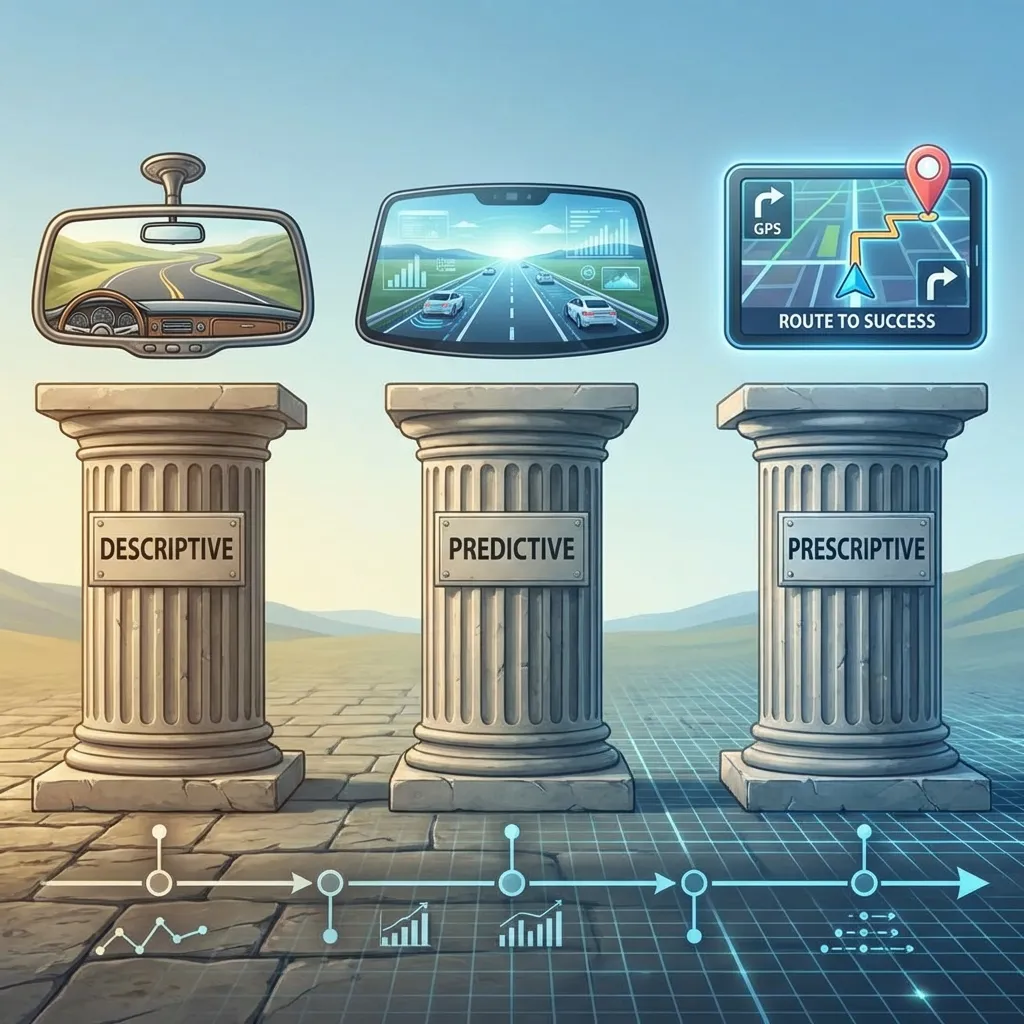
The Three Pillars of Analytics
🔍 Descriptive
What happened?
Summarizes past data to understand performance. Think of it as looking in the rearview mirror.
Example: A weekly sales report.
🔮 Predictive
What will happen?
Uses statistical models and forecasts to understand the future. It's looking at the road ahead.
Example: Forecasting next month's sales.
💡 Prescriptive
What should we do?
Uses optimization and simulation to recommend actions. It's the GPS telling you the best route.
Example: Recommending a marketing strategy.
Analytics Type Classifier
Classify each scenario. Is it Descriptive, Predictive, or Prescriptive analytics?
From Data to Decisions 🎯
Analytics empowers managers to make smarter, evidence-based choices.
- Identify Problems & Opportunities: Analytics can reveal a slow decline in sales in a specific region that might otherwise go unnoticed.
- Understand the 'Why': Drill-down analysis might show the sales dip correlates with a new competitor's marketing campaign.
- Predict Future Trends: Predictive models can forecast the potential revenue loss if no action is taken.
- Recommend Optimal Actions: Prescriptive analytics could suggest the most cost-effective counter-promotion to regain market share.
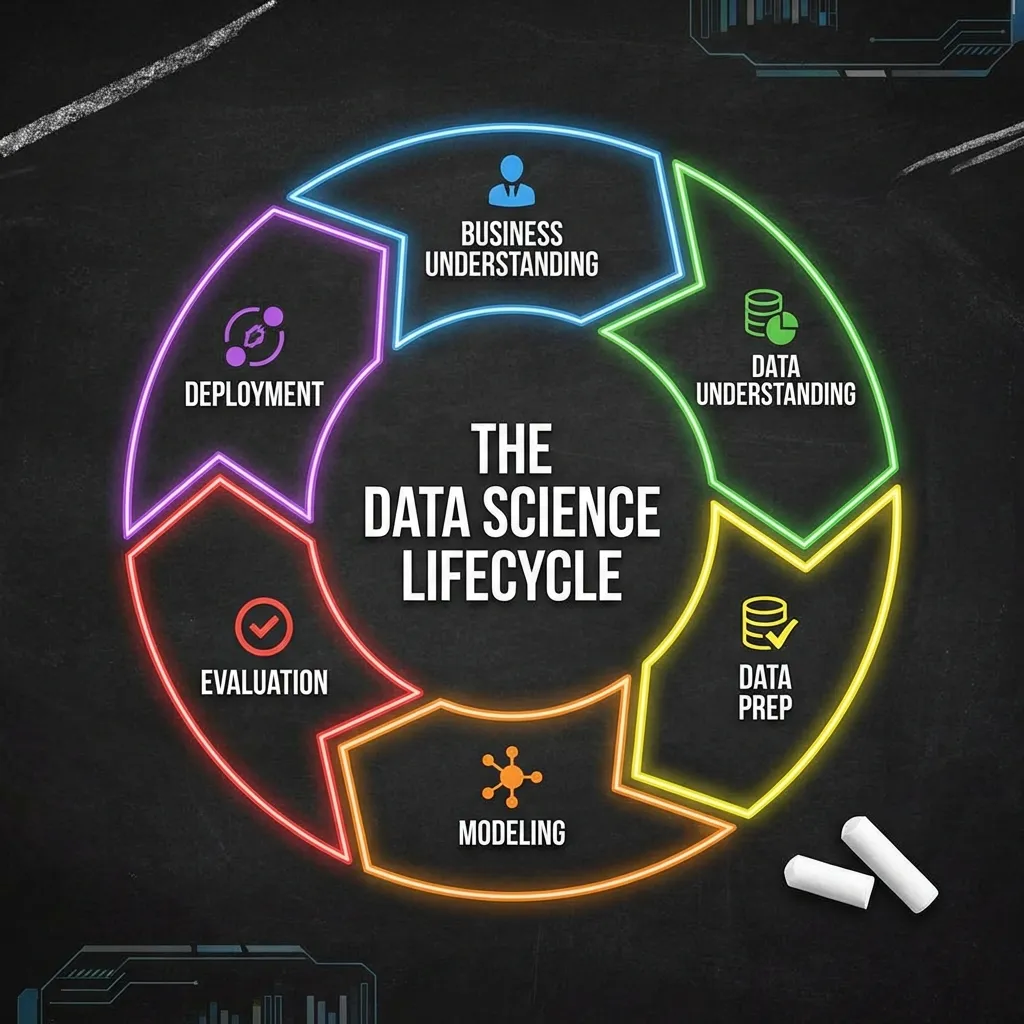
The Business Analytics Process
A structured approach to solving problems with data.
- Problem Framing: Define the business question clearly.
- Data Management: Collect, clean, and prepare data.
- Descriptive Analytics: Explore and visualize the data.
- Predictive Analytics: Build models to forecast outcomes.
- Prescriptive Analytics: Recommend actions.
- Communication: Present findings and tell the data's story.
BA Process: Sequence Challenge
Click the steps in the correct order (1 to 6) to build the BA process.
BA in Action: Real-World Examples
Global Example: Amazon
Uses predictive analytics for its "customers who bought this also bought..." feature and prescriptive analytics to optimize its global supply chain and warehouse inventory.
Context: A Nepali Ride-Sharing App (e.g., Pathao/inDrive)
Descriptive: A dashboard showing peak ride hours and most popular routes in the Kathmandu Valley.
Predictive: Forecasting demand for rides during the upcoming Teej festival to ensure enough drivers are available.
Prescriptive: Automatically implementing "surge pricing" in high-demand areas to incentivize more drivers to come online.
Sector Analytics Explorer
Select a Nepali industry sector to see all three analytics types applied to it.
Presenting Your Findings
Finding the insight is only half the battle. You must communicate it effectively.
Key Tools:
- Dashboards (Power BI, Tableau): Interactive, visual summaries of key performance indicators (KPIs).
- Reports: Static documents for detailed, periodic updates.
- Visualizations: Charts and graphs that make complex data easy to understand.
Data Storytelling
The most crucial skill is weaving your findings into a compelling narrative that explains what the data means and why it matters to the business.
Key Takeaways
- Business Analytics is the process of converting raw data into actionable insights to improve decision-making.
- The three types of analytics—Descriptive, Predictive, and Prescriptive—build upon each other to provide a comprehensive view of the business.
- Following a structured BA process ensures that analysis is relevant, rigorous, and leads to valuable outcomes.
- Effectively communicating analytical findings through storytelling and visualization is critical for driving action.
Thank You
This concludes our introduction to Business Analytics.
Next Topic: Unit 8.2: Managers and Decision Making: The Role of Analytics | IT 233