Unit 7.7
IT Support for Supply Chain Management (SCM) | IT 233 Notes
Today's Learning Objectives
By the end of this session, you will be able to:
- ✅ Explain why IT is the backbone of modern SCM.
- ✅ Describe key inter-organizational systems like EDI and extranets.
- ✅ Differentiate between SCM planning and execution systems.
- ✅ Define the bullwhip effect and explain how IT helps to mitigate it.
The Three Flows of a Supply Chain
🚚 Material Flow
The physical movement of goods from raw materials to the end customer.
💰 Financial Flow
The transfer of payments, credit terms, and ownership between partners.
💻 Information Flow
The exchange of data like orders, invoices, and shipment tracking.
The Information Flow is the most critical. It directs and enables the other two flows.
🔁 Explore: The Three Flows
Click each event card to reveal which supply chain flow it belongs to.
IT: The Backbone of Modern SCM
Modern Supply Chain Management is an information-intensive discipline.
The efficient management of material and financial flows is entirely dependent on the accurate and timely management of the information flow.
Information Technology provides the critical infrastructure and tools to enable this communication and coordination.
Connecting the Chain: Inter-Organizational Systems (IOS)
These systems allow different companies in the supply chain to communicate and collaborate seamlessly.
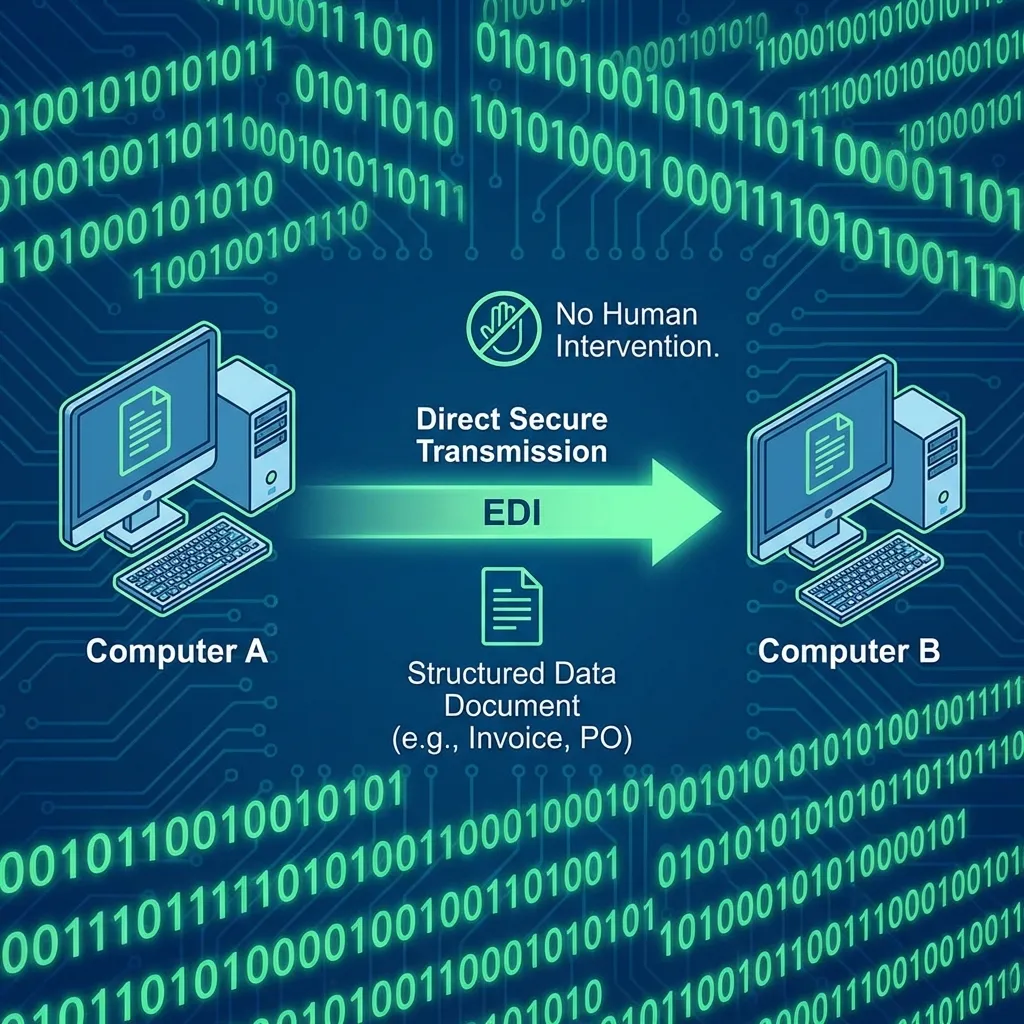
Electronic Data Interchange (EDI)
- A communication standard for B2B document exchange.
- Automates routine documents like Purchase Orders & Invoices.
- Reduces errors, saves time, and lowers costs.
Extranets
- A private network using internet technology.
- Securely shares business information with external partners.
🔌 Explore: EDI vs. Extranet in Action
Read each scenario. Choose the best Inter-Organizational System (IOS) for the job.
⚡ EDI vs. Manual: Simulation
Web-Based Collaboration: Portals & Exchanges
A single, web-based point of access for partners to find information and conduct business.
Procurement Portals (Supplier Side)
- Manage relationships with suppliers.
- Post purchasing requirements.
- Suppliers can submit bids, manage orders, and send invoices.
Distribution Portals (Customer Side)
- Manage relationships with distributors and customers.
- Customers can place orders.

🖥️ Demo: Supplier Portal Walkthrough
Step through a typical supplier's interaction with a Procurement Portal. Click the steps in order.
🇳🇵 SCM in Nepal: A Practical Example
Scenario: A large Nepali dairy company like Dairy Development Corporation (DDC).
- Extranet: DDC provides its major collection centers in rural areas with an extranet to log daily milk quantities and view quality reports.
- EDI: Purchase orders for packaging materials (like tetra paks) are sent automatically via EDI to the supplier, streamlining procurement.
- Distribution Portal: Large distributors in Kathmandu, Pokhara, and Chitwan use a portal to place new orders for milk, yogurt, and cheese, and track their delivery status.
🎬 Animation: DDC Dairy Supply Chain
Click Next Step to animate how information and goods flow through DDC's supply chain.
🎯 Planning vs. Execution Systems
Dedicated Supply Chain Management Systems (SCMS) fall into two main categories.
Supply Chain Planning
- Uses advanced models to plan the supply chain.
- 📊 Key Function: Demand Forecasting (predicting customer demand).
- Helps optimize production and distribution networks.
Supply Chain Execution
- Focuses on day-to-day logistics.
- 📦 Key Functions: Warehouse Mgt. (WMS) & Transportation Mgt. (TMS).
📊 Explore: Planning vs. Execution Metrics
Click each metric card to reveal whether it belongs to Supply Chain Planning or Supply Chain Execution.
⚡ The Bullwhip Effect
Fluctuations in retail demand amplify as they move up the supply chain.
Customer Demand 📉
↓
Retailer Orders 📈
↓
Wholesaler Orders 📈📈
↓
Manufacturer Orders 📈📈📈
Cause: Information silo and lack of visibility.
📊 Simulator: The Bullwhip Effect in Action
🔍 Taming the Bullwhip with IT
IT provides the visibility needed to counteract the bullwhip effect.
- Real-Time Data Sharing: Using EDI and extranets, a retailer's actual sales data (Point-of-Sale data) can be shared instantly with the wholesaler and manufacturer.
- Increased Visibility: Everyone in the chain sees the true end-customer demand, not just the orders from their immediate partner.
- Collaborative Forecasting: Partners can work together to forecast demand, leading to more accurate production and less excess inventory.
- Improved Coordination: With shared information, production and logistics can be synchronized, creating a more stable and efficient supply chain.
🛠️ Deep Dive: Bullwhip Solutions
Click each bullwhip cause to reveal the IT solution that tames it.
Summary & Key Takeaways
- The information flow is the most critical component of a modern supply chain, and IT is its backbone.
- Inter-organizational systems like EDI and extranets are essential for seamless communication between supply chain partners.
- SCM systems are divided into Planning (for strategic decision-making) and Execution (for managing daily logistics).
- IT is the primary tool for mitigating the bullwhip effect by increasing visibility and enabling real-time data sharing.
Thank You!
Any Questions?
Next Session: Chapter 8 - Business Analytics