Unit 7.5
The Structure of a Supply Chain
Today's Learning Objectives 🎯
By the end of this session, you will be able to:
- ✅ Define what a supply chain is and its importance.
- ✅ Describe the three main components of a supply chain's structure: upstream, internal, and downstream.
- ✅ Identify and explain the three critical flows that must be managed: material, information, and financial.
What is a Supply Chain?
A supply chain is the network of all organizations, resources, activities, and technologies involved in creating and delivering a product, from the initial sourcing of raw materials to the final delivery to the end customer.
It's not a single entity, but a complex web of relationships.
Every product you use—from your phone to your coffee—is the result of a coordinated supply chain effort.
The Three Components of a Supply Chain
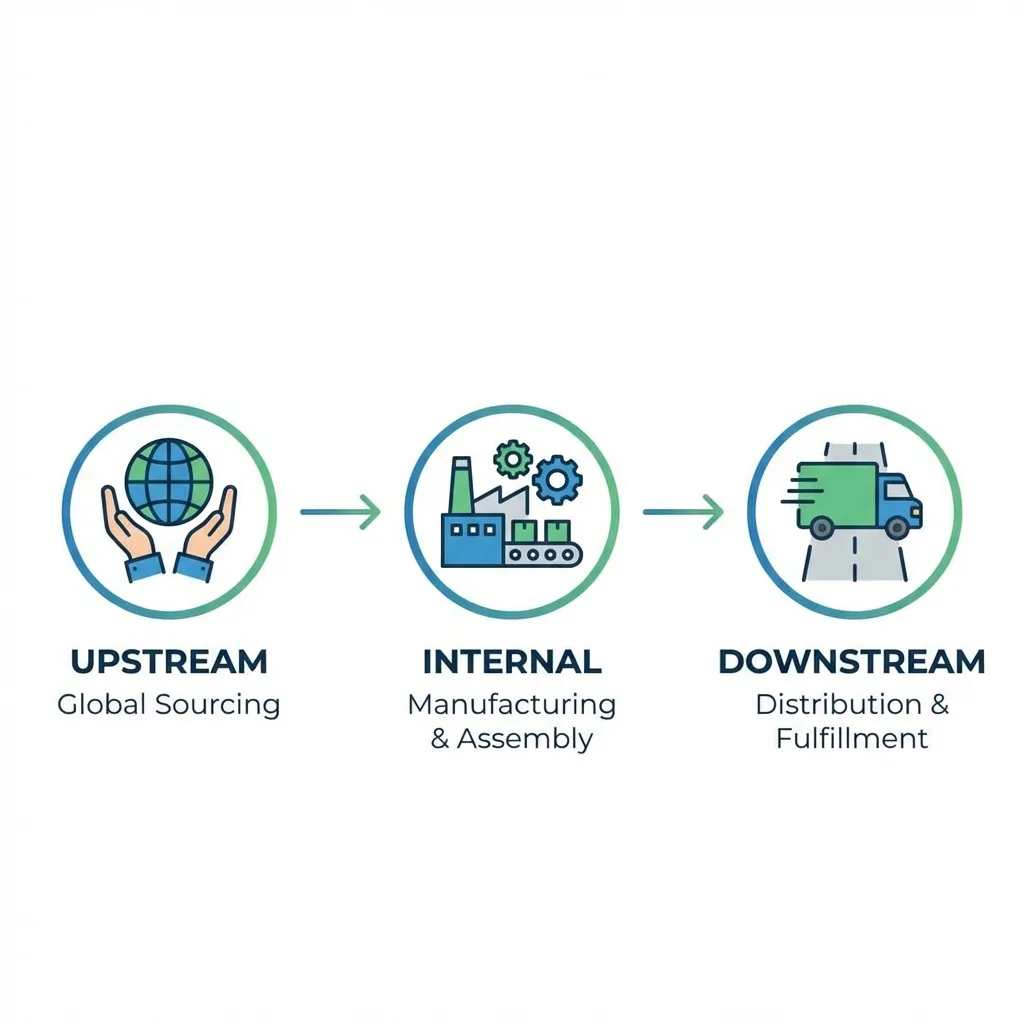
We can break down any supply chain into three core, interconnected components.
Upstream
Sourcing & Procurement
Internal
Manufacturing & Production
Downstream
Distribution & Delivery
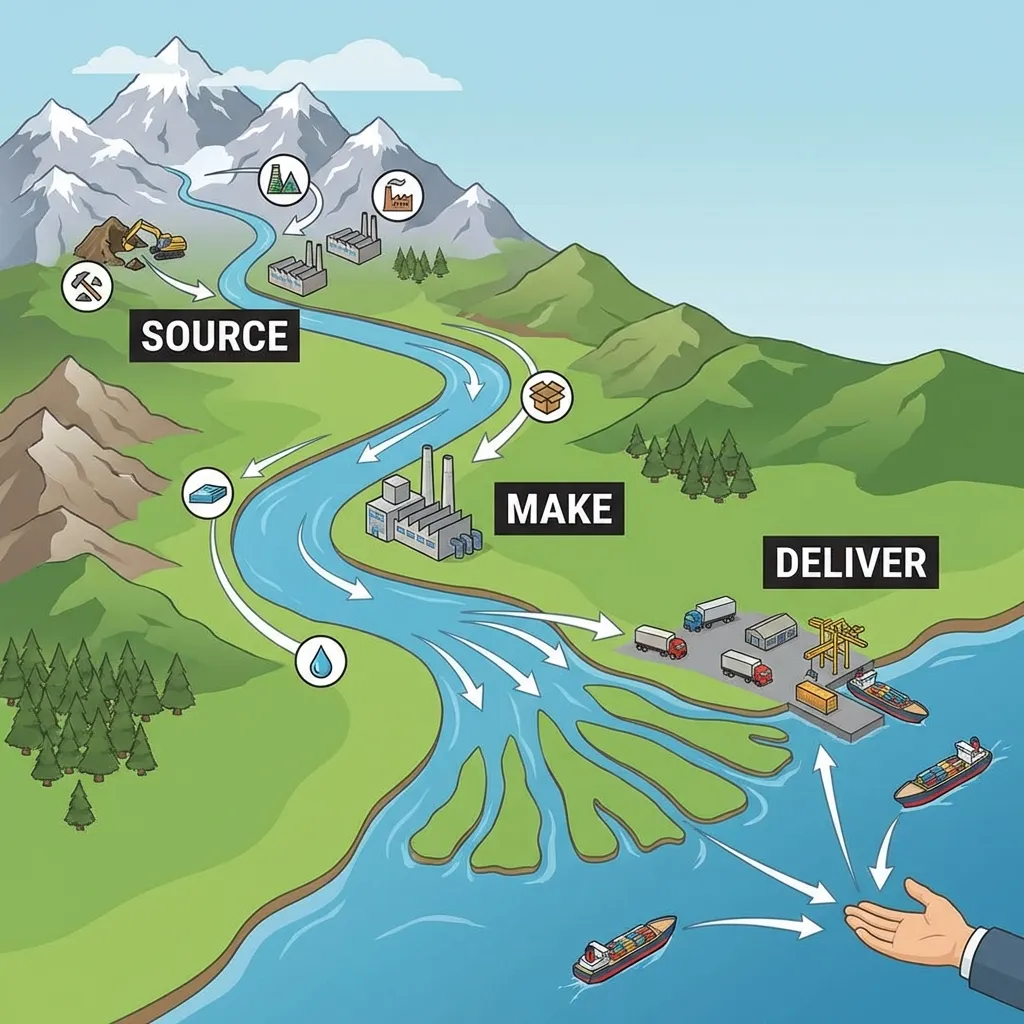
Think of it as: Get -> Make -> Deliver
Activity: Sort the Supply Chain
Click a card to select it, then click the correct component bucket to place it.
Sourcing & Procurement
Manufacturing & Production
Distribution & Delivery
1. Upstream Supply Chain 🏭
This is where everything begins. It's all about sourcing the inputs.
- Includes your company's direct suppliers (Tier 1) and their suppliers (Tier 2, etc.).
- Key Activities: Supplier selection, contract negotiation, and managing supplier relationships.
- Goal: Secure a reliable flow of high-quality raw materials and components.
Example: A Furniture Maker
The upstream includes:
- Lumber companies that harvest wood.
- Factories that produce screws and fabrics.
- Suppliers of varnish and paint.
2. Internal Supply Chain ⚙️
This component covers all the processes happening within your organization to create the final product.
- Focuses on the **transformation** of inputs from upstream suppliers into finished goods.
- Key Activities: Production scheduling, manufacturing/assembly, quality control, and internal inventory management.
- Goal: Efficiently and effectively produce the final product to meet quality standards and demand.
Example: The Furniture Maker
This is the workshop where wood is cut, assembled, sanded, and finished into a table or chair.
3. Downstream Supply Chain 🚚
This is the final leg of the journey: getting the finished product into the customer's hands.
- Includes all activities involved in distributing and delivering the product.
- Key Activities: Warehousing, transportation (logistics), order fulfillment, and managing distribution channels (e.g., retailers).
- Goal: Deliver the right product, to the right place, at the right time, in perfect condition.
Example: The Furniture Maker
This includes the trucks that transport the furniture, the retail showrooms, and the delivery team that brings it to the customer's home.
Explorer: Downstream Distribution Channels
Click a channel card to learn about its characteristics, advantages, and challenges.
Direct-to-Consumer
Brand sells directly to end customer (online store, own outlets)
Retail Stores
Products sold via third-party brick-and-mortar retailers
E-Commerce Marketplace
Sold through platforms like Amazon, Daraz, or Alibaba
🔍 Local Example: Nepali Pashmina Shawl
Upstream
Chyangra goat herders in the Himalayas harvest the raw cashmere wool.
Traders collect and clean the wool for processing.
Internal
Artisans in Kathmandu spin the yarn by hand.
Weavers create the shawls on looms, followed by dyeing and finishing.
Downstream
Exporters ship shawls to international boutiques and online customers.
Quiz: Pashmina Supply Chain Journey
For each activity below, identify the correct supply chain stage. Select an answer and click Check.
The Three Critical Flows ⚡
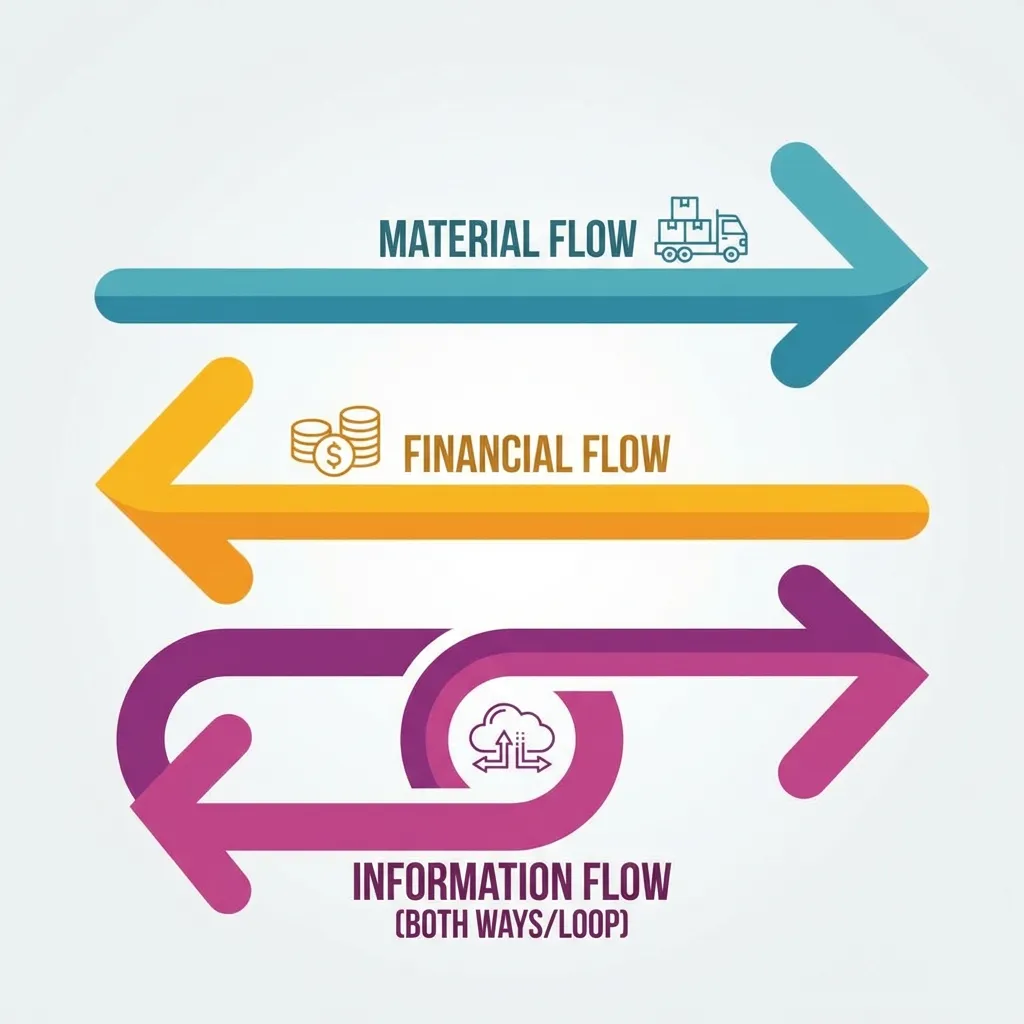
For a supply chain to function, three distinct flows must be managed simultaneously. A failure in one disrupts the entire system.
Material Flow ➡️
The physical movement of goods, including returns (reverse logistics).
Information Flow 🔄
The flow of data: orders, inventory levels, shipping notices. The "brain" of the supply chain.
Financial Flow 💰
The flow of money: payments, credit terms, and invoices from customer back to supplier.
Match: Scenario to Supply Chain Flow
Click a scenario card to select it, then click the correct flow type to match it. Score is shown when all 6 are placed.
Why Information Flow is Key 📊
In modern business information systems, the information flow is considered the most critical.
The accuracy and timeliness of information enables the efficient management of the other two flows.
- Triggers Material Flow: A customer order (information) triggers the shipment of a product (material).
- Triggers Financial Flow: A shipping notice (information) triggers the creation of an invoice (financial).
- Improves Efficiency: Real-time inventory data (information) prevents stockouts and reduces costly overstocking.
Simulator: Information Flow Accuracy Impact
Use the slider to change information accuracy and observe how it affects key supply chain performance metrics.
Chapter Summary & Key Takeaways
- A supply chain is a complex network of partners involved in creating and delivering a product.
- Its structure is broken into three parts: Upstream (sourcing), Internal (making), and Downstream (delivering).
- Effective supply chain management requires balancing the three critical flows: Material, Information, and Financial.
- The Information Flow is the digital backbone that coordinates and optimizes the entire supply chain.
Thank You
Discussion & Questions
Next Up: Chapter 6 - Supply Chain Management Technologies