Unit 7.2
Defining Customer Relationship Management (CRM)
Learning Objectives
By the end of this chapter, you will be able to:
- ✅ Define CRM as both a strategy and a system.
- ✅ Identify the primary goals of CRM: acquire, retain, and increase profitability.
- ✅ Explain the importance of the "360-degree customer view."
- ✅ Describe the phases of the customer lifecycle that CRM supports.
What is CRM? The Core Idea
Customer Relationship Management (CRM): A business strategy and supporting information systems designed to manage and nurture interactions with current and potential customers.
⚡ It's a Philosophy, Not Just Software! The software is a tool that enables a customer-centric strategy.

The Two Sides of CRM
1. The Strategy 🧠
- A customer-first business philosophy.
- Focuses on building long-term, profitable relationships.
- Guides how every department interacts with customers.
2. The System 💻
- The technology that enables the strategy.
- Software for collecting, storing, and analyzing customer data.
- Examples: Salesforce, HubSpot, Zoho CRM.
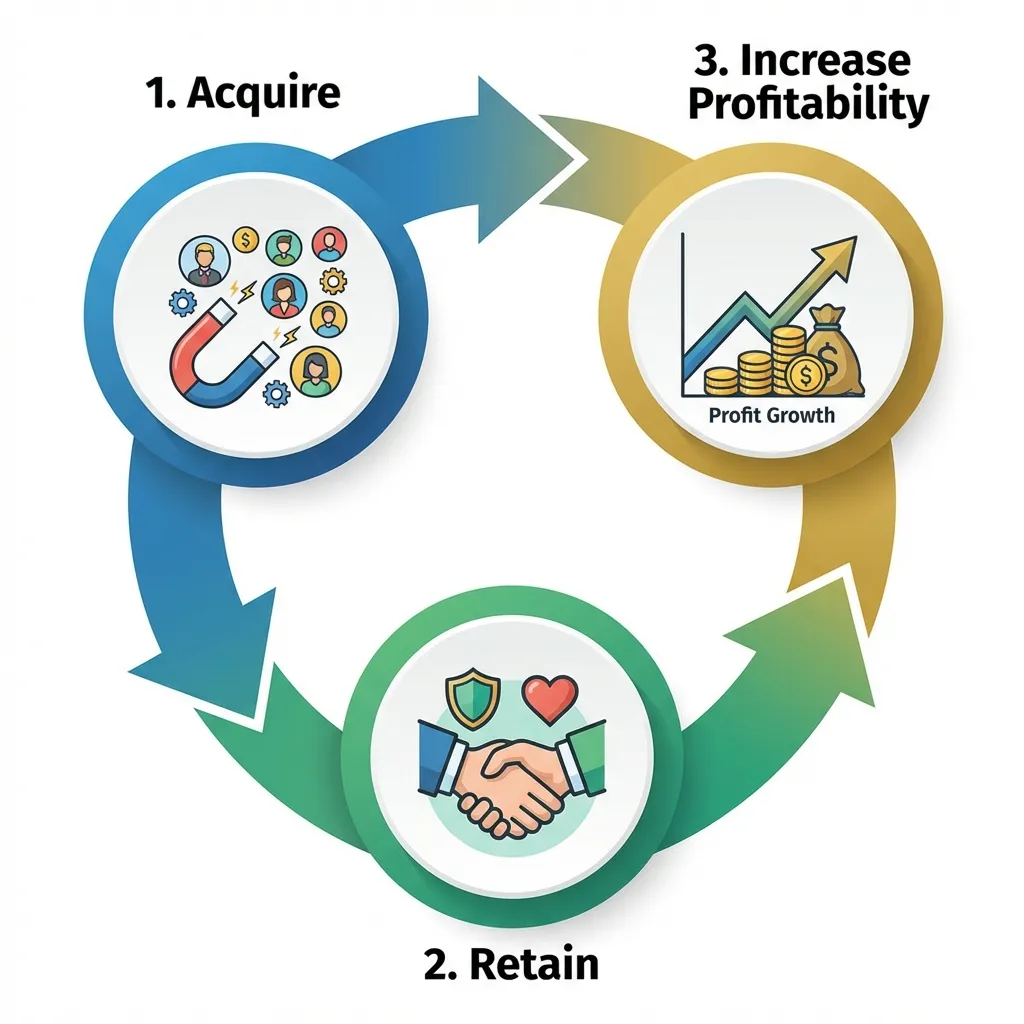
🎯 The Primary Goals of CRM
1. Acquire
Manage leads and track the sales pipeline to convert potential customers more effectively.
2. Retain
Improve customer satisfaction and loyalty through better service and personalized interactions.
3. Increase Profitability
Identify high-value customers and focus efforts to maximize their Customer Lifetime Value (CLV).
Interactive: CRM Goal Classifier
Click each scenario card to reveal which CRM goal it represents.
Why Retention Matters 📊
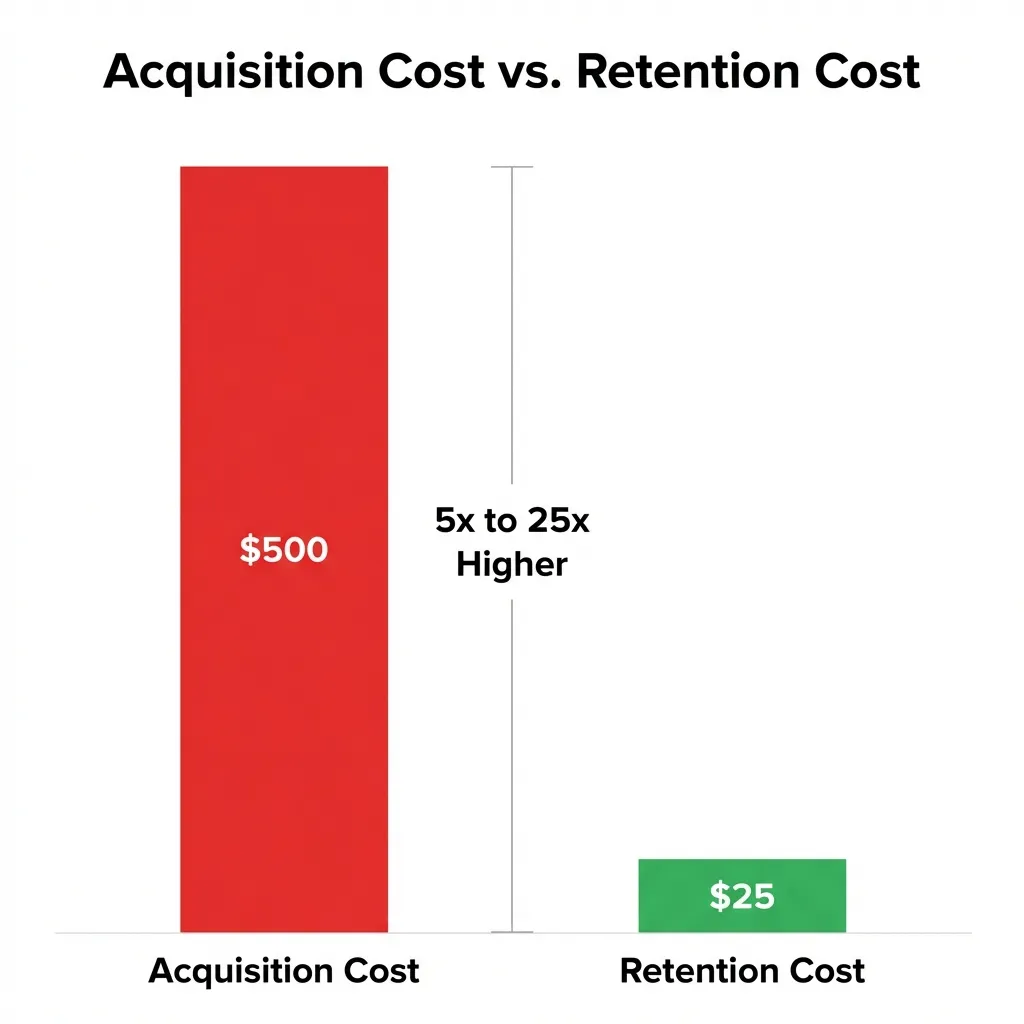
Acquiring a new customer is almost always more expensive than keeping an existing one.
Fact: It can be 5 to 25 times more expensive to acquire a new customer than to retain an existing one.
Customer Lifetime Value (CLV): CRM helps analyze data to predict the total profit a customer will generate for your business over their entire relationship.
Interactive: CLV Calculator
CLV = Average Purchase Value × Purchase Frequency (per year) × Customer Lifespan (years)
Supporting the Customer Lifecycle
CRM systems are designed to manage interactions across every phase of the customer journey.
Marketing
Engaging prospects & generating leads.
Sales
Converting leads into paying customers.
Service
Providing support & ensuring satisfaction.
Interactive: Lifecycle Phase Activity Matcher
Select an activity chip, then click the correct phase header to place it. Green = correct, red = wrong phase.
The Problem: Information Silos
Before CRM, customer data was scattered across different departments, creating a fragmented view.
Marketing Team
Campaign data
Sales Team
Purchase history
Service Team
Support tickets
Result: No one had a complete picture of the customer's journey.
The Solution: 🔍 The 360° Customer View
A CRM system breaks down silos by creating a single, central database.
360-Degree View: A complete, unified profile of a customer's entire history and interactions with the company, accessible to everyone.
- Sales knows about recent support issues.
- Marketing knows about purchase history for better targeting.
- Service knows about the customer's value and past interactions.
Interactive: Build the 360° Customer View
Click each department tile to reveal what data it contributes to the unified 360° customer profile.
Practical Application: CRM in Nepal
Scenario: A Nepali Bank (e.g., Nabil Bank)
- Acquire: Tracks online loan applications and assigns a relationship manager to follow up with promising leads.
- Retain: A teller sees a "high-value customer" alert in the CRM and can offer them priority service or personalized advice.
- 360° View: A loan officer can see the customer's savings account balance, past support calls about the mobile app, and their investment portfolio, all in one screen, before a meeting.
Key Takeaways
- Philosophy First: CRM is a customer-centric business strategy, enabled by technology.
- The 3 Goals: The core objectives are to acquire, retain, and increase the profitability of customers.
- Unified View: The "360-degree view" is CRM's most powerful benefit, breaking down information silos.
- Full Lifecycle Support: CRM manages the entire customer journey from marketing to sales to service.
Interactive: CRM Knowledge Check
Answer all 4 questions, then check your score.
1. CRM stands for Customer Relationship Management. Which best describes it?
2. According to research, acquiring a new customer is approximately how much more expensive than retaining one?
3. The "360-degree customer view" in CRM primarily solves which problem?
4. Which of the following is NOT one of the three primary CRM goals?
Thank You
Any questions?
Next Up: Unit 7.3 - Types of CRM Systems