Unit 4.4
Mobile Computing and M-Commerce
Learning Objectives
By the end of this chapter, you will be able to:
- ✅ Define mobile computing and its key characteristics.
- ✅ Explain the concept of context-awareness and localization.
- ✅ Define Mobile Commerce (M-Commerce) and identify its main drivers.
- ✅ Describe the major applications of M-Commerce.
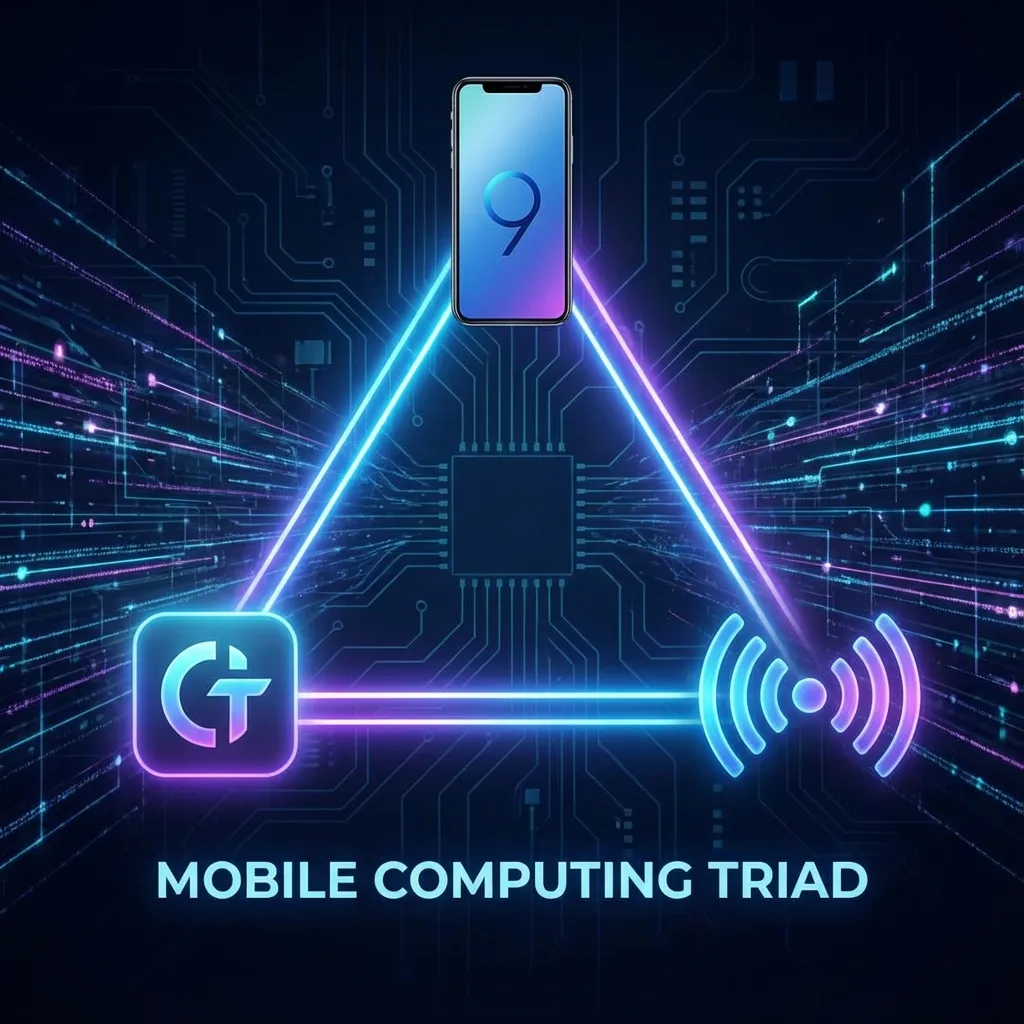
What is Mobile Computing? ⚡
Mobile Computing: A technology that allows for the transmission of data, voice, and video via a wireless-enabled device without a fixed physical link.
It's a paradigm shift from desktop computing to on-the-go capabilities.
📱 Mobile Devices
Smartphones, Tablets
⚙️ Mobile Software
iOS, Android, Apps
📡 Wireless Networks
Wi-Fi, 4G, 5G
Quick Check: Mobile Computing Components
Read each description and click the correct component it refers to.
"The operating system and apps that manage your phone — iOS or Android."
"The 5G tower that transmits data to your device wirelessly over the air."
"A smartphone or tablet — the physical hardware you carry and hold."
Key Characteristics of Mobile Computing
📍 Mobility
Access information and compute anywhere, anytime, while on the move.
🌐 Broad Reach
Users are almost always connected and reachable, regardless of their location.
🌍 Ubiquity
The idea that computing power is pervasively available everywhere, all the time.
🔍 Context-Awareness
Apps can use device sensors (GPS, etc.) to understand and adapt to the user's environment.
Characteristics: Scenario Challenge
Click each card to flip it and reveal which mobile computing characteristic the scenario describes.
You check your email while commuting on the bus to university.
Access info anywhere while physically moving.
Your manager sends you an urgent task notification no matter where you are in the city.
Users are always reachable regardless of location.
Your smartwatch, car dashboard, and fridge are all networked and always online.
Computing is pervasively available everywhere, in every device.
Your music app automatically starts a workout playlist the moment you arrive at the gym.
Apps use sensors to detect and adapt to the user's environment.
Tap any card to flip it
Deep Dive: Context-Awareness & Localization
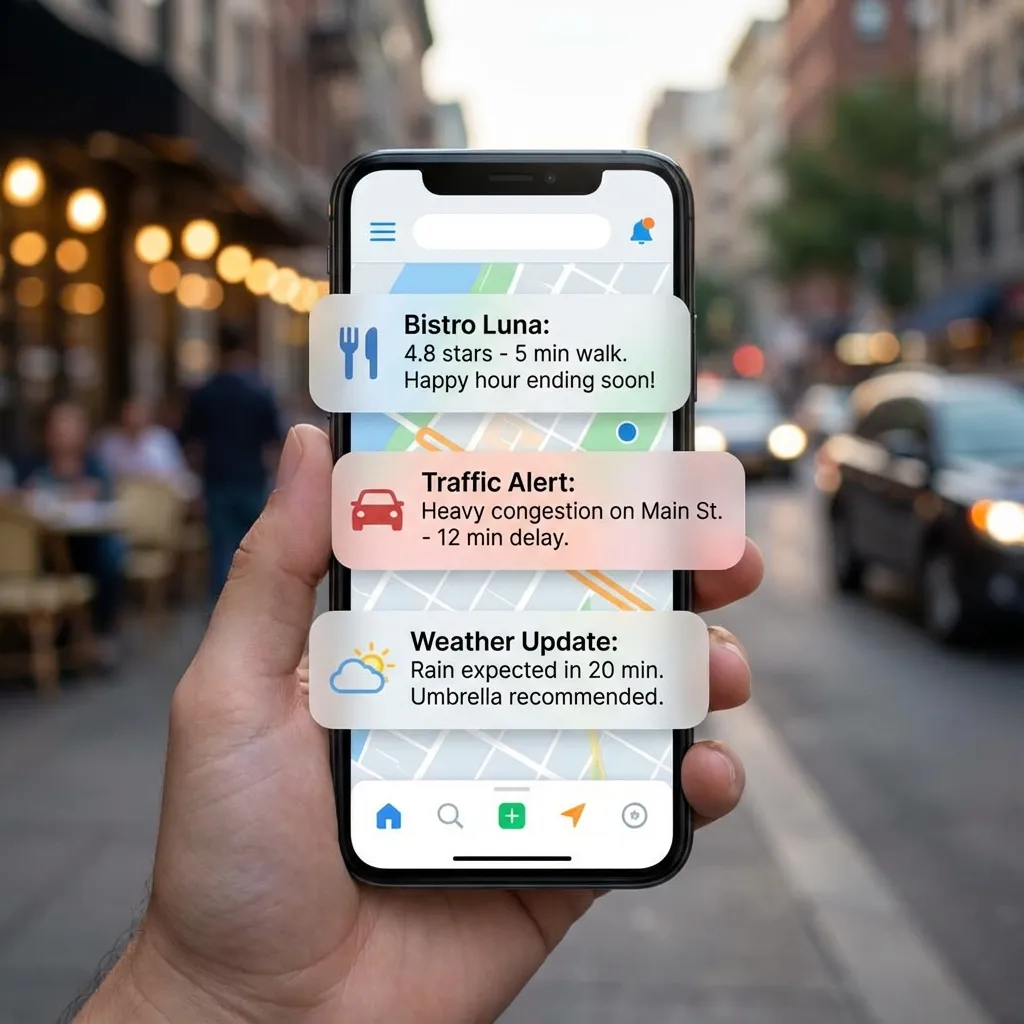
Context-Awareness: The ability of an application to be aware of the user's environment and situation.
Example: Localization 🗺️
This is the most common form of context-awareness.
- Your phone uses GPS to identify your location.
- A food delivery app then shows you restaurants that deliver to your specific area.
- A maps app provides real-time traffic updates based on your current route.
Simulator: Context-Awareness in Action
Select a location to see how a context-aware phone adapts its behaviour.
How Context-Awareness Works
Apps use GPS and on-device sensors to detect your environment and automatically adjust their behaviour — without you doing anything.
Tap a location on the left to run the simulation.
Introducing M-Commerce 🛍️
Mobile Commerce (M-Commerce): The buying and selling of goods and services through wireless handheld devices like smartphones and tablets.
It's a powerful subset of e-commerce, driven by the smartphone in your pocket.
Why is M-Commerce Exploding? 📊
Key Drivers of Growth
- High Smartphone Penetration: Nearly everyone has a powerful computer in their pocket.
- User-Friendly Apps: Smooth, intuitive mobile shopping experiences.
- Convenient Mobile Payments: Secure, one-tap payment systems (digital wallets, contactless pay).
- Personalization: Using location and data to offer tailored recommendations and ads.
Applications of M-Commerce (Part 1)
🏦 Mobile Banking
Manage your finances on the go:
- Check balances
- Transfer funds
- Pay bills
- Deposit checks
💳 Mobile Payments
Use your device as a wallet:
- Contactless Payments: Apple Pay, Google Pay
- Digital Wallets: PayPal, Venmo
- QR Code Payments: Scan to pay in stores
Applications of M-Commerce (Part 2)
🛒 Mobile Shopping
Purchasing physical goods directly from a mobile app or website.
- Ordering groceries
- Buying clothes & electronics
- Booking travel
🎮 In-App Purchases
Buying digital goods or features from within an app.
- Game power-ups
- Unlocking premium features
- Subscribing to services
Practical Application: M-Commerce in Nepal 🇳🇵
M-Commerce is transforming how business is done in Nepal.
Digital Wallets
Companies like eSewa and Khalti dominate the mobile payment landscape, enabling everything from utility bill payments to movie ticket purchases.
Ride-Sharing
Location-based services like Pathao and inDrive use mobile computing to connect riders with drivers, revolutionizing urban transport.
E-Commerce Apps
Retailers like Daraz have a "mobile-first" strategy, with their apps providing a primary channel for millions of users to shop online.
Chapter Summary & Key Takeaways 🎯
Mobile Computing is defined by its key characteristics: mobility, broad reach, ubiquity, and context-awareness.
M-Commerce is the buying and selling of goods and services via mobile devices, a rapidly growing subset of e-commerce.
Location-Based Services are a crucial application of mobile computing and a major driver of M-Commerce innovation.
Major M-Commerce applications include mobile banking, mobile payments, online shopping, and in-app purchases.
Discussion Questions 💬
- Besides ride-sharing and finding restaurants, what is another example of a useful location-based service you use?
- What are the key security concerns you have with mobile payments? How can they be mitigated?
- How has the rise of M-Commerce (e.g., food delivery apps, online shopping) changed your own habits?
Thank You
Any questions?
Next Topic: Unit 4.5: The Internet of Things (IoT) Explained | IT 233