Unit 2.7
Competitive Advantage and Strategic Information Systems

Learning Objectives
By the end of this chapter, you will be able to:
- ✅ Define competitive advantage and Strategic Information Systems (SIS).
- ✅ Describe Porter's Five Forces Model and how IS can counteract each force.
- ✅ Explain Porter's three generic strategies for competitive advantage.
- ✅ Provide examples of how IT supports each of these strategies.
What is Strategic Advantage?
Competitive Advantage: An attribute that allows an organization to outperform its competitors (e.g., higher profits, greater market share).
Strategic Information System (SIS): An IS specifically designed and implemented to help an organization achieve a competitive advantage.
The goal is not just to use technology, but to use it strategically to win.
Analyzing the Battlefield 📊
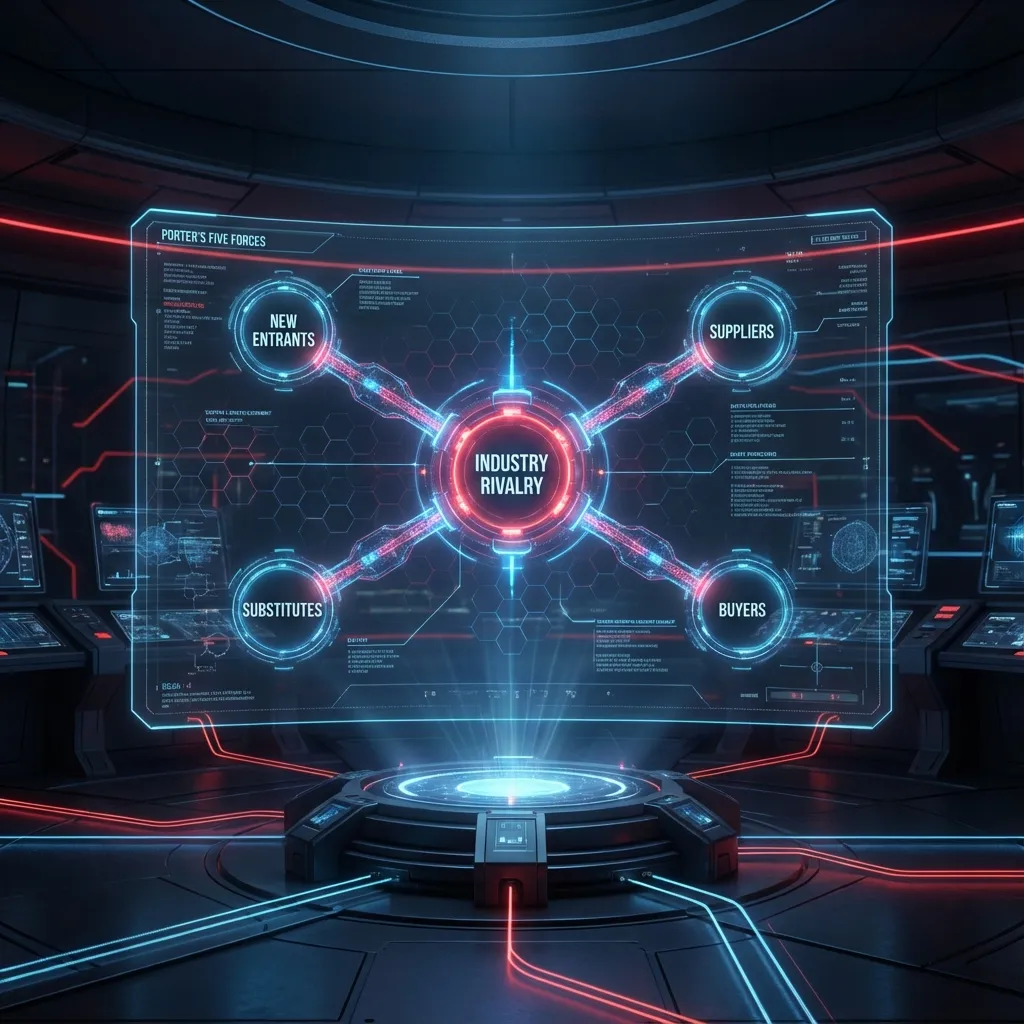
Porter's Five Forces Model
This model helps us understand the competitive intensity and attractiveness of an industry.
- Threat of New Entrants
- Bargaining Power of Buyers
- Bargaining Power of Suppliers
- Threat of Substitute Products
- Rivalry Among Existing Competitors
Five Forces Explorer
Click each force to reveal how Information Systems counter it.
Using IS to Counter the Forces (1/2)
1. Threat of New Entrants
How easy it is for new competitors to enter the market.
IS Response: Create high barriers to entry.
Example: A complex, proprietary airline reservation system is expensive for a new airline to replicate.
2. Bargaining Power of Buyers
How much power customers have to drive down prices.
IS Response: Increase switching costs.
Example: A CRM-powered loyalty program that "locks in" customers with personalized rewards.
Using IS to Counter the Forces (2/2)
3. Bargaining Power of Suppliers
How much power suppliers have to increase input costs.
IS Response: Widen the supplier base.
Example: Use a Supply Chain Management (SCM) system or web-based bidding platform to find more suppliers and force price competition.
4. Threat of Substitutes
The likelihood of customers finding a different way to do what you do.
IS Response: Add value and features.
Example: A traditional bank offers a superior mobile banking app to compete with new fintech services.
The Final Force: Industry Rivalry
5. Rivalry Among Existing Competitors
The intensity of competition among companies already in the industry.
IS Response: Use IT to gain an edge in any way possible.
- Differentiate your product with unique features.
- Lower your operational costs through automation.
- Create a unique, data-driven marketing campaign.
IS Counter-Strategy Quiz
Read each scenario. Which of Porter's Five Forces is being countered?
Scenario A: A supermarket chain deploys a points-based app so customers accumulate personalised discounts over time, making it painful to switch to a rival store.
Scenario B: A manufacturer builds an online bidding portal so dozens of raw-material vendors compete openly on price for every order.
Scenario C: A regional airline invests in a proprietary seat-pricing and booking engine that would cost a startup hundreds of millions to build.
From Analysis to Action 🎯
Porter's Generic Strategies
Once you've analyzed the industry, how do you compete? Porter suggests three primary strategies.
Cost Leadership
Be the lowest-cost producer.
Differentiation
Be unique and valued.
Focus
Serve a narrow market segment better than anyone.
Generic Strategy Classifier
Click a company scenario to select it, then click the correct strategy bucket to place it.
Strategy 1: Cost Leadership
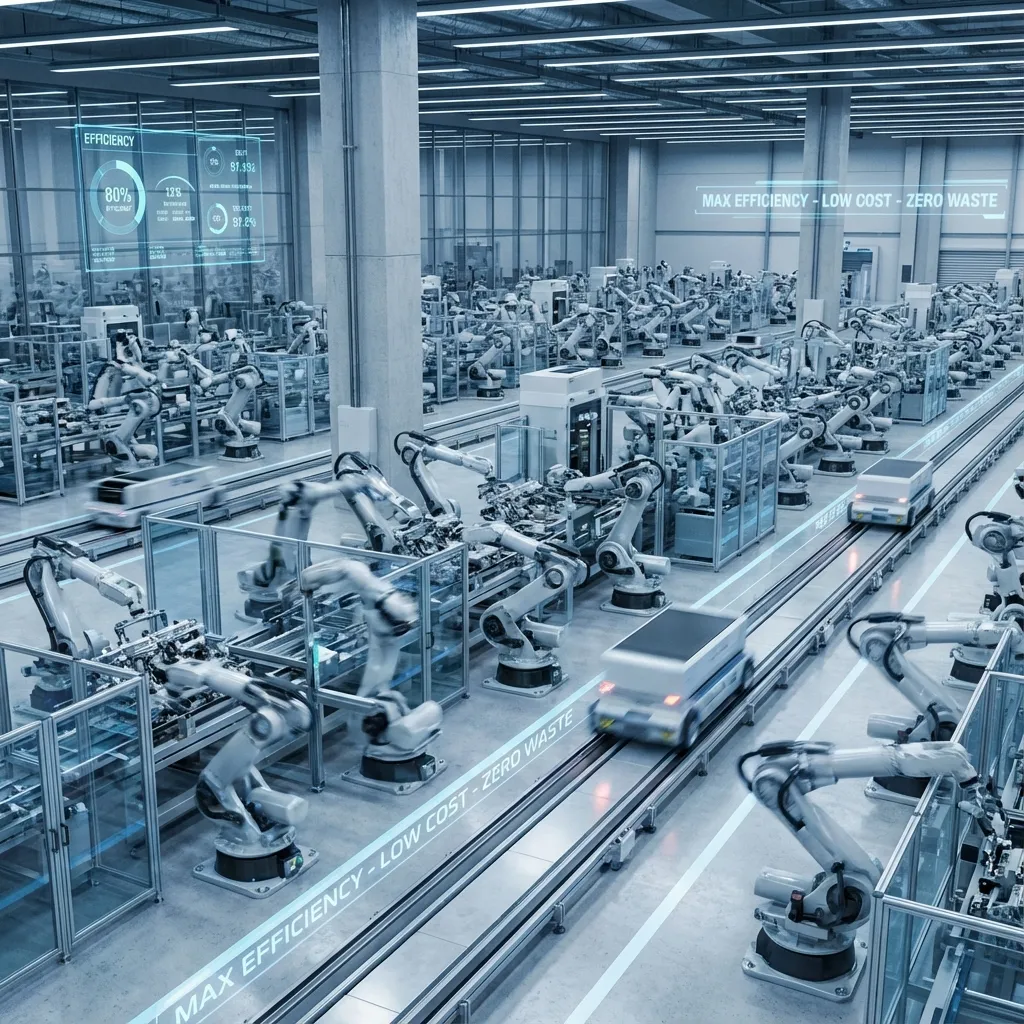
Goal: To become the lowest-cost producer in the industry.
How IT Helps:
- Automation: Using robots or software to reduce labor costs in manufacturing or services.
- Supply Chain Optimization: SCM systems reduce inventory holding and shipping costs.
- Efficiency: ERP systems streamline internal operations, reducing waste and administrative overhead.
Automation ROI Calculator
Adjust the sliders to model how IT-driven automation affects your company's cost structure.

Strategy 2: Differentiation
Goal: To offer a product or service that is perceived as unique and highly valuable.
How IT Helps:
- Personalization: Using CRM and data analytics to tailor experiences (e.g., Netflix's recommendation engine).
- Quality: Using CAD/CAM systems to improve product design and manufacturing precision.
- Brand Image: Leveraging digital marketing and social media to build a strong, unique brand identity.

Strategy 3: Focus (Niche Strategy)
Goal: To serve a specific, narrow market segment better than anyone else.
This can be a Cost Focus or a Differentiation Focus.
How IT Helps:
- Targeted Marketing: Using data analytics to identify and understand the specific needs of a niche audience.
- Specialized Services: Creating platforms that cater directly to the target segment (e.g., a website for collectors of rare stamps).
Application in Nepal 🇳🇵
🔍 Case Study: eSewa
Which of Porter's strategies does eSewa primarily use?
- Strategy: Primarily Differentiation and Focus.
- Differentiation: It created a unique, convenient digital wallet service when cash was king. Its value is in its ease of use and wide merchant acceptance.
- Focus: It initially focused on the niche market of tech-savvy users for utility payments and mobile top-ups before expanding.
- How IT enables this: The entire service IS the IT. Their mobile app, secure transaction servers, and integrations with banks and merchants are the core of their competitive advantage.
Key Takeaways ⚡
- A Strategic Information System (SIS) is specifically designed to create a competitive advantage.
- Porter's Five Forces model is a framework for analyzing the competitive landscape of an industry.
- Information Systems can be used to counter the five forces by creating barriers to entry, increasing switching costs, and more.
- IT is a critical enabler for Porter's generic strategies: Cost Leadership, Differentiation, and Focus.
Chapter Review Quiz
Test your understanding of Chapter 2.7. Select your answer for each question.
1. What is a Strategic Information System (SIS)?
2. According to Porter, which strategy aims to be the lowest-cost producer in an industry?
3. A CRM loyalty program that makes it expensive for customers to switch to a competitor primarily counters which force?
4. eSewa's strategy of initially serving only tech-savvy users for utility payments is best described as which Porter strategy?
Thank You
Any questions?