Unit 2.3
Improving Processes: BPI vs. BPR
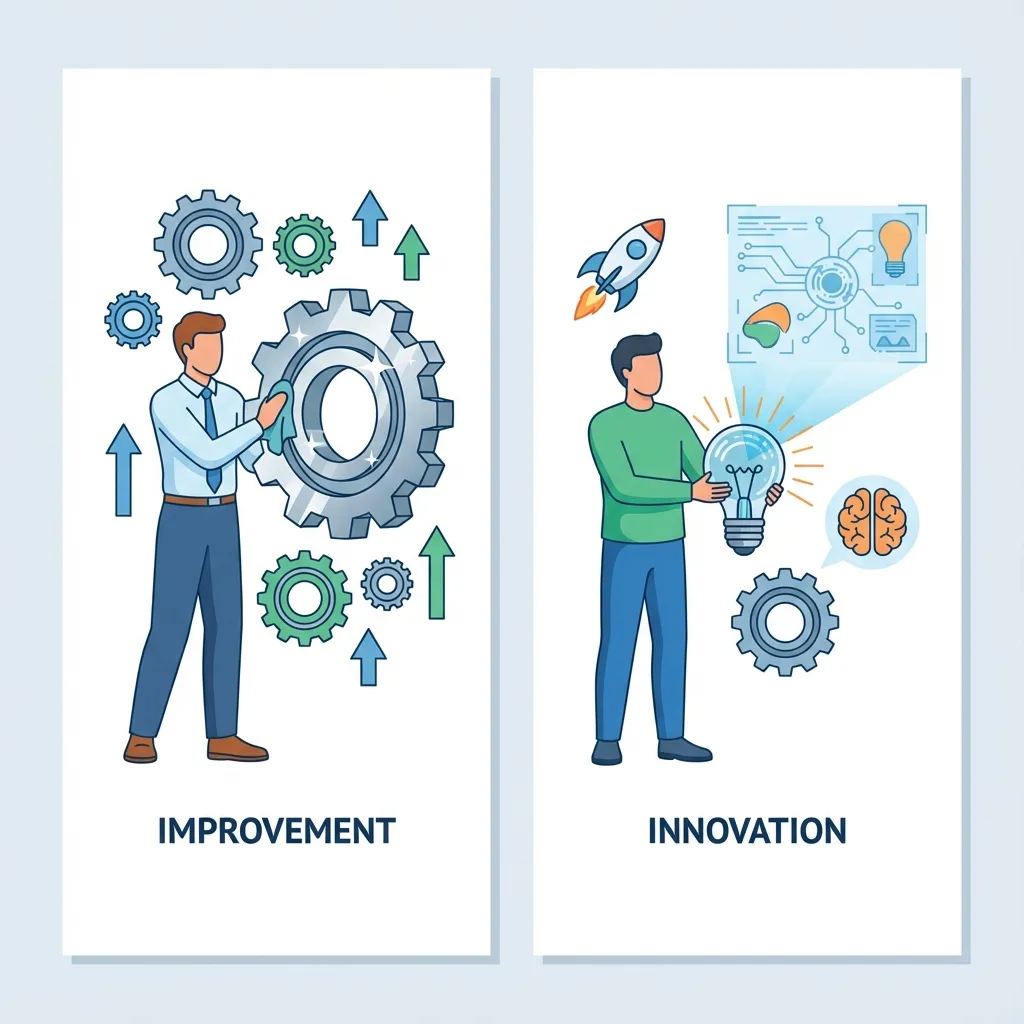
The Need for Change
Organizations must constantly evolve their business processes to remain competitive.
There are two primary approaches to process change:
1. Improvement (BPI)
"Doing things better"
2. Reengineering (BPR)
"Doing things differently"
Quick Check: BPI or BPR?
Click a scenario card, then choose BPI or BPR.
A bank reduces form-filling time by pre-populating known customer data.
A manufacturer scraps its entire assembly line and installs fully automated robots.
A hospital trains nurses to enter patient records faster into the existing system.
An airline replaces all ticketing agents with a fully digital self-service kiosk system.
A restaurant reduces food waste by tweaking portion sizes based on sales data.
A government office eliminates physical files entirely and rebuilds on a cloud platform.

Business Process Improvement (BPI)
BPI focuses on identifying and eliminating the root causes of defects and inefficiencies in existing processes.
- ✅ Focus: Incremental change (step-by-step).
- ✅ Goal: Reduce variation, eliminate waste.
- ✅ Risk: Low risk, low cost.
- ✅ Example: Six Sigma, TQM (Total Quality Management).
BPI in Action: Find the Bottlenecks
A loan application process. Click on the steps that are bottlenecks (taking too long or adding no value). Then submit.
Customer Submits Form5 min⚠
Clerk Re-types Data45 min⚠
Supervisor Signature3 days⚠
Credit Check10 min⚠
Physical File Archive2 days⚠
Approval Issued15 min⚠
Green = efficient step | Red = bottleneck / waste

Business Process Reengineering (BPR)
BPR is a radical redesign of business processes to achieve dramatic improvements in critical measures of performance.
- 🚀 Focus: Radical redesign (Clean Slate).
- 🚀 Goal: 10x improvement in cost, quality, speed.
- 🚀 Risk: High risk, high cost, high failure rate.
- 🚀 Motto: "If we were starting today, how would we do this?"
BPR Clean Slate: Design a Digital Loan Approval
Imagine you are building a loan process from scratch today. Check the steps you would eliminate — they no longer add value in the digital era.
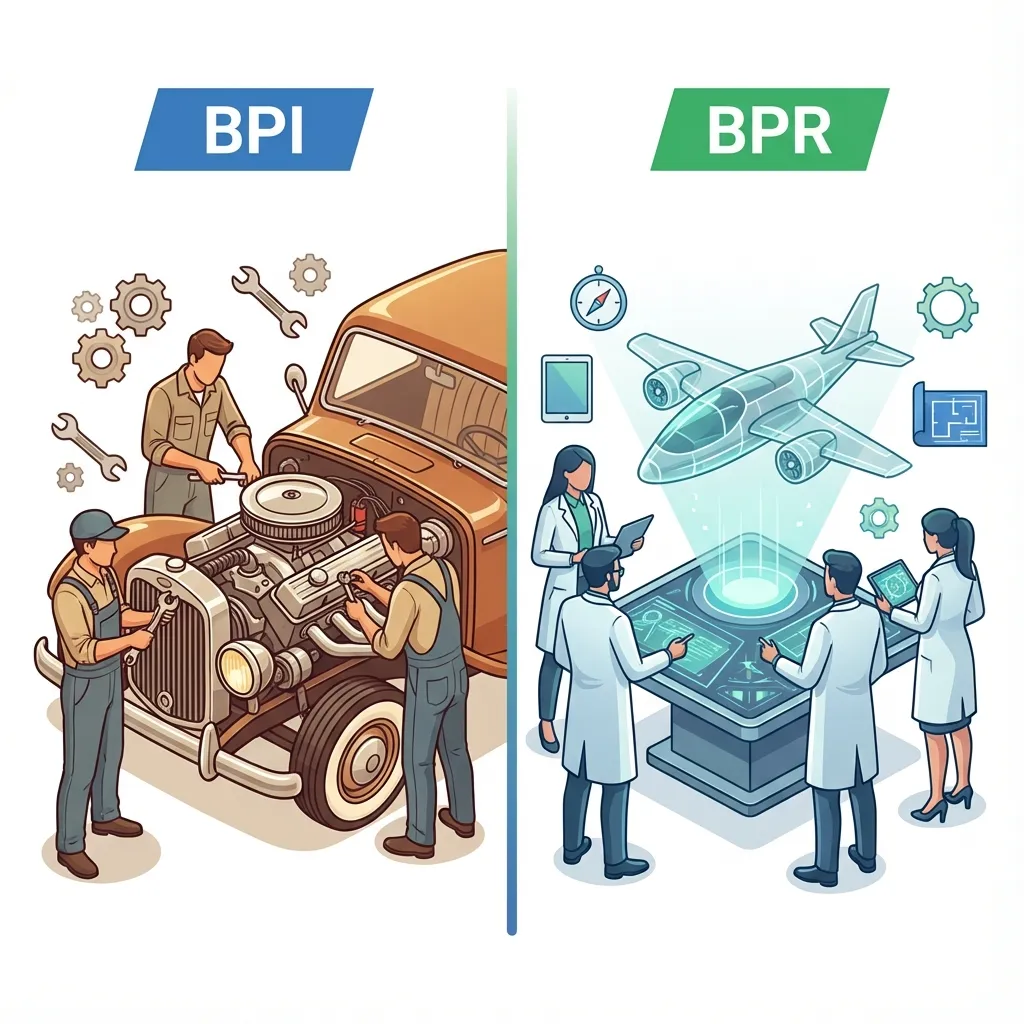
Comparison: BPI vs. BPR
| Feature | BPI (Improvement) | BPR (Reengineering) |
|---|---|---|
| Level of Change | Incremental | Radical |
| Starting Point | Existing Process | Clean Slate |
| Participation | Bottom-up | Top-down |
| Risk | Low | High |
Sort the Attributes: BPI or BPR?
Click an attribute card to select it, then click "Place in BPI" or "Place in BPR".
BPI (Improvement)
BPR (Reengineering)
Score: 0 / 8
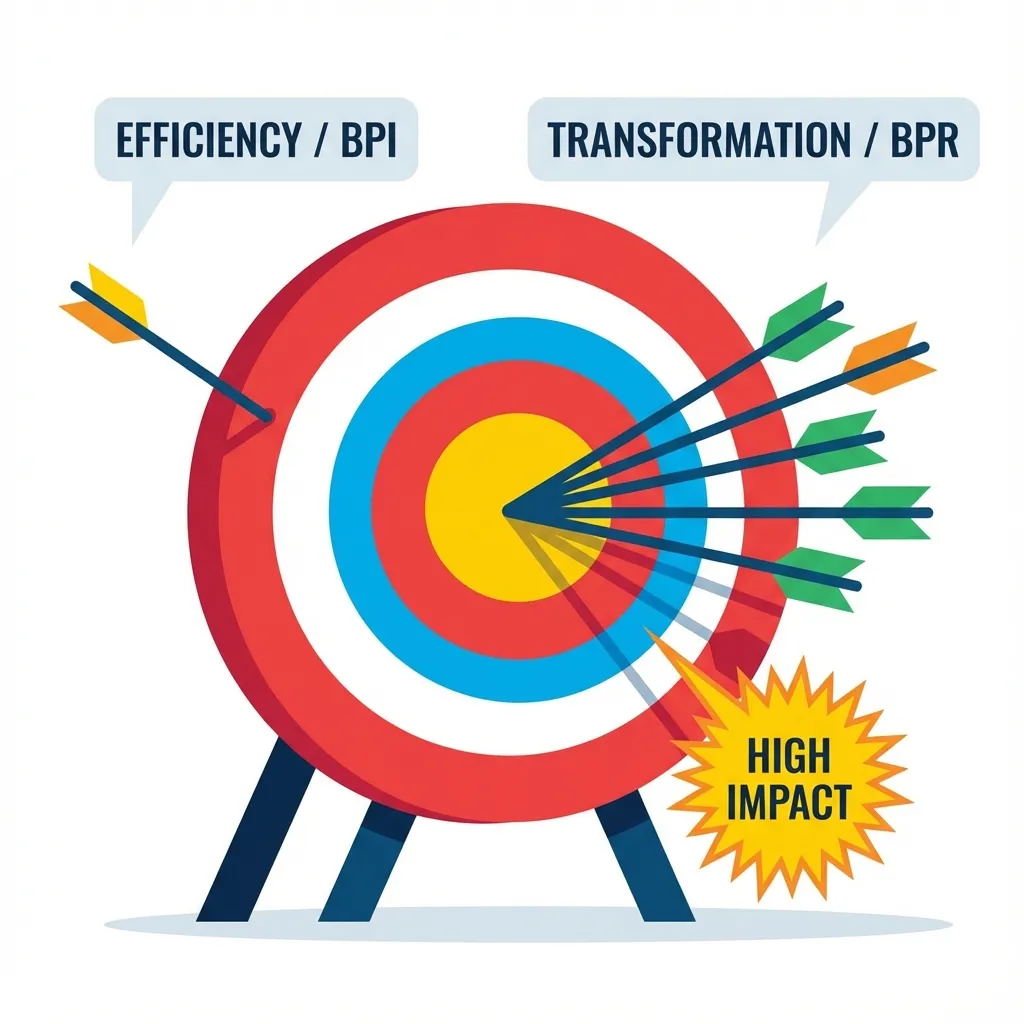
Key Takeaways
- Use BPI for continuous, low-risk optimization of stable processes.
- Use BPR when a process is broken or when a major strategic shift is required.
- Technology works best when processes are optimized first. Automating a bad process just makes it fail faster.
Nepal Context: BPI or BPR?
Four real-world scenarios from Nepal. For each, choose the right approach.
NRB Regulation Upgrade
A commercial bank in Kathmandu notices loan officers take 3 days to verify KYC documents. They train staff on a faster checklist and add a second reviewer to reduce delays.
eSewa / Digital Payments
A government revenue office scraps its paper-based tax filing system entirely and launches an online portal where citizens file and pay taxes from their phones.
Manufacturing — Patan Crafts
A handicraft exporter standardizes packaging dimensions and improves inventory counting frequency to reduce shipment errors from 12% to 4%.
Telecom — NTC Overhaul
Nepal Telecom replaces its 1990s billing system and network hardware entirely with a unified 4G/fiber platform, eliminating all legacy manual billing processes.
Score: 0 / 4