Unit 5.3
An Introduction to Marketing Technologies (MarTech)
Learning Objectives
By the end of this chapter, you will be able to:
- ✅ Define Marketing Technology (MarTech).
- ✅ Describe the role of web analytics.
- ✅ Understand how CRM and marketing automation platforms are used in marketing.
What is MarTech? 🎯
Marketing Technology (MarTech) is the range of software and tools that marketers use to plan, execute, and measure their campaigns.
Think of it as the engine that powers modern digital marketing, enabling efficiency, scale, and data-driven decisions.
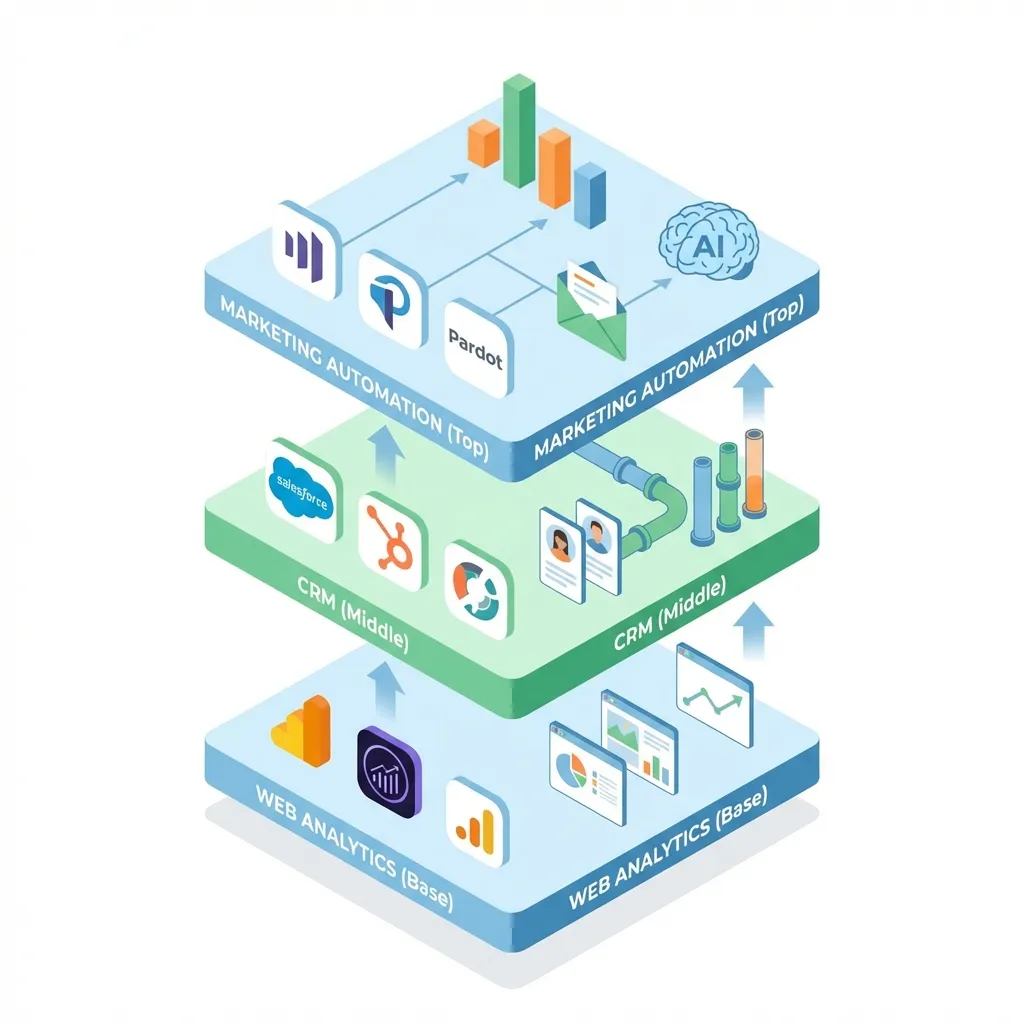
The Core MarTech Stack
Most e-commerce businesses rely on a "stack" of three core technologies working together.
📊 Web Analytics
Tracks and reports on website traffic and user behavior.
Answers: "What are users doing?"
👥 CRM
Manages customer data, relationships, and interactions.
Answers: "Who are our users?"
⚡ Marketing Automation
Automates repetitive marketing tasks and campaigns.
Answers: "How do we engage them at scale?"
Activity: Match the Tool to the Task
For each scenario below, click the MarTech tool that best provides the answer.
"Our product page has a 70% exit rate — which pages are losing users?"
"Segment all customers who spent over Rs. 5,000 in the last 30 days."
"Send a follow-up email 3 days after a customer abandons their cart."
🔍 Key Tech: Web Analytics
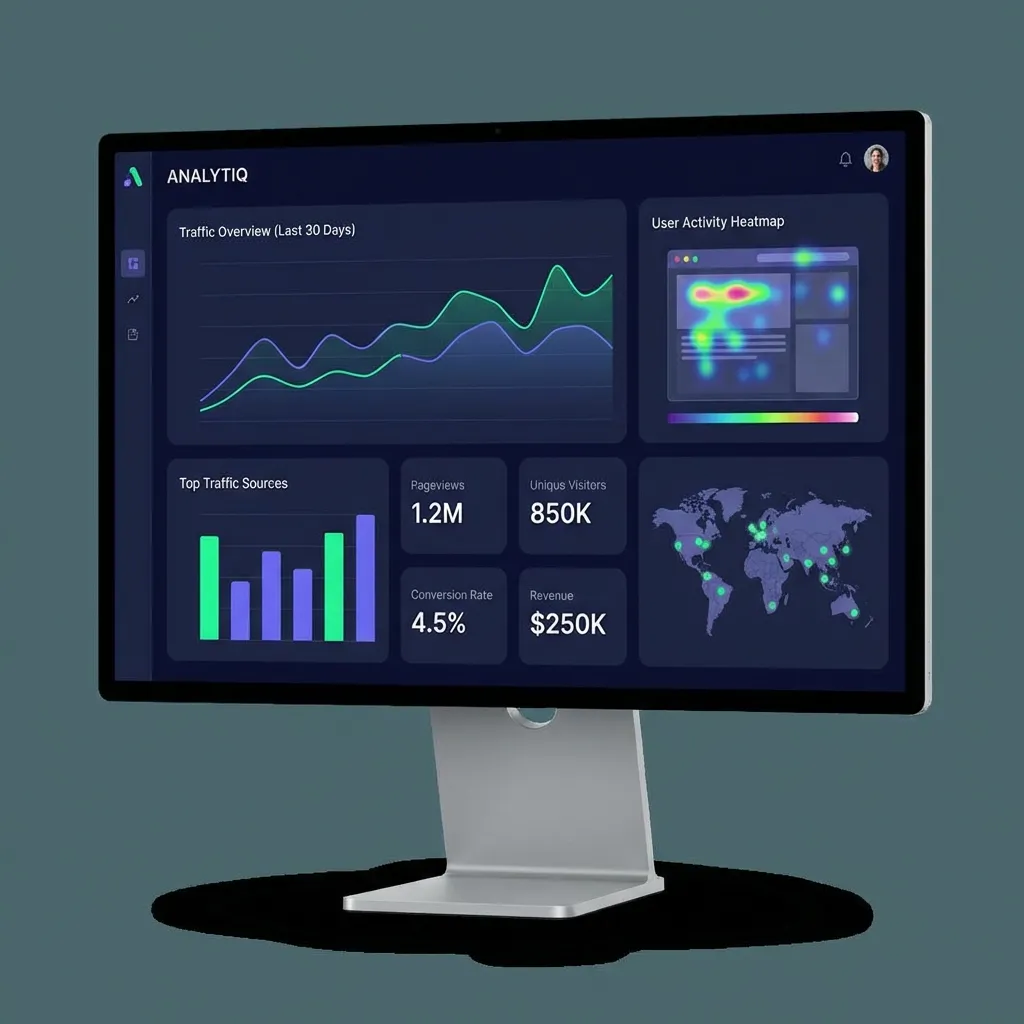
Web analytics is the measurement, collection, and analysis of web data to understand and optimize web usage.
- Provides insights into user behavior.
- Measures campaign effectiveness.
- Identifies areas for website improvement.
Primary Example: Google Analytics
A free and powerful tool that tracks:
- Pageviews & Sessions
- User Demographics
- Traffic Sources (e.g., Google, Social Media)
- Conversion Rates
Explore: Web Analytics Metrics
Click each metric card to discover what it measures and why it matters for e-commerce.
Pageviews
(click to reveal)
Total number of pages viewed. Repeated views by the same user count. Shows your most popular content.
Bounce Rate
(click to reveal)
% of visitors who leave after viewing only one page. A high bounce rate may signal poor content relevance or slow load times.
Sessions
(click to reveal)
A session is a group of interactions by one user within a time window. More sessions = more total engagement.
Traffic Sources
(click to reveal)
Where visitors come from: organic search, paid ads, social media, or direct. Helps decide where to invest your marketing budget.
Conversion Rate
(click to reveal)
% of visitors who complete a desired action (purchase, sign-up). The most critical metric for e-commerce success.
Avg. Session Duration
(click to reveal)
Average time users spend per visit. Longer duration generally indicates higher engagement with your content.
Key Tech: Customer Relationship Management (CRM)
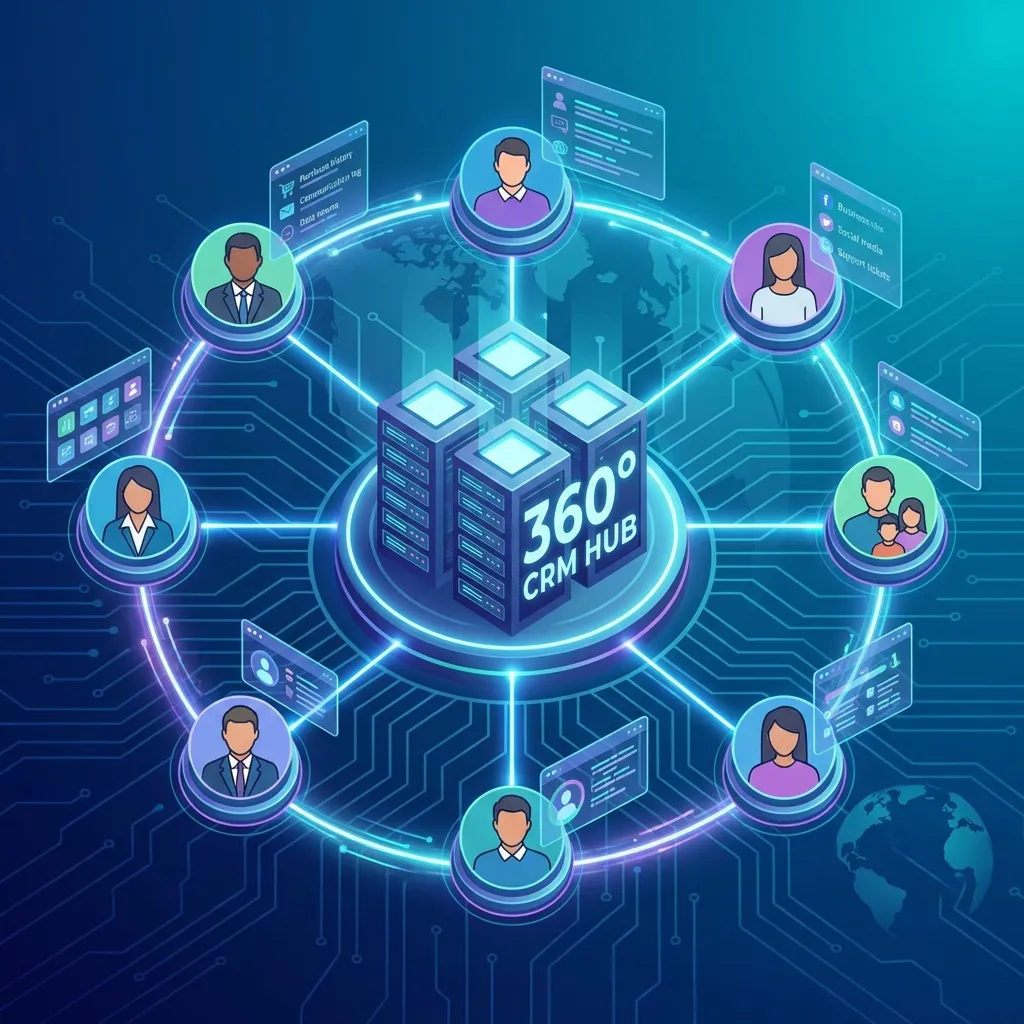
A CRM is a system for managing a company's relationships and interactions with current and potential customers.
In marketing, a CRM is used to:
- Store customer data (e.g., name, email, purchase history).
- Segment audiences for targeted campaigns.
- Track every interaction a customer has with the company.
Activity: What Does a CRM Store?
Click a data item to select it, then click the correct CRM category to place it.
Data Items — click to select, then click a category:
Full Name Email Address Phone Number Order History Emails Opened "VIP Customer" TagIdentity Data
Behavioral Data
Segmentation Data
Key Tech: Marketing Automation
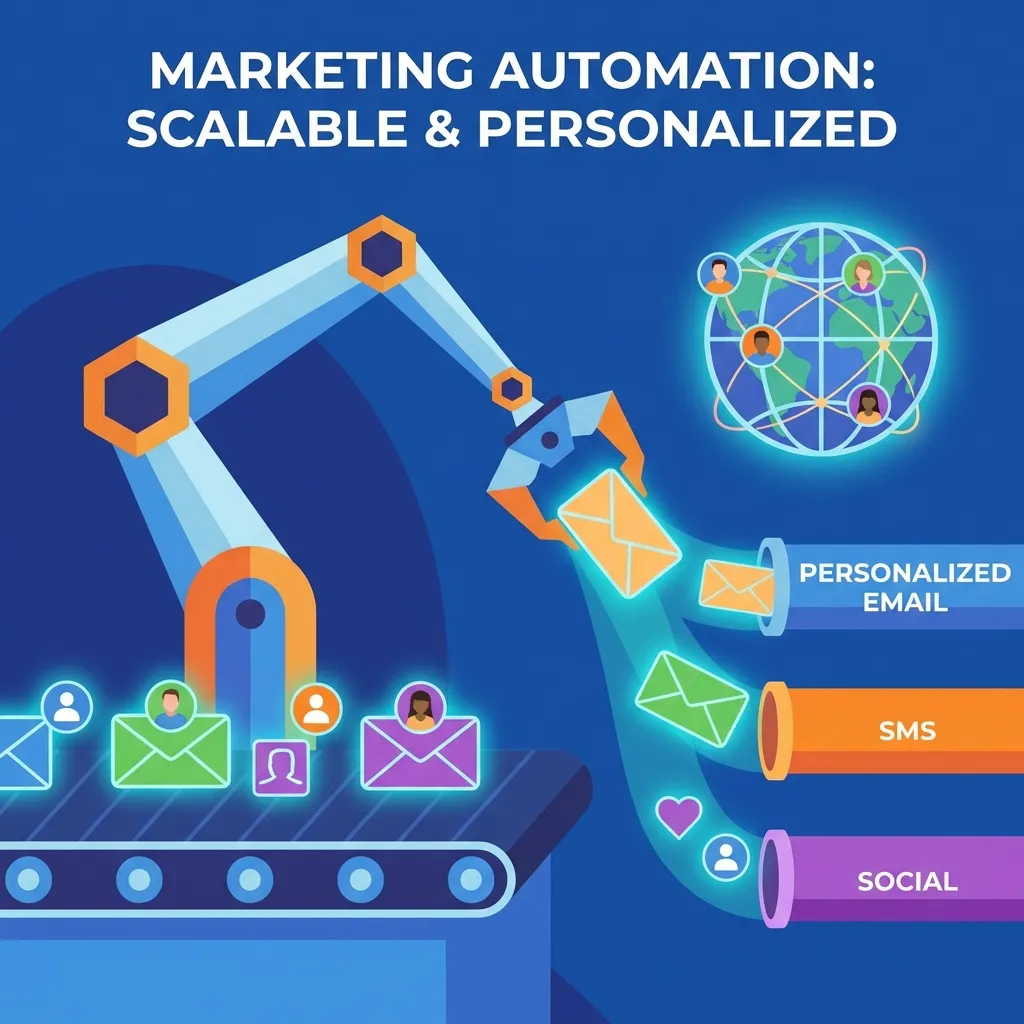
Marketing Automation platforms are designed to automate repetitive marketing tasks, allowing for personalized communication at scale.
Common Uses:
- Email Marketing: Sending welcome series, newsletters, or abandoned cart reminders automatically.
- Social Media Posting: Scheduling posts across multiple platforms in advance.
- Lead Nurturing: Automatically sending relevant content to potential customers over time.
Activity: Build the Automation Workflow
A customer just abandoned their cart. Use the dropdowns to number these 5 steps in the correct order (1 = first).
How They Work Together
MarTech tools are most powerful when they are integrated.
📊 Web Analytics data on user behavior is sent to the CRM.
👥 The CRM stores this data, creating a rich profile of the customer.
⚡ Marketing Automation uses the CRM data to trigger personalized and automated campaigns (e.g., an email with products the user viewed).
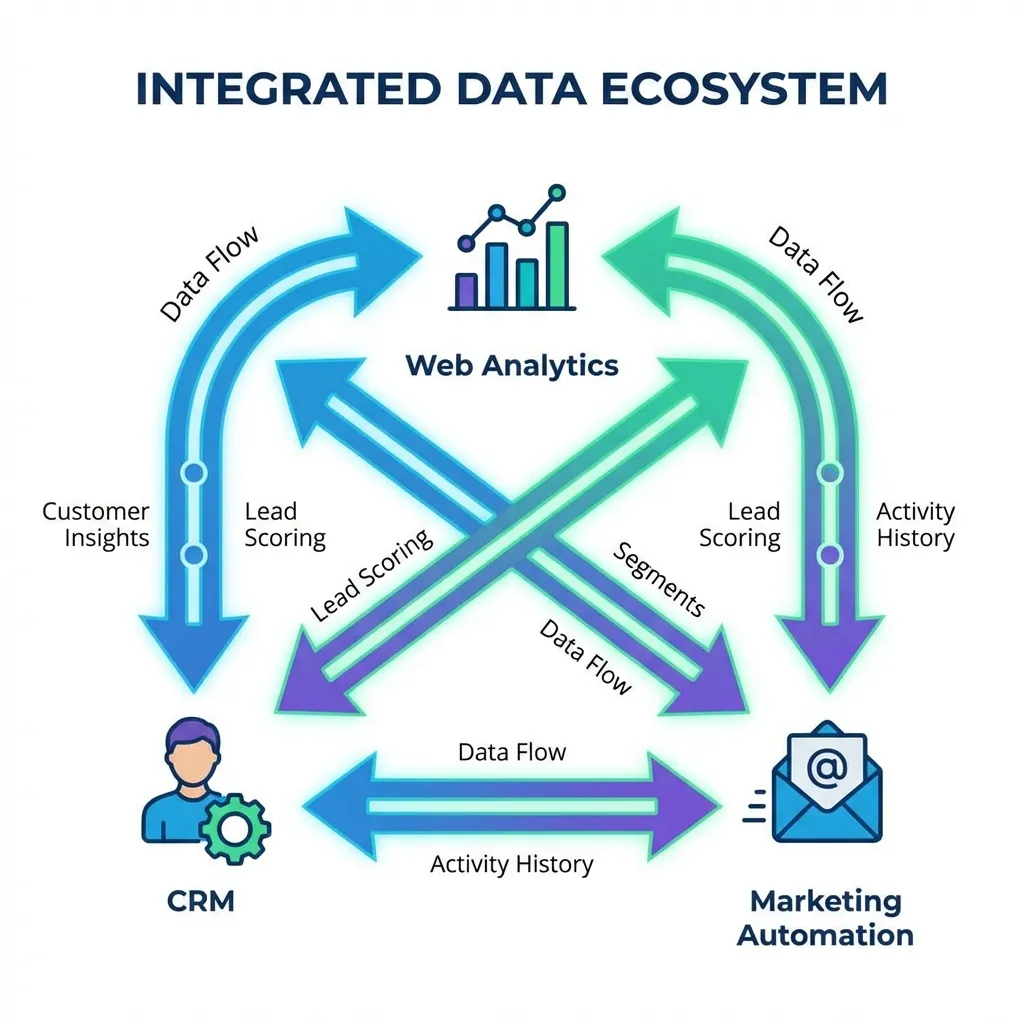
Simulation: Data Flow Through the MarTech Stack
A customer visits your site and buys running shoes. Press "Next Step" to trace how the MarTech stack responds in real time.
📊 Web Analytics
Google Analytics
👥 CRM
Customer Profiles
⚡ Marketing Automation
Campaign Triggers
[ Ready — press "Next Step" to begin the simulation ]
MarTech in Practice: The Nepal Context
MarTech adoption in Nepal is growing, but faces unique challenges.
Commonly Used Tools
- Web Analytics: Google Analytics is widely used.
- Social Media: Tools like Hootsuite & Buffer help manage social presence.
- Email Marketing: Mailchimp is a popular choice for newsletters.
- CRM: Adoption is growing, mainly among larger businesses.
Adoption Challenges
- Cost: Can be a significant barrier for small businesses.
- Lack of Skilled Personnel: A shortage of experts to implement and manage the tools.
- Lack of Awareness: Many businesses are unaware of the benefits.
Summary & Key Takeaways
- MarTech is the essential software toolkit for modern digital marketers.
- Web Analytics (like Google Analytics) tells you what users are doing on your site.
- A CRM manages who your customers are and their history with your company.
- Marketing Automation uses that data to engage customers efficiently and at scale.
- Together, these tools enable more effective, data-driven e-commerce marketing.
Discussion Questions
1. How can a marketer use data from Google Analytics (e.g., high bounce rate on a product page) to improve their website?
2. What is the relationship between a CRM system and a marketing automation platform?
3. Can a small business in Nepal do digital marketing without using any paid MarTech tools? What are the limitations?
Thank You
Any questions?
Next Topic: Unit 5.4: Understanding E-commerce Marketing Costs and Benefits | IT 204