Unit 4.5
E-commerce Payment Systems
Learning Objectives
By the end of this chapter, you will be able to:
- ✅ Identify and describe the primary types of e-commerce payment systems.
- ✅ Compare the advantages and disadvantages of different payment methods for both consumers and merchants.
- ✅ Analyze the unique characteristics and trends of the e-commerce payment landscape in Nepal.
- ✅ Understand the challenges and opportunities for digital payment growth.
The Core of E-commerce Transactions
Definition: An e-commerce payment system is a technology or service that facilitates the acceptance of electronic payments for online transactions.
It's the digital equivalent of a cash register, acting as the crucial link between a customer's funds and a merchant's account.
- ⚡ Enables seamless, automated transactions
- 🔒 Manages security and fraud prevention
- 📊 Provides transaction data and reporting
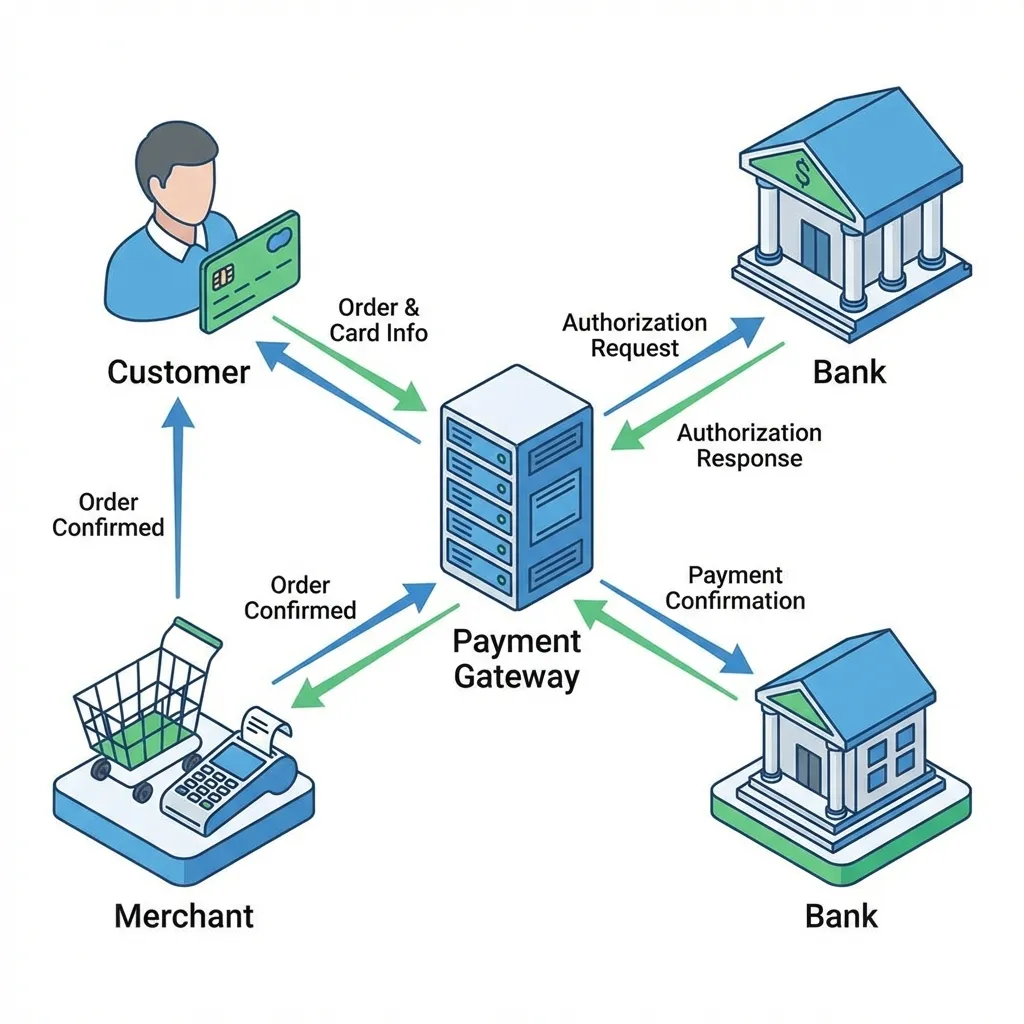
Activity: Sequence the Payment Flow
Drag the steps into the correct order to show how an online payment is processed.
Traditional Methods: Card Payments
💳 Credit Cards
- The most popular and widely accepted form of online payment globally.
- Based on a line of credit issued by a bank.
- Pro: Easy to use, offers consumer protection.
- Con: High transaction fees for merchants, risk of fraud.
🏦 Debit Cards
- Directly linked to a customer's bank account.
- Funds are deducted immediately upon purchase.
- Pro: Helps consumers avoid debt.
- Con: May have lower acceptance rates and fewer fraud protections than credit cards.
Activity: Credit or Debit?
Click Credit or Debit for each statement. Get all 6 correct!
The Rise of Digital Wallets
Definition: A secure online account that stores a user's payment information (card details, bank accounts) for quick and easy online checkouts.
They act as an intermediary, adding a layer of security and convenience.

PayPal

Apple Pay

Google Pay

Activity: Digital Wallet Feature Match
Match each feature description to the digital wallet it best describes. Click a wallet name for each row.
| Feature | Which wallet? |
|---|
Mobile Payments: Commerce on the Go
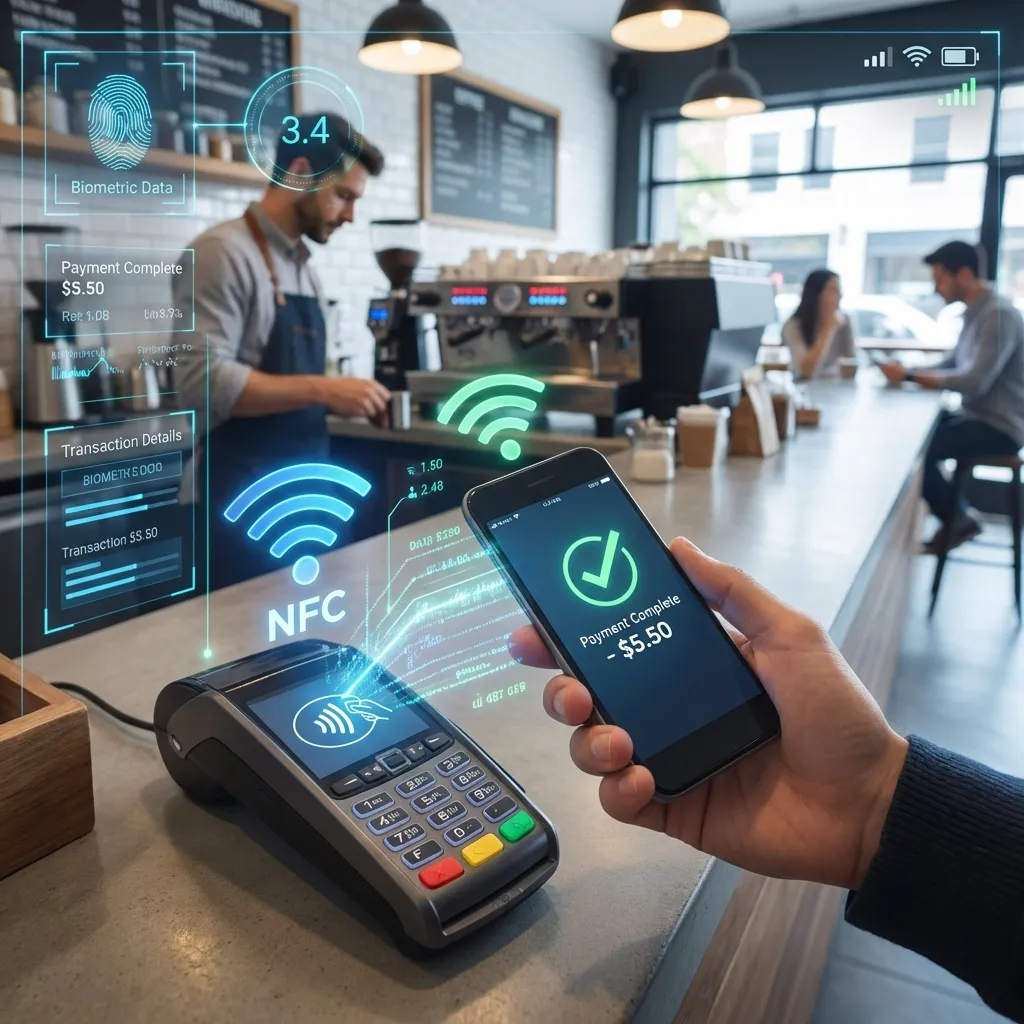
A subset of online payments made using a mobile device, often leveraging NFC technology for in-person transactions or in-app payments.
Key Insight: Digital Wallets and Mobile Payments are often intertwined. Systems like Apple Pay and Google Pay are digital wallets that facilitate mobile payments.
- 🎯 Convenience: Pay with a tap or a glance.
- 🔐 Security: Often use biometrics (fingerprint, face ID) and tokenization.
- 📈 Growing Trend: Driven by high smartphone penetration.
Activity: Mobile & Online Banking Security
Select True or False for each statement about mobile and online banking payment security.
Emerging Frontiers: Cryptocurrencies
Digital or virtual tokens that use cryptography for security. They operate on a decentralized network (blockchain).
Potential Advantages
- Lower transaction fees
- Decentralized control
- No chargebacks
Current Challenges
- High price volatility
- Scalability issues
- Regulatory uncertainty
🔍 Local Context: The use of cryptocurrencies for payments is currently not legal in Nepal.

Practical Application: The Payment Landscape in Nepal
The Nepalese e-commerce market shows a strong preference for traditional methods while digital options gain momentum.
Primary Payment Methods in Nepal
- Cash on Delivery (COD): Still the dominant method, driven by trust issues and limited card access.
- Digital Wallets: Rapidly growing in popularity. Key players include eSewa, Khalti, and IME Pay.
- Mobile Banking: Most major banks offer apps that facilitate online payments.
- Card Payments: Usage is relatively low but increasing as financial infrastructure improves.
Activity: Nepal Payment Scenarios
For each scenario, choose the most appropriate payment method commonly used in Nepal. Select one, then click Check.
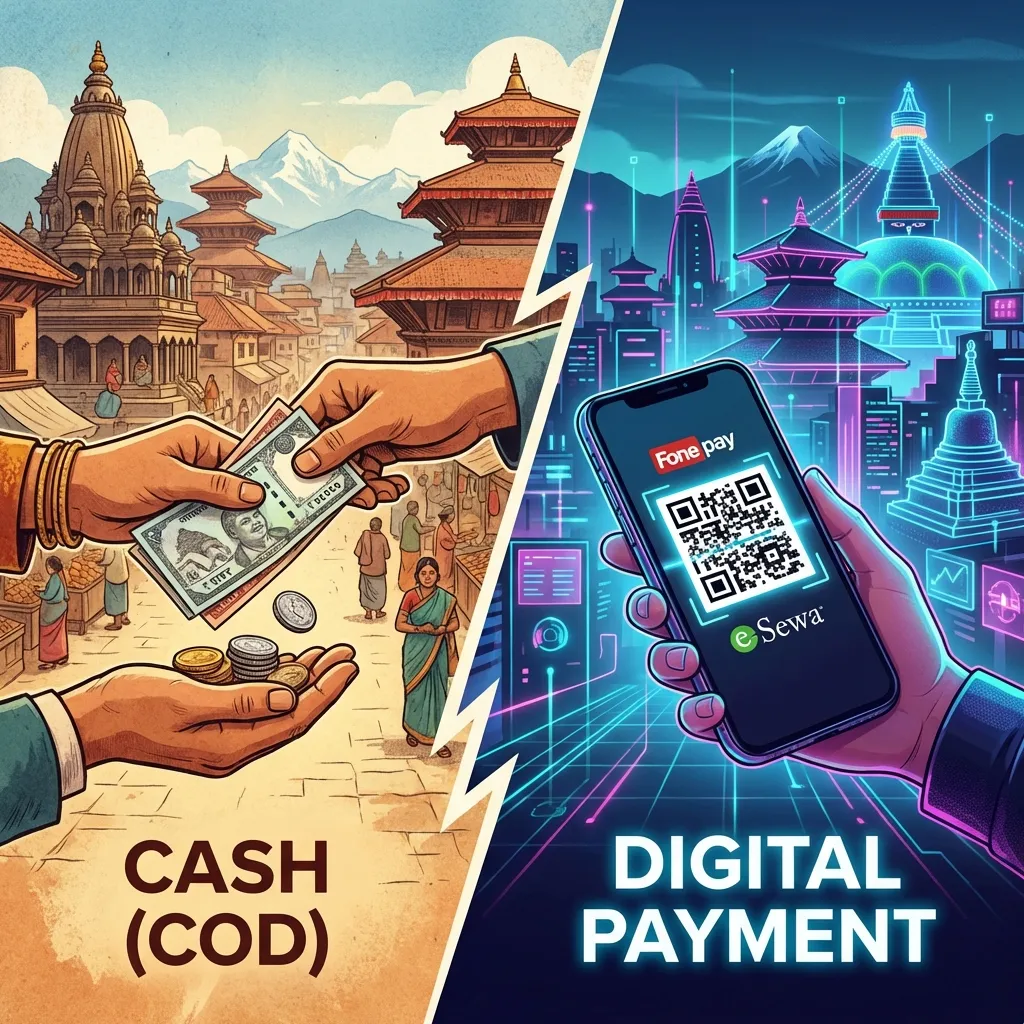
Case Study: COD vs. Digital Wallets in Nepal
Why COD Persists
Cash on Delivery is popular due to:
- Trust Deficit: Consumers prefer to inspect goods before paying.
- Accessibility: Overcomes the lack of access to credit/debit cards, especially in rural areas.
- Habit: A long-standing cultural preference for cash transactions.
The Rise of Digital Wallets
Digital wallets are gaining ground by:
- Utility: Offering more than just e-commerce payments (e.g., utility bills, mobile recharges).
- Incentives: Providing cashback, discounts, and loyalty points.
- Convenience: Simplifying the checkout process for a growing, tech-savvy youth population.
Nepal: Challenges & Opportunities
Challenges 🚧
- Lack of widespread awareness and digital literacy.
- Persistent lack of trust in online security.
- Need for a stronger legal and regulatory framework.
- Inconsistent internet infrastructure.
Opportunities 🚀
- Large, young, and increasingly tech-savvy population.
- Supportive government initiatives for digital payments.
- Growing number of businesses adopting online payment gateways.
- Increasing smartphone and internet penetration.
Key Takeaways
- 🎯 A diverse range of payment systems exists, from traditional cards to modern digital wallets, each with unique trade-offs.
- 🎯 The "best" payment system depends on the context: user convenience, merchant cost, security, and regional preferences.
- 🎯 In Nepal, the payment landscape is in transition, with traditional Cash on Delivery coexisting with the rapid growth of digital wallets like eSewa and Khalti.
- 🎯 Overcoming challenges in trust and infrastructure is key to unlocking the full potential of digital payments in emerging markets.
Thank You
Next Topic: Unit 5.1 - E-commerce Marketing & Advertising